Chapter 10Photosynthesis: Energy from Sunlight
Key Concepts
10.1 Photosynthesis Uses Light to Make Carbohydrates
10.2 Photosynthesis Converts Light Energy into Chemical Energy
10.3 Chemical Energy Trapped in Photosynthesis Is Used to Synthesize Carbohydrates
10.4 Plants Have Adapted Photosynthesis to Environmental Conditions
10.5 Photosynthesis Is an Integral Part of Plant Metabolism
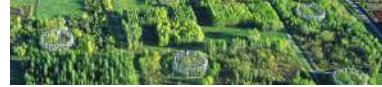
Photosynthesis and Rising CO2 Experiments with pipes emitting CO2 around crop plants are designed to predict the effects of rising atmospheric CO2 on photosynthesis and crop productivity.
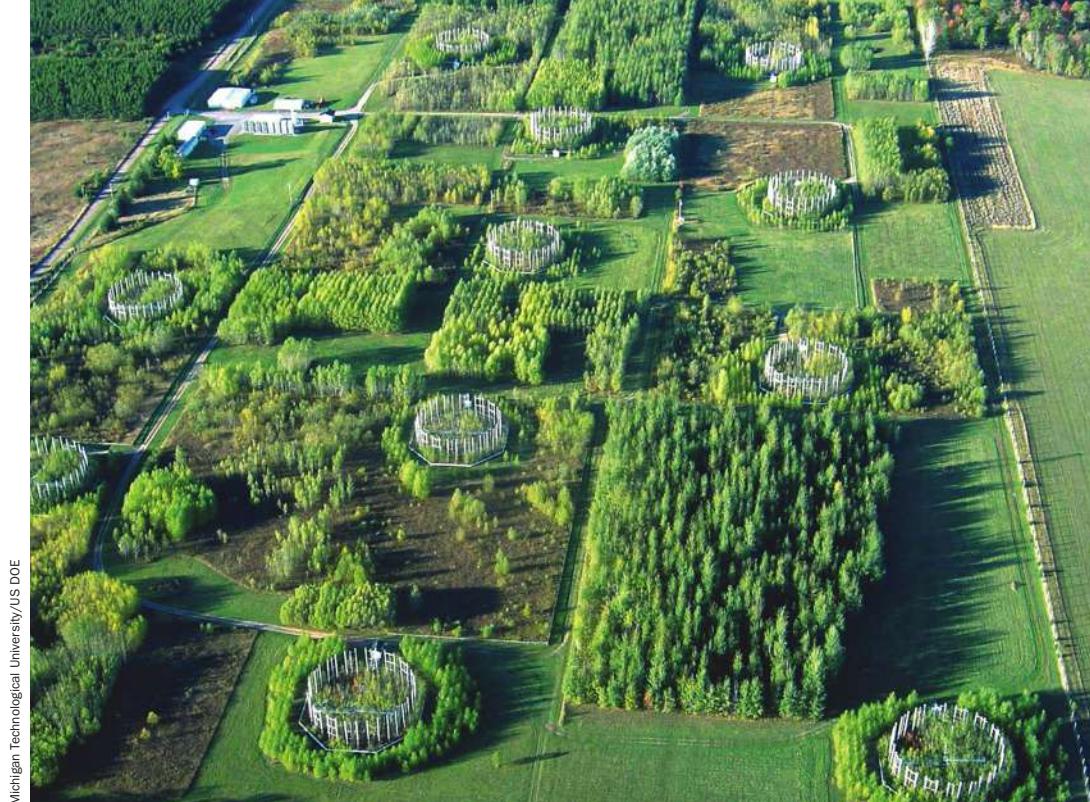
Michigan Technological University/US DOE
Investigating Life: Saving FACE
As human societies have become increasingly industrialized and dependent on energy to fuel vehicles, power plants, and factories, more and more fossil fuels have been combusted. As you know from Chapter 9, the combustion of hydrocarbons is exergonic, releasing not only energy but also CO2. Because CO2 is a “green-house gas” that traps heat in the atmosphere, the rising CO2 level is already beginning to result in global climate change. However, the increased amount of CO2 released has not all stayed in the atmosphere. About half of it has been absorbed by Earth’s biological and chemical systems. To try to find out what is absorbing all this CO2, a NASA satellite called the Orbiting Carbon Observatory is measuring not only the changing CO2 in the air at various places but also the presence of the green plant pigment chlorophyll.
As you may know, green plants use the pigment chlorophyll in photosynthesis, which has the general equation
Measurements by the orbiting satellite, as well as calculations from an interdisciplinary group of scientists called the Global Carbon Project, have found a significant role for green plant photosynthesis in reducing the effects of rising CO2. Plants absorb
CO2 in photosynthesis, but they also release it in cellular respiration (see Chapter 9):
The balance at present is tipped in favor of photosynthesis, and in an overall sense, plants absorb about half of the CO2 emitted into the air by human activities. How this happens and how long it will last are key questions for biologists.
To begin to answer these questions, scientists developed a way to expose plants to high levels of CO2 in the field. Free-air concentration enrichment (FACE) uses rings of pipes to release CO2 into the air surrounding plants in fields or forests. Wind speed and direction are monitored by a computer, which constantly controls which pipes release CO2. These experiments confirm that photosynthetic rates increase as the concentration of CO2 rises, and indicate that as atmospheric CO2 rises globally, there will be an increase in photosynthesis, and this may be reflected in more plant growth.
QA What is the chemistry of photosynthesis, and how will it be affected by rising atmospheric CO2? (Find the answer on page 213.)
Photosynthesis Uses Light to Make Carbohydrates
Learning Objectives
10.1.1 Use experimental evidence to explain the source of the produced in oxygenic photosynthesis.
10.1.2 Describe the relationship between the light reactions and the carbon-fixation reactions of photosynthesis.
Catabolism—the breakdown of complex molecules into simpler units—is the reverse of anabolism—the construction of complex molecules from simpler units. Chapter 9 described several energy-releasing catabolic pathways. The energy stored in chemical bonds in almost all organisms (with the exception of those living near deep-sea vents) ultimately comes from the Sun. Photosynthesis (literally, “synthesis from light”) is an anabolic process by which the energy of sunlight is captured and used to convert carbon dioxide () into more complex carbon-containing compounds. Organism that carry out photosynthesis are autotrophs (“self-feeders”), able to use only water and to essentially make their own “food”—carbohydrates—which can then be used directly or converted into other types of molecules for anabolic and catabolic processes. Autotrophs include plants, algae, and cyanobacteria. Other organisms, including animals, fungi, and most other bacteria, are heterotrophs (“other-feeders”) that must consume other organisms, such as autotrophs or other heterotrophs, to obtain molecules for their activities.
Photosynthesis involves light and gas exchange
Plants, algae, and cyanobacteria live in aerobic environments and carry out oxygenic photosynthesis: the conversion of and water () into carbohydrates (which we will represent as a six-carbon sugar, ) and oxygen gas () (Figure 10.1).
Equation 10.1 describes an endergonic reaction. From experiments such as the ones described in the chapter-opening story using FACE, the role of is well established. But while the equation is essentially correct, it is too general for a real understanding of the processes involved. Several questions arise: What are the precise chemical reactions of photosynthesis? What role does light play in these reactions? How do carbons become linked to form carbohydrates? What carbohydrates are formed? And does the oxygen gas come from or ?
Experiments with isotopes show that comes from in oxygenic photosynthesis
In 1941, Samuel Ruben and Martin Kamen at the University of California, Berkeley performed experiments using the isotopes and to identify the source of the produced during photosynthesis (Investigating Life: What Is the Chemistry of Photosynthesis, and How Will Increasing in the Atmosphere Affect It). Their results showed that all the oxygen gas produced during photosynthesis comes from water, as is reflected in the revised balanced equation:
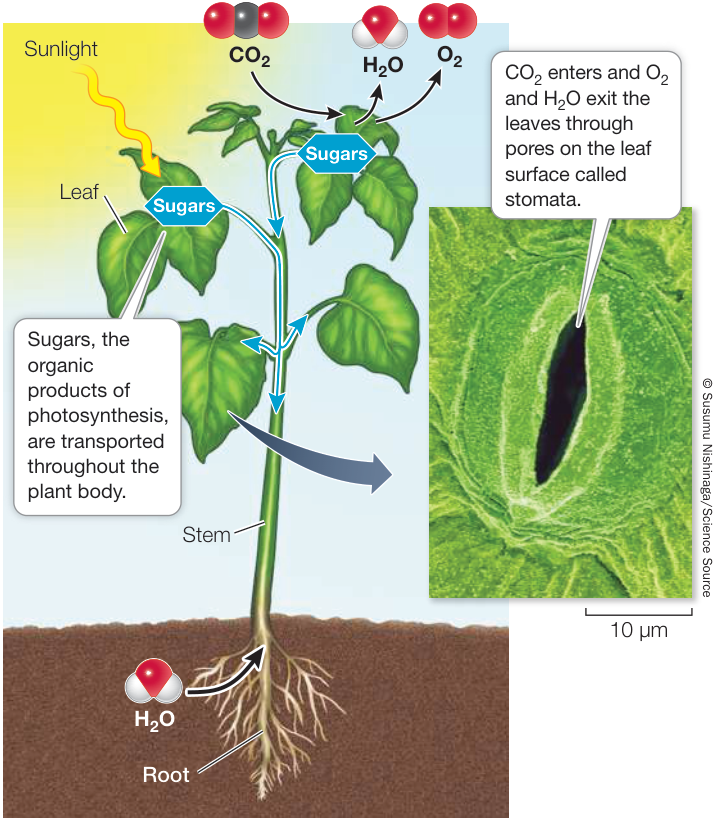
Figure 10.1 The Ingredients for Photosynthesis A green plant uses light from the Sun, water from the soil, and carbon dioxide from the atmosphere to form organic compounds by photosynthesis.
Water appears on both sides of the equation because it is both used as a reactant (the 12 molecules on the left) and released as a product (the 6 new molecules on the right). This revised equation accounts for all the water molecules needed for all the oxygen gas produced.
The realization that water was the source of photosynthetic led to an understanding of photosynthesis in terms of oxidation and reduction. As you learned in Key Concept 9.1, oxidation–reduction (redox) reactions are coupled: when one molecule becomes oxidized in a reaction, another gets reduced. In this case, oxygen atoms in the reduced state in get oxidized to :
while carbon atoms in the oxidized state in get reduced to carbohydrate, with the simultaneous production of water:
Adding Equations 10.3 and 10.4 (chemistry students will recognize them as half-cell reactions) gives the overall Equation 10.2 shown earlier.
As just described, water is the donor of protons and electrons in oxygenic photosynthesis. Some bacteria live in anaerobic environments and carry out non-oxygenic photosynthesis. In these cases, other molecules are used as electron donors in the reduction of to carbohydrates. For example, purple sulfur bacteria use hydrogen sulfide () as the electron donor:
Investigating Life: What Is the Chemistry of Photosynthesis, and How Will Increasing CO2 in the Atmosphere Affect It?
Experiment
Original Paper: S. M. Ruben et al. 1941. Heavy oxygen (18O) as a tracer in the study of photosynthesis. J Am Chem Soc 63: 877–879.
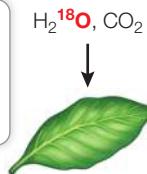
Understanding the chemical reactions of photosynthesis is key to understanding the effects of increasing atmospheric CO2. In particular, the source of O2 was not known. Two possibilities were the reactants, CO2 and H2O. In two separate experiments, Samuel Ruben and Martin Kamen labeled the oxygen in these molecules with the isotope 18O, then tested the O2 produced by a green plant to find out which molecules contributed the oxygen.
HYPOTHESIS The oxygen released by photosynthesis comes from water rather than CO2.
METHOD
Give plants isotope-labeled water and unlabeled CO2.
Experiment 1
Experiment 2
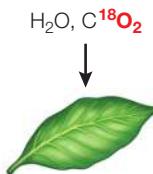
Give plants isotope-labeled CO2 and unlabeled water.
RESULTS
The oxygen released is labeled.
18O2
O2
The oxygen released is unlabeled.
CONCLUSION Water is the source of the oxygen atoms in the O2 produced by photosynthesis.
Work with the Data
In the 1930s, Cornelius van Niel, then a graduate student at Stanford University, was the first to propose that the oxygen released during photosynthesis is not actually derived from carbon dioxide, but rather from the water molecules consumed in the reaction. This hypothesis was formed on the basis of the discovery that the anaerobic purple sulfur bacteria do not release oxygen during photosynthesis. Instead, these organisms convert hydrogen sulfide (H2S) into elemental sulfur in their photosynthetic pathway (see Equation 10.5). This hypothesis was later confirmed by the experiment outlined above, which employed the “heavy” isotope of oxygen, 18O, to trace the flow of oxygen in plants.
As part of the expanding research on radioisotopes during World War II, the U.S. government set up a radiation laboratory at the University of California, Berkeley. Out of this lab came key experiments that described the light-dependent and carbon-fixation pathways of photosynthesis. In this set of experiments, Chlorella algal cells were exposed to water and CO2, the latter coming from potassium carbonate (K2CO3) and potassium bicarbonate (KHCO3), which dissolve in water to form CO2. In Experiment 1, water had a higher isotope ratio of 18O/16O than CO2; and in Experiment 2, CO2 had a higher isotope ratio than water. A mass spectrometer was used to measure the isotope contents of the reactants and the O2 produced, and the data were presented as the isotope ratio (18O/16O). These data are shown in the table.
QUESTIONS
- In Experiment 1, was the isotope ratio of O2 similar to that of H2O or to that of CO2? What about in Experiment 2?
- What can you conclude from these data?

Animation 10.1 The Source of the Oxygen Produced by Photosynthesis
| Time before start of O 2 collection (min) | Time at end of O 2 collection (min) | 18 O/ 16 O (proportion 18 O in compound) | |||
|---|---|---|---|---|---|
| H 2 O | HCO 3 - + CO 3 2- (CO 2 sources) | O 2 | |||
| Experiment 1: 0.09 M KHCO 3 + 0.09 M K 2 CO 3 ( 18 O in H 2 O) | 0 | 0.85 | 0.20 | ||
| 45 | 110 | 0.85 | 0.41 | 0.84 | |
| 110 | 223 | 0.85 | 0.55 | 0.85 | |
| 225 | 350 | 0.85 | 0.61 | 0.86 | |
| Experiment 2: 0.14 M KHCO 3 + 0.06 M K 2 CO 3 ( 18 O in CO 2 ) | 0 | 0.20 | |||
| 40 | 110 | 0.20 | 0.50 | 0.20 | |
| 110 | 185 | 0.20 | 0.40 | 0.20 |
Source: S. M. Ruben et al. 1941. J Am Chem Soc 63: 877–879. Adapted with permission. © 1941 American Chemical Society.
Green sulfur bacteria use sulfide ions, hydrogen, or ferrous iron as electron donors, whereas another group of bacteria uses compounds derived from arsenic. The remainder of this chapter will focus on oxygenic photosynthesis, which produces the vast majority of the organic carbon used by life on Earth today and replenishes the in our atmosphere.
Photosynthesis involves two pathways
Equation 10.2 summarized the overall process of photosynthesis, but not the steps by which it happens. Figure 10.2 shows two related pathways (you will find similarities with the pathways involved in the catabolism of glucose described in Chapter 8):
- The light reactions convert light energy into chemical energy in the form of ATP and the reduced electron carrier
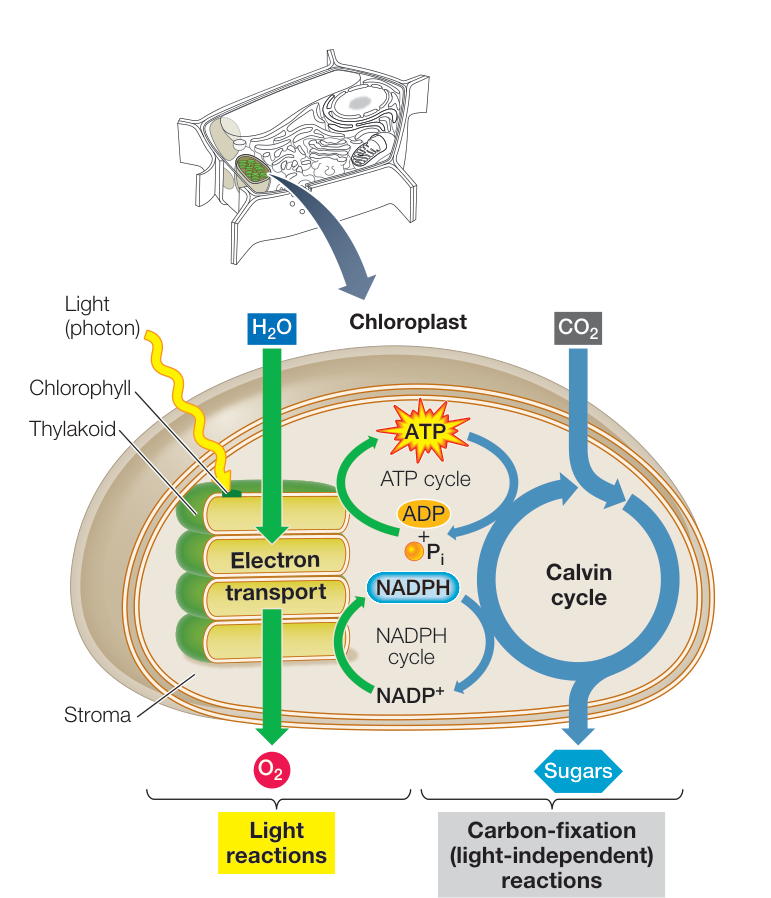
Figure 10.2 An Overview of Photosynthesis Photosynthesis consists of two pathways: the light reactions and the carbon-fixation reactions. These reactions take place in the thylakoids and the stroma (“bed”) of chloroplasts, respectively. See Figure 5.14 for more on the structure of chloroplasts. Q: In the cell, where does the reduction of occur, and what is the reducing agent?
NADPH. This molecule is similar to the coenzyme NADH (see Key Concept 9.1) but with an additional phosphate group attached to the sugar of its adenosine. In general, NADPH acts as a reducing agent in photosynthesis and other anabolic reactions.
- The carbon-fixation reactions (also called light-independent reactions) do not use light directly, but instead use ATP, NADPH (made by the light reactions), and to produce carbohydrate.
These pathways take place in chloroplasts, compartmentalized in different parts of the organelle (see Figure 10.2). As we describe these two series of reactions in more detail, you will see that they conform to the principles of biochemistry that we discussed in Chapters 8 and 9: energy transformations, oxidation–reduction, and the stepwise nature of biochemical pathways.
Recap and Assess
The light reactions of photosynthesis convert light energy into chemical energy. The carbon-fixation reactions use that chemical energy to reduce to carbohydrates. While most photosynthetic organisms use water as the electron donor for reduction of , some use other molecules, such as hydrogen sulfide ().
- What is the relationship between the light reactions and the carbon-fixation reactions of photosynthesis?
- What is the experimental evidence that water is the source of the produced during photosynthesis?
We will describe the light reactions and the carbon-fixation reactions separately. We’ll begin the next key concept by discussing the physical nature of light and the specific photosynthetic molecules that capture its energy.
Photosynthesis Converts Light Energy into Chemical Energy
Learning Objectives
- 10.2.1 Describe the transfer of energy within the reaction center of a light-harvesting complex.
- 10.2.2 Compare and contrast a pigment’s absorption spectrum and its action spectrum.
- 10.2.3 Explain how ATP and NADPH are produced in a chloroplast.
Light is a form of energy, and it can be converted to other forms of energy such as heat or chemical energy. Our focus here is on light as the source of energy to drive the formation of ATP (from ADP and ) and NADPH (from and ).
Light energy is absorbed by pigments in photosynthesis
It is helpful here to discuss light in terms of its photochemistry and photobiology.
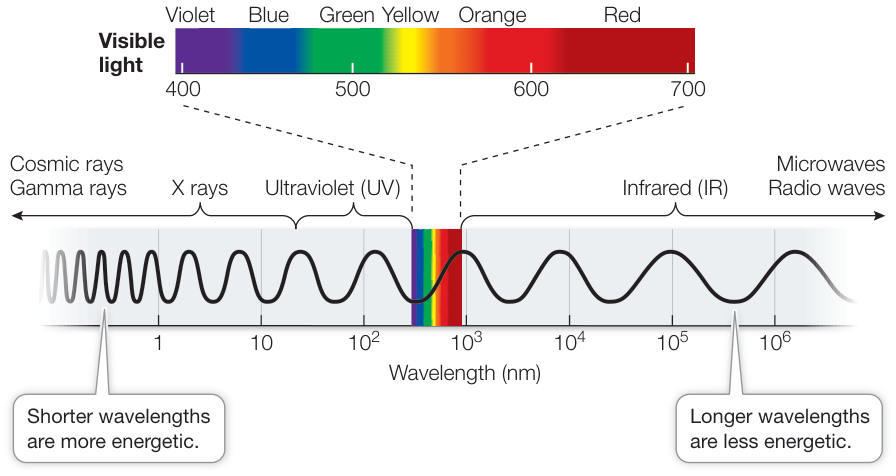
Figure 10.3 The Electromagnetic Spectrum The portion of the electromagnetic spectrum that is visible to humans (385–740 nm) is shown in detail at the top. (After S. Giannakis et al. 2016. Appl Catal B: Environ 199: 199–223.)
PHOTOCHEMISTRY Light is a form of electromagnetic radiation. Electromagnetic radiation is said to have a dual nature. Although it is propagated in waves, it also has particle-like behaviors. Particles of light can be described as packets of energy called photons, which have no mass. The amount of energy in electromagnetic radiation is inversely proportional to its wavelength—the shorter the wavelength, the greater the energy. The visible portion of the electromagnetic spectrum (Figure 10.3) encompasses a wide range of wavelengths and energy levels. In plants and other photosynthetic organisms, receptive molecules absorb photons and thereby harvest their energy for biological processes. These receptive molecules absorb only specific wavelengths of light—photons with specific amounts of energy.
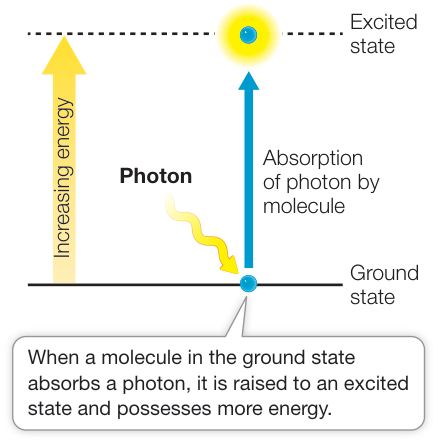
Figure 10.4 Light and Chemical Energy When light is absorbed by a molecule, it is raised to a higher energy level, as electrons are further away from the nucleus. Q: In a compact fluorescent lightbulb, electric current is absorbed first by mercury vapor, which emits energy that is then absorbed by fluorescent coating, which emits light. What is the flow of energy in this system?
When a photon meets a molecule, one of three things can happen:
- The photon may bounce off the molecule—it may be scattered or reflected.
- The photon may pass through the molecule—it may be transmitted.
- The photon may be absorbed by the molecule, adding energy to the molecule.
Neither of the first two outcomes causes any change in the molecule. However, in the case of absorption, the photon disappears and its energy is absorbed by the molecule. The photon’s energy cannot disappear, because according to the first law of thermodynamics, energy is neither created nor destroyed. When the molecule acquires the energy of the photon, it is raised from a ground state (with lower energy) to an excited state, with higher energy (Figure 10.4). The difference in free energy between the molecule’s excited state and its ground state is approximately equal to the free energy of the absorbed photon (a small amount of energy is lost to entropy, according to the second law of thermodynamics). The increase in energy boosts one of the electrons in the molecule into a shell farther from its nucleus; this electron is now held less firmly, making the molecule unstable and more chemically reactive.
Connect the Concepts As discussed in Key Concept 2.1, the electrons orbiting an atom are distributed in a series of electron shells, or energy levels, around the nucleus. The farther an electron is from the nucleus, the higher its energy level.
PHOTOBIOLOGY The specific wavelengths absorbed by a particular molecule are characteristic of that type of molecule. Molecules that absorb wavelengths in the visible spectrum are called pigments.
When a beam of white light (containing all the wavelengths of visible light) falls on a pigment, certain wavelengths are absorbed. The remaining wavelengths are scattered or transmitted and make the pigment appear to us as colored. For example, the pigment chlorophyll absorbs both blue and red light, and we see the remaining light, which is primarily green. If we plot light absorbed by a purified pigment against wavelength, the result is an absorption spectrum for that pigment.
In contrast to an absorption spectrum, an action spectrum is a plot of the rate of a biological activity carried out by an organism against the wavelengths of light to which it is exposed. An action spectrum for photosynthesis can be determined as follows:
- Place the organism in a closed container.
- Expose it to light of a certain wavelength for a period of time.
- Measure the rate of photosynthesis by the amount of released.
- Repeat with light of other wavelengths.
Figure 10.5 shows the absorption spectra of pigments in Anacharis, a common aquarium plant, and the action spectrum for photosynthesis by that plant. The two spectra can be compared to see which pigments in Anacharis contribute most to light harvesting for photosynthesis. Looking at the graphs, you can see that the best wavelengths for photosynthesis in the action spectrum correspond to the wavelengths at which chlorophyll a absorbs the most light. This molecule has a complex ring structure (Figure 10.6), similar to that of the heme group of hemoglobin, with a magnesium ion at the center. A long hydrocarbon “tail” anchors the chlorophyll a molecule to a complex of proteins that span the thylakoid membrane. In addition to chlorophyll a, there are other hydrophobic pigments such as chlorophyll b, carotenoids, and phycobilins. The entire complex is, not surprisingly, called a photosystem.
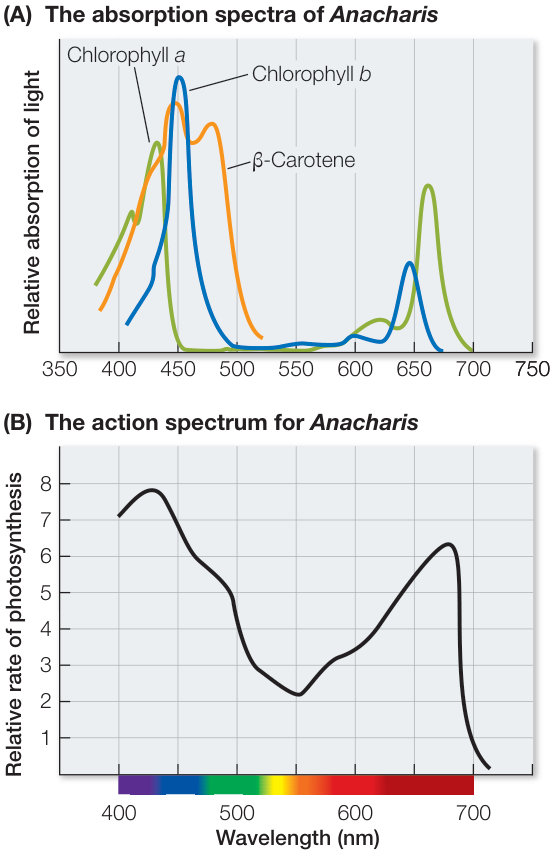
Figure 10.5 Absorption and Action Spectra (A) The three common photosynthetic pigments in plants have characteristic absorption spectra. These pigments are from the common aquarium plant Anacharis. (B) The peaks in the action spectrum for photosynthesis of Anacharis correspond to the peaks in the absorption spectrum of chlorophyll a. Q: Phycobilins are pigments that absorb yellow light. These pigments can transfer their absorbed energy to chlorophyll. How does this occur, thermodynamically?
Light absorption results in photochemical change
The pigment molecules in a photosystem are arranged in a specific orientation adjacent to one another. These are called light-harvesting complexes, or antenna systems. Their name gives away what they do: they absorb light, converting light energy into chemical energy. When a pigment molecule absorbs light, it enters an excited state (see Figure 10.4). This is an unstable situation, and the molecule rapidly returns to its ground state, releasing most of the absorbed energy. So rapid is this process that it is measured in picoseconds (trillionths of a second). Within the antenna systems of a photosystem, the energy released by a pigment molecule (for example, chlorophyll b) is absorbed by other, adjacent pigment molecules. The energy (not as electrons but in the form of chemical energy called resonance) is passed from molecule to molecule until it reaches a chlorophyll a molecule at the reaction center of the photosystem (Figure 10.7).
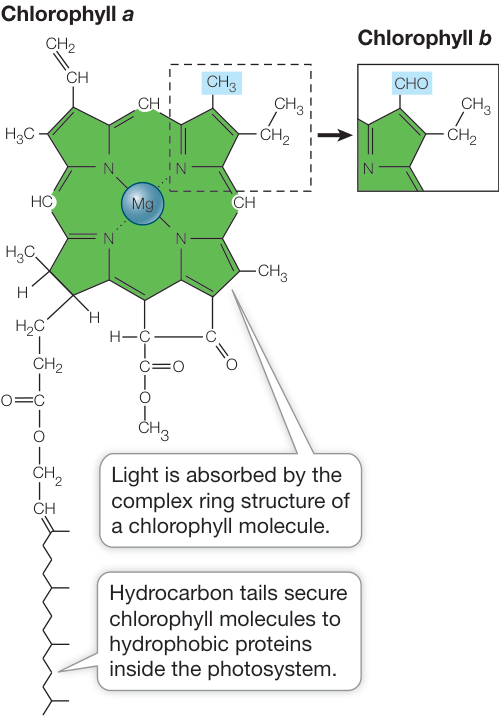
Figure 10.6 Chlorophyll Chlorophyll consists of a complex ring structure (green) and a hydrocarbon tail that anchors it in the hydrophobic region of a membrane in the chloroplast thylakoid.
Before getting to what happens at the reaction center, let’s pause and look at what happens with all the antenna pigments around it. Chlorophyll absorbs blue and red light, which are near the two ends of the visible spectrum (see Figure 10.3). The various accessory pigments absorb light in other parts of the spectrum and thus function to broaden the range of wavelengths that can be used for photosynthesis. You can see this in the action spectrum in Figure 10.5B: Anacharis is able to photosynthesize at wavelengths of light that chlorophyll a doesn’t absorb but that other pigments absorb (e.g., 500 nanometers [nm]). Different photosynthetic organisms have different combinations of accessory pigments. Higher plants and green algae have chlorophyll b (with a structure and absorption spectrum very similar to that of chlorophyll a) and carotenoids such as -carotene, which absorb photons in the blue and blue-green wavelengths. Phycobilins, which are found in red algae and cyanobacteria, absorb various yellow-green, yellow, and orange wavelengths.
Back to the reaction center: A ground-state chlorophyll a molecule (Chl) absorbs the energy from the adjacent chlorophylls and becomes excited (Chl*), but to return to the ground state this chlorophyll does not pass the energy to another pigment molecule—something very different occurs. The reaction center converts the absorbed light energy into chemical energy (see Figure 10.7). The chlorophyll molecule in the reaction center absorbs sufficient energy that it actually gives up its excited electron to a chemical acceptor:
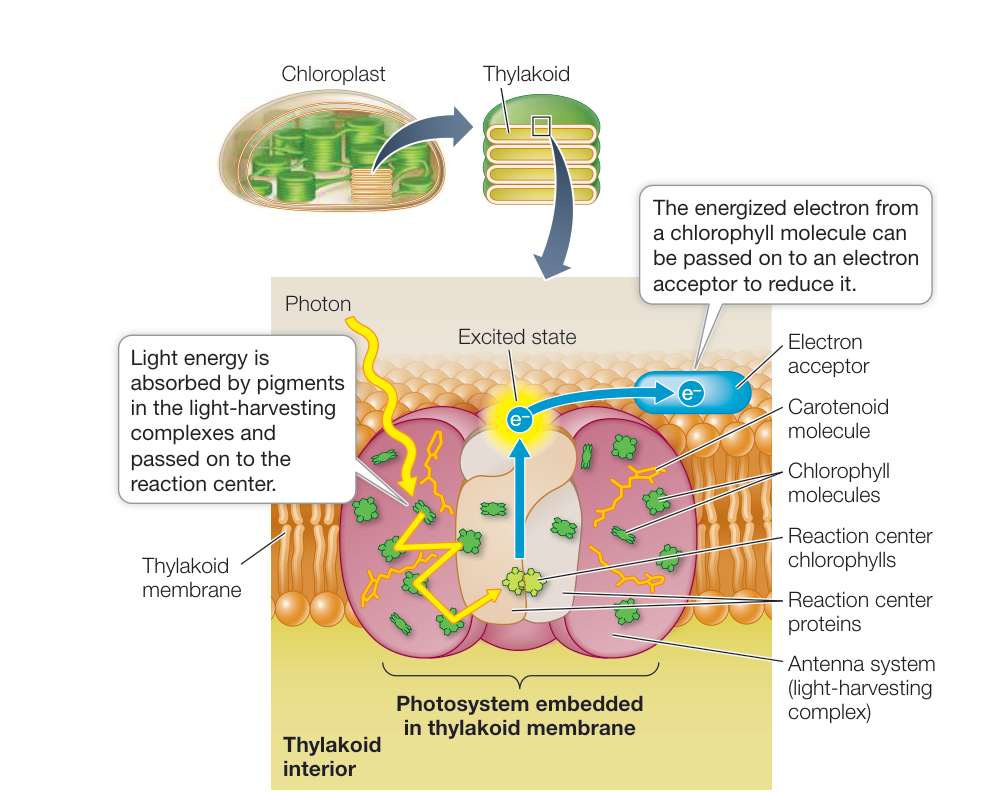
Figure 10.7 Energy Transfer and Electron Transport Chlorophylls and carotenoids are embedded in membrane proteins to form light-harvesting complexes that, combined with other molecules such as electron carriers, form a photosystem. A pigment molecule absorbs a light photon and the energy is transferred in multiple steps to a reaction center chlorophyll a molecule. The excited chlorophyll a transfers its energy to an electron, converting it to chemical-bond energy, which is used to reduce an electron acceptor.
This, then, is the first consequence of light absorption by chlorophyll: the reaction center chlorophyll (Chl*) loses its excited electron in a redox reaction and becomes Chl*. As a result of this transfer of an electron, the chlorophyll gets oxidized, while the acceptor molecule gets reduced.
Reduction leads to ATP and NADPH formation
The electron acceptor that is reduced by Chl* is the first in a chain of electron carriers in the thylakoid membrane. Electrons are passed from one carrier to another in an energetically “downhill” series of reductions and oxidations. The final electron acceptor is NADP+, which gets reduced:
As in mitochondria, ATP is produced chemically in the thylakoid membrane during the process of photophosphorylation, which we will illustrate shortly. The overall process involves two electron transport processes, noncyclic and cyclic. The noncyclic electron transport reactions that use the energy from light to generate ATP and NADPH are illustrated in Figure 10.8.
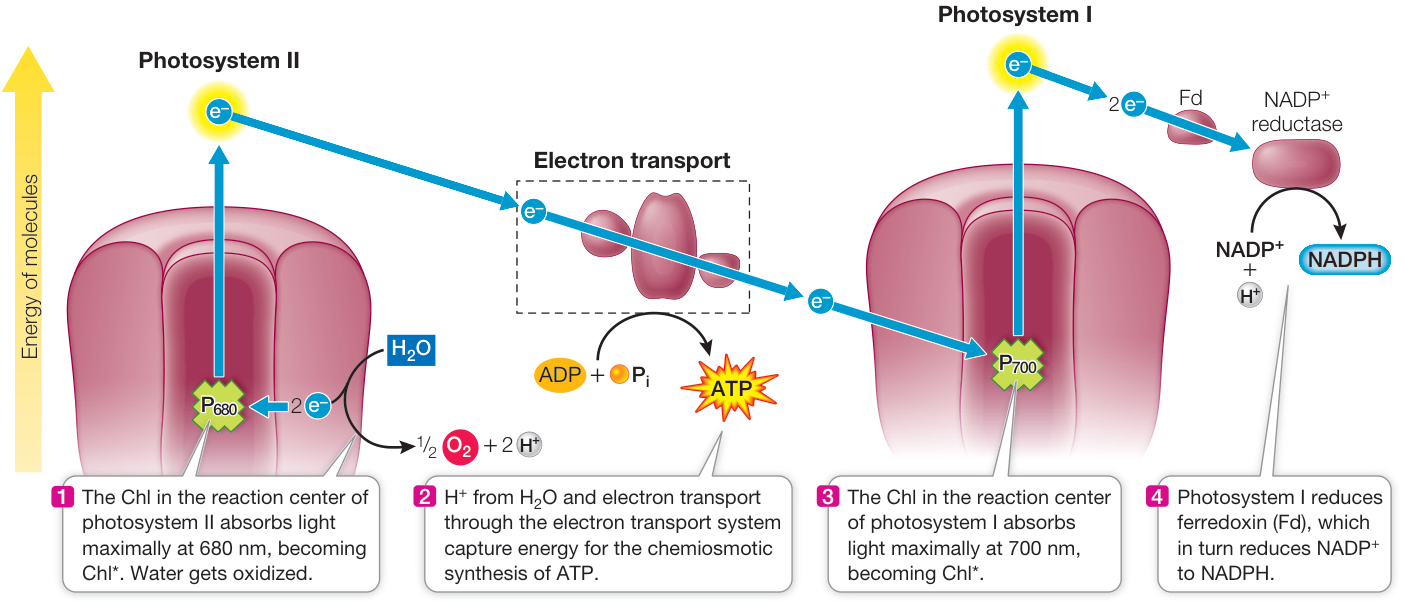
Figure 10.8 Noncyclic Electron Transport Uses Two Photosystems Absorption of light energy by chlorophyll molecules in the reaction centers of photosystems I and II allows them to pass electrons into a series of redox reactions.
Q: An herbicide can act as an electron acceptor, becoming reduced by ferredoxin (Fd). What effect would this have on a plant?
Connect the Concepts The thylakoid membrane has an electron transport system similar to the respiratory chain of mitochondria (see Key Concept 9.3).
Two coordinated photosystems, each with its own reaction center, collaborate to produce ATP and NADPH. Each photosystem is associated with its own group of integral proteins embedded in the thylakoid membrane. To give you an idea of the complexity needed to carry out this function so vital to life on our planet, here is what photosystem II is made up of: 20 proteins + 50 chlorophyll a (only 2 are in the reaction center; the rest are in light-harvesting complexes) + 6 carotenoid molecules (light-harvesting complexes) + 2 plastoquinine molecules.
Let’s look in more detail at what happens in these photosystems, beginning with photosystem II.
PHOTOSYSTEM II Photosystem II has “P680” chlorophylls at its reaction center—so named because they absorb light maximally at 680 nm. After an excited chlorophyll in the reaction center (Chl*) gives up its energetic electron to reduce a chemical acceptor molecule, the chlorophyll lacks an electron and is very unstable. It has a strong tendency to obtain an electron from another molecule to replace the one it lost—in chemical terms, it is a strong oxidizing agent. The replenishing electrons come from water, splitting the H—O—H bonds:
Notice that the source of O2 in photosynthesis is H2O (as demonstrated in Investigating Life: What Is the Chemistry of Photosynthesis, and How Will Increasing CO2 in the Atmosphere Affect It?).
Back to the electron acceptor in the electron transport system: The energetic electrons are passed through a series of membrane-bound carriers to a final acceptor at a lower energy level. As in the mitochondrion, a proton gradient is generated and is used by ATP synthase to make ATP (see the next section).
PHOTOSYSTEM I In photosystem I, which has “P700” chlorophylls at its reaction center, an excited electron from the Chl* at the reaction center reduces an acceptor. The oxidized chlorophyll (Chl+) now obtains an electron, but in this case the electron comes from the last carrier in the electron transport system. This links the two photosystems chemically. They are also linked spatially, with the two photosystems adjacent to one another in the thylakoid membrane. The energetic electrons from photosystem I pass through several molecules and end up reducing NADP+ to NADPH.
Next in the process of harvesting light energy to produce carbohydrates is the series of carbon-fixation reactions. These reactions require more ATP than NADPH. If the pathway we just described—the linear or noncyclic pathway—were the only set of light reactions operating, there might not be sufficient ATP for carbon fixation. Cyclic electron transport makes up for this imbalance. This pathway uses photosystem I and the electron transport system to produce ATP but not NADPH; it is cyclic because an electron is passed from an excited chlorophyll and recycles back to the same chlorophyll (Figure 10.9).
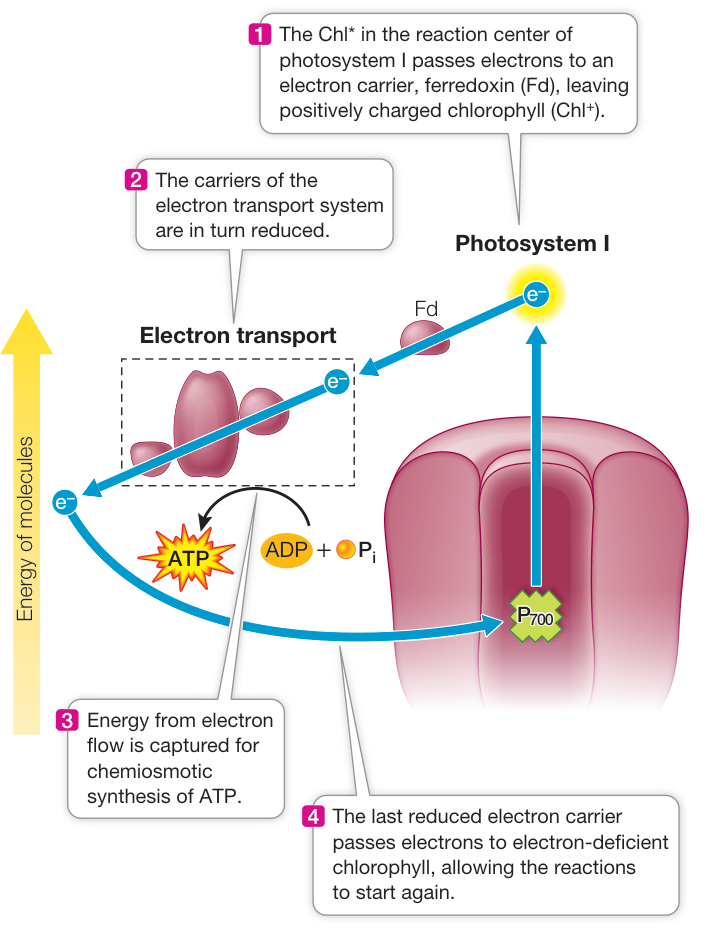
Figure 10.9 Cyclic Electron Transport Traps Light Energy as ATP
Chemiosmosis is the source of the ATP produced in photophosphorylation
In Chapter 9 you learned about the chemiosmotic mechanism for ATP formation in the mitochondrion. A similar mechanism, called photophosphorylation, operates in the chloroplast, where electron transport is coupled to the transport of protons (H+) across the thylakoid membrane, resulting in a proton gradient across the membrane (Figure 10.10).
The electron carriers in the thylakoid membrane are oriented so that protons are transferred from the stroma into the lumen of the thylakoid. Thus the lumen becomes more acidic (higher concentration of protons) compared with the stroma, resulting in an electrochemical gradient across the thylakoid membrane, whose bilayer is not permeable to H+. Water oxidation creates more H+ in the thylakoid lumen, and NADP+ reduction removes H+ in the stroma. Both reactions contribute to the H+ gradient. The high concentration of H+ in the thylakoid space drives the movement of H+ back into the stroma through protein channels
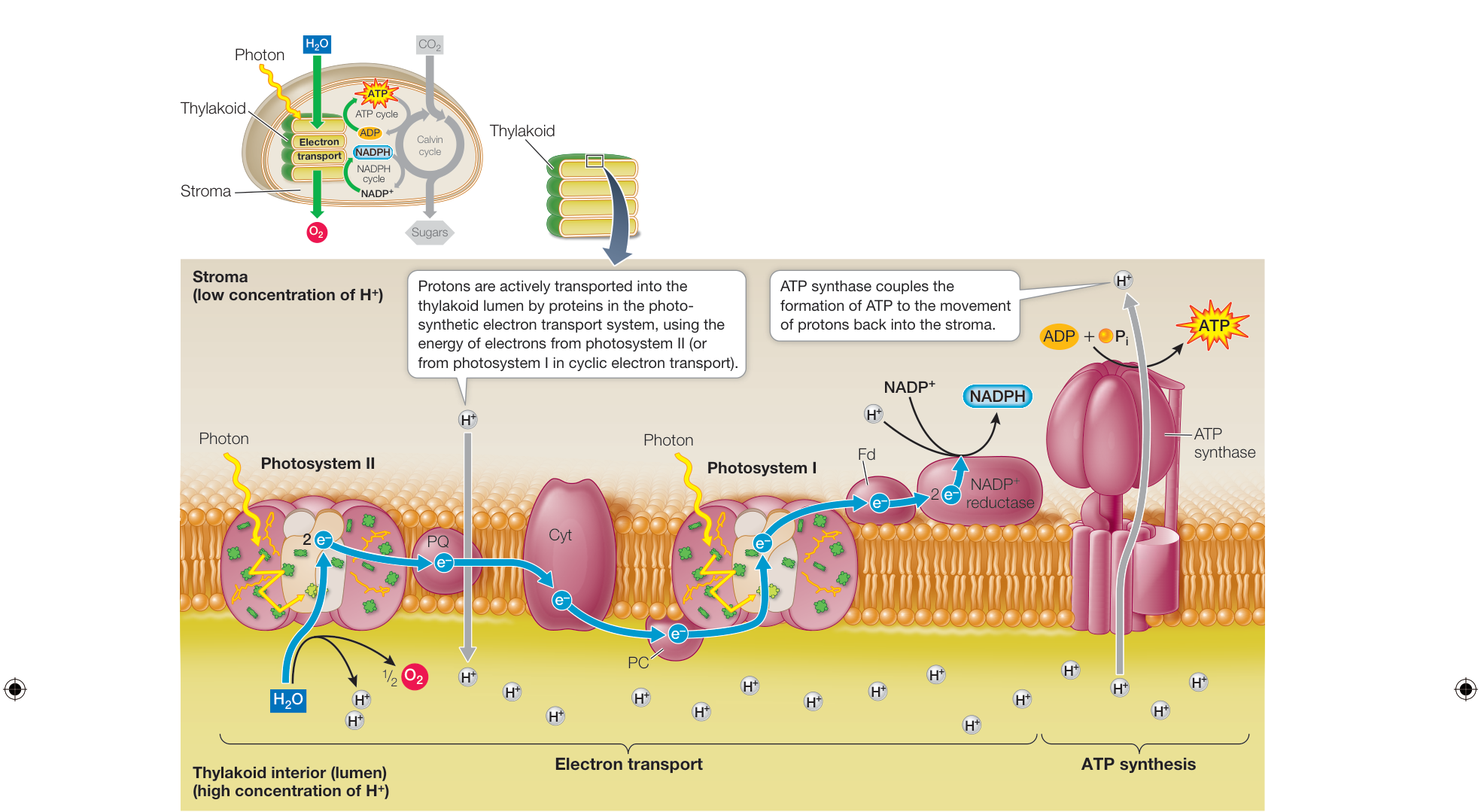
Figure 10.10 Photophosphorylation In the thylakoid membrane, electrons are passed from photosystem I to photosystem I via a series of electron carriers, including plastoquinone (PQ), cytochrome (Cyt), and plastocyanin (PC). From photosystem I the electrons are passed to ferredoxin (Fd) and then to NADP+ reductase. This process results in a proton gradient across the membrane, which drives ATP synthesis. Compare this illustration with Figure 9.13, where a similar process is depicted in mitochondria.
Q: An herbicide binds to plastoquinone and blocks electron transport in photosystem II. How does this kill a plant?
in the membrane. These channels are also enzymes—ATP synthases—that couple the movement of protons to the formation of ATP, as they do in mitochondria (see Figure 9.13). Indeed, the amino acid sequence of chloroplast ATP synthase is about 60% identical to that of human mitochondrial ATP synthase—a remarkable similarity, given that plants and animals had their most recent common ancestor more than a billion years ago. This is testimony to the evolutionary unity of life.
The mechanisms of the two enzymes are similar, but their orientations differ. In chloroplasts, protons flow through the ATP synthase out of the thylakoid lumen into the stroma (where the ATP is synthesized). In mitochondria, the protons flow out of the intermembrane space into the mitochondrial matrix.
Recap and Assess
Conversion of light energy into chemical energy occurs when photons are absorbed by chlorophylls and accessory pigments in the light-harvesting complex within the chloroplast. Light energy is used to drive a series of protein-associated redox reactions in the thylakoid membranes of the chloroplast. In the process of photophosphorylation, two linked photosystems establish a proton gradient across the membrane that drives ATP synthesis.
- How can a pigment molecule lose the energy of an absorbed photon?
- What is the difference between an absorption spectrum and an action spectrum?
- How does cyclic electron transport in photosystem I result in the production of ATP?
You have seen how light energy drives the synthesis of ATP and NADPH in the stroma of chloroplasts. We will now turn to the carbon-fixation reactions of photosynthesis, which use energy-rich ATP and NADPH to reduce and form carbohydrates.
Chemical Energy Trapped in Photosynthesis Is Used to Synthesize Carbohydrates
Learning Objectives
- 10.3.1 Describe the experiment that led to identification of the steps in the Calvin cycle.
- 10.3.2 Explain how light reactions stimulate the Calvin cycle.
Most of the enzymes that catalyze the reactions of fixation are in the stroma of the chloroplast, where those reactions take place. These enzymes use the energy in ATP and NADPH, produced in the light reactions, to reduce to carbohydrates. Therefore, with some exceptions, fixation occurs only in the light.
Experiments elucidated the pathway of carbon fixation
To identify the reactions by which the carbon from ends up in carbohydrates, scientists found a way to label so they could isolate and identify the compounds formed from it during photosynthesis. In the 1950s, Melvin Calvin, Andrew Benson, and their colleagues used radioactively labeled in which some of the carbon atoms were the radioisotope rather than the normal . They were able to trace the chemical pathway of fixation (Figure 10.11). The first molecule that appeared in the pathway was a three-carbon sugar phosphate called 3-phosphoglycerate (3PG) (the is shown in red):
Using successively longer exposures to , Calvin and his colleagues were able to trace the route of as it moved through a series of compounds, including monosaccharides and amino acids. It turned out the moved through a cyclical pathway. In this cycle, the initially bonds covalently to a five-carbon acceptor molecule. The resulting six-carbon intermediate quickly breaks into two three-carbon molecules. As the cycle repeats, a carbohydrate is produced and the initial acceptor is regenerated. This pathway was appropriately named the Calvin cycle.
The initial reaction in the Calvin cycle adds the one-carbon to the five-carbon acceptor molecule ribulose 1,5-bisphosphate (RuBP). The product is an intermediate six-carbon compound, which quickly breaks down and forms two molecules of
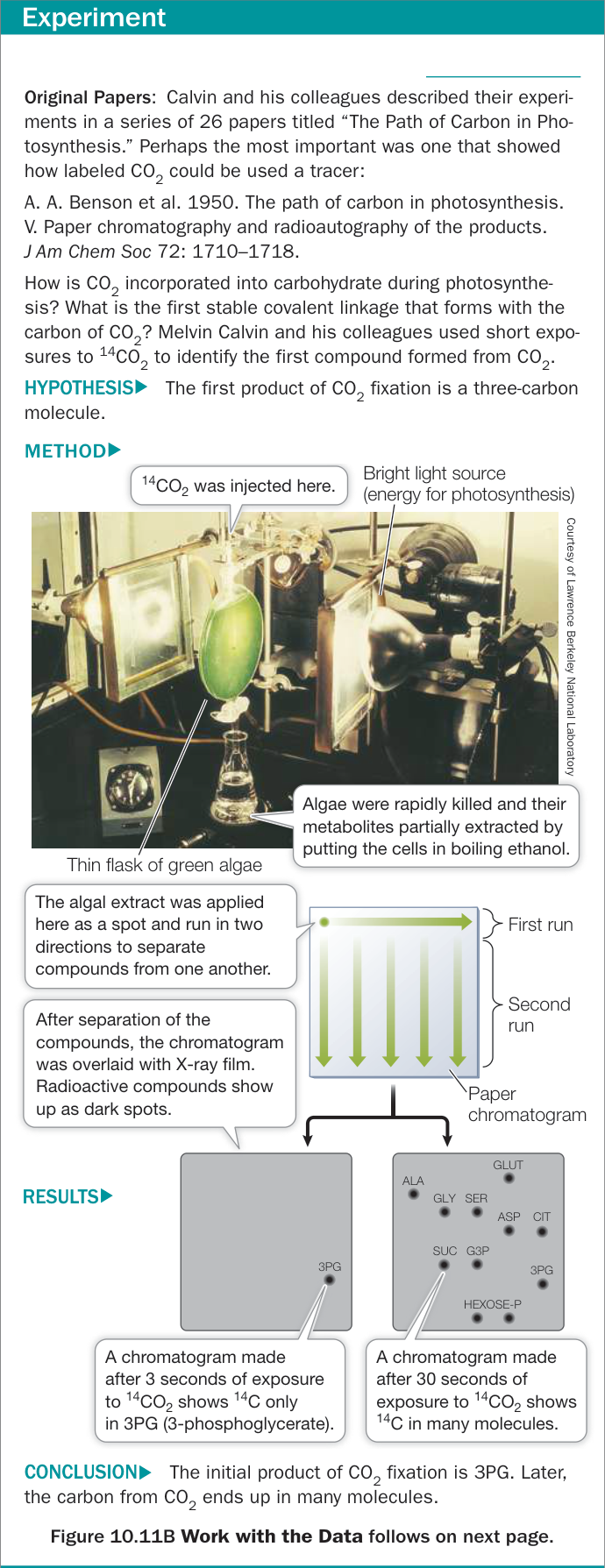
Figure 10.11A Tracing the Pathway of CO2 Figure 10.11A Tracing the Pathway of
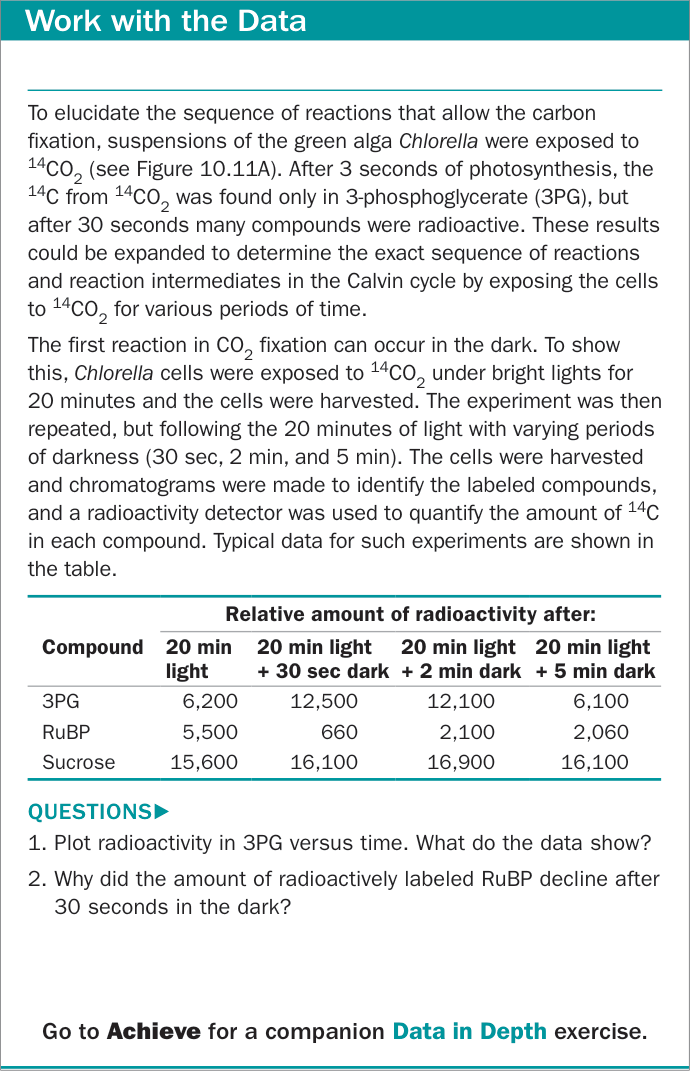
Figure 10.11B Tracing the Pathway of CO2
3PG (Figure 10.12). The intermediate compound is broken down so rapidly that Calvin did not observe radioactive carbon appearing in it first. The enzyme that catalyzes the reaction of CO2 with RuBP, ribulose bisphosphate carboxylase/oxygenase (rubisco), is the most abundant protein in the world! It constitutes up to 50% of all the protein in every plant leaf.
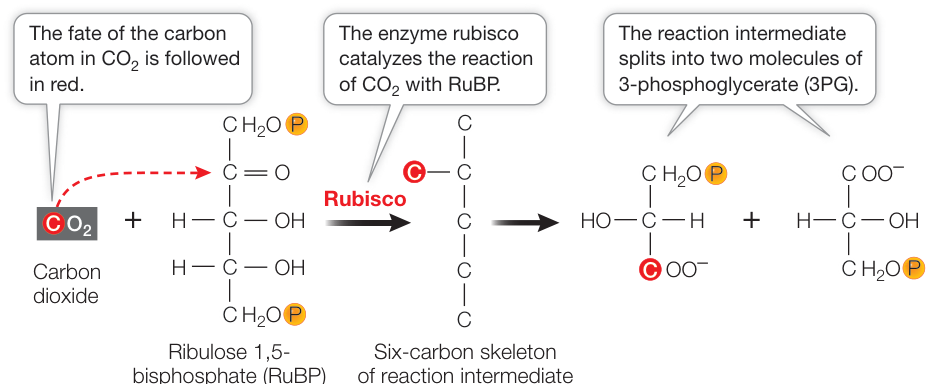
Figure 10.12 RuBP Is the Carbon Dioxide AcceptorIn carbon fixation catalyzed by rubisco, CO2 is added to a five-carbon compound, RuBP. The resulting six-carbon compound immediately splits into two molecules of 3PG.
The Calvin cycle is made up of three processesThe Calvin cycle uses the ATP and NADPH made in the light to reduce CO2 in the stroma to a carbohydrate. As in all biochemical pathways, each reaction is catalyzed by a specific enzyme. The cycle is composed of three distinct processes (Figure 10.13):
- Fixation of CO2. As we have seen, this reaction is catalyzed by rubisco, and its stable product is 3PG.
- Reduction of 3PG to form glyceraldehyde 3-phosphate (G3P). This series of reactions involves a phosphorylation (using the ATP made in the light reactions) and a reduction (coupled to the oxidation of NADPH made in the light reactions).
- Regeneration of the CO2 acceptor, RuBP. Most of the G3P ends up as ribulose monophosphate (RuMP), and ATP is used to convert this compound into RuBP. So for every “turn” of the cycle, one CO2 is fixed and one CO2 acceptor is regenerated.
The product of this cycle is glyceraldehyde 3-phosphate (G3P), which is a three-carbon sugar phosphate, also called triose phosphate:
Glyceraldehyde 3-phosphate (G3P)In a typical leaf, five-sixths of the G3P is recycled into RuBP. There are two fates for the remaining G3P, depending on the time of day and the needs of different parts of the plant:
- Some of the G3P is exported out of the chloroplast to the cytoplasm, where it is converted to hexoses (glucose and fructose). These molecules may be used in glycolysis and mitochondrial respiration to power the activities of photosynthetic cells (see Chapter 9) or they may be converted into the disaccharide sucrose, which is transported out of the leaf to other organs in the plant. There the sucrose is hydrolyzed to its constituent monosaccharides, which can be used as sources of energy or as building blocks for other molecules.
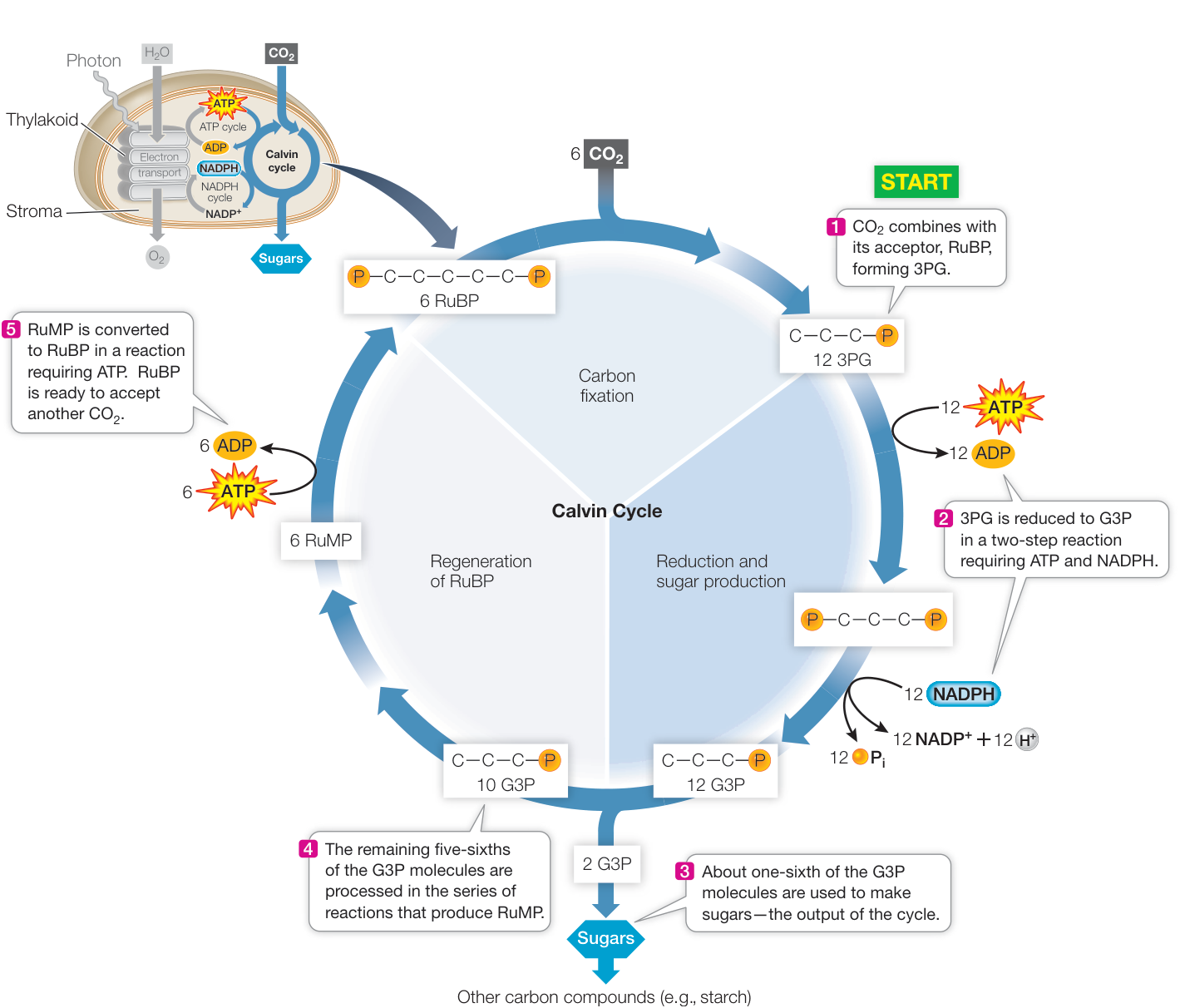
Figure 10.13 The Calvin Cycle The Calvin cycle uses the ATP and NADPH generated in the light reactions and to produce carbohydrate. Six turns of the cycle produce the equivalent of one molecule of glucose, a hexose sugar.
- Some of the G3P is used to synthesize glucose inside the chloroplast. As the day wears on, glucose molecules accumulate and are linked together to form the polysaccharide starch. This stored carbohydrate can then be drawn on during the night so that the photosynthetic tissues can continue to export sucrose to the rest of the plant, even when photosynthesis is not taking place. In addition, starch is abundant in nonphotosynthetic organs such as roots, underground stems, and seeds, where it provides glucose to fuel cellular activities, including plant growth.
The plant uses the carbohydrates produced in photosynthesis to make other molecules, including amino acids, lipids, and the building blocks of nucleic acids—in fact, all the organic molecules in the plant.
Light stimulates the Calvin cycle
As you have seen, the Calvin cycle uses NADPH and ATP, which are generated using energy from light. Two other processes connect the light reactions with this fixation pathway. Both connections are indirect but significant:
- Light-induced pH changes in the stroma activate some Calvin cycle enzymes. Proton transfer from the stroma into the thylakoid lumen causes an increase in the pH of the stroma from 7 to 8 (a tenfold decrease in concentration) that favors the activation of rubisco.
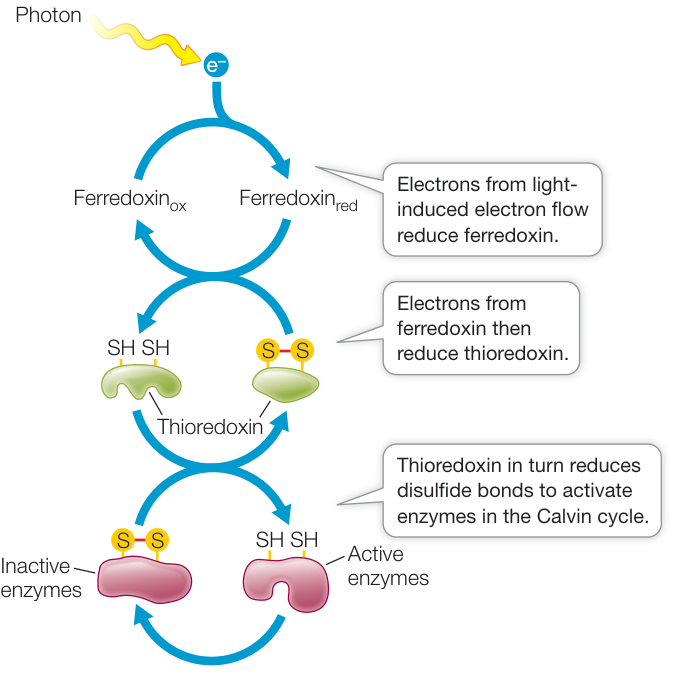
Figure 10.14 The Photochemical Reactions Stimulate the Calvin Cycle By reducing (breaking) disulfide bridges, electrons from the light reactions activate enzymes in fixation.
- Light-induced electron transport reduces disulfide bridges in four of the Calvin cycle enzymes, thereby activating them (Figure 10.14). When ferredoxin is reduced in photosystem I (see Figure 10.8), it passes some electrons to a small, soluble protein called thioredoxin, and this protein passes electrons to four enzymes in the fixation pathway. Reduction of the sulfurs in the disulfide bridges of these enzymes (see Figure 3.6) forms —SH groups and breaks the bridges. The resulting changes in their three-dimensional shapes activate the enzymes and increase the rate at which the Calvin cycle operates.
Recap and Assess
ATP and NADPH produced in the light reactions power the synthesis of carbohydrates by the Calvin cycle. This cycle fixes , reduces it, and regenerates the acceptor, RuBP, for further fixation.
- What experiments led to the identification of 3PG as the initial product of carbon fixation?
- In what ways does light stimulate the Calvin cycle?
- Both photosynthetic electron transport and the Calvin cycle stop in the dark. Which specific reaction stops first? Which stops next? Continue answering the question “Which stops next?” until you have explained why both pathways have stopped.
Although all green plants carry out the Calvin cycle, some plants have evolved variations on, or additional steps in, the carbon-fixation reactions. These variations and additions have permitted plants to adapt to and thrive in certain environmental conditions. Let’s look at these environmental limitations and the metabolic bypasses that have evolved to circumvent them.
Plants Have Adapted Photosynthesis to Environmental Conditions
Learning Objectives
10.4.1 Explain how and why plants maintain a high concentration of around rubisco.
10.4.2 Explain how CAM plants carry out carbon fixation separately from Calvin cycle reactions.
In addition to fixing during photosynthesis, rubisco can also react with . This reaction, which leads to a process called photorespiration, lowers the overall rate of fixation in some plants. After examining this problem, we’ll look at some biochemical pathways and features of plant anatomy that compensate for the limitations of rubisco.
Photorespiration reduces overall fixation
Rubisco is the key enzyme for life on Earth. Yet it is inefficient. Most enzymes catalyze hundreds to thousands of reactions per second (see Key Concept 8.3); rubisco catalyzes about three conversions of per second. To satisfy the huge need for this reaction, plants make a lot of rubisco. Indeed, it constitutes up to half of the protein molecules in every leaf and is the single most abundant protein on Earth. Also, in addition to having binding sites for ribulose-1,5-bisphosphate and , there is a binding site on the enzyme for . So rubisco is an oxygenase as well as a carboxylase:
- Rubisco is a carboxylase when it adds to RuBP.
- Rubisco is an oxygenase when it adds to RuBP.
It is not clear why rubisco has oxygenase activity. One hypothesis is that since there was little or no in the ancient atmosphere when rubisco first appeared (see Key Concept 4.2), the active site did not need to be specific for . That means that the oxygenase activity is an evolutionary relic with no current role. In any case, binding of and catalysis result in the formation of a poison, phosphoglycolate:
The 3PG can enter the Calvin cycle. But phosphoglycolate, a two-carbon molecule, cannot—and moreover is an inhibitor of reactions in the Calvin cycle. So the plant cell has a pathway to get rid of phosphoglycolate and recover its carbons for entry into the Calvin cycle. Unfortunately, while the elimination of phosphoglycolate is efficient, recovery of the carbons is not and some is lost as . The phosphoglycolate is hydrolyzed to glycolate, which diffuses into peroxisomes (Figure 10.15). There, a series of reactions converts it into the amino acid glycine:
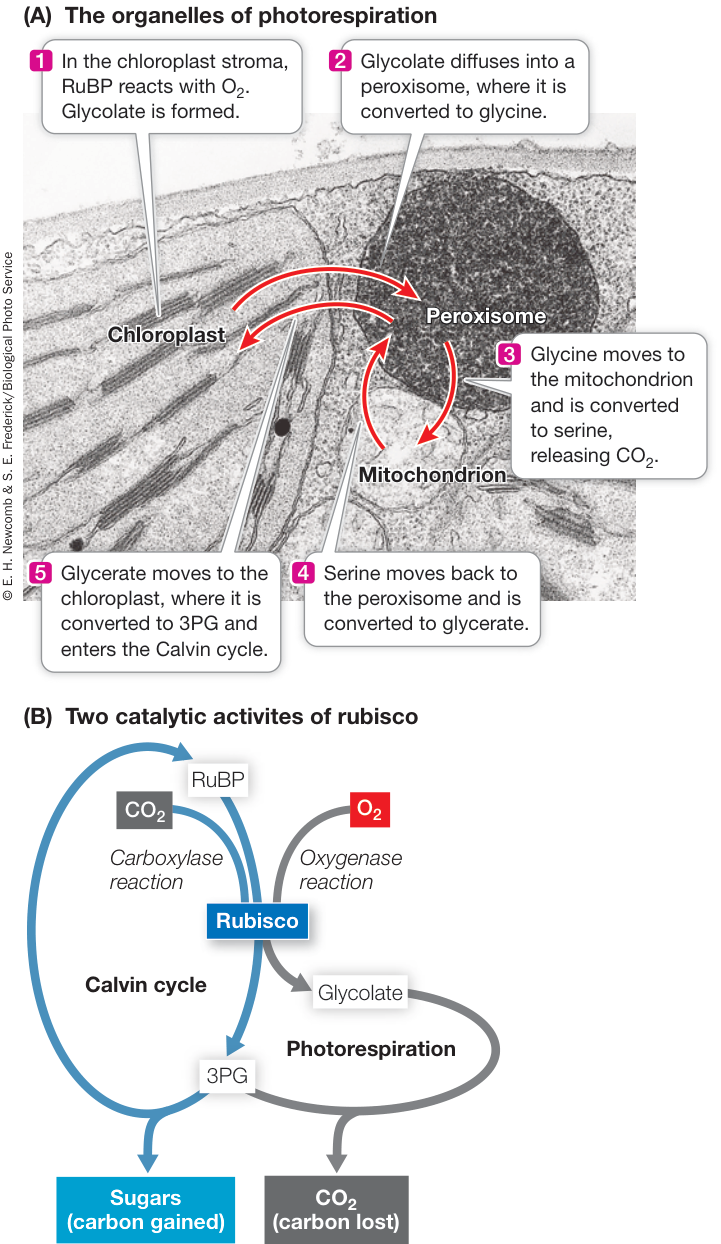
Figure 10.15 The Photorespiration Pathway (A) The reactions of photorespiration take place in the chloroplasts, peroxisomes, and mitochondria. (B) Overall, photorespiration consumes and releases . Q: Why is photorespiration considered a wasteful process in terms of plant growth?
The glycine then diffuses into a mitochondrion, where two glycine molecules are converted in a series of reactions into the amino acid serine, releasing :
The serine moves into the peroxisome, where it is converted to glycerate. The glycerate then moves into the chloroplast, where it is phosphorylated to make 3PG, which enters the Calvin cycle.
Note that it takes two phosphoglycolate molecules from Equation 10.11 to produce the two glycines used in Equation 10.13. So overall:
This pathway thus reclaims 75% of the carbons from phosphoglycolate for the Calvin cycle. In other words, the reaction of RuBP with instead of reduces the net carbon fixed by the Calvin cycle by 25%.
What determines whether rubisco acts as an oxygenase or a carboxylase? In today’s atmosphere the concentration of is 21% and that of is 0.04%. You would think that if there were an “even competition” between and for rubisco that , with its higher concentration, would be favored. But such is not the case. It turns out that the affinity (binding) of rubisco for is much stronger than it is for , so in normal air inside a leaf, fixation is favored even though the concentration of in the air is far lower than that of . It is when there is an even higher concentration of in the leaf relative to outside that competes with the , and rubisco combines RuBP with rather than with . This oxygenase activity reduces the overall amount of that can be converted into carbohydrates, and may play a role in limiting plant growth.
- Relatively low and high concentrations within the leaf favor carboxylase activity.
- Relatively high and low concentrations within the leaf favor oxygenase activity.
Under what conditions inside the leaf does the air have higher and lower , favoring the oxygenase activity? On a hot, dry day, small pores in the leaf surface called stomata close to prevent water from evaporating from the leaf (see Figure 10.1). But stomata closure also prevents gases from entering and leaving the leaf. If stomata are closed, the concentration in the leaf falls as is used up in photosynthetic reactions, and the concentration rises because of these same reactions where water is used to form (see Investigating Life: What Is the Chemistry of Photosynthesis, and How Will Increasing in the Atmosphere Affect It?). As the ratio of to falls, the oxygenase activity of rubisco is favored. The pathway is called photorespiration because it consumes and releases and because it occurs only in the light (mediated by the same enzyme activation processes that we mentioned earlier with regard to the Calvin cycle).
plants undergo photorespiration but plants do not
Plants differ in how they fix , and can be distinguished as or plants, based on whether the first product of fixation is a three-or four-carbon molecule. In plants such as roses, wheat, and rice, the first product is the three-carbon molecule 3PG—as we have just described for the Calvin cycle. In these plants the cells of the mesophyll, which makes up the main body of the leaf, are full of chloroplasts containing rubisco (Figure 10.16A). On a hot day, these leaves close their stomata to conserve water, and as a result, rubisco acts as an oxygenase as well as a carboxylase, and photorespiration occurs.
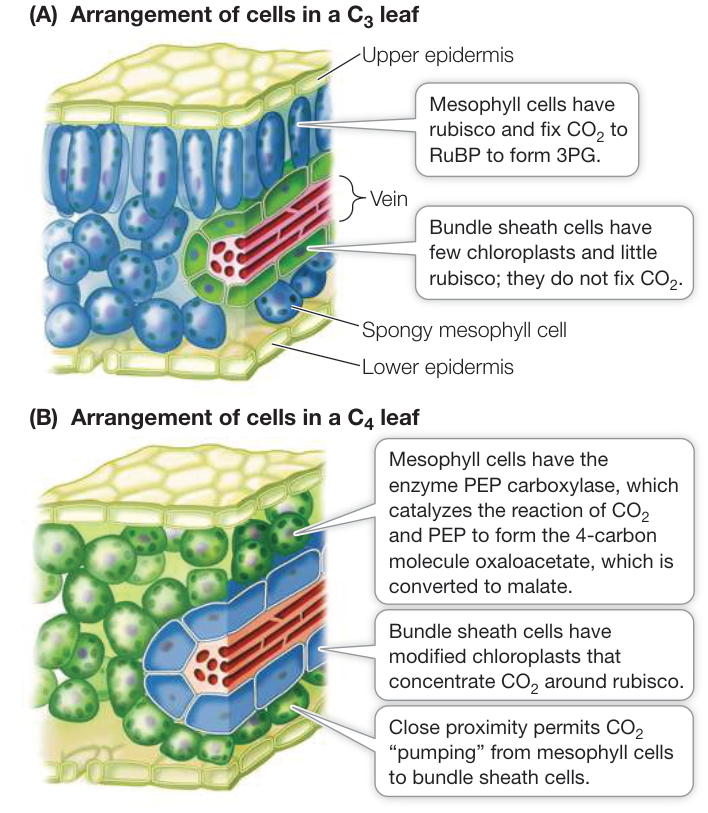
Figure 10.16 Leaf Anatomy of C3 and C4 Plants Carbon dioxide fixation occurs in different organelles and cells of the leaves in C3 plants (A) and C4 plants (B). Cells that are tinted blue have rubisco. Activity 10.2 C3 and C4 Leaf Anatomy
C4 plants—8,000 species that include corn, sugarcane, and tropical grasses—make the four-carbon molecule oxaloacetate as the first product of CO2 fixation (Figure 10.16B). On a hot day, they partially close their stomata to conserve water, but their rate of photosynthesis does not fall. What do they do differently?
C4 plants have evolved a mechanism that increases the concentration of CO2 around the rubisco enzyme while at the same time isolating the rubisco from atmospheric O2. Thus in these plants the carboxylase reaction is favored over the oxygenase reaction; the Calvin cycle operates, but photorespiration does not occur. This mechanism involves the initial fixation of CO2 in the mesophyll cells and then the transfer of the fixed carbon (as a four-carbon molecule) to the bundle sheath cells, where the fixed CO2 is released for use in the Calvin cycle (Figure 10.17A). The bundle sheath cells are located in the interior of the leaf where less atmospheric O2 can reach them than reaches cells near the surface of the leaf.
The first enzyme in the C4 carbon fixation process, called PEP carboxylase, is present in the cytosol of mesophyll cells near the
(A) Carbon fixation by C4 plants
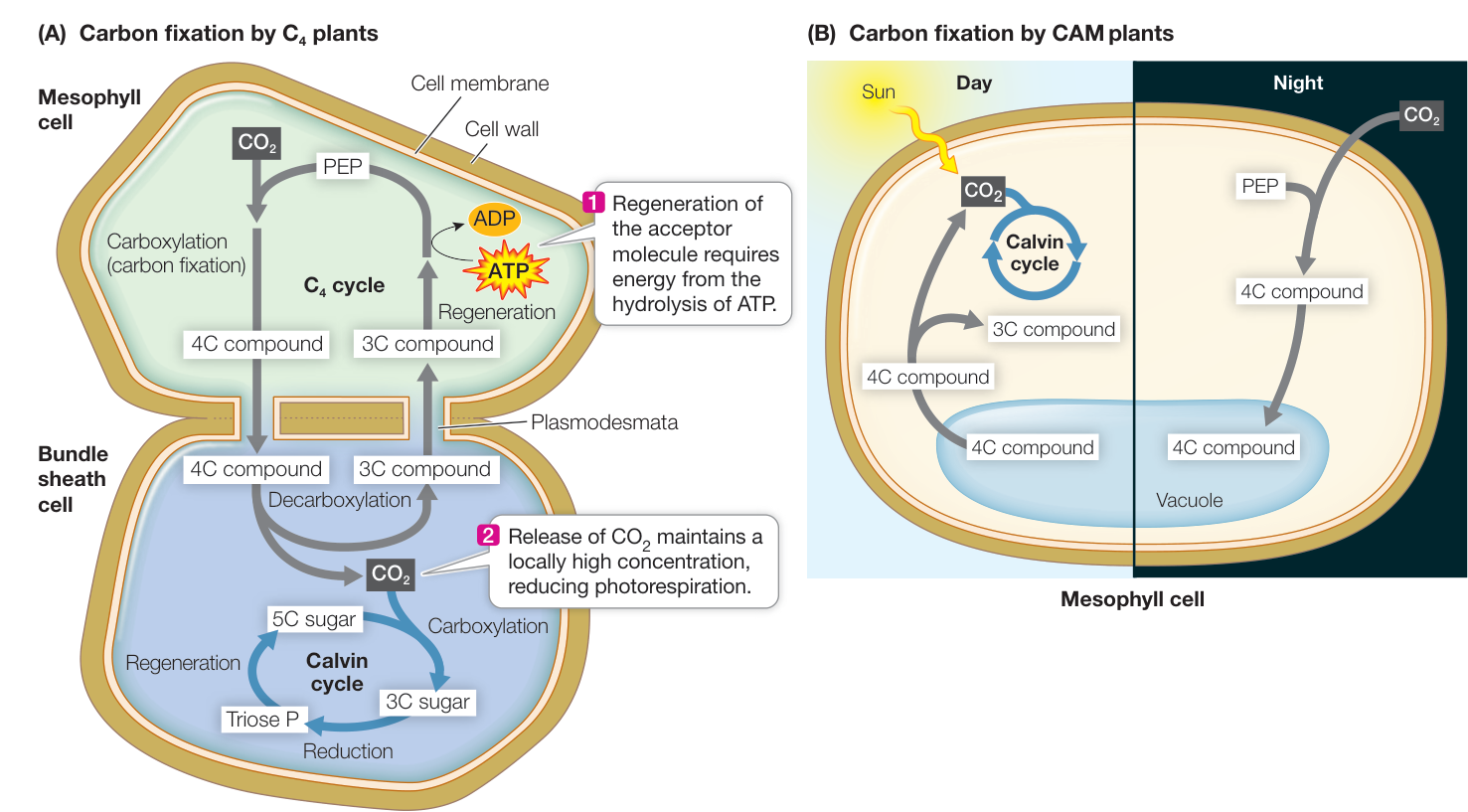
Figure 10.17 Adaptations for Efficiency in Photosynthesis C4 and CAM plants have different adaptations for fixing CO2. 3C, 4C, and 5C indicate the number of carbon atoms in compounds. (A) In C4 plants, CO2 is fixed initially in the mesophyll cells but enters the Calvin cycle in the bundle sheath cells. (B) In CAM plants, CO2 is initially fixed at night and then enters the Calvin cycle during the day. (B after Sabine Deviche, © Arizona Board of Regents/ASU Ask A Biologist; CC BY-SA 3.0. https://askabiologist.asu.edu/cam-plants) (B) Carbon fixation by CAM plants Q: What is the major difference between C4 plants and CAM plants in terms of CO2 fixation and the Calvin cycle?
leaf’s surface. This enzyme combines with a three-carbon acceptor compound, phosphoenolpyruvate (PEP), to produce the four-carbon fixation product, oxaloacetate. PEP carboxylase has two advantages over rubisco:
- It does not have oxygenase activity.
- It fixes even at very low levels.
So even on a hot day when the stomata are partially closed and the ratio of to rises, PEP carboxylase just keeps on fixing .
Oxaloacetate is converted to malate, which diffuses out of the mesophyll cells and into the bundle sheath cells (see Figure 10.16B). (Some plants convert the oxaloacetate to aspartate instead of malate, but we discuss only the malate pathway here.) The bundle sheath cells contain modified chloroplasts that are designed to concentrate around the rubisco. There, the four-carbon malate loses one carbon (is decarboxylated), forming and pyruvate. The latter moves back to the mesophyll cells where the three-carbon acceptor compound, PEP, is regenerated at the expense of ATP. So the “expenditure” of ATP in the mesophyll cell “pumps up” the concentration around rubisco in the bundle sheath cell, ensuring that rubisco will function as a carboxylase and begin the Calvin cycle.
Under relatively cool or cloudy conditions, plants have an advantage over plants in that they don’t expend energy to “pump up” the concentration of near rubisco. But this advantage begins to be outweighed under conditions that favor photorespiration, such as warmer seasons and climates. Under these conditions plants have the advantage, especially if there is ample light to supply the extra ATP required for photosynthesis. For example, Kentucky bluegrass is a plant that thrives on lawns in April and May. But in the heat of summer it does not do as well, and Bermuda grass, a plant, takes over the lawn. The same is true on a global scale for crops: plants such as soybean, wheat, and barley have been adapted for human food production in temperate climates, whereas plants such as corn and sugarcane originated and are still grown in the tropics.
THE EVOLUTION OF FIXATION PATHWAYS plants are more ancient than plants. Whereas photosynthesis appears to have begun about 2.5 billion years ago, plants appeared about 12 million years ago. A possible factor in the emergence of the pathway is the decline in atmospheric . When dinosaurs dominated Earth 100 million years ago, the concentration of in the atmosphere was four times what it is now. As levels declined thereafter, the plants would have gained an advantage over their counterparts in high-temperature, high-light environments.
CAM plants also use PEP carboxylase
Other plants besides the plants use PEP carboxylase to fix and accumulate . They include some water-storing plants (succulents) of the family Crassulaceae, many cacti, pineapples, and several other kinds of flowering plants. The metabolism of these plants is called crassulacean acid metabolism, or CAM, after the family of succulents in which it was discovered. CAM is much like the metabolism of plants in that is initially fixed into a four-carbon compound (Figure 10.17B). But in CAM plants the initial fixation and the Calvin cycle are separated in time rather than space:
- At night, when it is cooler and water loss is minimized, the stomata open. is fixed in mesophyll cells to form the four-carbon compound oxaloacetate, which is converted into malate and stored in the vacuole.
- During the day, when the stomata close to reduce water loss, the accumulated malate is shipped from the vacuole to the chloroplasts, where its decarboxylation supplies the for the Calvin cycle, and the light reactions supply the necessary ATP and NADPH.
Table 10.1 compares photosynthesis in , , and CAM plants.
Recap and Assess
Rubisco catalyzes the carboxylation of RuBP to form two 3PGs, and the oxygenation of RuBP to form one 3PG and one phosphoglycolate. The diversion of rubisco to its oxygenase function decreases net fixation. photosynthesis and CAM allow plants to fix under warm, dry conditions when stomata are closed and entry into the leaf is limited.
- How do plants keep the concentration of around rubisco high, and why?
- Describe CAM plants and explain how they can temporally segregate fixation from the Calvin cycle.
Table 10.1 Comparison of Photosynthesis in , , and CAM Plants
Now that you understand how photosynthesis produces carbohydrates, let’s see how the pathways of photosynthesis are connected to other metabolic pathways.
Photosynthesis Is an Integral Part of Plant Metabolism
Learning Objectives
- 10.5.1 Identify the metabolic intermediates that link photosynthesis to other metabolic pathways.
- 10.5.2 Explain the efficiency of energy flow as it moves from the environment through living organisms on Earth.
Green plants are autotrophs and can synthesize all the molecules they need from simple starting materials: , , phosphate, sulfate, ammonium ions (), and small quantities of other mineral nutrients. Plants use the carbohydrates generated in photosynthesis to provide energy for processes such as active transport and anabolism. Both cellular respiration and fermentation can occur in plants, although the former is far more common. Unlike photosynthesis, plant cellular respiration occurs all the time in both the light and the dark.
Photosynthesis interacts with other metabolic pathways
Photosynthesis and respiration are closely linked through the Calvin cycle (Figure 10.18). The partitioning of G3P, the product of the Calvin cycle, is particularly important:
- Some G3P from the Calvin cycle enters glycolysis and is converted into pyruvate in the cytosol. This pyruvate can be used in cellular respiration for energy, or its carbon skeletons can be used in anabolic reactions to make lipids, proteins, and other carbohydrates (see Figure 9.18).
- Some G3P can enter a pathway that is the reverse of glycolysis (gluconeogenesis; see Key Concept 9.5). In this case, hexose phosphates (hexose P) and then sucrose are formed and transported to the nonphotosynthetic tissues of the plant (such as the root).
Energy flows from sunlight to reduced carbon in photosynthesis, then to ATP in respiration. Energy can also be stored in the bonds of macromolecules such as polysaccharides, lipids, and proteins. For a plant to grow, energy storage (as body structures) must exceed energy release; that is, overall carbon fixation by photosynthesis must exceed respiration. This principle is the basis of the ecological food chain, as you will see in later chapters.
Connect the Concepts Chapter 56 describes the sequence of energy flow through a community, including food chains and food webs.
Photosynthesis provides most of the energy that we need for life. Given the uncertainties about the future of photosynthesis (because of changes in levels and climate change), it would be wise to seek ways to improve the efficiency of photosynthesis. Figure 10.19 shows the various ways in which solar energy is used by plants or lost. In essence, only about 5% of the sunlight that reaches Earth is converted into plant growth. The inefficiencies of photosynthesis involve basic chemistry and physics (some light
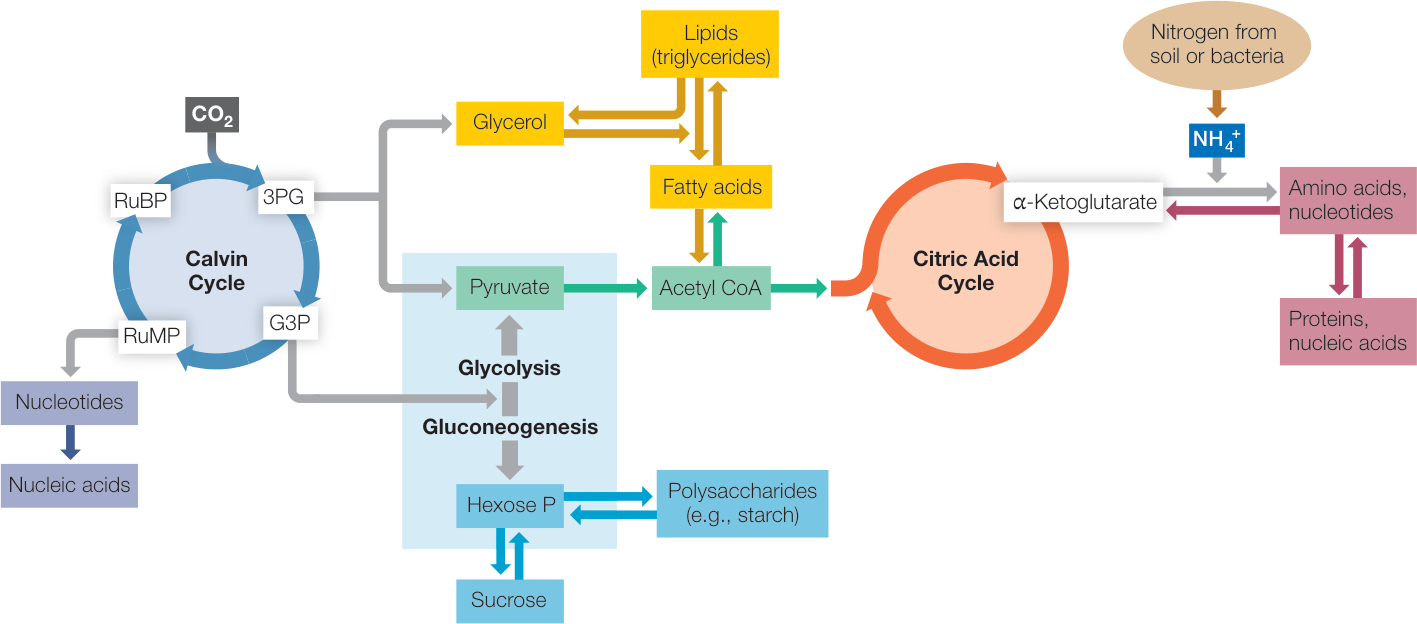
Figure 10.18 Metabolic Interactions in a Plant Cell The products of the Calvin cycle are used in the reactions of cellular respiration (glycolysis and the citric acid cycle).
Q: What is the route of a carbon atom in released in the air from the burning of fossil fuel by a gasoline-powered car to a protein in wheat bread?
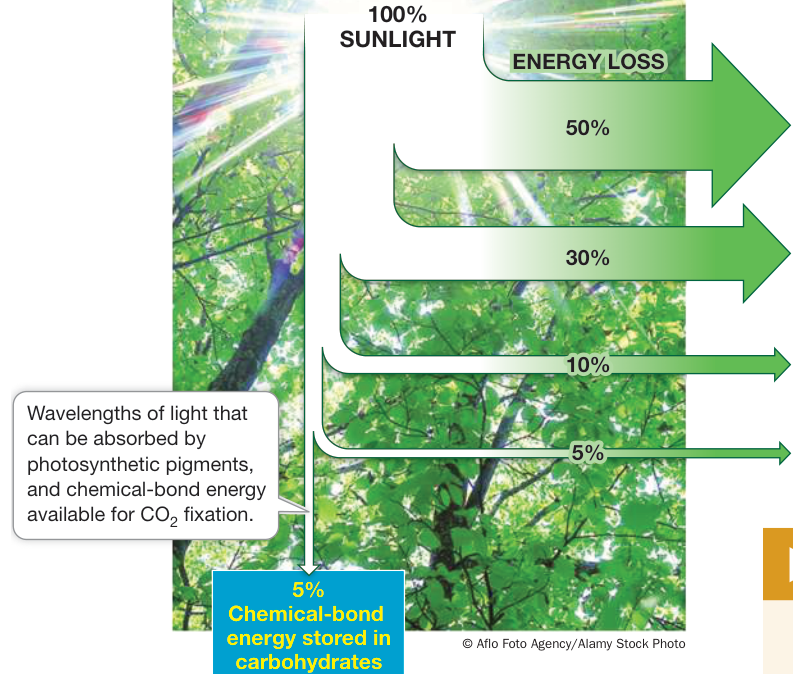
Figure 10.19 Energy Losses in Photosynthesis Photosynthetic pathways preserve at most about 5% of the Sun’s energy input as chemical energy in carbohydrates.
energy is not absorbed by photosynthetic pigments) as well as biology (plant anatomy and leaf exposure, the oxygenase reaction of rubisco, and inefficiencies in metabolic pathways). While it is hard to change chemistry and physics, biologists might be able to use their knowledge of plants to improve on the basic biology of photosynthesis. This could result in a more efficient use of resources and better food production.
Connect the Concepts Plants have many anatomical and physiological adaptations to improve the efficiency of photosynthesis. See Chapter 37.
Recap and Assess
The products of photosynthesis are used in glycolysis and the citric acid cycle, as well as in the synthesis of lipids, proteins, and other large molecules.
- How do common intermediates link the pathways of glycolysis, the citric acid cycle, and photosynthesis?
- Why is at most 5% of the solar radiation that reaches Earth converted to plant growth?
Investigating Life
QA What is the chemistry of photosynthesis, and how will it be affected by rising atmospheric CO2?
The FACE experiments and other data point to several effects of rising CO2 on photosynthesis and plant biology. First, higher CO2 levels generally lead to increased photosynthesis. This is especially true for C3 plants such as wheat and rice, in which rubisco is sensitive to the CO2:O2 ratio in the leaf. With more CO2, this ratio will favor the Calvin cycle and carbohydrate synthesis, as opposed to the fixation of O2, which results in photorespiration. However, in the future this may be offset by climate change: the rate of photorespiration increases with increased temperature, so the greenhouse effect of CO2 may counteract the photosynthetic effect. Second, increased photosynthesis results in more root growth for the plants, which in turn improves their ability to remove nitrogen and water from the soil. (You will learn more about this in Chapter 35) This will stimulate plant growth in the short term, but again, climate changes resulting in drought and heat stress could counteract these beneficial effects. Third, for unknown reasons, seeds and grains from plants grown in elevated CO2 have reduced contents of protein and iron. This could have adverse effects on human nutrition.
Future directions
As the human population rises and land for farming is limited, we are challenged to improve the productivity of crops. A significant increase in overall crop productivity would have global consequences. Increased atmospheric CO2 will not have a great effect on C4 plants. But the C4 pathway accounts for about 25% of all net carbon fixed. Some important species, such as corn, sorghum, and sugarcane, use the C4 pathway, but the major grain crops such as rice do not. An intensive research program is under way to understand the genetic control of the development of the C4 pathway, including not just the enzymes involved but also how the distinctive leaf anatomy develops. This research may lead to greater use of the C4 pathway, and its related increase in productivity in more plant species in a higher-CO2 world.
Michigan Technological University/US DOE
You should be able to relate each summary to the adjacent figures. If you go to this visual summary in Achieve, you can follow links to figures, animations, activities, and simulations that will help you consolidate the material.
Visual Summary
Photosynthesis Uses Light to Make Carbohydrates
- ■ In photosynthesis, the energy of sunlight is captured and used to convert into more complex carbon-containing compounds.
- ■ In the light reactions, light energy is converted into chemical-bond energy in the form of ATP and NADPH.
- ■ In the carbon-fixation reactions, energy in ATP and NADPH is used to reduce , forming carbohydrates.
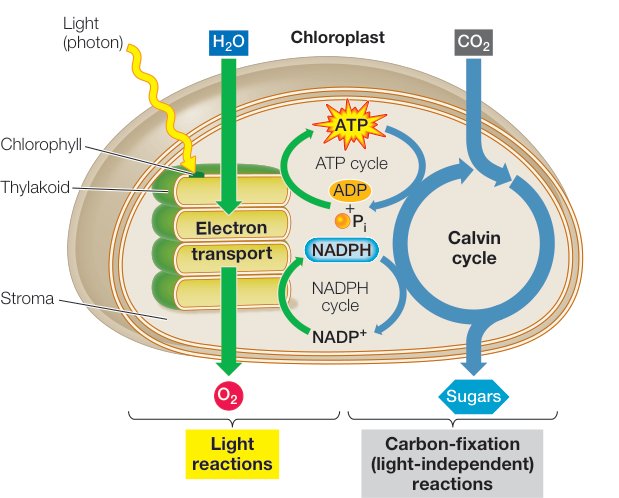
Figure 10.2
Questions
- How is the chemical-bond energy different in ATP and NADPH?
- The overall reaction of photosynthesis appears to be the reverse of the reactions of cellular respiration. Are they two sides of a reversible reaction?
Photosynthesis Converts Light Energy into Chemical Energy
- ■ Light is a form of electromagnetic radiation. It is emitted in particle-like packets called photons but has wavelike properties.
- ■ Photosynthetic pigments, notably chlorophylls and carotenoids, embedded in chloroplast membrane proteins absorb light energy, which is transferred to a chlorophyll reaction center in a photosystem.
- ■ Excited electrons in the reaction center are transferred to a molecule, reducing it.
- ■ Noncyclic electron transport uses photosystems I and II to produce ATP, NADPH, and . Cyclic electron transport uses only photosystem I and produces only ATP. Both systems generate ATP via the electron transport system.
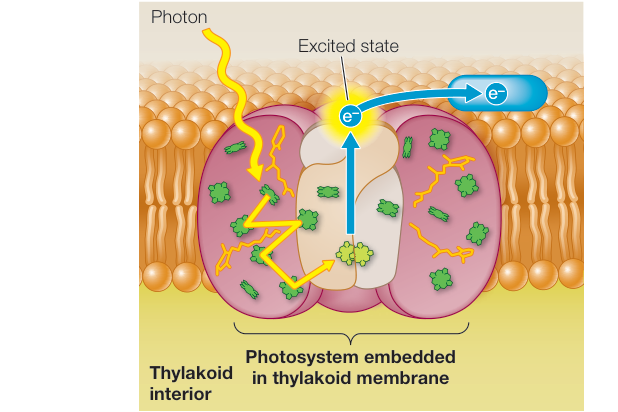
Figure 10.7
Questions
- If an electron acceptor was not present or able to be reduced in a photosystem, what would be the fate of the energy in excited chlorophyll after it absorbed light?
- What is the difference between cyclic and noncyclic electron transport?
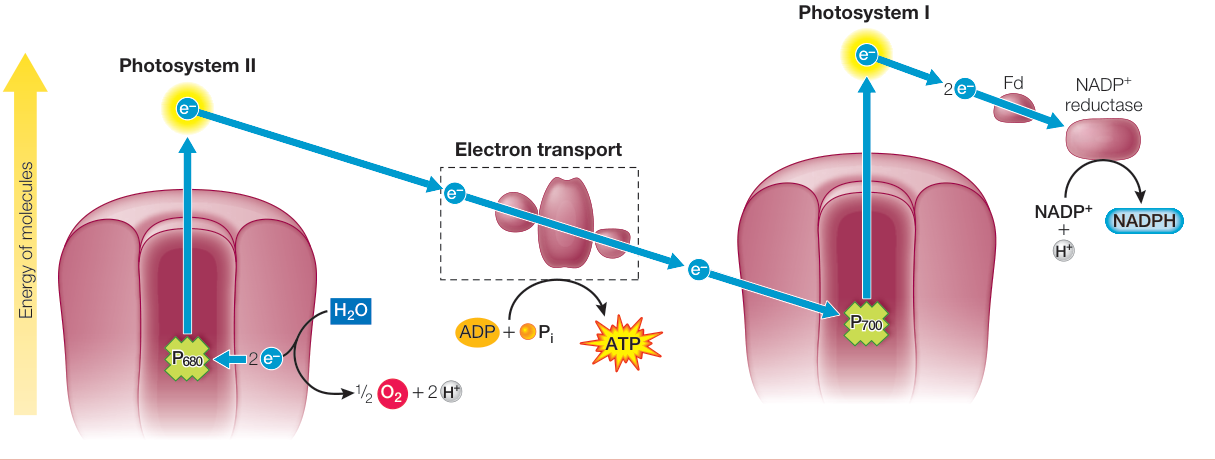
Figure 10.8
- RuBP is the initial acceptor, and 3PG is the first stable product of fixation
- The Calvin cycle makes carbohydrates from . The cycle consists of three processes: fixation of , reduction and carbohydrate production, and regeneration of RuBP.
Questions
- What are the roles of 3PG (3-phosphoglycerate) and G3P (glyceraldehyde 3-phosphate) in the carbon-fixation reactions of photosynthesis?
- Is the carbon-fixation process of photosynthesis truly independent of light?
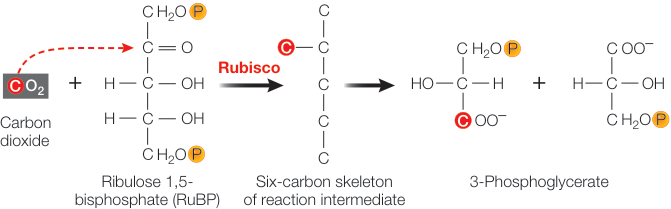
Figure 10.12
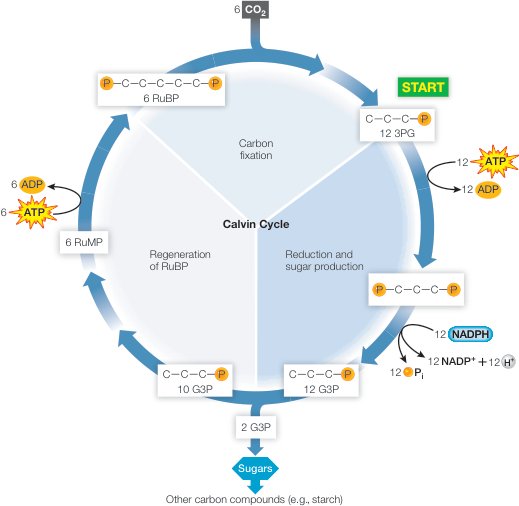
Figure 10.13
Plants Have Adapted Photosynthesis to Environmental Conditions
- Rubisco can catalyze a reaction between and RuBP in addition to the reaction between and RuBP. At high temperatures and low concentrations, the oxygenase function of rubisco is favored over its carboxylase function.
- The oxygenase reaction is part of photorespiration, which reduces net carbon assimilation.
- In plants, fixation is spatially separated from the Calvin cycle, whereas in CAM plants the processes are separated in time, with fixation occurring during the night. Both processes increase photosynthetic efficiency.
Questions
- In a hot, dry, environment, how are plants more productive in terms of carbon fixation than plants?
- What are three major differences between the enzymes PEP carboxylase and rubisco?
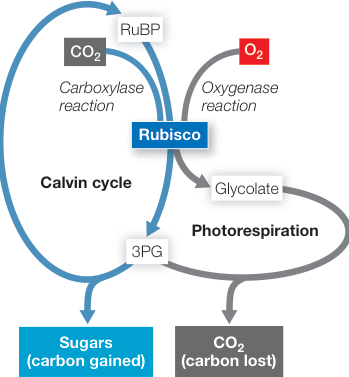
Figure 10.15
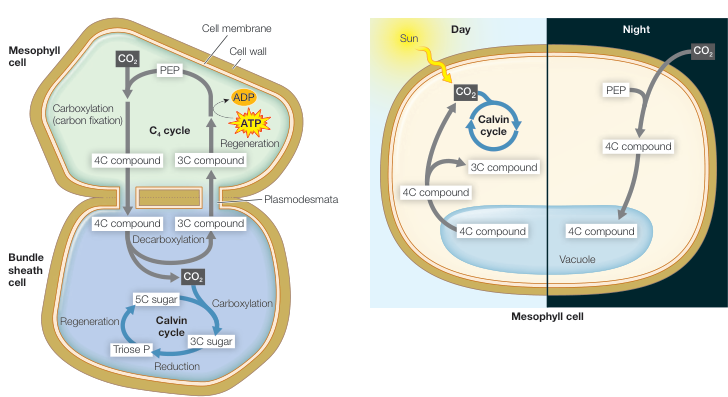
Figure 10.17
Photosynthesis Is an Integral Part of Plant Metabolism
- Photosynthesis and cellular respiration are linked through the Calvin cycle, the citric acid cycle, and glycolysis.
- To survive, a plant must photosynthesize more than it respires.
- Photosynthesis uses only a small portion of the energy of sunlight.
Questions
- What is the path of a carbon atom from the air inside a plant leaf to its release from the leaf into the atmosphere? Note the locations of the processes involved.
- In a forest, trees grow as tall as possible, and leaves at the top spread out as a canopy. How is this advantageous for plant growth?
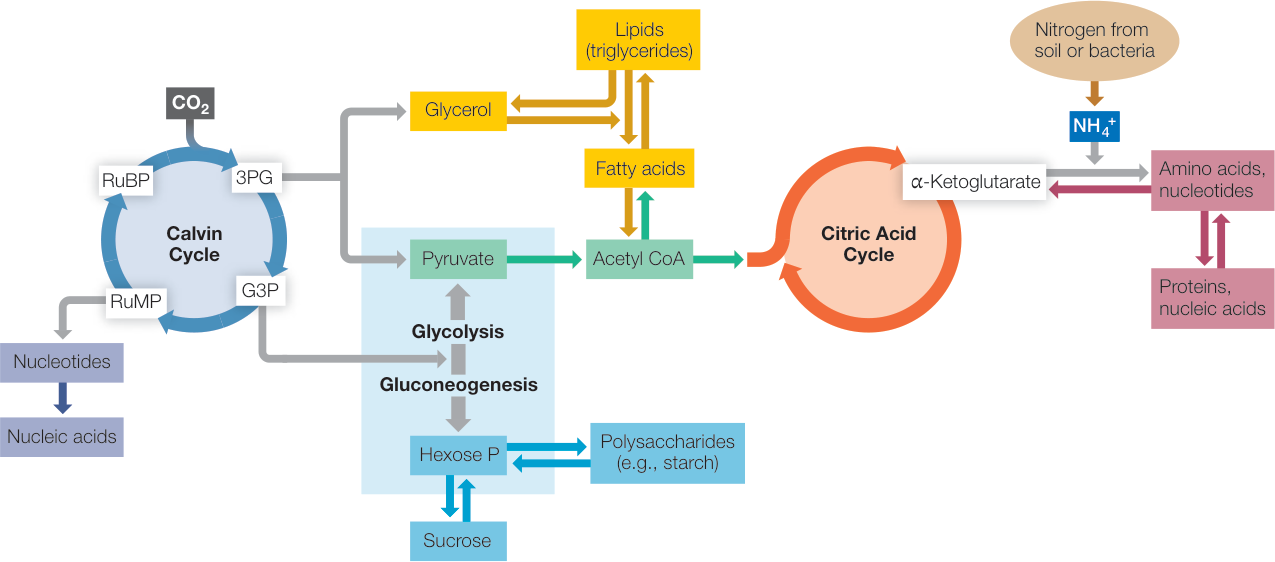
Figure 10.18