Chapter 36Reproduction in Flowering Plants
Key Concepts
36.1 Most Angiosperms Reproduce Sexually
36.2 Hormones and Signaling Determine the Transition from the Vegetative to the Reproductive State
36.3 Angiosperms Can Reproduce Asexually
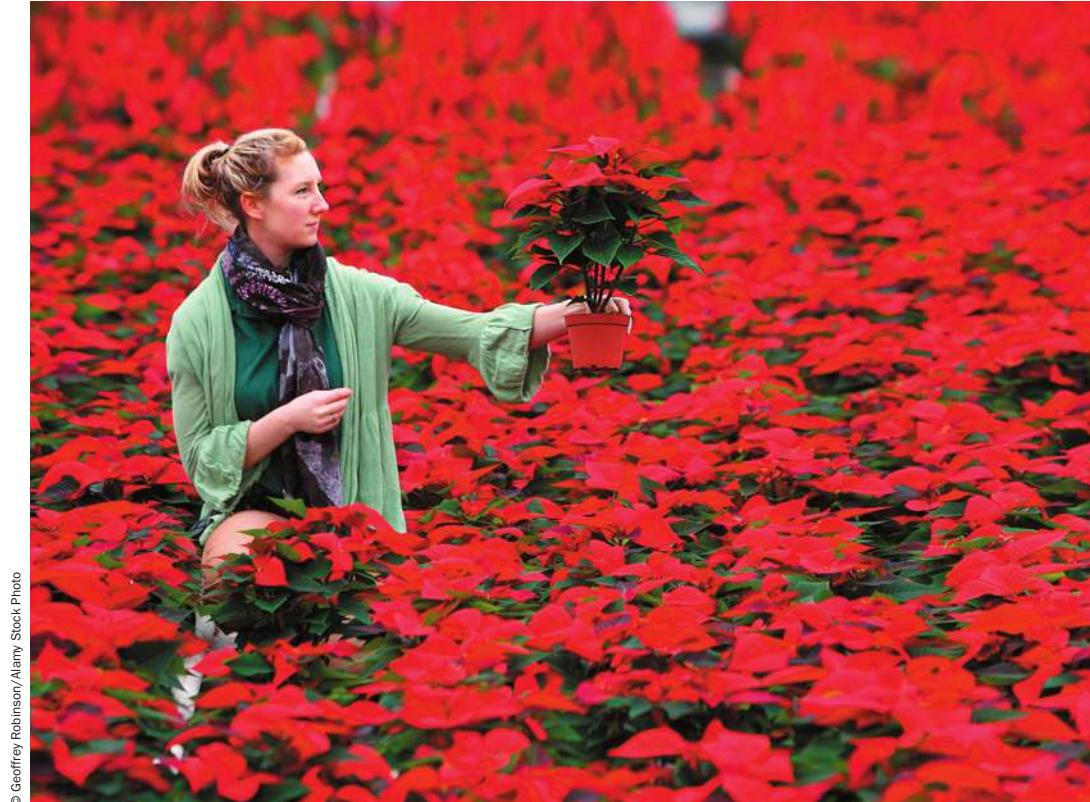
The poinsettia is a popular Christmas flower. But the red “flowers” are not flowers at all; instead, they are leaves (bracts).
© Geoffrey Robinson/Alamy Stock Photo
Investigating Life: What Signals Flowering?
Dairy farmer Albert Ecke was fascinated by the red and green shrubs that grew all over southern California and were used by Mexican-Americans for red dye. The shrub, Euphorbia pulcherrima, got the name “poinsettia” from the man who first brought it to the United States: the first U.S. ambassador to Mexico, Joel Roberts Poinsett. In the early 1900s, Ecke started selling the plants at his farm in Hollywood. But two challenges stood in the way of his making this plant a commercial success.
First, although poinsettias generally bloomed in the fall and early winter in the mild climate of southern California, when Ecke grew them in fields in Hollywood, the formation of flowers was unreliable. Biologists later found that the flowering of poinsettias required at least a 14-hour night for several weeks. Any interruption in the long night—by passing cars or street lamps or lighting from nearby movie sets, for example—inhibited flowering. So Ecke’s son Paul moved the growing operation south, to isolate fields far from Los Angeles. A second challenge was that the plants were tall and gangly. Although pretty, they were hard to transport and not attractive indoors. Paul Ecke found a variety of poinsettia that was much more compact. He propagated this variety and eventually developed it into the short potted plant that is so popular today. The Eckes decided that the time of flowering was just right for making the poinsettia a “Christmas flower,” so they promoted this now portable plant as a holiday decoration, blanketing live television shows with free plants between Thanksgiving and
Christmas. The campaign was successful: more than 100 million poinsettias are now sold in the United States during the Christmas season every year, making it the nation’s best-selling potted plant.
Breeding more attractive flowering plants that are easier to grow is an ongoing part of floriculture, the industry involved with the production of floral crops. You may be surprised to learn that the brightly colored “flowers” of poinsettias are not flowers at all. The red parts of the plant that we most notice and appreciate are actually specialized leaves called bracts. The flowers are grouped in small clusters in the center of the plant alongside yellow nectar-producing glands.
Q&A How did an understanding of angiosperm reproduction allow floriculturists to develop a commercially successful poinsettia? (Find the answer on page 819.)
© alisball/Gatty Images
Most Angiosperms Reproduce Sexually
Learning Objectives
- 36.1.1 Outline the life cycle of a flowering plant, including the steps that give rise to the haploid and diploid stages.
- 36.1.2 Describe two methods for preventing self-fertilization in angiosperms.
- 36.1.3 Describe the relationship among fertilization, seed development, and fruit development.
Most angiosperms (flowering plants) have evolved to reproduce sexually because this strategy has the selective advantage of producing the genetic diversity that is the raw material for evolution. Sexual reproduction in angiosperms involves mitosis, meiosis, and the alternation of haploid and diploid generations (see Figure 11.14).
There are several important differences between sexual reproduction in angiosperms and vertebrate animals:
- In animals, the germ line cells are determined before birth. In angiosperms, the cells that will form gametes are determined in the adult organism, usually in response to environmental conditions.
- In animals, meiosis usually produces gametes directly. In plants, meiosis produces spores. After the spores germinate, they undergo mitosis, forming a multicellular but haploid stage that then produces gametes.
- In animals, there is no multicellular haploid stage. The existence of multicellular diploid (sporophyte) and haploid (gametophyte) life stages in most angiosperms is called the alternation of generations.
How does the flower function as a structure for sexual reproduction?
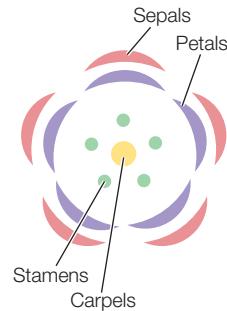
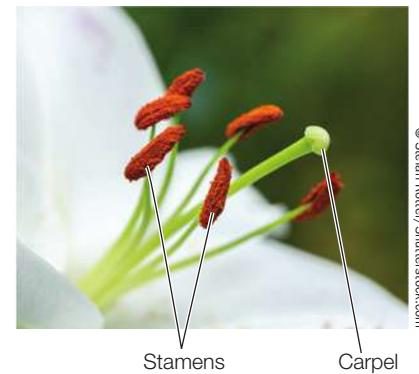
The plant life cycle typically involves the alternation of haploid and diploid generations (Figure 36.1) (see Key Concept 11.4). In angiosperms, the adult plant is a diploid sporophyte, and the male and/or female haploid gametophytes (structures that produce gametes) are contained in the flowers (see Key Concepts 27.1 and 27.3 for a description of flower parts and floral evolution). A complete flower consists of four concentric groups of organs arising from modified leaves: the carpels, stamens, petals, and sepals (Figure 36.2A).
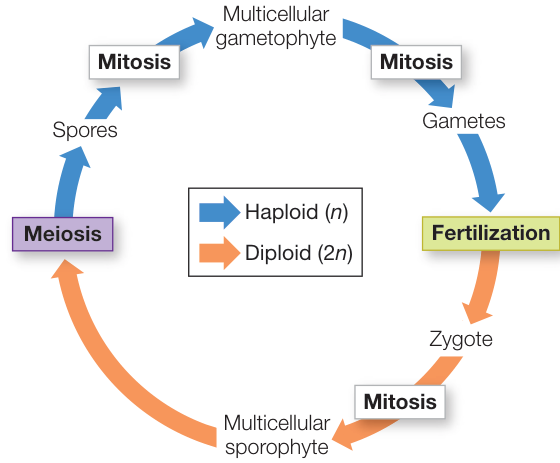
Figure 36.1 Alternation of Generations Unlike vertebrate animals, flowering plants have a life cycle that includes a multicellular haploid phase. This haploid generation gives rise to the gametes.
- The carpels are the female sex organs that contain the developing female gametophytes.
- Organs of a flower
- Perfect: lily (Lilium sp.)
- Imperfect monoecious: corn (Zea mays)
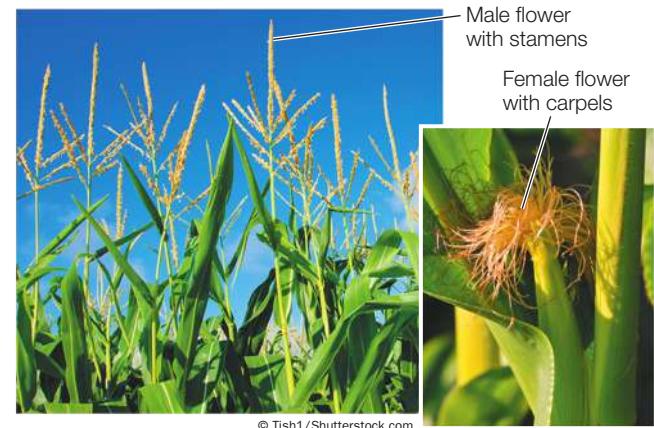
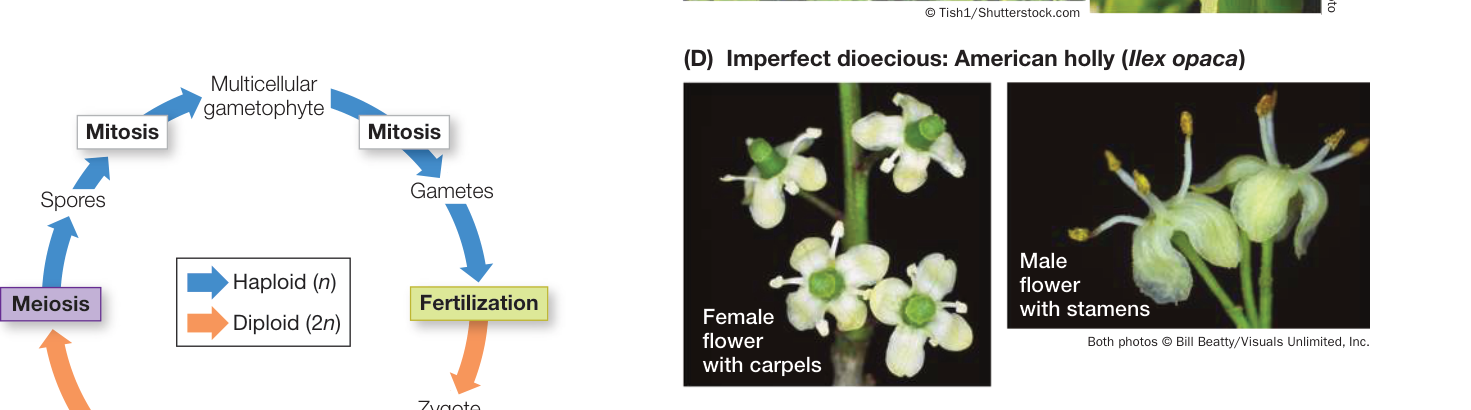
Figure 36.2 Perfect and Imperfect Flowers (A) The organs of a complete flower are sepals, petals, stamen, and carpels (B) A lily is an example of a perfect flower, meaning one that has both male and female sex organs. (C) Imperfect flowers are either male or female. Corn is a monoecious species: both types of imperfect flowers are borne on the same plant. (D) American holly is a dioecious species; some American holly plants bear male imperfect flowers whereas others bear female imperfect flowers.
- The stamens are the male sex organs that contain the developing male gametophytes.
Most angiosperms have flowers with both stamens and carpels; such flowers are termed “perfect” (Figure 36.2B). “Imperfect” flowers, by contrast, are those with only male or only female sex organs. Male flowers have stamens but not carpels, and female flowers have carpels but not stamens. Some plants, such as corn, bear both male and female flowers on an individual plant; such species are called monoecious (“one house”) (Figure 36.2C). In dioecious species, individual plants bear either male-only or female-only flowers; an example is holly (Figure 36.2D).
Flowering plants have microscopic gametophytes
You can follow the roles of male and female gametophytes in angiosperm reproduction in Figure 36.3. The gametophytes develop from haploid spores in the flower:
- Each female gametophyte (megagametophyte) is called an embryo sac, and it develops inside an ovule. One or more ovules are contained within the ovary, which is the lower part of the carpel.
- Male gametophytes (microgametophytes), which are called pollen grains, develop inside the anther, which is part of the stamen.
FEMALE GAMETOPHYTE Of the four haploid megaspores resulting from meiosis, three undergo apoptosis (programmed cell death). The remaining megaspore undergoes three mitotic divisions without cytokinesis, producing eight haploid nuclei, all initially contained within a single cell—three nuclei at one end, three at the other, and two in the middle. Subsequent cell wall formation leads to an elliptical, seven-celled female gametophyte with a total of eight nuclei:
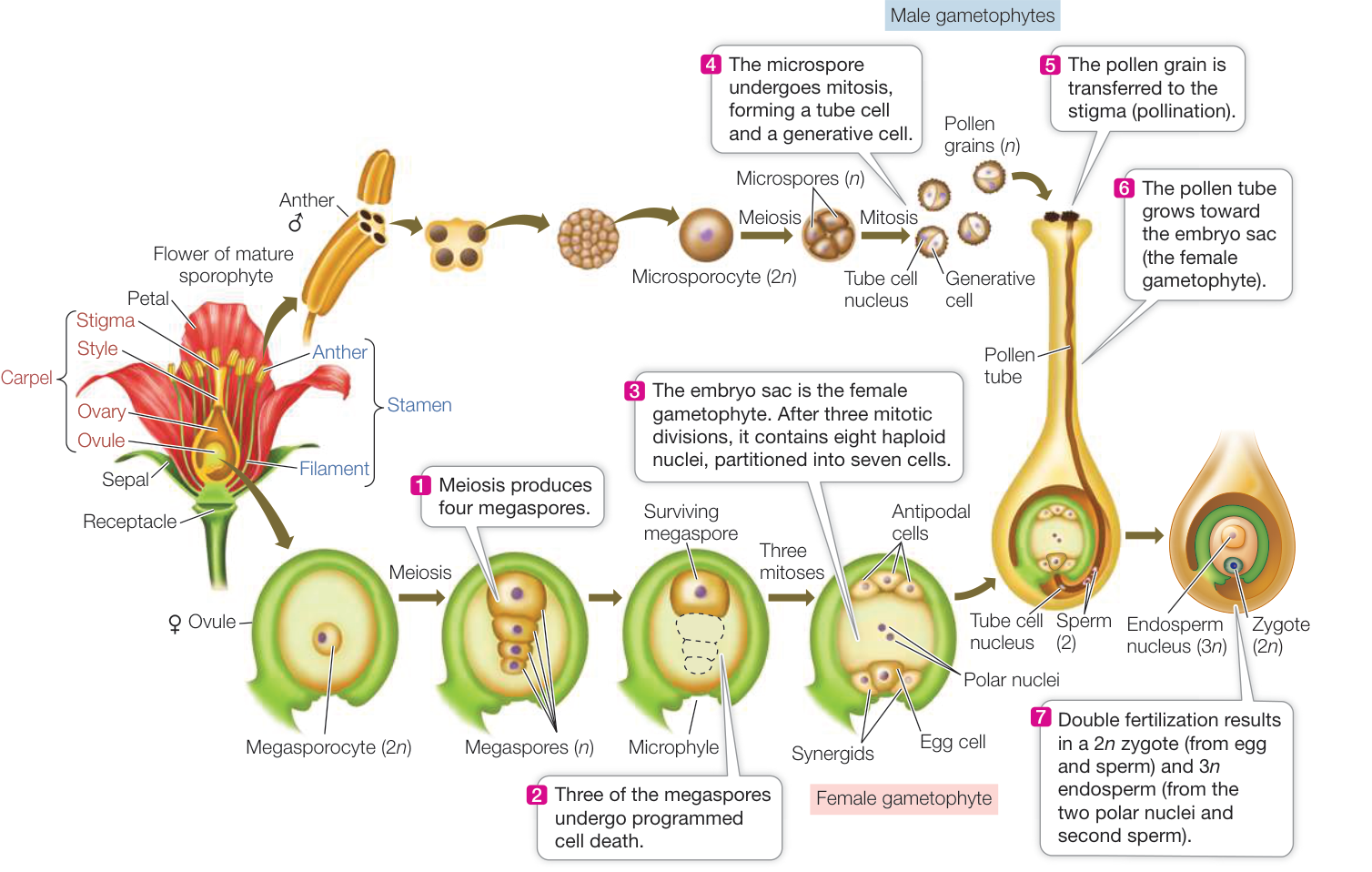
Figure 36.3 Sexual Reproduction in Angiosperms The embryo sac is the female gametophyte; the pollen grain is the male gametophyte. The male and female gametes meet and fuse in the embryo sac. Flowering plants have double fertilization, in which a zygote and an endosperm nucleus form from separate fusion events. The zygote forms by the fusion of one sperm cell with the egg cell. The endosperm forms after the other sperm cell fuses with the central cell, which contains two nuclei. The three nuclei fuse, forming a diploid cell.
Q: Considering the way in which the cells of the female gametophyte form, how similar or different would you predict the DNA content of the two polar nuclei to be?
Activity 36.1 Sexual Reproduction in Angiosperms
- At one end of the female gametophyte are three small cells: the egg cell and two cells called synergids. The egg cell is the female gamete, and the synergids participate in fertilization by attracting the pollen tube. The pollen tube enters one of the synergids before the sperm cells are released for fertilization.
- At the opposite end of the female gametophyte are three antipodal cells, which eventually degenerate.
- In the large central cell are two polar nuclei.
The female gametophyte, or embryo sac, is the entire seven-cell, eight-nucleus structure.
MALE GAMETOPHYTE The four haploid products of meiosis (the microspores) each develop a cell wall and undergo a single mitotic division, usually producing four two-celled pollen grains that are released into the environment. The two cells in a pollen grain have different roles:
- After pollination (the transfer of a pollen grain to a stigma, part of the female reproductive organ), the generative cell divides by mitosis to form two sperm cells that participate in fertilization.
- The tube cell forms the elongating pollen tube that delivers the sperm to the embryo sac.
Connect the Concepts Flower structure evolved over time.
Natural selection has favored floral features that have increased the likelihood of successful pollination. Key Concepts 27.3 and 55.3 describe how angiosperms coevolved with animal pollinators and how ecological communities are formed through interactions among plant and animal species.
A pollen tube delivers sperm cells to the embryo sac
When a functional pollen grain lands on a compatible stigma, it germinates. A key event is water uptake by pollen from the stigma: pollen loses most of its water as it matures. Germination involves the development of a pollen tube (Figure 36.4). The pollen tube either traverses the tissue of the style (part of the carpel; see Figure 36.3) or, if the style is hollow, grows on the inner surface of the style until it reaches an ovule. The growth rate of the pollen tube varies greatly among species, but it can be as fast as 1 centimeter an hour.
The growth of the pollen tube is guided in part by a chemical signal in the form of a small protein produced by the synergids within the ovule. If one synergid is destroyed, the ovule still attracts pollen tubes, but destruction of both synergids renders the ovule unable to attract pollen tubes, and fertilization does not occur.
Genetic screens (see Figure 35.7) of mutants in Arabidopsis thaliana have revealed several genes whose expression in synergids is needed for guiding the pollen tube. There is evidence that a small molecule made by the embryo sac— -aminobutyric acid, or GABA—is an attractant for pollen tube growth. This would be an amazing coincidence, since this molecule is also a signal in the vertebrate nervous system.
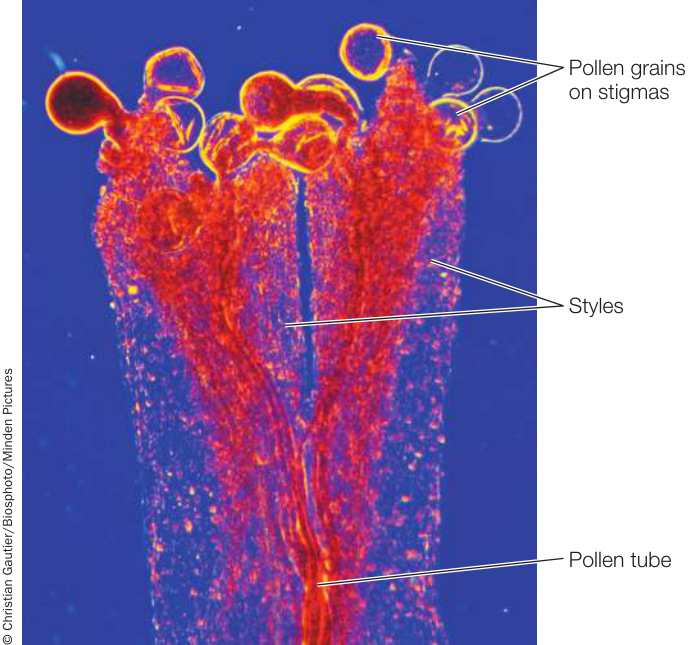
Figure 36.4 Pollen Tubes Begin to Grow Staining pollen with a dye allows it to be seen through a microscope. These pollen grains have landed on the stigmas of a crocus.
Many flowering plants control pollination or pollen tube growth to prevent inbreeding
You’ll recall from discussions of Mendel’s work (see Key Concept 12.1) that some plants can reproduce sexually by both cross-pollination and self-pollination. Self-pollination increases the chances of successful pollination but leads to homozygosity, which reduces genetic diversity. Because diversity is the raw material of evolution by natural selection, homozygosity can be selectively disadvantageous. Most plants have evolved mechanisms that prevent self-fertilization. Angiosperms prevent self-fertilization in two main ways: (1) physical separation of male and female gametophytes and (2) genetic self-incompatibility.
Connect the Concepts As described in Key Concept 27.3, flowers known as perfect flowers have functioning megasporangia and microsporangia. Perfect flowers are thus capable of self-pollination, which is usually disadvantageous. Various mechanisms have evolved in perfect flowers to prevent “selfing”; one is described in Figure 27.13.
SEPARATION OF MALE AND FEMALE GAMETOPHYTES Self-fertilization is prevented in dioecious species, which bear only male or female flowers on a particular plant. Pollination in dioecious species is accomplished only when one plant pollinates another. In monoecious plants, which bear both male and female flowers on the same plant, the physical separation of the male and female flowers is often sufficient to prevent self-fertilization. Some monoecious species prevent self-fertilization by staggering the development of male and female flowers so they do not bloom at the same time, making these species functionally dioecious.
GENETIC SELF-INCOMPATIBILITY A pollen grain that lands on the stigma of the same plant will fertilize the female gamete only if the plant is self-compatible, meaning capable of self-pollination. To prevent self-fertilization, many plants are genetically self-incompatible. Self-incompatibility depends on the ability of a plant to determine whether pollen is genetically similar or genetically different from itself. Rejection of “same-as-self” pollen prevents self-fertilization. How does it occur?
Self-incompatibility in many flowering plants is controlled by a cluster of tightly linked genes called the S locus (for self-incompatibility). The S locus encodes proteins in the pollen and style that interact during the recognition process. A self-incompatible species typically has many alleles of the S locus. The pollen phenotype may be determined by its own haploid genotype or by the diploid genotype of its parent plant. In either case, if the pollen expresses an allele that matches either of the alleles expressed in the recipient pistil, the pollen is rejected. Depending on the type of self-incompatibility system, the rejected pollen either fails to germinate or is prevented from growing through the style (Figure 36.5); either way, self-fertilization is prevented.
Angiosperms perform double fertilization
In most angiosperm species, the mature pollen grain consists of two cells: a large tube cell enclosing a much smaller generative cell. When a compatible pollen grain lands on the stigma of a plant of the same species, it germinates, and the pollen tube grows through the style tissue to the embryo sac (Figure 36.6, step 1). During this process, the generative cell undergoes one mitotic division and cytokinesis to produce two haploid sperm cells (Figure 36.6, step 2).
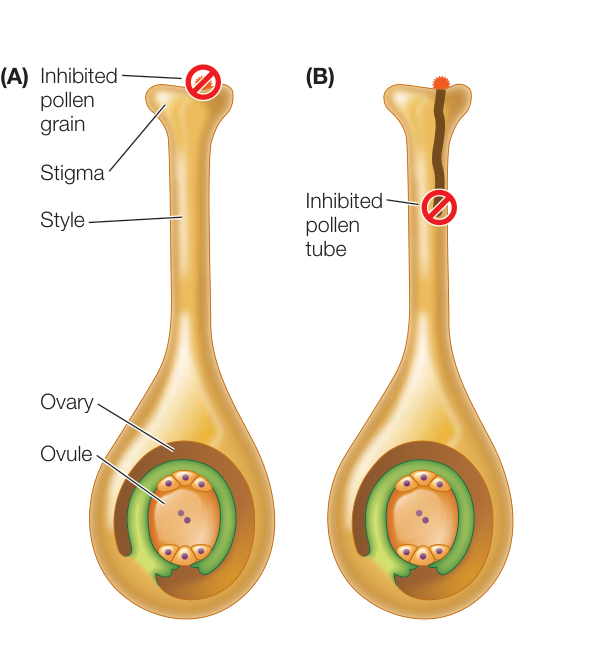
Figure 36.5 Self-Incompatibility In a self-incompatible plant, pollen is rejected if it expresses an S allele that matches one of the S alleles of the stigma and style. Self pollen may fail to germinate (A) or its pollen tube may die before reaching an ovule (B). In either case, the egg cannot be fertilized by a sperm from the same plant.
Two fertilization events now occur. One of the two synergids degenerates when the pollen tube arrives and the two sperm cells are released into its remains (Figure 36.6, step 3). Each sperm cell then fuses with a different cell of the embryo sac. One sperm cell fuses with the egg cell, and the two nuclei fuse, producing the diploid zygote; the other sperm cell fuses with the central cell, and its nucleus fuses with the two polar nuclei, forming a triploid (3n) cell (Figure 36.6, steps 4 and 5). Immediately after fertilization the triploid nucleus undergoes rapid mitotic divisions to form a specialized nutritive tissue, the endosperm. In most species the endosperm nucleus initially divides without cytokinesis, forming a large, multinucleate cell, and cell walls form later between the nuclei. After the endosperm begins developing, the zygote undergoes mitotic division to form the new sporophyte embryo. The developing embryo uses the endosperm tissue as a source of nutrients, energy, and carbon-based anabolic building blocks. In some cases the endosperm persists until germination and is used as a source of nutrients by the developing seedling; this is prevalent in grains such as corn, wheat, and rice. The source of nutrients is important because the seedling often begins its development underground and cannot perform photosynthesis right away.
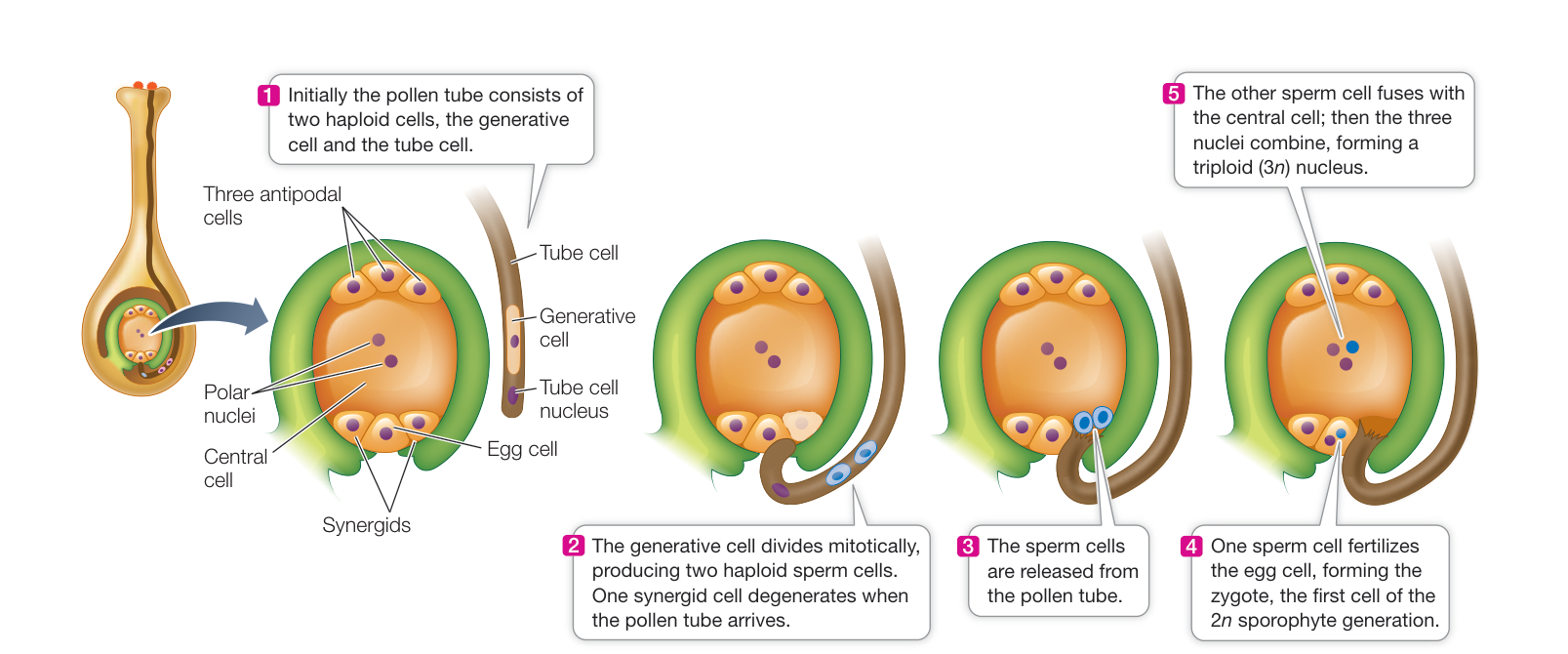
Figure 36.6 Double Fertilization Two sperm are involved in two cell fusion events, hence the term “double fertilization.” One sperm is involved in the formation of the diploid zygote, and the other results in the formation of the triploid endosperm cell that divides to form endosperm. Double fertilization is a characteristic feature of angiosperm reproduction.
The remaining cells of the male and female gametophytes—the antipodal cells, the remaining synergid, and the pollen tube nucleus—degenerate as the embryo begins to develop.
Double fertilization, a hallmark of angiosperms, is so named because it involves two cell fusion events:
- One sperm cell fuses with the egg cell.
- The other sperm cell fuses with the central cell.
The fusion of a sperm cell with the central cell to form the triploid endosperm nucleus is one of the defining characteristics of angiosperms.
Embryos develop within seeds contained in fruits
Fertilization initiates the highly coordinated growth and development of the embryo, endosperm, integuments, and carpel. The integuments—protective tissue layers surrounding the ovule—develop into the seed coat, and the ovary wall becomes the outer layers of the fruit that encloses the seed (see Figure 36.7A).
In Chapter 35 you learned about the events in plant embryonic development and its hormonal control. As seeds develop, they prepare for dispersal and dormancy by losing up to 95% of their water content. You can see this desiccation by comparing corn grains (e.g., popcorn) with ripe corn from the cob. A dry seed is still alive; it has protective proteins that keep its cells in a living state.
In angiosperms, the ovary—together with the seeds it contains—develops into a fruit after fertilization has occurred. Fruits have two main functions:
- They aid in seed dispersal.
- They protect the seed from damage by animals and infection by microbial pathogens.
A fruit may consist of only the mature ovary and seeds, or it may include other parts of the flower. Some species produce fleshy, edible fruits, such as peaches and tomatoes, whereas the fruits of other species are dry (Figure 36.7).
The diverse forms of fruits reflect the varied strategies plants use to disperse their progeny. Because plants cannot move, their progeny need some mechanism for separating themselves from their parents. Wide dispersal of progeny may not always be advantageous, however. If a plant has successfully grown and reproduced, its location is likely to be favorable for the next generation too. Some offspring do indeed stay near their parents. This is the case in many tree species, whose seeds simply fall to the ground. However, this strategy has several potential disadvantages. If the species is a perennial, the offspring that germinate near their parents will be competing with their parents for resources, which may be too limited to support a dense population. Furthermore, even though local conditions were good enough for the parent to produce at least some seeds, there is no guarantee that conditions will still be good the next year, or that they won’t be better elsewhere. Thus in many cases seed dispersal is vital to a species’ survival.
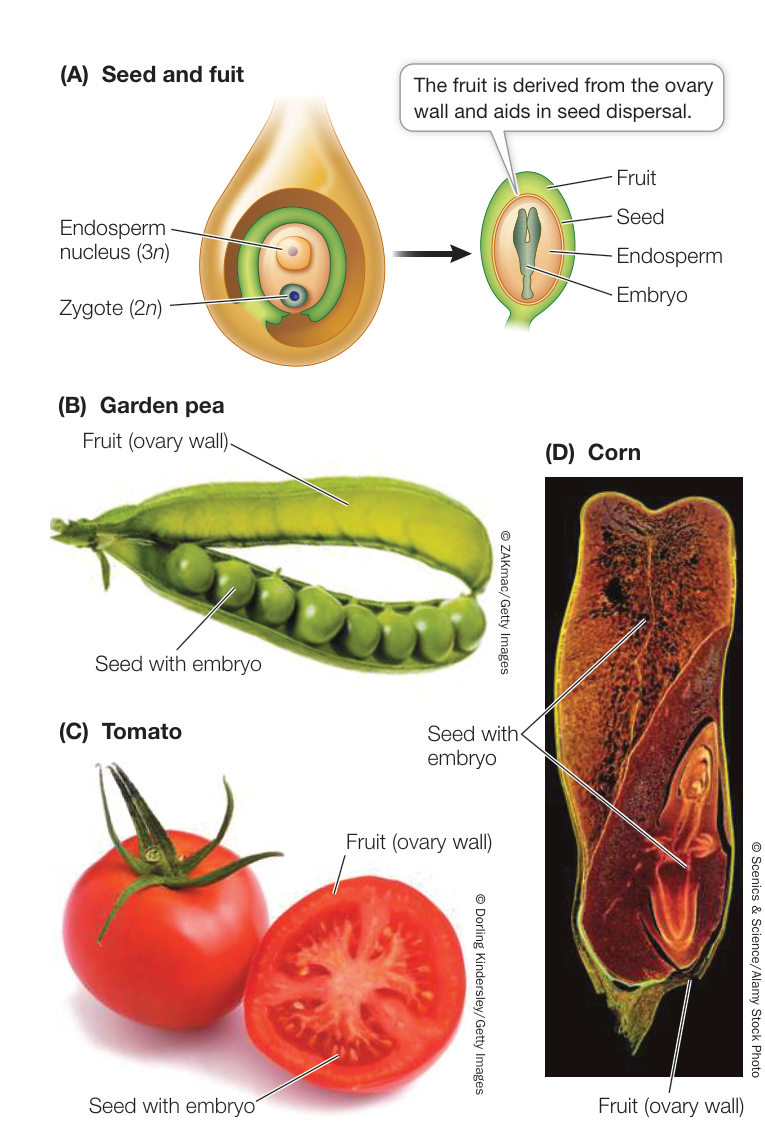
Figure 36.7 Angiosperm Fruits There are a variety of fruits, but all have a seed containing the embryo, surrounded by a fruit that comes from the wall of the ovary.
Many fruits help disperse seeds over substantial distances, increasing the probability that at least a few of the seeds will find suitable conditions for germination and growth to sexual maturity. Some wind-dispersed seeds have fruits with “wings,” like those of the familiar maple. In other cases, the fruits and seeds are tiny, and they include feathery structures, such as in thistle. Other fruits, such as burs, attach themselves to animals or to your clothes and shoes. Water disperses some fruits; coconuts have been known to float thousands of miles between islands. Seeds swallowed whole by an animal along with fruits such as berries travel through the animal’s digestive tract and are deposited some distance from the parent plant.
Biologists are beginning to understand the relationships between seed development (from ovules) and fruit development (from carpels). Some seedless fruits, such as varieties of watermelons and grapes, develop when fertilization occurs, but the embryo then aborts. In other cases, such as bananas, the fruit develops without fertilization. In most cases, however, fruit development does not occur in the absence of fertilization. Several years ago a farmer in Spain who grows sugar apples (Annona squamosa) noticed a seedless fruit and brought it to the attention of scientists. A single gene was subsequently identified whose mutated form results in this seedless phenotype. The wild-type version of this gene encodes a transcription factor important to the development of the outer tissues of the ovule. The gene is present in the genomes of all angiosperms examined. In the future, therefore, it may be possible to produce other seedless fruits by engineering mutations in this gene.
Seed development is under hormonal control
Chapter 35 described the role of the gibberellin hormones in the mobilization of stored macromolecules in the seed endosperm during germination. The development of seeds is under the control of a different hormone, abscisic acid (ABA). (Unfortunately, its name is misleading, because it does not directly control leaf abscission.) Most plant tissues make ABA, and like other plant hormones, it has multiple effects (see Table 35.2). During early seed development the ABA level is usually low, and it rises as the seed matures. This increase stimulates the endosperm to synthesize seed storage proteins. It also stimulates the synthesis of proteins that prevent cell death as the seeds dry.
ABA also keeps the developing seed from germinating on the plant before it dries. Premature germination, termed vivipary, is undesirable in seed crops (such as wheat) because the grain is damaged if it starts to sprout. Viviparous seedlings are also unlikely to survive if they remain attached to the parent plant and are unable to establish themselves in the soil. Mutant strains of corn that are insensitive to ABA have viviparous seeds, indicating the importance of ABA in preventing precocious germination.
The general effect of ABA in preventing germination extends to seed dormancy. Seeds tend to stay dormant if their ABA levels are high and germinate when the levels go down. This usually occurs as dormancy is broken.
Recap and Assess
Flowers contain the organs for sexual reproduction in angiosperms. Unlike animals, in which meiosis leads directly to gametes (egg and sperm), plants have a multicellular haploid generation. In angiosperms, meiosis forms two types of spores. The male spores (microspores) give rise to a haploid pollen tube that goes on to form the sperm. The female spores (megaspores) give rise to a haploid female gametophyte that contains the egg. After fertilization, the flower develops into seed(s) and fruit. The selective advantages of seeds and fruits include long-term viability and multiple modes of dispersal.
- How would plant reproduction be affected if the pollen tube failed to grow and develop properly?
- What two fertilization events occur during double fertilization? Name the products of fertilization.
- What might happen if the haploid polar nuclei contained a loss-of-function allele for a gene whose activity was required for endosperm formation? What advantage results from the formation of a triploid endosperm?
- What part of the flower develops into the seed? Into the fruit?
We have now traced the sexual life cycle of angiosperms from the flower to the gametophytes, pollination, fertilization, and the dispersal of seeds. We discussed seed germination and seedling development in Chapter 35, and vegetative plant growth in Chapter 32. Next we look at the rest of the angiosperm life cycle—the transition from the vegetative to the flowering state—and how this transition is regulated.
Hormones and Signaling
Hormones and Signaling Determine the Transition from the Vegetative to the Reproductive State
Learning Objectives
- 36.2.1 Relate the type of meristem a plant has to the type of organs it produces.
- 36.2.2 Explain how floral organs are specified.
- 36.2.3 Explain how flowering is triggered in a plant that is sensitive to day length.
Flowering is one of the major events in a plant’s life. Flowering requires a reallocation of energy and materials away from making more nonreproductive plant parts (vegetative growth) to making flowers and gametes (reproductive growth). Once a plant is old enough, it can respond to internal or external signals to initiate reproduction. Flowering can happen right at maturity as part of a predetermined developmental program or in response to environmental cues such as light or temperature.
Flowering occurs at specific places and specific times
Plants fall into three categories depending on when they mature and initiate flowering, and what happens after they flower:
- Annuals complete their lives in one year. This class includes many crops important to the human diet, such as corn, wheat, rice, and soybean. When the environment is suitable, these plants grow rapidly, with little or no secondary growth. After flowering, they use most of their materials and energy to develop seeds and fruits, and the rest of the plant withers away.
- Biennials take 2 years to complete their lives. These are much less common than annuals and include carrots, cabbage, and onions. Typically, biennials produce only vegetative growth during the first year and store carbohydrates in underground roots (carrot) and stems (celery). In the second year they use most of the stored carbohydrates to produce flowers and seeds rather than vegetative growth, and the plant dies after seeds form.
3. Perennials live 3 or more—sometimes many more—years. Maple trees can live up to 400 years. Perennials include many trees and shrubs, as well as wildflowers. Typically these plants flower every year but stay alive and keep growing for another season; the reproductive cycle repeats each year. However, some perennials (e.g., century plant) grow vegetatively for many years, flower once, and die.
No matter what type of life cycle they have, angiosperms all make the transition to flowering. The first visible sign of a transition to the flowering state may be a change in one or more apical meristems in the shoot system. As you saw in Chapter 32, meristems have a pool of undetermined cells. During vegetative growth, a shoot apical meristem continually produces leaves, axillary buds, and stem tissues (Figure 36.8A) in a kind of unrestricted growth called indeterminate growth (see Key Concept 32.1).
Flowers may appear singly or in an orderly cluster that constitutes an inflorescence. If a vegetative apical meristem becomes an inflorescence meristem, it stops making leaves and axillary buds and produces other structures: smaller leafy structures called bracts, as well as new meristems in the angles between the bracts and the stem (Figure 36.8B). These new meristems may also be inflorescence meristems, or they may be floral meristems, each of which gives rise to a flower. Conversion of an apical meristem to an inflorescence meristem occurs as a result of a change in the set of genes that are expressed in the meristematic cells.
Once the shoot apical meristem has been converted into an inflorescence meristem, it may begin producing flowers. Each floral meristem typically produces four consecutive whorls or spirals of organs—the sepals, petals, stamens, and carpels discussed earlier in the chapter—separated by very short internodes, keeping the flower compact (Figure 36.8C). (As noted in Key Concept 36.1, flowers that contain both stamens and carpels are called perfect flowers.) In contrast to vegetative apical meristems and some inflorescence meristems, floral meristems are responsible for determinate growth—growth of limited duration.
The type of organ that will be produced in each of the whorls is determined by the transcription factors that are expressed in those cells. In the model plant Arabidopsis thaliana, each flower begins as a floral meristem of about 700 cells arranged in a dome, and the four whorls develop from this meristem. The organs that make up the flower are evolutionarily derived from leaves. Their identity is determined by three classes of organ identity genes—classes A, B, and C—that encode transcription factors (Figure 36.9). These proteins act in combination to specify the type of organ that will be produced. For example, a combination of transcription factors that gives rise to purple petals would do so in part by leading to the expression of enzymes required for synthesis of purple pigment. Expression of class A genes alone gives rise to sepals, a combination of class A and class B genes gives rise to petals, a combination of class B and class C genes gives rise to stamens, and class C genes alone give rise to carpels. The genes that are expressed in a whorl (see Figure 36.9) generate that whorl’s specific organ identity.
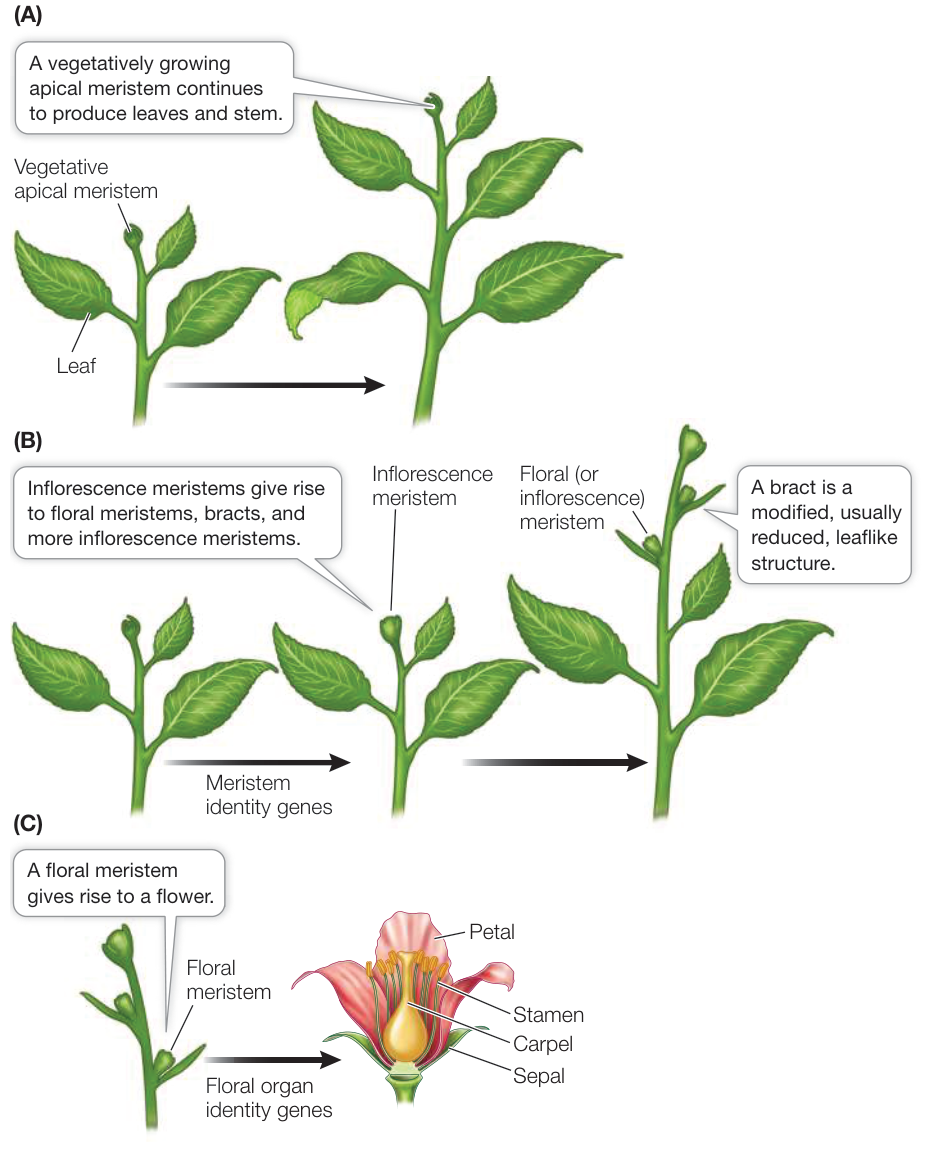
Figure 36.8 Flowering and the Apical Meristem A vegetative apical meristem (A) grows without producing flowers. Once the transition to the flowering state is made (B), inflorescence meristems give rise to bracts and to floral meristems (C), which become the flowers.
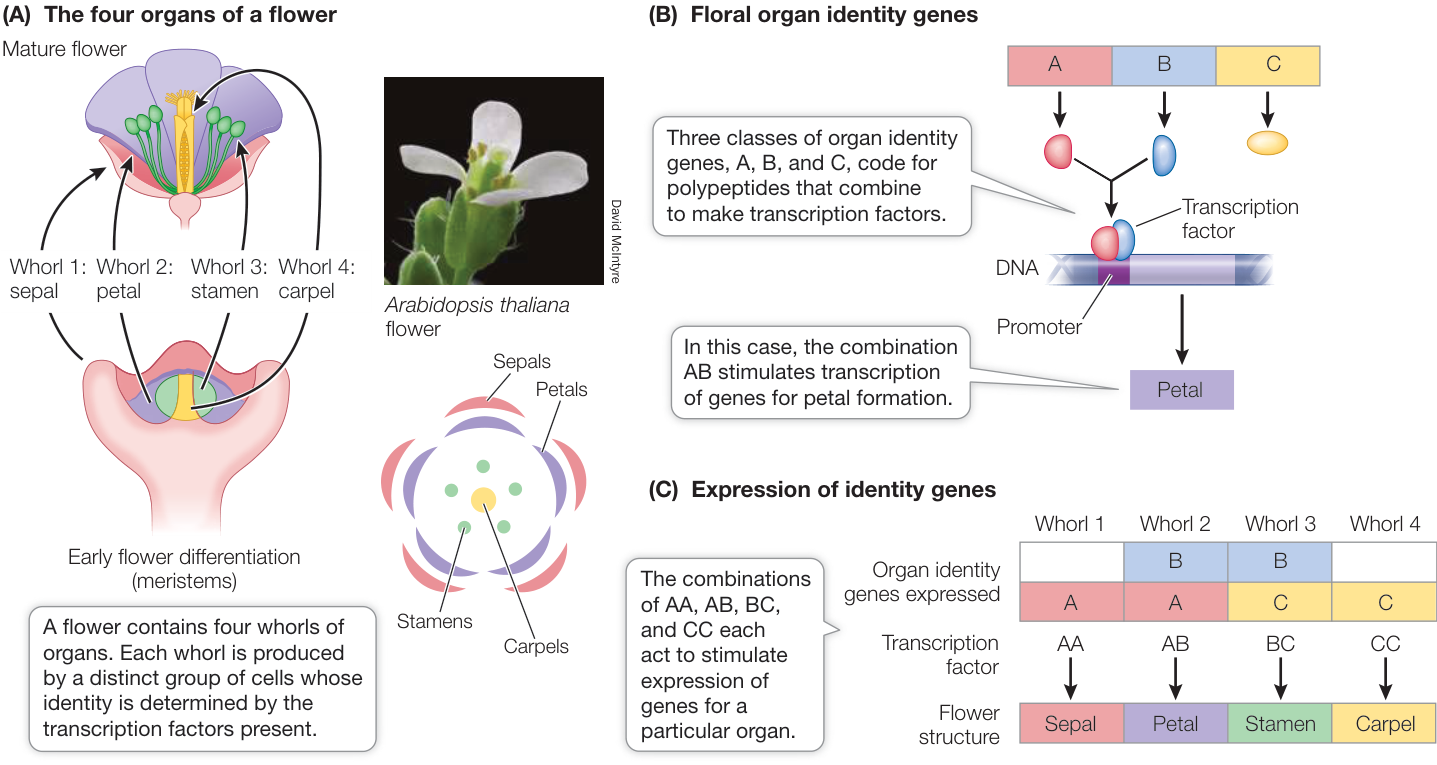
Figure 36.9 ABC Model for Flower Formation (A) The four organs of a flower—sepals (pink), petals (purple), stamens (green), and carpels (yellow)—grow in whorls that develop from the floral meristem. (B) Floral organs are determined by three classes of organ identity genes, the polypeptide products of which combine to form transcription factors. (C) Combinations of polypeptide subunits in transcription factors activate expression of specific genes. Simulation 36.1 Genes and Development
Modifications of this basic structure can result in great diversity. For example, expression of class B genes in the outermost whorl as well as in whorls 2 and 3 causes what would have been sepals to look like petals. This explains how tulip flowers arise (Figure 36.10). The multiple petals in cultivated roses are derived from wild relatives with one whorl of five petals and many stamens. A simple conversion of stamens to petals can be achieved by changing the boundary of class A gene expression.
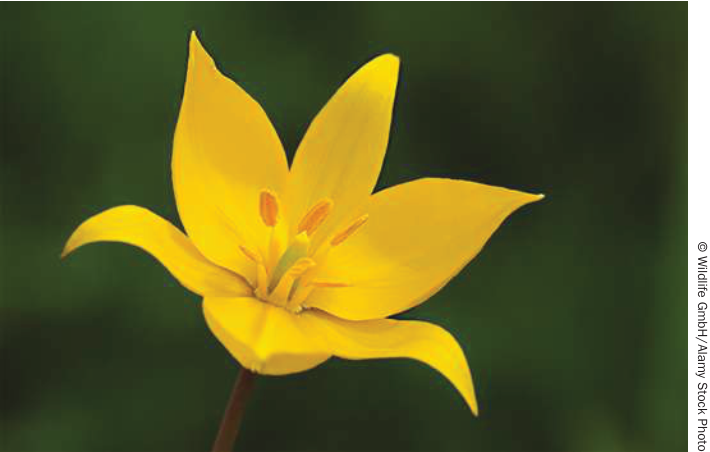
Figure 36.10 Anatomy of a Tulip Flower
Orchids can be particularly remarkable in having multiple types of unusually shaped petals. These appear to have arisen through diversification of the organ identity genes, creating a situation in which individual orchid petals express different versions of the identity genes. Flowers that lack specific organs, such as flowers that are all male or all female, can arise through selective abortion of particular whorls.
Floral organ identity genes often become activated in response to external cues (day length, temperature) or internal cues (hormones). We begin with day length, or photoperiod.
Photoperiodic cues can initiate flowering
The study of how light affects the transition to flowering began with two observations in the early twentieth century:
- Normally, tobacco grows to about 1.5 meters tall before flowering in the summer, but a variety called Maryland Mammoth grows to an amazing 5 meters. Farmers in Virginia were frustrated because they could not easily get seeds from this luxuriant plant for successive crops. Instead of flowering, it continued to grow until the late fall frost killed it.
- Because of improvements in agricultural techniques, soybean yields became so great that it was hard for farmers to harvest all the plants at once. Hoping to stagger the harvests, farmers tried planting the seeds in groups several weeks apart, but all resulting plants nevertheless formed flowers and seeds at the same time.
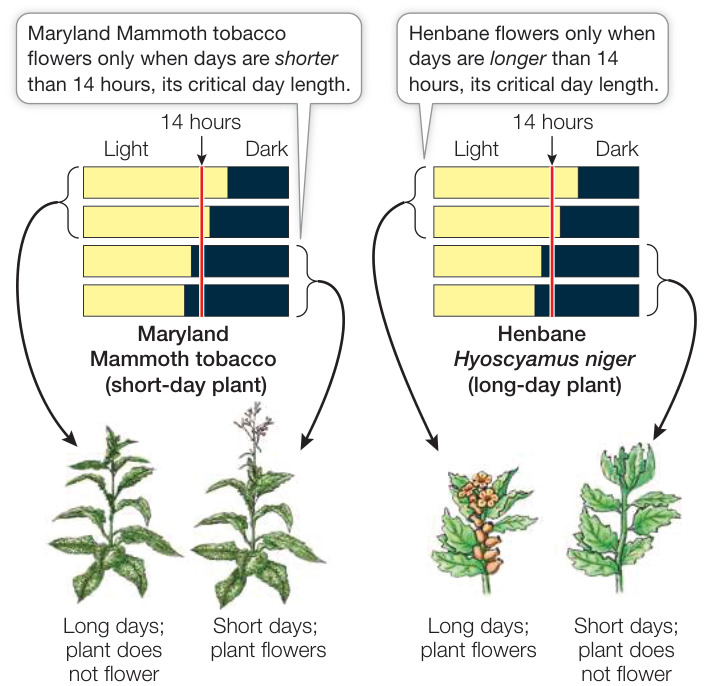
Figure 36.11 Day Length and Flowering Flowering of Maryland Mammoth tobacco is initiated when the days become shorter than a critical length. Maryland Mammoth tobacco is thus called a short-day plant. Henbane, a long-day plant, shows an inverse pattern of flowering. (After W. W. Garner and H. A. Allard. 1921. In Yearbook 1920, USDA, pp. 377–400. U.S. Government Printing Office: Washington, D.C.)
The explanation for both of these observations was the same: the signal that set the plants’ shoot apical meristems on the path to flowering was the length of daylight, or photoperiod. When soybeans experience days of a certain length, they flower, regardless of how “old” they are. Maryland Mammoth tobacco can flower, but it doesn’t do so in Virginia because it dies when the weather there gets cold. Maryland Mammoth is now grown commercially in Florida. You saw another example of the role of photoperiod in the opening investigation of this chapter, dealing with poinsettias.
Scientists used greenhouse experiments to measure the day length required for different plant species to flower. Maryland Mammoth tobacco did not flower if exposed to more than 14 hours of light per day; flowering was only initiated once day length became shorter than 14 hours, as it does in December. Other plants (such as soybean and henbane) flowered only when the days were long (Figure 36.11). Control of an organism’s responses by the length of day or night is called photoperiodism.
Plants vary in their responses to photoperiodic cues
Plants that flower in response to photoperiodic stimuli fall into two main classes:
Short-day plants (SDPs) flower only when the day is shorter than a critical maximum. They include coffee, morning glory, Maryland Mammoth tobacco, poinsettias, and chrysanthemums. Thus, for example, you see chrysanthemums in nurseries in the fall and poinsettias in winter.
- Long-day plants (LDPs) flower only when the day is longer than a critical minimum. Spinach, lettuce, and clover are examples of LDPs. For example, spinach tends to flower in the summer, so for harvesting leaves, it is planted in early spring.
While there are variations on these two patterns, photoperiodic control of flowering serves an important role: it synchronizes the flowering of plants of the same species in a local population, and this promotes cross-pollination and successful reproduction.
Night length is a key photoperiodic cue that determines flowering
The terms “short-day plant” and “long-day plant” imply that day length is the environmental cue that triggers flowering. Actually, the important cue is night length, as a series of greenhouse experiments confirmed (Figure 36.12). In a greenhouse, the overall length of a day or night can be varied, irrespective of the 24-hour natural cycle. For example, if cocklebur, an SDP, is exposed to several long periods of light (16 hours each), it will still flower as long as the dark period between them is 9 hours or longer. This 9-hour inductive dark period also induces flowering even if the light period varies from 8 hours to 12 hours.
Biologists noticed that when the inductive dark period was interrupted by a brief period of light, the flowering signal generated by the long night disappeared. It took several days of long nights for the plant to recover and initiate flowering. Interrupting the day with a dark period had no effect on flowering. A clue as to what occurred in the plant when the flash of light was given came when biologists determined the action spectrum for the wavelengths of light that were effective. As with lettuce seed germination (see Figure 35.22), red light was most effective at breaking the “night” stimulus, and its effect was reversible by far-red light (Investigating Life: The Flowering Signal). Later, the photoreceptor involved was identified as a phytochrome.
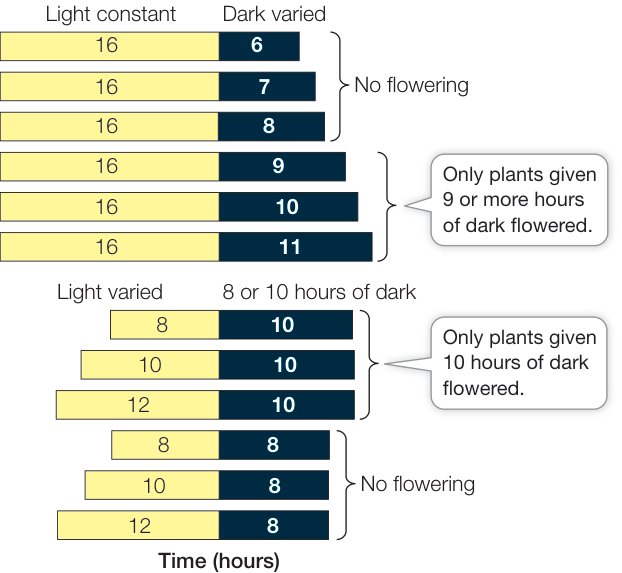
Figure 36.12 Night Length and Flowering Greenhouse experiments using cocklebur, a short-day plant, showed that night length, not day length, is the environmental cue that initiates flowering.
Investigating Life: The Flowering Signal
Experiment
Original Paper: S. B. Hendricks and H. W. Siegelman. 1967. Phytochrome and photoperiodism in plants. In Photobiology, Ionizing Radiations, M. Florkin and E. H. Stotz (Eds.), pp. 211–235. Elsevier: New York.
Knowing that plants measure night duration, the question became whether the dark hours to which a plant is exposed must be continuous. Using SDPs and LDPs as test subjects, Karl Hamner and James Bonner demonstrated that this was the case by interrupting the night with short bursts of light. Sterling Hendricks and William Siegelman repeated the experiments using light of different wavelengths to gain information about the photoreceptor involved.
HYPOTHESIS Red light participates in the photoperiodic timing mechanism.
METHOD Grow plants under short-day conditions, but interrupt the night with light of different wavelengths.
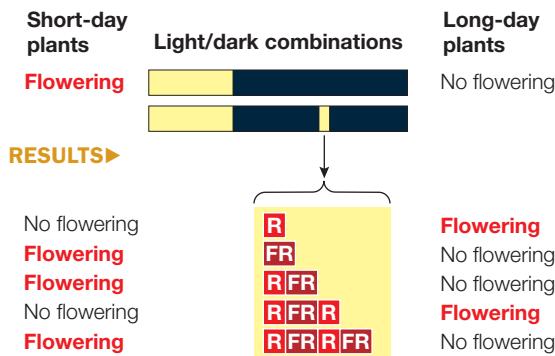
CONCLUSION When plants are exposed to red (R) and far-red (FR) light in alternation, the final treatment determines the effect. Phytochrome is the photoreceptor.
Work with the Data
Original Paper: H. A. Borthwick et al. 1952. The reaction controlling floral initiation. Proc Natl Acad Sci USA 38: 929–934.
After it was established that the length of night, rather than day, was critical for flowering in some plants, the U.S. Department of Agriculture group that had worked on the phytochrome response of lettuce seed germination (see Figure 35.22) asked whether the signaling system that initiated lettuce seed germination was the same as that involved in flowering.
QUESTIONS
- Cocklebur plants, which are SDPs that flower when exposed to long nights, were grown in conditions that could induce flowering, except that the nights were interrupted by a flash of light such that flowering was prevented. Following that nighttime flash, some of the plants were exposed to a second light. Plants were then allowed to grow for some days in short-night conditions that would not induce flowering, and the number of plants that contained a floral meristem was examined by dissection. Table A shows the results.
Table A
| Wavelength (nm) | Number of plants with a floral meristem after exposure to second light | |||
|---|---|---|---|---|
| 16 min | 8 min | 4 min | 2 min | |
| 680 | 0 | 0 | 0 | 0 |
| 700 | 1 | 3 | 0 | 0 |
| 720 | 3 | 3 | 3 | 1 |
- Why were the plants grown in short-night conditions after the light flashes, prior to evaluation of flowering?
- What can you conclude from the data in terms of the receptor and time needed?
- Groups of four plants were exposed to red, far-red, or no light at the beginning of the dark period (extending the day). Following this, the plants were given a dark period of the length indicated. The results are shown in Table B. Explain the changes in the critical night length required for flowering in terms of the phytochrome system.
Table B
| Length of dark period (h) | Number of plants with a floral meristem | ||
|---|---|---|---|
| No light | 660 nm | 720 nm | |
| 7.0 | — | — | 4 |
| 7.5 | — | — | 4 |
| 8.0 | 0 | 0 | 4 |
| 8.5 | 4 | 0 | 4 |
| 9.0 | 4 | 4 | — |
| 9.5 | 4 | 4 | — |
As described in Key Concept 35.4, phytochromes and a blue-light receptor function together to “entrain” a circadian rhythm in plants. These photoreceptors cycle through active and inactive phases over repeated 24-hour periods. One gene whose expression follows a circadian rhythm is CONSTANS (CO), which encodes a transcriptional regulator that controls the expression of flowering genes.
Experiments with Arabidopsis thaliana, an LDP, have shown that photoperiodic flowering times are determined by interactions between photoreceptors and the CO protein. CO gene expression goes through regular 24-hour cycles with peak expression occurring in the afternoon. On long days, the peak of CO mRNA production coincides with a period of daylight, whereas on short days it occurs after dark. The coincidence of light and CO mRNA levels affects the plant because CO protein is stabilized by light in the afternoon, so CO protein builds up only during long days. Accumulation of CO protein does not occur on short days.

Animation 36.2 The Effect of Interrupted Days and Nights
The flowering stimulus originates in a leaf
Early experiments indicated that reception of the photoperiodic stimulus occurs within the leaf. For example, in the LDP spinach, flowering occurred if the leaves were exposed to long-day periods of light, while the shoot apical meristem was masked to simulate short days. Flowering could not occur when the leaves were masked to simulate short days, while the bud was exposed to long-day periods of light.
These “masking” experiments were extended to SDPs as well (Figure 36.13). Because the receptor of the stimulus (in the leaf) is physically separated from the tissue on which the stimulus acts (the bud meristem), the inference can be drawn that a systemic signal travels from the leaf through the plant’s tissues to the bud meristem. Other evidence that a diffusible chemical travels from the leaf to the bud meristem signal includes the following:
- If a photoperiodically induced leaf is immediately removed from a plant after the inductive dark period, the plant does not flower. If, however, the induced leaf remains attached to the plant for several hours, the plant will flower. This result suggests that something is synthesized in the leaf in response to the inductive dark period, and then moves out of the leaf to induce flowering.
- If two cocklebur plants are grafted together, and if only one of the plants is exposed to inductive long nights, both plants flower.
- In several species, if an induced leaf from one species is grafted onto another, noninduced plant of a different species, the recipient plant flowers.
The transmissible signal was given a name, florigen (“flower inducing”), in 1937, but its chemical nature was not described until 2008.
Florigen is a small protein
The characterization of florigen was made possible by genetic and molecular studies of the model plant Arabidopsis thaliana. Three genes are involved in the signaling response for flowering (Figure 36.14):
- FT (FLOWERING LOCUS T) codes for florigen. FT is a small (20 kilodalton [kDa]) protein that can travel through plasmodesmata. FT is synthesized in the phloem companion cells of the leaf and then diffuses into the adjacent sieve tube elements. It then is carried through the phloem to the apical meristem. If the protein-coding region of the FT gene is coupled to an active promoter and expressed at high levels in the shoot meristem, flowering is induced even in the absence of an appropriate photoperiodic stimulus.
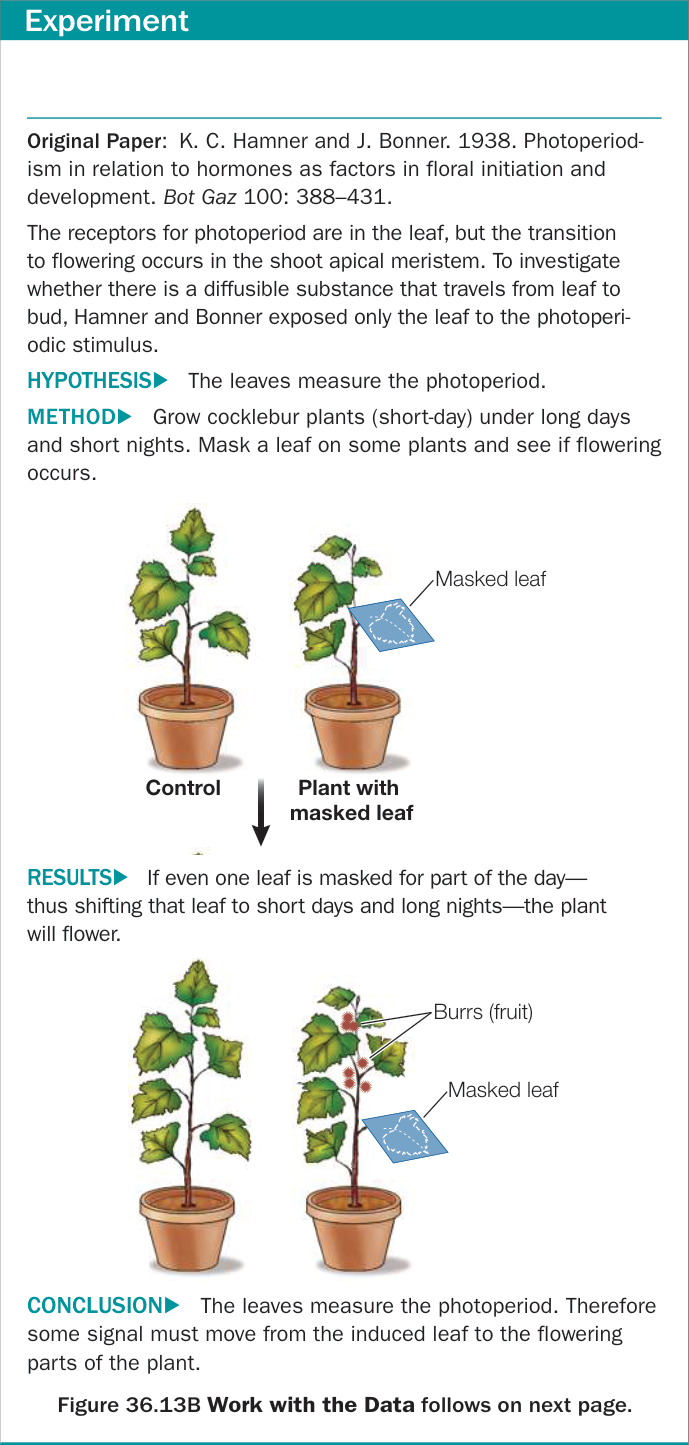
Figure 36.13A The Flowering Signal Moves from Leaf to Bud
Figure 36.13A The Flowering Signal Moves from Leaf to Bud
- CO (CONSTANS) codes for the transcription factor that activates the synthesis of FT. As described earlier in this key concept, CO expression follows a circadian rhythm, and stabilization of the CO protein occurs when the protein is produced in the light, allowing it to accumulate in long days. Like FT, CO is expressed in leaf companion cells. If CO is experimentally overexpressed in the leaf, flowering is induced. However, if CO is overexpressed in the apical meristem, flowering is not induced, indicating that CO functions in the leaf.
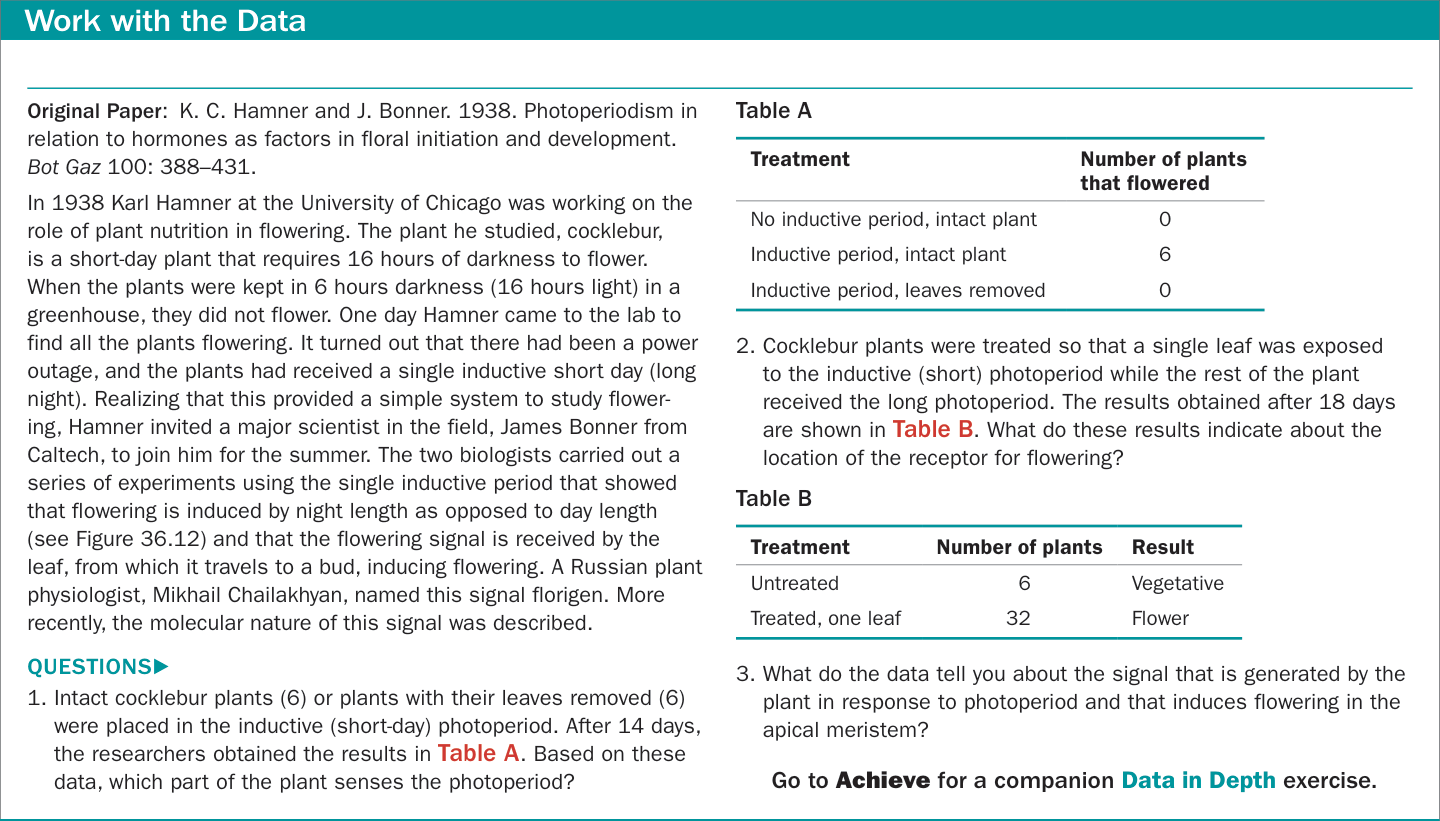
Figure 36.13B The Flowering Signal Moves from Leaf to Bud
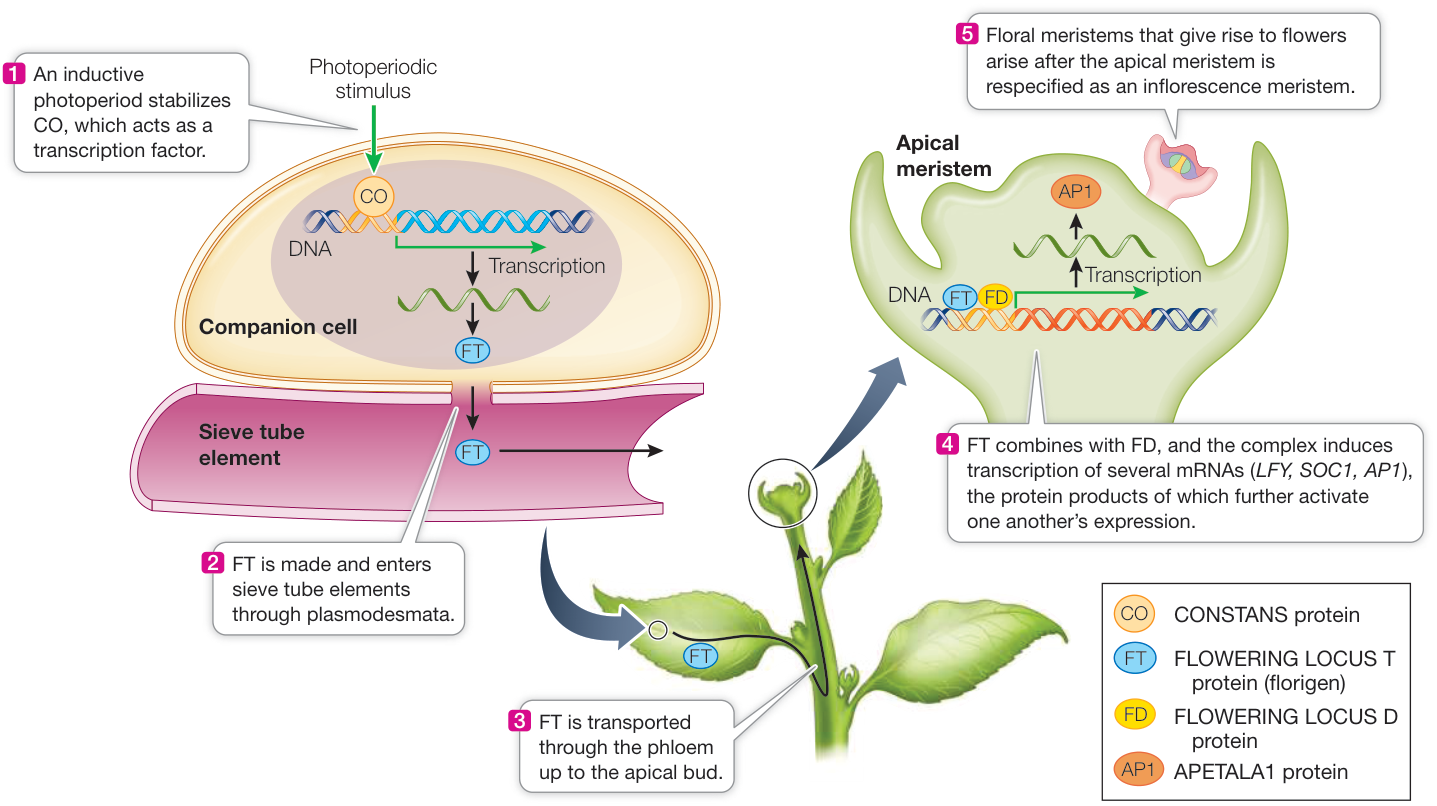
Figure 36.14 Florigen and Its Molecular Biology Florigen is a protein (FT) made in the phloem companion cells. It travels in the sieve tube elements from the leaf to the bud meristem. There, florigen combines with another protein to stimulate transcription of genes that initiate flower formation.
3. FD (FLOWERING LOCUS D) encodes a protein that binds to FT protein when it arrives in the apical meristem. The FD protein is a transcription factor that, when bound to FT, initiates transcription of a set of genes that code for other transcription factors, including the class A floral organ identity gene APETALA1 (API) (see Figure 36.9). The small group of transcription factors that is upregulated by FT–FD creates a positive feedback loop, as several of the proteins upregulate expression of other proteins in the group. Having a positive feedback loop at the center of a developmental transition is advantageous because it can act as a switch between two distinct programs. The meristem is either vegetative, producing leaves, or the positive feedback loop has been activated and the meristem is reprogrammed such that it gives rise to flowers. There is little chance of an in-between state.
Before FT was isolated, grafting experiments indicated that many different plant species could be induced to flower by the same chemical signal. Results of molecular experiments confirmed that the FT gene is involved in photoperiod signaling in many species:
- Transgenic plants (e.g., tobacco and tomato) that express the A. thaliana FT gene at high levels flower regardless of day length.
- Transgenic A. thaliana plants that express FT homologs from other plants (e.g., rice and tomato) flower regardless of day length.
The manner in which light affects the degradation of CO protein is complex. One system that leads to the ubiquitination and then degradation of CO protein is inhibited by several light-activated receptors, resulting in stabilization of CO in the light. Additionally, the amount of active phytochrome B (phyB) present in the morning affects the rate of CO degradation. Recall that phytochrome exists in two forms, and . At night, the form gradually is converted back to . So long nights result in more being converted back to . A low level of in the morning results in less breakdown of CO protein. A high level of CO results in the transcription of genes for flowering, such as FT. To summarize:
Low more CO more transcription of FT flowering
We have considered the photoperiodic regulation of flowering, from photoreceptors in the leaf to florigen that travels from the induced leaf to the sites of flower formation. In some plants, however, flowering is induced by other stimuli. These additional stimuli can function with photoperiodism or independently of it.
Flowering can be induced by temperature or gibberellin
Whereas some plants use the environmental cue of day length to induce flowering, other plants use different mechanisms. These include temperature (another environmental cue) and gibberellin (an internal, hormonal cue).
TEMPERATURE In some plant species, notably certain cereal grains, the environmental signal for flowering is cold temperature, a phenomenon called vernalization (Latin vernus, “spring”). In both wheat and rye, we distinguish two categories of flowering behavior. Spring wheat, for example, is a typical annual plant: it is sown in the spring and flowers in the same year. Winter wheat is sown in the fall, grows to a seedling, overwinters (often covered by snow), and flowers the following summer. If winter wheat is not exposed to cold in its first year, it will not flower normally the next year.
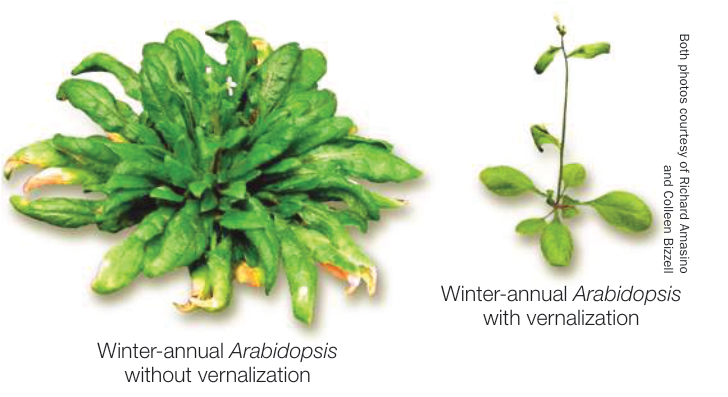
Figure 36.15 Vernalization A genetic strain of Arabidopsis thaliana (winter-annual A. thaliana) requires vernalization for flowering. Without it, the plant is large and vegetative (left), but with the cold period it is smaller and flowers (right).
Studies of A. thaliana have shown how vernalization leads to flowering (Figure 36.15). In some strains of A. thaliana a gene called FLC (FLOWERING LOCUS C) encodes a transcription factor that blocks the FT–FD florigen pathway (see Figure 36.14) by inhibiting expression of FT and FD. Cold temperature inhibits the synthesis of FLC protein, allowing the FT and FD proteins to be expressed, and flowering to proceed. Similar proteins control some steps in vernalization in cereals.
Epigenetics plays an important role in the inhibition of FLC gene expression by cold temperature. Before vernalization, the chromatin at the promoter of the FLC gene is in a relaxed configuration, with histone protein acetylation lowering the ionic attraction of these proteins for DNA, which allows transcription (Figure 36.16A). During vernalization, a gene is expressed whose protein product is involved in the deacetylation of histones on the FLC gene. Deacetylation causes the chromatin to be more compact, which blocks FLC gene expression (Figure 36.16B).
Connect the Concepts As described in Key Concept 16.4, epigenetic remodeling of chromatin involves loosening the nucleosome–DNA complex, opening up DNA for gene transcription. See Figure 16.18.
GIBBERELLIN A. thaliana plants do not flower if they are genetically deficient in the hormone gibberellin, or if they are treated with an inhibitor of gibberellin synthesis. These observations implicate gibberellins in flowering. Direct application of gibberellins to A. thaliana buds results in activation of the meristem identity gene LEAFY, which in turn promotes the transition to flowering.
(A) Chromatin relaxed
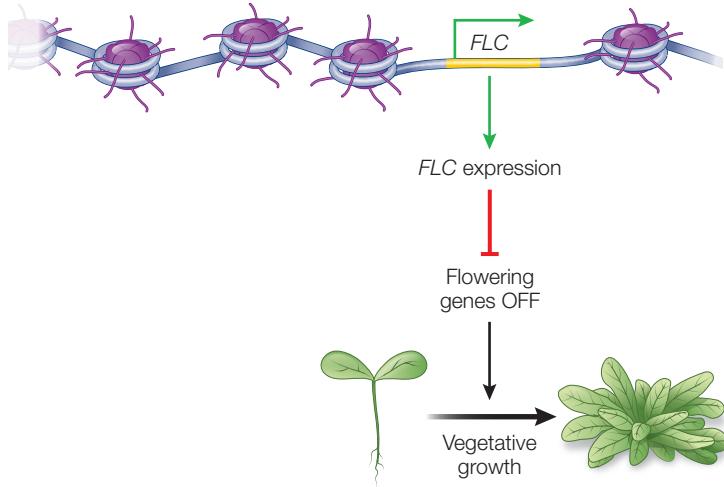
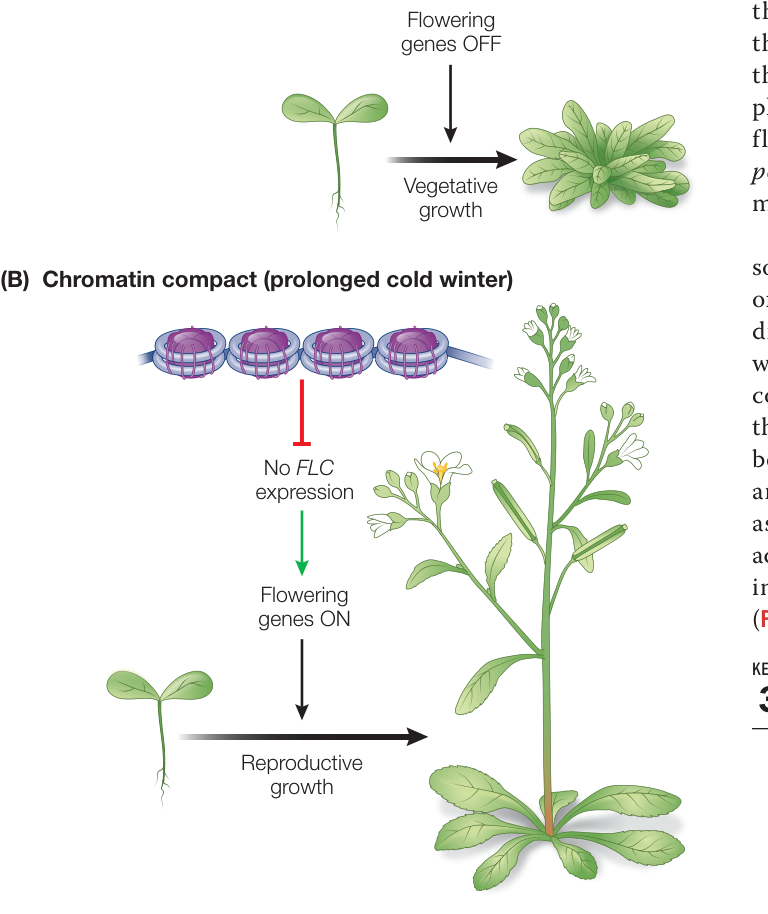
Figure 36.16 Chromatin Remodeling during Vernalization (A) In the absence of vernalization, FLOWERING LOCUS C (FLC) is expressed and flowering is repressed. (B) Prolonged cold weather leads to chromatin remodeling that represses expression of FLC. The absence of FLC protein allows flowering genes to be expressed.
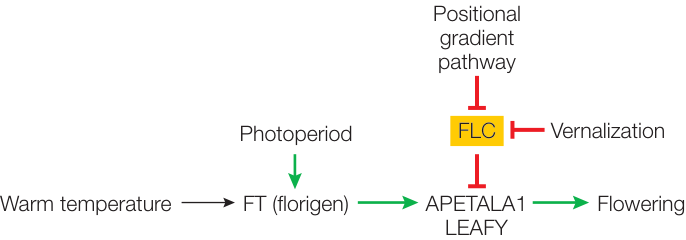
Figure 36.17 Induction of Flowering Multiple factors that promote flowering affect the expression of the same small group of genes.
Some plants do not require an environmental cue to flower
Several plant species and strains do not require a photoperiod or vernalization to flower, but instead flower on cue from an “internal clock.” For example, flowering in some strains of tobacco will be initiated in the terminal bud when the stem has grown four phytomers in length (recall that stems are composed of repeating units called phytomers; see Figure 32.16). If such a bud with a single adjacent phytomer is removed and planted, the cutting will flower because the bud has already received the cue for flowering. But the rest of the shoot below the bud that has been removed will not flower because it is only three phytomers long. After it grows an additional phytomer, it will flower. These results suggest that there is something about the position of the bud (atop four phytomers of stem) that determines its transition to flowering.
The bud might “know” its position by the concentration of some substance that forms a positional gradient along the length of the plant. Such a gradient could be formed if the root makes a diffusible inhibitor of flowering whose concentration diminishes with plant height. When the plant reaches a certain height, the concentration of the inhibitor would become sufficiently low at the tip of the shoot to allow flowering. What this inhibitor might be is unclear, but there is evidence that it acts by decreasing the amount of FLC, allowing the FT–FD pathway to proceed (just as cold acts on FLC in vernalization). A positional gradient that acts on FLC would be consistent with other mechanisms affecting flowering, which all converge on LEAFY and APETALA1 (Figure 36.17).
Recap and Assess
Angiosperms begin flowering after the apical meristem starts expressing a specific set of genes that convert the meristem to an inflorescence meristem. As flowers form, the combination of transcription factors expressed in each of the four whorls of the flower specifies what type of organ (sepal, petal, stamen, or carpel) will be produced. In some angiosperms, the transition to the flowering (reproductive) state is controlled by night length, a phenomenon called photoperiodism. The photoperiodic flowering stimulus originates in the leaf, and a signaling pathway ends in the expression of floral organ identity genes in the bud. In other angiosperms, other cues can drive the transition to flowering.
- Construct a diagram showing how a tulip flower that has two outer whorls, both of which look like petals, could arise by expanding the location in which particular organ identity genes are expressed.
- A horticulturist provides cut flowers for many occasions and often requires large numbers of flowers all blooming at the same time. Many of her flowers are normally summer-blooming, or long-day plants. How might she force these flowers to bloom during the winter?
- Describe the proteins and mutations that could be involved in the
following observations:
- A mutant plant flowers without its normal inductive dark period. When a leaf from the mutant plant is grafted onto an unexposed wild-type plant, the recipient plant flowers.
- A mutant plant does not flower when exposed to the normal inductive dark period. When a leaf from a mutant plant that has been exposed to the inductive dark period is grafted onto an unexposed wild-type plant, the recipient plant flowers.
- A plant flowers only after exposure to cold.
- If a gene is experimentally overexpressed in the leaf, flowering is induced. Overexpression of the gene in the shoot apical meristem, however, does not induce flowering.
You have seen how environmental factors interact with genes to control flowering in angiosperms. The function of flowers is sexual reproduction, which maintains beneficial genetic variation in a population. Many angiosperms, however, also benefit from being able to reproduce asexually.
Angiosperms Can Reproduce Asexually
Learning Objectives
- 36.3.1 Compare and contrast sexual and asexual reproduction in plants, including both the end result and the advantages and disadvantages.
- 36.3.2 List types of locations where vegetatively reproducing plants might occur, and give reasons for their occurrence in these locations.
- 36.3.3 Describe how apomixis occurs and how this might be useful in agriculture.
Although sexual reproduction takes up most of the space in this chapter, asexual reproduction accounts for many of the individual plants present on Earth. This fact suggests that in some circumstances asexual reproduction must be advantageous. In fact, many plants reproduce both asexually and sexually. For example, irises (Iris spp.), have beautiful flowers for sexual reproduction but also a rhizome (an underground stem) from which new plants can arise asexually (Figure 36.18).
We have noted that genetic recombination is one of the advantages of sexual reproduction. Self-fertilization is a form of sexual reproduction, but offers fewer opportunities for genetic recombination than does cross-fertilization. A diploid, self-fertilizing plant that is heterozygous for a certain locus can produce both kinds of homozygotes for that locus plus the heterozygote among its progeny, but it cannot produce any progeny carrying alleles that it does not itself possess. Nevertheless many self-fertilizing plant species produce viable and vigorous offspring.
Asexual reproduction eliminates genetic recombination altogether. A plant that reproduces asexually produces progeny genetically identical to the parent. What, then, is the advantage of asexual reproduction? If a plant is well adapted to its environment, asexual reproduction allows it to pass on to all its progeny a superior combination of alleles, which might otherwise be separated by sexual recombination.
Plants reproduce asexually by several methods
Stems, leaves, and roots are considered vegetative organs and are distinguished from flowers, the reproductive parts of the plant. Asexual reproduction is often accomplished through the modification of a vegetative organ, which is why the term vegetative reproduction is sometimes used to describe asexual reproduction in plants. Often the stem is the organ that is modified for vegetative reproduction. Strawberries, for example, produce horizontal stems, called stolons or runners, which grow along the soil surface, form roots at intervals, and establish potentially independent plants (Figure 36.19A). Asexual reproduction by shoot tips is accomplished when the tips of upright branches sag to the ground and develop roots, as in blackberry and forsythia.
Some plants, such as potatoes, form enlarged fleshy tips of underground stems, called tubers, that can produce new plants from the “eyes.” Rhizomes are horizontal underground stems that can give rise to new shoots. Bamboo is a striking example of a plant that reproduces vegetatively by means of rhizomes. A single bamboo plant can give rise to a stand—even a forest—of plants constituting a single, physically connected entity.
Whereas stolons and rhizomes are horizontal stems, bulbs and corms are short, vertical, underground stems. Lilies and garlic form bulbs (Figure 36.19B), short stems with many fleshy, highly modified leaves that store nutrients. These storage leaves make up most of the bulb. They can give rise to new plants by dividing or by producing new bulbs from axillary buds. Crocuses, gladioli, and many other plants produce corms, underground stems that function very much as bulbs do. Corms are disclike and consist primarily of stem tissue; they lack the fleshy modified leaves that are characteristic of bulbs.
Stems are not the only vegetative organs modified for asexual reproduction. Leaves may also be the source of new plantlets, as in some succulent plants called mother of thousands (genus Kalanchoe) (Figure 36.19C). Many kinds of angiosperms, ranging from grasses to trees such as aspen and poplars, form interconnected, genetically homogeneous populations by means of suckers—shoots produced by roots. What appears to be a whole stand of aspen trees, for example, may be a clone derived from a single tree by suckers (see Figure 11.13). This is why the leaves of a whole stand of aspen typically turn yellow at the same time.
Plants that reproduce vegetatively often grow in physically unstable soils such as eroding hillsides. Plants with stolons or rhizomes, such as beach grasses, rushes, and sand verbena, are common pioneers on coastal sand dunes. Rapid vegetative reproduction enables these plants, once introduced, not only to multiply but also to survive burial by the shifting sand; in addition, the dunes are stabilized by the extensive network of rhizomes or stolons that develops. Vegetative reproduction is also common in some deserts, where the environment is often not suitable for seed germination and the establishment of seedlings.
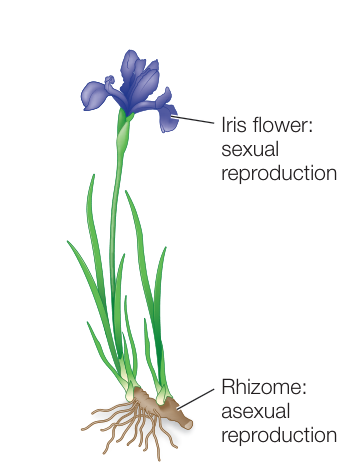
Figure 36.18 Sexual and Asexual Reproduction in Irises
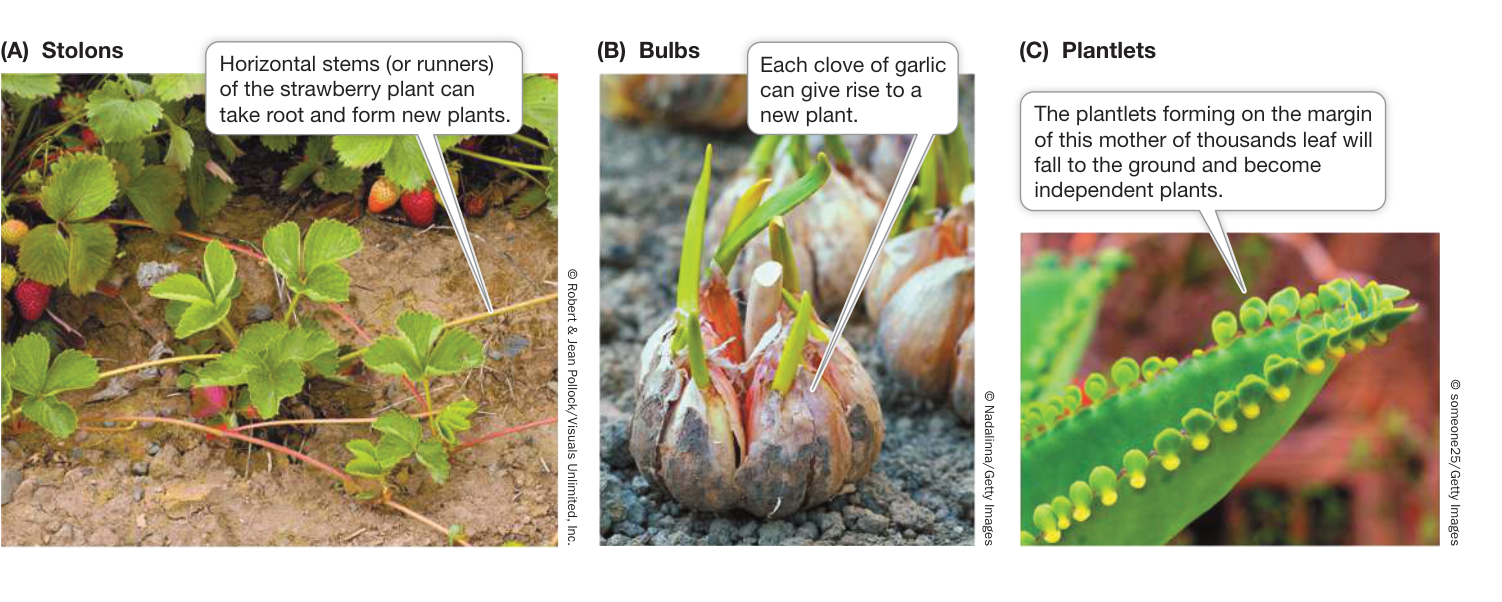
Figure 36.19 Vegetative Organs Modified for Reproduction
Vegetative reproduction has a disadvantage
Vegetative reproduction is highly efficient in an environment that is stable over the long term. A change in the environment, however, can leave an asexually reproducing species at a disadvantage. A striking example is provided by the demise of the English elm (Ulmus procera), which was apparently introduced into England as a clone by the ancient Romans. This tree reproduces asexually by suckers and is incapable of sexual reproduction. In 1967 Dutch elm disease first struck the English elms. After two millennia of clonal growth, the population lacked genetic diversity, and no individuals carried genes that would protect them against the disease. Today the English elm is all but gone from England.
Vegetative reproduction is important in agriculture
One of the oldest methods of vegetative reproduction used in agriculture consists of simply making cuttings of stems, inserting them in soil, and waiting for them to form roots and become autonomous plants. The cuttings are usually encouraged to root by treatment with auxin, a plant hormone.
Woody plants can be propagated asexually by grafting: attaching a bud or a piece of stem from one plant to a root or root-bearing stem of another plant. The part of the resulting plant that comes from the root-bearing “host” is called the stock; the part grafted on is the scion (Figure 36.20). The vascular cambium of the scion associates with that of the stock, forming a continuous cambium that produces xylem and phloem. The cambium allows the transport of water and minerals to the scion and of photosynthetic to the stock. Much of the fruit grown for market in the United States is produced on grafted trees, as are wine grapes.
Another method widely used for asexual plant propagation is meristem culture, in which pieces of shoot apical meristem are cultured on growth media to generate plantlets, which can then be planted in the field. This strategy is vital when uniformity is desired, as in forestry, or when virus-free plants are the goal, as with strawberries and potatoes.
In apomixis, flowers are used in asexual reproduction
Some plants produce flowers but use them to reproduce asexually rather than sexually. Dandelions, blackberries, some citrus trees, and some other plants reproduce by the asexual production of seeds, which is called apomixis. In sexual reproduction, seeds form from the union of haploid gametes in the embryo sac. But in apomixis, reproduction occurs differently. For example:
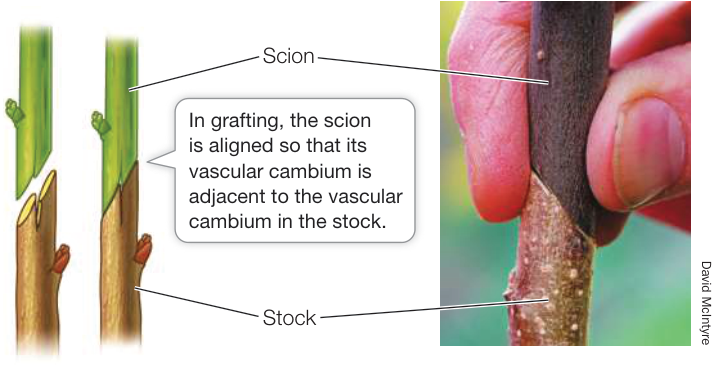
Figure 36.20 Grafting Grafting—attaching a piece of a plant to the root or root-bearing stem of another plant—is a common horticultural technique. The “host” root or stem is the stock; the upper grafted piece is the scion. In the photo, a scion of one apple variety is being grafted onto a stock of another variety.
- The megasporocyte in the ovule that is supposed to undergo meiosis fails to do so, resulting in a diploid egg cell, which then goes on to form an embryo and seed.
- Diploid cells from the integument surrounding the embryo sac form a diploid embryo sac, and the sac goes on to form an embryo and seed.
In both cases, seed and fruit development proceed normally. But the genetic consequences are profound: apomixis produces clones.
Some agriculturally important plants are hybrids that are derived by crossing two genetically different varieties. Because these hybrids have two sets of chromosomes that are not homologous to one another, they cannot undergo meiosis and are sterile. This means they cannot form the seeds and fruits that are desired by people. In citrus, apomixis occurs naturally, which gets around this problem. Kentucky bluegrass, a mainstay of lawns, reproduces in this manner as well.
Many important crops, such as corn, are grown as hybrids because the progeny of a cross between two inbred, homozygous genetic strains are often superior to either of their parents, a phenomenon called hybrid vigor (see Key Concept 12.3). Unfortunately, once farmers have obtained a hybrid with desirable characteristics, they cannot use those plants to create similar seed for the next year. You can imagine the genetic chaos when a hybrid, which is heterozygous at many of its loci (e.g., AaBbCcDdEe, etc.), is crossed with itself: there will be many new combinations of alleles (e.g., AabbCCDdee, etc.), resulting in highly variable progeny. The only way to reliably reproduce the hybrid is to maintain populations of the original parents to cross again each year. That is exactly what seed companies do. For farmers, it means buying new seeds every year—an expensive proposition.
If a hybrid carried a gene for apomixis, however, it could reproduce asexually, and its offspring would be genetically identical to itself. New hybrids could be developed that would be adapted to specific environments and could be propagated by the farmers on the spot. So an intensive search is on for genes for apomixis that could be introduced into desirable crops and allow them to be propagated indefinitely. Such a gene has been identified in corn, but the yield of the variety that contains it is low.
Recap and Assess
Angiosperms may reproduce asexually by means of modified stems, roots, or leaves. Asexual reproduction is advantageous when a plant has a superior genotype well adapted to its environment, but it can decrease the genetic diversity of plant populations. Seeds and fruits, normally the result of sexual reproduction, can form asexually through apomixis.
What are the advantages and disadvantages of asexual reproduction in plants? What are the advantages and disadvantages of sexual reproduction?
In what types of situations might asexual reproduction in plants be adaptive?
Thompson Seedless® grapes are produced from triploid plants. Explain why these grapes are seedless. Describe the role played by the flower in fruit formation when no seeds are being formed.
- Most of the navel orange trees that once grew all over southern California were derived by grafting and apomixis from a single tree that still exists in Riverside, California. How would you prove this?
You have seen how angiosperms reproduce sexually and asexually. A disadvantage of asexual reproduction is that its genetic inflexibility may leave a population unable to cope with new challenges. In the next chapter we will focus on the mechanisms that have evolved in plants to cope with biological and physical challenges in their environment.
Investigating Life: QA How did an understanding of angiosperm reproduction allow floriculturists to develop a commercially successful poinsettia?
Poinsettias are short-day plants, using the long nights of winter as a signal for flowering. In fact, the poinsettia’s inductive dark period of 14 hours was among the first described in a flowering plant. To control photoperiod, the plants are grown in green-houses, where the photoperiod is carefully regulated.
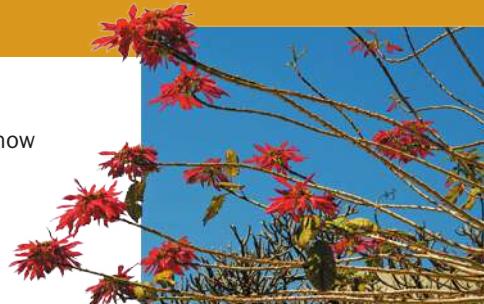
Another important factor in the poinsettia’s commercial success was the plant’s growth habit. In Mexico, the wild relatives of cultivated varieties grow up to 3 meters tall, with few branches (compare the plants shown in the opening question with the commercial variety in the chapter-opening photo). Paul Ecke found a variety that was much shorter and formed an attractive branching plant with axillary shoots. These compact poinsettias were initially propagated asexually by grafting to native plants.
Many new varieties of poinsettias have been generated by conventional sexual reproduction. You can look for the phenotypes of these varieties next holiday season. They include stiff stems, new colors (such as white), and longer lifetimes for the colorful bracts. How do you think these characteristics have been introduced into the cultivated varieties?
Future directions
Sequencing of the genomes of agriculturally important plants and genetic screening of mutant strains have led to an accumulation of knowledge of genes controlling the transition to flowering. Efforts are under way to use this understanding to breed crops that produce more seeds more often, by conventional means or biotechnology. This has enormous potential for human welfare. Consider legumes, which are in two general clades, most represented by peas and soybeans. The former is a long-day plant that responds to cold (vernalization), while the latter is more acclimated to warm climates and responds to short days to flower. Genes for the photoperiodic response and signal transduction for flowering have been identified for both species. For example, genetic changes in signaling could allow the plants to have more vegetative growth prior to flowering, which might lead to more floral meristems, more flowers, and more seeds.
Visual Summary
© Geoffrey Robinson/Alamy Stock Photo
You should be able to relate each summary to the adjacent figures. If you go to this visual summary in Achieve, you can follow links to figures, animations, activities, and simulations that will help you consolidate the material.
Most Angiosperms Reproduce Sexually
- The life cycle of flowering plants has two stages: a haploid gametophyte and a diploid sporophyte.
- Gametophytes produce gametes (eggs and sperm), and sporophytes produce spores.
- In double fertilization, one sperm fertilizes an egg, forming the 2n zygote, and the other sperm fertilizes the polar nuclei, forming the 3n endosperm.
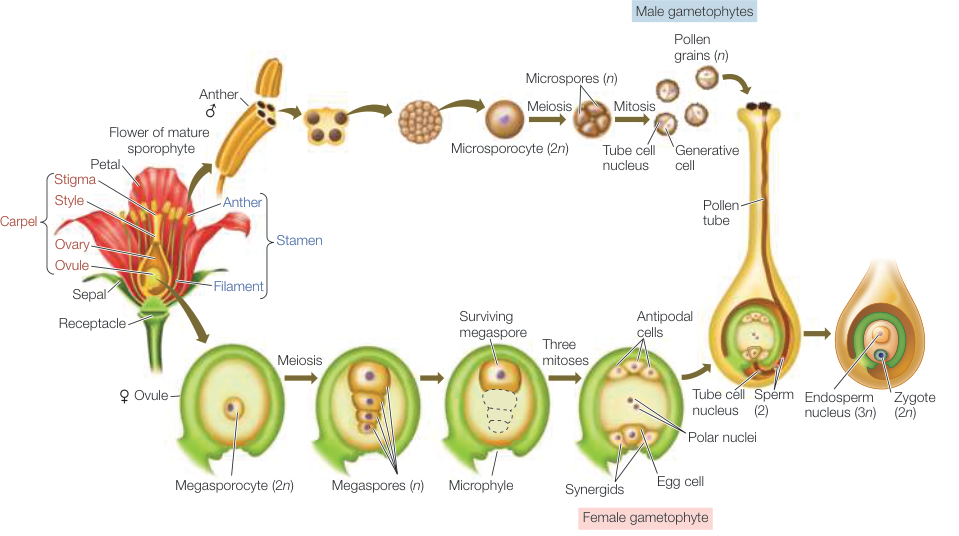
Figure 36.3 Questions
- How do female gametophytes and male gametophytes differ, and how are these differences important to sexual reproduction?
- In the human life cycle, single-celled gametes (eggs and sperm) are produced directly by meiosis of the diploid organism. Which stage of the plant life cycle do humans lack?
- Name one physical and one genetic method that can prevent inbreeding.
Hormones and Signaling Determine the Transition from the Vegetative to the Reproductive State
- Florigen, the hormone that induces a vegetative meristem to be converted to an inflorescence (reproductive) meristem, is produced in leaves in response to an inductive night length.
- An inflorescence meristem can produce floral primordia. Within a floral primordium, the expression of class A, B, and C organ identity genes determines which type of organ (sepal, petal, stamen, or carpel) is produced in each of the four whorls of the flower.
- Many plants use the photoreceptor phytochrome to perceive day-length. Short-day plants (SDPs) bloom when the night is longer than some critical value; long-day plants (LDPs) bloom when the night is shorter than some critical value.
Questions
- Explain how expression of a transcription factor can affect the identity of a developing organ.
- Explain how the co-occurrence of CO expression and a period of afternoon light affects flowering.
- Give at least two pieces of evidence supporting the presence of a transmissible substance that moves from leaves to bud meristems to initiate flowering.
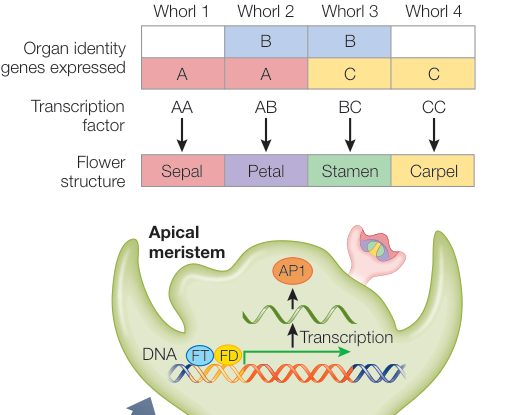
Figure 36.9
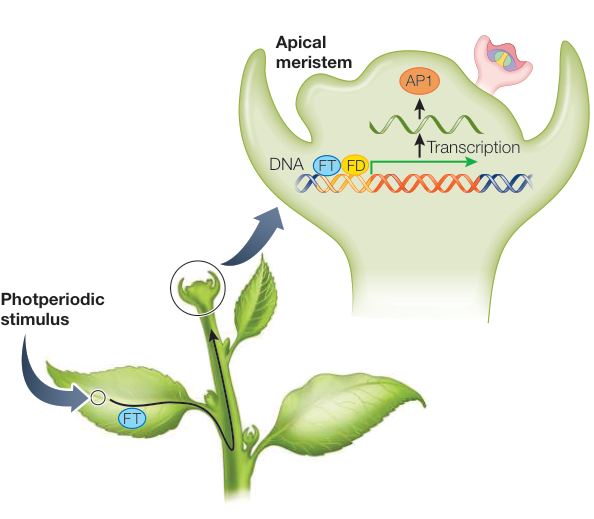
Figure 36.14
Angiosperms Can Reproduce Asexually
- ■ Asexual reproduction allows rapid multiplication of organisms that are well suited to their environment.
- ■ Vegetative reproduction occurs when vegetative organs—such as the stem—are used for reproduction.
- ■ Apomixis is a form of reproduction in which seeds form without fertilization.
Questions
- What form of reproduction (sexual or asexual) might be most advantageous in the face of global climate change?
- Give an example of a habitat where vegetatively reproducing plants might occur, and give reasons for their occurrence in that location.
- How can a failure to undergo meiosis lead to apomixis?
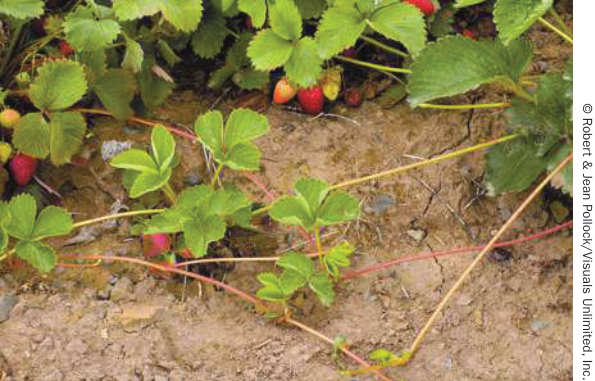
Figure 36.19
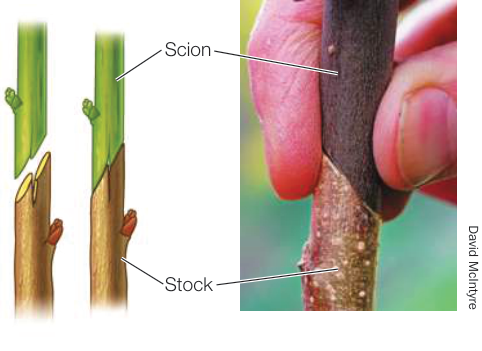
Figure 36.20