Chapter 6Orientational Sampling of Interatomic Vectors
Introduction
Sampling of tensorial properties is one of the fundamental concepts in computational structural biology. We introduce the basic concepts in this chapter, while describing RDCs in more detail. Second-rank tensors, such as the Saupe alignment tensor, can be determined using a set of experimental data and interatomic bond vectors. We describe a framework from Cowburn and co-workers [1] that quantifies how well a distribution of bond vectors samples the components of a tensor, and therefore provides a measure of tensor accuracy and quality. In particular, the framework measures (1) how well orientation space is sampled by a distribution of bond vectors, (2) how well this distribution samples the components of a second-rank tensor, and (3) how well the distribution completely characterizes the tensor.
The sampling properties of a set of 1736 proteins, representing all experimentally determined protein folds, were analyzed using the framework [1]. The results show that NH and carbonyl C’O bond vectors are the least uniformly distributed, reflecting secondary structure properties and hydrogen bonding in proteins. We also describe applications of the framework to experimental optimization, resulting in the determination of more accurate tensor properties.
Theory
The accuracy of a second-rank tensor , determined using a set of interatomic bond vectors, can be computed as follows. We describe (1) the sampling tensor () and (2) the generalized sampling parameter (), which mathematically characterize the uniformity of the bond vector distribution. We also calculate (3) the average constant () and (4) the generalized quality factor (), which quantify the accuracy of the tensor as sampled by the distribution.
Sampling Tensor
The sampling tensor (), represented by a matrix, characterizes the sampling of interatomic bond vector orientations along three axes of an arbitrary reference frame. The elements of the sampling tensor are calculated by
where are axes of an arbitrary reference frame, is the projection of a unit bond vector on the axis , and is the Kronecker delta.
The sampling tensor can be diagonalized to yield the principal axis frame oriented in the direction of best sampling, and the principal values of . The principal values can be used to calculate the sampling fractions ,
which represent the fraction of bond vectors oriented along each axis , with . Since the tensor is diagonalized in the direction of best sampling, , and . If the distribution of vectors is uniform, , and . If the distribution of vectors is perfectly nonuniform, , , , and . The triangle spanned by is called a simplex (see figure 6.1). The properties of sets of simplices will be discussed further in chapter 50.
Generalized Sampling Parameter
The generalized sampling parameter, a scalar, quantifies the uniformity of the distribution of bond vectors. The sampling parameter is calculated by
where are the sampling fractions. If the distribution of vector orientations is uniform, , and if the distribution of vector orientations is perfectly nonuniform, which means that all of the vectors are in the same direction, .
Average Constant
While and characterize the orientational uniformity of a set of bond vectors, quantifies how well the tensor of interest, , is sampled by that set. can be calculated by
where are elements of the sampling tensor and are elements of . If all parts of the tensor are sampled equally well, .
Generalized Quality Factor
The generalized quality factor, a scalar similar to the generalized sampling parameter, measures how well a set of bond vectors samples all elements of , the tensor of interest. The quality factor is calculated by
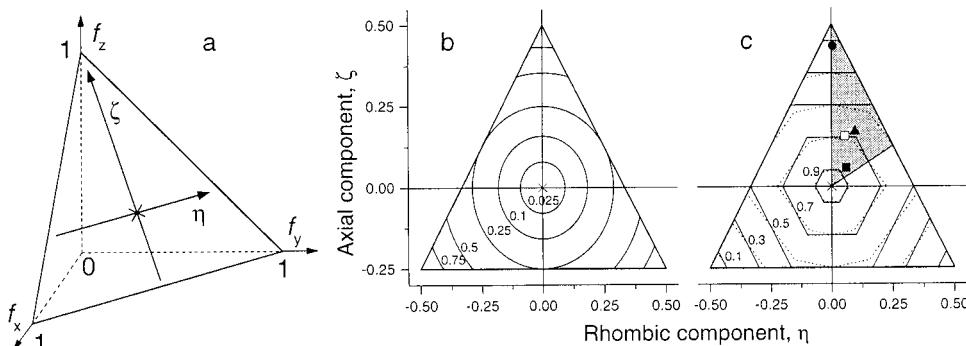
Figure 6.1 Geometric representation of sampling fractions [1]. Reprinted with permission. Copyright 2000 American Chemical Society.
where is the average constant, is the optimal average constant, and is the principal component of .
Geometric Representation
The sampling fractions for a distribution of bond vectors can be represented by a point on a plane in -space. This plane (figure 6.1a) can be parametrized (figure 6.1b and c) in terms of a rhombic component () and an axial component (), calculated by
The rhombic and axial components represent the degree of directional asymmetry of the sampling tensor. Thus, points lying close to the parametrized origin () represent a higher degree of uniformity, whereas points lying away from the parametrized origin represent a lower degree of uniformity. Contour lines represent levels of the generalized sampling parameter, (figure 6.1b), and the generalized quality factor, (figure 6.1c). Because the ordering is imposed, points may only lie in the shaded area in figure 6.1c.
Results
To determine which types of bond vectors (NH, NC , C H , C C’, C’O, Ci/Ni+1) sample orientation space optimally, the sampling properties of 1,736 protein structures (879 single proteins, 857 multisubunit proteins) were measured using the framework of Cowburn and co-workers [1].
The results are graphically illustrated in figure 6.2. The triangles shown correspond to the shaded area in figure 6.1c. Each point represents the sampling properties, , for a particular set of bond vectors in a particular structure.
NH bond vectors represent the least uniformly distributed sets. C’O bond vectors also demonstrate nonuniform distributions. This result has a biophysical, structural basis. NH bond vectors and C’O bond vectors lie antiparallel in the same peptide plane, and thus sample orientation space similarly. The result also reflects secondary structure properties in proteins. N-H-…O=C hydrogen bonding is important to forming -helix and -sheet secondary structures.
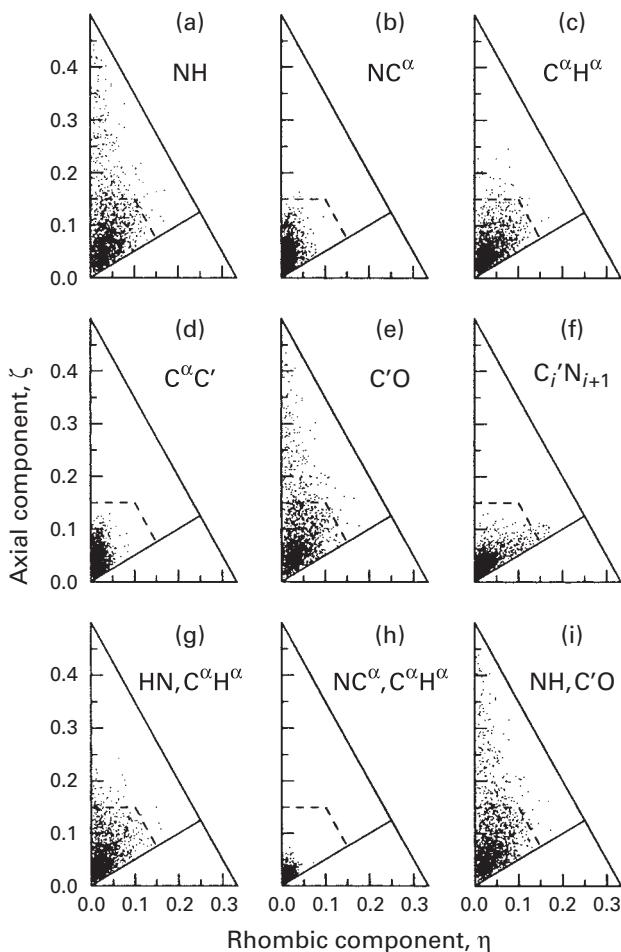
Figure 6.2 Sampling distributions for interatomic bond vectors [1]. Reprinted with permission. Copyright 2000 American Chemical Society.
Generalized sampling parameter () values were calculated for ideal -helices and -sheets. In -helices, for NH bond vectors, indicating a nonuniform distribution. NH bond vectors are all oriented in approximately the same direction, donating a hydrogen bond to the carbonyl group of the amino acid four residues earlier. bond vectors sample orientation space more optimally, with . bond vectors are oriented more uniformly, in different directions around the outside of the helix. NH and bond vectors together sample orientation space better than NH bond vectors alone, with .
In -sheets, both NH and bond vectors are distributed nonuniformly, with for NH bond vectors and for bond vectors. To sample orientation space more uniformly, another set of bond vectors, such as , must be used.
Applications
This framework presents opportunities for experimental optimization. When determining a second-rank tensor for a particular structure or substructure, orientation space may not be optimally sampled, and tensor accuracy may be low, if a particular set of bond vectors, a particular set of residues, or a particular aligning medium is used. By quantifying tensor accuracy and the uniformity of the bond vector distribution using the framework, the experiment can be optimized such that a more uniform distribution and a better sampled, more accurate tensor is obtained.
Fushman et al. [1] determined a rotational diffusion tensor for a protein, using NH bond vectors and relaxation data. For all residues, the bond vector distribution was uniform, , and the tensor was well sampled, . However, using only -helical residues, . We can conclude that using NH bond vectors, data from the -helical residues alone is insufficient to optimally sample orientation space and accurately determine the rotational diffusion tensor. To characterize the rotational diffusion tensor from -helical residues, additional sets of vectors, such as or , should be used.
The authors also determined a Saupe alignment tensor for a protein by recording NH residual dipolar couplings in a liquid-crystalline medium. While the bond vectors sampled orientation space relatively well, , tensor quality was not optimal, . The quality factor () changes if the alignment tensor frame changes relative to the sampling tensor frame. By changing the aligning medium, we can change the relative angle, and improve . This can be accomplished by doping the medium with ions, or using a different aligning medium. Changing from a liquid-crystalline medium to a purple membrane medium changes the angle of the alignment tensor, raising the value of the quality factor and resulting in a more accurate, better sampled alignment tensor, .
Reference
- [1] D. Fushman, R. Ghose, and D. Cowburn. The effect of finite sampling on the determination of orientational properties: A theoretical treatment with application to interatomic vectors in proteins. Journal of the American Chemical Society 122(2000): 10640–10649.