Chapter 2Small Molecules and the Chemistry of Life

Key Concepts
2.1 An Element’s Atomic Structure Determines Its Properties
2.2 Atoms Bond to Form Molecules
2.3 Chemical Reactions Transform Substances
2.4 The Properties of Water Are Critical to the Chemistry of Life
The atoms in water can become part of the bodies of animals that drink it.
Investigating Life: Tracking a Dinosaur
“You are what you eat—and that applies to teeth” is a modification of a famous saying about body chemistry. One of the important atoms in organisms is oxygen (O), which is part of water (H2O). Oxygen has two naturally occurring variants called isotopes; they have the same chemical properties but different weights because their nuclei have different numbers of neutrons. Both isotopes of O are incorporated into the bodies of animals that consume the isotopes in water and food.
The hard surface of teeth, called enamel, is made up largely of calcium phosphate, Ca3(PO4)2. The isotope composition of the oxygen in calcium phosphate enamel varies depending on where an animal was living when the enamel was made. When water evaporates from the ocean, it forms clouds that move inland and release rain. Water with the heavier isotope of O tends to fall more readily than water containing the lighter isotope. As a result, regions of the world that are closer to the ocean receive rain containing more heavy water than do regions farther away, and these differences are reflected in the bodies of animals that dwell in these regions.
This property has been used to reveal an astounding fact about dinosaurs that lived in the great basins of southwestern North America about 150 million years ago. Camarasaurus was big—up to 25 meters long and weighing up to 45 metric tons. Henry Ficke from Colorado College analyzed the oxygen isotopes in the enamel of Camarasaurus fossils and found two kinds of teeth: Some had the heavy oxygen content typical of rains and rocks in the basin region. But others, surprisingly, had a lower proportion of heavy oxygen, indicating that these animals had lived at higher elevations 300 kilometers to the west. This indicated for the first time that dinosaurs migrated a long way from west to east. The reason for this migration is not clear. Camarasaurus ate a plant-based diet, and perhaps the migration was directed at finding food.
Many biological phenomena are analyzed and understood in the context of chemistry. You will learn, for example, that adding even one atom to a large molecule can change its character and function. Analyzing the isotopes in dinosaur teeth is but one example of how chemical analysis has led to advances in biological science.
Q&A What insights into biological systems have been discovered through isotope analysis? (Find the answer on page 40.)
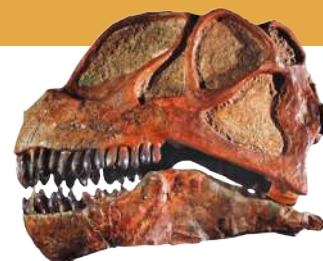
Phil Degginger/Alamy Stock Photo
An Element’s Atomic Structure Determines Its Properties
Learning Objectives
- 2.1.1 Compare the elements found in living tissue with elements found in nonliving matter.
- 2.1.2 Relate the atomic structure of an atom to its identity as an element.
- 2.1.3 Explain the role that the outermost electron shell plays in determining how an atom may combine with other atoms.
- 2.1.4 Explain how elements can be grouped into columns on the periodic table according to their chemical properties.
All matter is composed of atoms. Atoms are tiny—more than a trillion () of them could make up the period at the end of this sentence. Atoms and their component particles have volume and mass, which are characteristics of all matter. Mass is a measure of the quantity of matter present; the greater the mass, the greater the quantity of matter. Atoms also have electric charges.
Atoms contain protons, neutrons, and electrons
Each atom consists of a dense, positively charged nucleus, around which are one or more negatively charged electrons (Figure 2.1). The nucleus contains one or more positively charged protons and may contain one or more neutrons with no electric charge.
The mass of a proton serves as a standard unit of measure called the dalton (named after the English chemist John Dalton). A single proton or neutron has a mass of about 1 dalton (Da), which is grams ( g), but an electron has even less mass at g ( Da). Because the mass of an electron is negligible compared with the mass of a proton or a neutron, the contribution of electrons to the mass of an atom can usually be ignored when measurements and calculations are made. It is electrons, however, that determine how atoms will combine with other atoms to form stable associations.
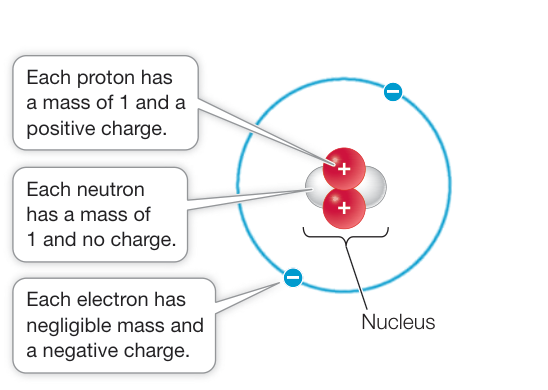
Figure 2.1 The Structure of an Atom An atom has a nucleus composed of neutrons and protons surrounded by electrons. Although the nucleus accounts for virtually all of the atomic weight, it occupies only 1/10,000 of the atom’s volume. This type of representation, which is called a Bohr model, depicts individual electrons moving in “orbits” at set distances from the nucleus.
Each proton has a positive electric charge, defined as +1 unit of charge. An electron has a negative charge equal and opposite to that of a proton (-1). The neutron, as its name suggests, is electrically neutral, so its charge is 0. Charges that are different (+/-) attract each other, whereas charges that are alike (+/+, -/-) repel each other. Generally, atoms are electrically neutral because the number of electrons in an atom equals the number of protons.
An element consists of only one kind of atom
An element is a fundamental substance that contains only one kind of atom. The element hydrogen consists only of hydrogen atoms; the element iron consists only of iron atoms. The atoms of each element have characteristics that distinguish them from the atoms of other elements. These physical and chemical properties (how they interact with other atoms) depend on the numbers of particles the atoms contain.
There are more than 100 different elements, although only 92 of them occur naturally. About 98% of the tissue of every living organism (except in skeletons) is composed of just six elements:
| Carbon (symbol C) | Hydrogen (H) | Nitrogen (N) |
|---|---|---|
| Oxygen (O) | Phosphorus (P) | Sulfur (S) |
Although living organisms are composed of the same elements as the nonliving universe, the proportions in living systems are very different. For example, oxygen makes up 65% of the human body (excluding bones). But it makes up 21% of Earth’s atmosphere and 46% of Earth’s crust. Carbon makes up 18% of the human body but less than 1% Earth’s atmosphere and its crust. Silicon, by contrast, makes up less than 0.01% of the human body and is absent from our atmosphere, but it makes up 28% of Earth’s crust. Clearly, living systems are selective in the amounts of elements they extract from the environment. This selectivity is a fundamental property of life.
Each element has a unique number of protons
A particular element differs from other elements by the number of protons in the nucleus of each of its atoms; the number of protons is designated the atomic number. This atomic number is unique to each element. The atomic number of helium is 2, and an atom of helium always has two protons; the atomic number of oxygen is 8, and an atom of oxygen always has eight protons. Since the number of protons (and electrons) determines how an element behaves in chemical reactions, it is possible to arrange the elements in a table such that those with similar chemical properties are grouped together. This is the familiar periodic table you see in Figure 2.2.
Along with a definitive number of protons, every element except hydrogen has one or more neutrons in its nucleus. The mass number of an atom is the total number of protons and neutrons in its nucleus. The nucleus of a carbon atom contains six protons and six neutrons and has a mass number of 12. Oxygen has eight protons and eight neutrons and has a mass number of 16. Since the mass of an electron is negligible, the mass number is essentially the mass of the atom in daltons.
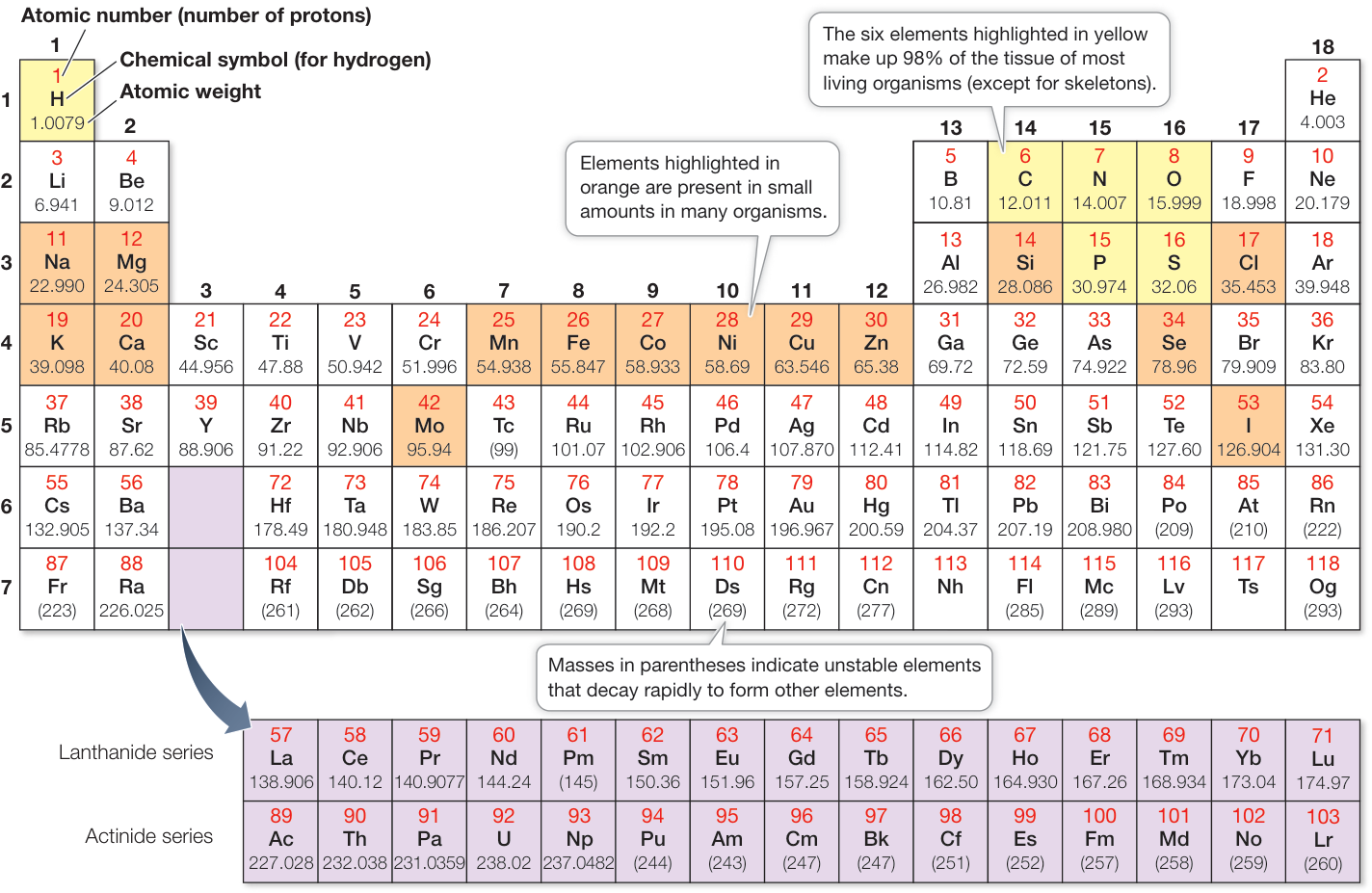
Figure 2.2 The Periodic Table The periodic table groups all the elements according to their physical and chemical properties. Elements 1–92 occur in nature; elements with atomic numbers greater than 94 were created in the laboratory.
Q: Why is this table called the periodic table?
By convention, we often print the symbol for an element with the atomic number at the lower left and the mass number at the upper left, both immediately preceding the symbol. Thus hydrogen, carbon, and oxygen can be written as , , and , respectively.
The number of neutrons differs among isotopes
In some elements, there are different forms in which the number of neutrons in the nucleus may vary. Different isotopes of the same element have the same number of protons but different numbers of neutrons, as you saw in the story opening this chapter. Many elements have several isotopes. Generally, isotopes are formed when atoms combine and/or release subatomic particles (decay). The isotopes of hydrogen (Figure 2.3) have special names, but for most elements their isotopes do not have special names.
For example, there are three isotopes of carbon: (six neutrons in the nucleus), (seven neutrons), and (eight neutrons). Note that all three (called carbon-12, carbon-13, and carbon-14) have six protons, so they are all carbon. Most carbon atoms are , about 1.1% are , and a tiny fraction are . The carbon atoms that make up complex biological molecules are mostly , but some are . The ratio of : varies with location and can be used to identify biological samples whose origin is not known (Investigating Life: Determining Beef Source in Big Macs Using Isotope Analysis). All carbon isotopes have virtually the same chemical reactivity, which is an important property for their use in experimental biology and medicine.
An element’s atomic weight (or relative atomic mass) is equivalent to the average of the mass numbers of a representative sample of atoms of that element, with all the isotopes in their normally occurring proportions. More precisely, an element’s atomic weight is defined as the ratio of the average mass per atom of the element to of the mass of an atom of . Because it is a ratio, atomic weight is a dimensionless physical quantity—it is not expressed in units. The atomic weight of hydrogen, taking into account all of its isotopes and their typical abundances, is 1.00794. This number is fractional because it is the average of the contributing masses of all of the isotopes. This definition implies that in any given sample of hydrogen atoms of a particular element found on Earth, the average composition of isotopes will be constant. But as you saw in the opening to this chapter, that is not necessarily so. Some water has more of the heavy O isotopes. So chemists are now listing atomic weights as ranges, for example, H: 1.00784–1.00811.
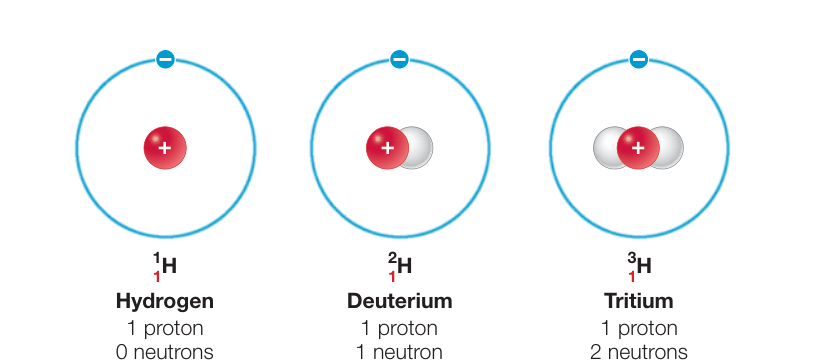
Figure 2.3 Isotopes of Hydrogen All three forms of H have the same number of protons (1), but their number of neutrons differs.
Investigating Life: Determining Beef Source in Big Macs Using Isotope Analysis
Experiment
Original Paper: L. Martinelli et al. 2011. Worldwide stable carbon and nitrogen isotopes of Big Mac patties: An example of a truly “glocal” food. Food Chem 127: 1712–1718.
The Big Mac hamburger can be purchased in 38,000 outlets in 120 countries. The recipe for the Big Mac is virtually the same everywhere; it is claimed that the burger has the same quality meat and nutritional quality everywhere it is served. To investigate this claim, Lesley Chesson and James Ehleringer at the University of Utah compared the ratio of : in Big Mac patties around the world to determine whether the meat had a local or a common source. Beef cattle eat plant food, and carbon atoms from this food end up in meat. In some types of plants, the ratio of : is higher than in others. Depending on which type of plants the cattle consume, the beef will also have a different : ratio.
HYPOTHESIS Beef in Big Macs served in different countries comes from the same source.
METHOD
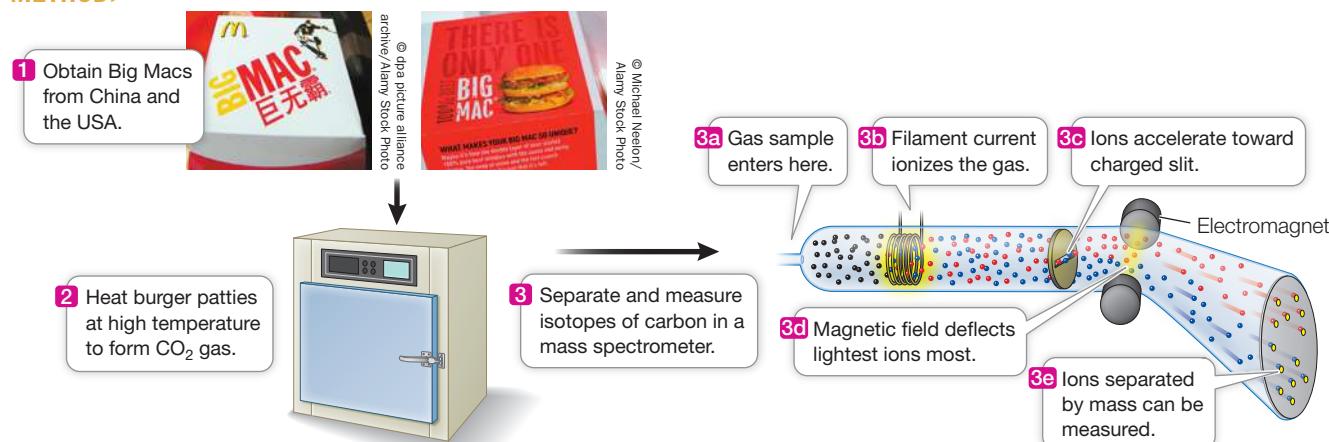
RESULTS
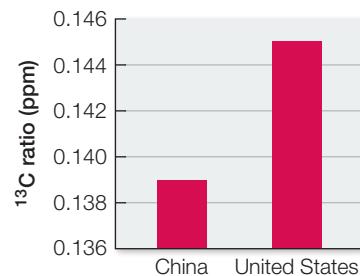
CONCLUSION The Big Mac burger patties in the two countries have a different isotopic ratio of : atoms, which reflects local sources for the beef. The hypothesis is rejected.
Most isotopes are stable. However, some, called radioisotopes, are unstable and spontaneously give off energy in the form of (alpha), (beta), or (gamma) radiation from the nucleus. Known as radioactive decay, this release of energy transforms the original atom. The type of transformation varies depending on the radioisotope, but some transformations result in a different number of protons, so that the original atom becomes a different element. This is especially true of elements with atomic numbers greater than 92, which exist only in the laboratory.
Scientists can detect released radiation from radioisotopes. For instance, if you feed an earthworm food containing a radioisotope, you can follow the worm’s path through the soil by using a detector called a Geiger counter. Most atoms in living organisms are organized into stable associations called molecules. If a radioisotope is incorporated into a molecule, it acts as a tag or label, allowing a researcher or physician to track the molecule in an experiment or in the body (Figure 2.4).
Work with the Data
The experiment compared the meat in Big Macs served in 26 different countries by measuring the ratio of stable carbon isotopes () in samples of ten beef patties from each country. The hypothesis was based on claims that the beef used in Big Macs comes from a single source, and that the ratio in patties found everywhere should thus be the same. Table A shows the average ratio for each of the 26 countries. A higher number means more of the rare, stable isotope than of the more common .
Table A
| Country | ratio a | Country | ratio | Country | ratio |
|---|---|---|---|---|---|
| All | 15.8 | Germany | 21.7 | Portugal | 20.7 |
| Argentina | 17.2 | Hungary | 22.0 | Scotland | 25.2 |
| Australia | 19.4 | Indonesia | 19.5 | Slovakia | 21.0 |
| Austria | 22.0 | Israel | 20.4 | South Africa | 13.0 |
| Brazil | 11.1 | Japan | 11.8 | Spain | 21.1 |
| Canada | 21.6 | Malaysia | 21.5 | Sweden | 23.2 |
| China | 13.9 | Mexico | 13.9 | Turkey | 20.5 |
| England | 25.4 | Netherlands | 20.7 | United States | 14.5 |
| France | 21.8 | Paraguay | 12.1 | Uruguay | 16.7 |
aMeasured in parts per million atoms ().
QUESTIONS►
- Do the average local ratios differ from the 26-country average ratio? What statistical test would you perform to show that the differences between the individual country averages and the all-countries average are significant? (Refer to Appendix B.)
- The countries from which the hamburgers were analyzed are in different locations on Earth. One way to compare locations is by geographic latitude. You may recall that in latitude, 0 degrees defines the equator and 90 degrees defines the poles. Table B shows average ratios of Big Mac beef patties from different latitudes. Plot the data on a graph of ratio versus latitude. What can you conclude from these data?
Table B
| Latitude | ratio a |
|---|---|
| 20°S–20°N | 11.4 |
| 20°–40° b | 15.3 |
| 40°–60° b | 21.8 |
aAverage value measured in parts per million atoms ().
b20°S–40°S and 20°N–40°N; 40°S–60°S and 40°N–60°N.
Connect the Concepts Radioisotopes are also used to analyze biochemical pathways (see Key Concept 10.3) and to date fossils (see Key Concept 24.1).
Although radioisotopes are useful in research and in medicine, even a low dose of the radiation they emit has the potential to damage molecules and cells. However, these damaging effects are sometimes used to our advantage; for example, the radiation from (co-balt-60) and (iodine-131) is used in medicine to kill cancer cells.
The behavior of electrons determines chemical bonding and geometry
The number of electrons in an atom determines how it will combine with other atoms. Biologists are interested both in the structures of substances in living systems, and how chemical changes take place in living cells. Combinations of atoms, usually involving changes in the distribution of electrons in atoms, underlie both of these areas of interest.
The location of a given electron in an atom at any given time is impossible to determine. We can only describe a volume of space within the atom where the electron is likely to be. The region of space where the electron is found at least 90% of the time is the electron’s orbital. Orbitals have characteristic shapes and orientations, and a given orbital can be occupied by a maximum of two electrons. Thus any atom larger than helium (atomic number 2) must have electrons in two or more orbitals. As we move from lighter to heavier atoms in the periodic table, the orbitals are filled in a specific sequence, in a series of what are known as electron shells, or energy levels, around the nucleus.
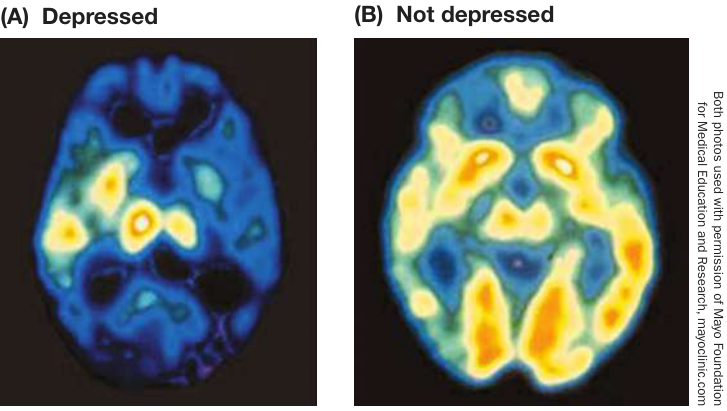
Figure 2.4 Tagging the Brain In these images from live persons, a radioactively labeled sugar has been used to detect differences between the brain activity of a depressed person (A) and a person who is not depressed (B). The more active a brain region is, the more sugar it takes up (shown as dark yellow areas). The brain of the depressed person (left) shows less activity than the brain of the person who is not depressed. Q: How could this technique be used in the clinic?
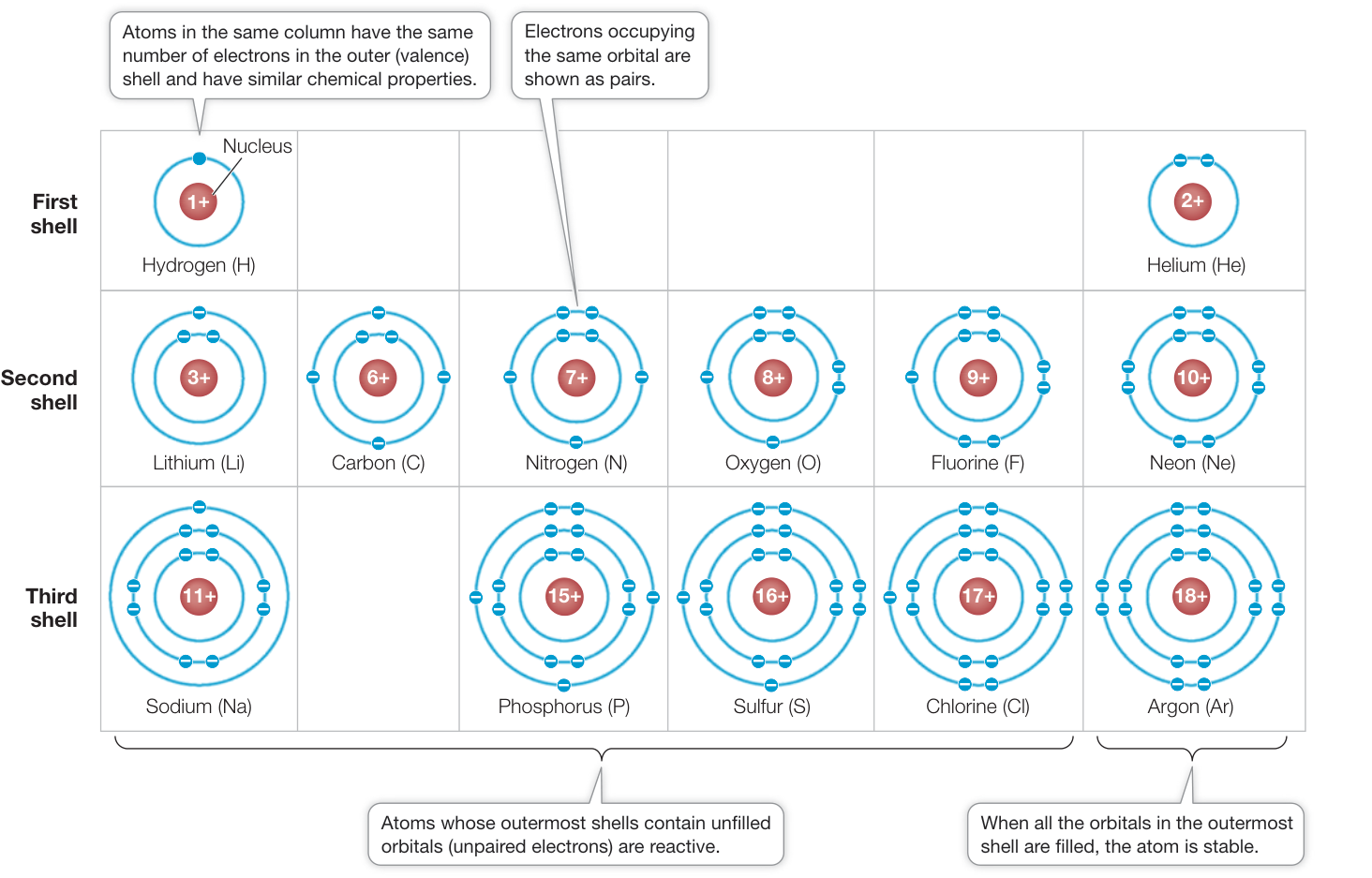
Figure 2.5 Electron Shells Determine the Reactivity of Atoms Each shell can hold a specific maximum number of electrons. Going out from the nucleus, each shell must be filled before electrons can occupy the next shell. The energy level of an electron is higher in a shell farther from the nucleus. An atom with unpaired electrons in its outermost shell can react (bond) with other atoms. Note that the atoms in this figure are arranged similarly to their arrangement in the periodic table. Q: Which elements on this graph do not react with other elements? Why?
- First shell: The innermost electron shell consists of just one orbital. A hydrogen atom () has one electron in its first shell; helium () has two. Atoms of all other elements have two or more shells to accommodate orbitals for additional electrons.
- Second shell: The second shell contains four orbitals and hence holds up to eight electrons.
- Additional shells: Elements with more than ten electrons have three or more electron shells. The farther a shell is from the nucleus, the higher the energy level is for an electron occupying that shell.
Every electron shell has a single, spherical orbital. The second shell and subsequent shells also have three dumbbell-shaped orbitals. The third shell and subsequent shells have additional orbitals. The orbitals fill with electrons first, and their electrons have the lowest energy level. Subsequent shells have different numbers of orbitals, but the outermost shells usually hold only eight electrons. In any atom, the outermost electron shell (the valence shell) determines how the atom combines with other atoms—that is, how the atom behaves chemically. When a valence shell with four orbitals contains eight electrons, there are no unpaired electrons and the atom is stable—it is least likely to react with other atoms (Figure 2.5). Examples of chemically stable elements are helium, neon, and argon. By contrast, atoms that have one or more unpaired electrons in their outer shell are capable of reacting with other atoms.
Atoms with unpaired electrons (i.e., partially filled orbitals) in their outermost electron shell are unstable and will undergo reactions in order to fill their outermost shell. Reactive atoms can attain stability either by sharing electrons with other atoms or by losing or gaining one or more electrons. In either case, the atoms involved are bonded together into stable associations called molecules. The tendency of atoms to form stable molecules so that they have eight electrons in their outermost shell is known as the octet rule. Many atoms in biologically important molecules—for example, carbon (C) and nitrogen (N)—follow this rule. An important exception is hydrogen (H), which attains stability when two electrons occupy its single shell (consisting of just one orbital).
Recap and Assess
Living organisms are composed of the same set of chemical elements as the rest of the universe. An atom consists of a nucleus of protons and neutrons and a characteristic configuration of electrons in orbitals around the nucleus. An atom’s chemical properties are determined by its atomic structure. Elements are composed of atoms with the same number of protons. Elements are grouped in the periodic table according to the number of electrons in their outermost shell.
- Describe how the configuration of the valence shell influences the placement of an element in the periodic table.
- How does bonding help a reactive atom achieve stability?
- Would you expect the elemental composition of Earth’s crust to be the same as that of the human body? Explain your answer.
- There is an isotope of oxygen with a mass number of 18. With respect to the number of protons, neutrons, and electrons, how does this isotope differ from oxygen atoms with a mass number of 16?
You have been introduced to the individual players on the biochemical stage—the atoms. We have shown how the number of unpaired electrons in an atom’s valence shell drives its “quest for stability.” Next we will describe the different types of chemical bonds that can lead to stability—joining atoms together into molecular structures with different properties.
Atoms Bond to Form Molecules
Learning Objectives
- 2.2.1 Compare chemical bonds and explain why covalent bonds are so strong.
- 2.2.2 Identify examples of polar covalent and nonpolar covalent bonds.
- 2.2.3 Distinguish between hydrophilic and hydrophobic interactions using examples.
- 2.2.4 Identify instances in which van der Waals forces are important.
A chemical bond is an attractive force that links two atoms together in a molecule. There are several kinds of chemical bonds (Table 2.1). We will begin with covalent bonds, the strong bonds that result from the sharing of electrons. Next we will examine ionic bonds, which form when an atom gains or loses one or more electrons to achieve stability. We will then consider other, weaker kinds of interactions, including hydrogen bonds.

Animation 2.1 Chemical Bond Formation
Covalent bonds consist of shared pairs of electrons
A covalent bond forms when two atoms attain stable electron numbers in their outermost shells by sharing one or more pairs of electrons. In a covalent bond, each atom contributes one member of each electron pair. Consider two hydrogen atoms coming close to one another, each with an unpaired electron in its single shell (Figure 2.6). When the electrons pair up, each hydrogen atom attains a stable number of electrons in its outermost shell—in this case, two electrons—and this links the two hydrogen atoms in a covalent bond, forming the molecule .
A compound is a pure substance made up of two or more different elements bonded together in a fixed ratio. Chemical symbols identify the different elements in a compound, and subscript numbers indicate how many atoms of each element are present. For example, water () has two atoms of hydrogen (H) bonded to a single oxygen atom (O). Every compound has a molecular weight that is the sum of the atomic weights of all atoms in the molecule. Looking at the periodic table in Figure 2.2, you can calculate the molecular weight of water to be 18.01. Molecules that make up living organisms can have molecular weights of up to half a billion.
Table 2.1 Chemical Bonds and Interactions
aBond energy is the amount of energy in kcal/mol needed to separate two bonded or interacting atoms under physiological conditions.
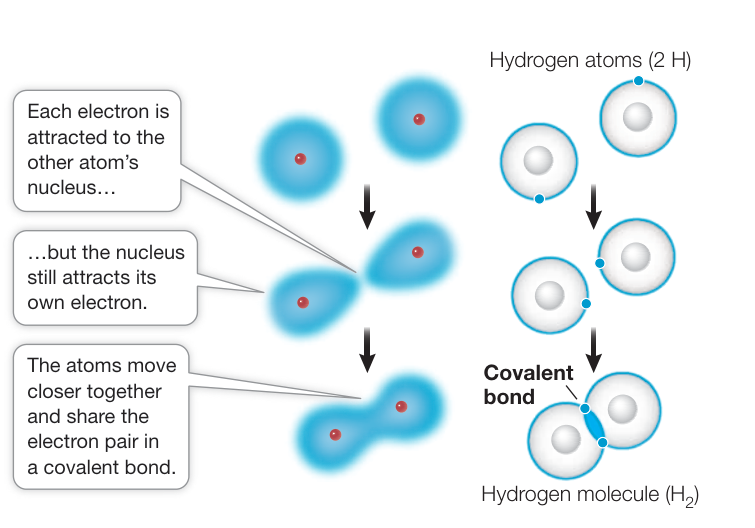
Figure 2.6 Electrons Are Shared in Covalent Bonds Two hydrogen atoms can combine to form a hydrogen molecule. A covalent bond forms when the electron orbitals of the two atoms overlap in an energetically stable manner.
How are the covalent bonds formed in a molecule of methane gas ()? The carbon atom has six electrons: two electrons fill its inner shell, and four unpaired electrons travel in its outer shell. Because its outer shell can hold up to eight electrons, carbon can share electrons with up to four other atoms—it can form four covalent bonds. When an atom of carbon reacts with four hydrogen atoms, methane forms. Thanks to electron sharing, the outer shell of methane’s carbon atom is now filled with eight electrons, a stable configuration. The outer shell of each of the four hydrogen atoms is also filled. Four covalent bonds—four shared electron pairs—hold methane together. Figure 2.7 shows several different ways to represent molecular structures. Table 2.2 shows the covalent bonding capabilities of some biologically significant elements.
STRENGTH AND STABILITY Covalent bonds are very strong, meaning that it takes a lot of energy to break them. At temperatures where life exists, the covalent bonds of biological molecules are quite stable, as are their three-dimensional structures. However, this stability does not preclude change, as you will see.
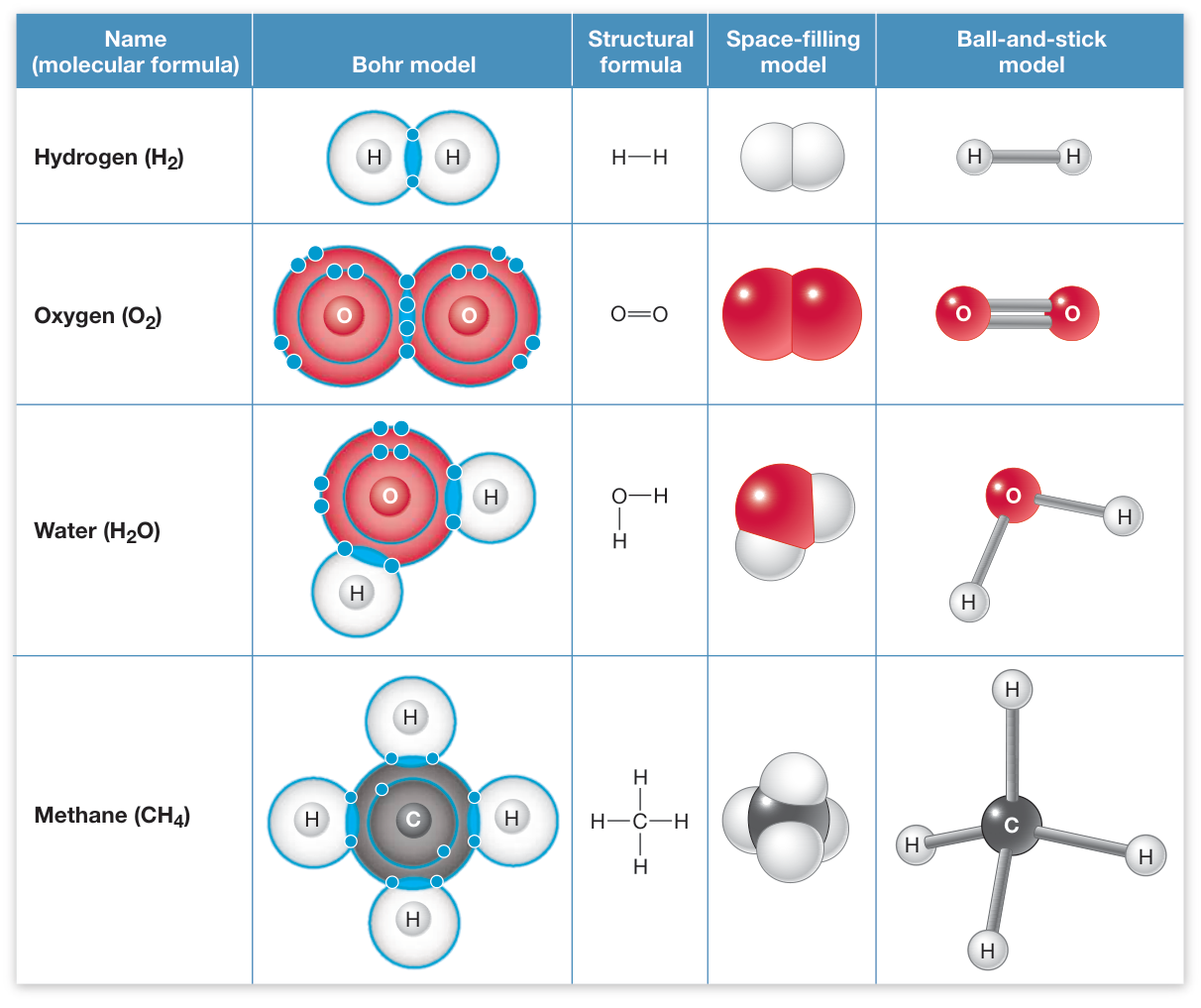
Figure 2.7 Molecular Structures The four molecules shown here are all formed by covalent bonding.
Q: Draw the four representations for carbon dioxide ().
Table 2.2 Covalent Bonding Capabilities of Some Biologically Important Elements
| Element | Usual number of covalent bonds |
|---|---|
| Hydrogen (H) | 1 |
| Oxygen (O) | 2 |
| Sulfur (S) | 2 |
| Nitrogen (N) | 3 |
| Carbon (C) | 4 |
| Phosphorus (P) | 5 |
ORIENTATION For a given pair of elements—for example, carbon bonded to hydrogen—the length of the covalent bond is always the same. And for a given atom within a molecule, the angle of each of its covalent bonds, with respect to the other bonds, is generally the same. This is true regardless of the type of larger molecule that contains the atom. For example, the four filled orbitals around the carbon atom in methane are always distributed in space so that the bonded hydrogen atoms point to the corners of a regular tetrahedron, with carbon in the center (see Figure 2.7). Even when carbon is bonded to four atoms other than hydrogen, this three-dimensional orientation is more or less maintained. The orientation of covalent bonds in space gives the molecules their three-dimensional geometry, and the shapes of molecules contribute to their biological functions (see Key Concept 3.1).
Even though the orientations of bonds around each atom are fairly stable, the shapes of molecules can change. Think of a single covalent bond as an axle around which the two atoms, along with their other bonded atoms, can rotate (Figure 2.8). Bond rotation has enormous implications for the large molecules that make up living tissues. Since long chains of atoms (especially carbons) can rotate freely, there are many possibilities for the arrangement of atoms within the chain. This allows molecules to alter their structures, for example, to fit other molecules.
MULTIPLE COVALENT BONDS Two atoms can share more than one pair of electrons, forming multiple covalent bonds. These can be represented by lines between the chemical symbols for the linked atoms:
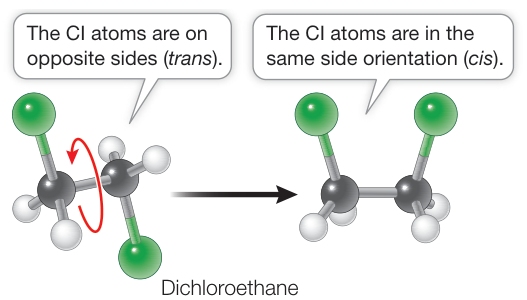
Figure 2.8 Different Orientations of Atoms around a Covalent Bond Rotation of atoms around a C—C bond allows different structures to form. These can have very different properties.
- A single bond involves the sharing of a single pair of electrons (for example, H—H or C—H).
- A double bond involves the sharing of four electrons (two pairs) ().
- Triple bonds—six shared electrons—are rare, but there is one in nitrogen gas (), which is the major component of the air we breathe.
The bond energies are higher for multiple covalent bonds. For example, the bond energy of a C—C single bond is 80 kcal/mol while that of a C=C double bond is 145 kcal/mol.
UNEQUAL SHARING OF ELECTRONS When two atoms of the same element are covalently bonded, electrons in the bond are shared equally by both atoms. However, when the two atoms are of different elements, the sharing may not be equal. One nucleus may exert a greater attractive force on the electron pair than the other nucleus, so that the pair tends to be closer to that atom.
The attractive force that an atomic nucleus exerts on electrons is called its electronegativity. The electronegativity of an atom depends roughly on how many positive charges it has (atoms with more protons are more positive and thus more attractive to electrons) and on the distance between the nucleus and the electrons in the outer (valence) shell (the closer the electrons, the greater the electronegative pull). Table 2.3 shows the electronegativities (which are calculated to produce dimensionless quantities) of some elements important in biological systems. Note that oxygen (O) is very electronegative; in fact, oxygen is the second most electronegative element (after fluorine). Many organisms exploit the negativity of oxygen; moving electrons between C and O atoms powers living systems, as you will see in many subsequent examples in this text.
If two atoms are close to one another in electronegativity, they will share electrons equally in what is called a nonpolar covalent bond. Two oxygen atoms, for example, each with an electronegativity of 3.5, will share electrons equally. So will two hydrogen atoms (each with an electronegativity of 2.1). But when hydrogen bonds with oxygen to form water, the electrons involved are shared unequally; they tend to be nearer to the oxygen nucleus because it is more electronegative than hydrogen. When electrons are drawn to one nucleus more than to the other, the result is a polar covalent bond (Figure 2.9). Typically, a polar covalent
Table 2.3 Some Electronegativities
| Element | Electronegativity |
|---|---|
| Oxygen (O) | 3.5 |
| Chlorine (Cl) | 3.1 |
| Nitrogen (N) | 3.0 |
| Carbon (C) | 2.5 |
| Phosphorus (P) | 2.1 |
| Hydrogen (H) | 2.1 |
| Sodium (Na) | 0.9 |
| Potassium (K) | 0.8 |
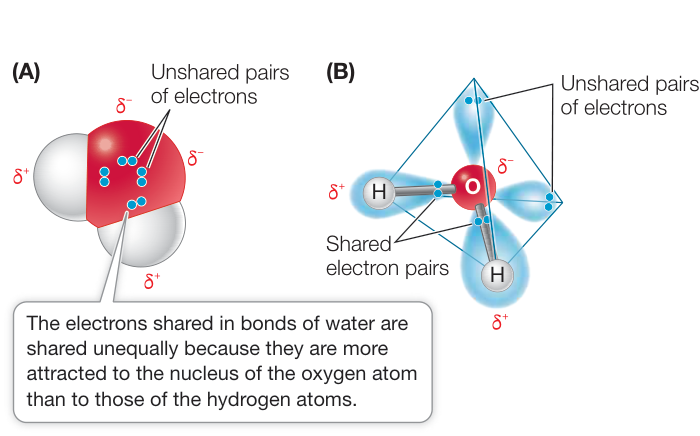
Figure 2.9 Water’s Covalent Bonds Are Polar When atoms with different electronegativities, such as oxygen and hydrogen, form a covalent bond, the electrons are drawn to one nucleus more than to the other. (A) A molecule held together by such a polar covalent bond has partial ( and ) charges at different surfaces. (B) In water, the shared electrons are displaced toward the oxygen atom’s nucleus.
bond occurs when the two atoms participating differ in electronegativity by more than 0.4.
Because of this unequal sharing of electrons, the oxygen end of the hydrogen–oxygen bond has a slightly negative charge (symbolized by and spoken of as “delta negative,” meaning a partial unit of charge), and the hydrogen end has a slightly positive charge (). The bond is polar because these opposite charges are separated at the two ends, or poles, of the bond. The partial charges that result from polar covalent bonds produce polar molecules or polar regions of large molecules. Polar bonds within molecules greatly influence the interactions that such molecules have with other polar molecules. Water () is a polar compound, and this polarity has significant effects on its physical properties and chemical reactivity, as you will see in later chapters. Molecules are termed polar if they contain polar covalent bonds and if one region is more polar than others.
Ionic bonds form by electrical attraction
When one interacting atom is much more electronegative than the other, a complete transfer of one or more electrons may take place. Consider sodium (electronegativity 0.9) and chlorine (electronegativity 3.1). A sodium atom has only one electron in its outermost shell; this condition is unstable. A chlorine atom has seven electrons in its outermost shell—another unstable condition. Since the electronegativity of chlorine is much greater than that of sodium, any electrons involved in bonding will tend to transfer completely from sodium’s outermost shell to that of chlorine (Figure 2.10). This reaction between sodium and chlorine makes the resulting atoms more stable because they both have eight fully paired electrons in their outer shell. The result is two ions.
Ions are electrically charged particles that form when atoms gain or lose one or more electrons:
The sodium ion () in our example has a +1 unit of charge because it has one less electron than it has protons. The outermost electron shell of the sodium ion is full, with eight electrons, so the ion is stable. Positively charged ions are called cations. Other biologically important cations include , , , and .
The chloride ion () has a -1 unit of charge because it has one more electron than it has protons. This additional electron gives a stable outermost shell with eight electrons. Negatively charged ions are called anions.
Some elements can form ions with multiple charges by losing or gaining more than one electron. Examples are (the calcium ion, a calcium atom that has lost two electrons) and (the magnesium ion). Two biologically important elements can each yield more than one stable ion. Iron yields (the ferrous ion) and (the ferric ion), and copper yields (the cuprous ion) and (the cupric ion). Groups of covalently bonded atoms that carry an electric charge are called complex ions; examples include (the ammonium ion), (the sulfate ion), and (the phosphate ion). Once formed, ions are usually stable and no more electrons are lost or gained.
Ionic bonds are bonds formed as a result of the electrical attraction between ions bearing opposite charges. Ions can form bonds that result in stable solid compounds, which we call salts. You’re familiar with sodium chloride ()—table salt; its cations () and anions () are held together by ionic bonds. In solids, the attractions are strong because the ions are close together. However, when ions are dispersed in water, the distances between them can be large, greatly reducing the strength of the attraction. Under the conditions in living cells, an ionic bond is less strong than a covalent bond (see Table 2.1).
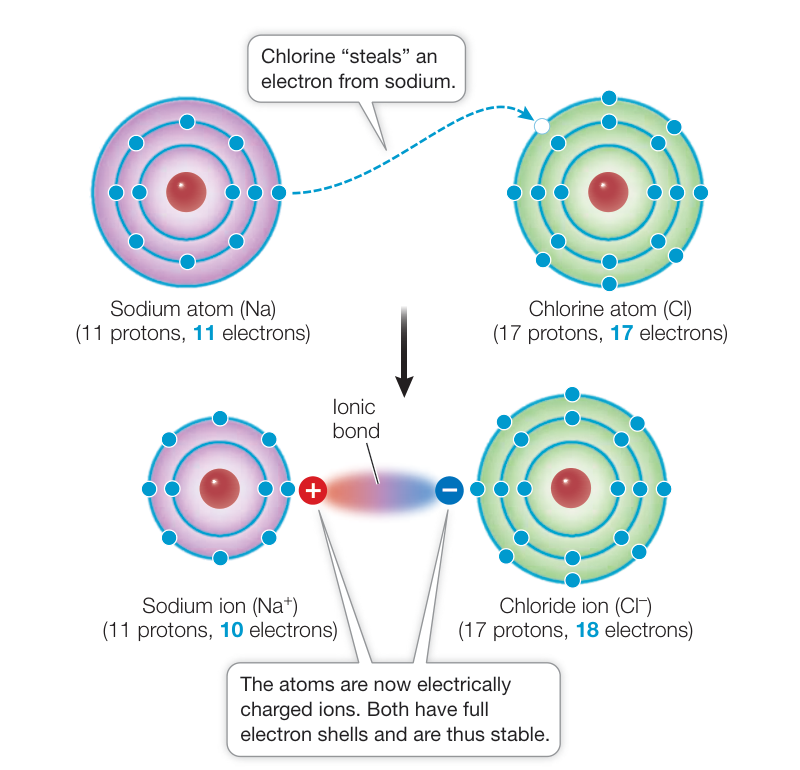
Figure 2.10 Formation of Sodium and Chloride Ions When a sodium atom reacts with a chlorine atom, the more electronegative chlorine fills its outermost shell by “stealing” an electron from the sodium. In so doing, the chlorine atom becomes a negatively charged chloride ion ( ). With one less electron, the sodium atom becomes a positively charged sodium ion ( ). Q: What ions are formed when calcium reacts with chlorine? See the periodic table in Figure 2.2.
Not surprisingly, ions can interact with polar molecules, since both are charged. This interaction results when a solid salt such as NaCl dissolves in water. Water molecules surround the individual ions, separating them (Figure 2.11). The negatively charged chloride ions attract the positive poles of the water molecules, while the positively charged sodium ions attract the negative poles of the water molecules. This special property of water (its polarity) is one reason it is such a good biological solvent (see Key Concept 2.4).
Hydrogen bonds may form within or between molecules with polar covalent bonds
In liquid water, the negatively charged oxygen () atom of one water molecule is attracted to the positively charged hydrogen () atoms of another water molecule (Figure 2.12A). The bond resulting from this attraction is called a hydrogen bond. Later in this chapter you’ll see how hydrogen bonding between water molecules contributes to many of the properties that make water so important for living systems. Hydrogen bonds are not restricted to water molecules. Such a bond can also form between a strongly electronegative atom in one molecule and a hydrogen atom that is involved in a polar covalent bond in another molecule, or another part of the same molecule (Figure 2.12B).
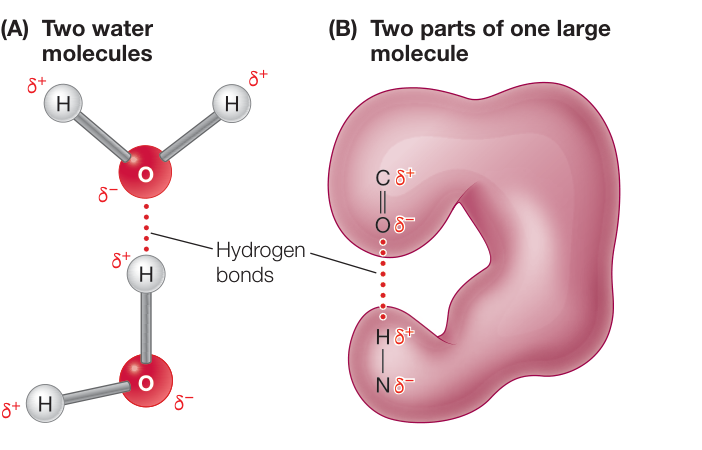
Figure 2.12 Hydrogen Bonds Can Form between or within Molecules (A) A hydrogen bond between two molecules is an attraction between a negative charge on one molecule and the positive charge on a hydrogen atom of the second molecule. (B) Hydrogen bonds can form between different parts of the same large molecule. Q: What happens to a large molecule if increasing heat is applied? Which bonds or interactions are affected?
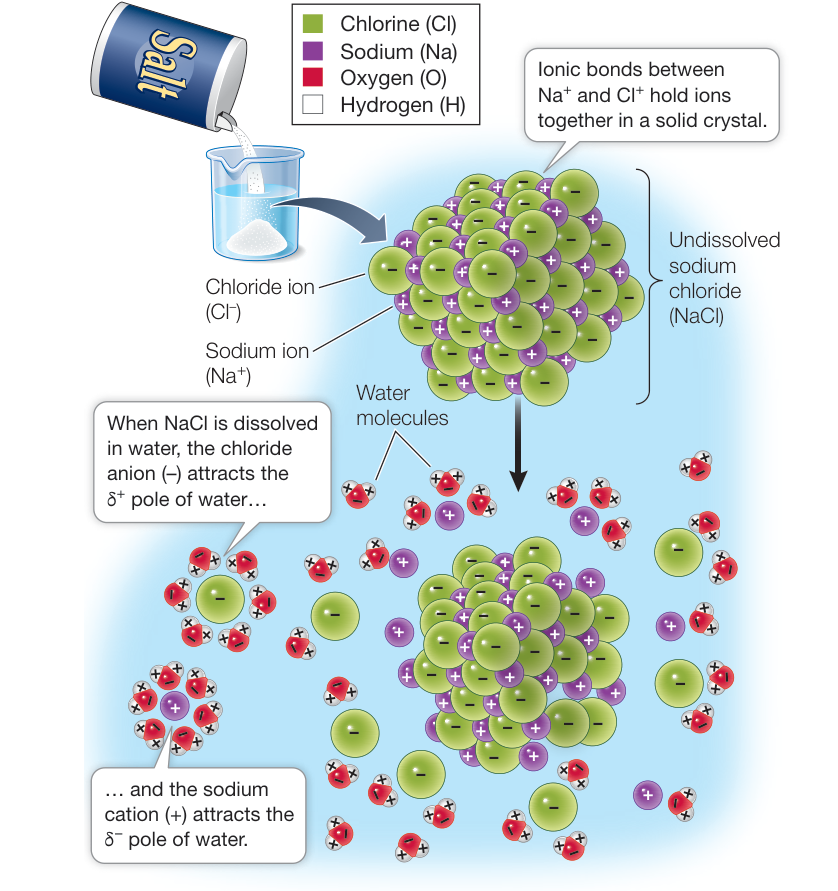
Figure 2.11 Water Molecules Surround Ions When an ionic solid dissolves in water, polar water molecules cluster around the cations and anions, preventing them from reassociating. Q: What happens at the chemical and physical levels when a salt solution evaporates?
A hydrogen bond is weaker than most ionic bonds because its formation is due to partial charges ( and ). It is much weaker than a covalent bond between a hydrogen atom and an oxygen atom (see Table 2.1). Although individual hydrogen bonds are weak, there can be many of them within a single molecule or between two molecules. In these cases, the hydrogen bonds together have considerable strength and can greatly influence the structure and properties of substances. For example, hydrogen bonds play important roles in determining and maintaining the three-dimensional shapes of giant molecules such as DNA and proteins (see Key Concept 3.2).
Hydrophobic interactions bring together nonpolar molecules
Just as water molecules can interact with one another through hydrogen bonds, any molecule that is polar can interact with other polar molecules through the weak ( to ) attractions of hydrogen bonds. If a polar molecule interacts with water in this way, it is called hydrophilic (“water-loving”) (Figure 2.13A).
Nonpolar molecules, in contrast, tend to interact with other nonpolar molecules. For example, carbon (electronegativity 2.5) forms nonpolar bonds with hydrogen (electronegativity 2.1), and molecules containing only hydrogen and carbon atoms—called hydrocarbon molecules—are nonpolar. In water these molecules tend to aggregate with one another rather than with the polar water molecules. Therefore nonpolar molecules are known as hydrophobic (“water-hating”), and the interactions between them are called hydrophobic interactions (Figure 2.13B). Of course, hydrophobic substances do not really “hate” water; they can form weak interactions with it, since the electronegativities of carbon and hydrogen are not exactly the same. But these interactions are far weaker than the hydrogen bonds between the water molecules (see Table 2.1), so the nonpolar substances tend to aggregate.
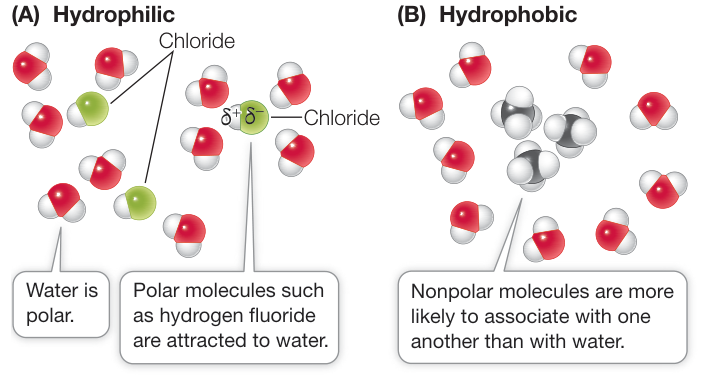
Figure 2.13 Hydrophilic and Hydrophobic (A) Molecules with polar covalent bonds are attracted to polar water (they are hydrophilic). (B) Molecules with nonpolar covalent bonds show greater attraction to one another than to water (they are hydrophobic). Q: Would a hydrocarbon with the formula be polar, nonpolar, or both?
van der Waals forces involve contacts between atoms
The interactions between nonpolar substances are enhanced by van der Waals forces, which occur when the atoms of two molecules are in close proximity. These brief interactions result from random variations in the electron distribution in one molecule, which can create opposite charge distributions in the adjacent molecule. So there will be a weak, temporary to attraction. van der Waals forces occur in polar and nonpolar molecules. In the latter case, they can induce cohesion between molecules that do not form ionic bonds or hydrogen bonds. Although a single van der Waals force is brief and weak, the sum of many such interactions over the entire span of a large nonpolar molecule can result in substantial attraction. This is important when hydrophobic regions of different molecules such as an enzyme and a substrate come together (see Chapter 8).
Recap and Assess
Some atoms form strong covalent bonds with other atoms by sharing one or more pairs of electrons. Unequal sharing of electrons resulting from differences in electronegativity produces polarity. Other atoms become ions by losing or gaining electrons. An ionic bond forms through the attractions of positively to negatively charged ions. Weak forces such as hydrogen bonds and van der Waals forces attract atoms to one another within the same molecules or between different molecules.
Why is a covalent bond stronger than an ionic bond when a molecule is in water?
Consider the following pairs of bonded atoms:
For each pair, use Tables 2.2 and 2.3 to determine:
whether the bond is polar or nonpolar
if the bond is polar, which end is c. whether the atom pair contributes hydrophilic or hydrophobic properties to a molecule
- Geckos are lizards that are amazing climbers. A gecko can climb up a glass surface and stick to it with a single toe. Professor Kellar Autumn at Lewis and Clark College and his students and collaborators have shown that each toe of a gecko has millions of micrometer-sized hairs, and that each hair splits into hundreds of 200-nanometer tips that provide intimate contact with a surface. Careful measurements show that a million of these tips could easily support the animal, but it has far more. The toes stick well on hydrophilic and hydrophobic surfaces. Bending the hairs allows the gecko to detach. What kind of noncovalent force is involved in gecko sticking?

The bonding of atoms to form molecules is not necessarily permanent. The dynamic aspect of life involves constant change, even at the molecular level. In the next key concept we will examine how molecules interact with one another—how they break up, how they find new partners, and what the consequences of those changes can be.
Chemical Reactions Transform Substances
Learning Objectives
- 2.3.1 Provide an example of how chemical reactions obey the law of conservation of matter.
- 2.3.2 Explain how energy is involved in a chemical reaction.
A hallmark of life is that it is dynamic. Things don’t sit still, especially at the chemical level. Atoms bonded to other atoms can leave a binding relationship and find a new partner. Bear in mind that this does not happen all the time: your skin is a biological tissue, and its atoms form a stable structure. But change is common, especially among the atoms and molecules dissolved in water. A chemical reaction occurs when moving atoms collide with sufficient energy to combine or to change their bonding partners.
Chemical reactions obey the laws of conservation of energy and conservation of matter
Consider the combustion reaction that takes place in the flame of a propane stove. When propane () reacts with oxygen gas (), the carbon atoms become bonded to oxygen atoms instead of hydrogen atoms, and the hydrogen atoms become bonded to oxygen instead of carbon (Figure 2.14). As the covalently bonded atoms change partners, the composition of the matter changes; propane and oxygen gas become carbon dioxide and water. This chemical reaction can be represented by the equation
In this equation, propane and oxygen are the reactants, and carbon dioxide and water are the products. This example is an oxidation-reduction (redox) reaction—a special type of chemical reaction that involves a transfer of electrons between two species:
- The electron acceptor, or oxidizing agent, gains electrons and is said to be reduced in a chemical reaction.
- The electron donor, or reducing agent, loses electrons and is said to be is oxidized in a chemical reaction.
Can you identify the oxidizing and reducing agents in our example? Because electrons and protons (i.e., hydrogen atoms) are transferred from propane, propane is the reducing agent and oxygen is the oxidizing agent, which in this example forms water upon accepting the hydrogens. You will see many examples of redox reactions involving electron/proton transfer in later chapters.
The products of a chemical reaction can have very different properties from the reactants. The reaction shown in Figure 2.14 is said to be complete: all the propane and oxygen are used up in forming the two products. The arrow symbolizes the direction of the chemical reaction. The numbers preceding the molecular formulas indicate how many molecules are used or produced.
Note that in this and all other chemical reactions, matter is neither created nor destroyed. The total number of carbon atoms on the left side of the equation (3) equals the total number of carbon atoms on the right (3). In other words, the equation is balanced.
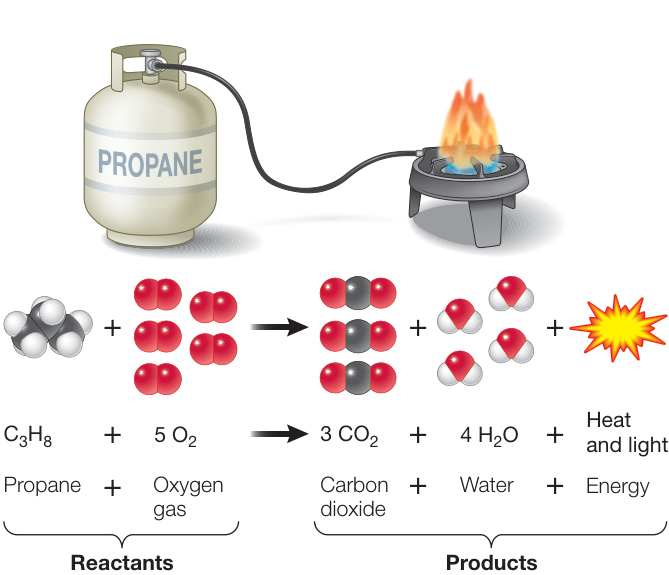
Figure 2.14 Bonding Partners and Energy May Change in a Chemical Reaction One molecule of propane (a gas used for cooking) from this burner reacts with five molecules of oxygen gas to give three molecules of carbon dioxide and four molecules of water. This reaction releases energy in the form of heat and light.
However, there is another aspect of this reaction: the heat and light of the stove’s flame reveal that the reaction between propane and oxygen releases a great deal of energy.
Energy is defined as the capacity to do work, but in the context of chemical reactions, it can be thought of as the capacity for change. Chemical reactions do not create or destroy energy, but changes in the form of energy usually accompany chemical reactions.
In the reaction between propane and oxygen, a large amount of heat energy is released. This energy was present in another form, called potential chemical energy, in the covalent bonds within the propane and oxygen gas molecules. Not all reactions release energy; indeed, many chemical reactions require that energy be supplied from the environment. Some of this energy is then stored as potential chemical energy in the bonds formed in the products. We will see in future chapters how reactions that release energy and reactions that require energy are often coupled.
Many chemical reactions take place in living cells, and some of these have a lot in common with the oxidation–reduction reaction we saw in the combustion of propane. In cells, the reactants are different (they may be sugars or fats), and the reactions proceed by many intermediate steps that permit the released energy to be harvested and put to use by the cells. But the products are the same: carbon dioxide and water.
Recap and Assess
In a chemical reaction, a set of reactants is converted to a set of products with different chemical compositions. A chemical reaction involves breaking old bonds and making new ones. A reaction may release energy or require its input.
- Using the example of the chemical equation , insert numbers so that the numbers of atoms on both sides of the equation are balanced.
- Use an example to explain how the form of energy can change during a chemical reaction.
We will return to chemical reactions and how they occur in living systems in Chapter 8, 9, and 10, focusing particularly on energy transformations that fuel biological processes. First, however, we will examine the unique properties of the substance in which most biochemical reactions take place: water.
The Properties of Water Are Critical to the Chemistry of Life
Learning Objectives
- 2.4.1 Describe how hydrogen bonding in water affects its heat capacity, melting, evaporation, and cohesion.
- 2.4.2 Explain why water’s solvent properties are important in understanding events taking place inside cells.
- 2.4.3 Perform quantitative analyses of biochemical compounds using the mole concept.
- 2.4.4 Predict and explain changes in pH caused by changes in concentration of weak acids or bases in living tissue.
Your body is more than 60% water by weight, excluding the minerals contained in bones. Water is the dominant component of virtually all living organisms, and most biochemical reactions take place in this watery, or aqueous, environment. Indeed, the search for life on other planets usually begins with the question of whether the planet has liquid water. Water is an unusual substance with unusual properties, many of them resulting from the polarity of the covalent bonds in the molecule and the ability to form hydrogen bonds with other molecules.
Water has a unique structure and special properties
The molecule has unusual physical and chemical properties.
ICE FLOATS In water’s solid state (ice), individual water molecules are held in place by hydrogen bonds. Each molecule is bonded to four other molecules in a rigid, crystalline structure (Figure 2.15). Although the molecules are held firmly in place, they are farther apart from one another than they are in liquid water, where the molecules are moving about. In ice, there are cavities between individual water molecules. In other words, solid water is less dense than liquid water, which is why ice floats.
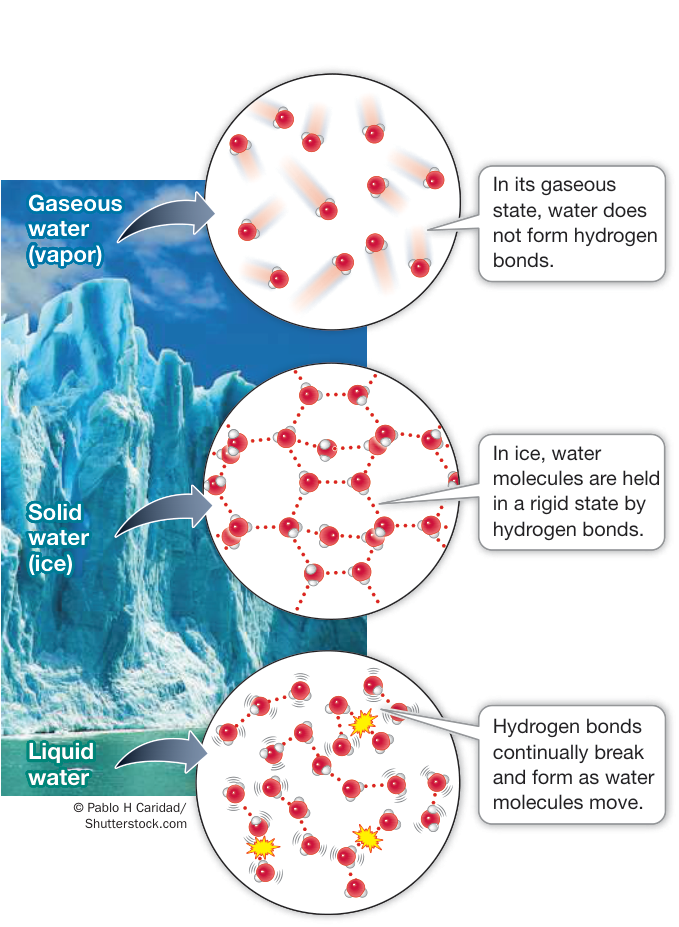
Figure 2.15 Hydrogen Bonding and the Properties of Water Hydrogen bonding occurs between the molecules of water in both its liquid and solid states. Ice is more structured but less dense than liquid water, which is why ice floats. Water forms a gas when its hydrogen bonds are broken and the molecules move farther apart.
Think of the biological consequences if ice were to sink in water. A pond would freeze from the bottom up, becoming a solid block of ice in winter and killing most of the organisms living there. Once the whole pond was frozen, its temperature could drop well below the freezing point of water. But because ice floats, it forms an insulating layer on the top of the pond, and reduces heat flow to the cold air above. Thus fishes, plants, and other organisms in the pond are not subjected to temperatures lower than , which is the freezing point of pure water.
MELTING, FREEZING, AND HEAT CAPACITY Compared with many other substances that have molecules of similar size, ice requires a great deal of heat energy to melt. The amount of heat energy required to raise the temperature of 1 gram of a substance by 1 degree Celsius is called its specific heat. Water has a relatively high specific heat because so many hydrogen bonds connecting the water molecules in ice must be broken to change water from solid to liquid. In the opposite process—freezing—a great deal of energy is released to the environment. We say water has a high heat capacity. For example, water has twice the specific heat of ethyl alcohol and five times that of sand. This is why when you are on the beach as the sun sets, the sand cools much more quickly than the water.
Water also has a high heat of vaporization, defined as the heat a liquid absorbs in order to form a gas. A lot of heat (actually 580 calories per gram) is required to change 1 gram of water from liquid to gas. Once again, much of the heat energy is used to break the many hydrogen bonds between the water molecules. This heat must be absorbed from the environment in contact with the water. Evaporation (forming a vapor, or gas) thus has a cooling effect on the environment—whether a leaf, a forest, or an entire land mass. This effect explains why sweating cools the human body: as sweat evaporates from the skin, it uses up some of the adjacent body heat (Figure 2.16A).
On an environmental scale, a lot of solar energy that arrives at Earth is absorbed by the oceans. This heat absorption keeps ocean temperatures moderate. This not only allows survival of many marine organisms that otherwise might die in high temperatures, but also keeps the temperatures on coastal lands more moderate. If you have been to the San Francisco Bay area you know this: on a summer day, the temperature in the city is often 10 degrees Celsius cooler than that of inland cities, such as Walnut Creek. As the global climate gets warmer, heat absorption by bodies of water is becoming increasingly important.
Connect the Concepts Living systems use the evaporation of water, which disrupts hydrogen bonds, to dissipate excess heat that would otherwise cause problems. See Key Concept 37.1 for examples in plants, and Key Concepts 38.3–38.5 for examples in animals.
COHESION AND SURFACE TENSION In liquid water, individual molecules are able to move about. The hydrogen bonds between the molecules continually form and break (see Figure 2.15). Chemists estimate that this occurs about a trillion times a minute for a single water molecule!
At any given time, a water molecule forms on average 3.4 hydrogen bonds with other water molecules. These hydrogen bonds explain the cohesive strength of liquid water. This cohesive strength, or cohesion, is defined as the capacity of water molecules to resist coming apart from one another when placed under tension. Water’s cohesive strength permits narrow columns of liquid water to move from the roots to the leaves of tall trees. When water evaporates from the leaves, the entire column moves upward in response to the pull of the molecules at the top (Figure 2.16B). A related property is adhesion, the attraction of water molecules to other molecules of a different type. For example, when you put a straw into a cup with water, it “climbs” up the straw so the column is higher than the level in the cup. This adhesive behavior of water—sticking to the sides of the straw—reflects the adhesion of water forming the column.
Connect the Concepts As described in Key Concept 33.2, the transpiration-cohesion-tension mechanism accounts for the movement of water from roots to leaves. Because of the cohesion between water molecules, water is pulled upward in continuous columns.
The surface of liquid water exposed to the air is difficult to puncture because the water molecules at the surface are hydrogen-bonded to other water molecules below them. This surface tension of water permits a container to be filled slightly above its rim without overflowing, and it permits spiders to walk on the surface of a pond (Figure 2.16C).
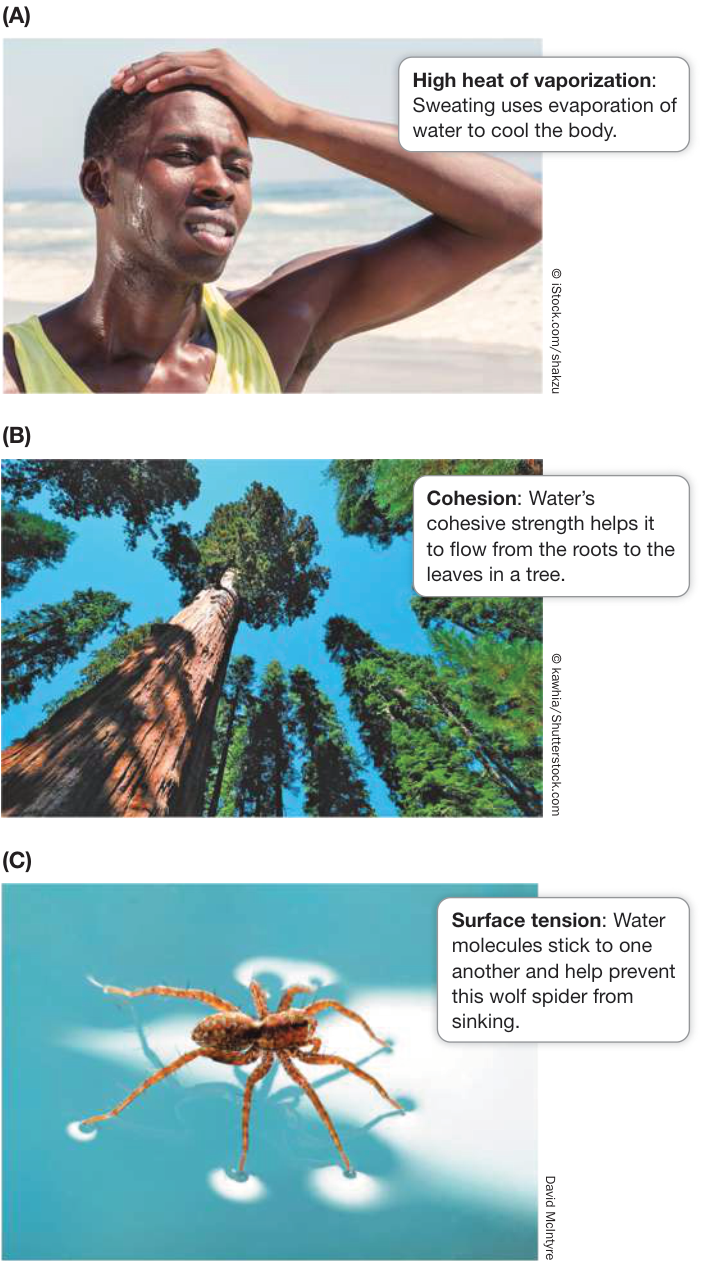
Figure 2.16 Water in Biology These three properties of water make it beneficial to organisms.
The reactions of life take place in aqueous solutions
A solution is produced when a substance (the solute) is dissolved in a liquid (the solvent). If the solvent is water, then the solution is called an aqueous solution. Water is polar, and because many important molecules in biological systems are polar, they readily dissolve in water. Being soluble doesn’t mean that the molecules lose their identity and properties. They can still react, and indeed many important biochemical reactions occur in aqueous solutions.
Biologists who are interested in the biochemical reactions within cells identify the reactants and products and determine their amounts using two different types of analyses:
- Qualitative analyses focus on identifying the substances involved in chemical reactions. For example, a qualitative analysis would be used to investigate the steps involved and the products formed when carbon-containing compounds are broken down to release energy in living tissues.
- Quantitative analyses measure concentrations or amounts of substances. For example, a biochemist would use a quantitative analysis to measure how much of a certain product is formed in a chemical reaction. What follows is a brief introduction to some of the quantitative chemical terms you will see in this book.
A mole is the amount of a substance (in grams) that is numerically equal to its molecular weight. So a mole of hydrogen gas () weighs 2 g, a mole of sodium ion () weighs 23 g, and a mole of table sugar () weighs about 342 g.
Quantitative analyses do not yield counts of molecules. Because the amount of a substance in 1 mole is directly related to its molecular weight, it follows that the number of molecules in 1 mole is constant for all substances. So 1 mole of salt contains the same number of molecules as 1 mole of table sugar. This constant number of molecules in a mole is called Avogadro’s number, and it is molecules per mole. Chemists work with moles of substances (which can be weighed in the laboratory) instead of actual molecules, which are too numerous to be counted. Consider 34.2 g (just over 1 ounce) of table sugar, . This is one-tenth of a mole, or one-tenth of Avogadro’s number: molecules.
A chemist can dissolve 1 mole of table sugar (342 g) in water to make 1 liter of solution, knowing that the mole contains individual sugar molecules. This solution—1 mole of a substance dissolved in water to make 1 liter—is called a 1 molar (1 M) solution. When a physician injects a certain volume and molar concentration of a drug into the bloodstream of a patient, a rough calculation can be made of the actual number of drug molecules that will interact with the patient’s cells. As you know, the dose is important.
The many molecules dissolved in the water of living tissues are not present at concentrations anywhere near 1 molar. Most are in the micromolar (millionths of a mole per liter of solution; ) to millimolar (thousandths of a mole per liter; mM) range. Some, such as hormone molecules, are even less concentrated than that. While these molarities seem to indicate very low concentrations, remember that even a 1 solution has molecules of the solute per liter.
Aqueous solutions may be acidic or basic
When some substances dissolve in water, they release hydrogen ions (), which are actually single, positively charged protons. Hydrogen ions can interact with other molecules and change their properties. For example, the protons in “acid rain” can damage plants, and you probably have experienced the excess of hydrogen ions that we call “acid indigestion.”
Here we will examine the properties of acids (defined as substances that release ) and bases (defined as substances that accept ). We will distinguish between strong and weak acids and bases, and provide a quantitative means for stating the concentration of in solutions: the pH scale.
ACIDS RELEASE When hydrochloric acid () is added to water, it dissolves, releasing the ions and :
Because its concentration has increased, the solution is acidic.
Acids are substances that release ions in solution. is an acid, as is (sulfuric acid). One molecule of sulfuric acid will ionize to yield two and one . Biological compounds that contain (called a carboxyl group) are acids because the carboxyl group can ionize to , releasing :
Acids that fully ionize in solution, such as and , are called strong acids. However, not all acids ionize fully in water. For example, if acetic acid () is added to water, some of it will dissociate into two ions ( and ), but some of the original acetic acid will remain as well. Because the reaction is not complete, acetic acid is a weak acid.
BASES ACCEPT Bases are substances that accept in solution. As with acids, there are strong and weak bases. If (sodium hydroxide) is added to water, it dissolves and ionizes, releasing and ions:
Because absorbs to form water, such a solution is basic. This reaction is complete, and so is a strong base.
Weak bases include the bicarbonate ion (), which can accept an ion and become carbonic acid (), and ammonia (), which can accept and become an ammonium ion (). Biological compounds that contain (the amino group) are also bases because accepts :
ACID-BASE REACTIONS MAY BE REVERSIBLE When acetic acid is dissolved in water, two reactions happen. First, the acetic acid forms its ions:
Then, once the ions are formed, some of them re-form acetic acid:
This pair of reactions is reversible. A reversible reaction can proceed in either direction—left to right or right to left—depending on the relative starting concentrations of the reactants and products. The formula for a reversible reaction can be written using a double arrow:
In terms of acids and bases, there are two types of reactions, depending on the extent of the reversibility:
- The ionization of strong acids and bases in water is virtually irreversible.
- The ionization of weak acids and bases in water is somewhat reversible.
WATER IS A WEAK ACID AND A WEAK BASE The water molecule has a slight but significant tendency to ionize into a hydroxide ion () and a hydrogen ion (). Actually, two water molecules participate in this reaction. One of the two molecules “captures” a hydrogen ion from the other molecule, forming a hydroxide ion and a hydronium ion ():
The hydronium ion is, in effect, a hydrogen ion bound to a water molecule. For simplicity, biochemists tend to use a modified representation of the ionization of water:
The ionization of water is important to all living creatures. This fact may seem surprising, since only about 1 water molecule in 500 million is ionized at any given time. But this is less surprising if we focus on the abundance of water in living systems, and the reactive nature of the ions produced by ionization.
pH: HYDROGEN ION CONCENTRATION As we have seen, compounds can be either acids or bases, and thus solutions can be either acidic or basic. We can measure how acidic or basic a solution is by measuring its concentration of in moles per liter (its molarity; see p. 37). Here are some examples:
- Pure water has a concentration of M.
- A 1 M solution has a concentration of 1 M (recall that all the dissociates into its ions).
- A 1 M solution has a concentration of M.
This is a very wide range of numbers to work with—think about the decimals! It is easier to work with the logarithm of the concentration, because logarithms compress this range: the of 100, for example, is 2; and the of 0.01 is -2. Because most concentrations in living systems are less than 1 M, their values are negative. For convenience, we convert these negative numbers into positive ones by using the negative of the logarithm of the molar concentration. This number is called the pH of the solution:
Since the concentration of pure water is M, its pH is , or 7. A smaller negative logarithm means a larger number. In practical terms, a lower pH means a higher concentration, or greater acidity. In 1 M HCl, the concentration is 1 M, so the pH is the negative logarithm of 1 (), or 0. The pH of 1 M NaOH is the negative logarithm of , or 14.
A solution with a pH of less than 7 is acidic—it contains more ions than ions. A solution with a pH of 7 is referred to as neutral, and a solution with a pH value greater than 7 is basic. Figure 2.17 shows the pH values of some common substances.
Why is this discussion of pH so relevant to biology? Many reactions involve the transfer of an ion or charged group from one molecule to another, and the presence of positive or negative ions in the environment can greatly influence the rates of such reactions. Furthermore, pH can influence the shapes of molecules. Many biologically important molecules contain charged groups (e.g., ) that can interact with the polar regions of water, and these interactions influence the way such molecules fold up into three-dimensional shapes. If these charged groups combine with or other ions in their environment to form uncharged groups (e.g., ; see above), they will have a reduced tendency to interact with water. These uncharged (hydrophobic) groups might induce the molecule to fold up differently so that they are no longer in contact with the watery environment. Since the three-dimensional structures of biological molecules greatly affect the way they function, organisms do all they can to minimize changes in the pH of their cells and tissues. An important way to do this is with buffers.
BUFFERS The maintenance of internal constancy—homeostasis—is a hallmark of all living things and extends to pH. If biological molecules lose or gain ions, their properties can change, thus upsetting homeostasis. For example, people who exercise strenuously produce lactic acid, which ionizes to produce . Internal constancy within tissues can be achieved with buffers: solutions that maintain a relatively constant pH even when substantial amounts of acid or base are added. How does this work?
A buffer is a mixture of a weak acid and its corresponding base, or a weak base and its corresponding acid. For example, a weak acid is carbonic acid (), and its corresponding base is the bicarbonate ion (). If another acid is added to a solution containing this mixture (a buffered solution), not all the ions from the acid remain in solution. Instead, many of them combine with the bicarbonate ions to produce more carbonic acid:
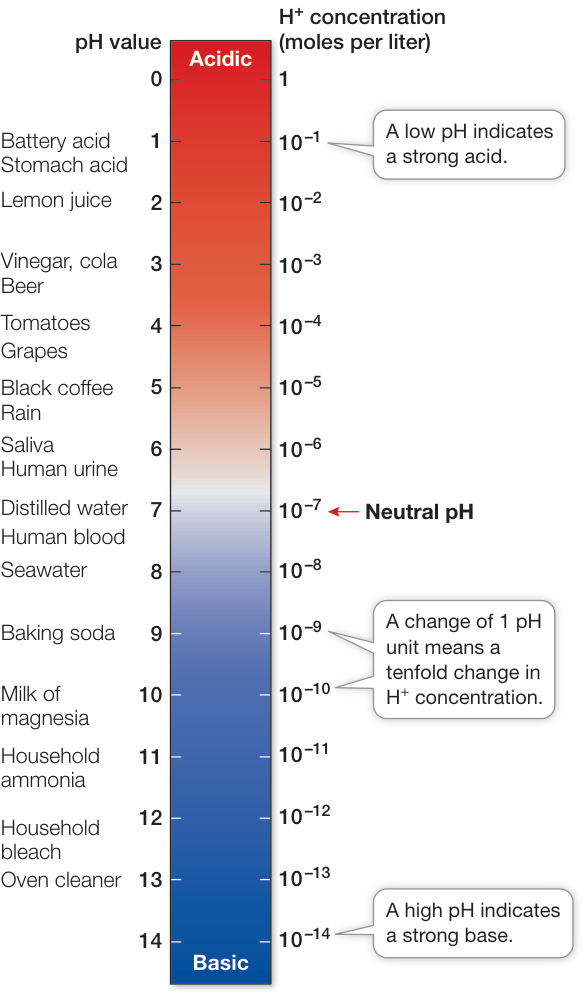
Figure 2.17 pH Values of Some Familiar Substances Figure 2.17 pH Values of Some Familiar Substances
This reaction uses up some of the ions in the solution and decreases the acidifying effect of the added acid. If a base is added, the reaction essentially reverses. Some of the carbonic acid ionizes to produce bicarbonate ions and more , which counteracts some of the added base. The buffer minimizes the effect that an added acid or base has on pH. The carbonic acid/bicarbonate buffering system is present in the blood, where it is important for preventing significant changes in pH that could disrupt the ability of the blood to carry vital oxygen to tissues. A given amount of acid or base causes a smaller pH change in a buffered solution than in a non-buffered one (Figure 2.18).
Buffers illustrate an important chemical principle of reversible reactions, called the law of mass action. Addition of a reactant on one side of a reversible system drives the reaction in the direction that uses up that compound. In the case of buffers, addition of an acid drives the reaction in one direction; addition of a base drives the reaction in the other direction.
You may occasionally use a buffer to relieve indigestion. The lining of the stomach constantly secretes hydrochloric acid, making the stomach contents acidic. But excessive stomach acid can cause discomfort. We can relieve this discomfort by ingesting a salt such as (sodium bicarbonate), which acts as a buffer.
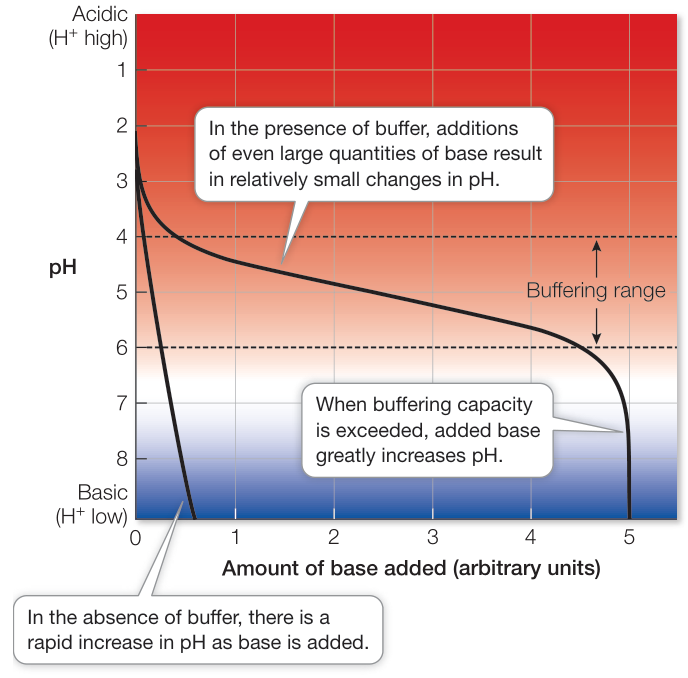
Figure 2.18 Buffers Minimize Changes in pH When base is added to a solution, the pH of the solution increases. Without a buffer, the change is large and the slope of the pH graph is steep. In the presence of a buffer, however, the slope within the buffering range is shallow. Q: If acid is added instead of base, what will the two graphs look like?
Recap and Assess
Most of the chemistry of life occurs in water, which has unique properties that make it an ideal medium for supporting life. These properties include hydrogen bonding between molecules, high specific heat, and cohesion between molecules. Aqueous solutions can be acidic or basic, depending on the concentration of hydrogen ions. The cells and tissues of organisms are buffered, however, because changes in pH can change the properties of biological molecules.
- The boiling point of water () is , while the boiling point of methane () is . Explain this difference in terms of hydrogen bonding between molecules.
- What is a solution, and why do we call water “the medium of life”?
- A substance in a cell has a concentration of molar. What does this mean in terms of the number of molecules in a cell that has a volume of liters?
- In human tissues, is formed as a by-product of oxidation of more complex molecules. enters the bloodstream and in red blood cells is removed from the blood by the reaction . What is the consequence of this reaction on the pH of the blood? What chemical reaction would restore the pH of the blood?
Investigating Life
QA: What insights into biological systems have been discovered through isotope analysis?
The opening investigation of dinosaurs (oxygen atoms) and the Investigating Life experiment on hamburgers (carbon atoms) are examples of identifying the life history of organisms through isotope analysis. Recently, this has been applied to humans as well. Hair is a living tissue, with a lot of O and H atoms derived from water in the diet. Ecologist Jim Ehleringer and chemist Thure Cerling have shown that as in the dinosaurs, the isotope ratios of O and H in hair reflect the geographic region where a person drank the water. This can be useful evidence in a forensic investigation, placing a person at a location. Isotope ratios are also used to identify where plants are grown, because their tissues also have unique ratios. For example, ratios have revealed the geographic origin of poppies used to make heroin. The mass spectrometer, a chemical analysis instrument that detects isotopes, is fast becoming an important tool for biologists.
Future directions
Tracking the isotopes of oxygen and hydrogen in precipitation is useful in understanding patterns of climate change. Water evaporates in warmer regions at the tropical latitudes on Earth and moves toward the cooler poles. As an air mass moves from a warmer to a cooler region, water vapor condenses and is removed as precipitation. The heavy isotopes of H and O tend to fall as precipitation more readily than the lighter isotopes, so as the water vapor moves toward the poles, it becomes enriched in the lighter isotopes. The ratio of heavy to light isotopes that reach the poles depends on the climate—the cooler the climate, the lower the ratio, because more water precipitates as it moves toward the poles, depleting more of the heavier isotopes. Analyses of polar ice cores show that heavy-to-light isotope ratios vary over geological time scales. This has allowed scientists to reconstruct climate change in the past, and to relate it to fossil organisms that lived at those times. Isotope ratios may be useful in monitoring climate change that is happening today.

Visual Summary
© robertharding/Alamy Stock Photo

You should be able to relate each summary to the adjacent figures. If you go to this visual summary in Achieve, you can follow links to figures, animations, activities, and simulations that will help you consolidate the material.
An Element’s Atomic Structure Determines Its Properties
- ■ Each element has a characteristic number of protons in its nucleus.
- ■ The number of electrons in the outer shell of an element determines its chemical properties. Elements are grouped in the periodic table.
Questions
- How many protons and neutrons are in the nucleus of the element aluminum (Al), with an atomic number of 13 and a mass number of 27?
- How many electrons are in each of the three electron shells of Al?
- Why do isotopes differ in mass number but not atomic number?
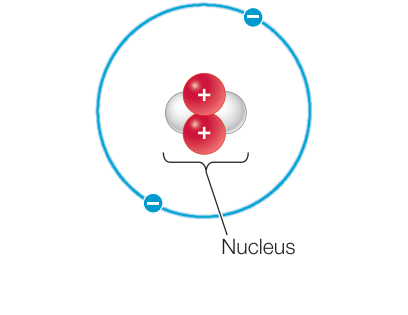
Figure 2.1
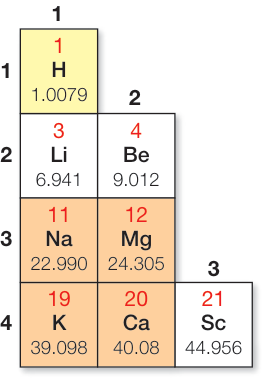
Figure 2.2
Atoms Bond to Form Molecules
- ■ A chemical bond is an attractive force that links two atoms together in a molecule.
- ■ Covalent bonds are strong bonds formed when two atoms share one or more pairs of electrons.
- ■ Ionic bonds occur between oppositely charged ions. Ionic bonds are strong in solids (salts) but weaken when the ions are separated from one another in solution.
- ■ A hydrogen bond is a weak electrical attraction that forms between a hydrogen atom in one molecule and a atom in another molecule (or in another part of the same, large molecule). Hydrogen bonds are abundant in water.
Questions
- Why aren’t covalent bonds between atoms of the same element polar?
- Why do elements such as sodium (Na) in the first group of the periodic table form ionic as opposed to covalent bonds?
- How does the polarity of carbon dioxide () compare with that of hexane ()? Would you expect either of them to form hydrogen bonds with water?
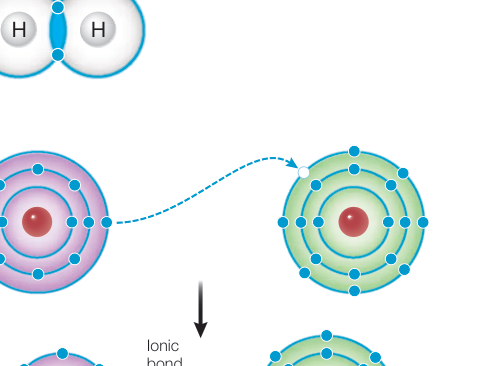
Figure 2.7
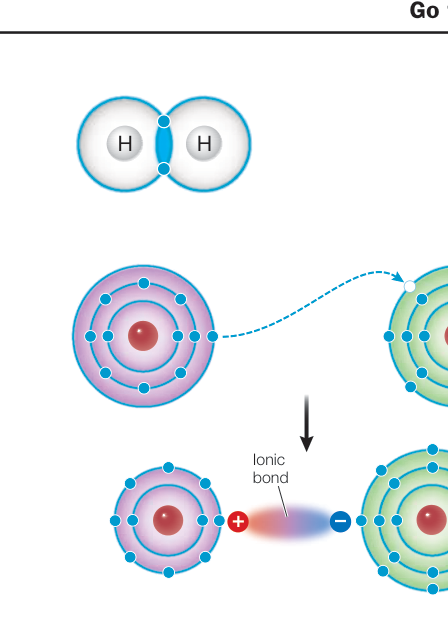
Figure 2.10
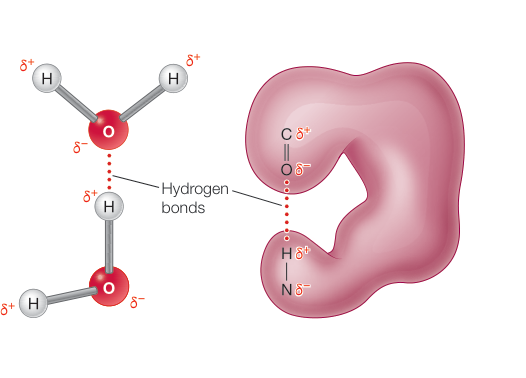
Figure 2.12
Chemical Reactions Transform Substances
- ■ In chemical reactions, atoms combine or change their bonding partners.
- ■ Some chemical reactions release energy as one of their products; other reactions can occur only if energy is provided to the reactants.
- ■ Neither matter nor energy is created or destroyed in a chemical reaction, but both change form.
Questions
- How can a freshwater fish, which does not regulate its body temperature, increase the rate of a chemical reaction in its muscles?
- In the reaction , the bond energy stored in the reactants is greater than the energy in the products. If there is an energy term in the equation, where would it go?
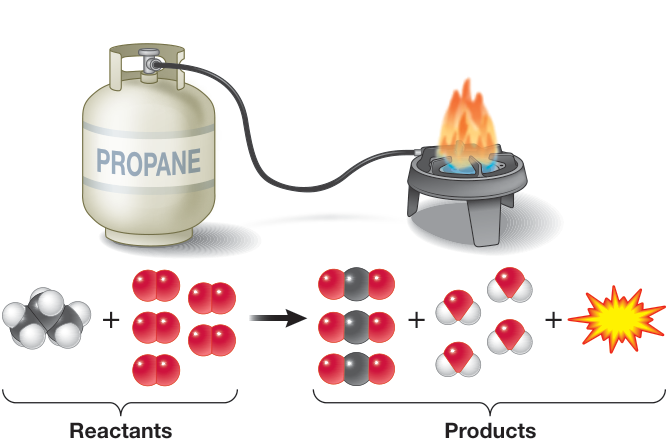
Figure 2.14
The Properties of Water Are Critical to the Chemistry of Life
- ■ Water’s molecular structure and its capacity to form hydrogen bonds give it unique properties that are significant for life.
- ■ A solution is produced when a solid substance (the solute) dissolves in a liquid (the solvent). Water is the critically important solvent for life. The ability of molecules to lose or accept protons () is important in biological structure and function.
Questions
- Why does water have a high heat capacity?
- What is surface tension, and why does water have a high surface tension?
- Why is water an excellent solvent for polar and ionic compounds?
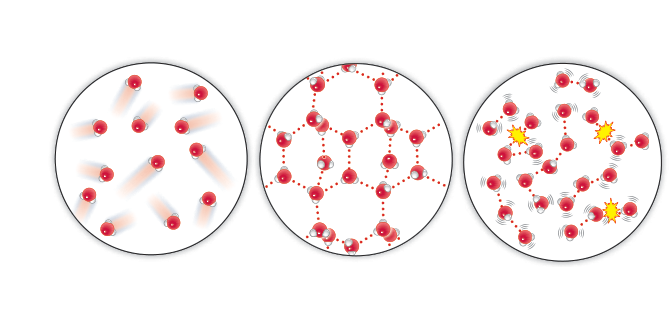
Figure 2.15
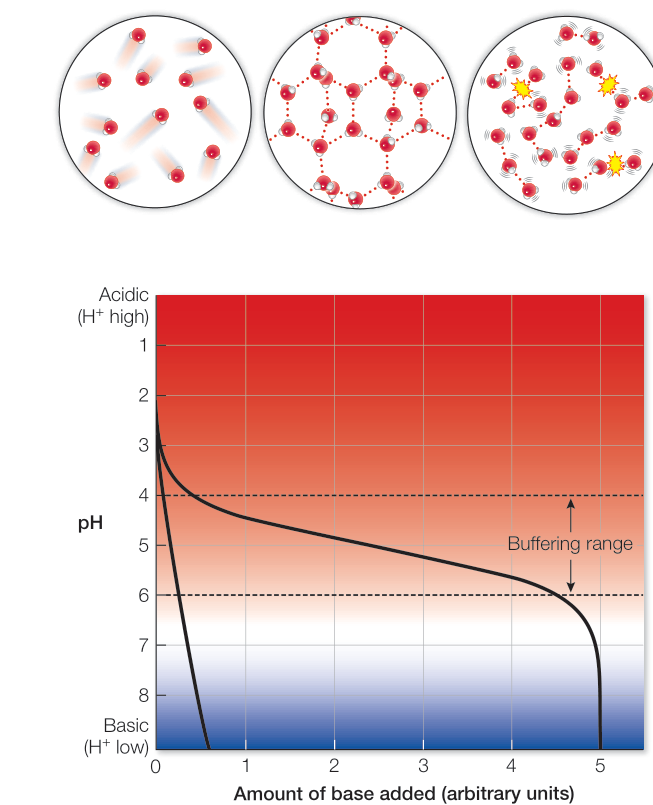
Figure 2.18