Chapter 4Nucleic Acids and the Origin of Life
Key Concepts
- 4.1 Nucleic Acids Are Informational Macromolecules
- 4.2 The Small Molecules of Life Originated on Primitive Earth
- 4.3 The Large Molecules of Life Originated from Small Molecules
- 4.4 Cells Originated from Their Molecular Building Blocks
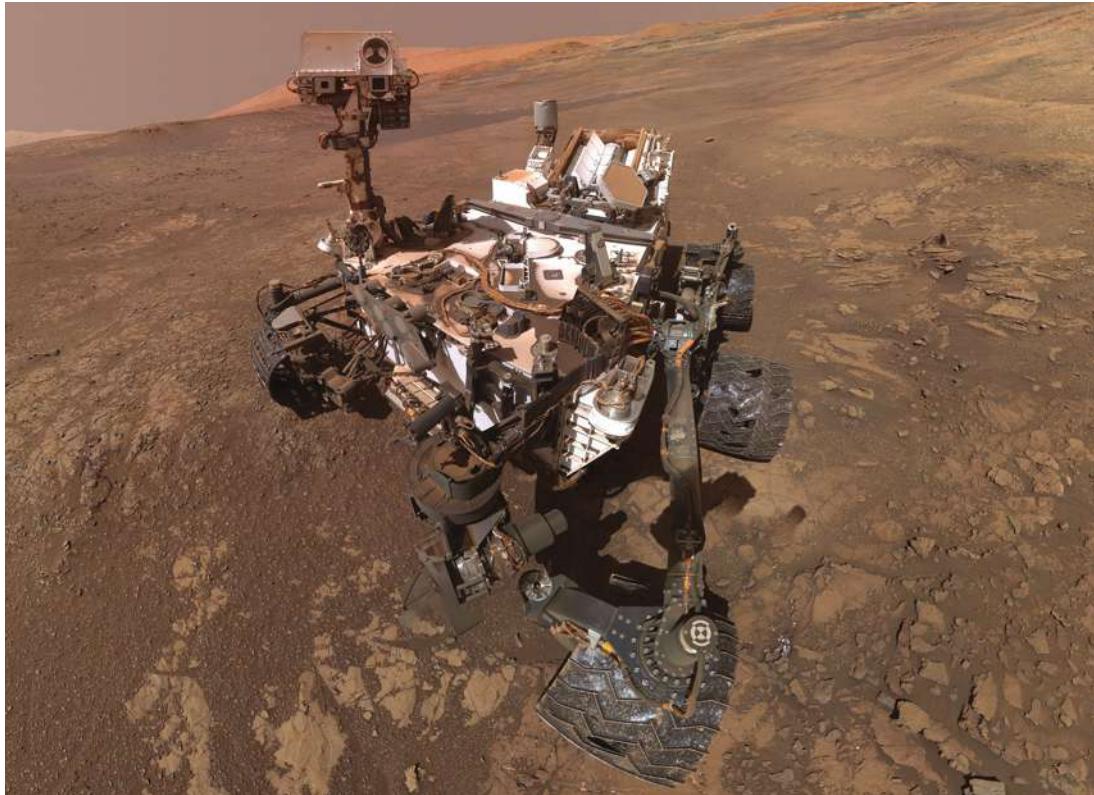
Self-portrait of the Mars rover Curiosity on the Martian surface. For reference, each wheel is 50 centimeters in diameter.
Investigating Life: Looking for Life
On Earth you can find organisms and the chemical signatures of life everywhere—even deep under the sea, inside volcanoes, buried in ice, and floating in the air. Determining life’s origin is difficult because (with few exceptions) the simple organisms that first existed left no fossils. On Mars, however, things might be different.
Mars has fascinated scientists (and science-fiction writers) since its discovery by astronomers more than 3,000 years ago. A cold planet, Mars has a geology that has changed little over several billion years, and so any evidence of life may be preserved. As you know from Chapter 2, life as we know it has two distinctive chemical features. One is the presence of water, and the other is carbon-based chemistry.
Initial observations of Mars with telescopes showed polar caps that changed with the seasons and were proposed to be made of water ice, as well as markings on the Martian surface that looked like rivers to some imaginative observers on Earth. Better telescopes, chemical analyses based on light emission (spectroscopy), orbiting satellites, and landers controlled from Earth have confirmed water at the poles, although it is mixed with CO2. While the “rivers” seen in the nineteenth century are mostly geological features, twenty-first-century observations have provided evidence for stream and lake beds on the surface, indicating that water was once there. In addition, there is a large amount of water ice below the Martian surface. The high pressures there may be sufficient to support a small amount of liquid water.
What about carbon-based chemistry? The Martian atmosphere is more than 95% CO2, much higher than the concentration in Earth’s atmosphere. In addition, methane (CH4) is in the Martian atmosphere, and fluctuates during the Martian solar year. While there are nonbiological explanations for methane and its fluctuation, there is a biological one as well—methane-producing bacteria are well established on Earth, and their activities vary with seasons. So far, no such bacteria have been found on or slightly below the Martian surface. But the search goes on.
QA Can we find evidence of life on Mars? (Find the answer on page 80.)
Nucleic Acids Are Informational Macromolecules
Learning Objectives
- 4.1.1 Compare the chemical structures of purines versus pyrimidines and DNA versus RNA.
4.1.2 Explain how biological information is encoded in DNA.
4.1.3 Identify cellular functions of nucleotides other than information processing.
DNA, a nucleic acid, is often used as a metaphor for the essence of something (“It’s in her DNA”), and indeed, DNA contains life’s genetic code. From medicine to evolution, from agriculture to forensics, the properties of nucleic acids affect our lives every day. It is with nucleic acids that the concept of “information” entered the biological vocabulary. Nucleic acids are uniquely capable of coding for and transmitting biological information.
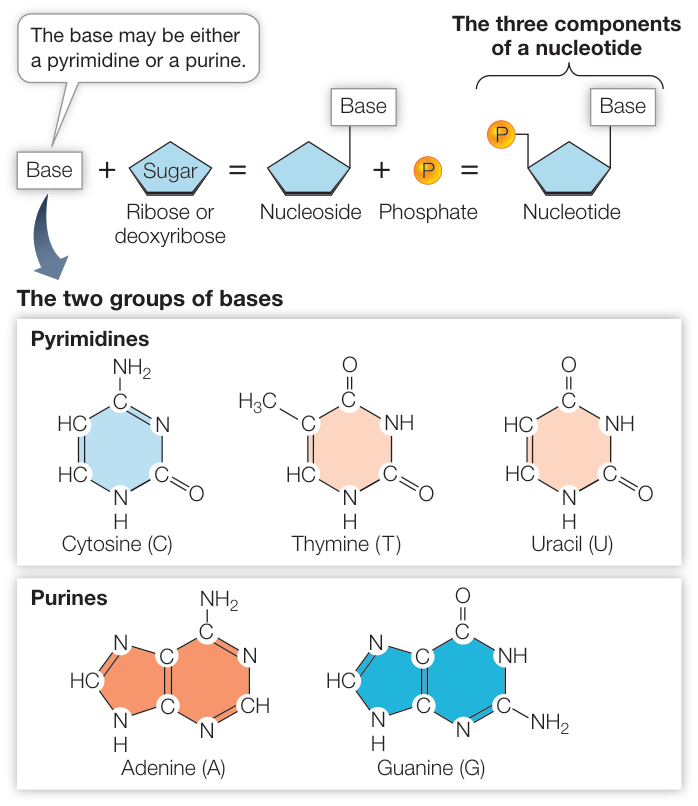
Figure 4.1 Nucleotide Chemistry Nucleotide monomers, each consisting of a base, a sugar, and a phosphate group, are the building blocks of DNA and RNA polymers. The bases fall into two groups: the pyrimidines and the purines. Q: What kinds of bonds link the base, sugar, and phosphate together? Activity 4.1 Nucleic Acid Building Blocks Animation 4.1 Nucleic Acids


Nucleic acids carry and express genetic informationNucleic acids are polymers specialized for the storage, transmission, and use of genetic information. There are two types of nucleic acids—DNA (deoxyribonucleic acid) and RNA (ribonucleic acid)—and both are macromolecules, polymers of monomers called nucleotides. The roles of DNA and RNA in the preservation, replication, and expression of genetic material will be described in later chapters. Here we focus on the chemistry of the nucleic acids, revealing how their structures reflect their functions.
A nucleotide has three components: a nitrogen-containing (nitrogenous) base, a pentose sugar, and one to three phosphate groups (Figure 4.1). Molecules consisting of a pentose sugar and a nitrogenous base—but no phosphate group—are called nucleosides. The nucleotides that make up nucleic acids contain just one phosphate group—they are nucleoside monophosphates. The bases of the nucleic acids take one of two chemical forms: a six-membered single-ring structure called a pyrimidine, or a fused double-ring structure called a purine (see Figure 4.1). In DNA, the pentose sugar is deoxyribose, which differs from the ribose found in RNA by the absence of one oxygen atom (see Figure 3.17).
A nucleic acid forms in a similar way that other macromolecule polymers (proteins and polysaccharides) form: by the addition of monomers, one at a time. The reaction, called a transesterification, is between the 3’ —OH on the sugar of the existing chain and the alpha (first) phosphate of the incoming nucleoside triphosphate. The resulting bond is called a phosphodiester bond (Figure 4.2). During the reaction, the terminal two phosphate groups, still covalently bonded, are released. Hydrolysis of this pyrophosphate to its two individual phosphates releases energy for the polymerization reaction. Because each nucleotide is added to the 3’ carbon of the last sugar, nucleic acids are said to elongate in the 5’-to-3’ direction.
Nucleic acids can range in polymer length. Oligonucleotides are relatively short, with about 20 nucleotide monomers, whereas polynucleotides can be much longer.
- Oligonucleotides include RNA molecules that function as “primers” to begin the duplication of DNA; RNA molecules that regulate the expression of genes; and synthetic DNA molecules used for amplifying and analyzing other, longer nucleotide sequences.
- Polynucleotides, more commonly referred to as nucleic acids, include DNA and some RNA. Polynucleotides can be very long, and indeed are the longest polymers in the living world. Some DNA molecules in plants and animals contain hundreds of millions of nucleotides.
Base pairing occurs in both DNA and RNADNA and RNA differ somewhat in their sugar groups, bases, and strand structure (Table 4.1). Four bases are found in DNA: adenine (A), cytosine (C), guanine (G), and thymine (T). RNA is also made up of four different monomers, but its nucleotides include uracil (U) instead of thymine.
A key to understanding the structure and function of nucleic acids is the principle of complementary base pairing. In DNA, thymine and adenine pair (T-A), and cytosine and guanine pair (C-G). In RNA, the base pairs are A-U and C-G (Figure 4.3). Base pairs are held together primarily by hydrogen bonds. There are polar C=O and N-H covalent bonds in the bases; these can form hydrogen bonds between the on an oxygen or nitrogen of one base and the on a hydrogen of another base when the atoms are in close proximity.
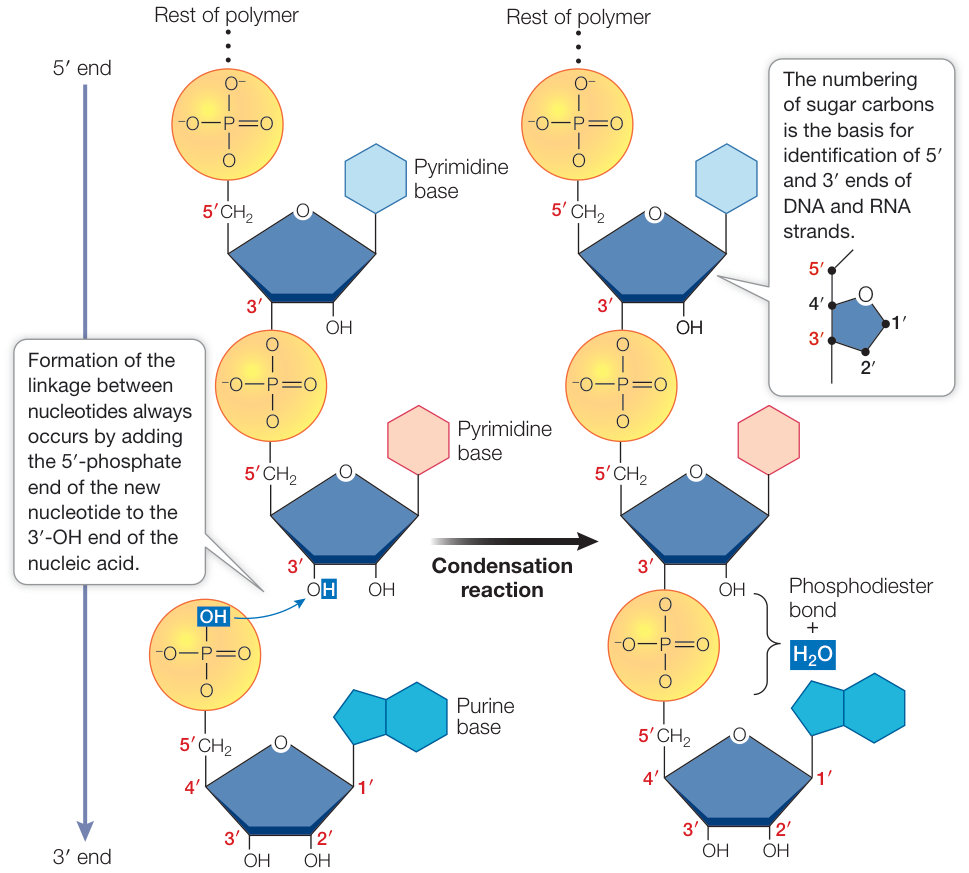
Figure 4.2 Linking Nucleotides Together Growth of a nucleic acid (RNA in this figure) from its monomers occurs in the 5’ (phosphate) to 3’ (hydroxyl) direction. Note that the added nucleotide is not initially a monophosphate but actually a triphosphate. The details of this process will be described in Chapter 13.
Individual hydrogen bonds are relatively weak, but there are so many of them in a DNA or RNA molecule that collectively they provide a considerable force of attraction, which can bind together two polynucleotide strands, or a single strand that folds back onto itself. This attraction is not as strong as a covalent bond, however. This means that individual base pairs can be broken with a modest input of energy. As you will see, the breaking and making of hydrogen bonds in nucleic acids is vital to their role in living systems.
RNA Even though RNA is generally single-stranded (Figure 4.4A), base pairing can occur between different regions of the molecule. Portions of the single-stranded RNA molecule can fold back and pair with one another (Figure 4.4B). Thus complementary hydrogen bonding between ribonucleotides plays an important role in determining the three-dimensional shapes of some RNA molecules. Complementary base pairing can also take place between ribonucleotides in RNA and deoxyribonucleotides in DNA. Adenine in an RNA strand can pair either with uracil (in another RNA strand) or with thymine (in a DNA strand). Similarly, an
Table 4.1 Distinguishing RNA from DNA
| Nucleic acid | Sugar | Bases | Name of nucleoside | Strands |
|---|---|---|---|---|
| RNA | Ribose | Adenine | Adenosine | One |
| Cytosine | Cytidine | |||
| Guanine | Guanosine | |||
| Uracil | Uridine | |||
| DNA | Deoxyribose | Adenine | Deoxyadenosine | Two |
| Cytosine | Deoxycytidine | |||
| Guanine | Deoxyguanosine | |||
| Thymine | Deoxythymidine |
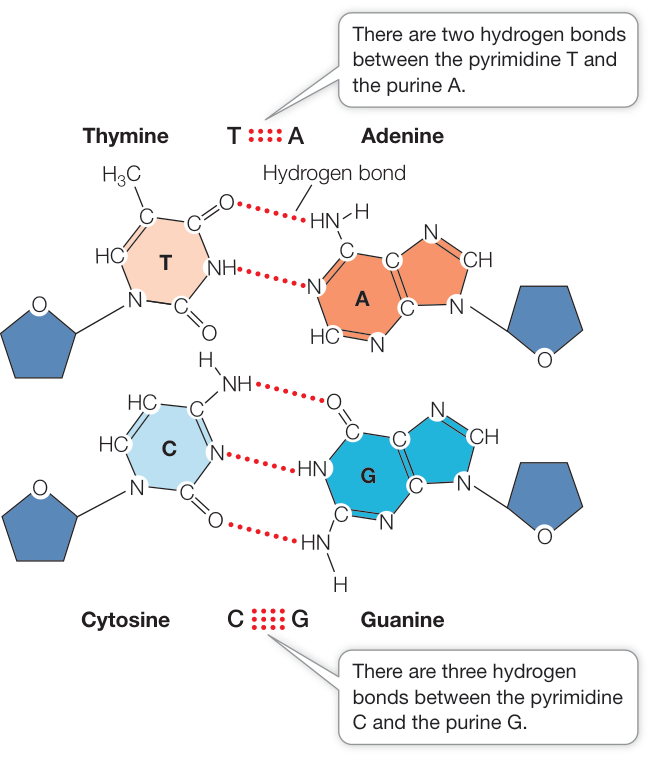
Figure 4.3 Base Pairing by Hydrogen Bonding between Nucleotides T-A and C-G base pairs form because the bases fit together such that atoms forming hydrogen bonds are in close proximity.
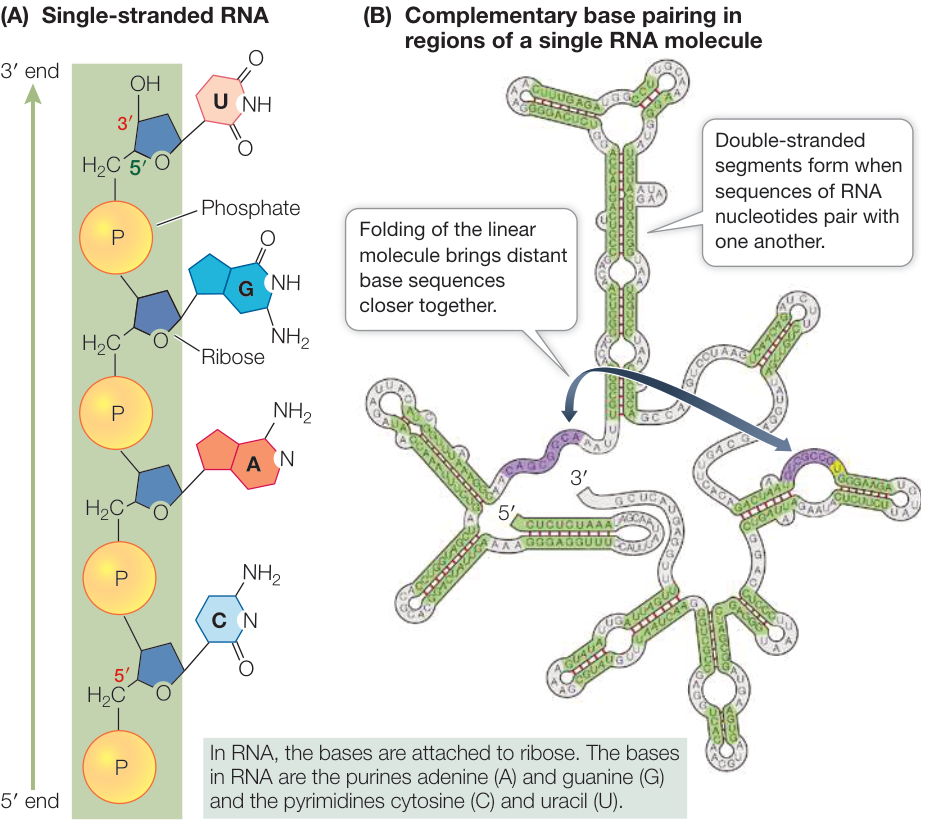
Figure 4.4 RNA (A) RNA is usually a single strand. (B) When a single-stranded RNA folds back on itself, hydrogen bonds between complementary sequences can stabilize it into a three-dimensional shape with complex surface characteristics. The surfaces and exposed bases can be recognized by other molecules, such as proteins, that bind to the nucleic acid. Q: What would happen if a folded RNA molecule were heated? Recall the effect of heat on hydrogen bonds.
adenine in DNA can pair either with thymine (in the complementary DNA strand) or with uracil (in RNA).
DNA Usually, DNA is double-stranded; that is, it consists of two separate polynucleotide strands of the same length that are held together by hydrogen bonds between base pairs (Figure 4.5A). In contrast to RNA’s diversity in three-dimensional structure, DNA is remarkably uniform. The A-T and G-C base pairs are about the same size (each is a purine paired with a pyrimidine), and the two polynucleotide strands form a “ladder” that twists into a double helix (Figure 4.5B). The sugar–phosphate groups form the sides of the ladder, and the bases with their hydrogen bonds form the “rungs” on the inside. DNA carries genetic information in its sequence of base pairs rather than in its three-dimensional structure. The key differences among DNA molecules are their different nucleotide base sequences.
Connect the Concepts As explained in Key Concept 13.2, the two strands of a DNA molecule fit together because they run in opposite directions—that is, they are antiparallel to one another. Equal distance between strands is maintained because a purine on one strand is always found opposite a pyrimidine on the other strand.
DNA carries information and is expressed through RNA
DNA is an informational macromolecule. The information is encoded in the sequence of bases carried in its strands. For example, the information encoded in a DNA strand with the base sequence TCAGCA is different from the information in the sequence CCAGCA. DNA transmits information in two ways:
- DNA can be reproduced exactly. This process, called DNA replication, is done by polymerization using an existing strand as a base-pairing template.
- Certain DNA sequences can be copied into RNA, in a process called transcription. The nucleotide sequence in the RNA can then be used to specify a sequence of amino acids in a polypeptide chain, in the process called translation (Figure 4.6). The overall process of transcription and translation is called gene expression.
The details of these important processes will be described in later chapters, but it is important to realize two things at this point:
- DNA replication and transcription depend on the base-pairing properties of nucleic acids. Recall that the hydrogen-bonded base pairs are A-T and G-C in DNA and A-U and G-C in RNA. Consider, for example, this double-stranded DNA region:
Transcription of the lower strand will result in a single strand of RNA with the sequence 5’-UCAGCA-3’. Can you figure out the sequence that the top strand would produce?
- The entire DNA molecule is replicated. Since DNA contains essential information, it must be replicated completely and accurately so that each new cell or new organism receives a complete set of DNA from its parent (Figure 4.7A). The complete set of DNA in a living organism is called its genome. However, not all of the information in the genome is needed at all times and in all tissues, and only small sections of the DNA are transcribed into RNA molecules (Figure 4.7B). The sequences of DNA that are transcribed into RNA are called genes.
In humans, the gene that encodes the major protein in hair (keratin) is expressed in skin cells that produce hair. The genetic information in the keratin-encoding gene is transcribed into RNA and then translated into a keratin polypeptide. In other tissues such as the muscles, the keratin gene is not transcribed, but other genes are—for example, the genes that encode proteins present in muscles but not in skin or hair. The expressions of these genes are turned on and off by elegant controls, described in Chapter 16.
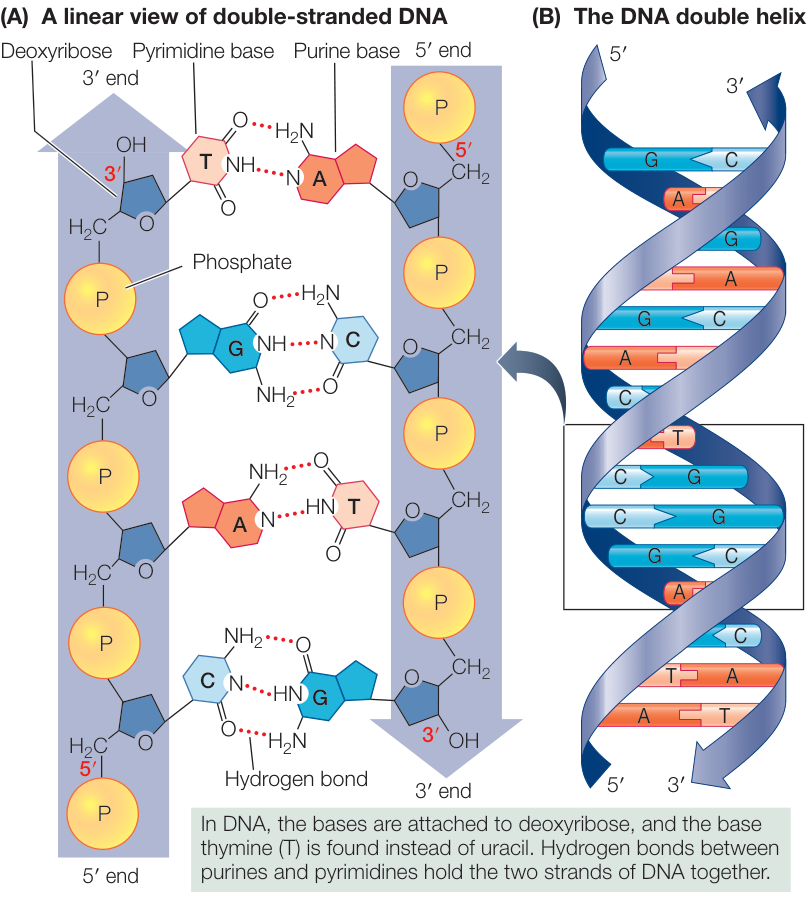
Figure 4.5 DNA (A) DNA usually consists of two strands running in opposite directions that are held together by hydrogen bonds between purines and pyrimidines on the two strands. (B) The two strands in DNA are coiled in a right-handed double helix. Q: For replication or transcription, DNA must “unwind” to expose bases. What bonds must be broken for this to occur? (A) Replication (B) Transcription
than they are to those of your great-grandparents. And on a more general level, your DNA sequences are more closely related to those of other primates than to those of fruit flies. (But yes, you do have sequences in common with fruit flies!) The details of how scientists use DNA sequence information to trace evolutionary relationships will be covered in Chapter 20.
DNA sequencing and analysis of sequences by computer programs have enabled scientists to determine the entire DNA base sequences—the genome—of many organisms, including humans, whose genome contains about 3 billion base pairs. These studies have confirmed many of the evolutionary relationships that had been inferred previously from more traditional comparisons of body structure, biochemistry, and physiology. Increasingly, scientists turn to DNA analyses to elucidate evolutionary relationships when other comparisons are not possible or are not conclusive. For example, DNA studies revealed a close relationship between starlings and mockingbirds that was not expected on the basis of their anatomy or behavior.
The DNA base sequence reveals evolutionary relationships
DNA carries hereditary information from one generation to the next, accumulating changes in its base sequence over long periods of time. A series of DNA molecules stretches back through the lineage of every organism to the beginning of biological evolution on Earth, more than 3.5 billion years ago. Therefore closely related living species have more similar base sequences than do species that are more distantly related. For example, your DNA base sequences are more similar to those of your biological parents
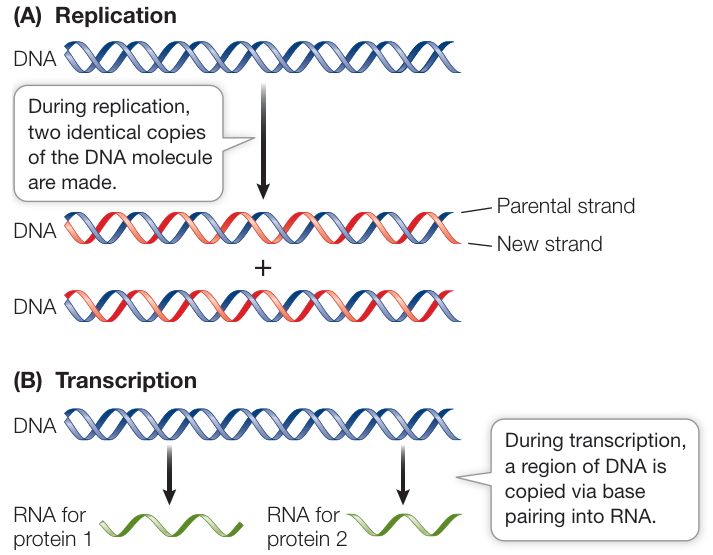
Figure 4.7 DNA Replication and Transcription DNA is usually completely replicated (A) but only partially transcribed (B). RNA transcripts are produced from genes that code for specific proteins. Transcription of different genes occurs at different times and, in multicellular organisms, in different cells of the body.
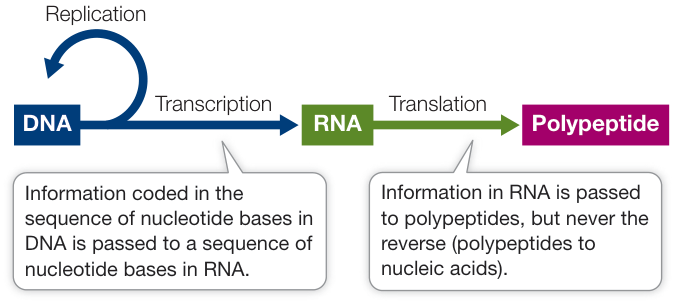
Figure 4.6 DNA, RNA, and Protein Replication, transcription, and translation describe the manner in which genetic information is used and together have been called the “central dogma of molecular biology”: the premise that information flows from DNA to RNA to polypeptide (protein). Q: What do you think determines whether a particular cell transcribes a sequence of DNA into RNA?
Nucleotides have other important roles
Nucleotides are more than just the building blocks of nucleic acids. As we will describe in later chapters, there are several nucleotides (or modified nucleotides) with other functions:
- ATP (adenosine triphosphate) acts as an agent of energy transfer in many biochemical reactions (see Key Concept 8.2).
- GTP (guanosine triphosphate) serves as an energy source, especially in protein synthesis. It also plays a role in the transfer of information from the environment to cells (see Key Concept 7.2).
- cAMP (cyclic adenosine monophosphate) is a special nucleotide with an additional bond between the sugar and the phosphate group. It is essential in many processes, including the actions of hormones and the transmission of information by the nervous system (see Key Concept 7.3).
- Nucleotides play roles as carriers in the synthesis and breakdown of carbohydrates and lipids (see Key Concept 9.1).
Recap and Assess
The nucleic acids DNA and RNA are polymers made up of nucleotide monomers. The sequence of nucleotides in DNA carries the information that is used by RNA to specify the sequence of amino acids in a protein. The genetic information in DNA is passed from generation to generation in cells and can be used to understand evolutionary relationships.
- What are the key differences between purines and pyrimidines, and how does this relate to the structure of DNA?
- How can DNA molecules be very diverse, even though they appear to be structurally similar?
- Single-stranded nucleic acids about 25 bases long are called aptamers. Because many sequences are possible, particular aptamers can be used to bind to specific targets, either as drugs to a protein target or for quantitating a small molecule in tissues or fluids. How can aptamers have such diversity and specificity for binding?
We have seen that the nucleic acids RNA and DNA carry the blue-print of life, and that the inheritance of these macromolecules reaches back to the beginning of evolutionary time. But when, where, and how did nucleic acids arise on Earth? How did the building blocks of life, such as amino acids and sugars, originally arise?
The Small Molecules of Life Originated on Primitive Earth
Learning Objectives
- 4.2.1 Explain how Redi’s and Pasteur’s experiments disproved spontaneous generation.
- 4.2.2 Describe conditions on early Earth and theories about how these conditions affected the origin of life on Earth.
- 4.2.3 Justify the conditions used by Miller and Urey in their experiments.
You learned in Chapter 2 that living things are composed of the same elements as the inanimate universe (e.g., C, H, O, P, N, and S). But in proteins, carbohydrates, and nucleic acids, for instance, the arrangements of these atoms into molecules are unique in biological systems. You don’t find DNA in rocks. Two possibilities for these new arrangements of atoms from inanimate nature are that they happen repeatedly, or that they happened only once and all life has come from life since then.
Living organisms do not repeatedly come from inanimate nature
We can’t know for certain how life on Earth began. But one thing is sure: life (or at least life as we know it) is not constantly being restarted. That is, spontaneous generation of life from inanimate nature is not happening repeatedly before our eyes. Now and in the past, all life has come from life that existed before. But people, including scientists, did not always believe this. The ancient Greek philosopher Aristotle, who had great influence on scientific thinking for more than a millennium, proposed that insects came from “putrifying earth.” In Shakespeare’s play Antony and Cleopatra, a Roman states that “Your Serpent of Egypt, is bred now of your mud by the operation of your sun: so is your crocodile.” Scientists in the seventeenth century wrote that mice arose from sweaty clothes placed in dim light and that rotting meat produced flies.
One scientist who doubted these assumptions was the Italian physician and poet Francesco Redi. Redi hypothesized that flies arose not by some mysterious transformation of decaying meat, but from other flies that laid their eggs on the meat. In 1668, Redi performed a scientific experiment—a relatively new concept at the time—to test his hypothesis (Figure 4.8). His finding that maggots could occur only where flies had been present laid to rest the idea that a complex organism such as a fly could appear spontaneously from a nonliving substance in the meat, or from “something in the air.” Well, perhaps not quite laid to rest.
In the 1660s, the newly invented microscope revealed a vast biological world that had never been seen before. Virtually every environment on Earth was found to be teeming with tiny organisms. Some scientists believed these organisms arose spontaneously from their rich chemical environment, by the action of a “life force.” But experiments in the nineteenth century by the great French scientist Louis Pasteur showed that microorganisms can arise only from other microorganisms, and that an environment without life remains lifeless (Figure 4.9).
Pasteur’s and Redi’s experiments showed that living organisms cannot arise from nonliving materials under the conditions that exist on Earth now. But their experiments did not prove that spontaneous generation never occurred. Eons ago, conditions on Earth and in the atmosphere above it were vastly different than they are today. Indeed, conditions similar to those found on primitive Earth may have existed, or may exist now, on other bodies in our solar system and elsewhere.

Animation 4.2 Pasteur’s Experiment
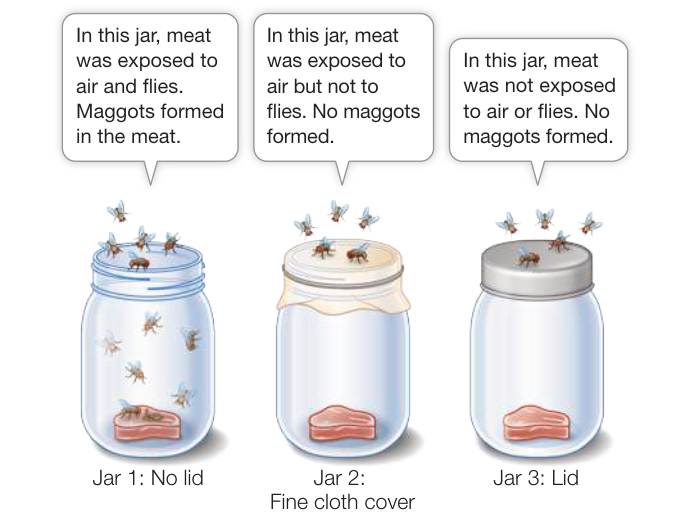
Figure 4.8 Disproving Spontaneous Generation: Redi’s Experiment By showing that maggots came from flies and not air, Francesco Redi disproved spontaneous generation of life. Experiment
Life began in water
As we emphasized in Chapter 2, water is an essential component of life as we know it. This is why there was great excitement when remotely controlled spacecraft sent from Earth detected water ice on Mars. Astronomers believe our solar system began forming about 4.6 billion years ago, when a cloud of space gas and dust was disturbed, possibly by a shock wave from an exploding star. The gas and dust collapsed on themselves to form the Sun. But the gas was rotating, and some of it more distant from the Sun formed a disc. Material on the disc cooled and formed rocks called planetesimals. These planetesimals collided with one another to form the inner planets, including Earth and Mars. The first chemical signatures indicating the presence of life on Earth are about 4 billion years old. So it took 600 million years for the chemical conditions on Earth to become just right for life. Key among those conditions was the presence of water.
Ancient Earth probably had a lot of water vapor in its atmosphere. Where did the water come from? One view is that comets (loose agglomerations of dust and ice that have orbited the Sun since the planets formed) struck Earth, bringing not only water but also other chemical components of life, such as nitrogen and carbon-containing molecules. The hot planetary surface evaporated any water that arrived. But over time, this atmospheric water vapor condensed as rain on a cooler planet, and lakes and oceans were formed.
As Earth cooled, chemicals from the rocks dissolved in the water, and simple chemical reactions would have taken place. Some of these reactions might have led to life, but impacts by large comets and rocky meteorites released enough energy to heat the developing oceans almost to boiling, thus destroying any early life that might have existed. On Earth, these large impacts eventually subsided, and about 3.8 billion years ago life gained a foothold. There has been life on Earth ever since.
Several models have been proposed to explain the origin of life on Earth. The next sections will discuss two alternative theories:
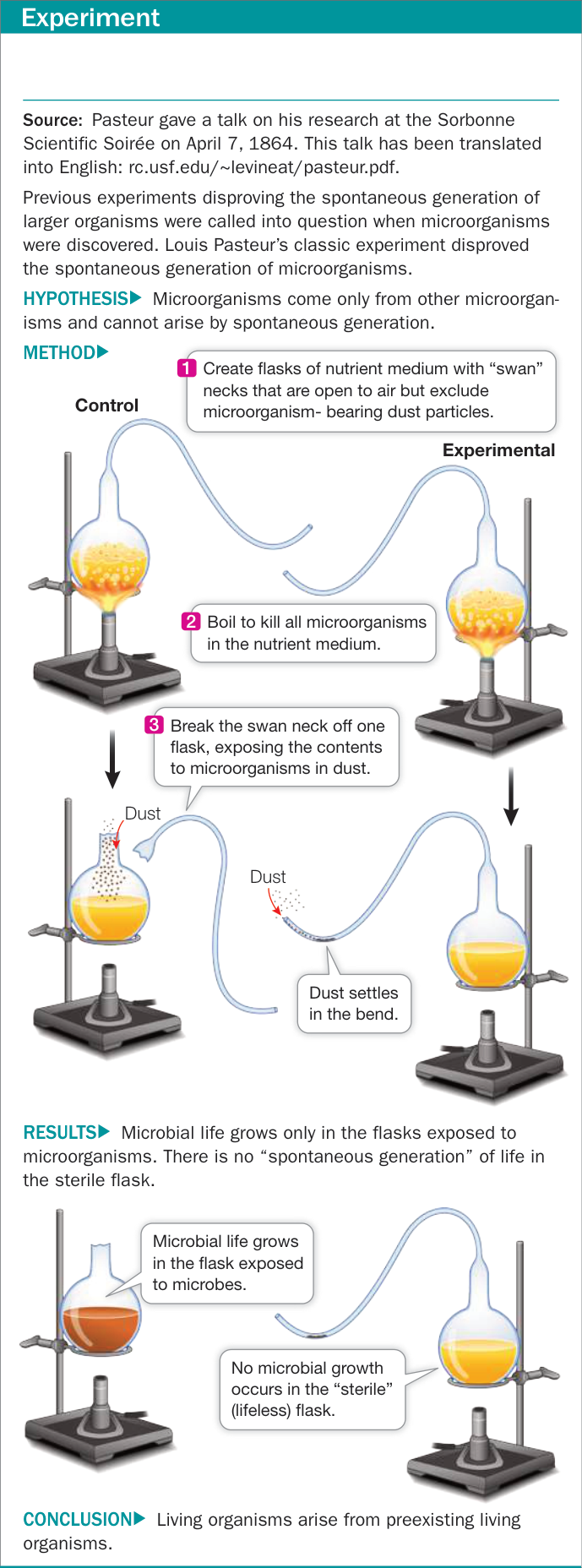
Figure 4.9 Disproving Spontaneous Generation: Pasteur’s Experiment
that life arose on Earth through chemical evolution, or that life came from outside Earth.
Prebiotic synthesis experiments model early Earth
One theory for the origin of life on Earth, chemical evolution, holds that conditions on primitive Earth led to the formation of simple molecules such as the monomers of proteins, carbohydrates, and nucleic acids (see Key Concept 3.1), and that these molecules led to the formation of life forms. Scientists have sought to reconstruct those primitive conditions, both physically (by varying temperature) and chemically (by re-creating the mixes of elements that may have been present).
HOT CHEMISTRY Earth’s early atmosphere came mostly from erupting volcanoes. Even today, the gases released from volcanoes are consistent: mostly vapor, with much smaller amounts of other gases. Most notably, there is no released from volcanoes, and scientists believe that it wasn’t until the emergence of photosynthetic life that began to accumulate in the atmosphere. In the 1950s Stanley Miller and Harold Urey at the University of Chicago set up an experimental “atmosphere” containing the gases they thought were present in Earth’s early atmosphere: hydrogen gas, ammonia, methane gas, and water vapor. They passed an electrical spark through these gases to simulate lightning, a source of energy to drive chemical reactions. Then they cooled the system so the gases would condense and collect in a watery solution, or “ocean” (Figure 4.10). After a week of continuous operation, the system contained numerous organic molecules, including a variety of amino acids—the building blocks of proteins.
COLD CHEMISTRY Stanley Miller also performed a long-term experiment in which the electrical spark was not used. In 1972 he filled test tubes with ammonia gas, water vapor, and cyanide (), another molecule that is thought to have formed on primitive Earth. After checking that there were no contaminating substances or organisms that might confound the results, he sealed the tubes and cooled them to , the temperature of the ice that covers Europa, one of Jupiter’s moons. Opening the tubes 27 years later, Miller found amino acids and nucleotide bases. Apparently, pockets of liquid water within the ice had allowed high concentrations of the starting materials to accumulate, thereby speeding up chemical reactions. The important conclusion is that the cold water within ice on ancient Earth may have provided environments for the prebiotic synthesis of molecules required for the subsequent formation of simple living systems.
The results of these experiments were profoundly important in giving weight to speculations about the chemical origin of life on Earth and elsewhere in the universe. Decades of experimental work and critical evaluation followed Miller and Urey’s original experiments. In science, an experiment and its results must be repeatable and be reinterpreted and refined as more knowledge accumulates. For example, ideas about Earth’s original atmosphere have changed. Volcanic gases now are known to include carbon dioxide (), nitrogen (), hydrogen sulfide (), and sulfur dioxide (). Experiments using these gases in addition to the ones in the original Miller–Urey experiment have produced a more diverse list of organic products:
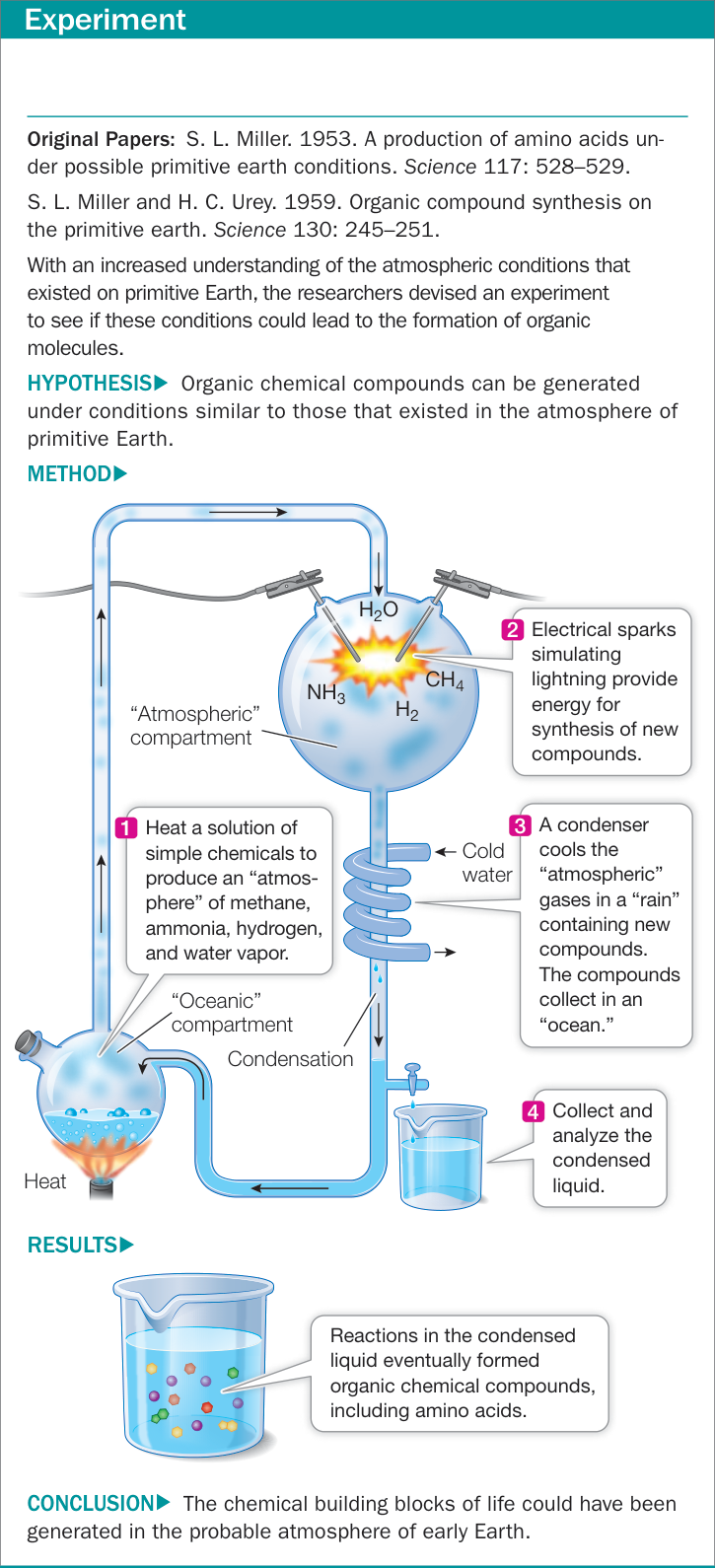
Figure 4.10 Modeling the Formation of Biological Molecules from Chemicals Present in Earth’s Early Atmosphere Figure 4.10 Modeling the Formation of Biological Molecules from Chemicals Present in Earth’s Early Atmosphere
- All five bases present in DNA and RNA (i.e., A, T, C, G, and U)
- All of the 20 amino acids used in protein synthesis
- Many three-to six-carbon sugars, including ribose
- Certain fatty acids and glycerol phosphate, a lipid precursor
- Vitamin (pantothenic acid, a component of coenzyme A)
- Nicotinamide (part of NAD, which is involved in energy metabolism)
- Carboxylic acids such as succinic and lactic acids (also involved in energy metabolism)
Life may have come from outside Earth
In 1969 a remarkable event led to the discovery that a meteorite from space carried molecules that are characteristic of life on Earth. On September 28 of that year, fragments of a meteorite fell around the town of Murchison, Australia. Using gloves to avoid Earth-derived contamination, scientists immediately shaved off tiny pieces of the rock, put them in test tubes, and extracted them in water (Figure 4.11). They found several of the molecules that are unique to life, including purines, pyrimidines, sugars, and ten amino acids.
Were these molecules truly brought from space as part of the meteorite, or did they get there after the rock landed on Earth? There are several reasons to believe the molecules were not Earthly contaminants:
- The scientists took great care to avoid contamination. They used gloves and sterile instruments, took pieces from below the rock’s surface, and did their work very soon after the meteorite landed (they hoped before organisms from Earth could contaminate the samples).
- Amino acids in most living organisms on Earth are L-amino acids; that is, the amino acids of living things are found in only one of the two possible optical isomeric forms (see Figure 3.2). The amino acids in the meteorite, however, were a mixture of L-and D-isomers, with a slight majority of the L form. Thus the amino acids in the meteorite were not likely to have come from a living organism on Earth.
- In the story that opened Chapter 2, we described how the ratio of isotopes in a living organism reflects the ratio of the same isotopes in the environment where the organism lives. The isotope ratios for carbon and hydrogen in the sugars from the meteorite were different from the ratios of those elements found on Earth.
More than 90 meteorites from Mars have been recovered on Earth. Many show signs of water—for example, in minerals such as carbonates that are precipitated from aqueous solution. Some also contain organic molecules that are the chemical signatures of life. While the presence of such molecules suggests that these rocks once harbored life, it does not prove that there were living organisms in the rocks when they landed on Earth. You may find it hard to believe that a living organism could survive thousands of years of traveling through space encased in a meteorite, followed by intense heat as the meteorite passed through Earth’s atmosphere. But there is evidence that the heat at the centers of some meteorites may not have been extreme. If this were the case, then a long interplanetary trip by living organisms might have been possible.
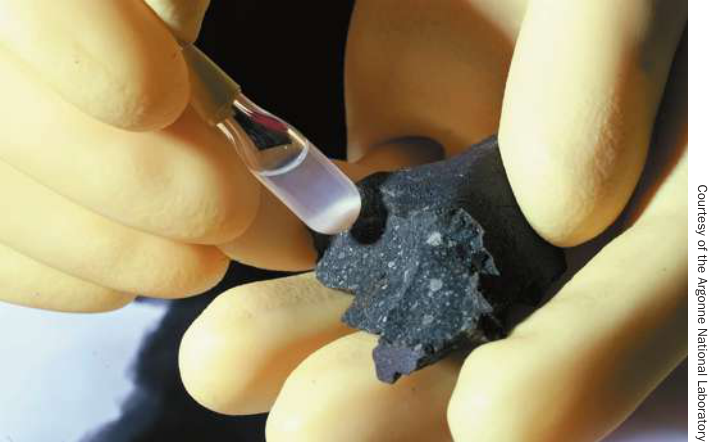
Figure 4.11 The Murchison Meteorite Pieces from a fragment of the meteorite that landed in Australia in 1969 were put into test tubes with water. Soluble molecules present in the rock—including amino acids, nucleotide bases, and sugars—dissolved in the water.
Life does not have to reach Earth from space to prove it exists elsewhere. There is an ongoing search for life in celestial bodies. For example, as mentioned in the opening story of this chapter, both orbiting satellites and vehicles probing the landscape of Mars search for conditions suitable for present or past life on Mars. Perhaps the most dramatic attempt to discover life on Mars came in 1976, when NASA landed two stationary probes, or landers, called Viking 1 and Viking 2 on the planet. Investigating Life: Can We Find Evidence of Life on Mars? describes how scientists on Earth directed onboard instruments to evaluate soil on Mars for signs of life. As noted in the opening story of this chapter, other landers have followed, with similar missions.
Recap and Assess
Life does not arise repeatedly through spontaneous generation but comes from preexisting life. Water is an essential ingredient for the emergence of life. Chemical synthesis experiments provide support for the idea that life’s simple molecules formed in the prebiotic environment on Earth. Meteorites that have landed on Earth provide some evidence for an extraterrestrial origin of life, as do experiments with landers on Mars showing possible chemical interconversions that may reflect life.
- What conditions existing on Earth today might preclude the origin of life from the prebiotic molecules Miller and Urey used?
- The interpretation of Pasteur’s experiment (see Figure 4.9) depended on the inactivation of microorganisms by heat. We now know of microorganisms that can survive extremely high temperatures (see Chapter 24). Does this change the interpretation of Pasteur’s experiment? What experiments would you do to inactivate such microbes?
(Continued on page 77)
Investigating Life: Can We Find Evidence of Life on Mars?
Experiment
Original Papers: G. V. Levin and O. Straat. 1976. Viking labeled release biology experiment: Interim results. Science 194: 1322–1329.
C. Ponnamperuma et al. 1977. Possible surface reactions on Mars: Implications for Viking biology results. Science 197: 455–457.
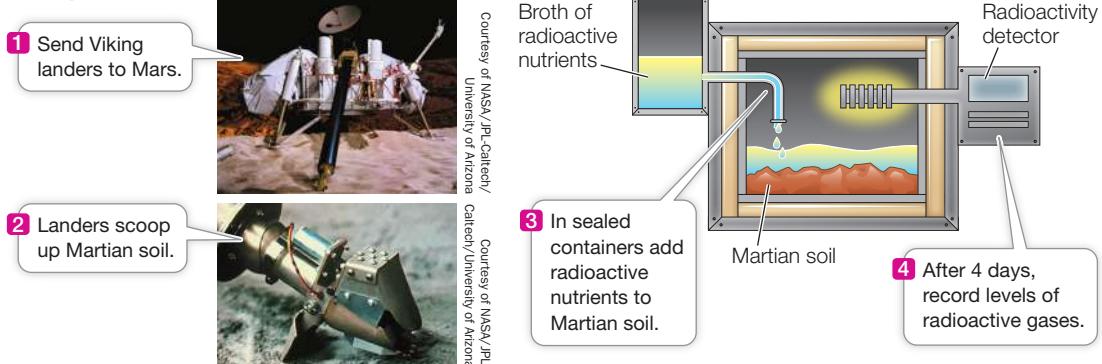
The Viking landers on Mars scooped up some of the soil and tested it for chemical interconversions consistent with life. Gilbert Levin and colleagues designed experiments to show remotely, at a distance of millions of miles, that there could be life on Mars at the present time.
HYPOTHESIS Martian soil can be tested by a probe on Mars to show chemical changes consistent with life.
METHOD
Work with the Data
While it’s challenging to design experiments in the lab here on Earth, imagine the challenge of designing experiments done remotely on Mars! A team of biologists and chemists led by Levin and Straat sent instruments to Mars to test for the presence of life by measuring the emission of gases after nutrients were supplied to soils possibly containing Martian organisms. A scoop was used to obtain a 0.2-mL sample of soil, which was then placed in a sealed container. The mixture was warmed to about 18°C (much higher than the surrounding Martian environment). Radioactive nutrients (formate, glycolate, glycine, alanine, and lactate) with their carbon atoms labeled in 14C were added. At intervals after nutrient injection, a radioactive detector was employed to test for the release of 14C radioactive gases.
QUESTIONS
- Table A shows data from two of the experiments. Plot the data as 14C radioactive gas versus Martian days after nutrient addition. What can you conclude? Laboratory experiments prior to the two Viking departures showed that the total radioactivity that could be released if all of the nutrients were completely converted to gases was 257,000 counts per minute (cpm). Calculate the fraction of this that appeared in the Martian sample and comment on the result.
- Table A shows data from Martian soil that had been heated for 3 h at 160°C before nutrient addition. Plot these data on the same graph you made for Question 1. What types of molecules are destroyed by heat, and how does this occur? How do these data affect your conclusions from Question 1?
RESULTS
Radioactive gas detected (counts per minute) after 4 Martian days
| Control (no soil) | Martian sample 1 | Martian sample 2 |
|---|---|---|
| 500 | 9,500 | 12,000 |
CONCLUSION Martian soil shows chemical changes consistent with life.
Table A
| 14 C Gases Detected (counts per minute) | |||
|---|---|---|---|
| Time (days) | Experiment 1 | Experiment 2 | Preheated soil |
| INITIAL | 185 | 1,100 | 655 |
| 0.2 | 3,000 | 5,500 | 540 |
| 0.5 | 4,800 | 7,200 | 500 |
| 1.0 | 6,200 | 9,500 | 525 |
| 2.0 | 7,000 | 11,300 | 590 |
| 3.0 | 7,600 | 11,800 | 610 |
| 4.0 | 8,000 | 12,000 | 620 |
Table B
| 14 C Gases Detected (counts per minute) | ||
|---|---|---|
| Hematite + 14 C nutrients | Hematite without nutrients | |
| Experiment | 10,140 | 207 |
| Preheated 160°C | 308 | 107 |
(4.2 Recap and Assess continued)
- The Miller–Urey experiment (see Figure 4.10) showed that it was possible for amino acids to be formed from gases that were hypothesized to have been in Earth’s early atmosphere. These amino acids were dissolved in water. Knowing what you do about the polymerization of amino acids into proteins (see Figure 3.7), how would you set up an experiment to show that proteins can form under the conditions of early Earth?
Chemistry experiments modeling the conditions of ancient Earth provide clues about the origins of the monomers (such as amino acids) that make up the polymers (such as proteins) that characterize life. How did these polymers develop?
The Large Molecules of Life Originated from Small Molecules
Learning Objectives
- 4.3.1 Justify the need for catalysts in the origin of life.
- 4.3.2 Describe the proposed role for RNA in the formation of long-chain polymers.
- 4.3.3 Provide evidence supporting RNA as a catalyst in prebiotic chemical reactions that gave rise to other biological polymers.
The Miller–Urey experiment and others that followed provide a plausible scenario for the formation of the building blocks of life under conditions that prevailed on primitive Earth. The next step in forming and supporting a general theory on the origin of life would be an explanation for how polymers formed from these monomers.
Complex molecules could be formed from simpler ones on primitive Earth
Scientists have used numerous model systems to try to simulate conditions under which the first biological polymers might have been made. Each of these systems is based on several observations and speculations:
- Solid mineral surfaces, such as powderlike clays, have large surface areas. Scientists speculate that the silicates in clay may have catalyzed (sped up) the condensation reactions that resulted in organic polymers.
- Hydrothermal vents deep in the ocean, where hot water emerges from beneath Earth’s crust, lack oxygen gas and contain metals such as iron and nickel. In laboratory experiments, these metals have been shown to catalyze the polymerization of amino acids in the absence of oxygen.
- In hot pools at the edges of oceans, evaporation may have concentrated monomers to the point where polymerization was favored (the “primordial soup” hypothesis).
In whatever ways the earliest stages of chemical evolution occurred, they resulted in the emergence of monomers and polymers that have probably remained unchanged in their general structures and functions for several billion years.
RNA may have been the first biological catalyst
A hallmark of life is change, particularly change induced by chemical reactions. You have already read about chemical changes in this and other chapters: for example, condensation and hydrolysis involving biological macromolecules, and DNA replication and transcription. As you will see in Chapter 8, some of these chemical changes can occur spontaneously in aqueous solutions like those that exist in biological systems, but most would occur extremely slowly. Catalysts—molecules that speed up biochemical conversions—solve this problem. So a key to the origin of life is the appearance of catalysts.
Today the main catalysts in organisms are proteins called enzymes. The many shapes of proteins allow them to bind to diverse substances in solution and speed up chemical reactions. But we know that proteins are made based on information in nucleic acids. So we have a chicken-or-egg problem: If proteins are needed for life, nucleic acids must have appeared first, so that the proteins could be made. But if nucleic acids appeared before proteins, proteins could not have been the first catalysts. Could nucleic acids be catalysts, in addition to their role as blueprints for protein synthesis? The answer is yes.
As in a protein, the three-dimensional structure of a folded RNA molecule presents a unique surface to the external environment (see Figure 4.4). The surfaces of RNA molecules can be every bit as specific as those of proteins. The three-dimensional shapes and other chemical properties of certain RNA molecules allow them to function as catalysts. Catalytic RNAs, called ribozymes, can speed up reactions involving their own nucleotides as well as other cellular substances. Given that RNA can be both informational (in its nucleotide sequence) and catalytic (because of its ability to form unique three-dimensional shapes), it has been hypothesized that early life consisted of an “RNA world”—a world before DNA. It is thought that when RNA was first made, it could have acted as a catalyst for its own replication as well as for the synthesis of proteins. DNA could eventually have evolved from RNA (Figure 4.12). Several lines of evidence support this scenario:
- Ribose, the sugar that is part of RNA nucleotides (see Figure 4.1), can be formed in prebiotic chemical synthesis experiments (see Key Concept 4.2). Ribose is the precursor to deoxyribose, the sugar in DNA.
- In living organisms today, the formation of peptide bonds between amino acids (see Figure 3.7) is catalyzed by ribozymes.
- In certain viruses called retroviruses, there is an enzyme called reverse transcriptase that catalyzes the synthesis of DNA from RNA.
- When a short, naturally occurring RNA molecule is added to a mixture of nucleotides, RNA polymers are formed at a rate of 7 million times greater than in the formation of polymers without the added RNA. This indicates that the added RNA is a catalyst, not just a template.
- An artificial ribozyme has been developed that can catalyze the assembly of short RNAs into a longer molecule that is an exact copy of itself. This may be how nucleic acid replication evolved.
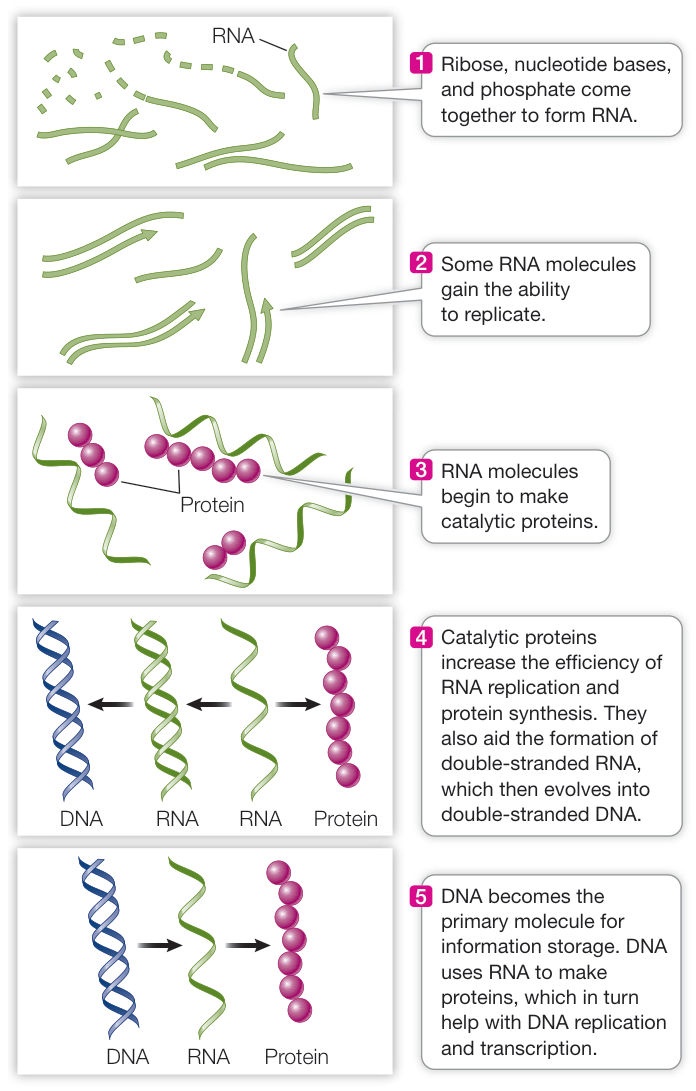
Figure 4.12 The “RNA World” Hypothesis This view postulates that in a world before DNA, RNA alone was both the blueprint for protein synthesis and a catalyst for its own replication. Eventually, the information storage molecules of DNA could have evolved from RNA. Q: Ribose sugar was made in the Miller–Urey hot chemistry experiment. Why is this important for the “RNA world” hypothesis?
Recap and Assess
The formation of the large polymers that are characteristic of life may have occurred on the surfaces of clay particles, near hydrothermal vents, or in hot pools at the edges of oceans. RNA may have been the first genetic material and catalyst.
- Why was the ability to both encode information and catalyze reactions important for the origin of life?
- Why was the discovery of ribozymes important for the development of the “RNA world” hypothesis?
- In living organisms, the catalyst for the formation of the peptide bond is an RNA that does not have an informational role. How does this relate to the “RNA world” hypothesis?
The discovery of mechanisms for the formation of small and large molecules is essential to answering questions about the origin of life on Earth. But we also need to understand how organized living systems formed. Such systems display the characteristic properties of life, including reproduction, energy processing, and responsiveness to the environment. These are properties of cells, whose origin we will explore in the next key concept.
Cells Originated from Their Molecular Building Blocks
Learning Objectives
- 4.4.1 Justify the reasoning behind the hypothesis that a membrane was critical in the evolution of life on Earth.
- 4.4.2 Describe the evidence suggesting that microfossils may be the remains of early cells.
Biochemical reactions are organized and do not occur in dilute solutions with the molecular participants far apart. In order for living systems to form, there had to be a compartment of some sort that brought together and concentrated the substances involved. Initially, this compartment may have simply been a tiny droplet of water on the surface of a rock, but this would have been unstable. The evolution of the cell membrane provided a stable system.
Life as we know it is separated from the environment within structurally defined units called cells. The internal contents of a cell are separated from the nonbiological environment by a special barrier—a membrane. The membrane is not just a barrier; it regulates what goes into and out of the cell, as we will describe in Chapter 6. This role of the surface membrane is very important because it permits the interior of the cell to maintain a chemical composition that is different from that of its external environment.
How did the first cells with membranes come into existence?
Jack Szostak and his colleagues at Harvard University built a laboratory model that gives insights into the origin of cells. To do this, they first put fatty acids (which can be made in prebiotic experiments) into water. Recall from Chapter 3 that fatty acids are amphipathic: they have a hydrophilic polar head and a long, nonpolar tail that is hydrophobic (see Figure 3.23). When placed in water, fatty acids will arrange themselves in a round “huddle” much like a football team: the hydrophilic heads point outward to interact with the aqueous environment, and the fatty acid tails point inward, away from the water molecules.
What if some water becomes trapped in the interior of this “huddle”? Now the layer of hydrophobic fatty acid tails is in water, which is an unstable situation. To stabilize this structure, a second layer of fatty acids forms. This lipid bilayer has the polar heads of the fatty acids facing both outward and inward, because they are attracted to the polar water molecules present on each side of the double layer. The nonpolar tails form the interior of the bilayer
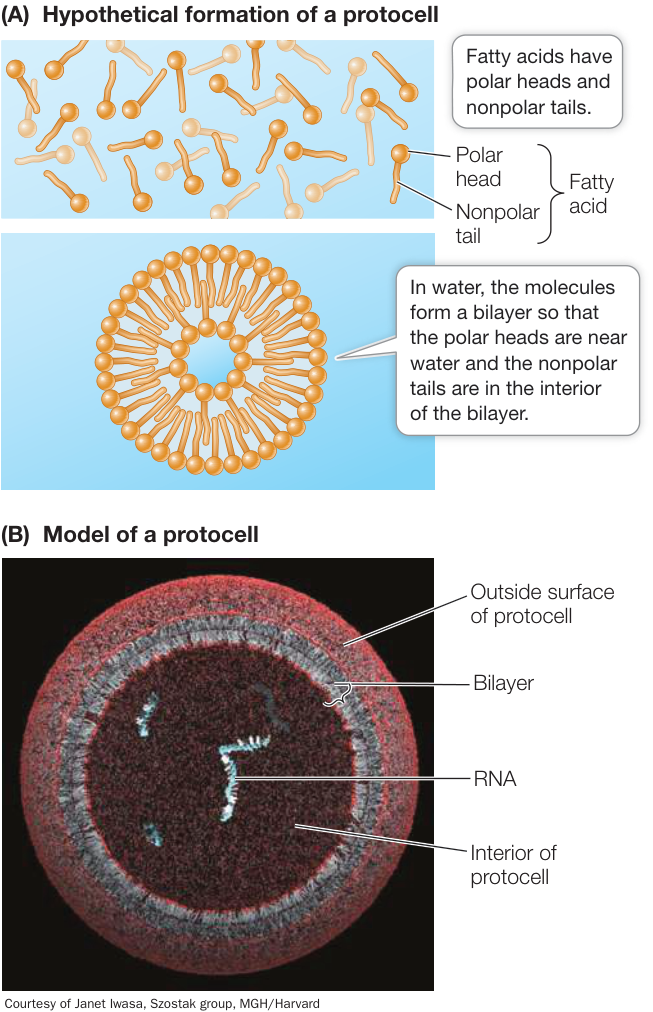
Figure 4.13 Protocells (A) In a series of experiments, Jack Szostak and his colleagues mixed fatty acid molecules in water. The molecules formed spherical structures called protocells, with water surrounded by bilayers of fatty acids. (B) A model of a protocell. A portion of the “membrane” has been cut away to reveal the inside of the protocell and the membrane’s bilayer structure. Nutrients and nucleotides pass through the “membrane” and enter the protocell, where they copy an already present RNA template. The new copies of RNA remain in the protocell.
(Figure 4.13). These prebiotic, water-filled structures, defined by a lipid bilayer membrane, very much resemble living cells. Scientists refer to these compartments as protocells. Examining their properties revealed that:
- Large molecules such as DNA and RNA could not pass through the bilayer to enter the protocells, but small molecules such as sugars and individual nucleotides could.
- Nucleic acids inside the protocells could replicate using the nucleotides from outside. When the investigators placed a short nucleic acid strand capable of self-replication inside protocells and added nucleotides to the watery environment outside, the nucleotides crossed the barrier, entered the protocells, and became incorporated into new polynucleotide chains. This replication, which can occur without protein catalysis, may have been the first step toward cell reproduction.
Were these protocells truly cells, and was the lipid bilayer produced in these experiments a true cell membrane? Certainly not. The protocells could not fully reproduce, nor could they carry out all the metabolic reactions that take place in modern cells. The simple lipid bilayer had few of the sophisticated functions of modern cell membranes. Nevertheless, the protocell may be a reasonable facsimile of a cell as it evolved billions of years ago:
- It can act as an organized system of parts, with substances interacting and reacting, in some cases catalytically.
- It includes an interior that is distinct from the exterior environment.
- It is capable of limited replication.
These are all fundamental characteristics of living cells.
Connect the Concepts Protocells more closely resemble bacteria than they do plant or animal cells. The evolution of the latter two cell types is believed to have occurred in a series of steps, as explained in Key Concept 25.1.
Some ancient cells left a fossil imprint
In the 1990s scientists made a rare find: a formation of ancient rocks in Australia that had remained relatively unchanged since the rocks first formed 3.5 billion years ago. In one of these rock samples, geologist J. William Schopf of the University of California, Los Angeles, saw chains and clumps of what looked tantalizingly like contemporary cyanobacteria, or “blue-green” bacteria (Figure 4.14). Cyanobacteria are believed to have been among the first organisms because they can perform photosynthesis, converting CO2 and water into carbohydrates. Schopf needed to prove that the chains were once alive, not just the results of simple chemical reactions. He and his colleagues looked for chemical evidence of biochemical processes in the rock samples.
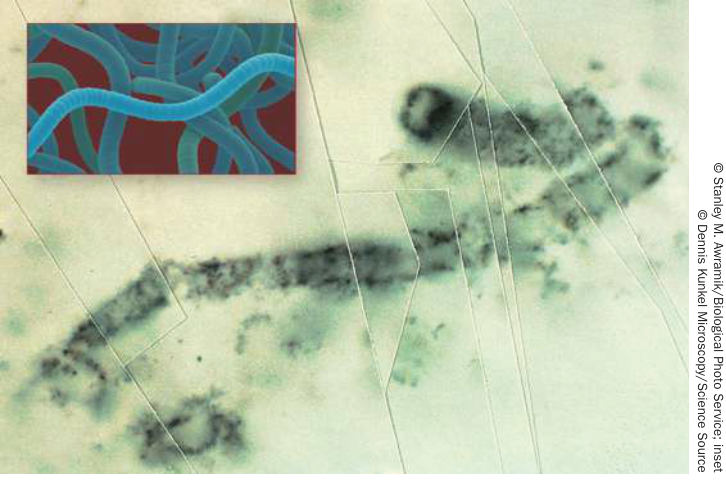
Figure 4.14 The Earliest Cells? This fossil from Western Australia is 3.5 billion years old. Its form is similar to that of modern filamentous cyanobacteria (inset).
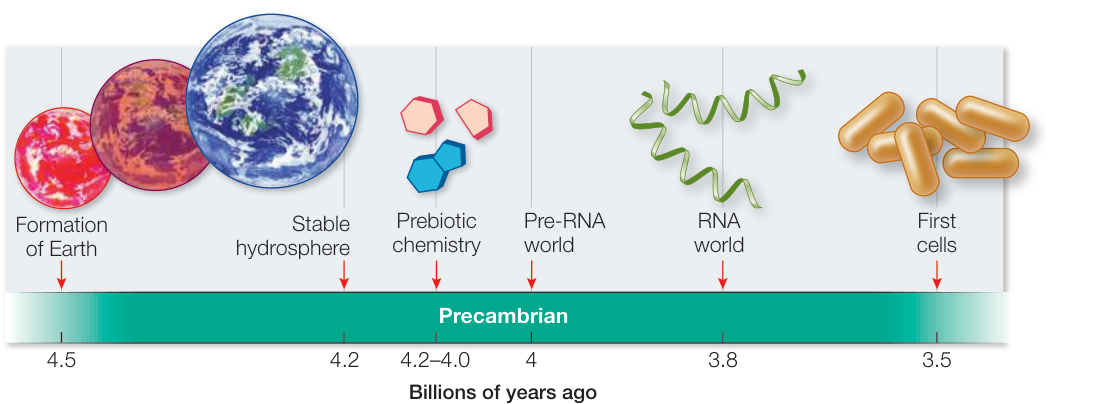
Figure 4.15 The Origin of Life This highly simplified time line gives a sense of the major events that culminated in the origin of life more than 3.5 billion years ago.
The ratio of carbon isotopes () in molecular structures produced by living systems differs from that of the inanimate environment. Using a sophisticated technique called secondary ion mass spectrometry (SIMS), Schopf and colleagues analyzed various samples of possible microfossils, carefully isolated from the ancient rocks, and found not only that the carbon isotope ratios differed from the rocks, but that there were several distinct ratios. Comparing these ratios with those in currently living organisms, they showed that the samples represented not just one species, but a diversity of simple organisms. For example, some samples had a carbon isotope ratio similar to that of current bacteria that use methane gas as a source of carbon, while other ancient samples had an isotope ratio more typical of bacteria that carry out photosynthesis, using . Still others appeared to use sulfur. These findings indicate that biological diversity was already present 3.5 billion years ago and suggest that the first cells arose even earlier.
Taking geological, chemical, and biological evidence into account, it is plausible that it took about 500 million to a billion years from the formation of Earth until the appearance of the first cells (Figure 4.15). Life has been cellular ever since. In the next chapter we will begin our study of cell structure and function.
Recap and Assess
The chemical reactions that preceded living organisms probably occurred in specialized compartments, such as water droplets on the surfaces of minerals. Life as we know it did not begin until the emergence of cells. Protocells made in the laboratory have some of the properties of modern cells. Cell-like structures fossilized in ancient rocks date early cells to about 3.5 billion years ago.
- Why is the cell membrane important to the evolution of living organisms?
- If you wanted to find evidence for the existence of cells more than 3 billion years ago, what would you look for?
Investigating Life: QA Can we find evidence of life on Mars?
In 2014 NASA declared that finding evidence for current or past life on Mars is a primary goal. At this writing, the Curiosity rover is still there, doing experiments and analyses. In 2018 it dug up and analyzed some Martian soil and detected significant amounts of complex organic (carbon-containing) molecules, including propane () and benzene (). While these molecules are not present in most living organisms on Earth, they indicate the presence of a complex chemistry needed for the formation of life’s molecules as we know them. Later Martian rovers with more sophisticated instruments for sampling and analysis are scheduled for launch in the near future. The European Space Agency, collaborating with Russia, is planning to launch the Rosalind Franklin rover, which will drill 2 meters into the surface of Mars to get cores to analyze. Most exciting, scheduled as early as 2026, is a Mars Sample Return mission, in which soil samples will be brought back to Earth for careful experimentation and analysis in laboratories, just as samples from the moon were brought back about 50 years ago. If you had a Martian soil sample here on Earth, what analyses and experiments would you perform?
Future directions
Mars is not the only celestial body subject to the search for life. Three moons of large outer planets—Jupiter’s Europa and Saturn’s Enceladus and Titan—have some conditions suitable for life. Powerful Earth-based observations and satellites have indicated the presence of abundant subsurface water (in some cases, liquid) and carbon-based chemistry. Future missions are planned to sample these moons directly.
A daring space mission is underway to obtain and return to Earth a soil sample from the asteroid Bennu. There are more than 600,000 known asteroids, most of them rocks from the early solar system orbiting the Sun between Mars and Jupiter. But a few thousand have been kicked out of the typical location and are relatively near Earth, some getting closer than our moon. Bennu is just the right size and composition to contain organic molecules. At this writing, the OSIRIS-REx probe has arrived and is orbiting around Bennu, getting images and data to find a suitable landing spot. After landing, it will return to Earth with its cargo in 2023. This sample of the early solar system will provide scientists with a window onto not just what the asteroid is made of, but perhaps the earliest molecules that could have led to life.

Visual Summary
NASA/JPL-Caltech/MSSS

You should be able to relate each summary to the adjacent figures. If you go to this visual summary in Achieve, you can follow links to figures, animations, activities, and simulations that will help you consolidate the material.
Nucleic Acids Are Informational Macromolecules
- ■ Nucleic acids (DNA and RNA) are polymers of nucleotides. The polymers can fold or interact with other chains by complementary base pairing.
- ■ DNA is the genetic material, and as such is purely an informational macromolecule. The information in DNA resides in its base sequence.
- ■ The information in DNA is expressed as RNA during transcription. During translation, RNA can then specify the amino acid sequence of a protein.
Questions
- One strand of DNA has the base sequence 5’-AAGGTC-3’. What is the sequence of the other strand? What would the sequence be of an RNA molecule transcribed from this strand?
- If, through an error in DNA replication, an A-G base pair is formed, what will be the consequence for the secondary structure of DNA?
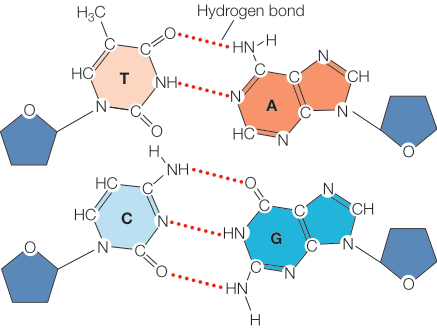
Figure 4.3
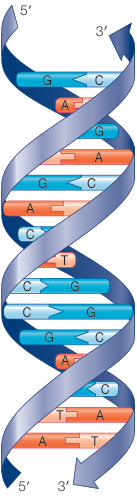
Figure 4.5

Figure 4.6
The Small Molecules of Life Originated on Primitive Earth
- ■ The historical belief that life can originate repeatedly by spontaneous generation was disproven experimentally.
- ■ One hypothesis for the origin of life on Earth is chemical evolution: the idea that organic molecules were formed on Earth before life began. Chemical experiments modeling the prebiotic conditions on Earth support the idea of chemical evolution.
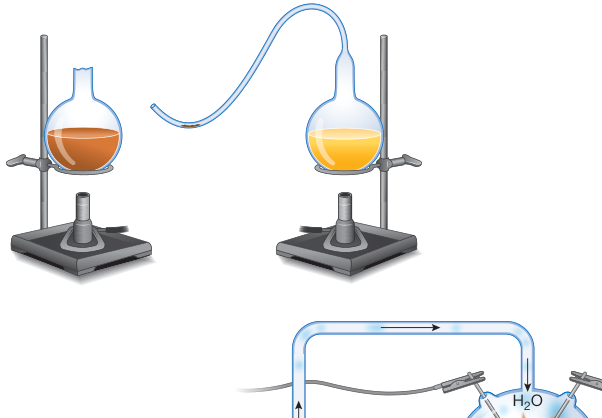
Figure 4.9
Questions
- Does the Miller–Urey experiment show that the organic molecules of life could have originated only on Earth? Explain your answer.
- When you purchase pasteurized milk, why is the container sealed? Relate this to the Pasteur experiments. Why must you store an opened milk container in the refrigerator?
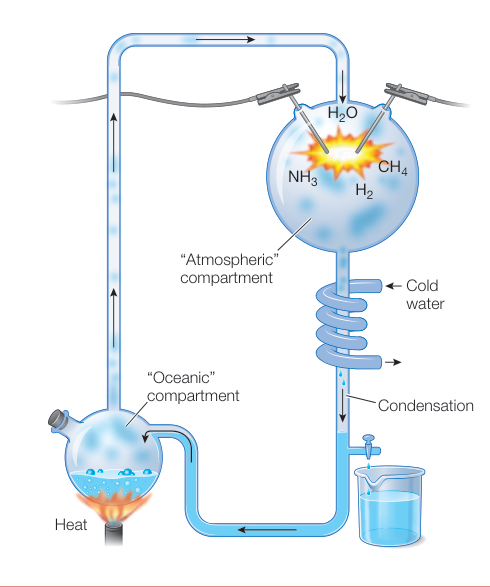
Figure 4.10
The Large Molecules of Life Originated from Small Molecules
- ■ Chemical evolution may have led to the polymerization of small molecules into polymers on clay particles, in hydro-thermal vents, or in hot pools at the edges of oceans.
- ■ On early Earth, RNA may have acted as a catalyst for its own replication as well as for the synthesis of proteins. DNA could eventually have evolved from RNA.
Question
- What key line of evidence rules out proteins and instead favors RNA as the first biological molecule?
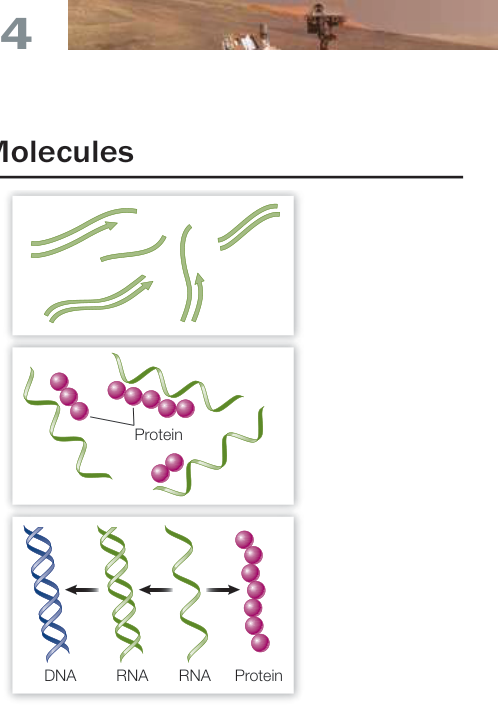
Figure 4.12
Cells Originated from Their Molecular Building Blocks
- ■ A key to the emergence of living cells was the prebiotic generation of compartments enclosed by membranes.
- ■ In the laboratory, fatty acids assemble into protocells that have some of the characteristics of cells.
- ■ Ancient rocks (3.5 billion years old) have been found with imprints that are probably fossils of early cells.
Questions
- Why was the evolution of a cell membrane important for the emergence of life?
- What is the evidence that the putative cellular fossils found in rocks in Australia were not the first cells, but the results of evolution from the first cells that existed previously?
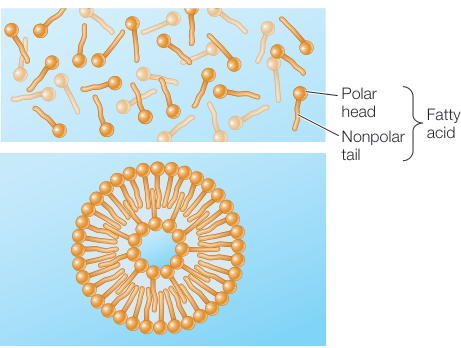
Figure 4.13
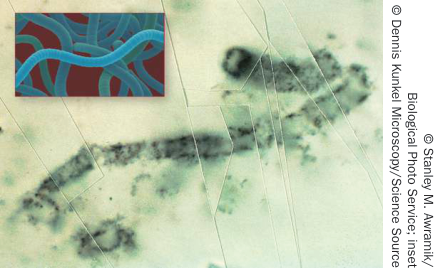
Figure 4.14