Chapter 22Speciation
Key Concepts
22.1 Species Are Reproductively Isolated Lineages on the Tree of Life
22.2 Speciation Is a Natural Consequence of Population Subdivision
22.3 Speciation May Occur through Geographic Isolation or in Sympatry
22.4 Reproductive Isolation Is Reinforced When Diverging Species Come into Contact
22.5 Speciation Rates Are Highly Variable across Life
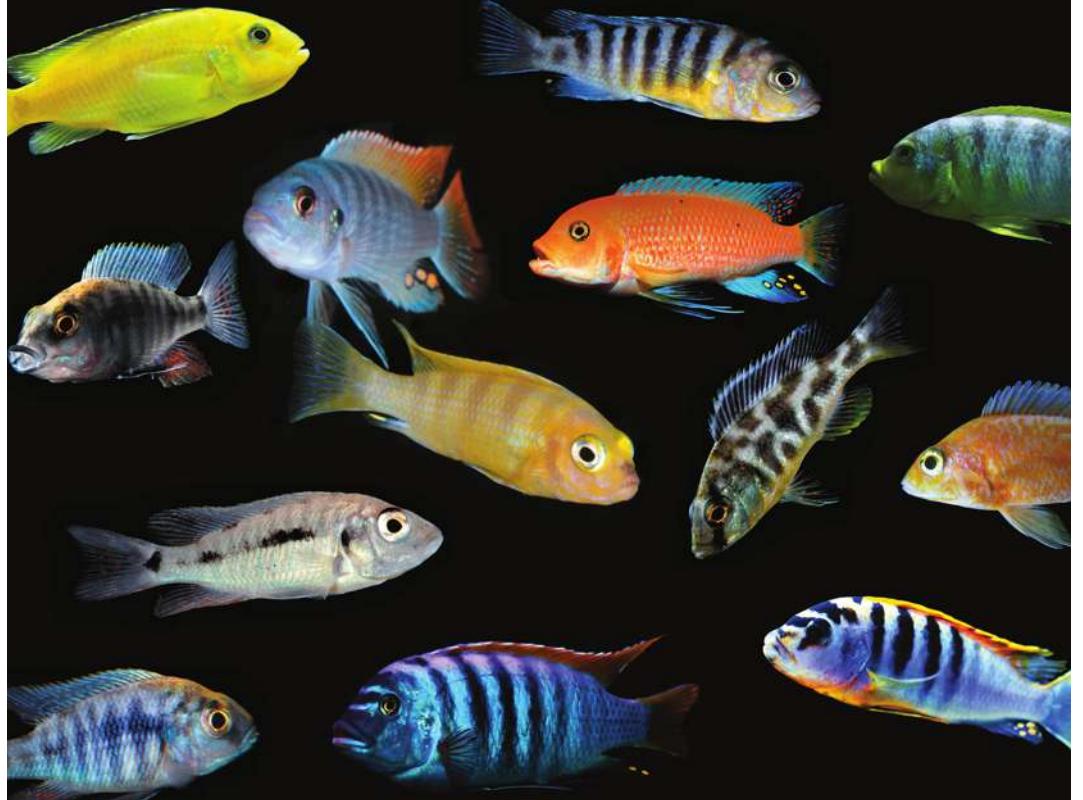
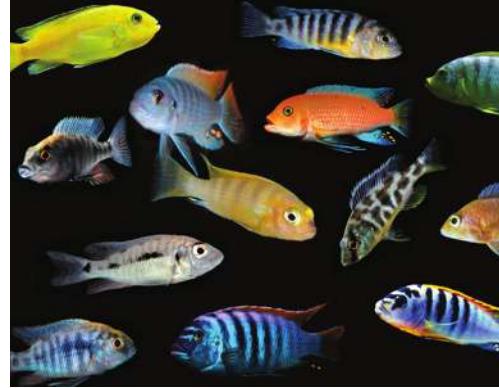
This composite photograph shows a few of the nearly 1,000 species of haplochromine cichlids that are endemic to Lake Malawi, all of which are from a single founder species.
Photos by David McNyre (courtesy of Exotic Fish and Pet World, Southampton, MA) and ©Nantawat Chotsuwan/Shutterstock, Andreas Gradin, Mikola Gyorgy, Girgorev Mikhail, Vladimir Wrangel/Shutterstock.com, © IStock.com/Vladimir Wrangel
Investigating Life: Rapid Speciation in African Lake Cichlids
Not quite 2 million years ago, a tectonic split in the Great Rift Valley of East Africa led to the formation of Lake Malawi, which lies between the modern countries of Malawi, Tanzania, and Mozambique. A few fish species entered the new lake, including a type known as a haplochromine cichlid. Today the descendants of this early invader include nearly 1,000 species of haplochromine cichlids. All of them are endemic to Lake Malawi—they are found nowhere else. This vast array of cichlid species makes this the most diverse lake in the world in terms of its fish fauna. How did so many different species arise from a single ancestral species in less than 2 million years?
By studying the history and timing of speciation events in Lake Malawi, biologists have pieced together some of the processes that led to so many cichlid species. The earliest haplochromine cichlids to enter the new lake encountered diverse habitats in Lake Malawi, as some shores were rocky and others were sandy. Cichlid populations quickly adapted to these distinct habitat types. Fish in rocky habitats adapted to breeding and living in rocky conditions, and those in sandy habitats evolved specializations for life over sand. These changes resulted in an early speciation event.
Within each of these major habitat types, there were numerous opportunities for diet specialization. Various populations of cichlids became rock scrapers, bottom feeders, fish predators, scale biters, pelagic zooplankton eaters, or plant specialists. Each of these feeding specializations requires a different mouth morphology. The offspring of fish that bred with fish of similar morphology were more likely to survive than were fish with two very different parents. These differences in fitness led to the formation of many more new species, each adapted to a different feeding mode.
The Lake Malawi cichlids continued to diverge and form new species. Male cichlids compete for the attention of females through their bright body colors. Diversification of the body colors of males, and of the preferences of females for different body colors, led to many more new species of cichlids, each isolated from the other by its sexual preferences. Now biologists are studying the genomes of these Lake Malawi cichlids to understand the details of the genetic changes that have given rise to so many species over so little time.
QA If speciation typically takes thousands to millions of years, how do biologists conduct experiments to study this process? (Find the answer on page 510.)
Species Are Reproductively Isolated Lineages on the Tree of Life
Species Are Reproductively Isolated Lineages on the Tree of Life
Learning Objectives
- 22.1.1 Explain how biologists define species using morphology, reproduction, and evolutionary history.
- 22.1.2 Describe how reproductive isolation plays a role in each species concept.
Biological diversity does not vary in a smooth, continuous way. People have long recognized groups of similar organisms that mate with one another, and they have noticed that there are usually distinct morphological breaks between these groups. Groups of organisms that share a suite of genetic and morphological attributes, and are reproductively isolated from other such groups, are known as species (note that this is both the plural and singular form of the word). Species are the result of the process of speciation: the divergence of biological lineages and the emergence of reproductive isolation between lineages.
Although “species” is a useful and common term, its usage varies among biologists who are interested in different aspects of speciation. Different biologists think about species differently because they ask different questions: How can we recognize and identify species? How do new species arise? How do different species remain separate? Why do rates of speciation differ among groups of organisms? In answering these questions, biologists focus on different attributes of species, leading to several different ways of thinking about what species are and how they form. Most of the various species concepts proposed by biologists are simply different ways of approaching the question “What are species?” Let’s compare three major classes of species concepts to contrast the ways that biologists think about species.
We can recognize many species by their appearance Someone who is knowledgeable about a group of organisms, such as birds or flowering plants, can usually distinguish the different species found in a particular area simply by looking at them. Standard field guides to birds, mammals, insects, and wildflowers are possible only because many species change little in appearance over large geographic distances (Figure 22.1A).
More than 250 years ago, Carolus Linnaeus developed the system of binomial nomenclature by which species are named today (see Key Concept 20.4). Linnaeus described and named thousands of species, but because he knew nothing about the genetics and little of the mating behavior of the organisms he was naming, he classified them on the basis of their appearance alone. In other words, Linnaeus used a morphological species concept, a construct that assumes that a species comprises individuals that “look alike” and that individuals that do not look alike belong to different species. Although Linnaeus could not have known it, the members of most of the groups he classified as species look alike because they share many alleles of the genes that code for their morphological features.
Using morphology to define species is practical and useful, but it also has limitations. Members of the same species do not always look alike. For example, males, females, and young individuals do not always resemble one another closely (Figure 22.1B). Furthermore, morphology is of little use in the case of cryptic species—instances in which two or more species are morphologically indistinguishable but do not interbreed (Figure 22.2). Biologists therefore cannot rely on appearance alone in determining whether individual organisms are members of the same or different species. Today biologists use several additional types of information—especially behavioral and genetic data—to differentiate species.
Reproductive isolation is a key aspect of most species concepts
The most important factor in the divergence of sexually reproducing lineages from one another is the development of reproductive isolation, a state in which two groups of organisms can no longer exchange genes. If individuals of group A mate and reproduce only with one another, then group A constitutes a distinct species within which genes recombine. In other words, group A is an independent evolutionary lineage—a separate branch on the tree of life.
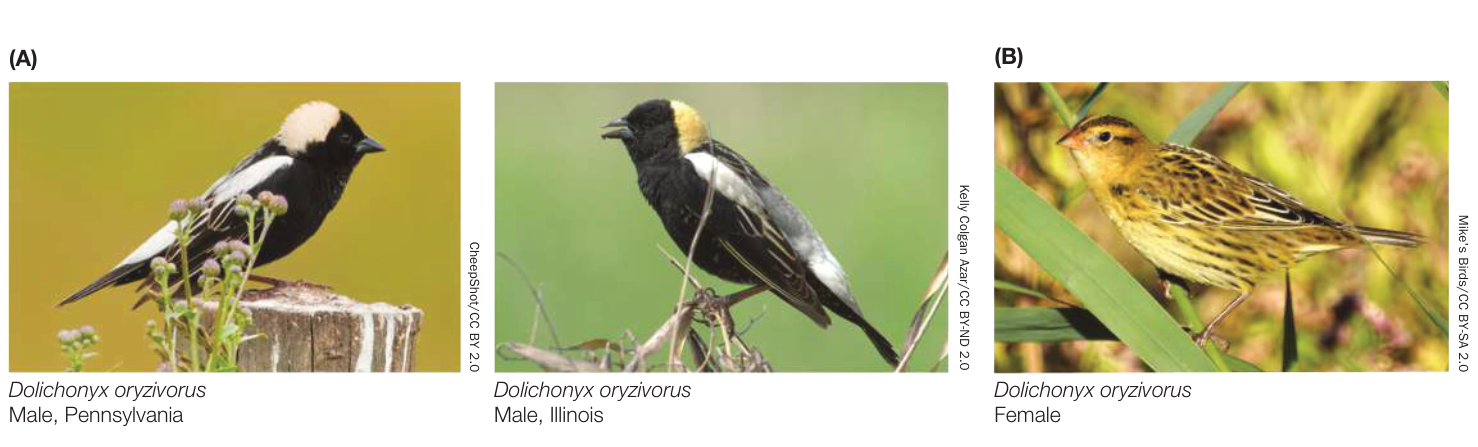
Figure 22.1 Not All Members of the Same Species Look Alike (A) It is easy to identify these two male Bobolinks (Dolichonyx oryzivorus) as members of the same species, even though they were photographed hundreds of miles apart in Pennsylvania and Illinois, respectively. Despite their geographic separation, the two individuals are morphologically very similar. (B) Bobolinks are sexually dimorphic, which means the female’s appearance is quite different from that of the male.
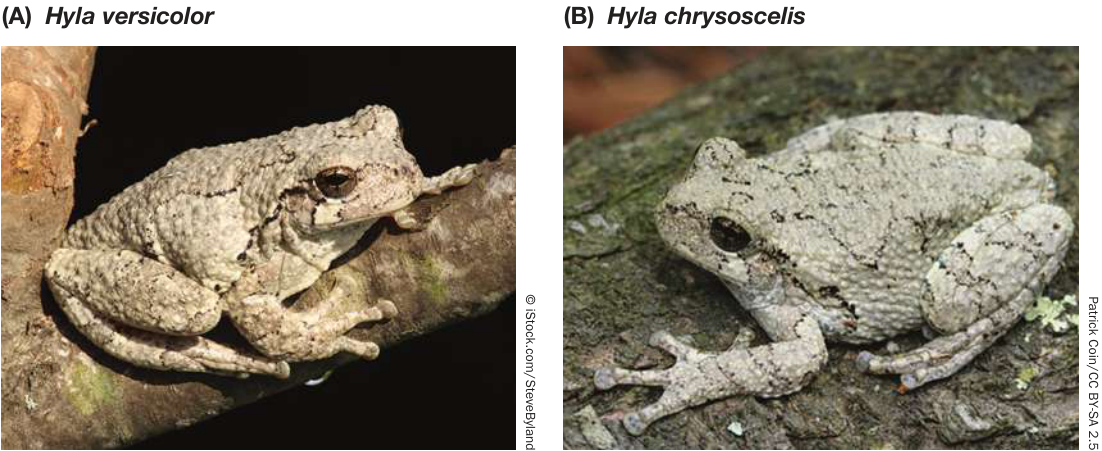
Figure 22.2 Cryptic Species Look Alike but Do Not Interbreed These two species of gray tree frogs cannot be distinguished by their external morphology, but they do not interbreed even when they occupy the same geographic range. Hyla versicolor (A) is a tetraploid species (four sets of chromosomes), whereas H. chrysoscelis (B) is diploid (two sets of chromosomes). And although they look alike, the males have distinctive mating calls; female frogs recognize and mate with males of their own species based on these calls.
To emphasize the importance of reproductive isolation in maintaining species, evolutionary biologist Ernst Mayr proposed the biological species concept: “Species are groups of actually or potentially interbreeding natural populations which are reproductively isolated from other such groups.” The phrase “actually or potentially” is an important element of this definition. “Actually” says that the individuals live in the same area and interbreed with one another. “Potentially” says that even though the individuals do not live in the same area, and therefore do not interbreed, other information suggests that they would do so if they were able to get together. This widely used species concept is not sufficient for all purposes, however. For example, it does not apply to organisms that reproduce asexually, and it is limited to a single point in evolutionary time.
The lineage approach to understanding species takes a long-term view
Evolutionary biologists often think of species as branches on the tree of life, an idea that articulates a lineage species concept. In this framework for thinking about species, one species splits into two descendant species, which thereafter evolve as distinct lineages. A lineage species concept allows biologists to consider species over evolutionary time.
A lineage is an ancestor–descendant series of populations followed over time. Each species has a history that starts with a speciation event (at which one lineage on the tree is split into two) and ends either at extinction or at another speciation event (at which the species produces two daughter species). The process of lineage splitting may be gradual, taking thousands of generations to complete. At the other extreme, an ancestral lineage may be split in two within a few generations (as happens with polyploidy, which we discuss in Key Concept 22.3). The gradual nature of some splitting events means that at a single point in time, the final outcome of the process may not be clear. In these cases it may be difficult to predict whether the incipient species will continue to diverge and become fully isolated from their sibling species, or if they will merge again in the future.
The different species concepts are not mutually exclusive
Many named variants of these three major classes of species concepts exist. These various concepts are not incompatible; they simply emphasize different aspects of species or speciation. The morphological species concept emphasizes the practical aspects of recognizing species visually, although it sometimes results in underestimation or overestimation of the actual number of species. Mayr’s biological species concept emphasizes that reproductive isolation is what allows sexual species to evolve independently of one another. The lineage species concept embraces the idea that sexual species are maintained by reproductive isolation, but extends the concept of a species as a lineage over evolutionary time. The species-as-lineage concept also accommodates species that reproduce asexually.
Virtually all species exhibit some degree of genetic recombination among individuals, even if recombination events are relatively rare and not associated with sexual reproduction. Significant reproductive isolation between species is therefore necessary for lineages to remain distinct over evolutionary time. Furthermore, reproductive isolation is responsible for the morphological distinctiveness of most species, because mutations that result in morphological changes cannot spread between reproductively isolated species. Therefore no matter which species concept we emphasize, the evolution of reproductive isolation is important for understanding the origin of species.
Recap and Assess
Species are distinct lineages on the tree of life. Speciation is usually a gradual process as one lineage divides into two. Over time, lineages of sexual species remain distinct from one another because they have become reproductively isolated.
- Why do different biologists emphasize different attributes of species in formulating species concepts?
- What makes reproductive isolation such an important component of each of the species concepts discussed here?
- Why is the biological species concept not applicable to asexually reproducing organisms? Do you think this limits its applicability?
Although Charles Darwin titled his groundbreaking book On the Origin of Species, in fact it included very little discussion of speciation as we understand it today. Darwin devoted most of his attention to demonstrating that individual species are altered over time by natural selection. The remaining sections of this chapter discuss the many aspects of speciation that biologists have learned about since Darwin’s time.
Speciation Is a Natural Consequence of Population Subdivision
Learning Objectives
- 22.2.1 Describe the Dobzhansky–Muller model of speciation and explain how genetic differences between species are correlated with reproductive isolation.
- 22.2.2 Evaluate data from two populations to determine if they are reproductively isolated.
Not all evolutionary changes result in new species. A single lineage may change over time without giving rise to a new species. Speciation requires the interruption of gene flow within a species whose members formerly exchanged genes. But if a genetic change prevents reproduction between individuals of a species, how can such a change spread through a species in the first place?
Incompatibilities between genes can result in reproductive isolation
If a new allele that causes reproductive incompatibility arises in a population, it cannot spread through the population because no other individuals will be reproductively compatible with the individual that carries the new allele. So how can one reproductively cohesive lineage ever split into two reproductively isolated species? Several early geneticists, including Theodosius Dobzhansky and Hermann Joseph Muller, developed a genetic model to explain this apparent conundrum (Figure 22.3).
The Dobzhansky–Muller model is quite simple. First, assume that a single ancestral population is subdivided into two daughter populations (by the formation of a new mountain range, for instance), which then evolve as independent lineages. In one of the descendant lineages, a new allele (A) arises and becomes fixed (see Figure 22.3). In the other lineage, another new allele (B) becomes fixed at a different gene locus. Neither new allele at either locus results in any loss of reproductive compatibility by itself. However, the two new forms of these two different genes have never occurred together in the same individual or population. Recall that the products of many genes must work together in an organism. It is possible that the new proteins encoded by the two new alleles will not be compatible with each other. If individuals from the two lineages come back together after these genetic changes, they may still be able to interbreed. However, the hybrid offspring will have a new combination of genes that may be functionally inferior or even lethal (the combination of alleles A and B at the two loci in this example). This will not happen with all new combinations of genes, but over time, isolated lineages will accumulate many allele differences at many gene loci. Some combinations of these differentiated genes will not function well together in hybrids. Thus genetic incompatibility between the two isolated lineages will develop over time.
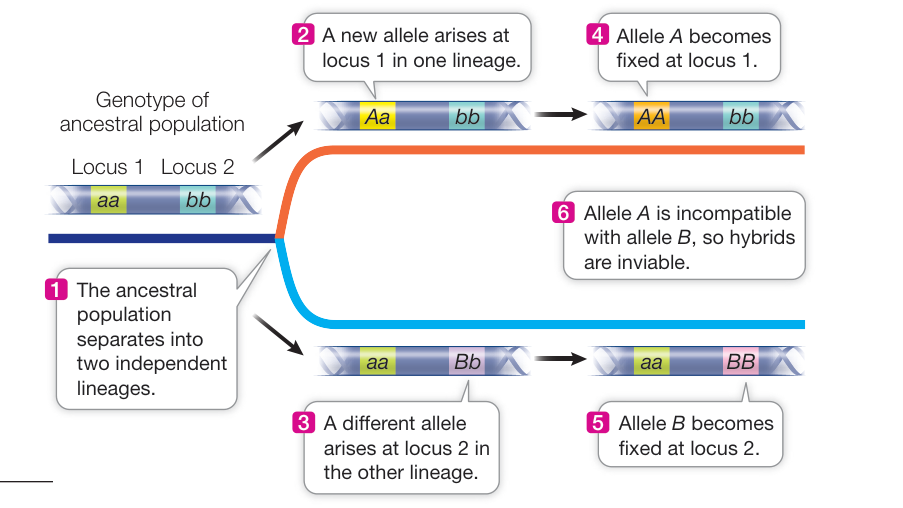
Figure 22.3 The Dobzhansky–Muller Model In this simple two-locus version of the model, two lineages from the same ancestral population become physically separated from each other and evolve independently. A new allele becomes fixed in each descendant lineage, but at a different locus. Neither of the new alleles is incompatible with the ancestral alleles, but the two new alleles in the two different genes are incompatible with each other. Thus the two descendant lineages are reproductively incompatible.
Many empirical and experimental examples support the Dobzhansky–Muller model. This model works not only for pairs of individual genes but also for some kinds of chromosomal rearrangements. Bats of the genus Rhogeessa, for example, exhibit considerable variation in centric fusions of their chromosomes. In other words, the chromosomes of the various species contain the same basic chromosomal arms, but in some species two acrocentric (one-armed) chromosomes have fused at the centromere to form larger, metacentric (two-armed) chromosomes. A polymorphism in centric fusion causes few, if any, problems in meiosis because the respective chromosomes can still align and assort normally. Therefore a given centric fusion can become fixed in a lineage. However, if a different centric fusion becomes fixed in a second lineage, then hybrids between individuals of each lineage will not be able to produce normal gametes in meiosis (Figure 22.4). Most of the closely related species of Rhogeessa display different combinations of these centric fusions and are thereby reproductively isolated from one another.
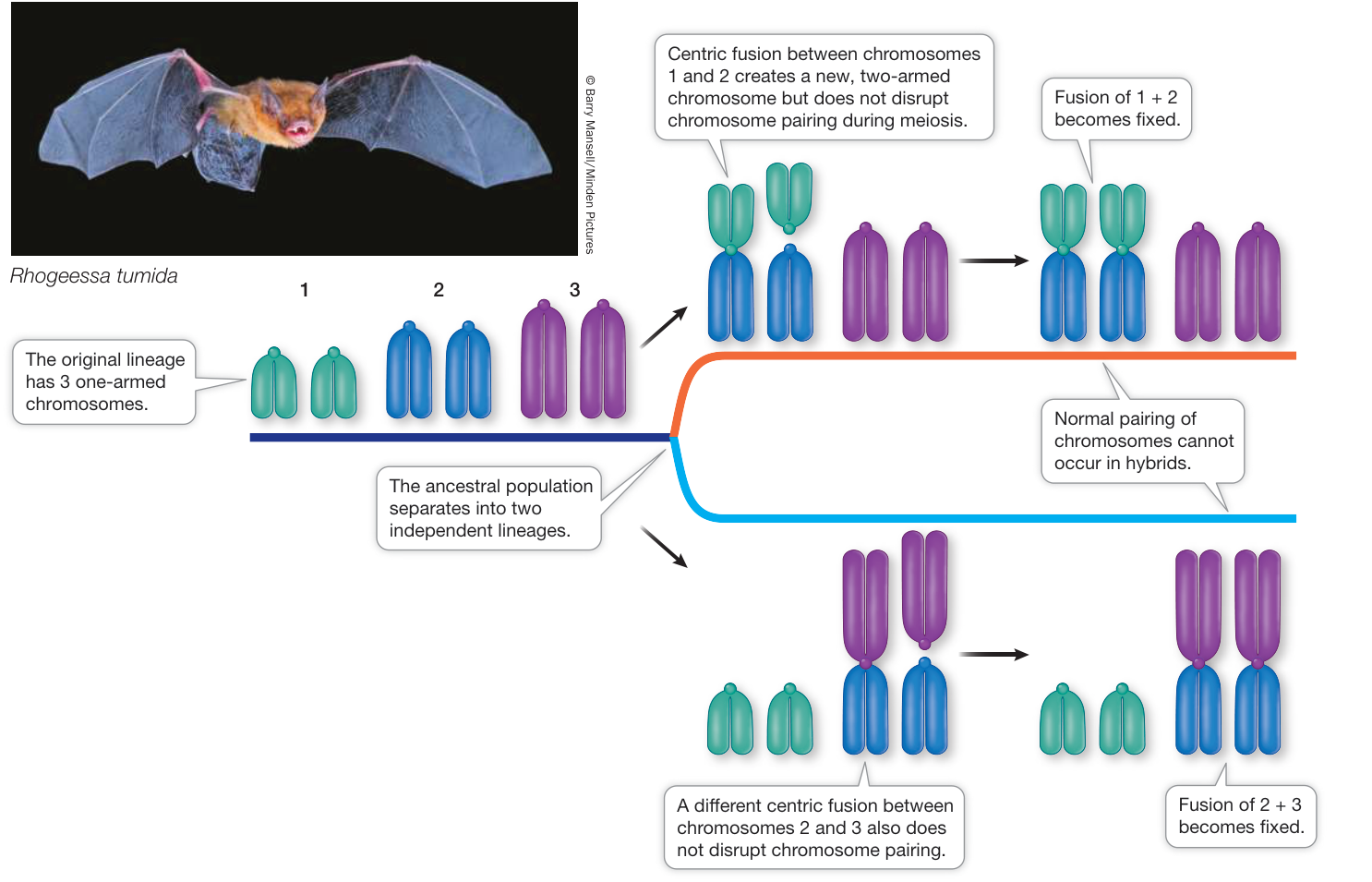
Figure 22.4 Speciation by Centric Fusion In this chromosomal version of the Dobzhansky–Muller model, two independent centric fusions of one-armed chromosomes occur in two sister lineages. Neither centric fusion by itself results in difficulties at meiosis, whether the fusion is found in just one or in both pairs of chromosomes. After fixation of the different fusions in each lineage, however, hybrids between the two lineages are sterile, because the three different chromosomes involved in these centric fusions cannot pair normally at meiosis in hybrids. Most of the species in the bat genus Rhogeessa differ from one another by such centric fusions.
Reproductive isolation develops with increasing genetic divergence
As pairs of species diverge genetically, they become increasingly reproductively isolated (Figure 22.5). Both the rate at which reproductive isolation develops and the mechanisms that produce it vary from group to group. Reproductive incompatibility has been shown to develop gradually in many groups of plants, animals, and fungi, reflecting the slow pace at which incompatible genes accumulate in each lineage. In some cases, complete reproductive isolation may take millions of years. In other cases (as with the chromosomal fusions of Rhogeessa just described), reproductive isolation can develop over just a few generations.
Partial reproductive isolation (reduced reproductive compatibility) has evolved in many strains of plants that have been artificially isolated by humans. In 1835, Thomas Drummond collected seeds of a newly discovered species of phlox in Texas and distributed them to nurseries in Europe. The European nurseries established more than 200 true-breeding strains of Drummond’s phlox (Phlox drummondii) that differ in flower size, flower color, and plant growth form. The breeders did not select directly for reproductive incompatibility between strains, but in subsequent experiments in which strains were crossed and seed production was measured and compared, biologists found that reproductive compatibility between strains had been reduced by 14% to 50%, depending on the cross—even though the strains had been isolated from one another for less than two centuries.
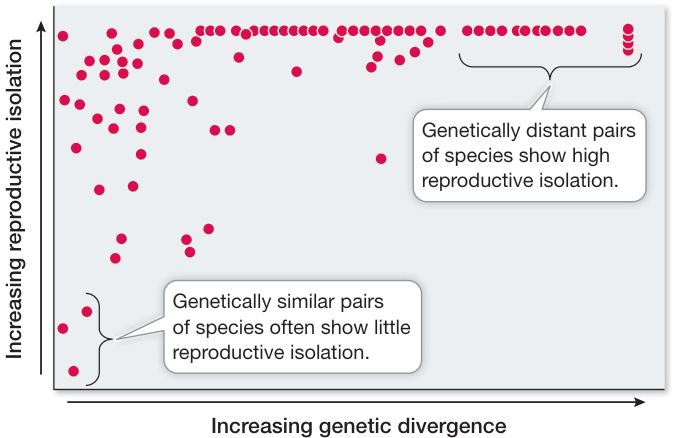
Figure 22.5 Reproductive Isolation Increases with Genetic Divergence Among pairs of Drosophila species, the more the species differ genetically (x axis), the greater their reproductive isolation from each other (y axis). Each dot represents a comparison of one species pair. Such positive relationships between genetic distance and reproductive isolation have been observed in many groups of plants, animals, and fungi. (After J. A. Coyne and H. A. Orr. 1989. Evolution 43: 362–381.) Q: Why might some genetically similar species pairs exhibit high levels of reproductive isolation?
Recap and Assess
When two parts of a population become isolated from each other by some barrier to gene flow, they begin to diverge genetically. The Dobzhansky–Muller model describes how new alleles or chromosomal arrangements that arise in the two descendant lineages can lead to genetic incompatibility, and hence reproductive isolation, of the two lineages.
- The Dobzhansky–Muller model suggests that divergence among alleles at different gene loci leads to genetic incompatibility between species. Why is genetic incompatibility between two alleles at the same locus considered less likely?
- Why do some combinations of chromosomal centric fusions cause problems in meiosis? Can you diagram what would happen at meiosis in a hybrid of the divergent lineages shown in Figure 22.4?
- Assume that the reproductive isolation seen in Phlox drummondii strains results from lethal combinations of incompatible alleles at several loci among the various strains. Given this assumption, why might the reproductive isolation seen among these strains be partial rather than complete?
We have now seen how the splitting of an ancestral population leads to genetic divergence and reproductive incompatibility in the two descendant lineages. Next we consider ways in which the descendant lineages could have become separated in the first place.
Speciation May Occur through Geographic Isolation or in Sympatry
Learning Objectives
- 22.3.1 Compare and contrast allopatric and sympatric speciation, and recognize examples of speciation as being one or the other.
- 22.3.2 Diagram the relationship between geographic isolation and speciation, and interpret data to make and support predictions.
Many biologists who study speciation have concentrated on geographic processes that can result in the division of an ancestral species. Splitting of the geographic range of a species is one obvious way of achieving such a division, but it is not the only way.
Physical barriers give rise to allopatric speciation
Speciation that results when a population is divided by a physical barrier is known as allopatric speciation (Greek allos, “other,” + patria, “homeland”). Allopatric speciation is thought to be the dominant mode of speciation in most groups of organisms. The physical barrier that divides the range of a species may be a body of water or a mountain range for terrestrial organisms, or dry land for aquatic organisms—in other words, any type of habitat that is inhospitable to the species. Such barriers can form when continents drift, sea levels rise or fall, glaciers advance or retreat, or climates change. The populations separated by such barriers are often, but not always, initially large. The lineages that descend from these founding populations evolve differences for a variety of reasons, including mutation, genetic drift, and adaptation to different environments in the two areas. As a result, many pairs of closely related sister species—species that are each other’s closest relatives—may exist on either side of the geographic barrier. An example of a physical geographic barrier that produced many pairs of sister species was the Pleistocene glaciation that isolated freshwater streams in the eastern highlands of the Appalachian Mountains from streams in the Ozark and Ouachita Mountains (Figure 22.6). This splitting event resulted in many parallel speciation events among isolated lineages of stream-dwelling organisms.
Allopatric speciation may also result when some members of a population cross an existing barrier and establish a new, isolated population. Many of the more than 800 species of Drosophila found in the Hawaiian Islands are restricted to a single island. We know that these species are the descendants of new populations founded by individuals dispersing among the islands when we find that the closest relative of a species on one island is a species on a neighboring island rather than a species on the same island. Biologists who have studied the chromosomes of these fruit flies estimate that speciation in this group of Drosophila has resulted from at least 45 such founder events (Figure 22.7).
The species of finches found on the islands of the Galápagos archipelago, some 1,000 kilometers off the coast of Ecuador, are among the most famous examples of allopatric speciation. Darwin’s finches (as they are usually called, because Darwin was the first scientist to study them) arose in the Galápagos from a single South American finch species that colonized the islands. Today the Galápagos species differ strikingly not only from their closest mainland relative, but also from one another (Figure 22.8). The islands are sufficiently far apart that the birds move among them only infrequently. In addition, environmental conditions differ widely from island to island. Some islands are relatively flat and arid; others have forested mountain slopes. Sister lineages on different islands have diverged over hundreds of thousands of years, and several feeding specializations have arisen on different islands with different environments. Although finches occasionally fly between islands, an immigrant finch population is not likely to become established unless the new environment is appropriate for its feeding specialization, and no other similar species are already present on the island. Each island now has from 1 to 4 species of finches, and biologists recognize between 14 and 18 species across the archipelago.
Sympatric speciation occurs without physical barriers
Geographic isolation is usually required for speciation, but under some circumstances speciation can occur in the absence of a physical barrier. Speciation without physical isolation is called sympatric speciation (Greek sym, “together with”). But how can such speciation happen? Given that speciation is usually a gradual process, how can reproductive isolation develop when individuals have frequent opportunities to mate with one another?
Animation 22.1 Speciation Mechanisms
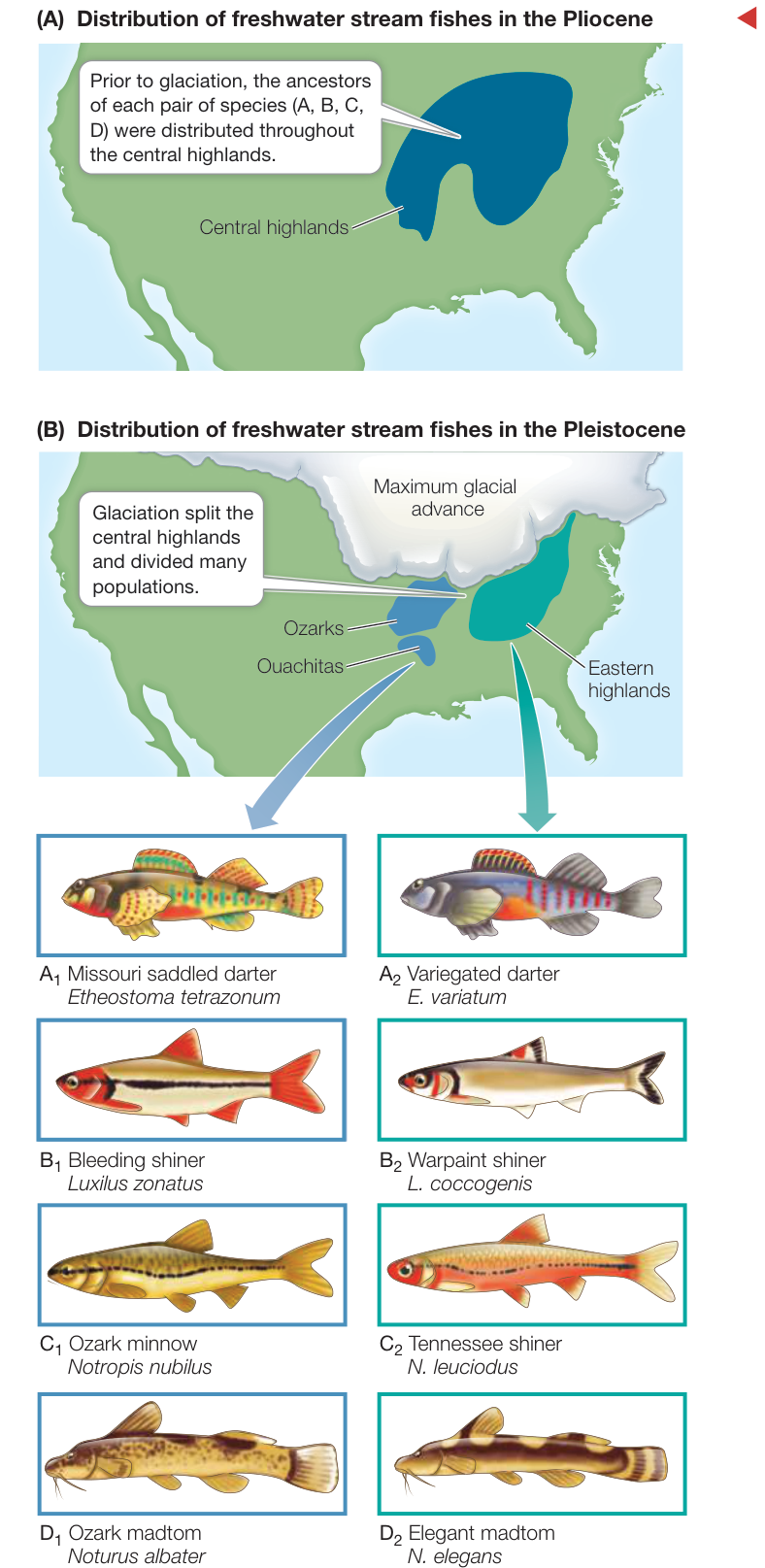
Figure 22.6 Allopatric Speciation Allopatric speciation may result when an ancestral population is divided into two separate populations by a physical barrier and those populations then diverge. (A) Many species of freshwater stream fishes were distributed throughout the central highlands of North America in the Pliocene (about 5.3–2.6 million years ago). (B) During the Pleistocene (about 2.6 million years ago–10,000 years ago), glaciers advanced and isolated fish populations in the Ozark and Ouachita Mountains to the west from fish populations in the highlands of the Appalachian Mountains to the east. Numerous species diverged as a result of this separation, including the ancestors of the four pairs of sister species shown here. (After R. L. Mayden. 1985. Southwest Nat 30: 195–211; R. L. Mayden. 1987. In Quarternary Environments of Kansas. Kansas Geol Surv Guidebook Series 5, W. C. Johnson (ed.), pp. 141–151. University of Kansas: Lawrence, Kansas.) Q: After the retreat of the glaciers, why did the fish species in the Ozarks and Ouachitas remain reproductively isolated from those in the Appalachians to the east?
DISRUPTIVE SELECTION Sympatric speciation may occur with some forms of disruptive selection (see Key Concept 19.4) in which individuals with certain genotypes have a preference for distinct microhabitats where mating takes place. For example, sympatric speciation via disruptive selection appears to be taking place in the Apple Maggot Fly (Rhagoletis pomonella) of eastern North America. Until the mid-1800s, Rhagoletis flies courted, mated, and deposited their eggs only on hawthorn fruits. Then, some flies began to lay their eggs on apples, which European immigrants had introduced into eastern North America. Apple trees are closely related to hawthorns, but the smell of the fruits differs, and the apple fruits appear earlier than those of hawthorns. Some early-emerging female Rhagoletis laid their eggs on apples, and over time, a genetic preference for the smell of apples evolved among early-emerging insects. When the offspring of these flies sought out apple trees for mating and egg deposition, they mated with other flies reared on apples, which shared the same preferences.
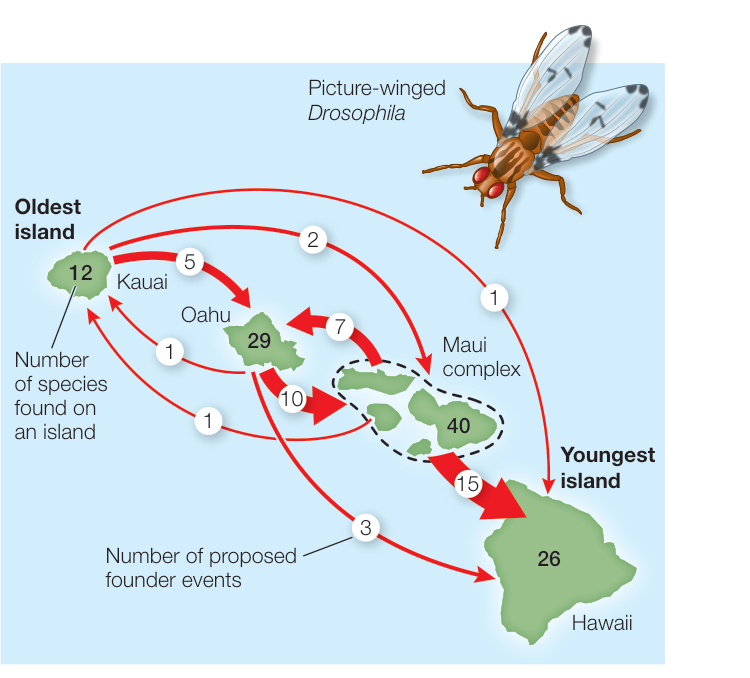
Figure 22.7 Founder Events Lead to Allopatric Speciation The large number of species of picture-winged Drosophila in the Hawaiian Islands is the result of founder events: the founding of new populations by individuals dispersing among the islands. The islands, which were formed in sequence as Earth’s crust moved over a volcanic “hot spot,” vary in age. (After H. L. Carson and A. R. Templeton. 1984. Annu Rev Ecol Syst 15: 97–131.) Animation 22.2 Founder Events and Allopatric Speciation
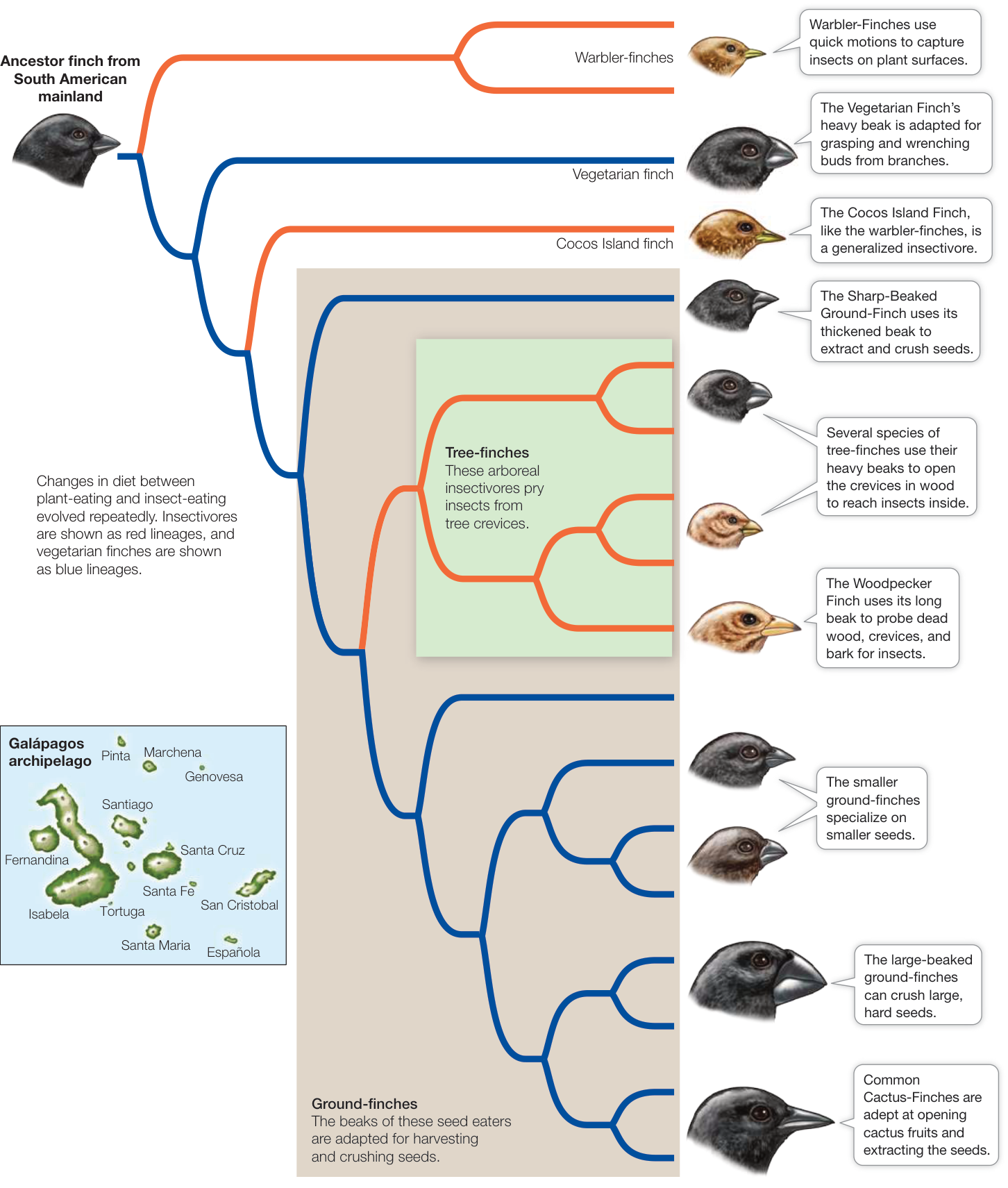
Figure 22.8 Allopatric Speciation among Darwin’s Finches The descendants of the ancestral finch that colonized the Galápagos archipelago several million years ago evolved into many different species whose beaks are variously adapted to feed on buds, seeds, or insects. (After S. Lamichhaney et al. 2015. Nature 518: 371–375.)
Today the two groups of Rhagoletis pomonella in the eastern United States appear to be on the way to becoming distinct species. One group mates and lays eggs primarily on hawthorn fruits, the other on apples. The incipient species are partially reproductively isolated because they mate primarily with individuals raised on the same fruit and because they emerge from their pupae at different times of the year. In addition, the apple-feeding flies now grow more rapidly on apples than they originally did. Sympatric speciation that arises from such host-plant specificity may be widespread among insects, many of which feed on only a single plant species.
POLYPLOIDY The most common means of sympatric speciation is polyploidy, or the duplication of sets of chromosomes within individuals. Polyploidy can arise either from chromosome duplication in a single species (autopolyploidy) or from the combining of the chromosomes of two different species (allopolyploidy).
An autopolyploid individual originates when, for example, two accidentally unreduced diploid gametes (with two sets of chromosomes) combine to form a tetraploid individual (with four sets of chromosomes). Tetraploid and diploid individuals of the same species are reproductively isolated because their hybrid offspring are triploid. Even if these offspring survive, they are usually sterile; they cannot produce normal gametes because their chromosomes do not segregate evenly during meiosis (Figure 22.9). So a tetraploid individual usually cannot produce viable offspring by mating with a diploid individual—but it can do so if it self-fertilizes or mates with another tetraploid. Thus polyploidy can result in complete reproductive isolation in two generations—an important exception to the general rule that speciation is a gradual process.
Allopolyploids may be produced when individuals of two different (but closely related) species interbreed. Such hybridization often disrupts normal meiosis, which can result in chromosomal doubling. Allopolyploids are often fertile because each of the chromosomes has a nearly identical partner with which to pair during meiosis.
Speciation by polyploidy has been particularly important in the evolution of plants, although it has contributed to speciation in animals as well (such as the tree frogs in Figure 22.2). Botanists estimate that about 70% of flowering plant species and 95% of fern species are the result of recent polyploidization. Some of these species arose from hybridization between two species followed by chromosomal duplication and self-fertilization. Other species diverged from polyploid ancestors, so that the new species shared their ancestors’ duplicated sets of chromosomes. New species arise by polyploidy more easily among plants than among animals because plants of many species can reproduce by self-fertilization. In addition, if polyploidy arises in several offspring of a single parent, the siblings can fertilize one another.
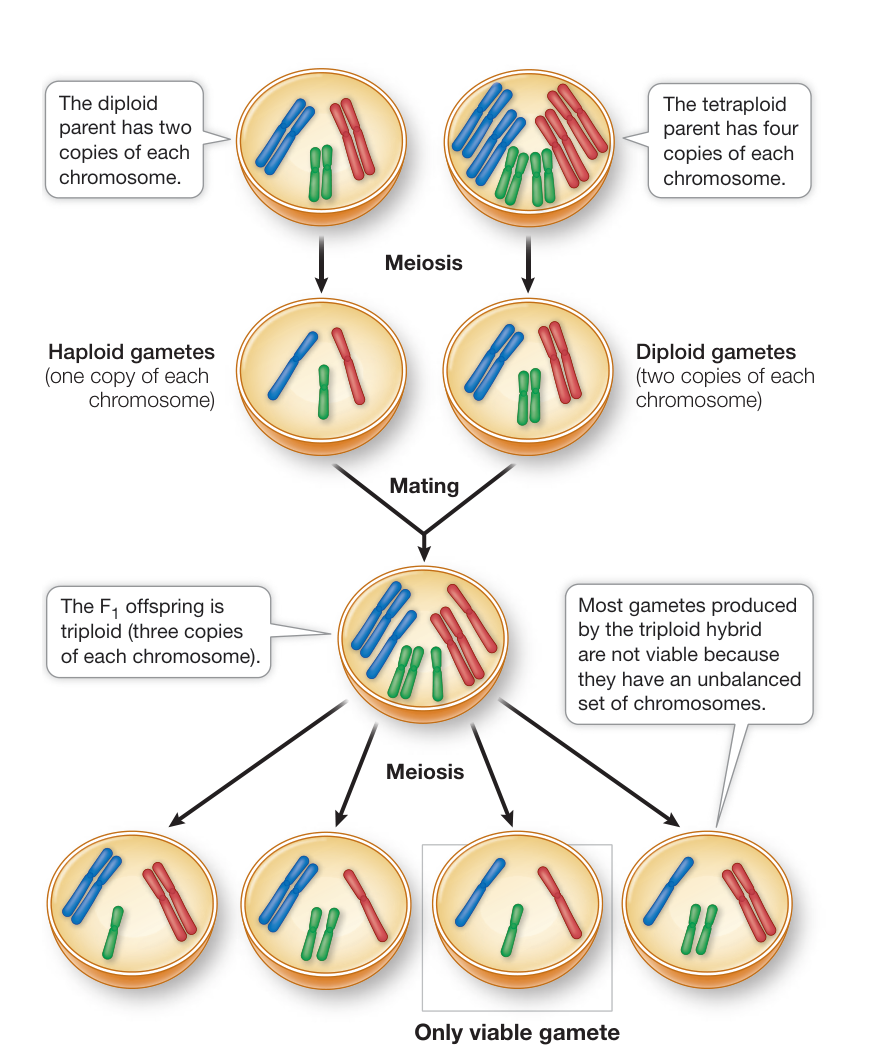
Figure 22.9 Tetraploids Are Reproductively Isolated from Their Diploid Ancestors Even if the triploid offspring of a diploid and a tetraploid parent survives and reaches sexual maturity, most of the gametes it produces have aneuploid (unbalanced) numbers of chromosomes. Such triploid individuals are effectively sterile. (For simplicity, the diagram shows only three homologous chromosomes. Most species have many more chromosomes, so viable gametes are extremely rare.)
Recap and Assess
Allopatric speciation results from the separation of populations by geographic barriers; it is the dominant mode of speciation among most groups of organisms. Sympatric speciation may result from disruptive selection that results in ecological isolation, but polyploidy is the most common cause of sympatric speciation among plants.
- Explain how speciation via polyploidy can happen in only two generations.
- If allopatric speciation is the most prevalent mode of speciation, what do you predict about the geographic distributions of many closely related species? Does your answer differ for species that are sedentary versus highly mobile?
- The species of Darwin’s finches shown in the phylogeny in Figure 22.8 have all evolved on islands of the Galápagos archipelago within the past 3 million years. Molecular clock analysis (see Key Concept 20.3) has been used to determine the dates of the various speciation events in that phylogeny. Geological techniques for dating rock samples (see Key Concept 23.1) have been used to determine the ages of the various Galápagos islands. The table shows the number of species of Darwin’s finches and the number of islands that have existed in the archipelago at several times during the past 4 million years (Data from P. R. Grant. 2001. Oikos 92: 385–403).
| Time (millions of years ago) | Number of islands | Number of finch species |
|---|---|---|
| 0.25 | 18 | 14 |
| 0.50 | 18 | 9 |
| 0.75 | 9 | 7 |
| 1.00 | 6 | 5 |
| 2.00 | 4 | 3 |
| 3.00 | 4 | 1 |
| 4.00 | 3 | 0 |
- Plot the number of species of Darwin’s finches and the number of islands in the Galápagos archipelago (dependent variables) against time (independent variable).
- Are the data consistent with the hypothesis that isolation of populations on newly formed islands is related to speciation in this group of birds? Why or why not?
- If no more islands form in the Galápagos archipelago, do you think that speciation by geographic isolation will continue to occur among Darwin’s finches? Why or why not? What additional data could you collect to test your hypothesis (without waiting to see if speciation occurs)?
Most populations separated by a physical barrier become reproductively isolated only slowly and gradually. If two incipient species once again come into contact with each other, what keeps them from merging back into a single species?
Reproductive Isolation Is Reinforced When Diverging Species Come into Contact
Learning Objectives
- 22.4.1 Create graphical representations of hybridization frequencies and analyze data to develop hypotheses about postzygotic isolation.
- 22.4.2 Compare and contrast prezygotic and postzygotic isolating mechanisms.
- 22.4.3 Relate the width of a hybrid zone to the fitness of hybrid offspring.
As we discussed in Key Concept 22.2, once a barrier to gene flow is established, reproductive isolation will begin to develop through genetic divergence. Over many generations, differences accumulate in the isolated lineages, reducing the probability that individuals from each lineage will mate successfully with individuals in the other lineage when they come back into contact. In this way, reproductive isolation can evolve as a by-product of the genetic changes in the two diverging lineages.
If reproductive isolation is incomplete when incipient species come back into contact, some hybridization is likely to occur. If hybrid individuals are less fit than non-hybrids, selection will favor parents that do not produce hybrid offspring. Under these conditions, selection will result in the strengthening, or reinforcement, of mechanisms that prevent hybridization.
Mechanisms that prevent hybridization from occurring are called prezygotic isolating mechanisms. Mechanisms that reduce the fitness of hybrid offspring are called postzygotic isolating mechanisms. Postzygotic isolating mechanisms result in selection against hybridization, which in turn leads to the reinforcement of prezygotic isolating mechanisms.
Prezygotic isolating mechanisms prevent hybridization
Prezygotic isolating mechanisms, which come into play before fertilization, can prevent hybridization in several ways.
MECHANICAL ISOLATION Differences in the sizes and shapes of reproductive organs may prevent the union of gametes from different species. With animals, the shapes of the reproductive organs of males and females of the same species often match, so that reproduction between individuals with mismatched reproductive structures is not physically possible. In plants, mechanical isolation may involve a pollinator. For example, some orchid species produce flowers that look and smell like the females of a particular species of bee or wasp (Figure 22.10). When a male bee or wasp visits and attempts to mate with the flower (thinking it is a female of his species), his mating behavior results in the transfer of pollen to and from his body by appropriately configured anthers and stigmas on the flower. Insects that visit the flower but do not attempt to mate with it do not trigger the transfer of pollen between the insect and the flower.
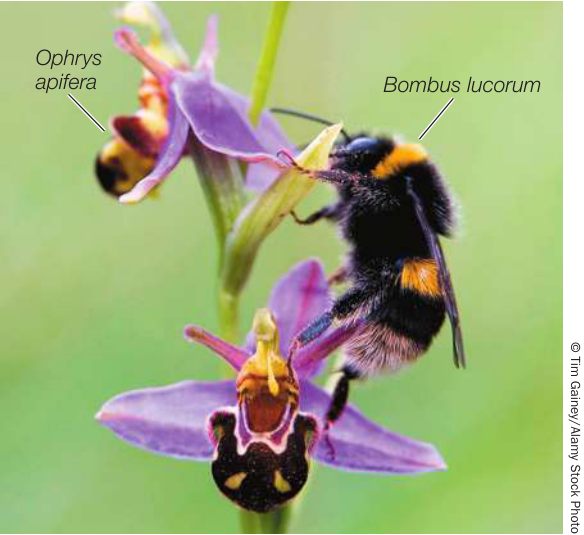
Figure 22.10 Mechanical Isolation through Mimicry Many orchid species maintain reproductive isolation by means of flowers that look and smell like females of one—and only one—bee or wasp species. A male insect of the correct species must land on the flower and attempt to mate with it; only males of this particular species are physically configured to collect and transfer the orchid’s pollen. The constraints of this method of pollen transfer reproductively isolate the plant from related orchid species that attract different insect pollinators. The species shown here are the two players in one such interspecific relationship.
TEMPORAL ISOLATION Many organisms have distinct mating seasons. If two closely related species breed at different times of the year (or different times of day), they may never have an opportunity to hybridize. For example, in sympatric populations of three closely related leopard frog species, each species breeds at a different time of year (Figure 22.11). Although there is some overlap in the breeding seasons, the opportunities for hybridization are minimized.
BEHAVIORAL ISOLATION Individuals may reject, or fail to recognize, individuals of other species as potential mating partners. For example, the mating calls of male frogs of related species
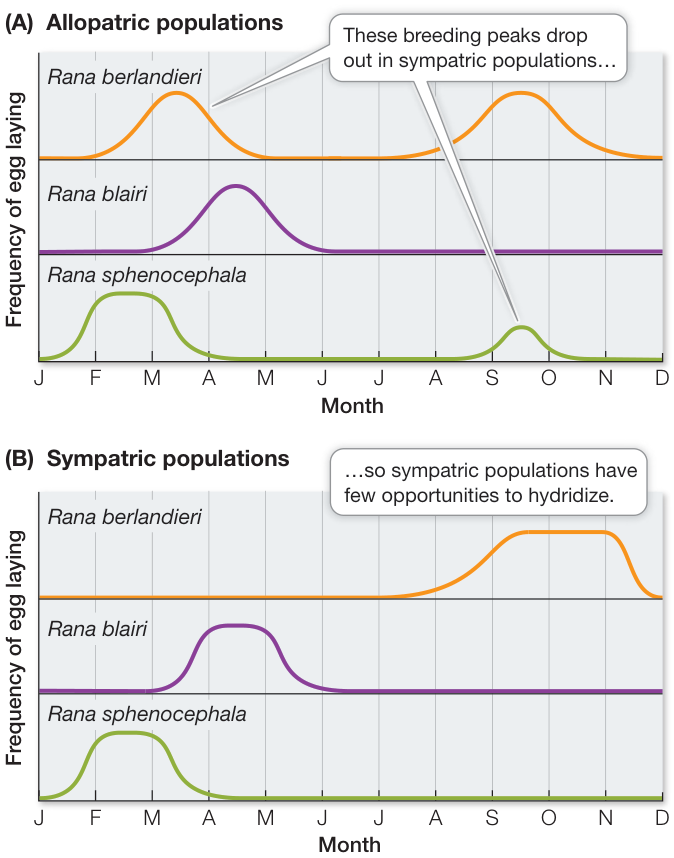
Figure 22.11 Temporal Isolation of Breeding Seasons (A) The peak breeding seasons of three species of leopard frogs (Rana) overlap when the species are physically separated (allopatry). (B) Where two or more species of Rana live together (sympatry), overlap between their peak breeding seasons is greatly reduced or eliminated. (After D. M. Hillis. 1981. Copeia 1981: 312–319.) Q: What means of selection helps reinforce this prezygotic isolating mechanism in areas of sympatry?
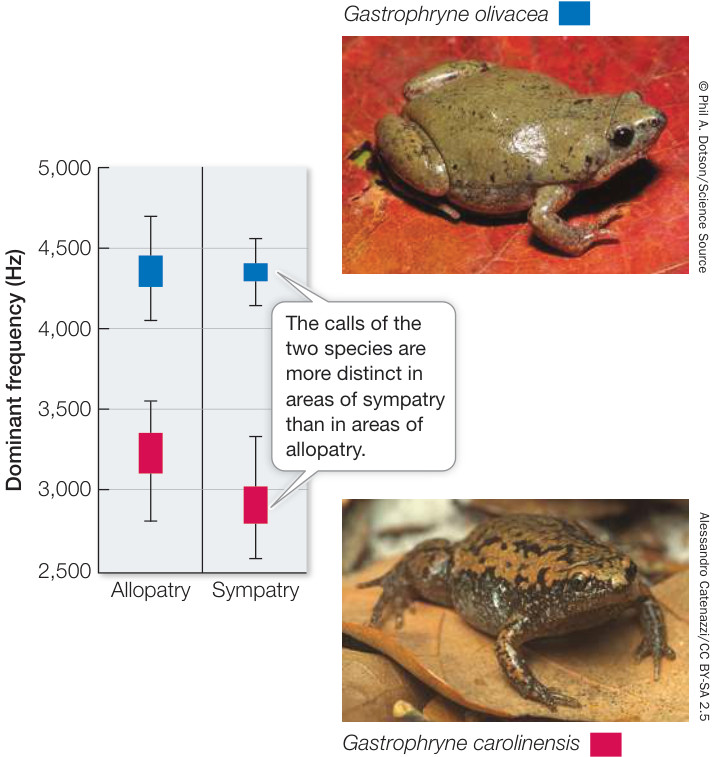
Figure 22.12 Behavioral Isolation in Mating Calls The males of most frog species produce species-specific calls. The calls of the two closely related frog species shown here differ in their dominant frequency (a high-frequency sound wave results in a high-pitched sound; a low frequency results in a low-pitched sound). Female frogs are attracted to the calls of males of their own species. Bars indicate 95% confidence limits for the mean frequencies of the calls. (After J. J. Loftus-Hills and M. J. Littlejohn. 1992. Evolution 46: 896–906.)
Media Clip 22.1 Narrowmouth Toads Calling for Mates Life12e.com/mc22.1
diverge quickly (Figure 22.12). Female frogs respond to mating calls from males of their own species but ignore the calls of other species, even closely related ones. The evolution of female preferences for certain male coloration patterns among the cichlids of Lake Malawi, described in the opening story of this chapter, is another example of behavioral isolation.
Sometimes the mate choice of one species is mediated by the behavior of individuals of other species. For example, whether or not two plant species hybridize may depend on the food preferences of their pollinators. The floral traits of plants, including their color and shape, can enhance reproductive isolation either by influencing which pollinators are attracted to the flowers or by altering where pollen is deposited on the bodies of pollinators. A plant whose flowers are pendant will be pollinated by an animal with different physical characteristics than will a plant in which the flowers grow upright (Figure 22.13A,B). Because each pollinator prefers (and is adapted to) a different type of flower, pollinators will rarely transfer pollen from one plant species to the other. Such isolation by pollinator behavior is seen in the mountains of California in two sympatric species of columbines (Aquilegia) that have diverged in flower color, structure, and orientation.
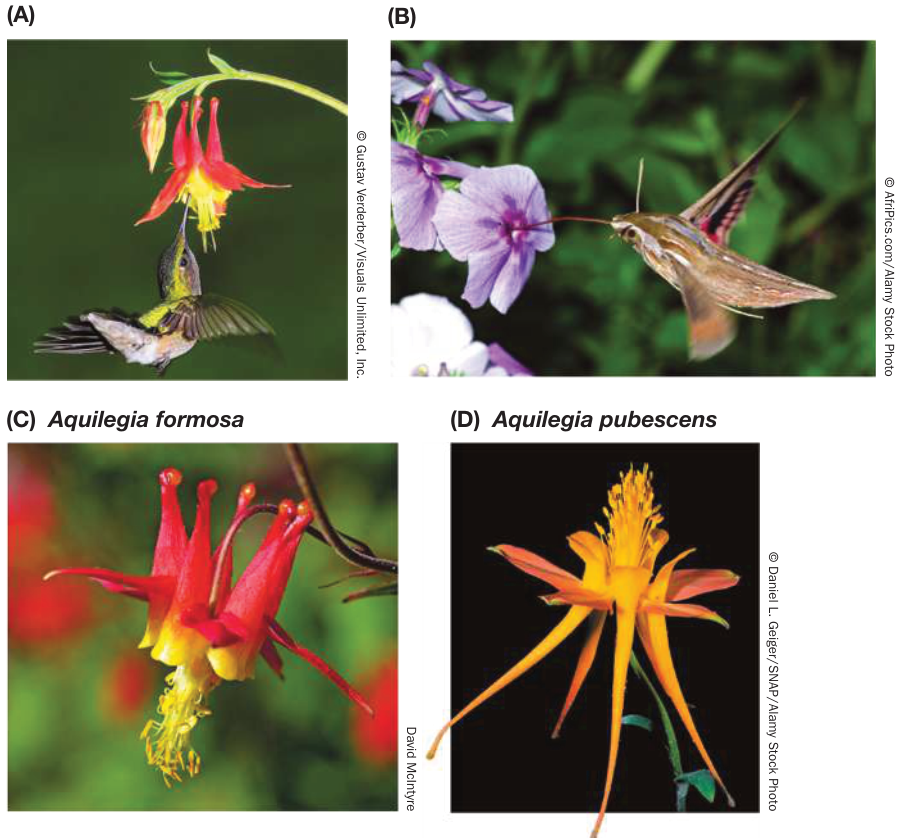
Figure 22.13 Reproductive Isolating Mechanisms May Be Mediated by Species Interactions (A) This hummingbird’s morphology and behavior are adapted for feeding on nectar from pendant flowers. (B) The nectar-extracting proboscis of this hawk moth is adapted to flowers that grow upright. (C) Aquilegia formosa flowers are normally pendant and are pollinated by hummingbirds. (D) Flowers of A. pubescens are normally upright and are pollinated by hawk moths. In addition, their long floral spurs appear to restrict access by some other potential pollinators.
A. formosa (Figure 22.13C) has pendant flowers with short spurs (spikelike, nectar-containing structures) and is pollinated by hummingbirds. A. pubescens (Figure 22.13D) has upright, lighter-colored flowers with long spurs and is pollinated by hawk moths. The difference in pollinators means that these two species are effectively reproductively isolated even though they populate the same geographic range.
Connect the Concepts Some plants and their pollinators become so tightly adapted to each other that they develop mutually dependent relationships, as described in Key Concept 27.3.
HABITAT ISOLATION When two closely related species evolve preferences for living or mating in different habitats, they may never come into contact during their respective mating periods. The Rhagoletis flies discussed in Key Concept 22.3 experienced such habitat isolation, as did the cichlid fishes that first adapted to rocky or sandy habitats upon entering Lake Malawi, as described in the opening of this chapter.
GAMETIC ISOLATION The sperm of one species may not attach to the eggs of another species because the eggs do not release the appropriate attractive chemicals, or the sperm may be unable to penetrate the egg because the two gametes are chemically incompatible. Thus even though the gametes of two species may come into contact, the gametes never fuse into a zygote.
Gametic isolation is extremely important for many aquatic species that spawn (release their gametes directly into the environment). For example, gametic isolation has been extensively studied in spawning sea urchins. A protein known as bindin is found in sea urchin sperm and functions in attaching (“binding”) the sperm to eggs. All sea urchin species studied produce this egg-recognition protein, but the bindin gene sequence diverges so rapidly that it becomes species-specific. Since sperm can attach only to eggs of the same species, no interspecific hybridization occurs.
Postzygotic isolating mechanisms result in selection against hybridization
Genetic differences that accumulate between two diverging lineages may reduce the survival and reproductive rates of hybrid offspring in any of three ways:
- Low hybrid zygote viability. Hybrid zygotes may fail to mature normally, either dying during development or developing phenotypic abnormalities that prevent them from becoming reproductively capable adults.
- Low hybrid adult viability. Hybrid offspring may have lower survivorship than non-hybrid offspring.
- Hybrid infertility. Hybrids may mature into infertile adults. For example, the offspring of matings between horses and donkeys—mules—are typically sterile. Although otherwise healthy, sterile mules produce no descendants.
Natural selection does not directly favor the evolution of postzygotic isolating mechanisms. But if hybrids are less fit, individuals that breed only within their own species will leave more surviving offspring than will individuals that interbreed with another species. Therefore individuals that can avoid interbreeding with members of other species will have a selective advantage, and any trait that contributes to such avoidance will be favored.
Donald Levin of the University of Texas has studied reinforcement of prezygotic isolating mechanisms in flowers of the genus Phlox. Levin noticed that most individuals of P. drummondii in most of the range of the species in Texas have pink flowers. However, where P. drummondii is sympatric with its close relative, the pink-flowered P. cuspidata, most P. drummondii have red flowers. No other Phlox species has red flowers. The results of an experiment that Levin performed showed that reinforcement may explain why red flowers are favored where the two species are sympatric (Investigating Life: Flower Color Reinforces a Reproductive Barrier in Phlox).
Investigating Life: Flower Color Reinforces a Reproductive Barrier in Phlox
Experiment
Original Paper: D. A. Levin. 1985. Reproductive character displacement in Phlox. Evolution 39: 1275–1281.
Most Phlox drummondii flowers are pink, but in regions where they are sympatric with P. cuspidata—which is always pink—most P. drummondii individuals are red. Most pollinators preferentially visit flowers of one color or the other. In this experiment, Donald Levin explored whether flower color reinforces a prezygotic reproductive barrier, lessening the chances of interspecific hybridization.
HYPOTHESIS Red-flowered P. drummondii are less likely to hybridize with P. cuspidata than are pink-flowered P. drummondii
METHOD
- Introduce equal numbers of red-and pink-flowered P. drummondii individuals into an area with many pink-flowered P. cuspidata.
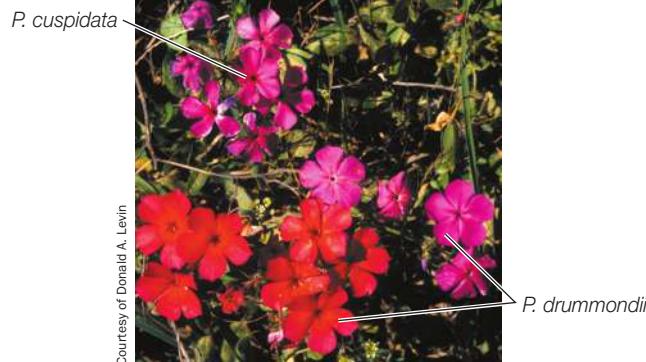
- After the flowering season ends, measure hybridization by assessing the genetic composition of the seeds produced by P. drummondii plants of both colors.
RESULTS Of the seeds produced by pink-flowered P. drummondii, 38% were hybrids with P. cuspidata. Only 13% of the seeds produced by red-flowered individuals were genetic hybrids. Bars indicate 95% confidence intervals for the mean percent of hybrid seeds.
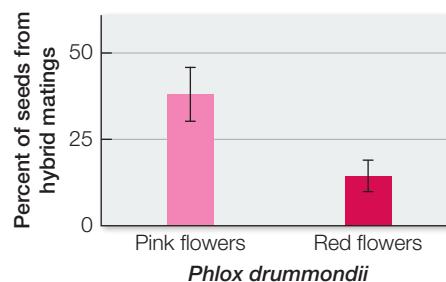
CONCLUSION P. drummondii and P. cuspidata are less likely to hybridize if the flowers of the two species differ in color.
Work with the Data
Donald Levin of the University of Texas proposed that Phlox drummondii has red flowers only in locations where it is sympatric with pink-flowered P. cuspidata because having red flowers decreases interspecific hybridization. To test this hypothesis, Levin introduced equal numbers of red-and pink-flowered P. drummondii individuals into an area with many pink-flowered P. cuspidata. At the end of the flowering season, he assessed the genetic composition of the seeds produced by P. drummondii. The results are shown in the table.
| Number of seeds (progeny) | |||
|---|---|---|---|
| Morph (flower color) | P. drummondii | Hybrid | Total |
| Red | 181 (87%) | 27 (13%) | 208 |
| Pink | 86 (62%) | 53 (38%) | 139 |
QUESTIONS
- Check the 95% confidence intervals for the proportion of hybrid seeds in red-and pink-flowered P. drummondii in the graph in the Results of the experiment. There are many websites available for calculating confidence intervals; a good one is the Vassar College statistical computation site, VassarStats.
net. You can go to this site and select “Proportions” from the left-hand menu, then select “The Confidence Interval of a Proportion.” What are the numerical values of the 95% confidence intervals?
Notice that the proportions of hybrids among the seeds of red-versus pink-flowered samples are significantly different, because the 95% confidence intervals do not overlap. To quantify the significance of this difference, use the website suggested in Question 1, but select “Significance of the Difference Between Two Independent Proportions” from the “Proportions” menu. What null hypothesis are you testing in this case? (See Appendix B if you need help.) What is the P-value of getting results at least as different as these two samples if your null hypothesis is true?
How would you extend or improve the experimental design of this study? What kinds of additional test sites or conditions would you want to examine? How might replicate or control sites make the study more convincing?
Likely cases of reinforcement are often detected by comparing sympatric and allopatric populations of potentially hybridizing species, as in the case of Phlox. If reinforcement is occurring, then sympatric populations of closely related species are expected to evolve more effective prezygotic reproductive barriers than do allopatric populations of the same species. As Figure 22.11 shows, the breeding seasons of sympatric populations of different leopard frog species overlap much less than do those of allopatric populations. Similarly, the frequencies of the frog mating calls illustrated in Figure 22.12 are more divergent in sympatric populations than in allopatric populations. In both cases, there appears to have been natural selection against hybridization in areas of sympatry.
Hybrid zones may form if reproductive isolation is incomplete
Unless reproductive isolation is complete, closely related species may hybridize in areas where their ranges overlap, resulting in the formation of a hybrid zone. When a hybrid zone first forms, most hybrids are offspring of crosses between individuals of the two hybridizing species. However, subsequent generations include a variety of individuals with varying proportions of their genes derived from the original two species, so hybrid zones often contain recombinant individuals resulting from many generations of hybridization.
Detailed genetic studies can tell us why narrow hybrid zones may persist for long periods between the ranges of two species.
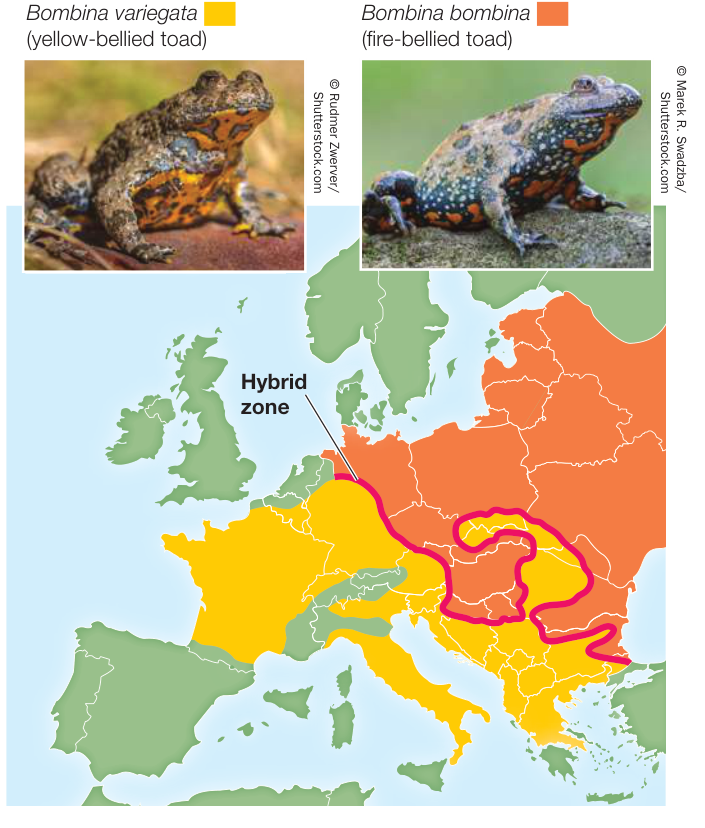
Figure 22.14 A Hybrid Zone The narrow zone (shown in red) in which fire-bellied toads meet and hybridize with yellow-bellied toads has been stable for hundreds of years. (After J. Vörös et al. 2006. Mol Phylogenet Evol 38: 705–718.)
The fire-bellied toad (Bombina bombina) lives in eastern Europe; the closely related yellow-bellied toad (B. variegata) lives in western and southern Europe. The ranges of the two species overlap in a long but narrow zone stretching 4,800 kilometers from eastern Germany to the Black Sea (Figure 22.14). Hybrids between the two species suffer from a range of defects, many of which are lethal. Those hybrids that survive often have skeletal abnormalities, such as a misshapen mouth, ribs that are fused to vertebrae, and a reduced number of vertebrae. By following the fates of thousands of toads from the hybrid zone, investigators found that a hybrid toad, on average, is only half as fit as an individual of either species. The hybrid zone remains narrow because there is strong selection against hybrids and because adult toads do not move over long distances. The zone has persisted for hundreds of years, however, because individuals of both species continue to move short distances into it, continually replenishing the hybrid population.
Recap and Assess
Reproductive isolation may result from prezygotic or postzygotic isolating mechanisms. Lower fitness of hybrids can lead to the reinforcement of prezygotic isolating mechanisms.
- As shown in Figure 22.11, the leopard frogs Rana berlandieri and R. sphenocephala usually have non-overlapping breeding seasons in areas of sympatry, but where they are allopatric, both species breed in both spring and fall. When new ponds are created where the ranges of the two species come close together, frogs from previously allopatric populations may colonize the new ponds and hybridize during their overlapping breeding seasons.
Imagine you have collected and tabulated data on hybridization between these two frog species. You have sampled various life stages of frogs and their tadpoles for 2 years after an initial spring breeding season at a newly established pond. Use the data in the table to answer the following questions.
| Life stage | R. berlandieri | R. sphenocephala | F1 hybrids |
|---|---|---|---|
| Recently hatched tadpoles (spring, year 1) | 155 | 125 | 238 |
| Late-stage tadpoles (summer, year 1) | 45 | 55 | 64 |
| Newly metamorphosed froglets (fall, year 1) | 32 | 42 | 15 |
| Adult frogs (year 2) | 10 | 15 | 1 |
- Create four pie charts (one for each life stage) showing the proportions of each species and of hybrids at each stage.
- Offer possible reasons for the differences in the proportion of hybrids found at each life stage. Suggest some postzygotic isolating mechanisms that are consistent with your data.
- Over time, what changes might you expect in the breeding seasons of the two species at this particular pond, and why? How would future pie charts differ from those you created here, if your predictions about breeding seasons are correct?
- In each of the columbine (Aquilegia) species shown in Figure 22.13, the orientation of the flowers and the length of the flower spurs are associated with a particular type of pollinator
(hummingbirds or hawk moths). Columbine flowers vary in other ways as well—for example, in color and probably in fragrance. What experiments could you design to determine the traits that various pollinators use to distinguish among the flowers of different columbine species?
- Why don’t most narrow hybrid zones, such as the one between Bombina bombina and B. variegata shown in Figure 22.14, get wider over time?
Some groups of organisms have many species, others only a few. Hundreds of species of Drosophila evolved in the small area of the Hawaiian Islands over about 20 million years. In contrast, there are only a few species of horseshoe crabs in the world, and only one species of ginkgo tree (Ginkgo biloba), even though these latter groups have persisted for hundreds of millions of years. Why do different groups of organisms have such different rates of speciation?
Speciation Rates Are Highly Variable across Life
Learning Objectives
22.5.1 List four factors that commonly affect speciation rates.
22.5.2 Describe the conditions that favor adaptive radiation.
Many factors influence the likelihood that a lineage will split to form two or more species. Therefore rates of speciation (the proportion of existing species that split to form new species over a given period) vary greatly among groups of organisms. What are some of the factors that influence the probability of a given lineage splitting into two?
Several ecological and behavioral factors influence speciation rates
Many factors can influence rates of speciation across groups, including the diet, behavioral complexity, and dispersal abilities of the respective species.
DIET SPECIALIZATION Populations of species that have specialized diets may be more likely to diverge than those with more generalized diets. To investigate the effects of diet specialization on rates of speciation, Charles Mitter and colleagues compared species richness in some closely related groups of true bugs (hemipterans). The common ancestor of these groups was a predator that fed on other insects, but a dietary shift to herbivory (eating plants) evolved at least twice in the groups under study. Herbivorous bugs typically specialize on one or a few closely related species of plants, whereas predatory bugs tend to feed on many different species of insects. A high diversity of host-plant species can lead to a correspondingly high species diversity among herbivorous specialists. The study by Mitter and his colleagues showed that among these insects, the herbivorous groups do indeed contain many more species than do the related predatory groups (Figure 22.15).
POLLINATION Speciation rates are faster in animal-pollinated than in wind-pollinated plants. Animal-pollinated groups have, on average, 2.4 times as many species as related groups pollinated by wind. Among animal-pollinated plants, speciation rates are correlated with pollinator specialization. In columbines (Aquilegia), the rate of evolution of new species has been about three times faster in lineages that have long nectar spurs than in lineages that lack spurs. Why do nectar spurs increase the speciation rate? Apparently it is because spurs restrict the number of pollinator species that visit the flowers, thus increasing opportunities for reproductive isolation (see Figure 22.13).
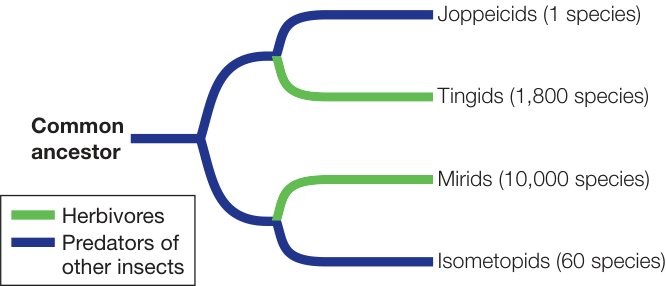
Figure 22.15 Dietary Shifts Can Promote Speciation Herbivorous groups of hemipteran insects have speciated several times faster than closely related predatory groups. (After C. Mitter et al. 1988. Am Nat 132: 107–128.)
SEXUAL SELECTION It appears that the mechanisms of sexual selection (see Key Concept 19.2) result in high rates of speciation, as we saw in the case of the cichlids of Lake Malawi. Some of the most striking examples of sexual selection are found in birds with polygynous mating systems (meaning one male may attract and mate with many different females). Birdwatchers travel thousands of miles to Papua New Guinea to witness the mating displays of male birds of paradise, which have brightly colored plumage (Figure 22.16A) and look distinctly different from females of their species—a phenomenon called sexual dimorphism. Males assemble at display grounds called leks, and females come there to choose a mate. After mating, the females leave the display grounds, build their nests, lay their eggs, and feed their offspring with no help from the males. The males remain at the lek to court more females.
The closest relatives of the birds of paradise are the manucodes (Figure 22.16B). Male and female manucodes differ only slightly in size and plumage (they are sexually monomorphic). They form monogamous pair bonds, and both sexes contribute to raising the young. There are only 5 species of manucodes, compared with 33 species of birds of paradise. By itself, this one comparison would not be convincing evidence that sexually dimorphic clades have higher rates of speciation than do monomorphic clades. However, when biologists examined all the examples of birds in which one clade is sexually dimorphic and the most closely related clade is sexually monomorphic, the sexually dimorphic clades were significantly more likely to contain more species. But why would sexual dimorphism be associated with a higher rate of speciation?
Animals with complex sexually selected behaviors are likely to form new species at a high rate because they make sophisticated discriminations among potential mating partners. They distinguish members of their own species from members of other species, and they make subtle discriminations among members of their own species on the basis of size, shape, appearance, and behavior. Such discriminations can greatly influence which individuals are most successful in mating and producing offspring, so they may lead to rapid evolution of behavioral isolating mechanisms among populations.
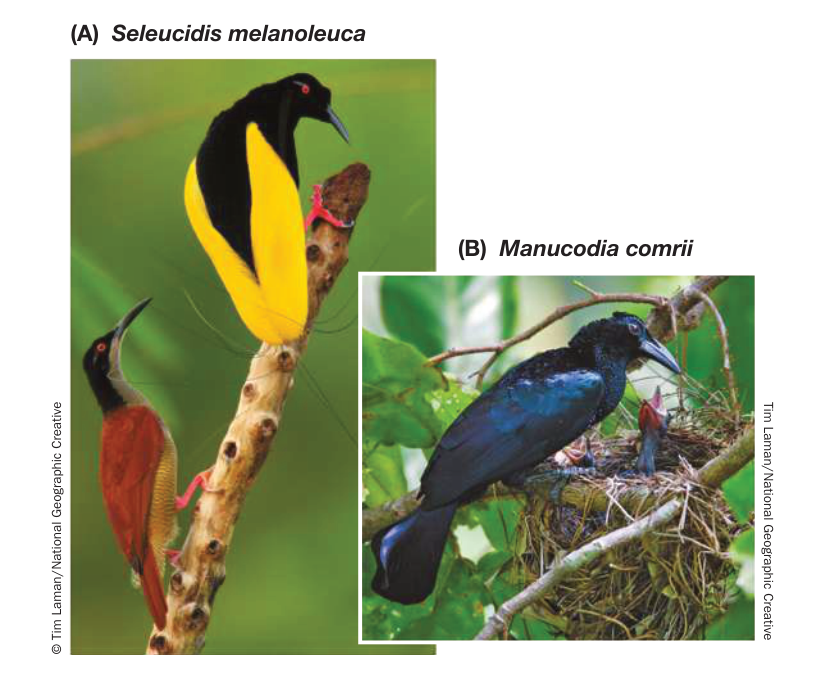
Figure 22.16 Sexual Selection Can Lead to Higher Speciation Rates Birds of paradise (the brightly colored male is above the female on the branch) (A) and manucodes (B) are closely related bird groups of the South Pacific. Speciation rates are much higher among the sexually dimorphic, polygynous birds of paradise (33 species) than among the sexually monomorphic, monogamous manucodes (5 species).
DISPERSAL ABILITY Speciation rates are usually higher in groups with poor dispersal abilities than in groups with good dispersal abilities because even narrow barriers can be effective in dividing a species whose members are highly sedentary. Until recently, the Hawaiian Islands had about 1,000 species of land snails, many of which were restricted to a single valley. Because snails move only short distances, the high ridges that separate the valleys were effective barriers to their dispersal. Unfortunately, introductions of other species and changes in habitat have resulted in the recent extinction of most of these unique Hawaiian land snails.
Rapid speciation can lead to adaptive radiation
The rapid proliferation of a large number of descendant species from a single ancestor species is called an evolutionary radiation. Evolutionary radiations often occur when a species colonizes a new area, such as an island archipelago that contains no other closely related species, because of the large number of open ecological niches. If such a rapid proliferation of species results in an array of species that live in a variety of environments and differ in the characteristics they use to exploit those environments, it is referred to as an adaptive radiation.
Several remarkable adaptive radiations have occurred in the Hawaiian Islands. In addition to its 1,000 species of land snails, the native Hawaiian biota includes 1,000 species of flowering plants, 10,000 species of insects, and more than 100 bird species. However, there were no amphibians, no terrestrial reptiles, and only one native terrestrial mammal (a bat) on the islands until humans introduced additional species. The 10,000 known native species of insects on Hawaii are believed to have evolved from about 400 immigrant species; only 7 immigrant species are believed to account for all the native Hawaiian land birds. Similarly, as we saw earlier in this chapter, an adaptive radiation in the Galápagos archipelago resulted in the many species of Darwin’s finches, which differ strikingly in the size and shape of their bills and, accordingly, in the food resources they use (see Figure 22.8).
The 28 species of Hawaiian sunflowers called silverswords are an impressive example of an adaptive radiation in plants (Figure 22.17).
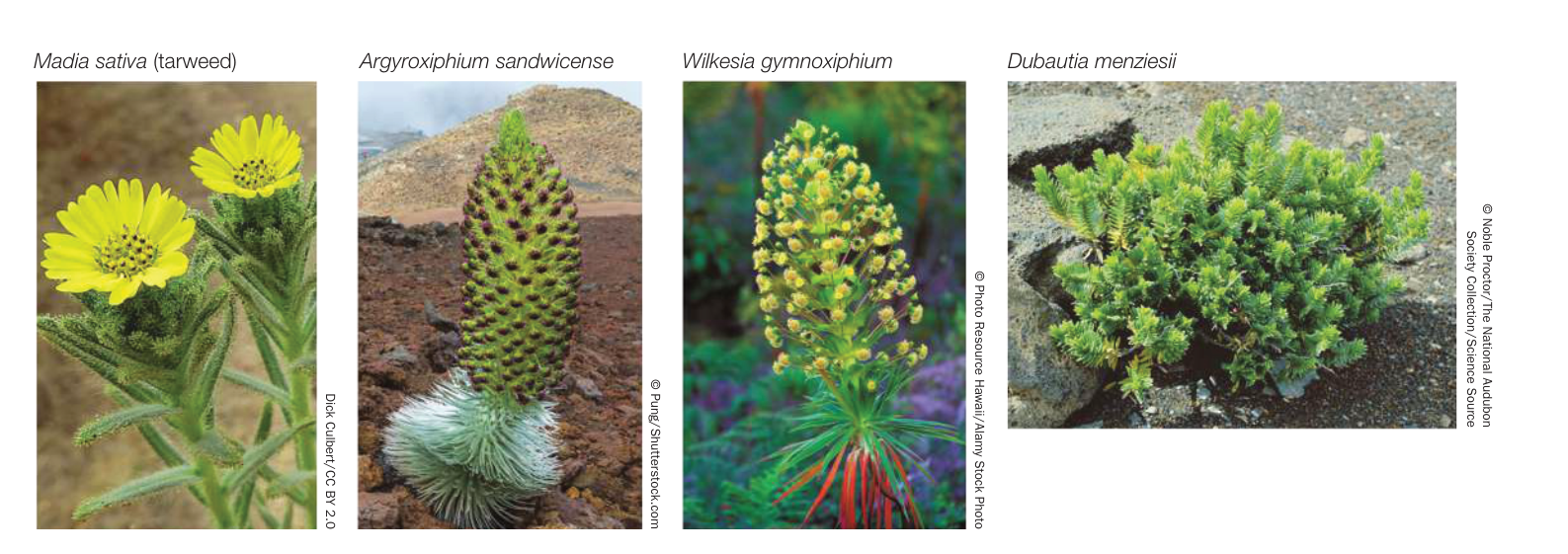
Figure 22.17 Rapid Evolution among Hawaiian Silverswords The Hawaiian silverswords, three closely related genera of the sunflower family, are believed to have descended from a single common ancestor (a plant similar to the tarweed Madia sativa) that colonized Hawaii from the Pacific coast of North America. The four plants shown here are more closely related than they appear to be based on their morphology.
DNA sequences show that these species share a relatively recent common ancestor with a species of tarweed from the Pacific coast of North America. Whereas all mainland tarweeds are small, upright herbs (nonwoody plants such as Madia sativa; see Figure 22.17), the silverswords include shrubs, trees, and vines as well as both upright and ground-hugging herbs. Silversword species occupy nearly all the habitats of the Hawaiian Islands, from sea level to above the timberline in the mountains. Despite their extraordinary morphological diversification, all silverswords are genetically very similar.
The Hawaiian silverswords are more diverse in size and shape than the mainland tarweeds because their tarweed ancestors first arrived on islands that harbored very few plant species. In particular, there were few trees and shrubs because such large-seeded plants rarely disperse to oceanic islands. Trees and shrubs have evolved from nonwoody ancestors on many oceanic islands. On the mainland, however, tarweeds live in ecological communities that contain many tree and shrub species in lineages with long evolutionary histories. In those environments, opportunities to exploit the “tree” way of life have already been preempted.
Recap and Assess
Dietary specialization, pollinator specialization, sexual selection, and poor dispersal abilities are correlated with high rates of speciation. Open ecological niches present opportunities for adaptive radiations.
- How can pollinator specialization in plants and sexual selection in animals increase rates of speciation?
- Why do adaptive radiations often occur when a founder species invades an isolated geographic area?
The result of 3.8 billion of years of evolution has been many millions of species, each adapted to live in a particular environment and to use environmental resources in a particular way. In Chapter 23 we will consider the broader evolutionary history of life on Earth and examine the long-term evolutionary changes that have given rise to all of life’s diversity.

Activity 22.1 Concept Review: Speciation
Investigating Life
Q&A If speciation typically takes thousands to millions of years, how do biologists conduct experiments to study this process?
Although speciation usually takes thousands to millions of years, and is typically studied in natural settings such as Lake Malawi or in field experiments like the one described in Investigating Life: Flower Color Reinforces a Reproductive Barrier in Phlox, some aspects of speciation can be studied and observed in controlled laboratory experiments. Most such experiments use organisms with short generation times, in which evolution is expected to be relatively rapid.
William Rice and George Salt conducted an experiment in which fruit flies (Drosophila melanogaster) were allowed to choose food sources in different habitats. The habitats—where mating also took place—were vials in different parts of an experimental cage (Figure 22.18). The vials differed in three environmental factors: (1) light; (2) the direction (up or down) in which the fruit flies had to move to reach food; and (3) the concentrations of two aromatic chemicals, ethanol and acetaldehyde. In just 35 generations, the two groups of flies that chose the most divergent habitats had become reproductively isolated from each other, having evolved distinct preferences for the different habitats.
The experiment by Rice and Salt (1988. Am Nat 131: 911–917) demonstrated an example of habitat isolation as a prezygotic isolating mechanism. Even though the different habitats were in the same cage, and individual fruit flies were capable of flying from one habitat to the other, habitat preferences were inherited by offspring from their parents, and populations from the two divergent habitats did not interbreed. Similar habitat isolation is thought to have resulted in the early split between cichlids that preferred the rocky versus the sandy shores of Lake Malawi. In controlled experiments like this one, biologists can observe many aspects of the process of speciation directly.
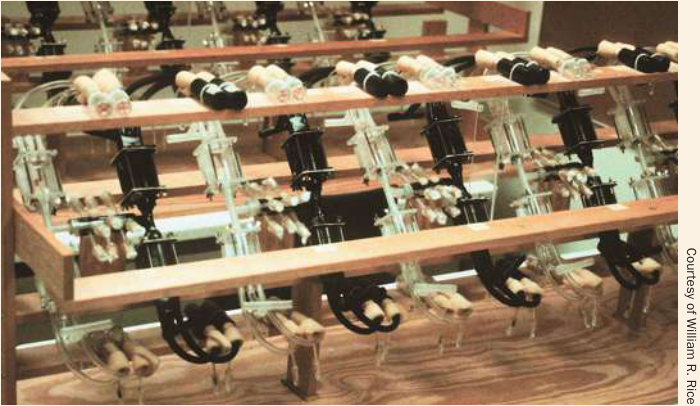
Figure 22.18 Evolution in the Laboratory For their experiments on the evolution of prezygotic isolating mechanisms in Drosophila melanogaster, Rice and Salt built an elaborate system of varying habitats contained within vials inside a large fly enclosure. Some groups of flies developed preferences for widely divergent habitats and became reproductively isolated within 35 generations.
Future directions
Biologists can now sequence entire genomes of organisms, which allows them to compare divergent genes in pairs of recently divergent species, and to identify the genes responsible for prezygotic and postzygotic isolation. These same techniques also allow researchers to detect any level of hybridization between species. Thus we are now able to determine the genetic basis of reproductive isolation, and measure the rate at which diverging species become isolated from one another. With these advances, biologists can now appreciate the details and genetic basis for the origin of species.
Photos by David McIntyre and Nantawat Chotsuwan/Shutterstock.com
You should be able to relate each summary to the adjacent figures. If you go to this visual summary in Achieve, you can follow links to figures, animations, activities, and simulations that will help you consolidate the material.
Visual Summary
Species Are Reproductively Isolated Lineages on the Tree of Life
- ■ Speciation is the process by which one species splits into two or more daughter species, which thereafter evolve as distinct lineages.
- ■ The morphological species concept distinguishes species on the basis of physical similarities; it often underestimates or overestimates the actual number of reproductively isolated species.
- ■ The biological species concept distinguishes species on the basis of reproductive isolation.
- ■ The lineage species concept recognizes independent evolutionary lineages as species and allows biologists to consider species over evolutionary time.
Questions
- What species concept(s) would paleontologists likely use to group fossil remains into species?
- How is reproductive isolation, the core of the biological species concept, also related to morphological and lineage species concepts?
Photos by David McIntyre (courtesy of Exotic Fish and Pet World, Southampton, MA) and ©Nantawat Chotsuwan/Shutterstock. Andreas Gradin, Mikola Gyorgy, Grigorev Mihhail, Vladimir Wrangel/Shutterstock.com, © IStock.com/Vladimir Wrangel
Speciation Is a Natural Consequence of Population Subdivision
- ■ Genetic divergence results from the interruption of gene flow within a population.
- ■ The Dobzhansky-Muller model describes how reproductive isolation between two physically isolated populations can develop through the accumulation of incompatible genes or chromosomal arrangements.
- ■ Reproductive isolation increases with increasing genetic divergence between populations.
Questions
- Why does the Dobzhansky-Muller model involve changes at multiple gene loci?
- What kinds of chromosomal rearrangements work particularly well with the Dobzhansky-Muller model? Why?
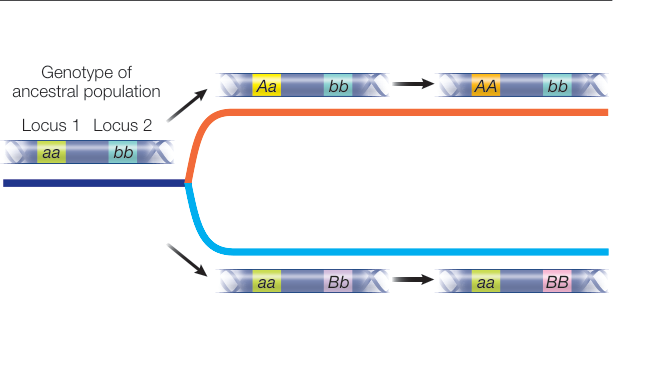
Figure 22.3
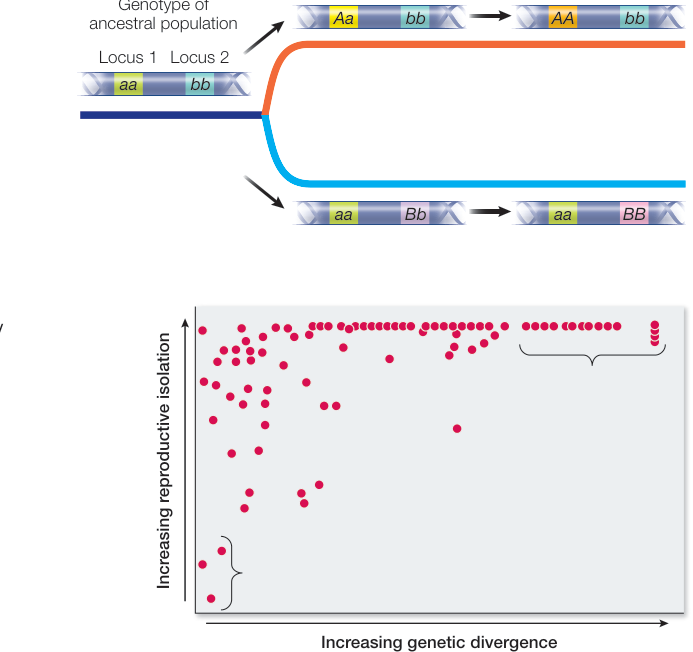
Figure 22.5
- ■ Allopatric speciation, which results when populations are separated by a physical barrier, is the dominant mode of speciation. This type of speciation may follow founder events, in which some members of a population cross a barrier and found a new, isolated population.
- ■ Sympatric speciation results when the genomes of two groups diverge in the absence of physical isolation. It can result from disruptive selection in two or more distinct microhabitats.
- ■ Sympatric speciation can occur within two generations via polyploidy, an increase in the number of chromosomes sets. Polyploidy may arise from chromosome duplications within a species (autopolyploidy) or from hybridization that results in combining the chromosomes of two species (allopolyploidy).
Questions
- What types of geographic events are likely to give rise to many species (in different groups) simultaneously via allopatric speciation?
- How does speciation occur so quickly through polyploidy?
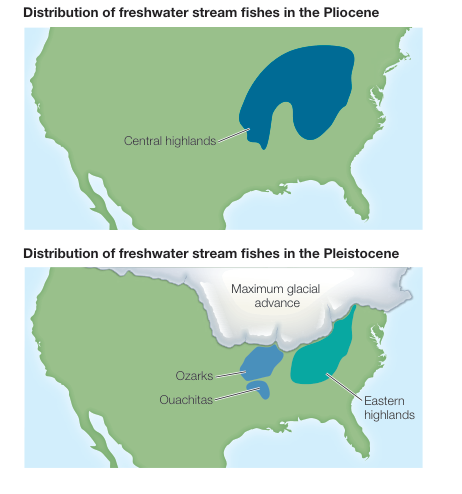
Figure 22.6
Reproductive Isolation Is Reinforced When Diverging Species Come into Contact
- ■ Prezygotic isolating mechanisms prevent hybridization; postzygotic isolating mechanisms reduce the fitness of hybrids.
- ■ Postzygotic isolating mechanisms lead to reinforcement of prezygotic isolating mechanisms by natural selection.
- ■ Hybrid zones may form and persist if reproductive isolation between species is incomplete.
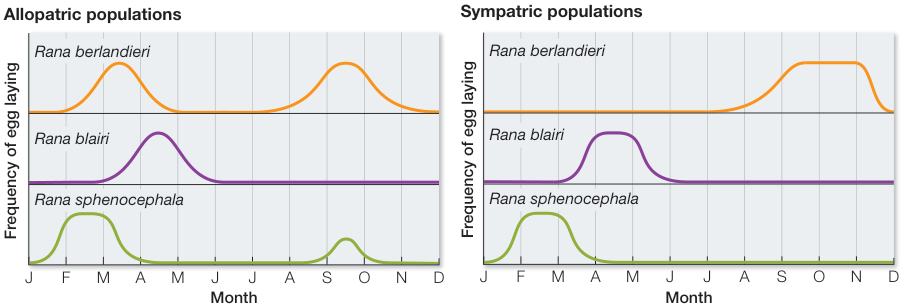
Figure 22.11
Questions
- What are five major types of prezygotic isolating mechanisms?
- What are three major types of postzygotic isolating mechanisms?
Speciation Rates Are Highly Variable across Life
- ■ Dietary specialization, pollinator specialization, sexual selection, and dispersal ability all influence speciation rates.
- ■ Evolutionary radiation refers to the rapid proliferation of descendant species from a single ancestor species. This often occurs when a species colonizes a new area with unoccupied ecological niches. If evolutionary radiation results in an array of species that live in a variety of environments and differ in the characteristics they use to exploit those environments, it is referred to as adaptive radiation.
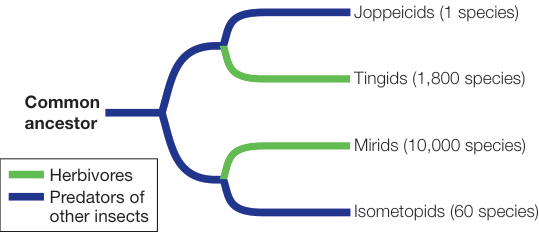
Figure 22.15
Questions
- Why are speciation rates often higher among herbivorous insects than among carnivorous insects?
- How does dispersal ability affect speciation rates?
- What biogeographic event often precedes an evolutionary radiation?