Chapter 26Plants without Seeds: From Water to Land
Plants without Seeds: 26 From Water to Land

Courtesy of the U.S. Coast Guard
Key Concepts
26.1 Primary Endosymbiosis Produced the First Photosynthetic Eukaryotes
26.2 Key Adaptations Permitted Plants to Colonize Land
26.3 Vascular Tissues Led to Rapid Diversification of Land Plants
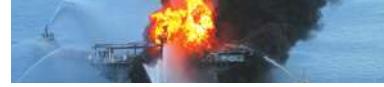
An explosive blowout of the drilling rig Deepwater Horizon in April 2010 resulted in almost 5 million barrels of oil spilling into the Gulf of Mexico. This oil was the product of ancient photosynthesis of marine algae, whose remains were trapped beneath the ocean floor.
Investigating Life: A Planet Powered by Photosynthesis, Past and Present
The living world depends largely on energy from the Sun, which drives photosynthesis. Using sunlight, plants convert water and carbon dioxide () into carbohydrates and produce atmospheric oxygen () as a by-product. Life on Earth as we know it today depends on the carbohydrates and produced by plants.
Today there is great interest in using solar power to help meet human energy needs. But unicellular eukaryotes capitalized on this process first, and long ago. Single-celled eukaryotes incorporated tiny solar energy converters into their cells more than 1.5 billion years ago, when they formed partnerships with photosynthetic cyanobacteria. These endosymbionts—which over time would become the chloroplasts of modern plants—allowed many eukaryotes to use solar energy to drive the reactions that convert water and into organic carbon compounds. Fossil fuels such as coal, natural gas, and petroleum are the remains of carbon compounds produced by ancient organisms using photosynthesis. Hence fossil fuels were produced using solar energy captured by photosynthetic organisms millions of years ago.
If fossil fuels were produced using solar energy, then why is the burning of fossil fuels so problematic? The problem is that the used to produce these fossil fuels was drawn by plants from Earth’s atmosphere over many hundreds of millions of years. In contrast, we are now burning these fuels, and thus releasing trapped back into the atmosphere, over the course of just a few centuries. This has resulted in a rapid increase in concentrations of (and other carbon compounds, such as methane) in Earth’s atmosphere. The increased concentrations of carbon compounds increase the ability of Earth’s atmosphere to trap heat from the Sun, thus warming the overall climate of Earth. Although many changes in Earth’s climate have occurred in the past, the burning of fossil fuels by humans is resulting in perhaps the fastest increases in global temperature in Earth’s history. This rapid rise in global temperature has enormous consequences for life on Earth—hence our need to develop renewable, sustainable sources of energy that don’t depend on burning fossil fuels.
QA Can we grow new biofuels that capture carbon from Earth’s atmosphere? (Find the answer on page 598.)
Primary Endosymbiosis Produced the First Photosynthetic Eukaryotes
Learning Objectives
- 26.1.1 Identify the common evolutionary origin of chloroplasts on the tree of life and explain the meaning of primary endosymbiosis.
- 26.1.2 Describe the ten major clades of Plantae and their evolutionary relationships to one another.
Photosynthesis is critical to life as we know it. As detailed in Chapter 10, photosynthesis uses energy from sunlight to convert carbon dioxide and water into carbohydrates and oxygen. The reverse process, known as catabolism, provides organisms with the energy they need to function, grow, and reproduce. So almost all living organisms depend on the carbohydrates and oxygen produced by photosynthesis.
More than a billion and a half years ago, when a cyanobacterium was first engulfed by an early eukaryote, the history of life was altered radically. The chloroplasts that resulted from primary endosymbiosis of this cyanobacterium (see Figure 25.2) were obviously important for the evolution of plants and other photosynthetic
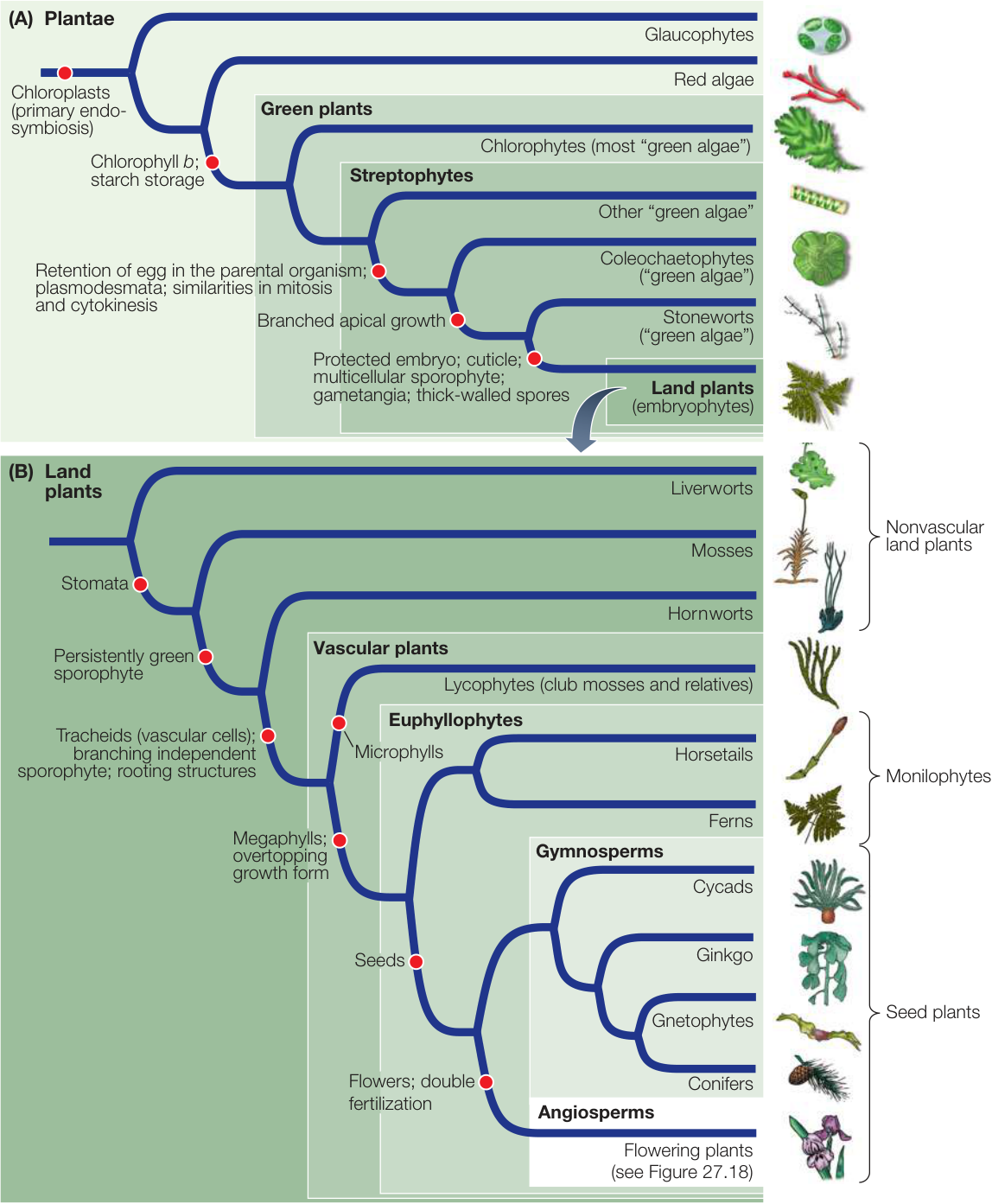
Figure 26.1 The Evolution of Plants In its broadest definition, the term “plant” includes the glaucophytes, red algae, and green plants—all the groups descended from a common ancestor that had chloroplasts (A). Some biologists restrict the term “plant” to the green plants (those with chlorophyll b) or, even more narrowly, to the land plants (B). Three key characteristics that emerged during the evolution of land plants—protected embryos, vascular tissues, and seeds—led to their success in the terrestrial environment. Q: Which two names of plant groups are used in this figure only as terms of convenience, and do not refer to clades?
Work with the Data
The Phylogeny of Land Plants
Original Paper: Y.-L. Qiu et al. 2006. The deepest divergences in land plants inferred from phylogenomic evidence. Proc Natl Acad Sci USA 103: 15511–15516. © 2006 National Academy of Sciences, U.S.A.
In addition to the morphological characters of land plants shown on the phylogeny in Figure 26.1, DNA sequences are widely used to study and reconstruct the evolutionary history of plants. These sequences are many tens of thousands of nucleotides long and have been collected from a large number of species. The full data set used by Yin-Long Qiu and his colleagues (available at treebase.org) includes DNA sequences from 67 genes. The table below provides sample sequences from a chloroplast gene that has been used to reconstruct the relationships of representative plant species; the table shows 27 nucleotide positions for 10 species.
QUESTIONS►
- Construct a phylogenetic tree of these 10 species using the parsimony method (see Key Concept 20.2 and the examples in Table 20.1 and Figure 20.5 for instructions). Use the outgroup to root your tree. Assume that all changes among nucleotides are equally likely.
- How many changes (from one nucleotide to another) occur along each branch on your tree?
- Which nucleotide positions (i.e., which character states) exhibit homoplasy (convergence or reversal of the character state)?
- Which group on your tree represents the streptophytes? The land plants? The vascular plants? The euphyllophytes? The seed plants? The angiosperms?
| Species | Nucleotide position (character state) | ||||||||||||||||||||||||||
|---|---|---|---|---|---|---|---|---|---|---|---|---|---|---|---|---|---|---|---|---|---|---|---|---|---|---|---|
| 1 | 2 | 3 | 4 | 5 | 6 | 7 | 8 | 9 | 10 | 11 | 12 | 13 | 14 | 15 | 16 | 17 | 18 | 19 | 20 | 21 | 22 | 23 | 24 | 25 | 26 | 27 | |
| Outgroup (chlorophyte alga) | T | A | T | T | A | T | G | A | T | T | C | C | A | A | A | T | A | T | T | A | T | A | A | T | C | T | A |
| Stonewort | T | A | T | T | T | A | A | A | T | T | A | C | T | A | A | T | A | A | T | A | A | T | C | T | A | ||
| Liverwort | A | C | T | T | T | T | A | A | T | G | A | T | T | C | A | G | A | A | T | A | A | A | T | C | T | A | |
| Moss | A | C | T | T | T | T | A | A | T | A | T | T | T | T | A | A | T | A | A | A | A | T | C | T | T | ||
| Hornwort | A | C | T | T | T | T | A | A | T | G | T | T | T | T | A | A | T | A | C | A | G | A | A | A | C | T | T |
| Lycophyte | A | C | T | C | C | C | G | G | T | G | T | T | C | T | G | A | T | A | C | A | A | G | G | A | C | C | T |
| Fern | C | C | T | C | C | G | A | G | C | G | T | T | C | T | T | A | G | A | T | A | A | G | G | A | C | C | T |
| Pine tree | A | C | C | C | C | G | C | G | C | G | T | T | C | T | G | A | T | G | C | G | A | G | G | A | T | C | T |
| Rice | A | C | C | C | C | G | C | G | C | G | T | T | C | T | G | A | T | G | C | G | A | G | G | A | T | A | T |
| Tobacco | A | C | C | A | C | G | C | G | C | G | T | T | C | T | G | A | T | G | C | G | A | G | G | A | T | A | T |
eukaryotes, but they were also critical to the evolution of all life on land. Until photosynthetic plants were able to move onto land, there was very little on land to support multicellular animals or fungi, and almost all life was restricted to the oceans and fresh waters.
Primary endosymbiosis is a shared derived trait—a synapomorphy—of the group known as Plantae (Figure 26.1). Although Plantae is Latin for “plants,” in everyday language—and throughout this book—the unmodified common name “plants” is usually used to refer only to the land plants. However, the first several clades to branch off the tree of life after primary endosymbiosis are all aquatic. Most aquatic photosynthetic eukaryotes (other than those secondarily derived from land plants) are known by the common name algae. This name, however, is just a convenient way to refer to these groups, which are not all closely related. Many of the photosynthetic groups we discussed in Chapter 25 (which acquired chloroplasts through secondary endosymbiosis) are also commonly called algae.
Connect the Concepts As noted in Key Concept 20.1, derived traits shared by a group of organisms that offer evidence of their common ancestry are called synapomorphies.
Several distinct clades of algae were among the first photosynthetic eukaryotes
microscopic freshwater algae are thought to be the sister group to the rest of Plantae (see Figure 26.1A). The chloroplast of glaucophytes is unique in containing a small amount of peptidoglycan between its inner and outer membranes—the same arrangement
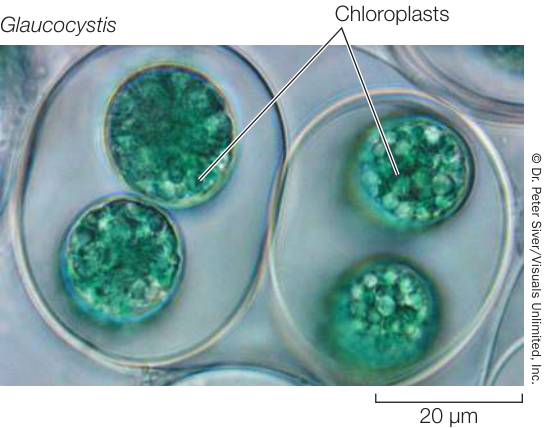
Figure 26.2 Glaucophytes May Resemble Some of the Earliest Plantae The large chloroplasts of unicellular glaucophytes differ from chloroplasts of other Plantae in retaining a layer of peptidoglycan. This feature is thought to have been retained from the endosymbiotic cyanobacteria that gave rise to the chloroplasts of Plantae. The photograph shows a colony of four individuals, each with many chloroplasts.
- Rhodomycea sp.
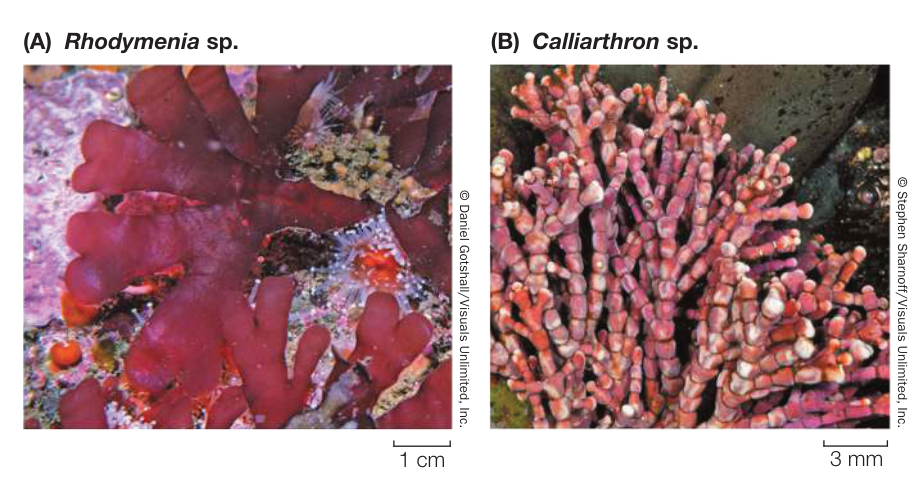
Figure 26.3 Red Algae Contain a Red Accessory Photosynthetic Pigment (A) The rich red color of red algae is a result of the pigment phycoerythrin. (B) Coralline red alga is named for its coral-like appearance.
found in cyanobacteria. Peptidoglycan has been lost from the remaining photosynthetic eukaryotes.
In contrast to the glaucophytes, almost all red algae are multicellular (Figure 26.3). Their characteristic color is a result of the accessory photosynthetic pigment phycoerythrin, which is found in relatively large amounts in the chloroplasts of many red algae. In addition to phycoerythrin, red algal chloroplasts contain chlorophyll a as well as several other accessory pigments.
The red algae include species that grow in the shallowest tidal pools as well as the photosynthesizers found deepest in the ocean (as deep as 260 meters if nutrient conditions are right and the water is clear enough to permit light to penetrate). A few red algae inhabit fresh water. Most grow attached to a substrate by a structure known as a holdfast.
Despite their name, red algae don’t always appear red in color. The ratio of two pigments—phycoerythrin (red) and chlorophyll a (green)—depends largely on the intensity of light that reaches the alga. In deep water, where light is dim, algae accumulate large amounts of phycoerythrin (which absorbs light at short wavelengths) and appear red. But many species growing near the surface contain a higher concentration of chlorophyll a and thus appear bright green.
The remaining algal groups in Plantae are the various “green algae.” Like land plants, the green algae contain both chlorophylls a and b and store their reserve of photosynthetic products as starch in chloroplasts. All the groups that share these features are commonly called green plants because both of their photosynthetic pigments are green.
The largest clade of “green algae” is the chlorophytes. There are more than 17,000 species of chlorophytes, most of which are aquatic (some are marine, though more are freshwater forms), although there are a few terrestrial forms that live in moist environments. Chlorophytes range in size from microscopic unicellular forms to multicellular forms many centimeters long and display an incredible variety of shapes and body forms. Surprisingly large and well-formed colonies of cells are found in some unicellular freshwater groups, such as the genus Volvox (Figure 26.4A). Certain cells in these colonies are specialized for reproduction. The cells in these colonies are not differentiated into specialized tissues and organs, as in land plants and animals, but they show vividly how the preliminary step of this great evolutionary innovation might have been taken.
Volvox is a colonial unicellular chlorophyte, but there are also many true multicellular species of chlorophytes. Some of these are filamentous. Others, like species in the genus Ulva (Figure 26.4B), grow into thin, membranous sheets up to 30 centimeters wide.
Biologists are exploring mass production of several species of chlorophytes as a source of biofuels. One of the biggest limitations in using algae for biofuels relates to the cost of providing an appropriate growth medium for the algae. Growth media typically require fresh water and abundant sources of carbon, nitrogen, and phosphorus. These nutrients are already present in most municipal wastewater supplies, and the removal of these nutrients by growing algae would help clean the water supply. Investigating Life: Can
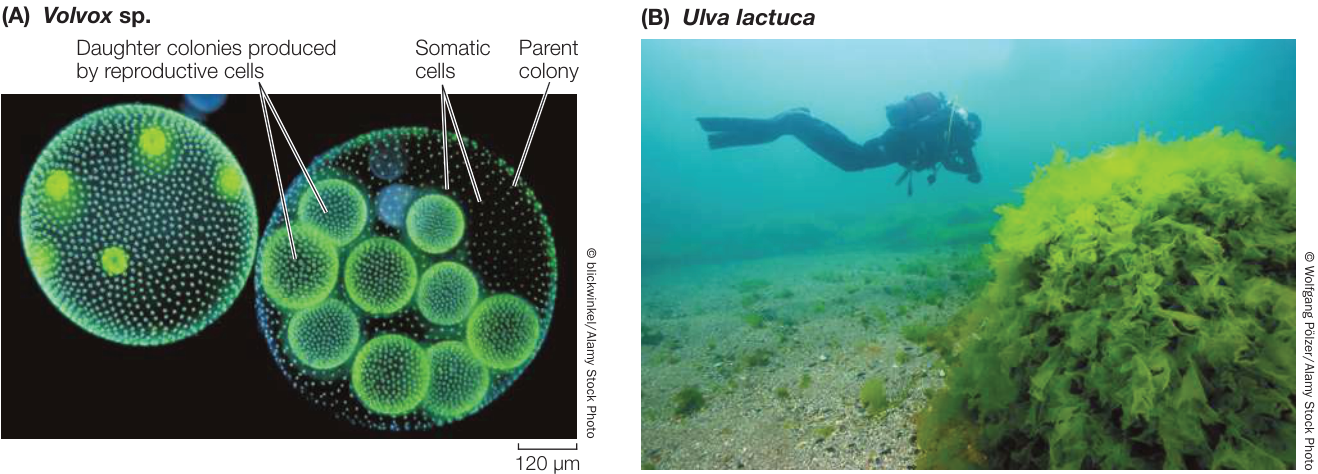
Figure 26.4 Chlorophytes Display a Wide Diversity of Forms (A) Volvox colonies are precisely spaced arrangements of individual cells. Specialized reproductive cells produce daughter colonies, which will eventually release new individuals. (B) Sea lettuce grows in marine waters and intertidal areas.
Chlorella Algae Be Grown in Municipal Sewage Wastewater for Biofuel Production? explores the potential of municipal wastewater as a growth medium for algae used in biofuel production.
Investigating Life: Can Chlorella Algae Be Grown in Municipal Sewage Wastewater for Biofuel Production?
Experiment
Original Paper: A. M. Bhatnagar et al. 2010. Chlorella minutissima—A promising fuel alga for cultivation in municipal wastewaters. Appl Biochem Biotechnol 161: 523–536.
Growing algae for use in biofuel production requires an abundant source of fresh water that contains appropriate nutrients. Appropriate nutrients for growing algae are present in municipal wastewater, but other contaminants of wastewater (such as salts and detergents) could diminish algal growth. Ashish Bhatnagar and his colleagues at the University of Georgia conducted an experiment to see if Chlorella minutissima algae could be grown successfully in municipal wastewater.
HYPOTHESIS Chlorella minutissima algae can be grown successfully in municipal wastewater, either with or without dilution from traditional growth medium.
METHOD
- Grow replicate cultures of a standard inoculate of Chlorella minutissima algae in growth medium, as well as in 25%, 50%, 75%, and 100% municipal wastewater.
- Control temperature and light conditions for all cultures.
- Measure growth of the algae after 15 days by measuring the concentration of chlorophyll a present in each culture.
RESULTS Errors bars indicate standard deviation.
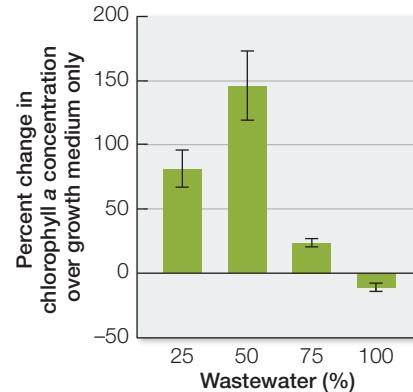
CONCLUSION Chlorella minutissima algae can be grown effectively in municipal wastewater, and growth may even exceed production in standard growth medium.
Q: At what tested concentration of wastewater do the algae grow best?
Work with the Data
After determining that municipal wastewater could be used to grow Chlorella minutissima for biofuel production, Ashish Bhatnagar and his colleagues explored the effects on Chlorella growth of various sources of carbon that were present in the wastewater. The table below shows three measures of algal growth in standard growth medium, as well as in the medium with added sources of carbon. Use these data to answer the following questions.
QUESTIONS
- Calculate 95% confidence intervals for mean measures of chlorophyll a concentration in the various growth media (see Appendix B)
for directions on calculating confidence intervals from standard errors). Which carbon source additives result in significantly higher or lower chlorophyll a concentrations (based on non-overlapping confidence intervals) compared with the growth medium only?
- Plot the measures for chlorophyll a concentration, biomass, and cell count for each growth condition. Which two measures appear to be most strongly correlated? Can you think of reasons why the uncorrelated measure might show a different trend than the two correlated measures?
| Measurement a | Growth medium only | Growth medium + propionate | Growth medium + acetate | Growth medium + citrate | Growth medium + sucrose | Growth medium + glucose |
|---|---|---|---|---|---|---|
| Chlorophyll a concentration (mg/L) | 13.41 | 1.72 | 9.4 | 15.26 | 17.63 | 37.21 |
| (1.24) | (0.03) | (0.82) | (0.59) | (0.86) | (3.76) | |
| Biomass (mg/L) | 899 | 120 | 630 | 1,007 | 1,164 | 2,456 |
| (27.6) | (12.6) | (35.1) | (110.4) | (87.9) | (297.7) | |
| Cell count (per mL) | 2.01 | 0.51 | 1.89 | 1.50 | 1.93 | 1.76 |
| (0.17) | (0.02) | (0.08) | (0.07) | (0.17) | (0.18) |
aMeasures are means, with standard errors of mean shown in parentheses.
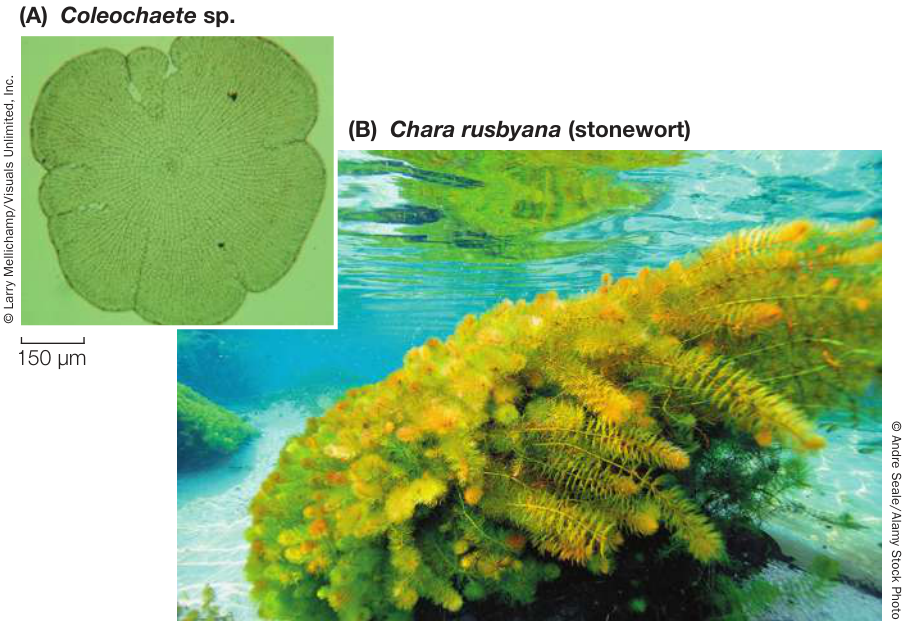
Figure 26.5 The Closest Relatives of Land Plants (A) This species is a representative of the coleochaetophytes, the sister clade of stoneworts plus land plants. (B) The land plants probably evolved from a common ancestor shared with the stoneworts, an abundant group of multicellular green algae often found in freshwater pools and lakes (although a few species are found in marine environments). A species in the common genus Chara is shown here.
Table 26.1 Classification of Land Plants
| Group | Common name | Characteristics |
|---|---|---|
| NONVASCULAR LAND PLANTS | ||
| Hepatophyta | Liverworts | No stomata; gametophyte flat or leafy |
| Bryophyta | Mosses | Filamentous stage; gametophyte leafy; sporophyte grows apically (at the tip) |
| Anthocerophyta | Hornworts | Embedded archegonia; sporophyte grows basally (i.e., from the ground) |
| VASCULAR PLANTS | ||
| Lycopodiophyta | Lycophytes: club mosses and allies | Microphylls in spirals; sporangia in leaf axils |
| Monilophyta | Horsetails and ferns | Simple leaves in whorls or frondlike compound leaves |
| SEED PLANTS | ||
| Gymnosperms | ||
| Cycadophyta | Cycads | Compound leaves; swimming sperm; seeds on modified leaves |
| Ginkgophyta | Ginkgo | Deciduous; fan-shaped leaves; swimming sperm |
| Gnetophyta | Gnetophytes | Vessels in vascular tissue; opposite, simple leaves |
| Coniferophyta | Conifers | Seeds in cones; needle-or scalelike leaves |
| Angiosperms | Flowering plants | Endosperm; carpels; gametophytes much reduced; seeds contained within fruits |
Two groups of green algae are the closest relatives of land plants
All green algae other than the chlorophytes form a group together with the land plants known as streptophytes (see Figure 26.1A). Several microscopic structural features, backed by clear evidence from molecular studies, indicate that the closest relatives of the land plants are two groups of aquatic green algae, the coleochaetophytes (Figure 26.5A) and the stoneworts (Figure 26.5B). Both of these multicellular algal groups retain their eggs in the parental organism, as land plants do. As in land plants, the cytoplasm of adjacent cells in these algal groups is connected through structures called plasmodesmata; they also share similarities in the details of mitosis and cytokinesis. Of these two groups, stoneworts are thought to be the sister group of land plants (see Figure 26.1A). The growth form of stoneworts is branching and apical (new growth occurs at the tips of branches), as in most land plants. Phylogenetic analysis of gene sequences has confirmed the close relationships of coleochaetophytes and stoneworts to the land plants.
There are ten major groups of land plants
One of the key synapomorphies of the land plants is development from an embryo that is protected by tissues of the parent plant. For this reason, land plants are sometimes called embryophytes (phyton, “plant”). The green plants, the streptophytes, and the land plants have each been called “the plant kingdom” by different authorities; others take an even broader view and include red algae and glaucophytes as “plants.” To avoid confusion in this chapter, we use modifying terms (e.g., “land plants” or “green plants”) to refer to the various clades of Plantae shown in Figure 26.1.
The land plants that exist today fall naturally into ten major clades (listed by their common names in the center column of Table 26.1). Members of seven of those clades possess well-developed vascular systems that transport materials throughout the plant body. We call these seven groups, collectively, the vascular plants, or tracheophytes, because they all possess fluid-conducting cells called tracheids (discussed in more detail in Chapter 32). The remaining three clades (liverworts, mosses, and hornworts) lack tracheids and are referred to collectively as nonvascular land plants. Note, however, that the three groups of nonvascular land plants do not form a clade (unlike the vascular plants, which are a clade).
Recap and Assess
Primary endosymbiosis is a synapomorphy of Plantae. The glaucophytes, the sister clade of the other Plantae, are unicellular algae that are similar to some of the earliest photosynthetic eukaryotes. The green plants contain chlorophyll b in addition to the chlorophyll a found in all Plantae.
- Explain the different possible uses of the term “plant.”
- Why doesn’t the term “algae” designate a formal taxonomic group?
- What are some of the key differences among glaucophytes, red algae, and the various clades of green algae?
- What evidence supports the phylogenetic relationship between land plants and the various groups of aquatic green algae?
The green algal ancestors of the land plants lived at the margins of ponds or marshes, ringing them with a mat of dense green. It was from such a marginal habitat, which was sometimes wet and sometimes dry, that early plants made the transition onto land.
Key Adaptations Permitted Plants to Colonize Land
Learning Objectives
26.2.1 Describe one or more key innovations in land plants that were most important to their transition to a terrestrial environment, and justify your choice(s).
26.2.2 Distinguish alternation of generations in plants from the life cycles of animals.
How did the land plants arise? To address this question, we can compare land plants with their closest relatives among the green algae. The features that differ between the two groups include the adaptations that allowed the first land plants to survive in the terrestrial environment.
Adaptations to life on land distinguish land plants from green algae
Land plants first appeared in the terrestrial environment between 500 and 450 million years ago (mya). How did they survive in an environment that differed so dramatically from the aquatic environment of their ancestors? While the water essential for life is everywhere in the aquatic environment, water is difficult to obtain and retain in the terrestrial environment.
No longer bathed in fluid, organisms on land faced potentially lethal desiccation (drying). Large terrestrial organisms had to develop ways to transport water to body parts distant from the source of the water. And whereas water provides aquatic organisms with support against gravity, a plant living on land must either have some other support system or sprawl unsupported on the ground. A land plant must also use different mechanisms for dispersing its gametes and progeny than its aquatic relatives, which can simply release them into the water.
Survival on land was facilitated by the evolution among plants of numerous adaptations, including:
- The cuticle, a coating of waxy lipids that retards water loss
- Stomata, small closable openings in leaves and stems that are used to regulate gas exchange and water loss
- Gametangia, multicellular organs that enclose plant gametes and prevent them from drying out
- Embryos, young plants contained within a protective structure
- Certain pigments that afford protection against the mutagenic ultraviolet radiation that bathes the terrestrial environment
- Thick spore walls containing a polymer that protects the spores from desiccation and resists decay
- A mutually beneficial association with fungi (mycorrhizae) that promotes nutrient uptake from the soil
The cuticle may be the most important—and the earliest—of these features. Composed of several unique waxy lipids that coat the leaves and stems of land plants, the cuticle has several functions, the most obvious and important of which is to keep water from evaporating from the plant body.
As ancient plants colonized the land, they not only adapted to the terrestrial environment, they also modified it by contributing to the formation of soil. Acids secreted by plants help break down rock, and the organic compounds produced by the breakdown of dead plants contribute nutrients to the soil. Such effects are repeated today as plants colonize and grow in new areas.
Life cycles of land plants feature alternation of generations
A universal feature of the life cycles of land plants is alternation of generations. Recall from Key Concept 25.3 the two hallmarks of alternation of generations:
- The life cycle includes both a multicellular diploid stage and a multicellular haploid stage.
- Gametes are produced by mitosis, not by meiosis. Meiosis produces spores that develop into multicellular haploid organisms.
If we begin looking at the land plant life cycle at the single-cell stage—the diploid zygote—then the first phase of the cycle is the formation, by mitosis and cytokinesis, of a multicellular embryo, which eventually grows into a mature diploid plant. This multicellular diploid plant is called the sporophyte (“spore plant”).
Cells contained within specialized reproductive organs of the sporophyte, called sporangia (singular sporangium), undergo meiosis to produce haploid, unicellular spores. By mitosis and cytokinesis, a spore develops into a haploid plant. This multicellular haploid plant, called the gametophyte (“gamete plant”), produces haploid gametes by mitosis. The fusion of two gametes (fertilization) forms a single diploid cell—the zygote—and the cycle is repeated (Figure 26.6).
The sporophyte generation extends from the zygote through the adult multicellular diploid plant and sporangium formation. In contrast, the gametophyte generation extends from the spore through the adult multicellular haploid plant to the gametes. The transitions between the generations are accomplished by fertilization and by meiosis. In all land plants, the sporophyte and the gametophyte differ genetically: the sporophyte has diploid cells, and the gametophyte has haploid cells.
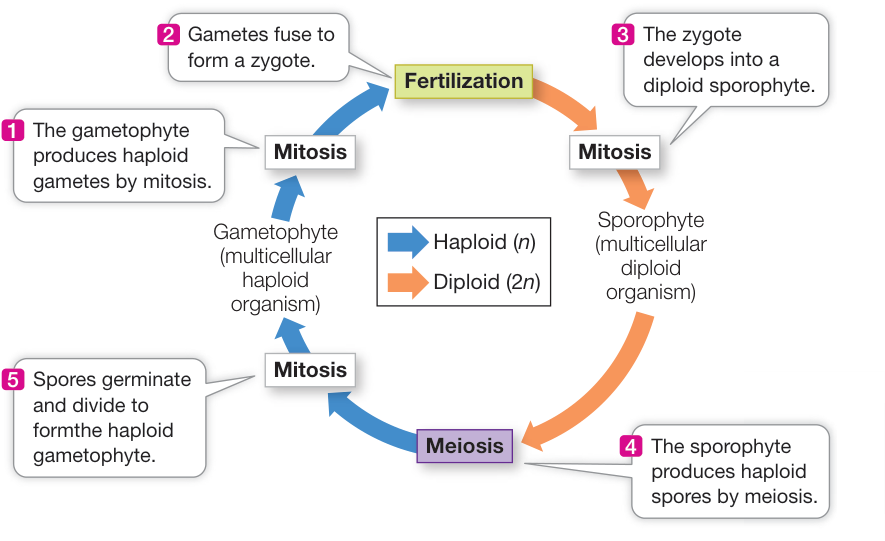
Figure 26.6 Alternation of Generations in Land Plants A multicellular diploid sporophyte generation that produces spores by meiosis alternates with a multicellular haploid gametophyte generation that produces gametes by mitosis. Q: What is a major difference in the haploid portion of the life cycle of plants and animals?
There is a trend toward reduction of the gametophyte generation in plant evolution. In the nonvascular land plants, the gametophyte is larger, longer-lived, and more self-sufficient than the sporophyte. In those groups that appeared later in plant evolution, however, the sporophyte is the larger, more conspicuous, longer-lived, and more self-sufficient generation.
Nonvascular land plants live where water is readily available
The living species of nonvascular land plants are the liverworts, mosses, and hornworts. These three groups are thought to be similar in many ways to the earliest land plants. Most of these plants grow in dense mats, usually in moist habitats. Even the largest of these species are only about half a meter tall, and most are only a few centimeters tall or long. Why have they not evolved to be taller? The probable answer is that they lack an efficient vascular system for transporting water and minerals from the soil to distant parts of the plant body.
The nonvascular land plants lack the true leaves, stems, and roots that characterize the vascular plants, although they have structures analogous to each. Their growth form allows water to move through the mats of plants by capillary action. They have leaflike structures that readily catch and hold any water that splashes onto them. They are small enough that minerals can be distributed throughout their bodies by diffusion. As in most land plants, layers of maternal tissue protect their embryos from desiccation. Nonvascular land plants also have a cuticle, although it is often very thin (or even absent in some species) and thus is not highly effective in retarding water loss.
Most nonvascular land plants live on the soil or on vascular plants, but some grow on bare rock, on dead and fallen tree trunks, and even on buildings. Their ability to grow on such marginal surfaces results from a mutualistic association with fungi. The earliest association of land plants with fungi dates back at least 460 million years. This mutualism probably facilitated the absorption of water and minerals, especially phosphorus, from the first soils.
Connect the Concepts Land plants of many groups have mutualistic associations with fungi, as described in Key Concept 28.2.
Nonvascular land plants are widely distributed over six continents and even exist (albeit very locally) on the coast of the seventh, Antarctica. Most are terrestrial. Although a few species live in fresh water, these aquatic species are descended from terrestrial ones. None live in the oceans.
The sporophytes of nonvascular land plants are dependent on the gametophytes
In the nonvascular land plants, the conspicuous green structure visible to the naked eye is the gametophyte. The gametophyte is photosynthetic and is therefore nutritionally independent; the sporophyte may or may not be photosynthetic, but it is always nutritionally dependent on the gametophyte and remains permanently attached to it.
Figure 26.7 illustrates a moss life cycle that is typical of the life cycles of nonvascular land plants. A sporophyte produces unicellular haploid spores as products of meiosis within a sporangium. When a spore germinates, it gives rise to a multicellular haploid gametophyte whose cells contain chloroplasts and are thus photosynthetic. Eventually gametes form within specialized sex organs, called the gametangia. The archegonium is a multicellular, flask-shaped female sex organ that produces a single egg. The antheridium is a male sex organ in which sperm, each bearing two flagella, are produced in large numbers. Both archegonia and antheridia are produced on the same individual in many species, so each individual has both male and female reproductive structures. Adjacent individuals often fertilize one another’s gametes, however, which helps maintain genetic diversity in the population.
Once released from the antheridium, the sperm must swim or be splashed by raindrops to a nearby archegonium on the same or a neighboring plant—a constraint that reflects the aquatic origins of the nonvascular land plants’ ancestors. The sperm are aided on their journey by chemical attractants released by the egg or the archegonium. Before sperm can enter the archegonium, however, certain cells in the neck of the archegonium must break down, leaving a water-filled canal through which the sperm can swim to complete their journey. Notice that all of these events require liquid water.
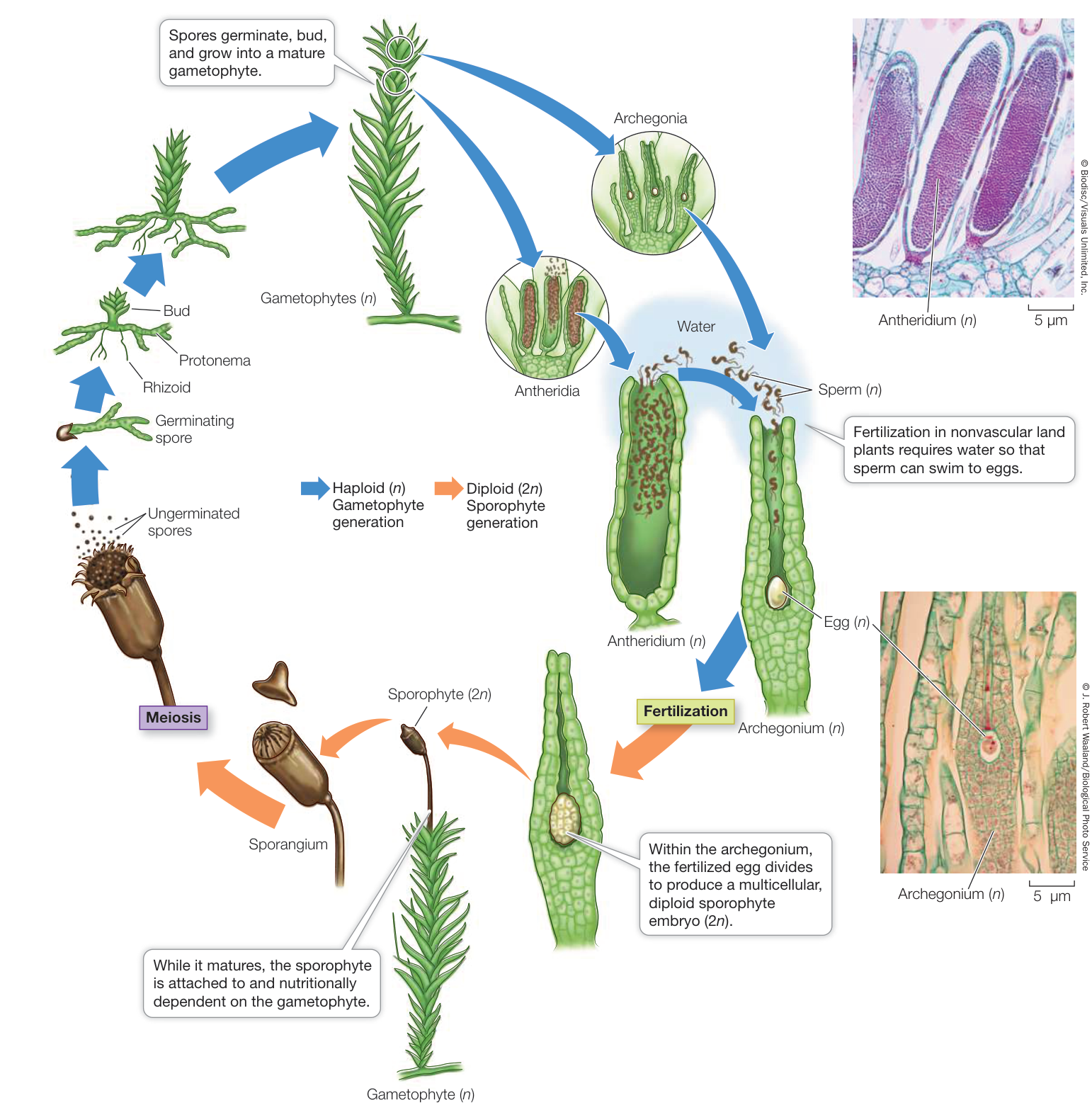
Figure 26.7 A Life Cycle Dependent on Water The life cycles of nonvascular land plants, exemplified here by that of a moss, are dependent on an external source of liquid water. The visible green structure of such plants is the gametophyte, which contains haploid archegonia and antheridia. Water carries sperm from the antheridia into an archegonium, inside which an egg is fertilized and grows into a multicellular, diploid sporangium.
Once sperm arrive at an egg, the nucleus of a sperm fuses with the egg nucleus to form a diploid zygote. Mitotic divisions of the zygote produce a multicellular, diploid sporophyte embryo. The sporophyte matures and produces a single sporangium, within which meiotic divisions produce spores and thus the next gametophyte generation.
Liverworts are the sister clade of the remaining land plants
There are about 9,000 species of liverworts. Most liverworts have leafy gametophytes (Figure 26.8A). Some have thalloid gametophytes: green, leaflike layers that lie flat on the ground (Figure 26.8B,C). The simplest liverwort gametophytes are flat plates of cells, a centimeter or so long, that produce antheridia or archegonia on their upper surfaces and rhizoids (rootlike filaments) on their lower surfaces.
Liverwort sporophytes are shorter than those of mosses and hornworts, rarely exceeding a few millimeters. The liverwort sporophyte has a stalk that raises the sporangium above the gametophyte. In most species, the stalk elongates by expansion of cells throughout its length. This elongation raises the sporangium above ground level, allowing the spores to be dispersed more widely. The sporangia of liverworts are simple: a globular sporangium wall surrounds a mass of spores. In some species of liverworts, spores are not released by the sporophyte until the surrounding sporangium wall rots. In other liverworts, however, the spores are thrown from the sporangium by structures that shorten and compress as they dry out. When the stress becomes sufficient, the compressed structure snaps back to its resting position, throwing spores in all directions.
Among the most familiar thalloid liverworts are species of the genus Marchantia. Marchantia is easily recognized by the characteristic structures on which its male and female gametophytes bear their antheridia and archegonia (see Figure 26.8C). Like most liverworts, Marchantia also reproduces asexually by simple fragmentation of the gametophyte. In addition, Marchantia and some other liverworts and mosses reproduce asexually by means of gemmae (singular gemma), which are lens-shaped clumps of cells (see Figure 26.8B). In a few liverworts, the gemmae are held in structures called gemmae cups, which promote dispersal of the gemmae by raindrops.
Water and sugar transport mechanisms emerged in the mosses
The most familiar of the nonvascular land plants are the mosses. These hardy little plants, of which there are about 15,000 species, are found in almost every terrestrial environment. They are often found on damp, cool ground, where they form thick mats (Figure 26.9). The mosses are the sister clade of the vascular plants plus the hornworts (see Figure 26.1B).
The mosses, along with the hornworts and vascular plants, share an advance over the liverworts in their adaptation to life on land: they have openings called stomata, which allow to enter the plant body and allow water and to leave it. Stomata are a synapomorphy of mosses and all other land plants except liverworts.
In mosses, the gametophyte begins its development following spore germination as a branched, filamentous structure called a protonema (see Figure 26.7). Although the protonema looks a bit like a filamentous green alga, this structure is unique to the mosses. Some of the filaments contain chloroplasts and are photosynthetic; others, called rhizoids, are nonphotosynthetic and anchor the protonema to the substrate. After a period of linear growth, cells close to the tips of the photosynthetic filaments divide rapidly in three dimensions to form buds. The buds eventually develop a distinct tip, or apex, and produce the familiar leafy moss shoot with leaflike structures arranged spirally. These leafy shoots produce antheridia or archegonia (see Figure 26.7).
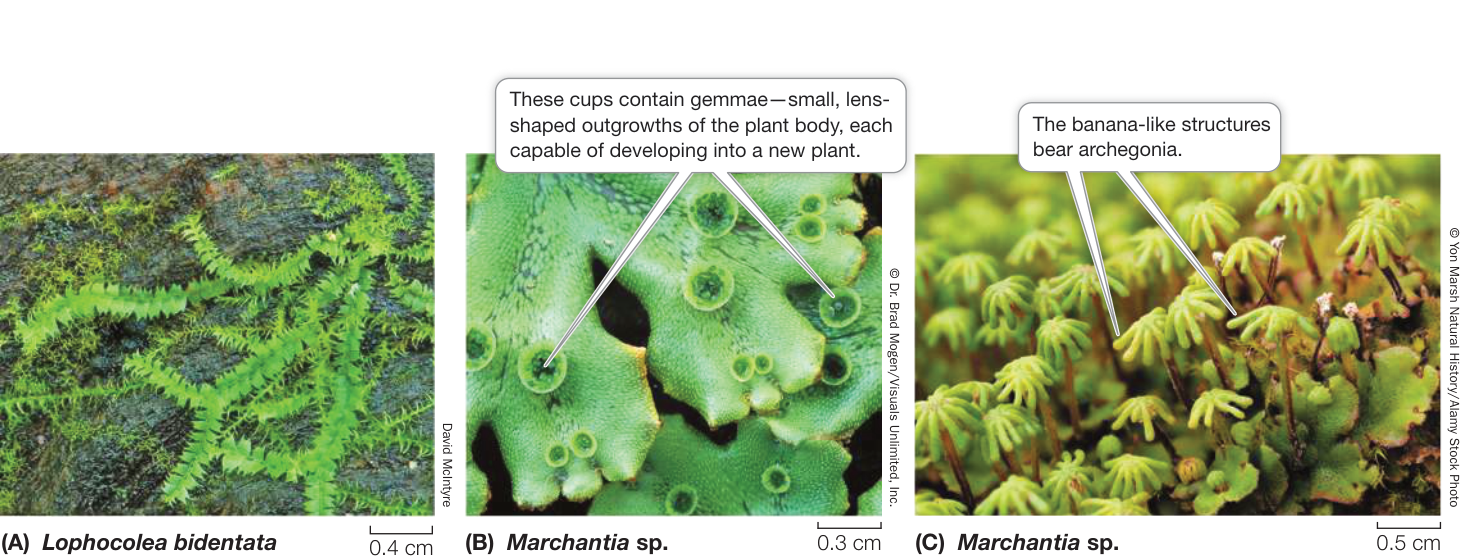
Figure 26.8 Liverwort Diversity (A) The gametophyte of a leafy liverwort. (B) The gametophytes of the thalloid liverwort Marchantia lie flat on the ground. (C) Marchantia gametophytes bearing archegonia.
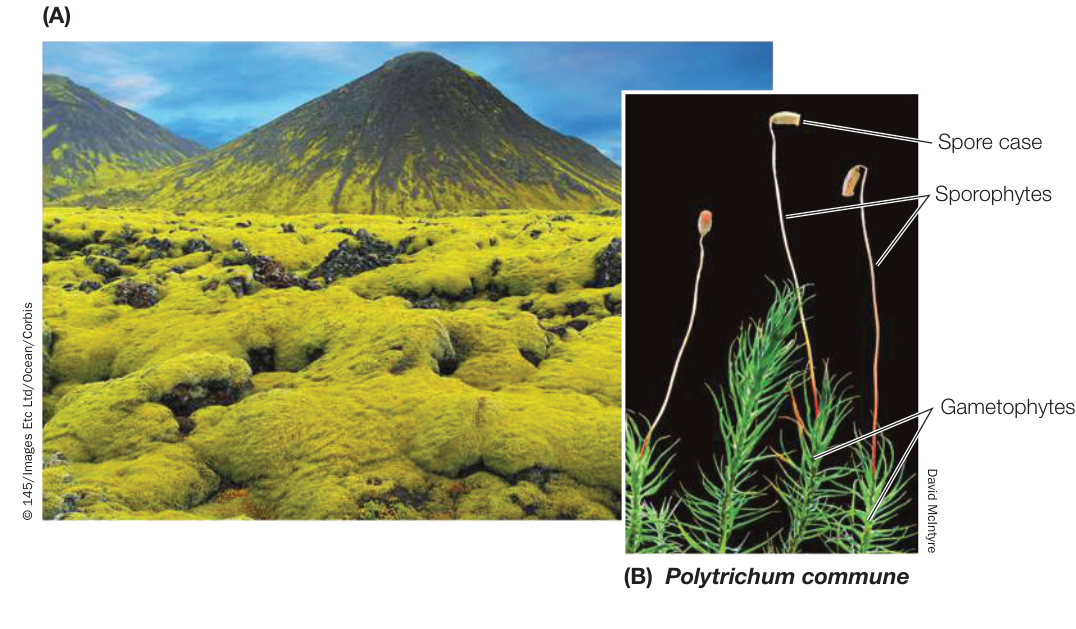
Figure 26.9 Mosses Often Cover the Ground in Dense Mats (A) Dense layers of moss carpet a field of solidified volcanic lava in Iceland. (B) A close-up view of moss. Q: When you see a growing moss, are you more likely to see the haploid or the diploid multicellular stage? Is your answer the same for a fern and for a flowering plant?
Some moss gametophytes are too large to transport enough water through their bodies solely by diffusion. Gametophytes and sporophytes of many mosses contain a type of cell called a hydroid, which dies and leaves a tiny channel through which water can travel. The hydroid is functionally similar to the tracheid, the characteristic water-conducting cell of the vascular plants, but it lacks lignin and the cell wall structure found in tracheids. The possession of hydroids and of a limited system for transport of sugar in some mosses shows that the term “nonvascular plant” is somewhat misleading when applied to these plants. Despite their simple system of internal transport, however, the mosses are not considered vascular plants because they lack tracheids or other components of xylem and phloem.
Mosses of the genus Sphagnum (Figure 26.10A) often grow in cool, swampy places, where the plants begin to decompose in water after they die. Rapidly growing upper layers of moss compress the deeper-lying, decomposing layers. Partially decomposed plant matter is called peat. In some parts of the world, people derive the majority of their fuel from peat bogs (Figure 26.10B). Sphagnum-dominated peatlands cover a total area approximately half the size of the United States—more than 1% of Earth’s surface. Millions of years ago, continued compression of peat composed primarily of other seedless plants gave rise to coal.
Hornworts have distinctive chloroplasts and stalkless sporophytes
The approximately 100 species of hornworts are so named because their sporophytes look like little horns (Figure 26.11).
Hornworts appear at first glance to be liverworts with very simple gametophytes. Their gametophytes are flat plates of cells a few cells thick.
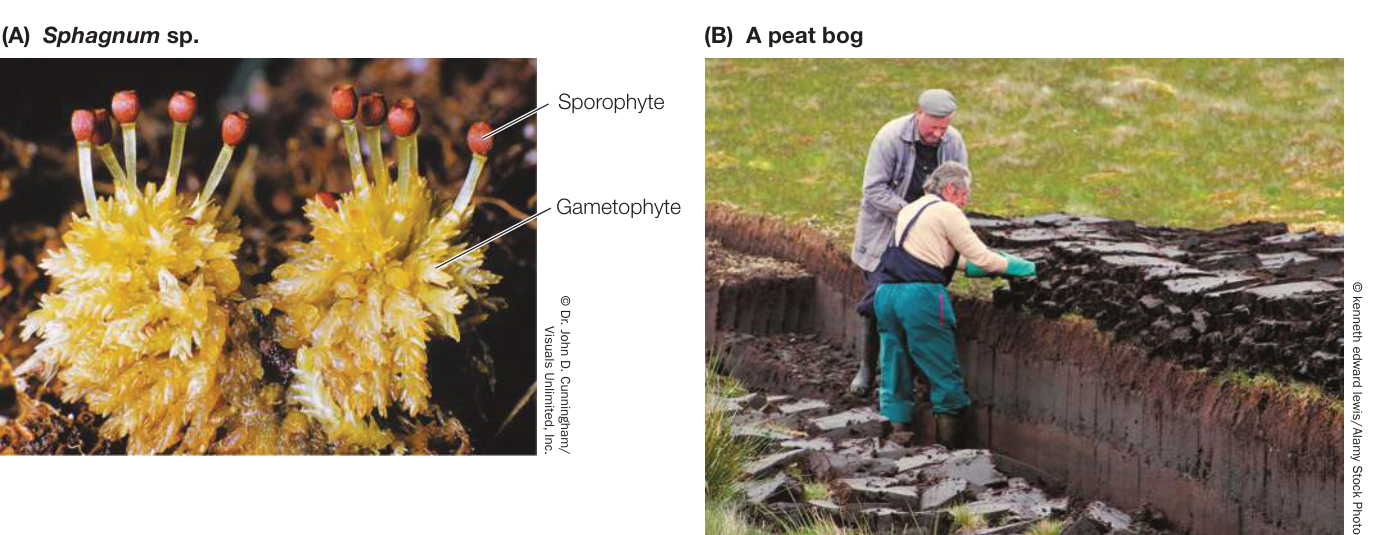
Figure 26.10 Sphagnum Moss (A) Sphagnum bogs are extremely dense growths of the moss shown here in a close-up view. (B) Workers mine a bog for peat, a fossil fuel formed from decomposing Sphagnum mosses.
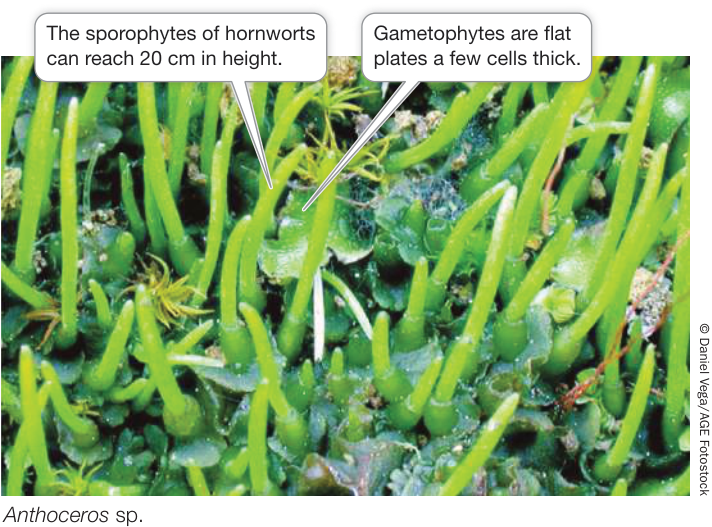
Figure 26.11 Hornworts Get Their Name from Their Hornlike Sporophytes Unlike liverworts and mosses, hornworts have sporophytes that are persistently green. The hornworts share this trait with the vascular plants.
Hornworts have several characteristics that distinguish them from liverworts and mosses. First, the cells of hornworts each contain a single large, platelike chloroplast, whereas the cells of the other two groups contain numerous small, lens-shaped chloroplasts. Second, of the sporophytes in all three groups, those of the hornworts come closest to being capable of growth without a set limit. Liverwort and moss sporophytes have a stalk that stops growing as the sporangium matures, so elongation of the sporophyte is strictly limited. The hornwort sporophyte, however, has no stalk, and it is persistently green (a trait shared with vascular plants). A basal region of the sporangium remains capable of indefinite cell division, continuously producing new spore-bearing tissue above. The sporophytes of some hornworts growing in mild and continuously moist conditions can become as tall as 20 centimeters. Eventually, however, the sporophyte’s growth is limited by its simple transport system.
Hornworts have a symbiotic relationship with cyanobacteria that promotes their growth by providing them with access to nitrogen, which is often a limiting resource. Internal cavities of hornworts that are filled with mucilage can dry out, forming air-filled cavities through which cyanobacteria can enter. Cyanobacteria such as Nostoc convert atmospheric nitrogen gas into a form usable by their host plant; in return, the hornwort provides the symbiont with carbohydrates.
Recap and Assess
The transition of plants to land required numerous adaptations, including the cuticle, stomata, gametangia, protected embryos, pigments, thick spore walls, and mutually beneficial associations with fungi. Nonvascular land plants rely on liquid water for reproduction.
- Explain what is meant by “alternation of generations.” Why do we not use this phrase for humans?
- Describe key adaptations of plants to the terrestrial environment, and describe the distribution of those adaptations among the liverworts, mosses, and hornworts.
New features appeared in plants as they continued to adapt to the terrestrial environment. One of the most important of these was vascular tissues, the characteristic that defines the vascular plants.
Vascular Tissues Led to Rapid Diversification of Land Plants
Learning Objectives
- 26.3.1 Detail the differences among tracheids, xylem, and phloem.
- 26.3.2 List five important structures in vascular plants that probably first arose in lycophytes.
- 26.3.3 Discuss the possible selective advantages of heterospory over homospory.
The first plants possessing vascular tissues did not arise until tens of millions of years after the earliest nonvascular plants had colonized the land. But once vascular tissues arose, their ability to transport water and food throughout the plant body allowed the vascular plants to spread to new terrestrial environments and to diversify rapidly.
Vascular tissues transport water and dissolved materials
The key synapomorphy of the vascular plants is a well-developed vascular system containing two types of tissues that are specialized for the transport of materials from one part of the plant to another. One type of vascular tissue, the xylem, conducts water and minerals from the soil to aerial parts of the plant. Because some of its cell walls contain a stiffening substance called lignin, xylem also provides support against gravity in the terrestrial environment. The other type of vascular tissue, the phloem, conducts the products of photosynthesis from sites where they are produced or released to sites where they are used or stored.
Connect the Concepts The vascular tissues of plants are described in detail in Chapters 32 and 33.
Although the vascular plants are an extraordinarily large and diverse group, one particular event was critical to their evolution. Sometime during the Paleozoic, probably in the mid-Silurian (430 mya), a new cell type—the tracheid—evolved in sporophytes of the earliest vascular plants. The tracheid is the principal water-conducting element of the xylem in all vascular plants except the angiosperms (flowering plants) and gnetophytes—and tracheids persist even in these groups, along with a more specialized and efficient system derived from them.
The evolution of tracheids set the stage for the complete and permanent invasion of land by plants. First, these cells provided a pathway for the transport of water and mineral nutrients from a source of supply to regions of need in the plant body. Second, the cell walls of tracheids, stiffened by lignin, provided rigid structural support. This support is a crucial factor in a terrestrial environment because it allows plants to grow upward and thus compete for sunlight. A taller plant can intercept more direct sunlight (and thus conduct photosynthesis more readily) than a shorter plant, which may be shaded by the taller one. Increased height also improves the dispersal of spores.
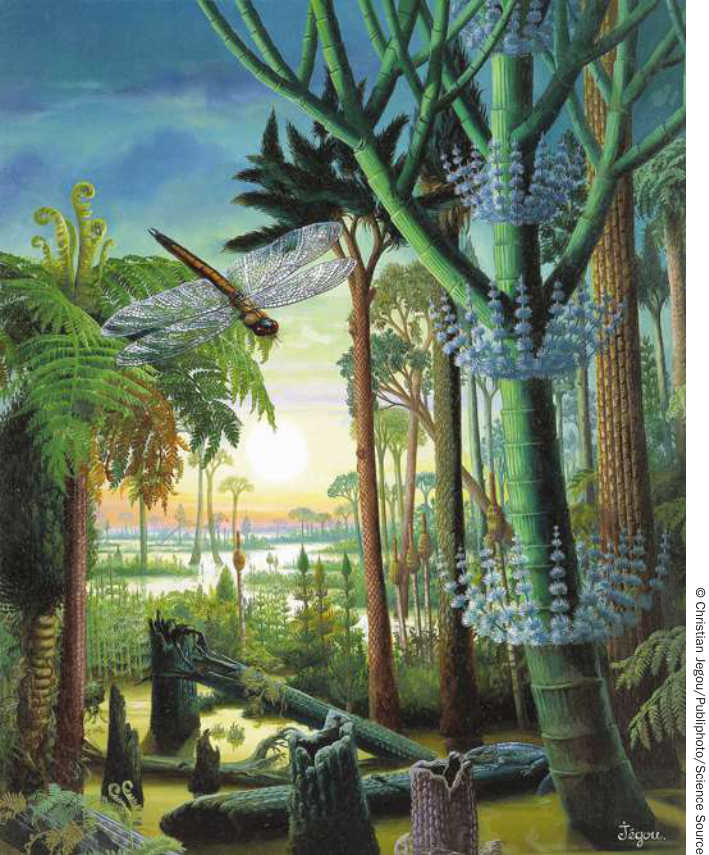
Figure 26.12 Artist’s Reconstruction of an Ancient Forest Forests of the Carboniferous were characterized by abundant vascular plants such as club mosses, ferns, and horsetails, some of which reached heights of 40 meters. Huge flying insects (see the opening of Chapter 23) thrived in these forests, which are the source of modern coal deposits. Figure 26.12 Artist’s Reconstruction of an Ancient Forest Forests of the Carboniferous were characterized by abundant vascular plants such as club mosses, ferns, and horsetails, some of which reached heights of 40 meters. Huge flying insects (see the opening of Chapter 23) thrived in these forests, which are the source of modern coal deposits.
The vascular plants featured another evolutionary novelty: a branching, independent sporophyte. A branching sporophyte body can produce more spores than an unbranched body, and it can develop in complex ways. The sporophyte of a vascular plant is nutritionally independent of the gametophyte at maturity. Among the vascular plants, the sporophyte is the large and obvious plant that one normally pays attention to in nature, in contrast to the relatively small, dependent sporophytes typical of most nonvascular land plants.
Diversification of vascular plants made land more suitable for animals
The initial absence of herbivores (plant-eating animals) on land helped make the first vascular plants successful. By the late Silurian (about 425 mya), the proliferation of land plants made the terrestrial environment more hospitable to animals. Arthropods, vertebrates, and other animals moved onto land only after vascular plants became established there.
Trees of various kinds appeared in the Devonian and dominated the landscape of the Carboniferous (359–299 mya). Forests of lycophytes (club mosses) up to 40 meters tall, along with horsetails and tree ferns, flourished in the tropical swamps of what would become North America and Europe (Figure 26.12). Plant parts from those forests sank into the swamps and were gradually covered by layers of sediment. Over millions of years, as the buried plant material was subjected to intense pressure and elevated temperatures, it was transformed into coal. Today that coal powers nearly 40% of the world’s electricity generation. The world’s coal deposits, although huge, are not infinite, and humans are burning coal deposits at a far faster rate than they were produced.
In the subsequent Permian, when the continents came together to form Pangaea, the continental interior became warmer and drier. The 200-million-year reign of the lycophyte–fern forests came to an end as they were replaced by forests of early gymnosperms.
The closest relatives of vascular plants lacked roots
The closest relatives of living vascular plants belonged to several extinct groups called rhyniophytes (Figure 26.13). The rhyniophytes were among a very few types of land plants in the Silurian. The landscape at that time probably consisted mostly of bare ground, with mats of nonvascular plants and stands of rhyniophytes in low-lying moist areas. Early versions of the structural features of the vascular plant groups appeared in the rhyniophytes of that time. These shared features strengthen the case for the origin of all vascular plants from a common nonvascular land plant ancestor.
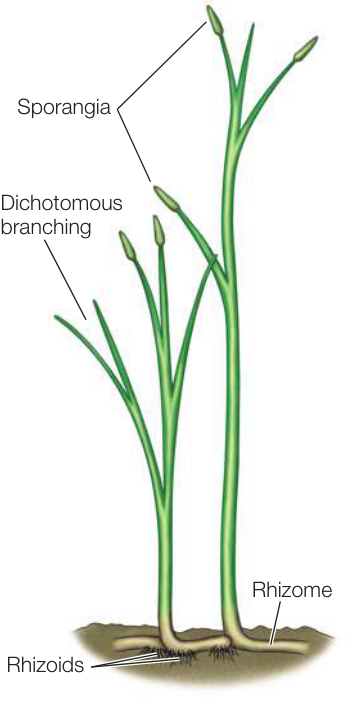
Figure 26.13 An Ancient Relative of the Vascular Plants The extinct rhyniophyte Aglaophyton major lacked roots and leaves. It had a central column of xylem running through its stems but no true tracheids. A horizontal underground stem called a rhizome anchored the plant. The dichotomously branching aerial stems were less than 50 centimeters tall. Some stems were topped by sporangia. Figure 26.13 An Ancient Relative of the Vascular Plants The extinct rhyniophyte Aglaophyton major lacked roots and leaves. It had a central column of xylem running through its stems but no true tracheids. A horizontal underground stem called a rhizome anchored the plant. The dichotomously branching aerial stems were less than 50 centimeters tall. Some stems were topped by sporangia.
Rhyniophytes did not have roots. They were apparently anchored in the soil by horizontal portions of stem called rhizomes, which bore water-absorbing unicellular filaments called rhizoids. These plants also bore aerial branches, and sporangia—homologous to the sporangia of mosses—were found at the tips of those branches. The branching pattern of rhyniophytes was dichotomous; that is, the apex (tip) of the shoot divided to produce two equivalent new branches, with each pair of branches diverging at approximately the same angle from the original stem.
Lycophytes are sister to the other vascular plants
The club mosses and their relatives, the spike mosses and quillworts, are collectively called lycophytes. The lycophytes are the sister group to the remaining vascular plants (see Figure 26.1B). There are relatively few (just over 1,200) surviving species of lycophytes.
The lycophytes have true roots that branch dichotomously. The arrangement of vascular tissue in their stems is simpler than that in other vascular plants. They bear simple leaflike structures called microphylls, which are arranged spirally on the stem (Figure 26.14A). Growth in lycophytes comes entirely from apical cell division. Branching in the stems, which is also dichotomous, occurs by division of an apical cluster of dividing cells.
The sporangia of many club mosses are aggregated in conelike structures called strobili (singular strobilus) (see Figure 26.14A), which are clusters of spore-bearing microphylls attached to the end of the stem. Other club mosses lack strobili and bear their sporangia on (or adjacent to) the upper surfaces of specialized microphylls.
Horsetails and ferns constitute a clade
The horsetails and ferns were once thought to be only distantly related. As a result of genomic analyses, we now know that they form a clade, the monilophytes. In the monilophytes—as in the seed plants, to which they are the sister group (see Figure 26.1B)—there is differentiation between a main stem and side branches (including the leaves derived from these branches). This pattern contrasts with the dichotomous branching characteristic of the lycophytes and rhyniophytes, in which each split gives rise to two branches of similar size.
Today there are only about 15 species of horsetails, all in the genus Equisetum. The horsetails have reduced true leaves that form in distinct whorls (circles) around the stem (Figure 26.14B). Horsetails are sometimes called “scouring rushes” because rough silica deposits found in their cell walls once made them useful for cleaning. They have true roots that branch irregularly. Horsetails have a large sporophyte and a small gametophyte, each independent of the other.
The first ferns appeared during the Devonian. Today this group comprises more than 12,000 species. Analyses of gene sequences indicate that a few species traditionally allied with ferns may in fact be more closely related to horsetails than to ferns. Nonetheless, the majority of ferns form a monophyletic group.
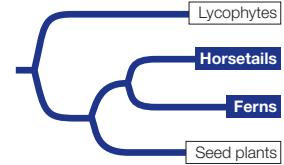
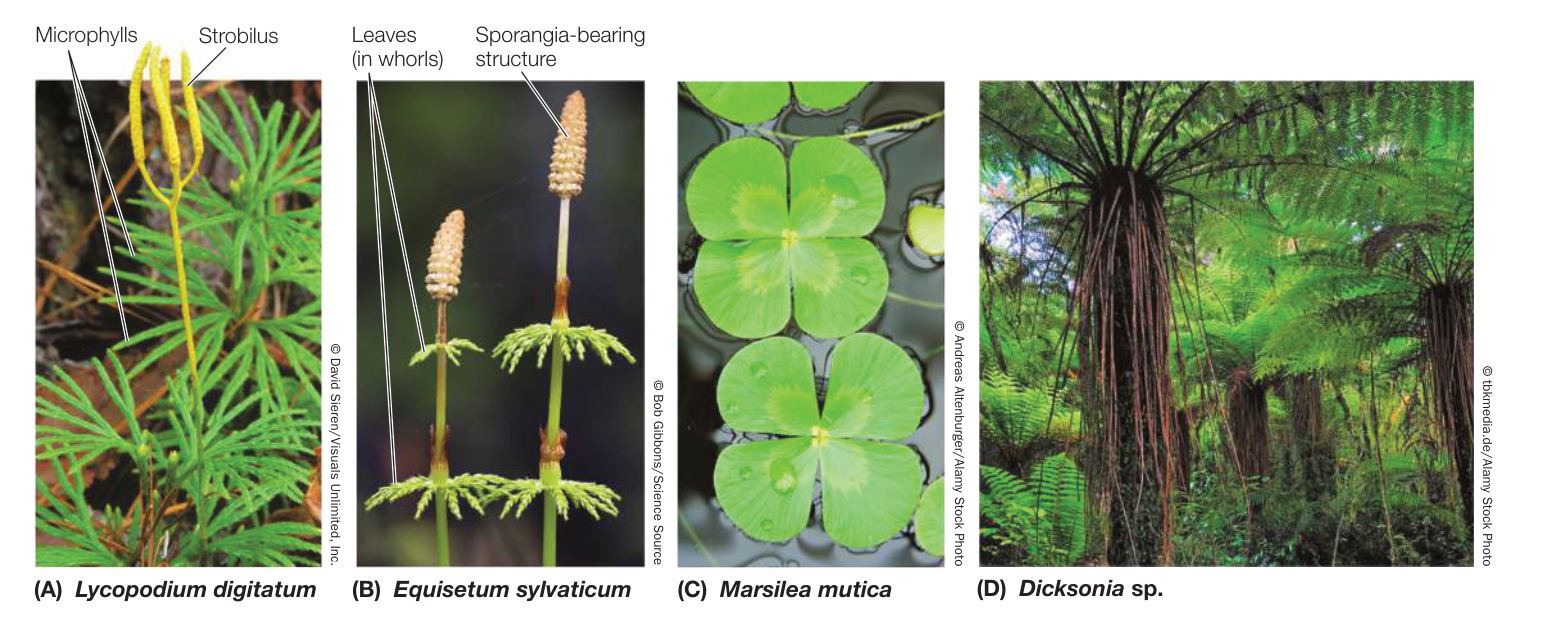
Figure 26.14 Lycophytes and Monilophytes (A) Club mosses have microphylls arranged spirally on their stems. Strobili are visible at the tips of these stems. (B) Horsetails have a distinctive growth pattern in which the stem grows in segments above each whorl of leaves. These are fertile shoots with sporangia-bearing structures at the apex. (C) The floating leaves of a water fern. (D) Tree ferns dominate this forest in Oparara Basin Kahurangi National Park in New Zealand.
Although most ferns are terrestrial, a few species live in shallow fresh water (Figure 26.14C). Terrestrial ferns are characterized by large leaves with branching vascular strands (Figure 26.14D). Some fern leaves become climbing organs and may grow to be as long as 30 meters.
In the alternating generations of a fern, the gametophyte is small, delicate, and short-lived, but the sporophyte can be very large and can sometimes survive for hundreds of years (Figure 26.15). Ferns require liquid water for the transport of the male gametes to the female gametes, so most ferns inhabit shaded, moist woodlands and swamps. The sporangia of ferns typically are borne on a stalk in clusters called sori (singular sorus). The sori are found on the undersurfaces of the leaves, sometimes covering the entire undersurface and sometimes located at the edges.
Vascular plants branched out
Several features that were new to the vascular plants evolved in lycophytes and monilophytes. Roots probably had their evolutionary origins as a branch, either of a rhizome or of the above-ground portion of a stem. These branches presumably penetrated the soil and branched further. The underground portion could anchor the plant firmly, and even in this primitive condition it could absorb water and minerals.
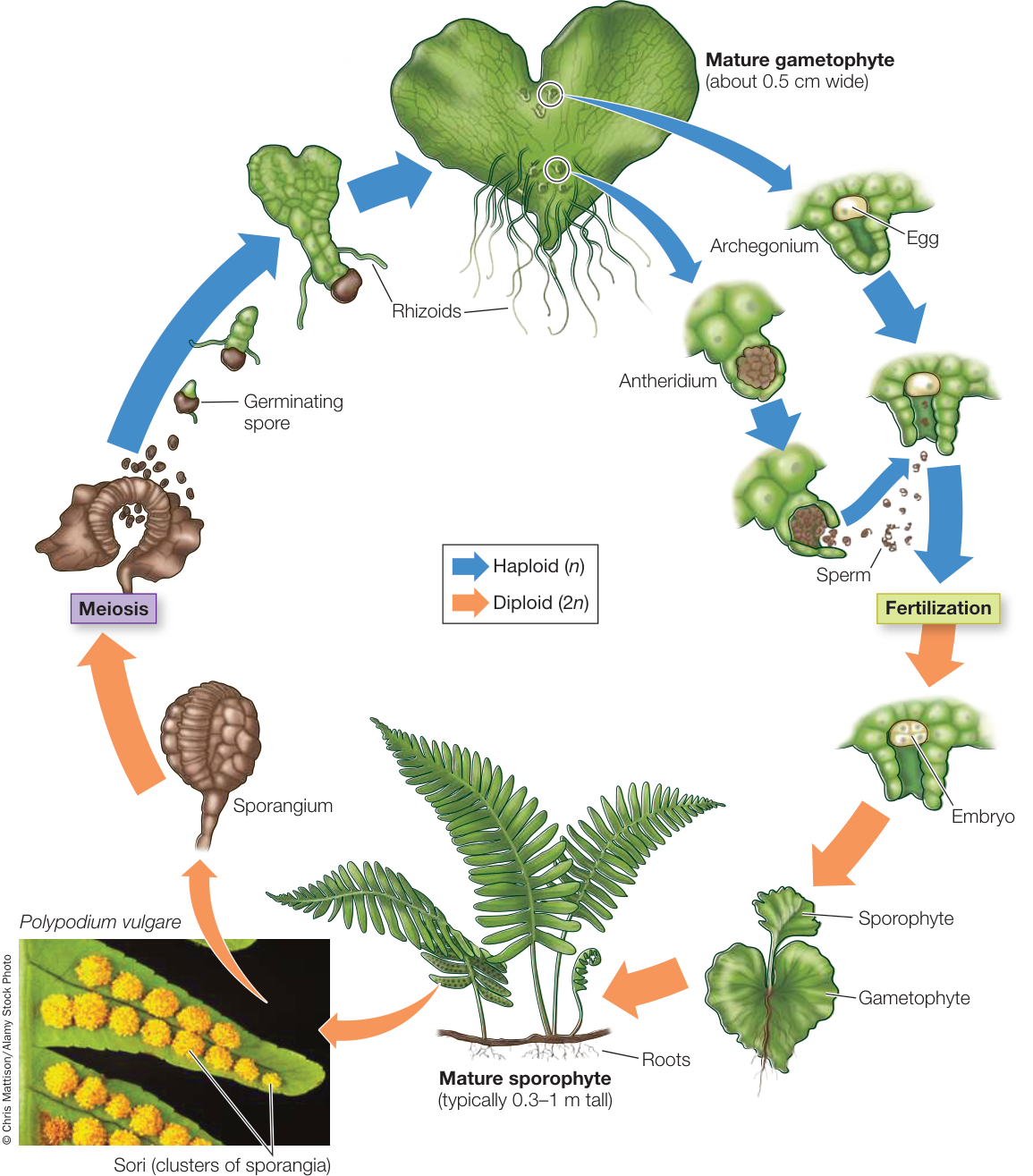
Figure 26.15 Life Cycle of a Fern The most conspicuous stage in the fern life cycle is the mature diploid sporophyte, shown at the bottom of this diagram. The inset shows sori on the underside of a fern leaf. Each sorus contains many spore-producing sporangia.
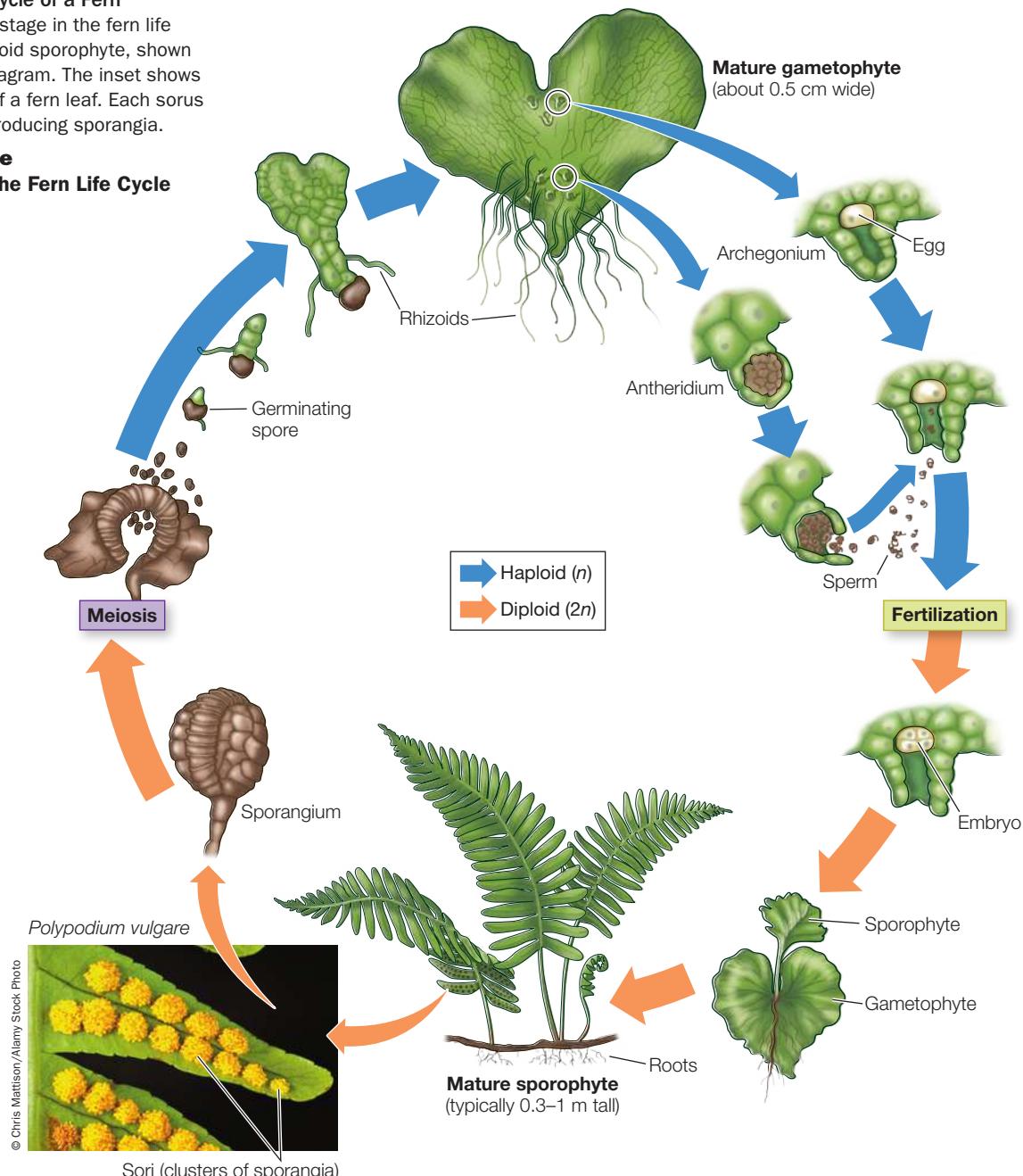
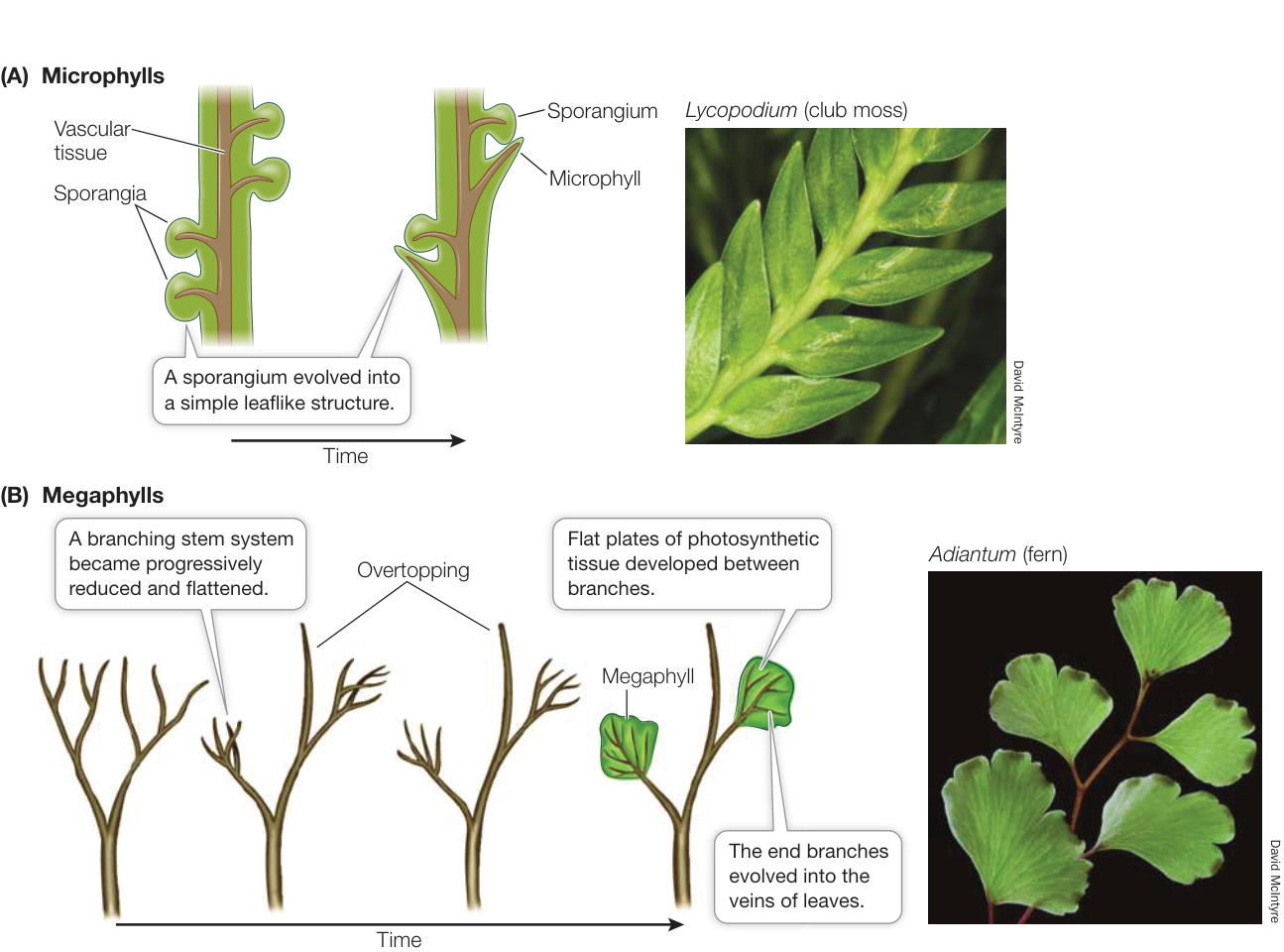
Figure 26.16 Evolution of Leaves (A) Microphylls are thought to have evolved from sterile sporangia. (B) The megaphylls of monilophytes and seed plants may have arisen as photosynthetic tissue developed between branch pairs that were “left behind” as dominant branches overtopped them.
The microphylls of lycophytes were probably the first leaflike structures to evolve among the vascular plants. Microphylls are usually small and only rarely have more than a single vascular strand, at least in existing species. Some biologists believe that microphylls had their evolutionary origins as sterile sporangia (Figure 26.16A). The principle characteristic of a microphyll is a vascular strand that departs from the vascular system of the stem in such a way that the structure of the stem’s vascular system is scarcely disturbed. This pattern was evident even in the lycophyte trees of the Carboniferous, many of which had microphylls many centimeters long.
The monilophytes and seed plants constitute a clade called the euphyllophytes (eu, “true,” + phyllos, “leaf”). An important synapomorphy of the euphyllophytes is overtopping, a growth pattern in which one branch differentiates from and grows beyond the others (Figure 26.16B). Overtopping would have given these plants an advantage in the competition for light, enabling them to shade their dichotomously branching competitors. The overtopping growth of the euphyllophytes also allowed a new type of leaflike structure to evolve. This larger, more complex leaf is called a megaphyll. The megaphyll is thought to have arisen from the flattening of a portion of a branching stem system that exhibited overtopping growth. This change was followed by the development of photosynthetic tissue between the members of overtopped groups of branches, which had the advantage of increasing the photosynthetic surface area of those branches.
The first megaphylls, which were very small, appeared in the Devonian. We might expect that evolution should have led swiftly to the appearance of more and larger megaphylls because of their greater photosynthetic capacity. However, it took some 50 million years, until the Carboniferous, for large megaphylls to become common. Why should this have been so, especially given that other advances in plant structure were taking place during that time?
According to one theory, the high concentration of in the atmosphere during the Devonian reduced selection for the stomata that allow a leaf to take up for use in photosynthesis. With more available, fewer stomata were needed. In the Devonian, larger leaves with a limited number of stomata would have absorbed heat from sunlight, but they would have been unable to lose heat fast enough by evaporation of water through their stomata. The resulting overheating would have been lethal. Recent research has supported this hypothesis, indicating that larger megaphylls evolved only as concentrations dropped over millions of years (Figure 26.17).
Connect the Concepts As explained in Key Concept 33.3, stomata are pores in the epidermis of plants that open and close to regulate uptake of into the plant and guard against excessive diffusion of water out of the plant. Various environmental factors trigger the opening and closing of stomata, including light, the level in photosynthetic cells of the plant, and water availability.
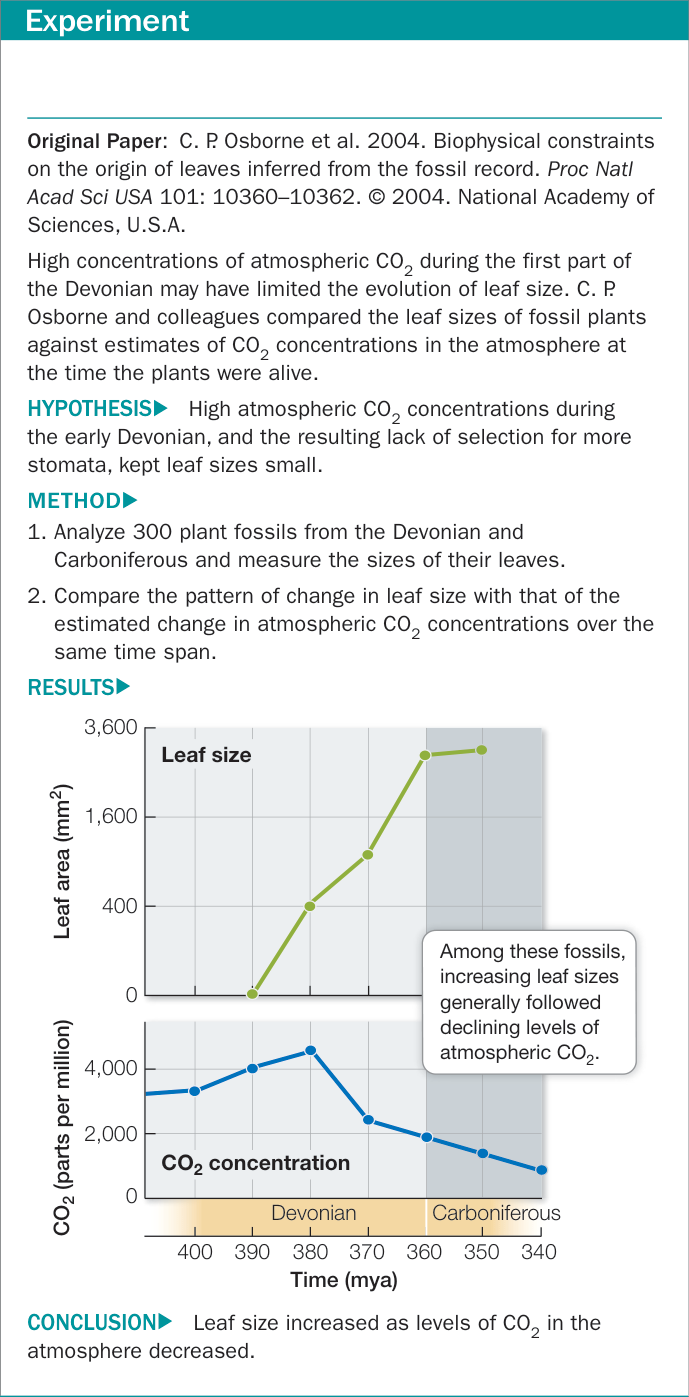
Figure 26.17 Atmospheric CO2 Concentrations and the Evolution of Megaphylls
Heterospory appeared among the vascular plants
In the lineages of present-day, seedless vascular plants that are most similar to their ancestors, the gametophyte and the sporophyte are independent, and both are usually photosynthetic. The spores produced by the sporophyte are of a single type and develop into a single type of gametophyte that bears both female and male reproductive organs (see Figure 26.15). Such plants, which bear a single type of spore, are said to be homosporous (Figure 26.18A).
A system with two distinct types of spores evolved somewhat later. Plants of this type are said to be heterosporous
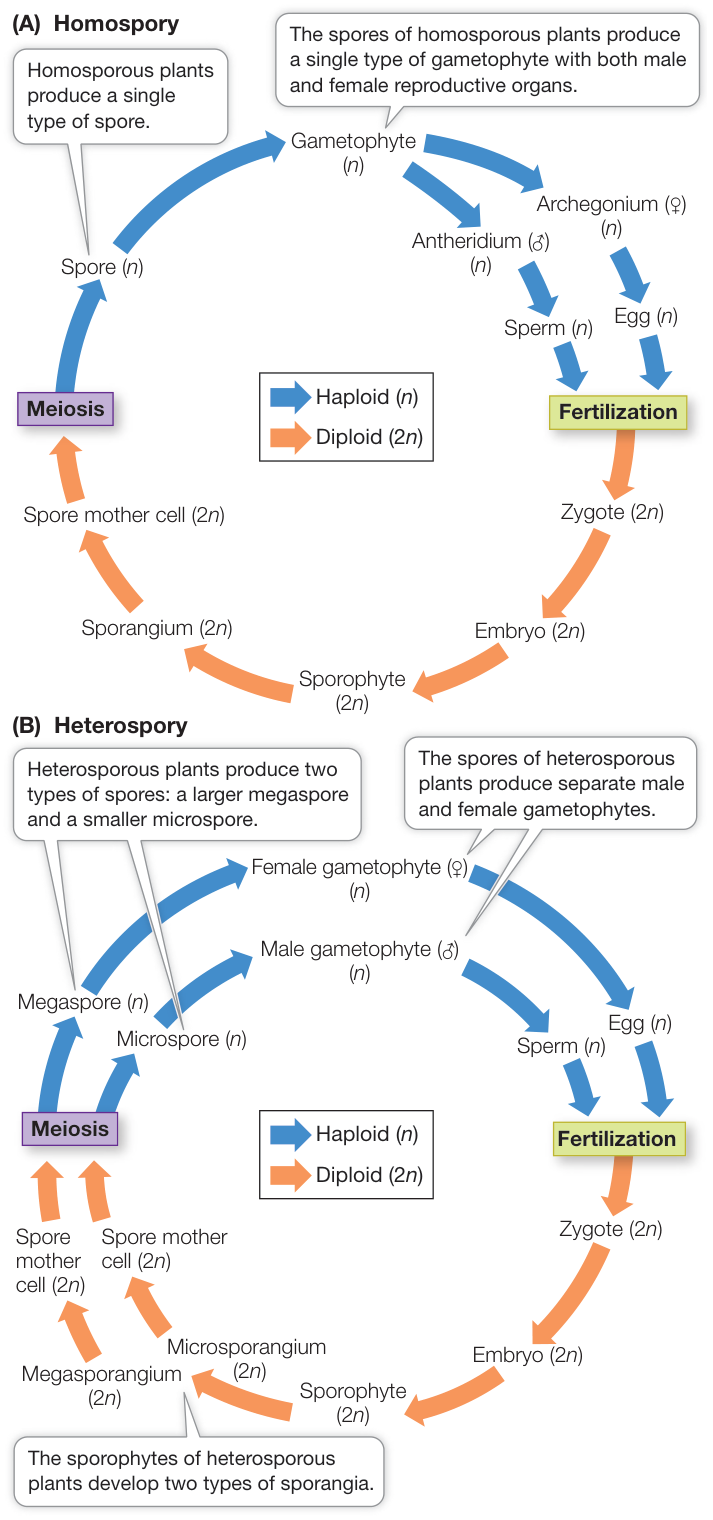
Figure 26.18 Homospory and Heterospory (A) Homosporous plants bear a single type of spore. Each gametophyte has two types of sex organs, antheridia (male) and archegonia (female). (B) Heterosporous plants bear two types of spores that develop into distinctly male and female gametophytes.
(Figure 26.18B). In heterospory, one type of spore—the megaspore—develops into a specifically female gametophyte (or megagametophyte) that produces only eggs. The other type, the microspore, is smaller and develops into a male gametophyte (or microgametophyte) that produces only sperm. The sporophyte produces megaspores in small numbers in megasporangia and microspores in large numbers in microsporangia. Heterospory affects not only the spores and the gametophytes but also the sporophyte plant itself, which must develop two types of sporangia.
The earliest vascular plants were all homosporous, but heterospory evidently evolved several times independently among later groups of vascular plants. The fact that heterospory evolved repeatedly suggests that it affords selective advantages. What advantages does heterospory provide? Heterospory allows the production of many small microspores, which are easily transported from plant to plant. Heterospory also results in the production of a few large megaspores in large megasporangia, which can provide nutrition and protection for the developing embryo. With this division, plants can increase the opportunities for long-distance cross-fertilization, and at the same time increase the chances for survival of the developing embryo.
Recap and Assess
Vascular plants are characterized by a vascular system specialized for the transport of materials from one part of the plant to another. A new type of cell, the tracheid, marked the origin of this group. Later evolutionary events included the appearance of roots, leaves, and heterospory.
- How do the vascular tissues xylem and phloem serve the vascular plants?
- Describe the evolution and distribution of different kinds of leaves and roots among the vascular plants.
- Explain the concept of heterospory. How does heterospory provide selective advantages over homospory?
All of the vascular plant groups we have discussed thus far disperse by means of spores. The embryos of these seedless vascular plants develop directly into sporophytes, which either survive or die, depending on environmental conditions. The spores of some seedless plants may remain dormant and viable for long periods, but the embryos of seedless plants are relatively unprotected. Greater protection of the embryo evolved in the seed plants, which we will consider in the next chapter.
▶ Investigating LIFE
QA Can we grow new biofuels that capture carbon from Earth’s atmosphere?
Before we consider the practicality of biofuel production, let’s look at how much carbon is tied up in all the major groups of life on Earth (Figure 26.19). In 2018, biologists estimated the gigatons of carbon (GtC) that are incorporated into each major group. All of life represents about 500 GtC. Of the total, about 90% of carbon (450 GtC) is in plants, and most of the biomass of plants is present on land. The uncertainty of the estimate is relatively low for plants (the 95% confidence limits are within 1.2-fold of the estimate, or 375–540 GtC), but the uncertainty of the estimates for the other groups is higher, especially for bacteria and archaea. Despite the broad confidence limits in these estimates, it is clear that most life on Earth is green, and that it is this plant life that sustains (directly or indirectly) almost all other life on Earth. Some plants (such as corn) are currently grown for biofuel (ethanol) pro-duction, but the input of fossil fuels in corn agriculture is very high. Are there more practical and sustainable sources of biofuels?
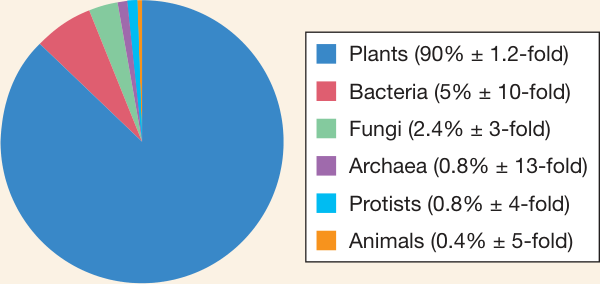
Figure 26.19 Most Life on Earth Is Green This pie chart shows the estimated percentages of carbon found in the major groups of living organisms on Earth; 95% confidence limits are shown as x-fold of the estimates. (After Y. M. Bar-On et al. 2018. Proc Natl Acad Sci USA 115: 6506–6511; with updates from Y. M. Bar-On and R. Milo. 2019. Nat Rev Microbiol 17: 199–200.)
Future directions
What if we could grow biofuels that captured carbon from the atmosphere, while using minimal fossil fuels to grow the plants? Algae appear to provide the most likely source for such sustainable biofuels. The primary commercial limitations to growing algae for biofuels include the need to establish efficient growing facilities, water needs, costs of fertilizers, costs and difficulties associated with harvest and refining, and labor expenses. As we explored in Investigating Life: Can Chlorella Algae Be Grown in Municipal Sewage Wastewater for Biofuel Production?, considerable research is being conducted on ways to reduce these costs, such as growing algae for biofuels in municipal wastewater. Many new methods for growing and harvesting algae are being developed (Figure 26.20). Once some of the technical difficulties have been overcome, it is possible that commercial production of biofuels from algae will provide a significant, sustainable source of energy for humans.
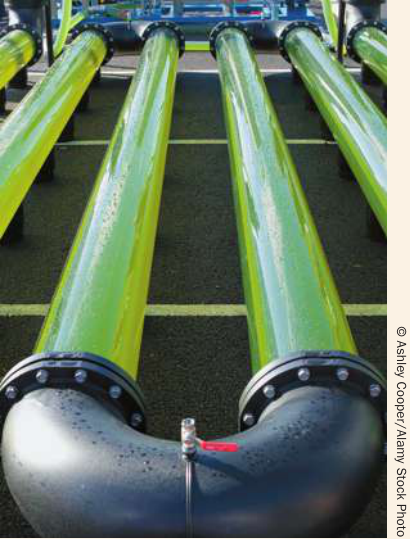
Figure 26.20 Biodiesel from Algae In this algal cultivation system for biofuel production, algae are grown in tubes of clear plastic.

Visual Summary
Courtesy of the U.S. Coast Guard
You should be able to relate each summary to the adjacent figures. If you go to this visual summary in Achieve, you can follow links to figures, animations, activities, and simulations that will help you consolidate the material.
Primary Endosymbiosis Produced the First Photosynthetic Eukaryotes
- Primary endosymbiosis gave rise to chloroplasts and the subsequent diversification of Plantae. The descendants of the first photosynthetic eukaryote include glaucophytes, red algae, several groups of green algae, and land plants, all of which contain chlorophyll a.
- Streptophytes include the land plants and two groups of green algae. Green plants, which include the streptophytes and the remaining green algae, are characterized by the presence of chlorophyll b (in addition to chlorophyll a).
- Land plants, also known as embryophytes, arose from an aquatic green algal ancestor related to today’s stoneworts. Land plants develop from embryos that are protected by parental tissue.
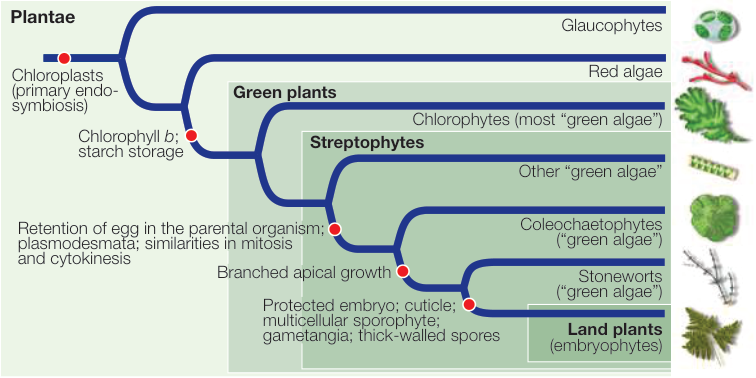
Figure 26.1 Questions
- What kind of organism became endosymbiotic in plants and gave rise to chloroplasts?
- Photosynthesis uses energy to convert carbon dioxide and water into carbohydrates and oxygen. What is the reverse of this process called?
Key Adaptations Permitted Plants to Colonize Land
- The acquisition of a cuticle, stomata, gametangia, a protected embryo, protective pigments, thick spore walls with a protective polymer, and a mutualistic association with fungi were all adaptations of land plants to terrestrial life.
- All land plant life cycles feature alternation of generations, in which a multicellular diploid sporophyte alternates with a multicellular haploid gametophyte.
- The nonvascular land plants comprise the liverworts, mosses, and hornworts. These groups lack specialized vascular tissues for the conduction of water or nutrients through the plant body, and their life cycles depend on liquid water.
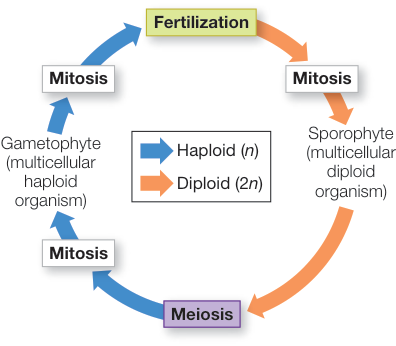
Figure 26.6
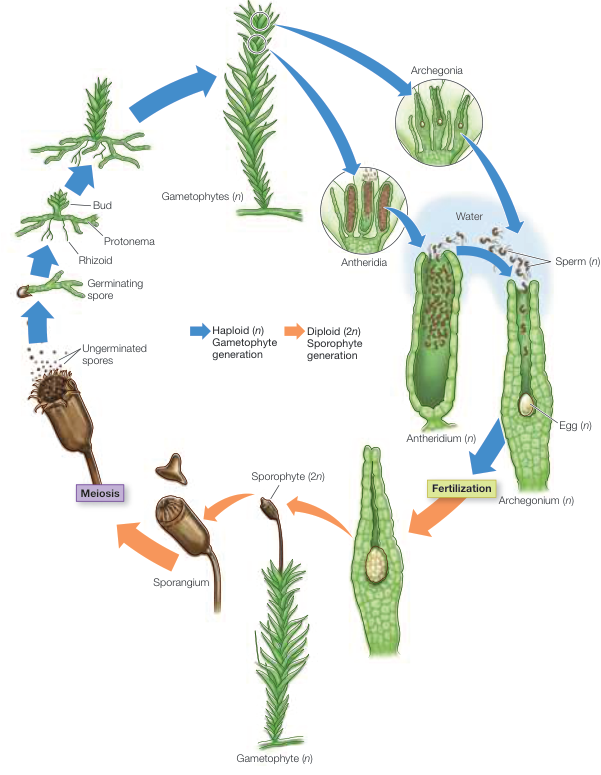
Figure 26.7 Questions
- How do each of the adaptations to terrestrial life that we have just listed convey an advantage to life on land?
- When you look at a moss, which is most obvious—the haploid gametophyte generation, or the diploid sporophyte generation?
- What part of the moss is the diploid sporophyte generation?
Vascular Tissues Led to Rapid Diversification of Land Plants
- The vascular plants have a vascular system consisting of xylem and phloem that conducts water, minerals, and products of photosynthesis through the plant body.
- Among living vascular plant groups, the lycophytes (club mosses and relatives) have only small, simple leaflike structures (microphylls). True leaves (megaphylls) are found in monilophytes (which include horsetails and ferns). The monilophytes and the seed plants are collectively called euphyllophytes.
- Roots may have evolved either from rhizomes or from stems. Microphylls probably evolved from sterile sporangia, and megaphylls may have resulted from the flattening and reduction of a portion of a stem system with overtopping growth.
- The earliest-diverging groups of vascular plants are homosporous, but heterospory—the production of distinct megaspores and microspores—has evolved several times.
Questions
- In the late Paleozoic, forests of giant club mosses, ferns, and horsetails covered large areas of land. What are these groups like today? Why do you think this is the case?
- What is the advantage of heterospory over homospory that has facilitated heterospory’s repeated evolution?
- How is a fern gametophyte different from the gametophyte of a seed plant?
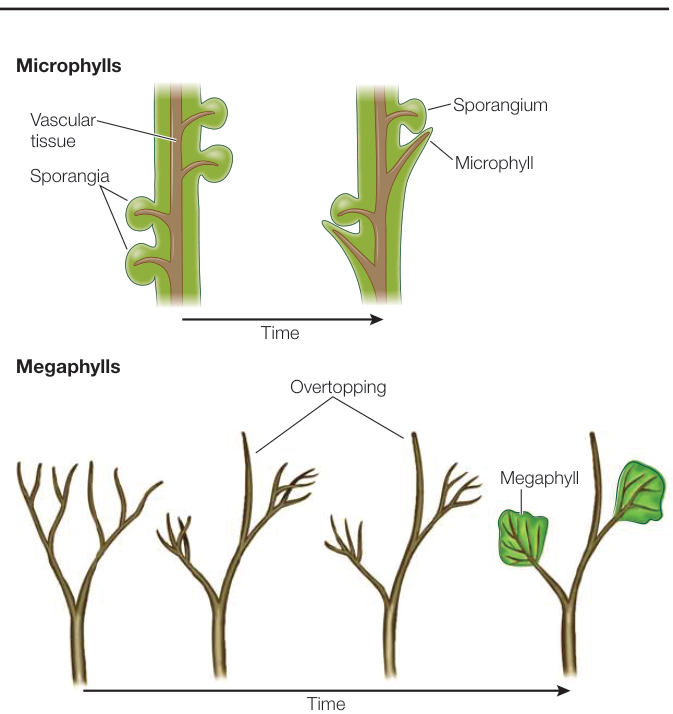
Figure 26.16
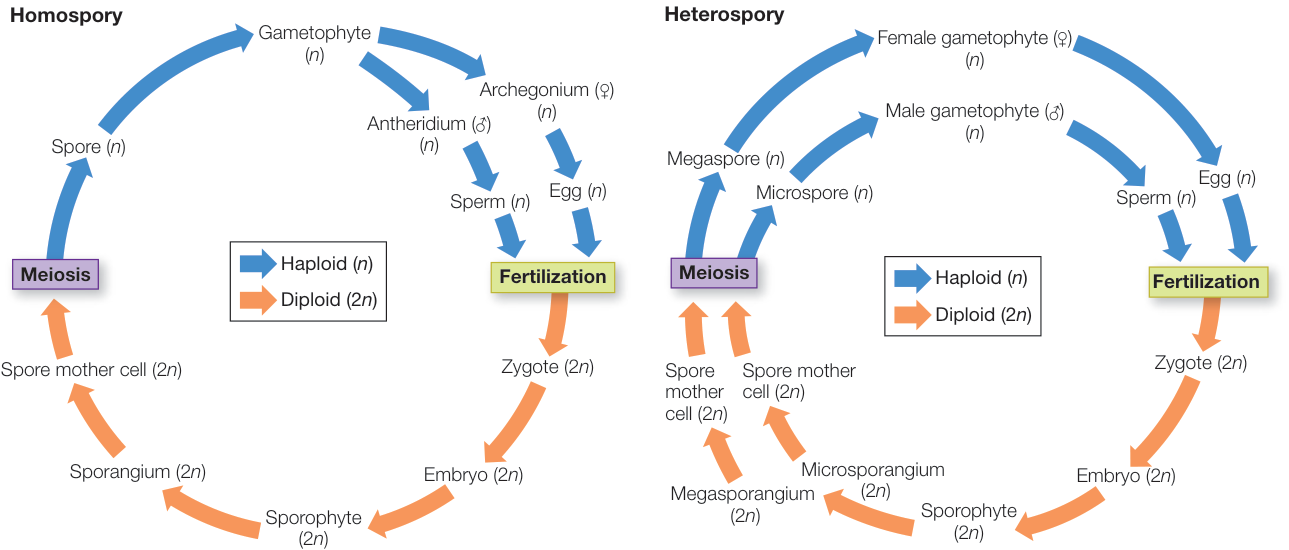
Figure 26.18