Chapter 27The Evolution of Seed Plants
© Zoomimi Atletic/Alamy Stock Photo
Key Concepts
27.1 Pollen, Seeds, and Wood Contributed to the Success of Seed Plants
27.2 Once Dominant Gymnosperms Still Thrive in Some Environments
27.3 Flowers and Fruits Led to Increased Diversification of Angiosperms
27.4 Plants Play Critical Roles in Terrestrial Ecosystems
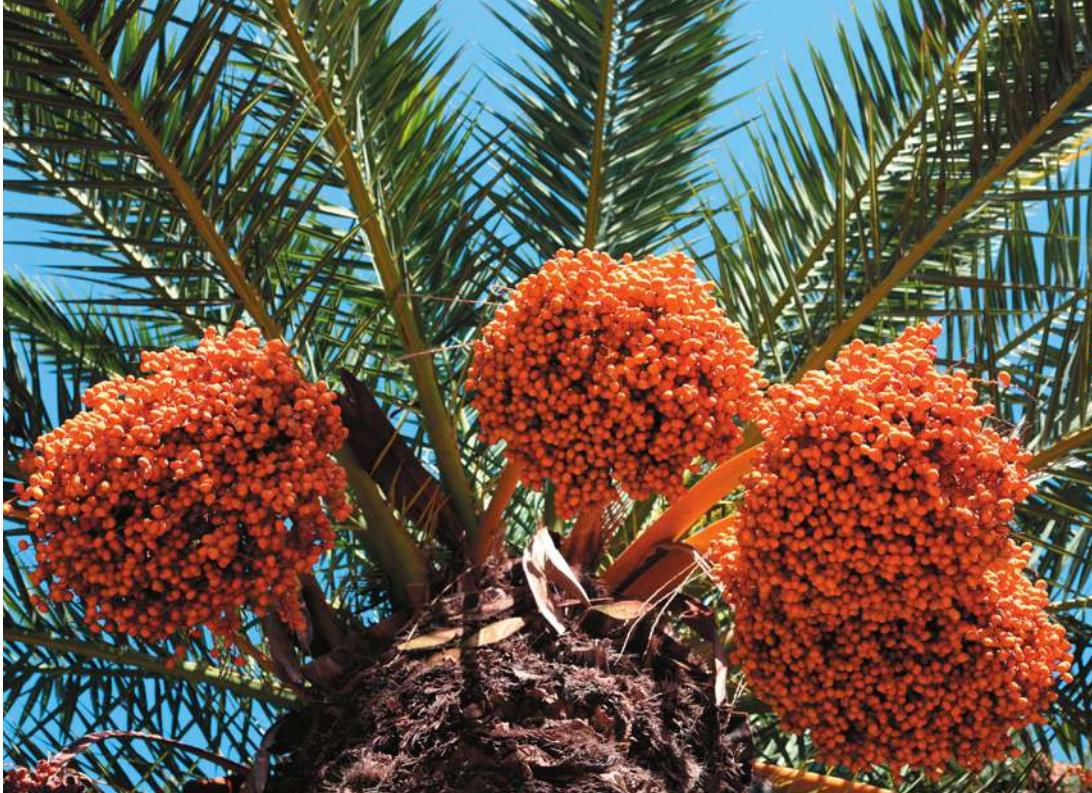
Phoenix dactylifera, the date palm, is widely cultivated for its edible fruit.
Investigating Life: Brought Back from Extinction by a Seed
The Judean date is a fruit that was once much prized, admired for its nutritional and medicinal properties. This fruit was the source of the “honey” in the biblical “land of milk and honey.” Today that ancient strain of date is gone. Or is it?
About 2,000 years ago, a seed developed in a fruit on a Judean date palm. The fruit that contained that seed found its way to a storeroom in the fortress Masada in Judea. In 73 CE a band of Jewish zealots involved in a revolt against Rome fled to this refuge with their families and provisions. The fortress was eventually sacked and left in ruins.
Twenty centuries later, archeologists working in Masada discovered the date seed that was long ago stored in the Masada fortress and confirmed its age. The previous record for seed survival and germination was 1,300 years, held by lotus seeds that recently germinated under the care of scientists in China. But botanist Elaine Solowey succeeded in making the 2,000-year-old date seed germinate! For 10 years the seedling has thrived, and is now mature and producing pollen.
Seeds are important structures for the evolutionary survival of plants. Each seed protects an enclosed plant embryo from environmental extremes through what may be a very long and stressful resting period—in the case of the Judean date, many centuries in a harsh desert. Such hardness has contributed to making seed plants the predominant plants on Earth. All of today’s forests are dominated by seed plants.
So will the resurrected palm serve as the parent of a new population of Judean dates, thus bringing that genotype back from extinction? Unfortunately, it cannot do so alone, because date palms have separate sexes, and the single known individual is a male that can produce only pollen. However, the search is on for other ancient seeds of Judean dates from archeological sites, and it is hoped that one of those will grow into a female plant that can produce new fruit and seeds. Even if a female Judean date seed cannot be found, the male Judean date’s pollen can be used to introduce valuable genes back into other, still living, strains of dates.
QA How long can most seeds survive, and why is seed dormancy important? (Find the answer on page 620.)
Pollen, Seeds, and Wood
Learning Objectives
- 27.1.1 Explain how the evolution of pollen enabled seed plants to thrive in terrestrial environments.
- 27.1.2 List three major advantages of having seeds.
- 27.1.3 Describe the earliest group of woody plants and list two advantages of woody plants.
By the late Devonian, more than 360 million years ago, Earth was home to a great variety of land plants, many of which we discussed in Chapter 26. The land plants shared the hot, humid terrestrial environment with insects, spiders, centipedes, and early tetrapods. These plants and animals evolved together, each acting as agents of natural selection on the other. In the Devonian, a new innovation appeared when some plants developed extensively thickened woody stems. Among the first plants with this adaptation were seedless vascular plants called progymnosperms, all species of which are now extinct. The progymnosperms included many large trees.
Two other innovations, pollen and seeds, arose in the seed plants. Pollen increases reproductive opportunities in a terrestrial environment, and seeds provide a secure and lasting structure that protects the dormant stage of the embryo. A plant embryo may safely wait within its seed (in some cases for many years, or even centuries) until conditions are right for germination.
The earliest fossil evidence of seed plants is found in late Devonian rocks. Like the progymnosperms, these now-extinct seed ferns were woody. They possessed fernlike foliage but had seeds attached to their leaves. By the end of the Permian, other groups of seed plants had become dominant (Figure 27.1). Today’s living seed plants fall into two major groups, the gymnosperms (such as pines and cycads) and the hugely diverse group known as the angiosperms (flowering plants).
Features of the seed plant life cycle protect gametes and embryos
In Key Concept 26.2 we described a major trend in land plant evolution: the sporophyte became less dependent on the gametophyte, which became smaller in relation to the sporophyte.
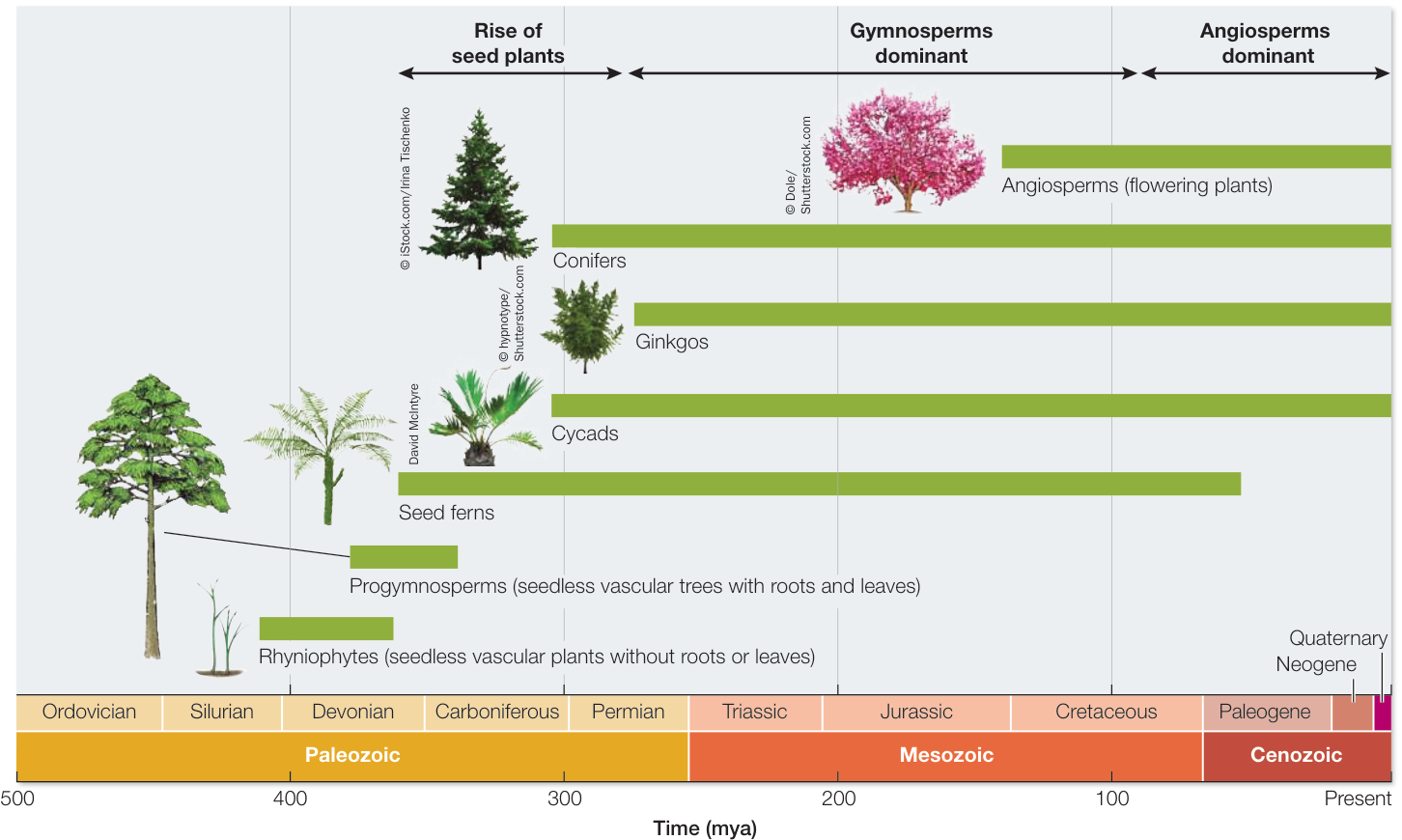
Figure 27.1 The Fossil Record of Seed Plant Evolution Woody growth evolved in the seedless progymnosperms. The now-extinct seed ferns had woody growth, fernlike foliage, and seeds attached to their leaves. New lineages of seed plants arose during the Carboniferous, but the earliest known fossils of flowering plants are from near the Jurassic–Cretaceous boundary. The flowering plants have dominated most terrestrial environments through the Cenozoic. (mya, millions of years ago.)
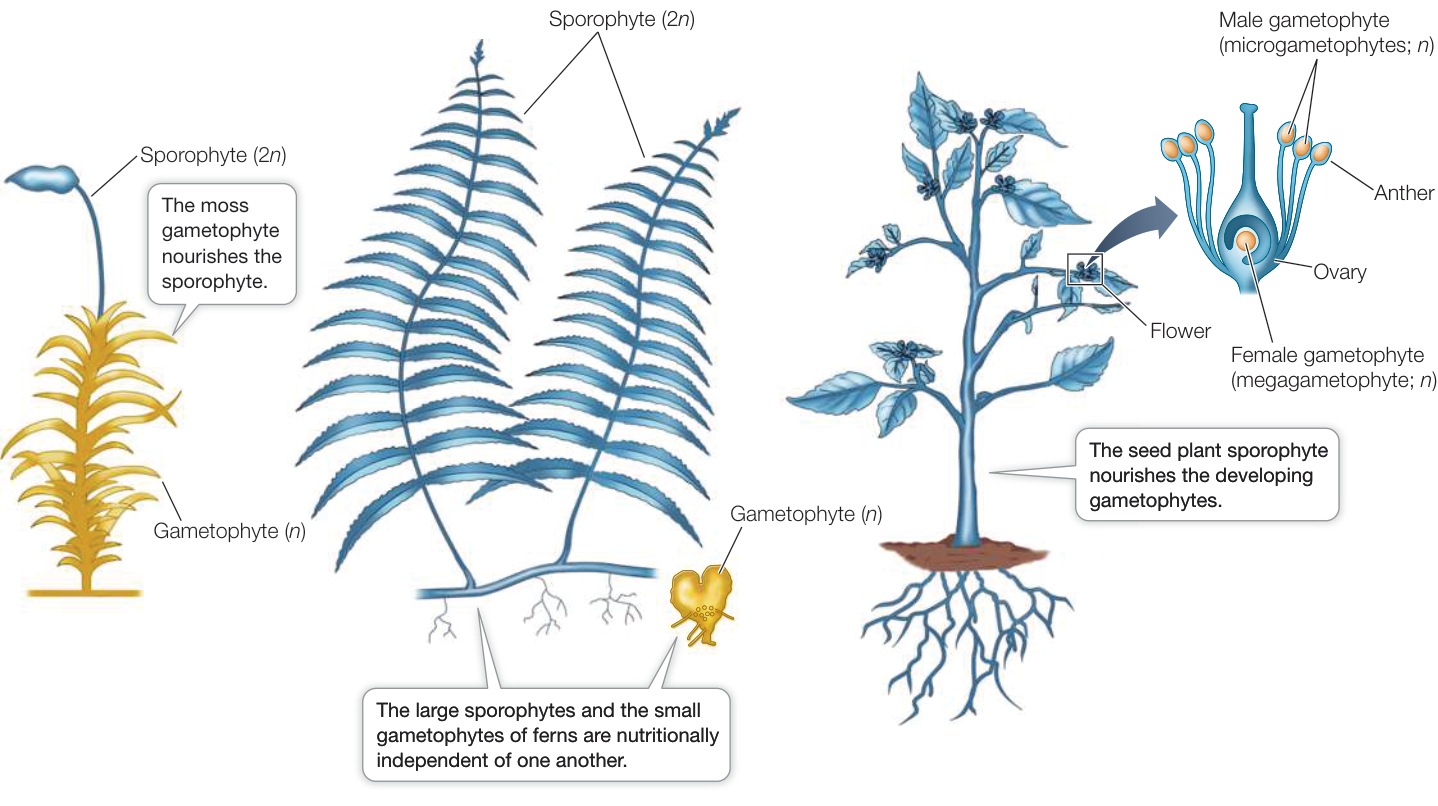
Figure 27.2 The Relationship between Sporophyte and Gametophyte In the course of plant evolution, the gametophyte (brown) has been reduced and the sporophyte (blue) has become more prominent.
This trend continued with the seed plants, whose gametophyte generation is reduced even further than it is in the ferns (Figure 27.2). The haploid seed plant gametophyte develops partly or entirely while attached to and nutritionally dependent on the diploid sporophyte.
Among the seed plants, only the earliest-diverging groups of gymnosperms (including modern cycads and ginkgos) have swimming sperm. Even in these groups, sperm is transferred via pollen grains, so fertilization does not require liquid water outside the plant body. The evolution of pollen, along with the advent of seeds, gave seed plants the opportunity to colonize drier areas and spread over the terrestrial environment.
Seed plants are heterosporous (see Figure 26.18B)—that is, they produce two types of spores, one that becomes a male gametophyte (microgametophyte) and one that becomes a female gametophyte (macrogametophyte). They form separate microsporangia and megasporangia on structures that are grouped on short stems, such as the stamens and carpels of an angiosperm flower.
Within the microsporangium, the meiotic products are microspores. Within its spore wall, a microspore divides mitotically one or a few times to form a multicellular male gametophyte, also known as a single grain of pollen. Pollen grains are released from the microsporangium to be distributed by wind or by an animal pollinator (Figure 27.3). As in seedless land plants, the spore wall that surrounds the pollen grain contains a substance called sporopollenin, the most chemically resistant biological compound known. Sporopollenin protects the pollen grain against
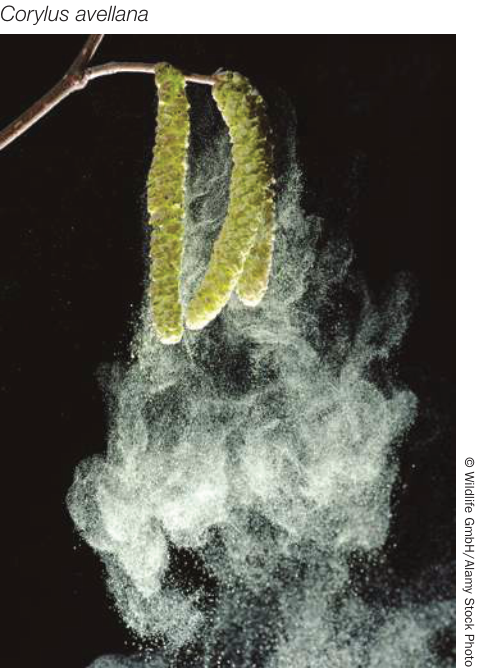
Figure 27.3 Blown on the Wind Pollen grains are the male gametophytes of seed plants. The male flowers of this hazel tree release pollen-containing spores that are dispersed by the wind and may land near female gametophytes of other hazel plants.
Media Clip 27.1 Pollen Transfer by Wind Life12e.com/mc27.1
dehydration and chemical damage—another advantage in terms of survival in the terrestrial environment.
In contrast to the microspores, the megaspores of seed plants are not shed. Instead, they develop into female gametophytes within the megasporangia. These female gametophytes are dependent on the sporophyte for food and water.
In most seed plant species, only one of the meiotic products in a megasporangium survives. The surviving haploid nucleus divides mitotically, and the resulting cells divide again to produce a multicellular female gametophyte. The megasporangium is surrounded by sterile sporophytic structures, which form an integument that protects the megasporangium and its contents. Together, the megasporangium and integument constitute the ovule, which will develop into a seed after fertilization.
The arrival of a pollen grain at an appropriate landing point, close to a female gametophyte on a sporophyte of the same species, is called pollination. A pollen grain that reaches this point develops further. It produces a slender pollen tube that elongates and digests its way toward the female gametophyte (Figure 27.4). When the tip of the pollen tube reaches the female gametophyte, sperm are released from the tube and fertilization occurs.
The resulting diploid zygote divides repeatedly, forming an embryonic sporophyte. After a period of embryonic development, growth is temporarily suspended (the embryo enters a dormant stage). The end product at this stage is the multicellular seed.
The seed is a complex, well-protected package
A seed contains tissues from three generations (Figure 27.5). A seed coat develops from the integument—the tissues of the diploid sporophyte parent that surround the megasporangium. Within the megasporangium is haploid tissue from the female gametophyte, which contains a supply of nutrients for the developing embryo. (This tissue is fairly extensive in most gymnosperm seeds. In angiosperm seeds it is greatly reduced, and nutrition for the embryo is supplied instead by a tissue called endosperm.) In the center of the seed is the third generation, the embryo of the new diploid sporophyte.
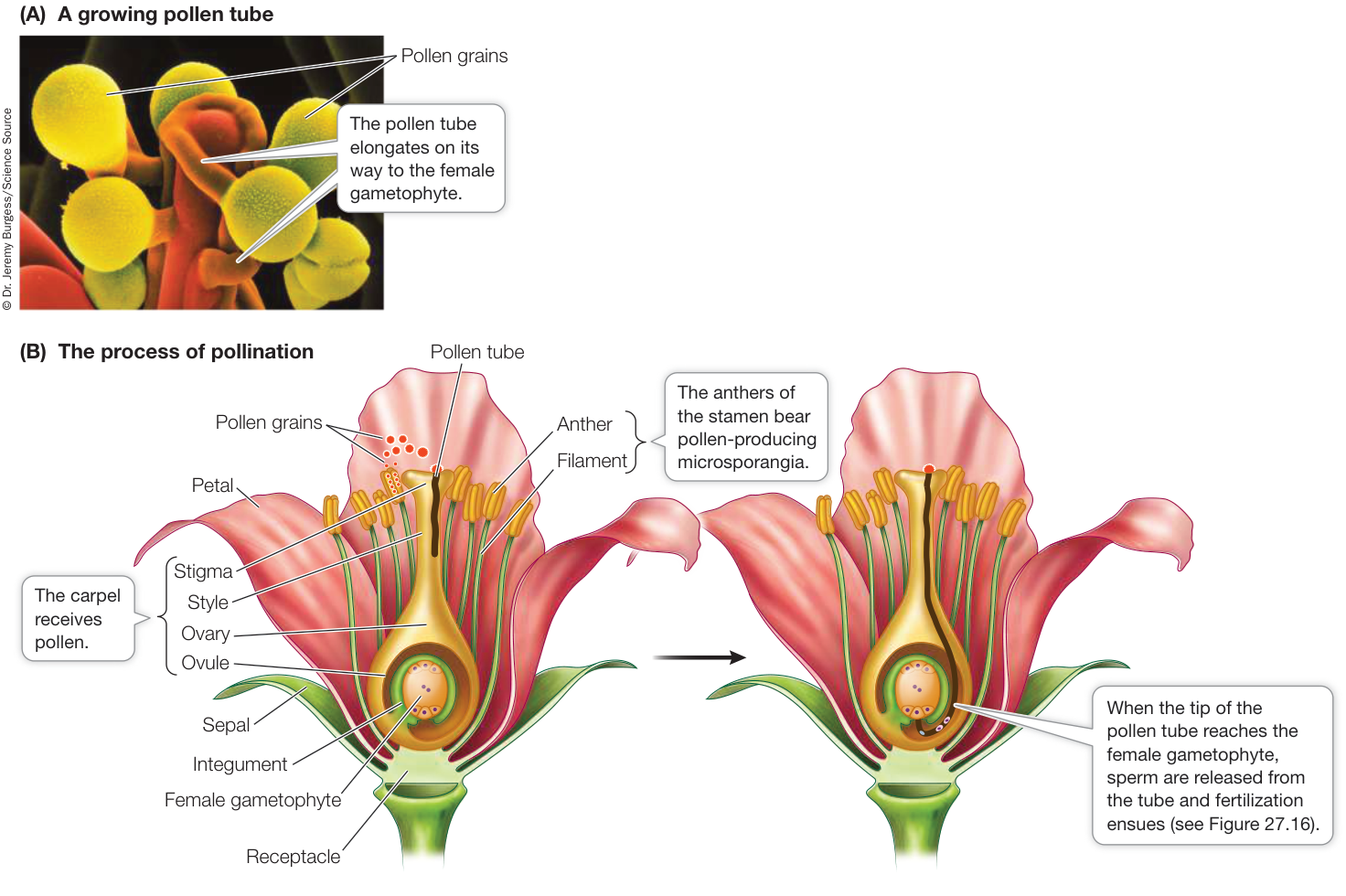
Figure 27.4 Pollination Is a Hallmark of the Seed Plants In most seed plants, a pollen tube grows from the pollen grain to the female gametophyte, where sperm are released and fertilize the egg within the ovule. Once fertilization takes place, the ovule can develop into a seed (see Figure 27.5). (A) Scanning electron micrograph of a pollen tube growing in the flower of an angiosperm, the prairie gentian. (B) The process of pollination is diagrammed for a generalized angiosperm flower.
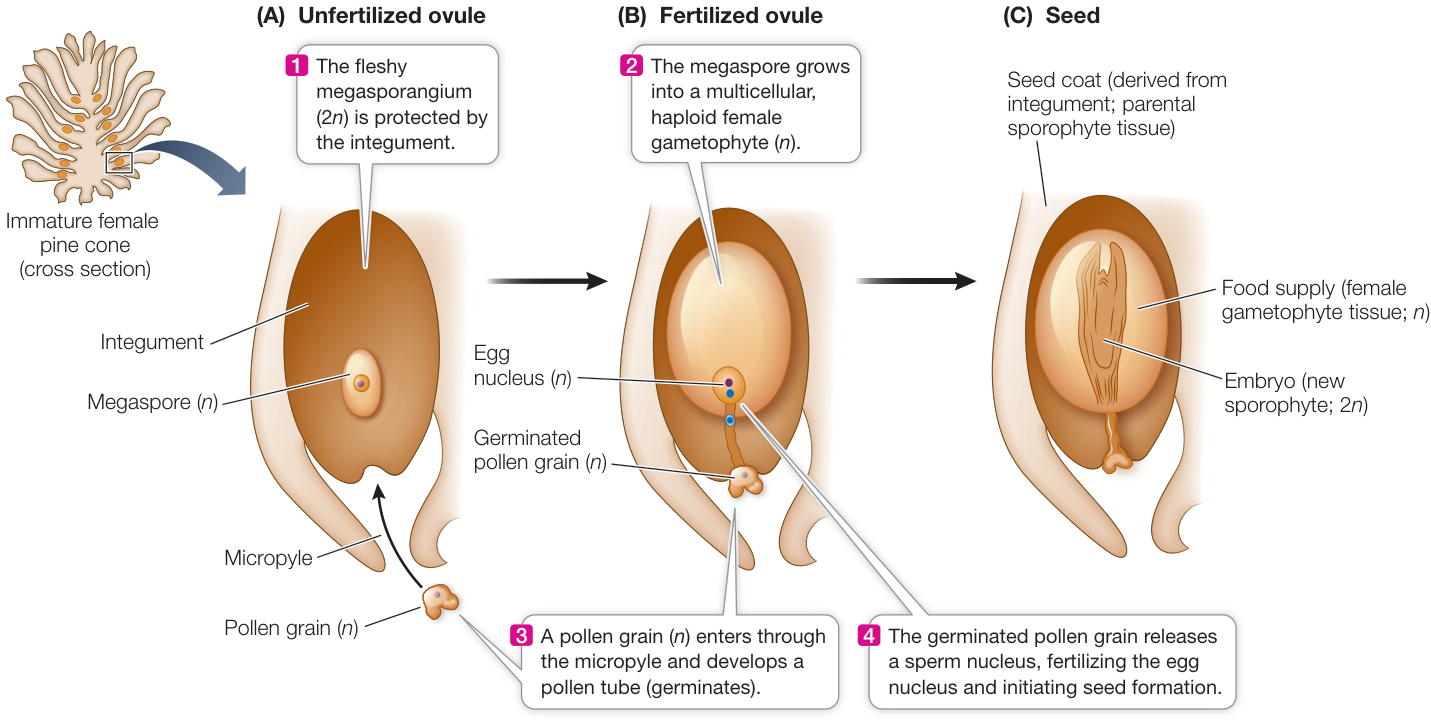
Figure 27.5 A Seed Develops These cross sections diagram the development of the ovule into a seed in a gymnosperm (Pinus sp.). Angiosperm seed development has differences (e.g., angiosperm integuments have two layers rather than one, and the angiosperm embryo is nourished by specialized tissue called endosperm) but follows the same principle (compare Figures 27.8 and 27.16). (A) The haploid megaspore is nourished by tissues of the parental sporophyte (the diploid megasporangium). (B) The mature megaspore is fertilized by a pollen grain that penetrates the integument, germinates (grows a pollen tube; see Figure 27.4A), and releases a sperm nucleus. (C) Fertilization initiates production of a seed. A mature seed contains three generations: a diploid embryo (the new sporophyte), which is surrounded by haploid female gametophyte tissue that supplies nutrition, which is in turn surrounded by the seed coat (diploid parental sporophyte tissue).
The seed is a well-protected resting stage. As we discussed in the opening of this chapter, the seeds of some species may remain dormant but stay viable (capable of growth and development) for many years, germinating only when conditions are favorable for the growth of the sporophyte. During the dormant stage, the seed coat protects the embryo from excessive drying and may also protect it against potential predators that would otherwise consume the embryo and its nutrient reserves. Many seeds have structural adaptations or are contained in fruits that promote their dispersal by wind or, more often, by animals. When the young sporophyte resumes growth, it draws on the food reserves in the seed. The possession of seeds is a major reason for the enormous evolutionary success of the seed plants, which are the dominant life forms of most modern terrestrial floras.
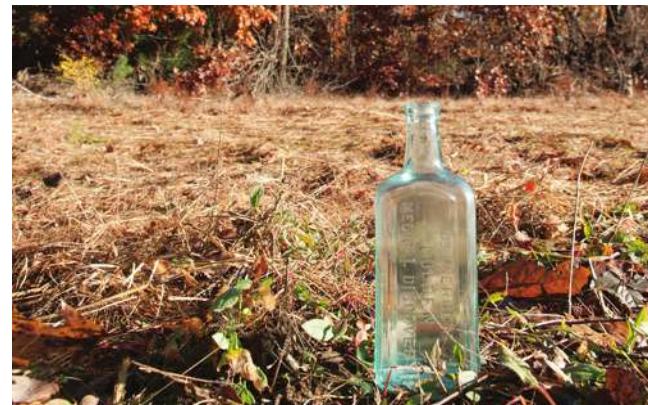
The germination of the Judean date described in the opening story is an extreme example of seed dormancy. How do we know how long most seeds remain viable? To find out, William J. Beal, a biologist at Michigan State University, decided to begin an experiment in 1879 that he could not hope to finish in his lifetime (Investigating Life: William Beal’s Seed Viability Study). He prepared 20 lots of seeds for long-term storage. Each lot consisted of 50 seeds from each of 23 species of plants. He mixed each lot of seeds with sand and placed the mixture in an uncapped bottle, then buried all the bottles upside down (so they would stay dry) on a sandy knoll. The seeds experienced normal temperature fluctuations for Michigan. At regular intervals ever since, other biologists have excavated a bottle and checked the viability of the seeds it contained. The seeds of most species remained viable for decades, whereas others have remained viable for more than a century.
A change in stem anatomy enabled seed plants to grow to great heights
Fossils of the closest relatives of seed plants (progymnosperms) and the earliest seed plants (seed ferns) are found in late Devonian rocks (see Figure 27.1). These plants had thickened woody stems, developed through the proliferation of xylem. This type of growth, which increases the diameter of stems and roots in many modern seed plants, is called secondary growth. Its product is secondary xylem, or wood.
The younger portion of the wood produced by secondary growth is well adapted for water transport, but older wood becomes clogged with resins or other materials. Although no longer functional in transport, the older wood continues to provide support for the plant. This support allows woody plants to grow taller than other plants around them and thus capture more light for photosynthesis.
Not all seed plants are woody. In the course of seed plant evolution, many groups lost the woody growth habit; however, other advantageous attributes helped them become established in an astonishing variety of places.
Investigating Life: William Beal’s Seed Viability Study
Experiment
Original Papers: W. J. Beal. 1884. The vitality of seeds. Proc Soc From Agr Sci 5: 44–46.
H. T. Darlington. 1941. The sixty-year period for Dr. Beal’s seed viability. Am J Bot 28: 271–273.
A. Kivilaan and R. S. Bandurski. 1981. The one hundred-year period for Dr. Beal’s seed viability experiment. Am J Bot 68: 1290–1292.
F. W. Telewski and J. Zeevaart. 2002. The 120-year period for Dr. Beal’s seed viability study. Am J Bot 89: 1285–1288.
William Beal began an experiment in 1879 to measure the long-term viability of seeds of several common plants. This ongoing experiment has been continued by biologists for well over a century. For the first 40 years of the experiment, Beal checked seed viability every 5 years. H. T. Darlington took over the experiment in 1915 and extended the sampling period to 10-year intervals beginning in 1920. R. S. Bandurski took over the experiment when Darlington retired, and extended the sampling period to 20 years in 1980, a century after the experiment began.
QUESTION How long do seeds of common plants remain viable?
METHOD
- Collect 1,000 seeds of each of 23 species of plants.
- Divide the seeds into 20 lots of 50 seeds of each of the 23 species.
- Mix each of the lots of seeds with sand, and place the mixtures in uncapped bottles.
- Bury the bottles upside down (to prevent the entry of water) on a marked, sandy knoll.
- At regular intervals, excavate a bottle and check the viability of its contents.
RESULTS The table shows the number of germinating seeds (of the original 50) from three of the species in years 50–100 of this ongoing experiment.
| Species | Years after burial | |||||
|---|---|---|---|---|---|---|
| 50 | 60 | 70 | 80 | 90 | 100 | |
| Oenothera biennis (evening primrose) | 19 | 12 | 7 | 5 | 0 | 0 |
| Rumex crispus (curly dock) | 26 | 2 | 7 | 1 | 0 | 0 |
| Verbascum blattaria (moth mullein) | 31 | 34 | 37 | 35 | 10 | 21 |
Source: F. W. Telewski and J. Zeevaart. 2002. Am J Bot 89: 1285–1288.
CONCLUSION Biologists have used this and similar experiments to estimate the maximum viability of seeds of many species of plants under near-natural environmental conditions. Explore how these data can be used to make predictions about seed viability in the Work with the Data exercise.
M. H. Stadall
Work with the Data
The data presented in this experiment can be used to make predictions about seed viability. Use the data to answer the following questions.
- Calculate the percent of viable seeds for these three species in years 50–100 and graph seed survivorship as a function of time buried.
- No seeds of the first two species were viable after 90 years of the experiment. Assume 100% seed viability at the start of the experiment (year 0), and predict from your graph the approximate year when you think the last Verbascum blattaria seeds will germinate.
- What factors do you think might influence the differences among the species in long-term seed viability?
Recap and Assess
Today’s living seed plants fall into two major groups, the gymnosperms and the angiosperms. Pollen grains, seeds, and wood are major evolutionary innovations of the seed plants. Protection of embryos is a hallmark of seed plants.
- Explain the importance of pollen in freeing seed plants from dependence on liquid water.
- How do seeds and seed dormancy help plants survive in highly seasonal environments?
- What part did the evolution of wood play in changing the terrestrial landscape?
The seed ferns have long been extinct, but the surviving seed plants have been remarkable successes. After the seed ferns, the gymnosperms were the next group of plants to dominate terrestrial environments.
Once Dominant Gymnosperms
Learning Objectives
- 27.2.1 Describe and contrast the roles of male and female gametophytes in reproduction.
- 27.2.2 Summarize the functions of cones in conifers.
- 27.2.3 Describe the role of fire in the life history of the lodgepole pine.
The gymnosperms are seed plants that do not form flowers or fruits. Gymnosperms (which means “naked-seeded”) are so named because their ovules and seeds, unlike those of angiosperms, are not protected by ovary or fruit tissue.
Gymnosperms dominated the terrestrial world through the Mesozoic but were replaced across large areas of Earth by flowering plants during the Cenozoic (see Figure 27.1). Although they now number fewer than 1,200 living species, gymnosperms are second only to the angiosperms in their dominance of the terrestrial environment.
There are four major groups of living gymnosperms
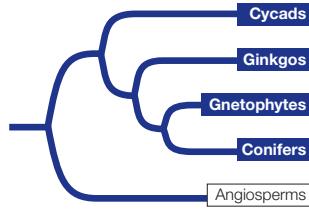
The living gymnosperms can be divided into four major groups:
- 1. Cycads are palmlike plants of the tropics and subtropics (Figure 27.6A). Of the present-day gymnosperms, the cycads are probably the earliest-diverging clade. There are about 300 species, some of which grow as tall as 20 meters. The tissues of many species are highly toxic to humans if ingested.
- 2. Ginkgos, common during the Mesozoic, are represented today by a single species, Ginkgo biloba, the maidenhair tree (Figure 27.6B). There are both male (microsporangiate) and female (megasporangiate) maidenhair trees. The difference is determined by X and Y sex chromosomes, as in humans. Few other plants have distinct sex chromosomes.
- 3. Gnetophytes number about 90 species in three very different genera, which share certain characteristics analogous to ones found in the angiosperms. One of the gnetophytes is Welwitschia mirabilis (Figure 27.6C), a long-lived desert plant with just two permanent straplike leaves, which split into many pieces that sprawl across the sand.
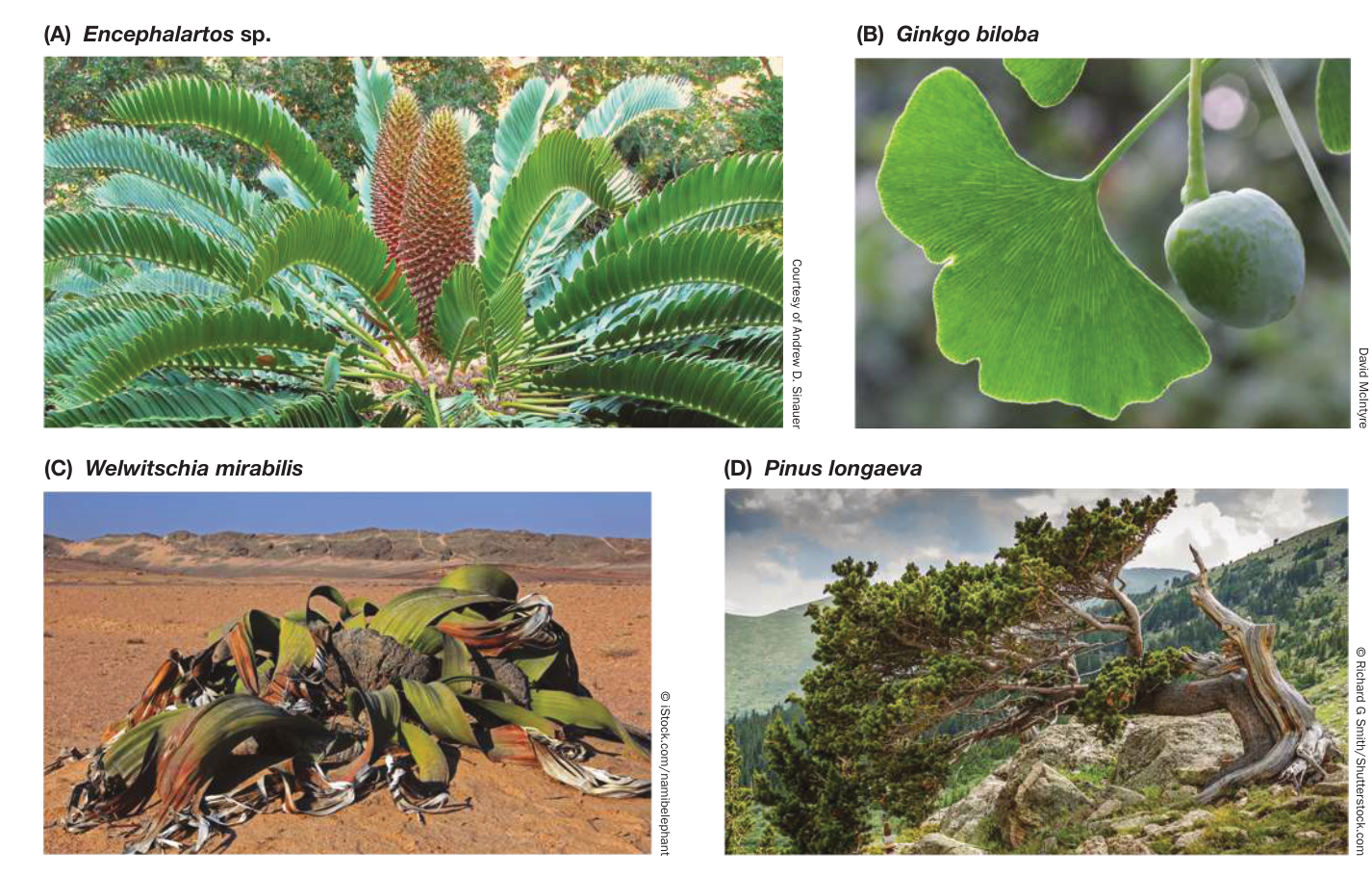
Figure 27.6 Diversity among the Gymnosperms (A) Many cycads have growth forms that resemble those of both ferns and palms, although cycads are not closely related to either group. (B) The characteristic broad leaves of the maidenhair tree. (C) The two permanent straplike leaves of Welwitschia mirabilis, a gnetophyte, grow throughout the life of the plant, breaking and splitting as they grow. (D) Conifers dominate many types of landscapes in the Northern Hemisphere. Bristle-cone pines such as these are the longest-lived individual trees known.
4. Conifers are by far the most abundant of the gymnosperms. There are about 700 species of these cone-bearing plants, including the pines, spruces, and redwoods (Figure 27.6D).
With the exception of the gnetophytes, the living gymnosperm groups have only tracheids as water-conducting and support cells in the xylem. Most gymnosperms lack the vessel elements and fibers (cells specialized for water conduction and support, respectively) that are found in angiosperms. While the gymnosperm water-transport and support system may thus seem somewhat less efficient than that of the angiosperms, it serves some of the largest trees known. The coastal redwoods of California are the tallest gymnosperms, with some individuals growing to well over 100 meters tall.
During the Permian, as environments became warmer and dryer, the conifers and cycads flourished. Gymnosperm forests changed over time as the gymnosperm groups evolved. Gymnosperms dominated the Mesozoic, during which the continents drifted apart and large dinosaurs lived. Gymnosperms were the principal trees in all forests until about 65 million years ago, and even today conifers are the dominant trees in many forests, especially at high latitudes and elevations. The oldest living single organism on Earth today is a gymnosperm in California—a bristlecone pine (Pinus longaeva) that germinated about 5,000 years ago, at about the time the ancient Egyptians were starting to develop writing.
Conifers have cones and lack swimming sperm
The great Douglas fir and cedar forests found in the northwestern United States and the massive boreal forests of pine, fir, and spruce of northern Eurasia and North America, as well as on the upper slopes of mountain ranges elsewhere, rank among the great forests of the world. All these trees belong to one group of gymnosperms: the conifers, or cone-bearers.
Male and female cones contain the reproductive structures of conifers. The female (seed-bearing) cone is known as a megastrobilus (plural megastrobili). An example of a familiar megastrobilus is the woody cone of pine trees. The seeds in a megastrobilus are protected by a tight cluster of woody scales, which are modifications of branches extending from a central axis (Figure 27.7A). The typically much smaller male (pollen-bearing) cone is known as a microstrobilus. The microstrobilus is typically herbaceous rather than woody, as its scales are composed of modified leaves, beneath which are the pollen-bearing microsporangia (Figure 27.7B).
The life cycle of a pine illustrates reproduction in gymnosperms (Figure 27.8). As in other seed plants, conifers have male gametophytes in the form of pollen grains, which frees the plant completely from its dependence on liquid water for fertilization. Wind, rather than water, assists conifer pollen grains in their first stage of travel from the microstrobilus to the female gametophyte inside a cone. A pollen tube provides the sperm with the means for the last stage of travel by elongating through maternal sporophytic tissue. When the pollen tube reaches the female gametophyte, it releases two sperm, one of which degenerates after the other unites with an egg. Union of sperm and egg results in a zygote. Mitotic divisions and further development of the zygote result in an embryo.
The megasporangium, in which the female gametophyte will form, is enclosed in a layer of sporophytic tissue—the integument—that will eventually develop into the seed coat that protects the embryo. The integument, the megasporangium inside it, and the tissue attaching it to the maternal sporophyte constitute the ovule. The pollen grain enters through a small opening in the integument at the tip of the ovule, the micropyle.
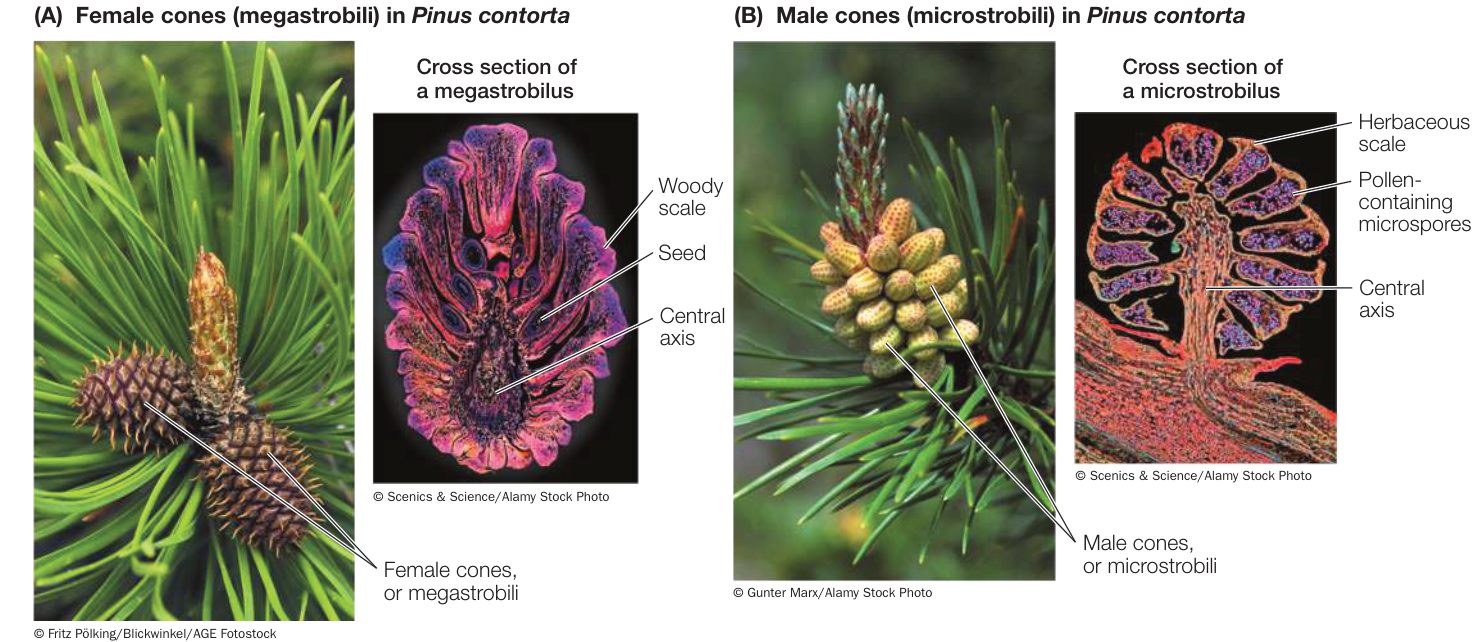
Figure 27.7 Female and Male Cones (A) The woody scales of female cones (megastrobili) are modified branches. (B) The herbaceous scales of male cones (microstrobili) are modified leaves.
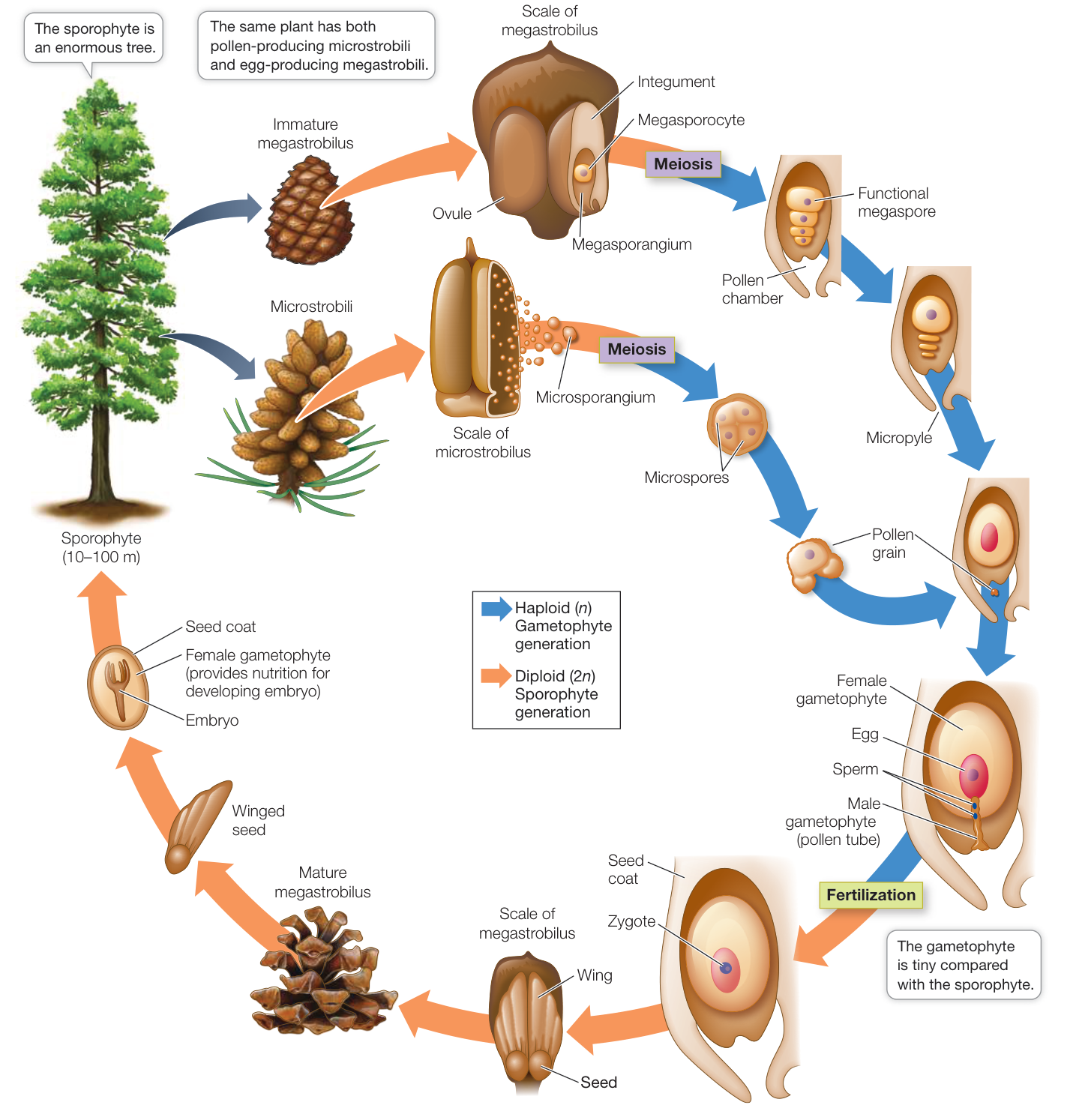
Figure 27.8 The Life Cycle of a Pine Tree In conifers and other gymnosperms, the gametophytes are small and nutritionally dependent on the sporophyte generation.
Most conifer ovules (which will develop into seeds after fertilization) are borne exposed on the upper surfaces of the scales of the cone (megastrobilus). The only protection of the ovules comes from the scales, which are tightly pressed against one another within the cone. Some pines, such as the lodgepole pine (Pinus contorta), have such tightly closed cones that only fire suffices to split them open and release the seeds. These species are said to be fire-adapted, and fire is essential to their reproduction. A fire devastated lodgepole pine forests in Yellowstone National Park in 1988, but also released large numbers of seeds from cones. As a result, large numbers of lodgepole pine seedlings are now emerging in the burn area (Figure 27.9).
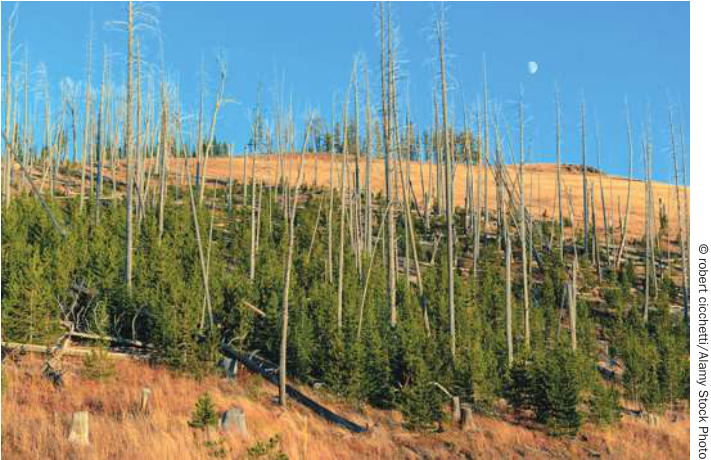
Figure 27.9 From Devastation, New Life A stand of lodgepole pines in Yellowstone National Park. The mature trees were destroyed by a forest fire in 1988. However, the fire released large numbers of seeds from cones, and now many young lodgepole pine trees are growing in the burn area.
About half of all conifer species have soft, fleshy modifications of the cones that envelop their seeds. Some of these modified tissues are fleshy, fruitlike cones, as in junipers. Others are fruitlike extensions of the seeds, called arils, as in yews. These tissues, although often mistaken for “berries,” are not true fruits. As you will see in Key Concept 27.3, true fruits are the plant’s ripened ovaries, which are absent in gymnosperms. Nonetheless, the fleshy tissues that surround many conifer seeds serve a similar purpose as that of the fruits of flowering plants, acting as an enticement for seed-dispersing animals. Animals eat these fleshy tissues and disperse the seeds in their feces, often depositing the seeds considerable distances away from the parent plant.
Recap and Assess
Living gymnosperms can be divided into four major groups: cycads, ginkgos, gnetophytes, and conifers. Although they have declined since the Mesozoic, gymnosperms are still the dominant trees in some areas, especially at high elevations and latitudes. All gymnosperms are woody and have seeds that are not protected by ovaries, although some have fleshy, fruitlike cones or extensions of seeds that entice animals to disperse the seeds.
- Why is fire necessary for the survival of some gymnosperms?
- Distinguish between the roles of the female gametophyte and the pollen grain in the life cycle of a conifer.
- What is the function of the fleshy cones that surround the seeds of many gymnosperms?
Although gymnosperms still dominate the terrestrial landscape in some environments, angiosperms (the flowering plants) have become the dominant land plants across much of Earth.
Flowers and Fruits Led to Increased Diversification of Angiosperms
Flowers and Fruits Led to Increased Diversification of Angiosperms
Learning Objectives
- 27.3.1 Distinguish between the two different roles of sperm in angiosperm double fertilization.
- 27.3.2 Explain the difference between pollination and fertilization.
- 27.3.3 Predict the likely modes of seed dispersal based on the type of fruit a plant produces.
- 27.3.4 Outline the functions of flowers, fruits, and seeds.
The most obvious feature defining the angiosperms is the flower, which is their sexual structure. Production of fruits is also a synapomorphy (shared derived trait) of angiosperms. After fertilization, the ovary of a flower (together with the seeds it contains) develops into a fruit that protects the seeds and can promote seed dispersal. As we will see, both flowers and fruits afford major reproductive advantages to angiosperms. These advantages led to the dominance of the terrestrial environment by angiosperms in the Cenozoic (see Figure 27.1).
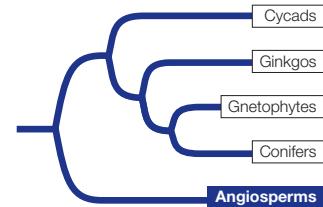
Angiosperms have many shared derived traits
The name angiosperm (“enclosed seed”) is derived from another distinctive trait of flowering plants that is related to the formation of fruits: the ovules and seeds are enclosed in a modified leaf called a carpel. Besides protecting the ovules and seeds, the carpel often interacts with incoming pollen to prevent self-fertilization, thus favoring cross-fertilization and increasing genetic diversity.
The female gametophyte of the angiosperms is even more reduced than that of the gymnosperms, usually consisting of only seven cells (see Figure 27.16). Thus the angiosperms represent the current extreme of the trend we have traced throughout the evolution of the vascular plants: the sporophyte generation becomes larger and more independent of the gametophyte, while the gametophyte generation becomes smaller and more dependent on the sporophyte.
The xylem of most angiosperms is distinguished by the presence of specialized water-transporting cells called vessel elements. These cells are larger in diameter than tracheids and connect with one another without obstruction, allowing easy water movement. A second distinctive cell type in angiosperm xylem is the fiber, which plays an important role in supporting the plant body. Angiosperm phloem possesses another unique cell type, called a companion cell. Like the gymnosperms, woody angiosperms show secondary growth, increasing in diameter by producing secondary xylem and secondary phloem.
A more comprehensive list of angiosperm synapomorphies, then, includes the following (some of these traits will be discussed later in this chapter):
- Flowers
- Fruits
- Ovules and seeds enclosed in a carpel
- Highly reduced gametophytes
- Germination of pollen on a stigma
- Double fertilization
- Endosperm (nutritive tissue for the embryo)
- Phloem with companion cells
The majority of these traits bear directly on angiosperm reproduction, which is a large factor in the success of this dominant plant group.
The sexual structures of angiosperms are flowers
Flowers come in an astonishing variety of forms—just think of some of the flowers you recognize. Flowers may be single, or they may be grouped together to form an inflorescence. Different families of flowering plants have characteristic types of inflorescences, such as the compound umbels of the carrot family (Figure 27.10A), the heads of the aster family (Figure 27.10B), and the spikes of many grasses (Figure 27.10C).
If you examine any familiar flower, you will notice that the outer parts look somewhat like leaves. In fact, all the parts of a flower are modified leaves. The diagram in Figure 27.4B represents a generalized flower (for which there is no exact counterpart in nature). The structures bearing microsporangia are called stamens. Each stamen is composed of a filament bearing an anther that contains the pollen-producing microsporangia. The structures bearing megasporangia are called carpels. The swollen base of the carpel, containing one or more ovules (each containing a megasporangium surrounded by two protective integuments), is called the ovary. The stalk at the top of the carpel is the style, and the terminal surface that receives pollen grains is the stigma. Two or more fused carpels, or a single carpel if only one is present, are also called a pistil.
In addition, many flowers have specialized sterile (non-spore-bearing) leaves. The inner ones are called petals (collectively, the corolla) and the outer ones sepals (collectively, the calyx). The corolla and calyx can be quite showy and often play roles in attracting animal pollinators to the flower. The calyx more commonly protects the immature flower in bud. From base to apex, these floral organs—sepals, petals, stamens, and carpels—are usually positioned in circular arrangements or whorls and attached to a central stalk.
The generalized flower in Figure 27.4B has both functional megasporangia and functional microsporangia. Such flowers are referred to as perfect (or hermaphroditic). Many angiosperms produce two types of flowers, one with only megasporangia and the other with only microsporangia. Consequently, either the stamens or the carpels are nonfunctional or absent in a given flower, and the flower is referred to as imperfect.
Species such as corn or birch, in which both megasporangiate (female) and microsporangiate (male) flowers occur on the same plant, are said to be monoecious (“one-housed”—but, it must be added, one house with separate rooms). Complete separation of imperfect flowers occurs in some other angiosperm species, such as willows and date palms; in these species, an individual plant produces either flowers with stamens or flowers with carpels, but never both. Such species are said to be dioecious (“two-housed”).
Flower structure has evolved over time
The flowers of the earliest-diverging clades of angiosperms have a large and variable number of tepals (undifferentiated sepals and petals), carpels, and stamens (Figure 27.11A). Evolutionary change within the angiosperms has included some striking modifications of this early condition: reductions in the number of each type of floral organ to a fixed number, differentiation of petals from sepals, and changes in symmetry from radial (as in a lily or magnolia) to bilateral (as in a sweet pea or orchid), often accompanied by an extensive fusion of parts (Figure 27.11B).
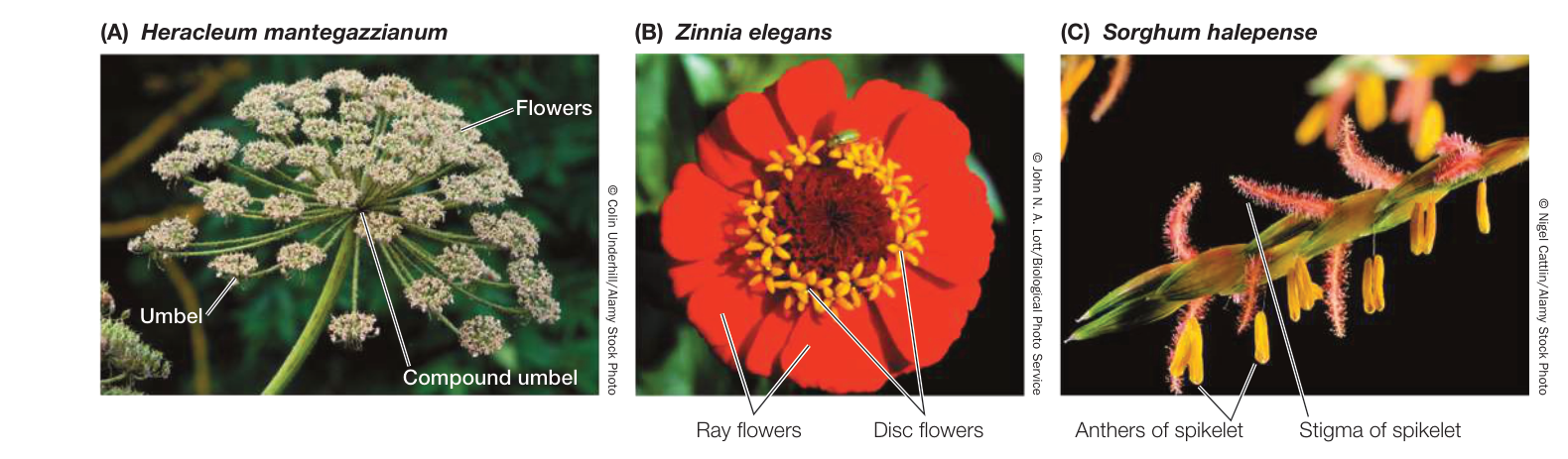
Figure 27.10 Inflorescences (A) The inflorescence of the giant hogweed, a member of the carrot family, is a compound umbel. Each umbel bears flowers on stalks that arise from a common center. (B) Zinnias are members of the aster family; their inflorescence is a head. Within the head, each of the long, petal-like structures is a ray flower; the central portion of the head consists of dozens to hundreds of disc flowers. (C) Some grasses, such as Johnson grass, have inflorescences called spikes, which are composed of many smaller groups of flowers, or spikelets.
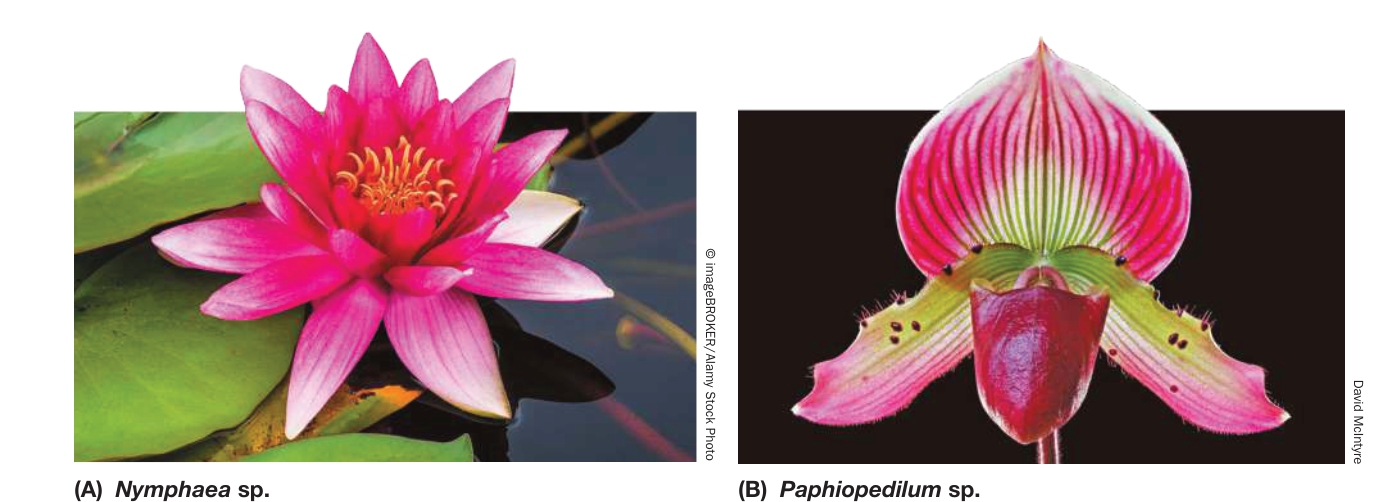
Figure 27.11 Flower Form and Evolution (A) A water lily shows the major features of early flowers: it is radially symmetrical, and the individual tepals, stamens, and carpels are separate, numerous, and attached at their bases. (B) Orchids such as this Venus slipper have a bilaterally symmetrical structure that evolved much later than radial flower symmetry.
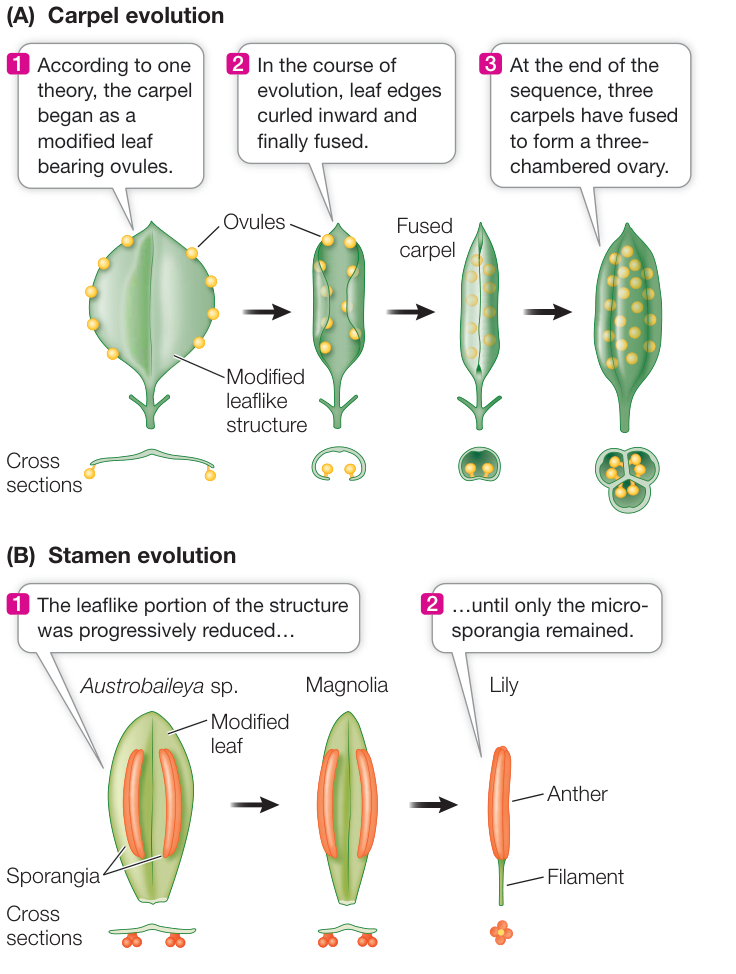
Figure 27.12 Carpels and Stamens Evolved from Leaflike Structures (A) Possible stages in the evolution of a carpel from a more leaflike structure. (B) The stamens of three modern plants show three possible stages in the evolution of that organ. (It is not implied that these species evolved from one another; their structures simply illustrate the possible stages.)
According to one hypothesis, the first carpels to evolve were leaves with marginal sporangia, folded but incompletely closed. Early in angiosperm evolution, the carpels fused with one another, forming a single, multichambered ovary (Figure 27.12A). In some flowers, the other floral organs are attached at the top of the ovary rather than at the bottom as in Figure 27.4B. The stamens of the most ancient flowers may have been leaflike (Figure 27.12B), with little resemblance to the stamens of the generalized flower seen in Figure 27.4B.
Why do so many flowers have carpels with long styles and anthers with long filaments? Natural selection has favored length in both of these floral organs, probably because length increases the likelihood of successful pollination. Long filaments may bring the anthers into contact with insect bodies, or they may place the anthers in a better position to catch the wind. Similar arguments apply to long styles.
A perfect flower represents a compromise of sorts. On the one hand, by attracting a pollinating bird or insect, the plant is attending to both its female and male functions with a single flower type, whereas plants with imperfect flowers must create that attraction twice—once for each type of flower. On the other hand, the perfect flower can favor self-pollination, which is usually disadvantageous. Another potential problem is that the female and male functions might interfere with each other—for example, the stigma might be so placed as to make it difficult for pollinators to reach the anthers, thus reducing the export of pollen to other flowers.
Might there be a way around these problems? One solution is seen in the bush monkeyflower (Mimulus aurantiacus), which is pollinated by hummingbirds. Its flower has a stigma that initially serves as a screen, hiding the anthers (Figure 27.13). Once a hummingbird touches the stigma, however, one of the stigma’s two lobes is retracted, so that subsequent hummingbird visitors pick up pollen from the previously screened anthers. Thus the first bird to visit the flower transfers pollen from another plant to the stigma, eventually leading to fertilization. Later visitors pick up pollen from the now-accessible anthers, fulfilling the flower’s male function. Figure 27.14 describes the experiment that revealed the function of this mechanism.
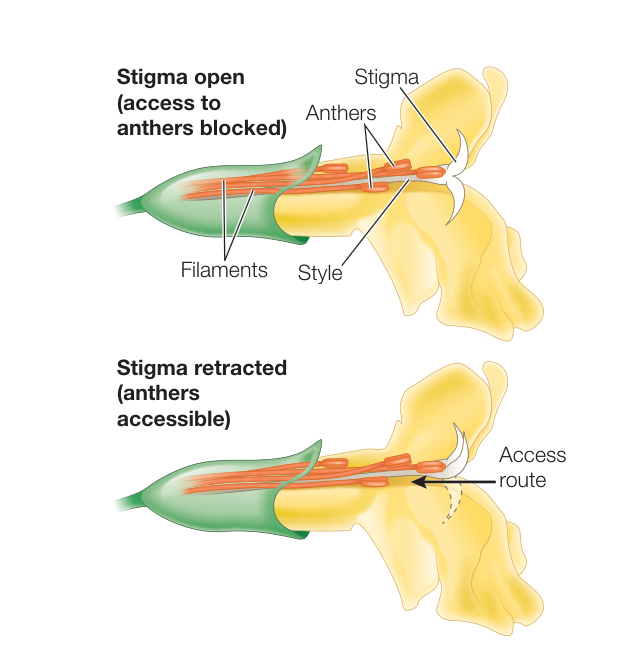
Figure 27.13 An Unusual Way to Prevent Selfing Both long stamens and long styles facilitate cross-pollination, but if these male and female structures are too close to each other, the likelihood of (disadvantageous) self-pollination increases. In Mimulus aurantiacus, the stigma is initially open, blocking access to the anthers. A hummingbird’s touch as it deposits pollen on the stigma causes one lobe of the stigma to retract, creating a path to the anthers and allowing pollen dispersal by subsequent hummingbird visitors. (After A. E. Fetscher. 2001. Proc R Soc Lond B Biol Sci 268: 525–529.)
Angiosperms have coevolved with animals
Whereas most gymnosperms are pollinated by wind, most angiosperms are pollinated by animals. The many different mutualistic pollination relationships between plants and animals are vital to both parties.
Connect the Concepts Mutualisms benefit both partners in a relationship, as described in Chapter 54.
Many flowers entice animals to visit them by providing food rewards. Pollen grains themselves sometimes serve as food for animals. In addition, some flowers produce a sugary fluid called nectar as a pollinator attractant, and some of these flowers have specialized structures to store and distribute it. In the process of visiting flowers to obtain nectar or pollen, animals often carry pollen from one flower to another or from one plant to another. Thus, in their quest for food, the animals contribute to the genetic diversity of the plant population. Insects, especially bees, are among the most important pollinators. Other major pollinators include some species of birds and bats.
Media Clip 27.2 Pollen Transfer by a Bat Life12e.com/mc27.2
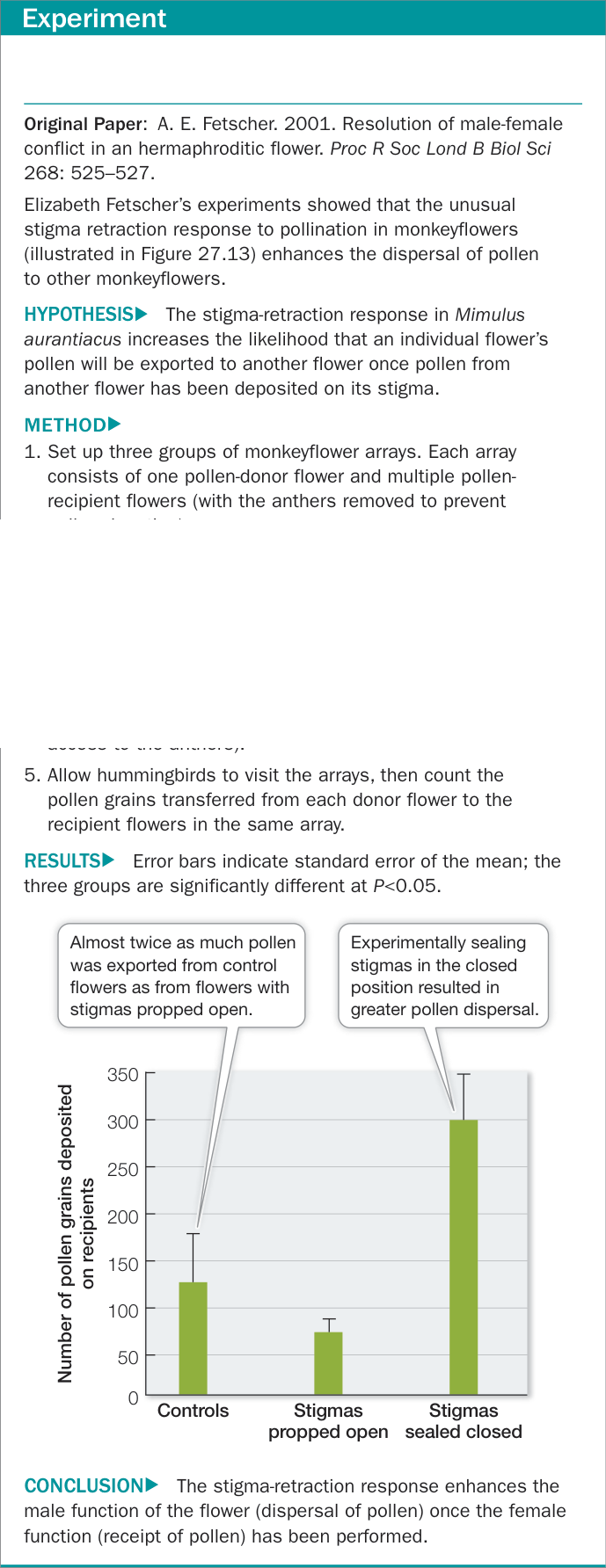
Figure 27.14 The Effect of Stigma Retraction in Monkeyflowers Figure 27.14 The Effect of Stigma Retraction in Monkeyflowers
For more than 150 million years, angiosperms and their animal pollinators have coevolved in the terrestrial environment. The animals have affected the evolution of the plants, and the plants have affected the evolution of the animals. Flower structure has become incredibly diverse under these selection pressures. Some of the products of coevolution are highly specific. For example, the flowers of some yucca species are pollinated by only one species of yucca moth, and that moth may exclusively pollinate just one species of yucca. Such specific relationships provide plants with a reliable mechanism for transferring pollen only to members of their own species.
Most plant–pollinator interactions are much less specific. In most cases, many different animal species pollinate the same plant species, and the same animal species pollinates many different plant species. However, even these less specific interactions have developed some specialization. Bird-pollinated flowers are often red and odorless. Many insect-pollinated flowers have characteristic odors. Bee-pollinated flowers may have conspicuous markings, called nectar guides, that are conspicuous only to animals, such as bees, that can see colors in the ultraviolet region of the spectrum (Figure 27.15).
The fruits of some plants that are still around today originally evolved to attract large frugivorous animals—many of which went extinct in the Pleistocene. For example, the large round fruits of the osage orange tree attracted wooly mammoths, which ate the fruits and dispersed the seeds. After the extinction of the mammoths, osage orange trees survived in large part because early humans used the wood of this species for making bows for hunting, dispersing the fruits to new areas in the process. Some other species that depended on now-extinct mammals to disperse their seeds, however, may be slowly declining toward extinction.
The angiosperm life cycle produces diploid zygotes nourished by triploid endosperms
Like all seed plants, angiosperms are heterosporous. As you have seen, their ovules are contained within carpels rather than being exposed on the surfaces of scales, as in most gymnosperms. The male gametophytes, as in the gymnosperms, are pollen grains.
Pollination in the angiosperms consists of the arrival of a male gametophyte—a pollen grain—on a receptive surface in a flower (the stigma). As in the gymnosperms, pollination is the first in a series of events that results in the formation of a seed. The next event is the growth of a pollen tube extending to the female gametophyte. The third event is a fertilization process that, in detail, is unique to the angiosperms (Figure 27.16).
In nearly all angiosperms, two male gametes, contained in a single male gametophyte, participate in fertilization. The nucleus of one sperm combines with that of the egg to produce a diploid zygote, the first cell of the sporophyte generation. In most angiosperms, the other sperm nucleus combines with two other haploid nuclei of the female gametophyte to form a cell with a triploid (3n) nucleus. That cell, in turn, gives rise to triploid tissue, the endosperm, which nourishes the embryonic sporophyte during its early development. This process, in which two fertilization events take place, is known as double fertilization. In some angiosperms, additional haploid nuclei are incorporated to form even higher ploidy levels in the endosperm, or the second sperm fuses with only one haploid nucleus, resulting in diploid endosperm.
As Figure 27.16 shows, the zygote develops into an embryo, which consists of an embryonic axis (the “backbone” that will become a stem and a root) and one or two cotyledons, or “seed leaves.” The cotyledons have different fates in different plants. In many, they serve as absorptive organs that take up and digest the endosperm. In others, they enlarge and become photosynthetic when the seed germinates. Often they play both roles.
The ovule develops into a seed containing the products of the double fertilization that characterizes angiosperms: a diploid zygote and a triploid endosperm (see Figure 27.16). The endosperm serves as storage tissue for starch or lipids, proteins, and other substances that will be needed by the developing embryo.
Fruits aid angiosperm seed dispersal
Fruits typically aid in seed dispersal. Fruits may attach to or be eaten by an animal. The animal is then likely to move, after which the seeds may fall off or be defecated. Fruits are not necessarily fleshy. Fruits can also be hard and woody, or small and have modified structures that allow the seeds to be dispersed by wind or water (Figure 27.17).
A fruit may consist of only the mature ovary and its seeds, or it may include other parts of the flower or structures associated
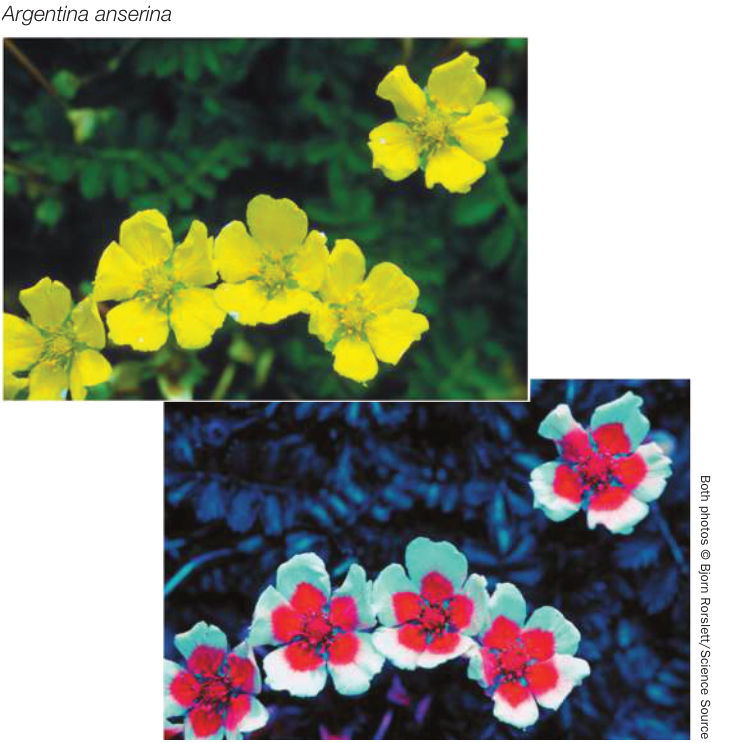
Figure 27.15 See Like a Bee To normal human vision, the petals of silverweed appear solid yellow. Ultraviolet photography reveals patterns that attract bees to the central region, where pollen and nectar are located.
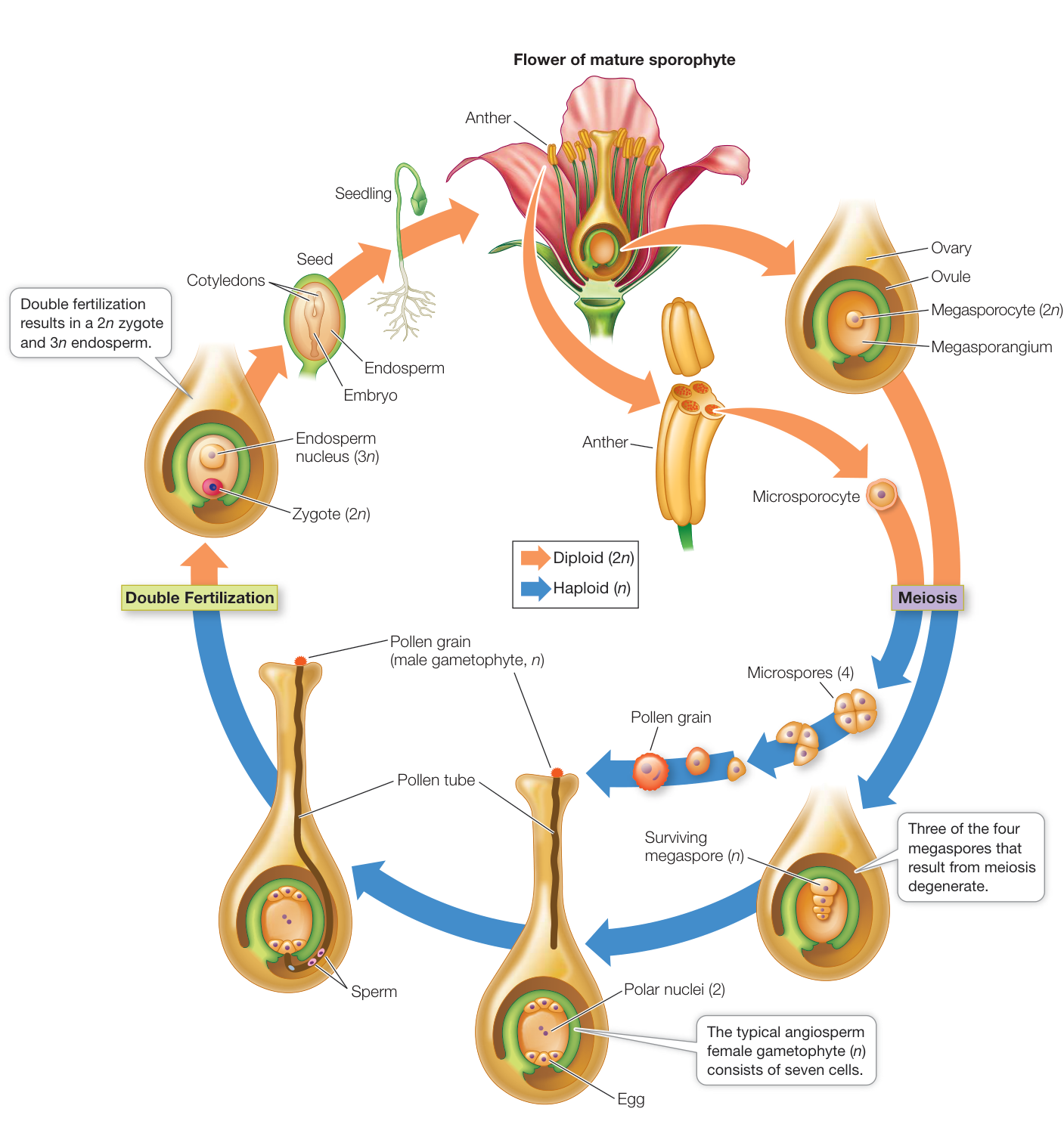
Figure 27.16 The Life Cycle of an Angiosperm Double fertilization results in triploid endosperm in most species of angiosperms. One sperm nucleus fertilizes the egg to form the zygote, while the other combines with the two polar nuclei to form the endosperm.
Animation 27.2 Life Cycle of an Angiosperm with it. A simple fruit is one that develops from a single carpel or several fused carpels, such as a plum or cherry. A raspberry is an example of an aggregate fruit—one that develops from several separate carpels of a single flower. Pineapples and figs are examples of multiple fruits, formed from a cluster of flowers (an inflorescence). Fruits derived from parts in addition to the carpel and seeds are called accessory fruits—examples are apples, pears, and strawberries.
Media Clip 27.3 Flower and Fruit Formation Life12e.com/mc27.3
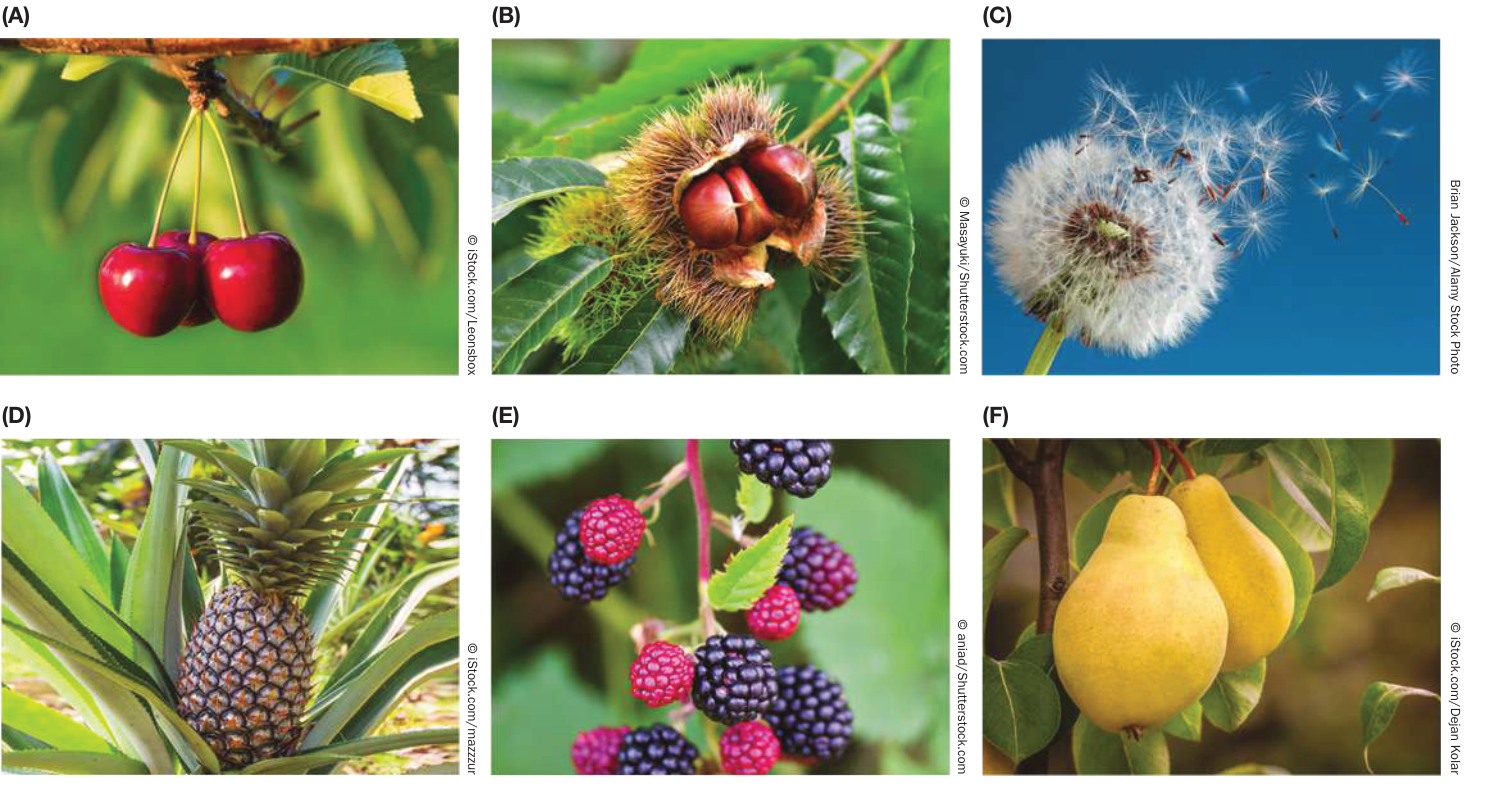
Figure 27.17 Fruits Come in Many Forms (A) The single seeds inside the simple fruits of Bing cherries are dispersed by animals. (B) Each seed of the horse chestnut is covered by a hard, woody fruit that allows it to survive drought. Although such fruits are commonly called “nuts,” this is a culinary rather than a biological term. (C) The highly reduced simple fruits of dandelions are dispersed by wind. (D) A multiple fruit, the pineapple (Ananas comosus), has become one of the most economically significant fruit crops of the tropics. (E) An aggregate fruit (blackberry). (F) An accessory fruit (pear). CHAPTER 27 The Evolution of Seed Plants
Q: The large incisors of rodents help these animals penetrate the shells of woody nuts, which they consume as food. But unlike many animals that eat fruits without digesting the seeds, rodents destroy the seeds when they eat them. So how do rodents aid in dispersing the seeds of nut-bearing plants?
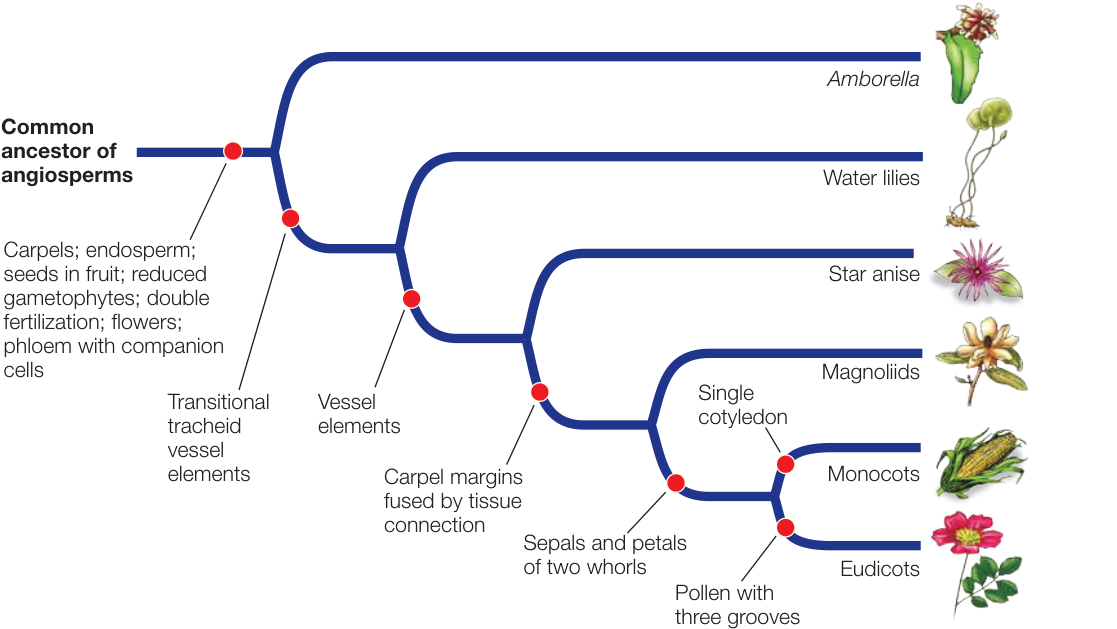
Figure 27.18 Evolutionary Relationships among the Angiosperms Recent analyses of many angiosperm genes have clarified the relationships among the major groups.
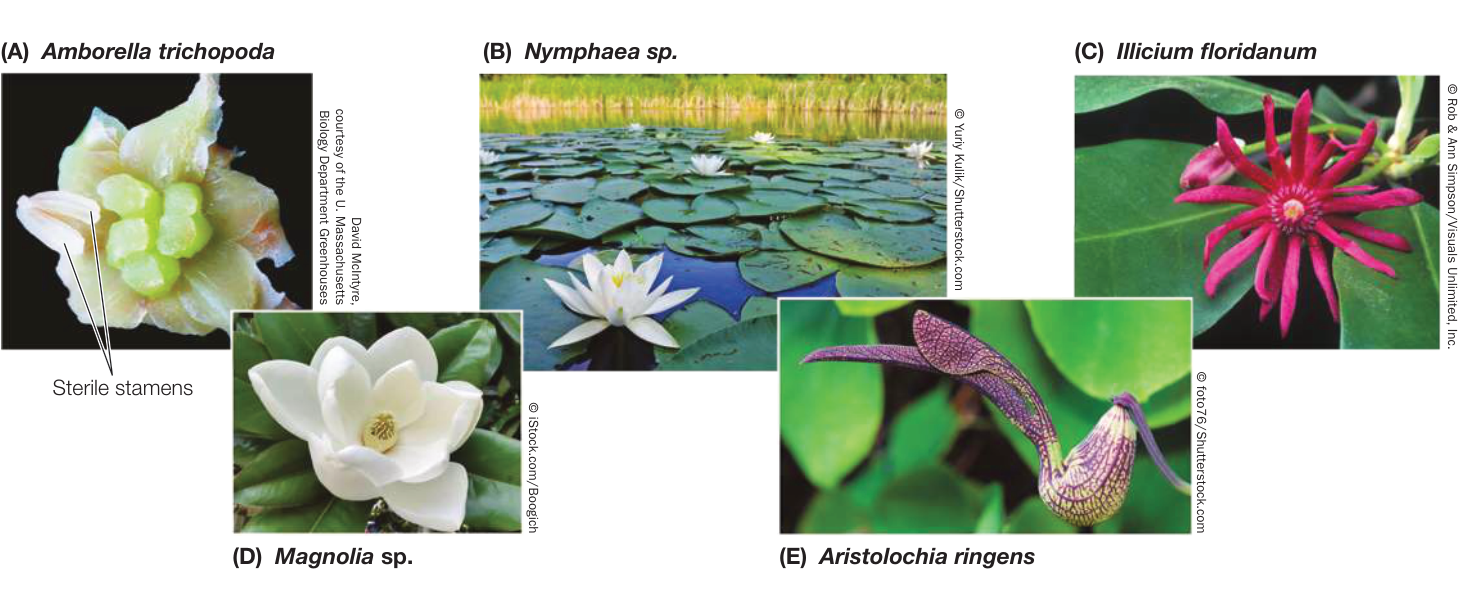
Figure 27.19 Monocots and Eudicots Are Not the Only Surviving Angiosperms (A) Amborella, a shrub, is sister to the remaining extant angiosperms. Notice the sterile stamens on this female flower, which may serve to lure insects that are searching for pollen. (B) The water lily clade was the next to diverge after Amborella. (C) Star anise and its relatives belong to another early-diverging angiosperm clade. (D, E) The largest clade other than the monocots and eudicots is the magnoliid complex, which includes magnolias and the group known as “Dutchman’s pipe.”
Recent analyses have revealed the phylogenetic relationships of angiosperms
Figure 27.18 shows the relationships among the major angiosperm clades. Recent molecular and morphological analyses have supported the hypothesis that the sister group of remaining flowering plants is a single species of the genus Amborella (Figure 27.19A). This woody shrub with cream-colored flowers lives only on New Caledonia, an island in the South Pacific. Other early-branching angiosperm groups include the water lilies (Figure 27.19B), star anise and its relatives (Figure 27.19C), and the magnoliids (Figure 27.19D,E). The magnoliids include many familiar and useful plants, such as avocados, cinnamon, black pepper, and magnolias.
The two largest clades—the monocots and the eudicots—include the great majority of angiosperm species. The monocots are so called because they have a single embryonic cotyledon, whereas the eudicots have two.
Representatives of the two largest angiosperm clades are everywhere. The monocots (Figure 27.20) include grasses, cattails, lilies,
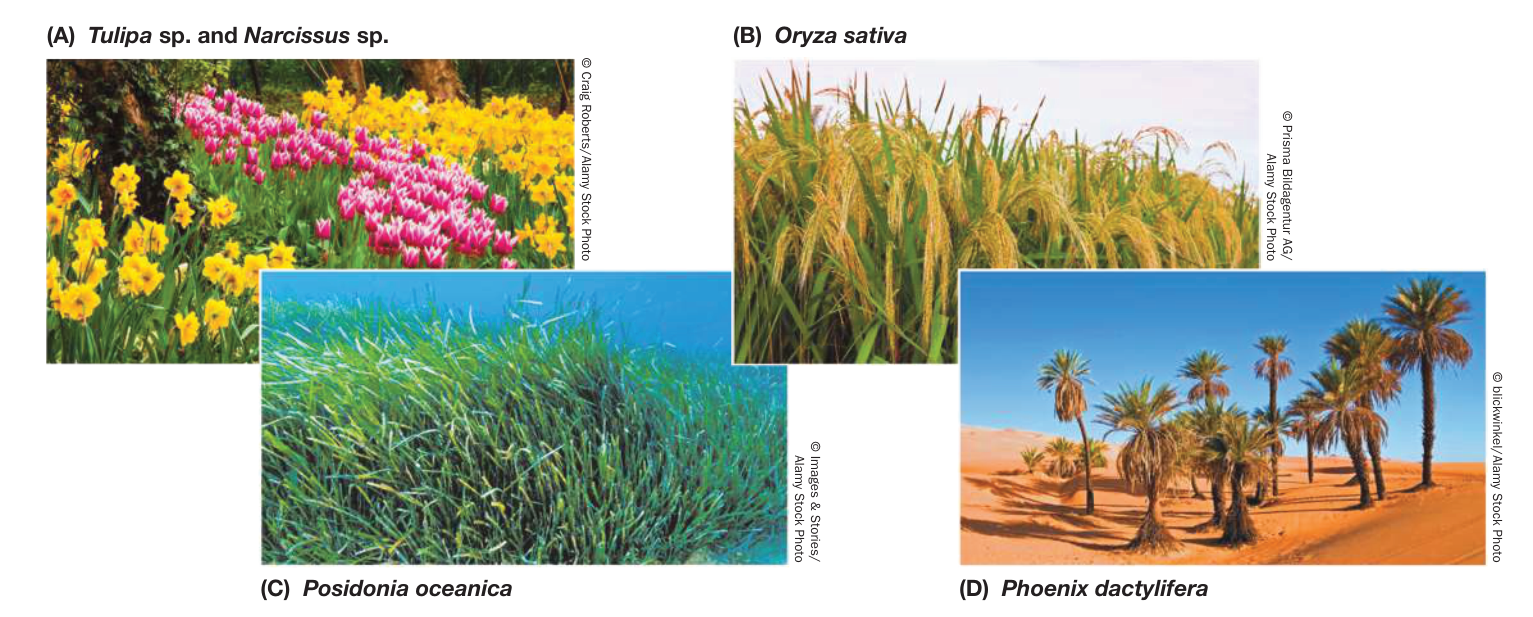
Figure 27.20 Monocots (A) Monocots include many popular garden flowers such as these tulips (pink and white) and daffodils (yellow). (B) Monocot grasses such as rice feed the world; wheat, sugarcane, and corn (maize) are also grasses. (C) Seagrasses such as this Neptune’s grass form “meadows” in the shallow, sunlit waters of the world’s oceans. (D) Palms are among the few monocot trees. Date palms like these are a major food source in some areas of the world.
Origins insights orchids, and palms. The eudicots (Figure 27.21) include the vast majority of familiar seed plants, including most herbs (i.e., nonwoody plants), vines, trees, and shrubs. Among the eudicots are such diverse plants as oaks, willows, beans, snapdragons, roses, and sunflowers.
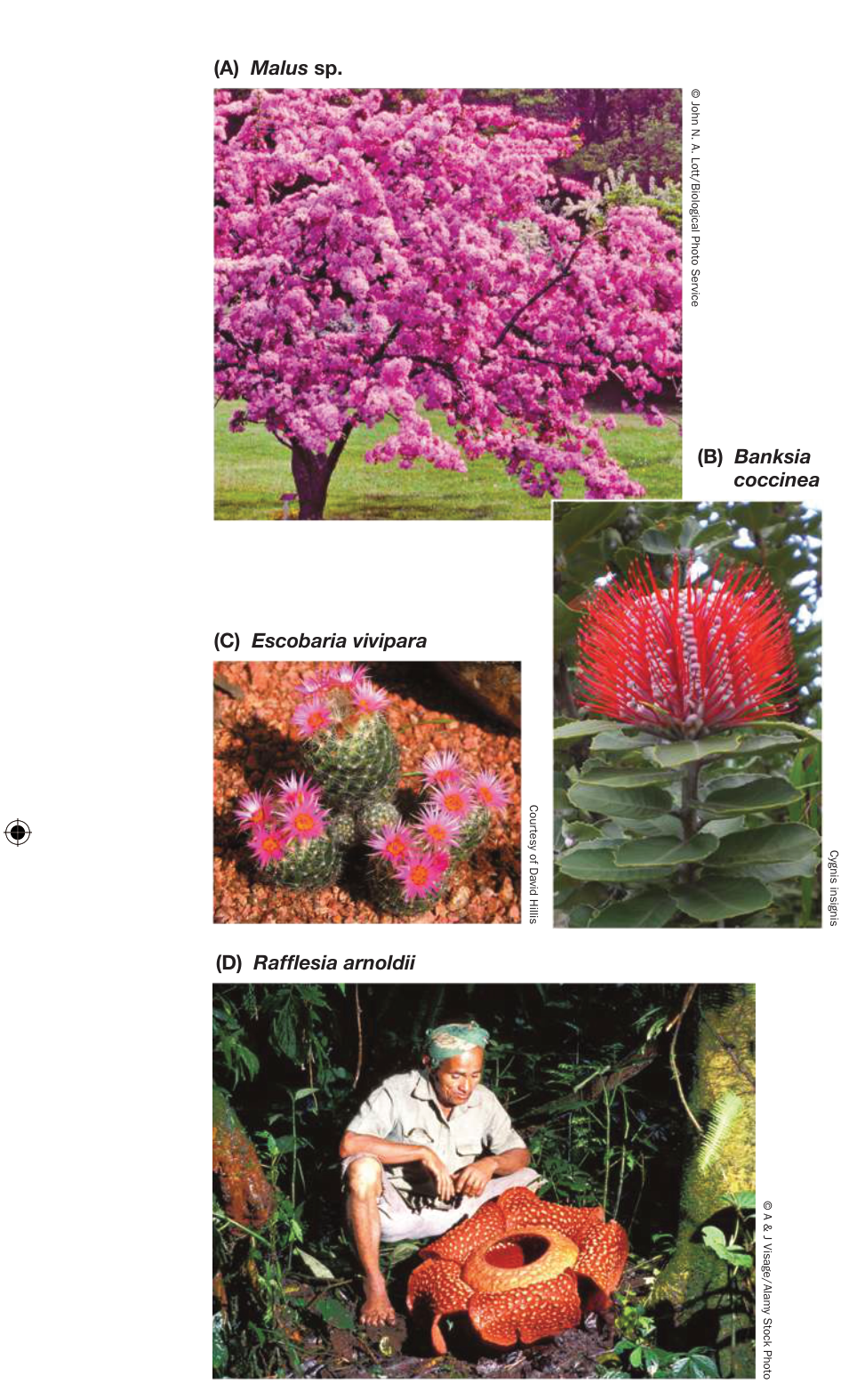
Figure 27.21 Eudicots (A) Eudicots include many trees, such as this crabapple tree. (B) Scarlet Banksia is a species of an Australian genus of eudicots that attracts a wide diversity of pollinators by producing large quantities of nectar. (C) Cacti comprise a large group of eudicots, with about 1,500 species in the Americas. Many, such as this spinystar cactus, bear large flowers for a brief period of each year. (D) Rafflesia arnoldii, found in the rainforests of Indonesia, bears the largest flower in the world. The flower lives as a parasite on tropical vines and has lost its leaf, stem, and even root structures. It smells like decaying meat, which attracts its fly pollinators. (D) Rafflesia arnoldii
Recap and Assess
Angiosperms are the dominant terrestrial plants of the Cenozoic. The synapomorphies of angiosperms include flowers, fruit, carpels, double fertilization, and endosperm. Most angiosperms also possess distinctive cells in the xylem and phloem. The largest angiosperm clades are the monocots and the eudicots.
- What are the respective roles of the two sperm in double fertilization in angiosperms?
- Explain the difference between pollination and fertilization.
- What are some of the differences between fruits that are dispersed by attracting animals to a food resource and those that are dispersed by attaching themselves to animals? Give examples of each.
- What are the different functions of flowers, fruits, and seeds?
- Many fleshy fruits attract animals, which eat the fruit and then disperse the seeds in their feces. If all other factors are equal, large seeds have a better chance of producing a successful seedling than small seeds. So why isn’t there selection for larger seeds in the fruits of all plants? In one study in Peru, the feces of the spider monkey Ateles paniscus were found to contain seeds from 71 species of plants. After eating fruit, the monkeys usually travel some distance before defecating, thus dispersing any undigested seeds. If monkey feces are left undisturbed on the forest floor, rodents eat and destroy the vast majority of the seeds in the feces. To germinate successfully, the seeds in spider monkey feces need to be buried by dung beetles, which makes the discovery and destruction of seeds by rodents much less likely.
Ellen Andresen hypothesized that dung beetles were more likely to remove larger than smaller seeds from spider monkey dung before burying the dung. She added plastic beads of various diameters to spider monkey dung (to simulate seeds) and measured the percentage of beads buried with the dung by the beetles. Use her data to answer the questions below.
| Bead diameter (mm) | 2 | 4 | 6 | 8 | 10 | 12 |
|---|---|---|---|---|---|---|
| Percent buried | 100 | 76 | 52 | 39 | 20 | 4 |
Source: E. Andresen. 1999. Biotropica 31: 145–158.
- Plot bead size (the independent variable) versus percent of beads buried by dung beetles (the dependent variable).
- Calculate a regression line for the relationship shown in your graph (see Appendix B). Approximately what percent of beads with a diameter of 5 mm would you predict would be buried by the beetles? What about beads 14 mm in diameter?
- What other factors besides size might influence the probability of seed burial by dung beetles? Can you design an experiment to test your hypotheses?
- Describe how changes in the population sizes of spider monkeys, rodents, and dung beetles would affect the reproductive success of various plant species.
The remarkable diversity of the seed plants has been shaped by both biotic and abiotic components of the environments to which they have adapted. In turn, land plants—and seed plants in particular—shape their environments.
Plants Play Critical Roles in Terrestrial Ecosystems
Learning Objectives
- 27.4.1 Describe how seed plants have been used for medicinal purposes.
- 27.4.2 Summarize the ecological services that angiosperms perform.
- 27.4.3 Summarize the main plants that humans use for food.
Plants make profound contributions to ecosystem services—processes by which the environment maintains resources that benefit human society. Once life moved onto land, it was largely plants that shaped the terrestrial environment.
Plants produce oxygen and remove carbon dioxide from the atmosphere, and they play important roles in forming soils and renewing soil fertility. Plant roots help hold soil in place, providing protection against erosion by wind and water (Figure 27.22). Plants also moderate the local climate in various ways, such as by increasing humidity, providing shade, and blocking wind. All of these ecosystem services permit a great diversity of fungi and animals to exist on land.
Seed plants have been sources of medicine since ancient times
Although we also use medicines derived from fungi, lichens, and actinobacteria, seed plants are the source of many of our medications. A few examples of medicines derived from plants are shown in Table 27.1. Even in synthetic pharmaceuticals, the chemical structures of the active ingredients are often based on the biochemistry of substances isolated from plants.
How are plant-based medicines discovered? Many were discovered over the millennia by people who lived alongside useful plants and discovered the properties of the plants through trial and error. Some plant-based medicines have come into widespread use through the work of ethnobotanists, who study how people use and view plants in their local environments. This work proceeds all over the globe today. An older example of this approach is the discovery of quinine as a treatment for malaria. In the sixteenth century, Spanish priests in Peru became aware that the native population used the bark of local Cinchona trees to treat fevers. The priests successfully used the bark to treat malaria. Word of the medicine spread to Europe, where it was put into use as early as 1631. The active ingredient of Cinchona bark—quinine—was identified in 1820, and quinine remained the standard malarial remedy well into the twentieth century.
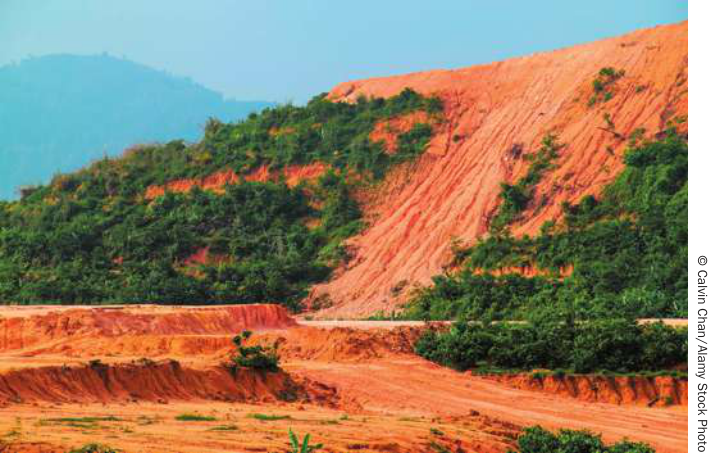
Figure 27.22 Plants Prevent Erosion When forest vegetation was cleared on these hillsides in Malaysia, landslides and extensive soil erosion quickly followed. Adjacent forested areas did not have landslides.
Since the mid-1900s, many plant-based medicines have been found by systematic testing of plants from all over the world. One example of a medicine discovered in this way is Taxol®, an important anticancer drug. Among the myriad plant samples that had been tested by 1962, extracts of the bark of the Pacific yew (Taxus brevifolia) showed anti-tumor activity in tests against rodent tumors. The active ingredient, paclitaxel, was isolated in 1971 and tested against human cancers in 1977. After another 16 years, the U.S. Food and Drug Administration approved it for human use, and Taxol® is now widely used in treating breast and ovarian cancers as well as several other types of cancers.
Seed plants are our primary food source
Plants are primary producers. They trap energy and carbon by means of photosynthesis, making those resources available not only for their own needs, but also for the herbivores and omnivores that consume them, for the carnivores and omnivores that eat the herbivores, and for the prokaryotes and fungi that complete food webs. The earliest steps in human civilization involved cultivating angiosperms to provide a reliable food supply.
Today, twelve species of seed plants account for most of the food eaten by humans: rice, coconut, wheat, corn (maize), potato, sweet potato, cassava (also called tapioca or manioc), sugarcane, sugar beet, soybean, common bean (Phaseolus vulgaris), and banana. Hundreds of other seed plants are cultivated for food, but none rank with these twelve in importance. Indeed, more than half of the world’s human population derives the bulk of its food energy from the seeds of a single plant, Oryza sativa, better known as rice. Rice is particularly important in eastern Asia, where it has been cultivated for more than 8,000 years (Figure 27.23).
Table 27.1 Some Medicinal Plants and Their Products
| Plant | Product | Medical application |
|---|---|---|
| Belladonna | Atropine | Dilate pupils for eye examination |
| Pineapple stem | Bromelain | Control tissue inflammation |
| Foxglove | Digitalin | Strengthen heart muscle contraction |
| Ephedra | Ephedrine | Ease nasal congestion |
| Japanese mint | Menthol | Relieve coughing |
| Opium poppy | Morphine | Relieve pain |
| Pacific yew | Paclitaxel | Treat ovarian and breast cancers |
| Cinchona bark | Quinine | Treat malaria |
| Curare plant | Tubocurarine | Muscle relaxant (used in surgery) |
| Periwinkle | Vincristine | Treat leukemia and lymphoma |
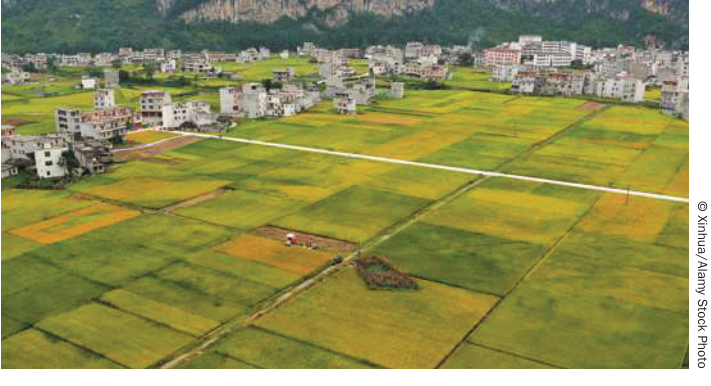
Figure 27.23 Rice Feeds Much of the World’s Human Population These rice fields, or “paddies,” are in south China. Rice has been cultivated in this manner for thousands of years.
In addition to providing food directly for human consumption, plants also provide feed for agricultural production of animals. In particular, the grasses that grow in the world’s rangelands are the primary forage for the grazing animals that humans use for meat and dairy products.
Recap and Assess
Terrestrial ecosystems could not function without the foods and habitats provided by plants. Plants produce oxygen and remove carbon dioxide from the atmosphere, help form soils, and hold soils in place against erosion by wind and water. Plants also provide us with many important medicines and are the basis (directly or indirectly) of virtually all of our food.
- Name three plants that are used in medicine for humans, and give an example of how each is used.
- A parcel of agricultural land that has been used to produce corn for decades no longer produces healthy crops. Tests indicate that the soil is depleted of nitrogen and organic matter. A farm extension agent recommends that the farmer grow soybeans and then rotate this crop with corn in future years. She also recommends that the farmer till the stubble from the crops after harvest into the soil. Why are these practices expected to help crop production?
- What major group of plants provides (either directly or indirectly) the majority of calories consumed by humans? Explain your answer.
As you will see in the coming chapters, the transformation of the terrestrial environment by plants was critical to the terrestrial invasion by fungi and animals.
Investigating LIFE
QA How long can most seeds survive, and why is seed dormancy important?
As you saw in Investigating Life: William Beale’s Seed Viability Study and in the opening of this chapter, seeds of some plants can remain dormant but viable for decades, centuries, or in extreme cases, even millennia. Seed dormancy is especially important for the long-term survival of plant species that grow in unpredictable or highly fluctuating environments. If the appropriate conditions for seed growth and seedling maturation occur only rarely, then seeds need to be able to remain dormant in the soil until those favorable conditions occur. Biologists refer to dormant seeds in a given area as the “seed bank.” What conditions will cause the seeds to break their dormancy and sprout? Fire, heavy rain, appropriate temperatures, or disturbance by animals are some of the more common stimulants for breaking seed dormancy. Many seeds need to be consumed by an animal and to pass through the acidic conditions of the animal’s digestive system before the seeds will sprout. As anyone who has planted a new garden will know, soil disturbance will often produce the conditions needed for many dormant seeds to start growing. A new garden often requires persistent weeding to remove all the unwanted (by the gardener) plants that have been “awakened” from the seed bank.
Future directions
We’ve noted that humans depend on a relatively small number of plants for the majority of our food needs, although many more species of plants are grown and eaten for food. Traditionally, different locally adapted strains of crop plants have been grown by different farmers in different regions of the world. Agricultural companies now produce new varieties of crops that increase agricultural production. Unfortunately, a downside to these new strains is that farmers across the world have switched to growing relatively few varieties of important crop plants, which increases our global risk to disease and pests. If all farmers grow the same strain of wheat, for example, and that strain is susceptible to a particular pathogen or insect pest, what happens when the pathogen or pest spreads and all the susceptible wheat is lost?
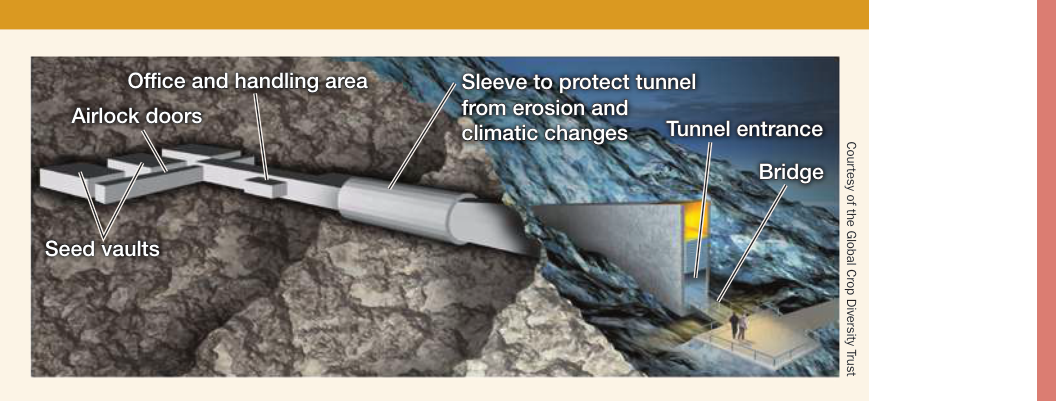
Figure 27.24 The Global Seed Vault This vault is located more than 100 meters inside a sandstone mountain on the Norwegian island of Spitsbergen, about 1,000 kilometers from the North Pole. The location was chosen for secure, long-term storage of seeds because the surrounding ground was expected to remain perpetually frozen and the site is secure against earthquakes, floods, and other natural disasters. However, global warming now threatens the surrounding permafrost.
To guard against devastating losses of important plants, many nations around the world have collaborated to develop a secure seed vault, which stores and protects the genetic diversity of crop plants (Figure 27.24). This seed vault is built into a sandstone mountain, which has long been surrounded by permafrost on the Arctic island of Spitsbergen, Norway (although the permafrost is now threatened by global warming). It is situated at a high enough elevation that it will remain above sea level even if all the polar ice caps were melted by global warming. Cooling systems maintain the vault at , and even if these systems fail, insulation and local cold weather would protect the seeds inside and maximize their viability. This seed vault complements several shorter-term seed depositories that are maintained in individual countries. Such seed depositories are used by biologists to develop new varieties of plant crops and to research the genetic variation of plant species from around the world.
Visual Summary
© Zvonimir Atletic/Alamy Stock Photo
You should be able to relate each summary to the adjacent figures. If you go to this visual summary in Achieve, you can follow links to figures, animations, activities, and simulations that will help you consolidate the material.
Pollen, Seeds, and Wood
- ■ The two major groups of living seed plants are the gymnosperms and angiosperms, both of which include many woody species.
- ■ Seed plants do not require liquid water for fertilization. Pollen grains, the male gametophytes of seed plants, are carried to a female gametophyte by wind or by animals.
- ■ Following pollination, a pollen tube emerges from the pollen grain and elongates to deliver gametes to the female gametophyte.
- ■ An ovule consists of the seed plant female gametophyte and the integument of sporophytic tissue that protects it. The ovule develops into a seed.
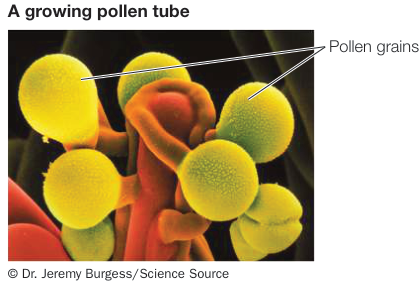
Figure 27.4
Questions
- What is the difference between pollen and sperm?
- When you look at a seed plant, which is most obvious—the haploid gametophyte generation or the diploid sporophyte generation?
- Which parts of a seed plant constitute the gametophyte generation?
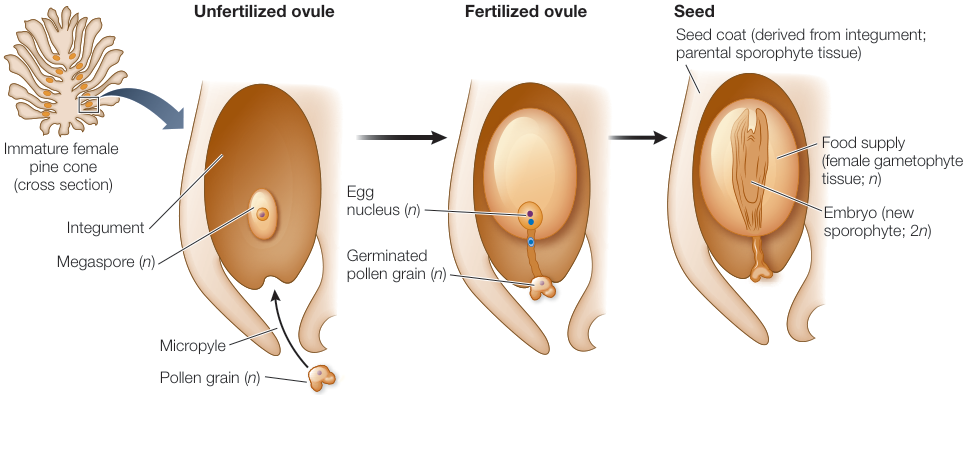
Figure 27.5
Once Dominant Gymnosperms
- ■ The gymnosperms produce ovules and seeds that are not protected by ovary or fruit tissues.
- ■ The major gymnosperm groups are the cycads, ginkgos, gnetophytes, and conifers.
Questions
- Why are forest fires often necessary for the long-term survival of some gymnosperm forests?
- If gymnosperm seeds are not protected by fruits, then what are the red “berries” on a juniper tree?
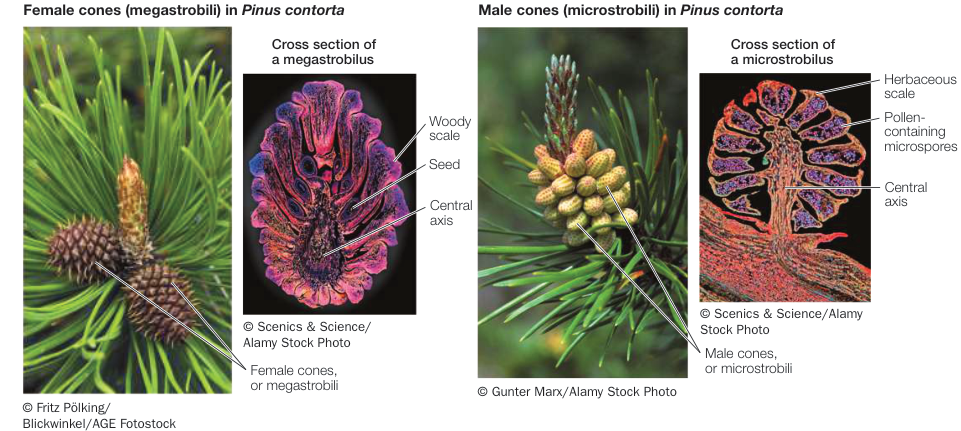
Figure 27.7
- ■ Flowers and fruits are unique to the angiosperms, distinguishing them from the gymnosperms.
- ■ The floral organs, from the base to the apex of the flower, are the sepals, petals, stamens, and one or more carpels. Stamens bear microsporangia in anthers. The carpel includes an ovary containing ovules and a receptive surface called the stigma.
- ■ Flowers may be pollinated by wind or by animals. Many angiosperms have coevolved with their animal pollinators.
- ■ The magnoliids are the sister group to the monocots and eudicots (the most species-rich angiosperm clades).
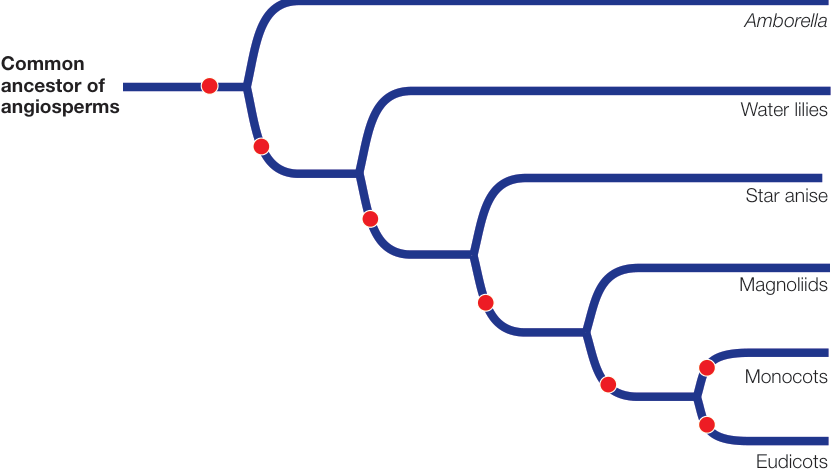
Figure 27.18 Questions
- What are three ways that different flowers attract insect pollinators?
- Which of the following are true fruits: the parachute-like structures on a mature dandelion head; the acorns on an oak tree; a pineapple?
Plants Play Critical Roles in Terrestrial Ecosystems
- ■ Plants provide critical ecosystem services that affect soil, water, air quality, and climate.
- ■ Plants provide humans with many important medicinal products.
- ■ Plants are primary producers and as such are the foundation of terrestrial food webs.
Questions
- What plant produces paclitaxel, an important drug for the treatment of ovarian and breast cancers?
- What single plant produces the majority of food energy for more than half the world’s human population?
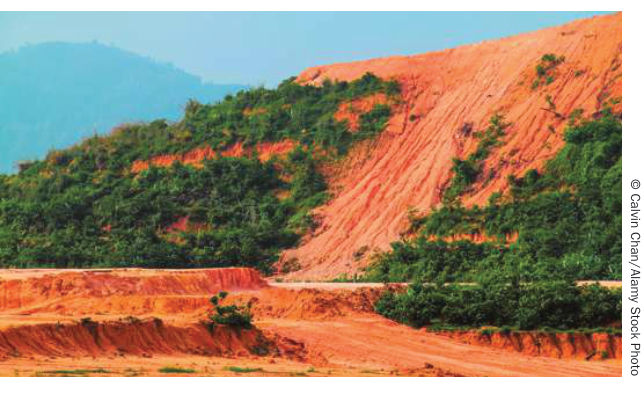
Figure 27.22
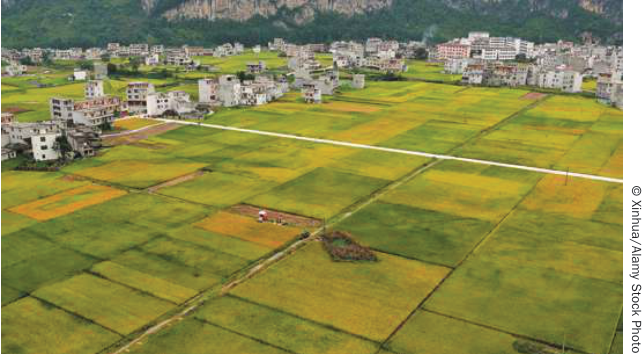
Figure 27.23