Chapter 33Transport in Plants
Key Concepts
33.1 Plants Acquire Water and Minerals from the Soil
33.2 Water and Minerals Are Transported in the Xylem
33.3 Stomata Control the Loss of Water and the Uptake of CO2
33.4 Solutes Are Transported in the Phloem
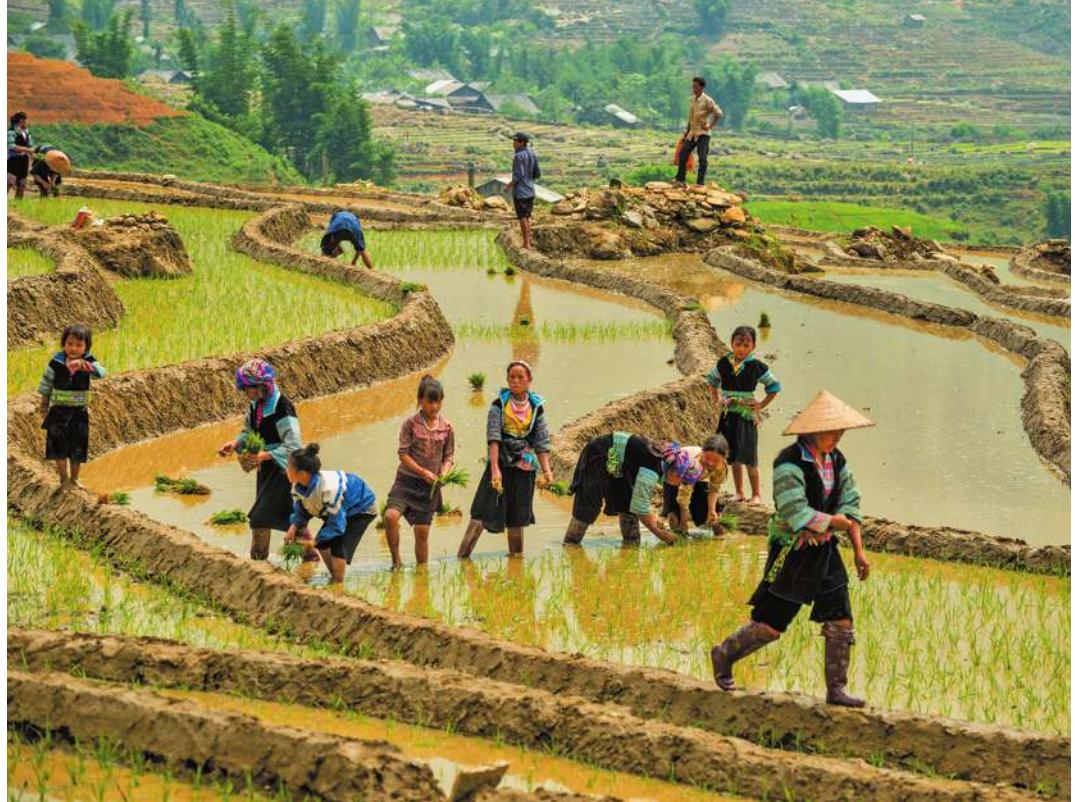
Cultivation of rice, the most important food crop in Asia, requires large quantities of water.
© Izzet Kenlar/Gatty images
Investigating Life: Thirty Rice
Plants need a lot of water to grow. Crop plant cultivation consumes far more water than all other human activities combined. Meeting the demand is especially challenging in drought-prone regions, compelling us to understand how plants use water so that we can select or breed plants that use it more efficiently. Much of the mass that plants acquire as they grow is due to their net fixation of atmospheric CO2 into carbohydrates through photosynthesis. As the CO2 used in photosynthesis enters the plant, generally through open stomata in the leaves, water is lost to the atmosphere. The ratio of carbon fixed to water lost is known as a plant’s water-use efficiency.
One of the least water-efficient of all crop plants is, unfortunately, one of our most important: rice. Rice plants use up to three times more water per unit of growth than crops such as wheat and corn. The precariousness of heavily water-dependent rice farming was dramatically demonstrated in eastern India between 1997 and 2003, when drought reduced rice production by more than 5 million tons—some farmers lost up to 50% of their crops.
A strain of rice requiring less water yet producing the same amount of grain would both make the world supply of rice less vulnerable to drought and help conserve water for other uses. A team of scientists began the quest for such a strain by studying the model organism Arabidopsis thaliana. They searched for mutations of A. thaliana that had superior water-use efficiency. One genetic variant they studied has an extensive root system (indicating higher capacity for water uptake) and thick leaves with abundant photosynthetic tissue (indicating prolific photosynthesis). Molecular and physiological characterization linked the improved water usage of this A. thaliana strain to a mutation in a single gene that codes for a transcription factor that the scientists called HARDY. This protein turns out to be a member of a family of transcription factors that plants use to regulate genes in response to biotic and abiotic stress. When biotechnologists isolated this gene (HARDY) and put it into rice plants, the transformed rice plants not only had higher water-use efficiency than wild-type rice plants but were more tolerant of dry soil as well.
Laboratories around the world are using A. thaliana to isolate genes involved in water usage and other important physiological processes. The knowledge gained from these studies may lead to various improvements of crop plants.
QA What methods are used to reduce water loss in agriculture? (Find the answer on page 760.)
Plants Acquire Water and Minerals from the Soil
Learning Objectives
- 33.1.1 Describe how solute potential and pressure potential affect the movement of water across the plant cell membrane.
- 33.1.2 Describe how aquaporins, ion channels, and ion pumps affect the movement of water and solutes across the plant cell membrane.
- 33.1.3 Using the terms “apoplast” and “symplast,” describe the role of the Casparian strip in regulating the movement of water and ions from the soil to the xylem.
Terrestrial plants must obtain both water and mineral nutrients from the soil, through their roots, and the water is transported through the plant in xylem tissue. Carbohydrates and other important materials mostly originate in leaves and circulate through the phloem (Figure 33.1). Water is required for photosynthesis in the leaves (see Key Concept 10.1), for transporting solutes between plant organs, for cooling the plant, and for developing the internal pressure that supports the plant body.
The minerals that a plant needs are transported along with the water. Several steps in water and mineral transport are considered in this chapter. In this key concept we focus on the first part of the journey—the uptake of water and minerals into the roots and their transport into the xylem.
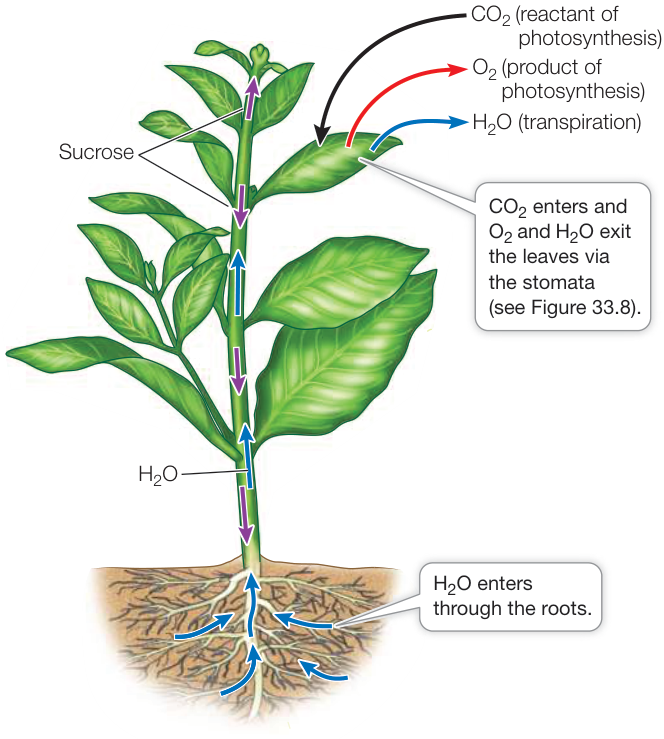
Figure 33.1 The Pathways of Water and Solutes in a Plant Water travels from the soil to the atmosphere, with only a small fraction used within the plant.
Water potential differences govern the direction of water movement
Water moves into and out of plant cells. The direction of water movement from cell to cell is determined by water potential ( , psi), defined as the tendency of water molecules to move in response to forces such as pressure and solute concentration gradients. Water tends to move away from regions of high pressure and toward regions of high solute concentration.
How does a high solute concentration affect the tendency of water to move across a cell membrane? The explanations traditionally given in introductory biology textbooks and on the internet are now considered to be misconceptions. A more current explanation in line with physicists’ understanding is as follows: While water molecules are able to diffuse across a semipermeable membrane in both directions, solute molecules cannot cross the membrane. As a result, the movement of solute molecules that contact a semipermeable membrane is redirected away from the membrane, much as a ball bounces off a wall. This movement of the solute particles away from the membrane impacts the solvent as well, with the result that the solvent (water) is also directed away from the membrane. Therefore a higher solute concentration decreases the effective pressure of free water on the membrane, allowing more water to enter.
In the case of plant roots in soil water, whenever water moves across a selectively permeable membrane by osmosis, it moves toward the region of lower (more negative) water potential (Figure 33.2A, left). We measure water potential in megapascals (MPa), a unit of pressure. Atmospheric pressure, 1 atmosphere, is about 0.1 MPa, or 14.7 pounds per square inch; a typical pressure in an automobile tire is about 0.2 MPa.
Connect the Concepts The key to water movement is osmosis. You can review the process of osmosis and the role of the cell membrane in Key Concept 6.3.
Water potential has two major components:
- 1. Solute potential (): As solutes are added to pure water, the tendency to take up water increases, and water potential decreases.
- 2. Pressure potential (): As plant cells take up water, they tend to swell. The result is an increase in pressure inside the cell (turgor pressure), which decreases the tendency of the cell to take up more water (increases the water potential) (Figure 33.2A, right).
A solution’s water potential is the sum of its (usually negative) solute potential () and its (usually positive) pressure potential ():
By definition, the solute potential of pure water is zero (no solutes); because added solutes decrease water potential, solute potential is usually negative. Pressure potential is defined as zero when it equals atmospheric pressure. Pressure potential less than atmospheric pressure is negative; pressure potential greater than atmospheric pressure is positive.
To see how these relationships affect cell expansion, consider what happens if a plant cell is immersed in a beaker of pure water
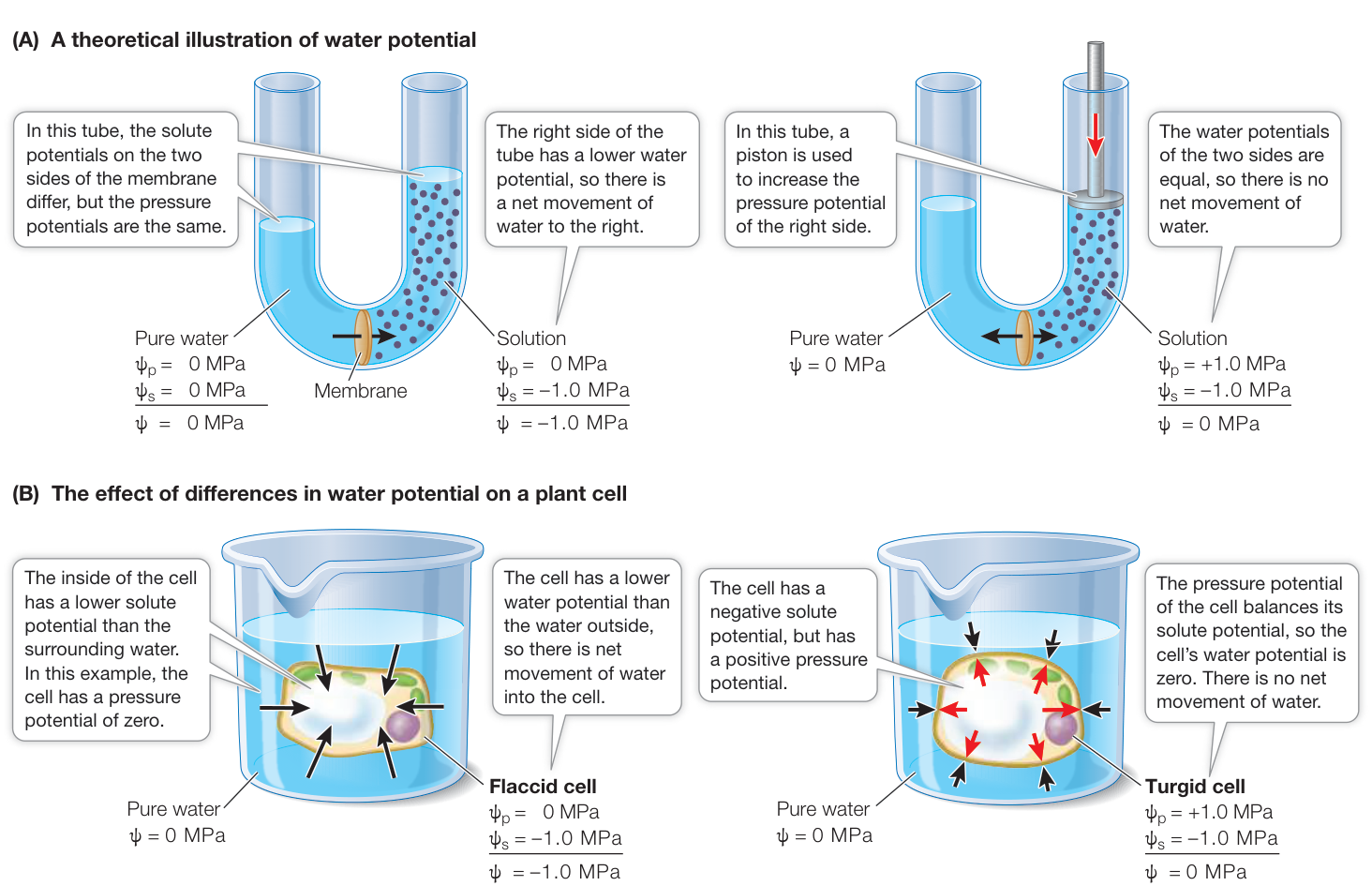
Figure 33.2 Water Potential, Solute Potential, and Pressure Potential
(Figure 33.2B). If the cell is initially flaccid (i.e., the internal pressure is equal to atmospheric pressure), then the solutes in the cell will cause water to enter by osmosis until the pressure potential exactly balances the solute potential and the water potential is zero. At this point the cell is turgid—that is, it has a significantly positive pressure potential. Plant cells are surrounded by water with dissolved solutes rather than pure water, and their water potential is dependent on the water potential in the soil. But because turgid cells have a positive pressure potential, there is no net movement of water into them. The physical structures of many plants are maintained by the positive pressure potential of the water in their cells. If the pressure potential drops (for example, if the plant does not have enough water), the plant wilts (Figure 33.3).
Water and ions move across the root cell’s cell membrane
Now that you’ve seen how water can move into plant cells by osmosis, what about ions? The movement of water and mineral ions across a root cell membrane can be impeded for two reasons:
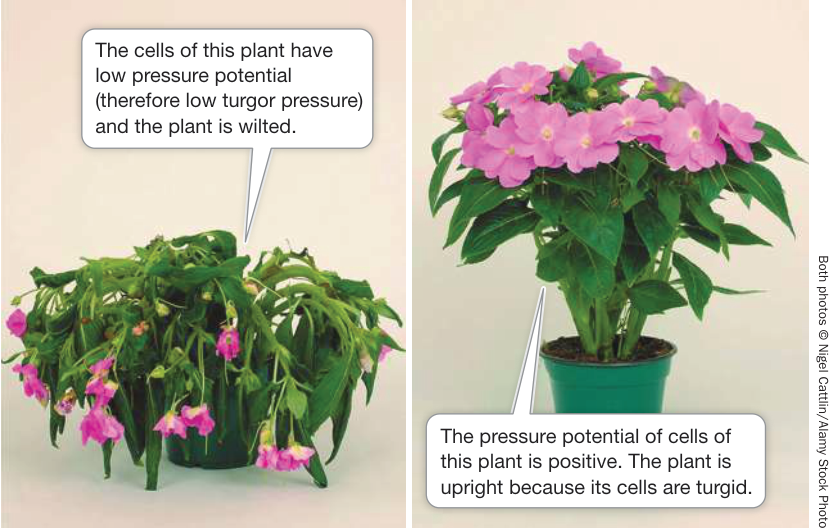
Figure 33.3 A Wilted Plant A plant wilts when the pressure potential in its cells (and therefore the turgor pressure) is low. Q: Sometimes a plant will wilt even if it is adequately watered, because of an excess of fertilizer (dissolved ions in the soil). Why?
- The interior of the membrane is hydrophobic, whereas water and mineral ions are polar.
- Some mineral ions must be moved against their concentration gradients.
However, as you saw in Chapter 6, membrane proteins assist with the movement of materials across membranes:
- Aquaporins. Aquaporins (see Key Concept 6.3) are located in both the cell membrane and the tonoplast (vacuolar membrane) of a plant cell. Aquaporins allow water to diffuse rapidly across these membranes. The number of aquaporins in a particular cell varies by cell type, and can vary with environmental conditions. The permeability of some aquaporins also can be regulated. Alterations in aquaporin abundance and permeability change the rate of osmosis across the membrane. Note that water movement through aquaporins is always passive: from a region of higher water potential to one of lower water potential.
- Ion channels and pumps. When the concentration of a charged ion in the soil is greater than that in the plant, transport proteins can move the ions into the plant by facilitated diffusion, which is a passive process (see Key Concept 6.3). The concentrations of most ions in the soil solution, however, are lower than those inside the plant. In these cases the plant must actively take up ions against their concentration gradients—a process that requires energy (see Key Concept 6.4).
Electric charge differences also play a role in the uptake of mineral ions. For example, a negatively charged ion that moves into a negatively charged compartment is moving against an electrical gradient, and this requires energy. Concentration and electrical gradients combine to form an electrochemical gradient. Uptake against an electrochemical gradient involves active transport, which requires energy and specific transport proteins.
Connect the Concepts Electrochemical gradients are important in many biological systems. Learn more about electrochemical gradients, and their role in the animal nervous system, in Key Concept 43.2.
Active transport in plants is frequently driven by a proton pump, which uses energy obtained from ATP to move protons out of the cell against a proton concentration gradient (Figure 33.4, step 1). Because protons () are positively charged, their accumulation outside the cell has two results:
- An electrical gradient is created, with the region outside the cell more positively charged than the inside.
- A proton concentration gradient develops, with more protons outside the cell than inside.
Both the electrical gradient and the concentration gradient affect the movement of other ions. The balance between the electrical and concentration gradients is such that cations (positively charged ions) such as potassium () can move into the cell by facilitated diffusion through specific membrane channels (Figure 33.4, step 2). In addition, the proton concentration gradient can be harnessed to drive secondary active transport, in which the energy released when ions move back into the cell is coupled to movement of another ion against its electrochemical gradient. For example, symport proteins couple the movement of chloride () against the electrochemical gradient with that of (Figure 33.4, step 3).
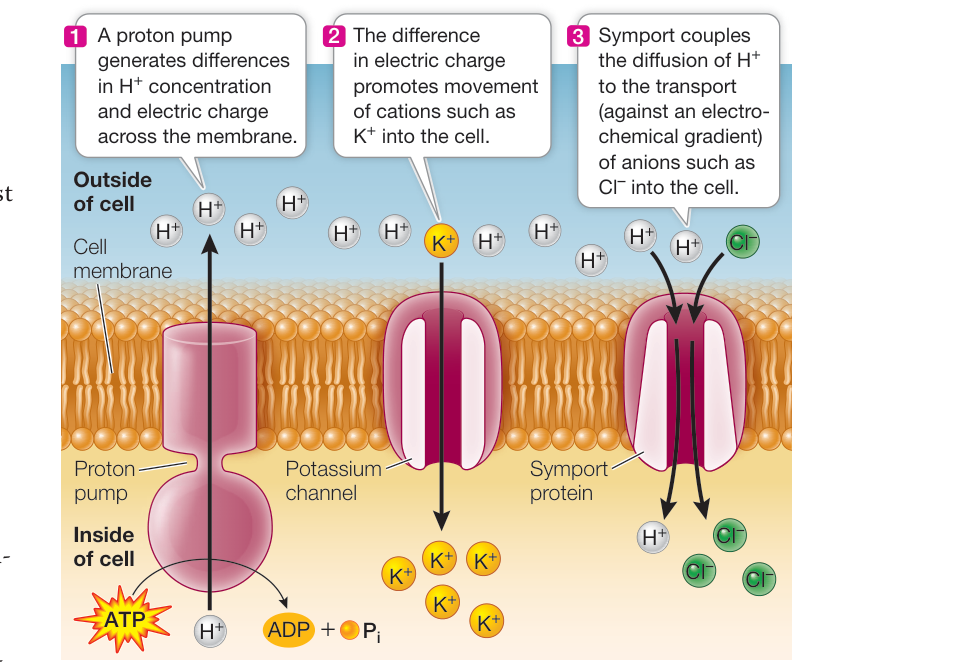
Figure 33.4 The Proton Pump in Transport of and The active transport of hydrogen ions ( ) out of the cell by the proton pump (1) drives the movement of both cations (2) and anions (3) into the cell.
Water and ions pass to the xylem by way of the apoplast and symplast
The journey from the soil through the roots to the xylem occurs primarily by one of two pathways, either separately or simultaneously: the fast lane (called the apoplast) and the slow(er) lane (called the symplast) (Figure 33.5):
- The apoplast (Greek apo, “away from,” + plast, “living material”) consists of the cell walls, which lie outside the cell membranes, and the intercellular spaces (spaces between cells) that are common in many plant tissues. Typically, the apoplast occupies 5%–20% of plant tissues by volume. The apoplast is a continuous meshwork through which water and dissolved substances can flow without ever having to cross a membrane. Movement of materials through the apoplast is thus unregulated and rapid.
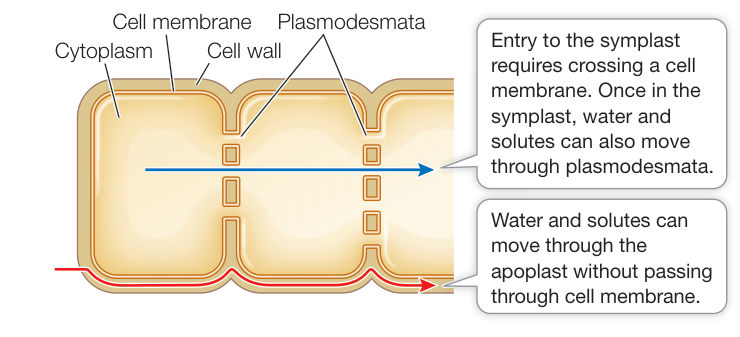
Figure 33.5 Apoplast and Symplast Plant cell walls and intercellular spaces constitute the apoplast. The symplast comprises the living cells connected by plasmodesmata. To enter the symplast, water and solutes must pass through a cell membrane. No such selective barrier limits movement through the apoplast.
- The symplast (Greek sym, “together with”) is all the other parts of the cells, the fluid part of which is connected by plasmodesmata (see Figure 7.16B). Secretory cells such as those in flowers that make nectar have a lot of plasmodesmata. So do cells in the root tip, where the selectively permeable cell membranes of the root cells control access to the symplast. Movement of water and dissolved substances into the symplast is tightly regulated.
Water and minerals that pass from the soil solution through the apoplast can travel as far as the endodermis, the innermost layer of the root cortex (Figure 33.6; see Key Concept 32.3). The cell wall of the endodermis is distinguished from the rest of the ground tissue by the presence of a lignin-rich strip of material that is surrounded by a waxy layer of suberin (a hydrophobic substance composed largely of fatty acids). Called the Casparian strip, this region acts as a seal that prevents water and ions from moving through apoplastic spaces between the endodermal cells. Therefore all water and ions must enter the symplast in order to cross the endodermis into the stele, which contains the vascular tissues of the root. The materials pass from the endodermal cells to cells in the stele via plasmodesmata.
Once they have passed the endodermal barrier, water and minerals remain in the symplast until they reach parenchyma cells in the pericycle or xylem. These cells then actively export mineral ions into the apoplast of the stele. As the concentrations of mineral ions in the apoplast increase, its water potential becomes more negative. Consequently, water moves out of the cells and into the apoplast by osmosis. In other words, ions are transported actively, and water follows passively. The end result of transport is that water and minerals end up in the xylem, where they constitute the xylem sap. Table 33.1 shows the composition of xylem sap.
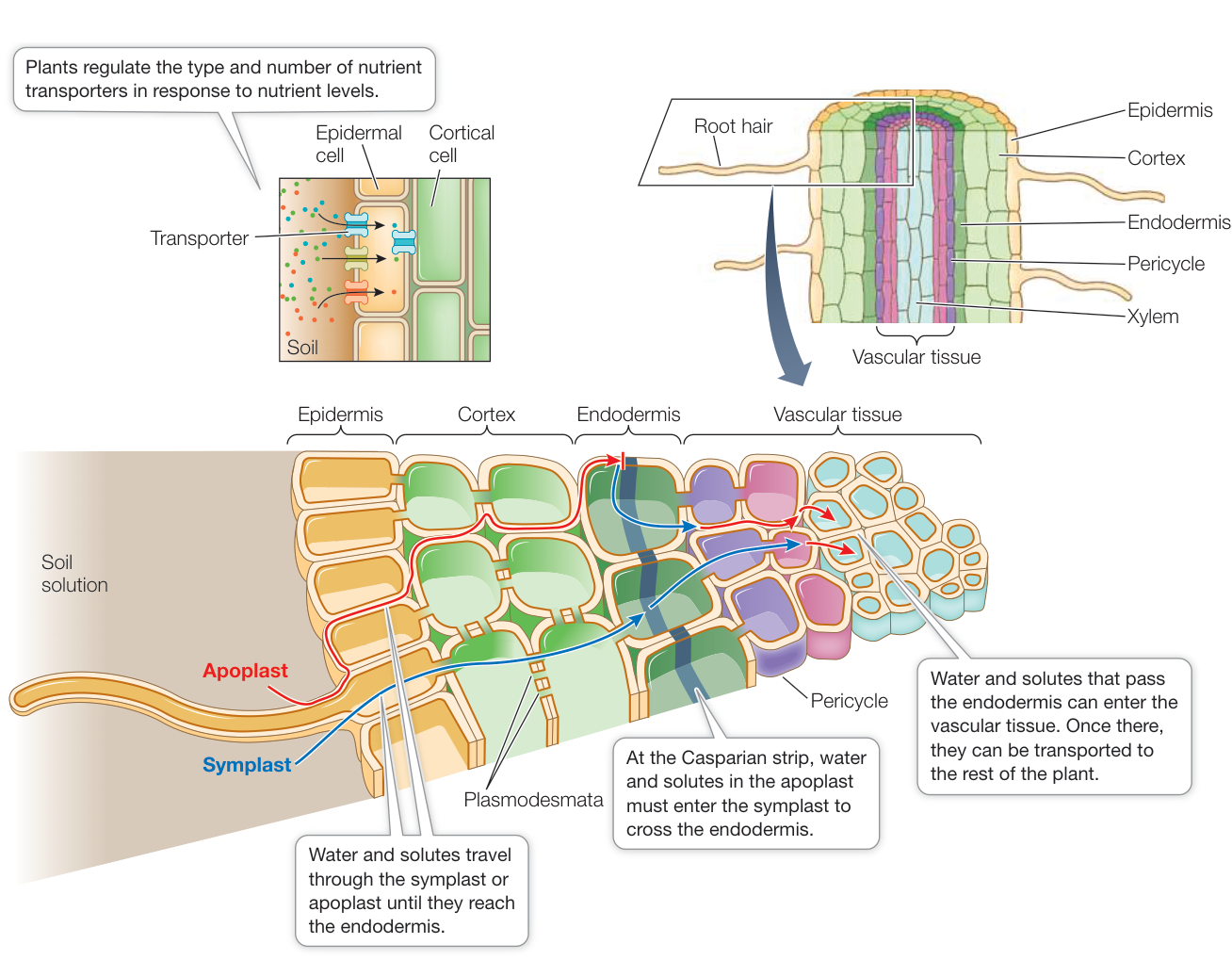
Figure 33.6 Pathways to the Root Xylem Water and solutes can move into the root through the symplast or the apoplast until they reach the endodermis (shown in dark green); there the water and solutes must enter the symplast to bypass the Casparian strip (dark blue), a region of the endodermal cell wall that contains lignin and is impregnated with the water-repelling substance suberin. Inside the vascular tissue, the water and solutes enter the xylem (light blue). Q: What type of animal cell junction is best compared with the Casparian strip? See Figure 6.6.
Table 33.1 Composition of Xylem and Phloem Fluids
| Substance | Xylem | Phloem |
|---|---|---|
| Ions, minerals (g/L) | 0.2–4 | 1–5 |
| Amino acids (g/L) | 0.1–1 | 5–40 |
| Sugars (g/L) | 0 | 100–300 |
| Solute potential, (MPa) | -0.02 to -0.2 | -0.6 to -3 |
Recap and Assess
Differences in water potential govern the osmotic flow of water from the soil into the plant stele; this is a passive process. Uptake of minerals from the soil that occurs along an electrochemical gradient is an active process requiring energy and membrane transport proteins. Water and minerals can move toward the root vascular tissue through either the apoplast or the symplast, but cannot reach the xylem without crossing a cell membrane.
- Consider two cells, A and B:
| Cell A | Cell B |
|---|---|
| MPa | MPa |
| MPa | MPa |
Assuming the cells are sitting next to one another, which way will the water flow: toward cell A or toward cell B? Explain your answer.
- What is the role of the cell wall in determining the direction of water movement and plant form?
- A major component of root growth is osmotically driven cell expansion, which is achieved by the formation and swelling of the central vacuole. What role would you predict the presence and abundance of aquaporins to play in this cell expansion?
So far we’ve described the movement of water and minerals into plant roots and their entry into the root xylem. How does the xylem sap move once it is in the xylem?
Water and Minerals Are Transported in the Xylem
Learning Objectives
- 33.2.1 Solve problems relating to the transport of water by the xylem when given information on water potential.
- 33.2.2 Discuss the interaction of the processes of transpiration, cohesion, and tension in the movement of water through the xylem.
- 33.2.3 Provide evidence for the importance of each of the processes of transpiration, cohesion, and tension in the movement of water through the xylem.
Once water has arrived in the xylem, it is all “uphill” from there. Before considering the ascent of water and minerals to the leaves, reacquaint yourself with the cells in the xylem through which water and minerals are transported: the tracheids and vessel elements (see Figure 32.10A,B). Recall that these xylem cells are dead and lack all cell contents. When fused end-to-end, they form long tubular “straws” of lignified cell walls called xylem vessels. These vessels provide both structural support and the rigidity needed to maintain a gradient of pressure.
Consider the magnitude of what the xylem accomplishes. A single maple tree 15 meters tall was estimated to have some 177,000 leaves, with a total leaf surface area of 675 square meters—about one and a half times the area of a basketball court. During a summer day, that tree loses 220 liters of water per hour to the atmosphere by evaporation from the leaves. So to prevent wilting, the xylem needs to transport 220 liters of water up to 15 meters from the roots to the leaves every hour. (By comparison, a 50-gallon drum holds 189 liters.)
Connect the Concepts As you learn about water movement in the xylem, keep in mind the properties of water described in Key Concept 2.4.
Various hypotheses have proposed how water moves in the xylem
Until the twentieth century, two mechanisms for moving water to the top of a tree through the xylem were under consideration: upward pressure by living cells and capillary action. Both of these possibilities were largely ruled out by experiments:
- A simple experiment in 1893 ruled out the hypothesis that root cells might initiate a pumping mechanism to propel water upward. A tree was cut at its base and the sawed-off part was placed in a vat containing a solution of poison that killed living cells. The poison rose up the trunk, killing any living cells it encountered along the way. The experiment demonstrated that a living pump in the root is not necessary to push the xylem sap up a tree. Because the roots were absent, it was clear that they were not involved in this movement through the xylem. Furthermore, when the poison sap reached the leaves, they died and all upward movement of the solution stopped, showing that living leaves are necessary for water to move in the xylem.
- Because of its surface tension (see Key Concept 2.4) and adhesive forces between water and its container, water will move up a narrow column by a mechanism called capillary action. You’ve seen this when you put a straw into a cup of water. Capillary action was ruled out as a primary mechanism for upward xylem sap transport when calculations showed that xylem vessels (at 100 micrometers [ ] in diameter) are too wide to get water to the top of a 15-meter tree in this fashion. In fact, the maximum height for a water column raised by capillary action alone in a 100- tube would be only 0.15 meters.
The transpiration–cohesion–tension mechanism accounts for xylem transport
The current model of xylem transport involves three processes (Figure 33.7):
- Transpiration of water molecules from the leaves by evaporation
- Tension (negative pressure) in the xylem sap resulting from transpiration from the leaves
- Cohesion of water molecules in the xylem sap, from the leaves to the roots
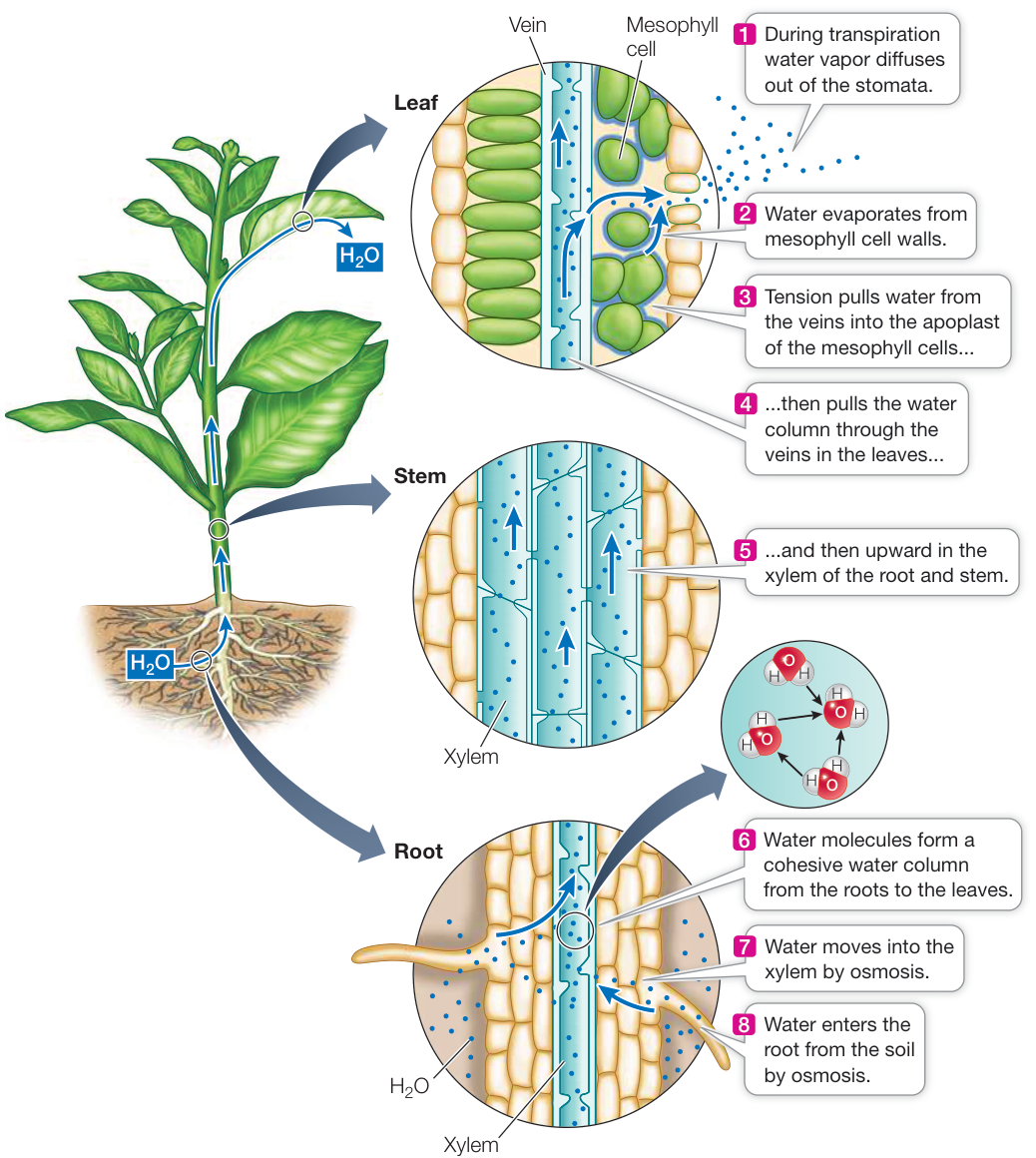
Figure 33.7 The Transpiration–Cohesion–Tension Mechanism Transpiration causes evaporation from mesophyll cell walls, generating tension on the xylem. Cohesion among water molecules in the xylem transmits the tension from the leaf to the root, causing water to flow in the xylem from the roots to the atmosphere. Q: What would be the effect of high relative humidity in the air around the leaves on root uptake of water? Explain.
Each part of this theory is supported by evidence:
- The difference in water potential between the soil solution and the air is huge, on the order of MPa. This difference should generate more than enough tension to pull a water column up a tree.
- There is a continuous column of water in the xylem, which is made possible by the cohesive forces holding water molecules together.
- Actual measurements of xylem pressures in cut stems show negative pressure potentials, indicating considerable tension in the xylem.
The concentration of water vapor in the atmosphere is lower than that in the air spaces inside the leaf. Because of this difference, water vapor diffuses from the intercellular spaces of the leaf to the outside air, in a process called transpiration. Within the leaf, water evaporates from the moist walls of the mesophyll cells and enters the intercellular spaces. As water evaporates from the aqueous film coating each cell, the film shrinks back into tiny spaces in the cell walls, increasing the curvature of the water surface and thus increasing its surface tension. This increased tension (negative pressure potential) in the surface film draws more water into the walls from the cells, replacing that which was lost. The resulting tension in the mesophyll draws water from the xylem of the nearest vein into the apoplast surrounding the mesophyll cells. The removal of water from the veins, in turn, establishes tension on the entire column of water contained in the xylem. Cohesion between water molecules in the column prevents the column from breaking. So these three forces—transpiration, tension, and cohesion—operate together to draw water up the xylem, all the way from the roots to the leaves.
The transpiration–cohesion–tension mechanism accounts for the movement of water through the xylem. Dissolved mineral ions are carried along with the water to all of the plant’s living tissues, where the ions are used for various cellular processes. In addition to promoting the transport of minerals, transpiration has an added benefit of cooling a plant’s leaves. The evaporation of water from mesophyll cells consumes heat, thereby decreasing the leaf temperature. A farmer can hold a leaf between thumb and forefinger to estimate its temperature; if the leaf doesn’t feel cool, that means transpiration is not occurring and it must be time to water.
As you saw in the opening investigation of this chapter, farmers strive to improve the water-use efficiency of their crops. The roles of the root system and transpiration are important. A gene from the model plant Arabidopsis thaliana has been shown to improve water-use efficiency by encoding a transcription factor that regulates the expression of other genes that affect this trait (Investigating Life: Improving Water-Use Efficiency in Rice).
Investigating Life: Improving Water-Use Efficiency in Rice
Experiment
Original Paper: A. Karaba et al. 2007. Improvement of water use efficiency in rice by expression of HARDY, an Arabidopsis drought and salt resistance gene. Proc Natl Acad Sci USA 104: 15270–15275.
The objective of improving rice production involves cultivating a large amount of plant material (biomass)—meaning a large amount of grain—while using less water. The relationship between biomass produced and water consumed is called water-use efficiency. A team at Virginia Polytechnic University led by Andrew Pereira approached this problem by isolating a gene that confers drought resistance from the model plant Arabidopsis thaliana. This gene, called HARDY, encodes a transcription factor in the AP/ERF family that activates transcription of genes involved in the plant’s response to stresses. The team showed that A. thaliana strains that expressed the HARDY transcription factor were much more resistant to drought and to an environment high in dissolved salts. They then inserted the HARDY gene into a high-expressing vector and made transgenic rice plants. Initial studies showed that the plants were drought-resistant. (Photos from A. Karaba et al. © 2007. National Academy of Sciences U.S.A.)
HYPOTHESIS A gene from A. thaliana confers drought resistance and improves water-use efficiency.
METHOD
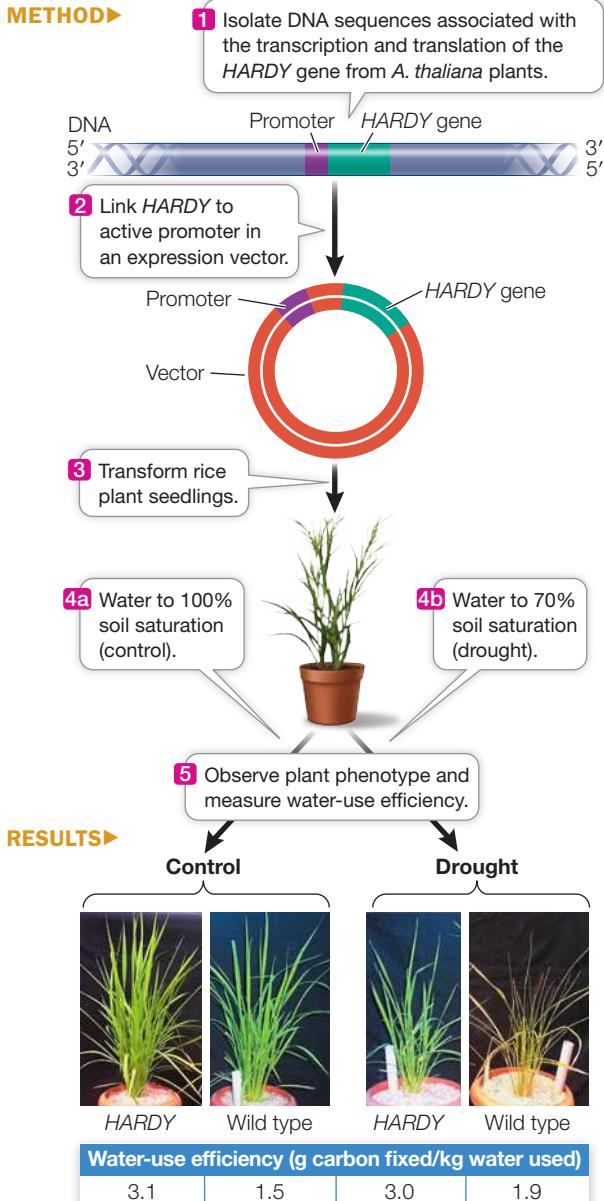
CONCLUSION High expression of the A. thaliana gene HARDY in rice plants confers drought resistance and improved water-use efficiency.
Work with the Data
The investigators measured several parameters in both wild-type and transgenic HARDY rice:
- Water-use efficiency: g carbon fixed/kg water used
- Transpiration rate: water lost in g/cm2 plant area/day
- Carbon fixation rate: g/cm2 plant area/day
- Biomass accumulation: g in root + shoot
Results are shown in the table and expressed as mean ± SD (standard deviation; see Appendix B for explanation of SD).
| Parameter | Wild type | HARDY |
|---|---|---|
| Water-use efficiency | 1.5 ± 0.06 | 3.0 ± 0.5 |
| Transpiration rate | 5.2 ± 0.2 | 4.0 ± 0.4 |
| Carbon fixation rate | 0.7 ± 0.06 | 1.3 ± 0.06 |
| Biomass accumulation | 7.5 ± 0.5 | 13.0 ± 0.6 |
QUESTIONS
- Explain the origin of changes in water-use efficiency.
- What statistical test would you use to evaluate the significance of any differences found?
Recap and Assess
The transpiration–cohesion–tension mechanism explains the ascent of xylem sap. Transpiration draws water out of leaves, resulting in tension that pulls water from the xylem. Because of cohesion between water molecules, water is pulled passively through the xylem vessels in continuous columns, always toward a region with lower pressure potential.
- What experiment ruled out the role of pressure from the roots in the upward flow of water in the xylem?
- The table at right shows measurements of water potential () in a 100-meter-tall tree and its surroundings:
| Region | (MPa) |
|---|---|
| Soil water | -0.3 |
| Xylem of root | -0.6 |
| Gravity exerts a force of -0.01 MPa per meter of height above ground. | Xylem of trunk -1.2 Inside of leaf -2.0 Outside air -58.5 |
- Is the water potential in the leaf sufficiently low to draw water to
the top of the tree?
- Would transpiration continue if soil water potential suddenly decreased to -1.0 MPa?
- What would you expect to happen to the xylem water potential if all of the stomata closed?
- Explain why all three parts of the transpiration–cohesion–tension mechanism are necessary for water transfer through the xylem.
- What types of evidence provide support for the transpiration–cohesion–tension mechanism of water transport through the xylem?
Although transpiration provides the driving force for the transport of water and minerals in the xylem, it also results in the loss of tremendous quantities of water from the plant. How plants control this loss will be the subject of the next key concept.
Stomata Control the Loss of Water and the Uptake of CO2
Learning Objectives
- Analyze reasons why stomata do not always remain open, considering the processes of both photosynthesis and water conservation.
- Discuss the importance of the proton pump and K+ ions in the actions of stomata, and list environmental changes that trigger the opening and closing of stomata.
The epidermis of leaves and stems secretes a waxy cuticle, which is impermeable to water and thus helps minimize the loss of water from transpiration. However, the cuticle is also impermeable to CO2. The cuticle poses a dilemma: how can the plant balance its need to retain water with its need to obtain CO2 for photosynthesis?
Stomata control water loss and gas exchange
An elegant compromise has evolved in plants in the form of pores called stomata (singular stoma) in the epidermis of their leaves.
A pair of specialized epidermal cells, called guard cells, controls the opening and closing of each stoma (Figure 33.8A). When the stomata are open, CO2 can enter the leaf by diffusion—but water vapor diffuses out of the leaf at the same time. Closed stomata prevent water loss but also exclude CO2 from the leaf.
Most plants open their stomata only when the light intensity is sufficient to maintain a moderate rate of photosynthesis. At night, when darkness precludes photosynthesis, their stomata are closed; no CO2 is needed, and water is conserved. Even during the day, the stomata close if water is being lost at too rapid a rate.
Stomata are ancient structures; they have been found in plant fossils that are more than 400 million years old. For this reason they are thought to predate the evolution of leaves. Stomata are found in all vascular plants and in many nonvascular plants, including mosses (but not liverworts; see Chapter 26).
The stoma and guard cells seen in Figure 33.8A are typical of eudicots. Monocots typically have specialized epidermal cells associated with their guard cells. However, the principle of operation, which we will now describe in more detail, is the same for both monocot and eudicot stomata.
The guard cells control the size of the stomatal opening
The opening and closing of stomata are regulated by several environmental factors, including light, CO2 levels, temperature, and water availability. Plants can also change the total number of stomata in response to longer-term changes in environmental conditions.
LIGHT AND CO2 CONCENTRATION Guard cells can respond to changes in light and CO2 concentration in a matter of minutes by changing their solute potential. The absorption of light by a pigment in the guard cell’s cell membrane activates a proton pump (see Figure 33.4), which actively transports H+ out of the guard cells and into the apoplast of the surrounding epidermis. The resulting electrochemical gradient drives K+ into the guard cells, where it accumulates (Figure 33.8B). Negatively charged chloride (Cl-) ions and organic ions also move into and out of the guard cells along with the K+ ions, maintaining electrical balance. The increased concentration of K+ and other solutes inside the guard cells makes the solute potential of the guard cells more negative. Water then enters by osmosis, increasing the turgor pressure of the guard cells. The guard cells change their shape, becoming more turgid in response to the increase in pressure potential, so that a space—the stoma—appears between them. This structural change is similar to what happens when air is pumped into a bicycle inner tube; sides that originally lay flat against one another are pushed apart, creating an opening in the center. The stoma closes in the absence of light: the proton pump becomes less active, K+ ions diffuse passively out of the guard cells, water follows by osmosis, the pressure potential decreases, and the guard cells sag together and seal off the stoma. Guard cell membranes are particularly rich in aquaporins, making guard cells well adapted for the rapid water movements involved in stomatal responses.
WATER Stomata also respond to water availability. Water stress is a common problem for plants, especially on a hot, windy day, when plants might close their stomata even when the Sun is shining. When the water potential of the plant declines, the concentration of the hormone abscisic acid increases in the vicinity of the guard cells, causing the stomata to close.
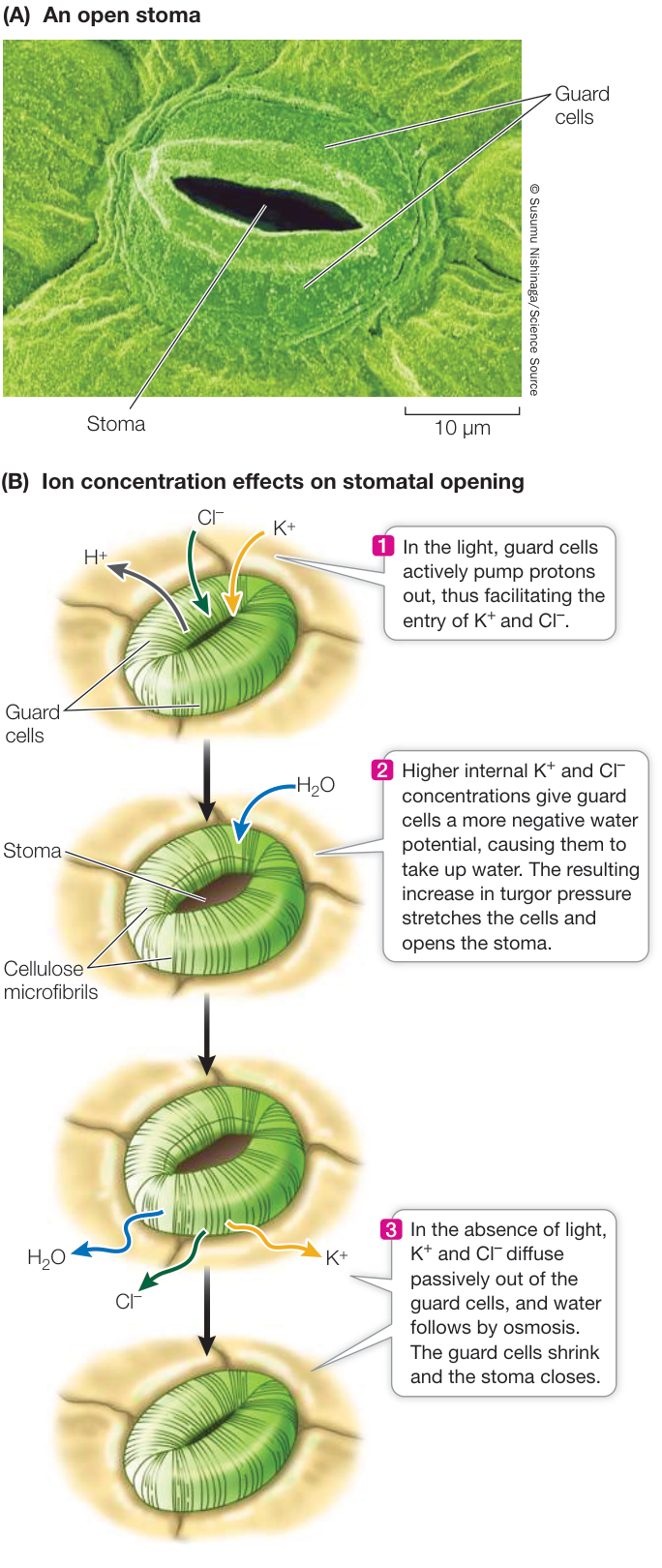
Figure 33.8 Stomata (A) Scanning electron micrograph of an open stoma formed by two sausage-shaped guard cells. (B) Potassium ion concentrations affect the water potential of the guard cells, controlling the opening and closing of stomata. Negatively charged ions (e.g., ) that accompany maintain electrical balance and contribute to the changes in water potential that open and close the stomata.
STOMATA NUMBER A plant can regulate water loss not just by the opening or closing of stomata, but by changing the number of stomata. The process of controlling the number of stomata takes place over days or weeks. Trees, for example, can reduce stomata numbers by shedding leaves, or by making new leaves that have few stomata.
Recap and Assess
, which is needed for photosynthesis, enters leaves via tiny pores called stomata. Stomata also permit the loss of water by transpiration. Guard cells open or close stomata in response to a variety of environmental cues. Plants control their total numbers of stomata by shedding leaves or by altering the density of stomata on new leaves.
- What is the role of ions in the functioning of guard cells?
- Describe how water availability can affect stomatal function.
Stomata are normally open during daylight hours, allowing photosynthesis—the production of carbohydrates from and water. In the next key concept we’ll discuss how the products of photosynthesis are delivered to other parts of the plant, supporting plant growth.
Solutes Are Transported in the Phloem
Learning Objectives
33.4.1 Identify and define sources and sinks in plants as they relate to the products of photosynthesis.
33.4.2 Explain why energy and active transport are required to transport phloem sap and how the pressure flow model makes phloem sap flow possible.
33.4.3 Define and compare the processes of loading and unloading in phloem sap transport.
Photosynthesis occurs primarily in the leaf (see Figure 10.1). The carbohydrate products of photosynthesis (mainly sucrose) diffuse to the nearest small vein (composed of xylem and phloem), where they are actively transported into sieve tube elements of the phloem. The movement of carbohydrates and other solutes through the phloem is called translocation.
The products of photosynthesis are called photosynthates, and the content of the phloem is called the phloem sap (see Table 33.1). Phloem sap is translocated throughout the plant from sources to sinks:
- A source is an organ (such as a mature leaf or a storage root) that produces, by photosynthesis or by digestion of stored reserves, more sugars than it requires.
- A sink is an organ (such as a root, flower, developing fruit, or immature leaf) that consumes sugars for its own growth and storage needs of the plant.
Sources and sinks can change roles. For example, the storage roots of cassava (see Chapter 32) are sinks when they accumulate carbohydrates but are sources when their stored carbohydrates are mobilized to nourish other organs when the plant grows.
Sucrose and other solutes are carried in the phloem
Evidence that the phloem carries sugar and other solutes was first obtained in the 1600s when the Italian scientist Marcello Malpighi removed a ring of bark from the trunk of a tree—that is, he “girdled” the tree. The bark contained the phloem, while the xylem in the underlying wood remained intact. Over time, the bark in the region above the girdle swelled (Figure 33.9).
Malpighi correctly concluded that a solution coming from the leaves above the girdle was trapped in the bark. Later the bark below the girdle died, presumably because it no longer received nutrients from the leaves. Eventually the roots, and then the entire tree, died—suggesting that sugar transport might occur in the phloem.
The cells that make up the phloem’s conducting tubes are sieve tube elements (see Figure 32.10C). Like the vessel elements in the xylem, sieve tube elements meet end-to-end. However, unlike vessel elements, whose end walls are broken down as they mature, sieve tube elements retain their end walls. Communication between sieve tube elements is achieved by plasmodesmata in their end walls. During sieve tube development, the diameter of these plasmodesmata increases 10-to 100-fold, resulting in pores that allow the flow of phloem sap between neighboring cells. Because the end walls of sieve tube elements look and function like sieves, they are called sieve plates (Figure 33.10).
What happens next is truly remarkable and makes sieve tube elements among the most unusual cell types in nature. As the holes in the sieve plates expand, most of the cell contents are lost, including the nucleus, Golgi apparatus, and most of the ribosomes and cytoskeleton. Despite this, sieve tube elements live for an entire growing season in deciduous trees, and for decades in some other plants. How can sieve tube elements live for so long with no nucleus? The answer is that each sieve tube element has one or more companion cells (see Figure 33.10). Companion cells are produced as daughter cells along with the sieve tube elements when parent cells divide. Numerous plasmodesmata link a companion cell with its neighboring sieve tube element. Companion cells retain all their organelles and provide all the components needed to maintain the sieve tube elements—they may be thought of as the “life support systems” of the sieve tube elements.
Plant biologists have used aphids to precisely analyze the contents of the phloem. Aphids are insects that feed on plants by drilling into sieve tube elements with a specialized organ, the stylet. After a stylet is inserted into a plant, the contents of the phloem are forced through the stylet into the aphid’s digestive tract because the pressure potential in the sieve tube is higher than that outside the plant. So great is the pressure that some of the liquid is forced through the insect’s body and out its anus (Figure 33.11).
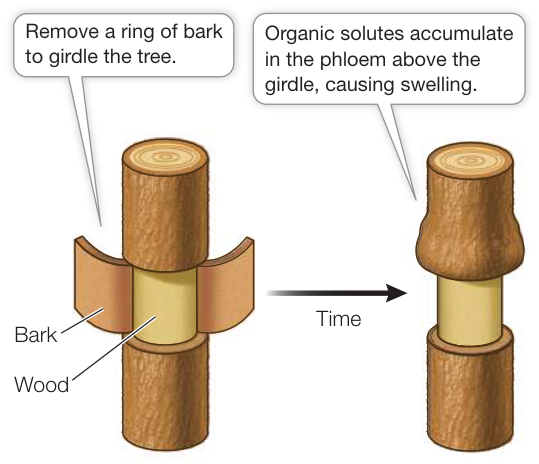
Figure 33.9 Girdling a Tree Disrupts Phloem Transport
If an aphid is frozen in the act of feeding, its body can be chopped off the plant stem, leaving the stylet intact. Phloem sap continues to flow from the stylet for hours, and can be collected for analysis. These and other experiments led to several important observations:
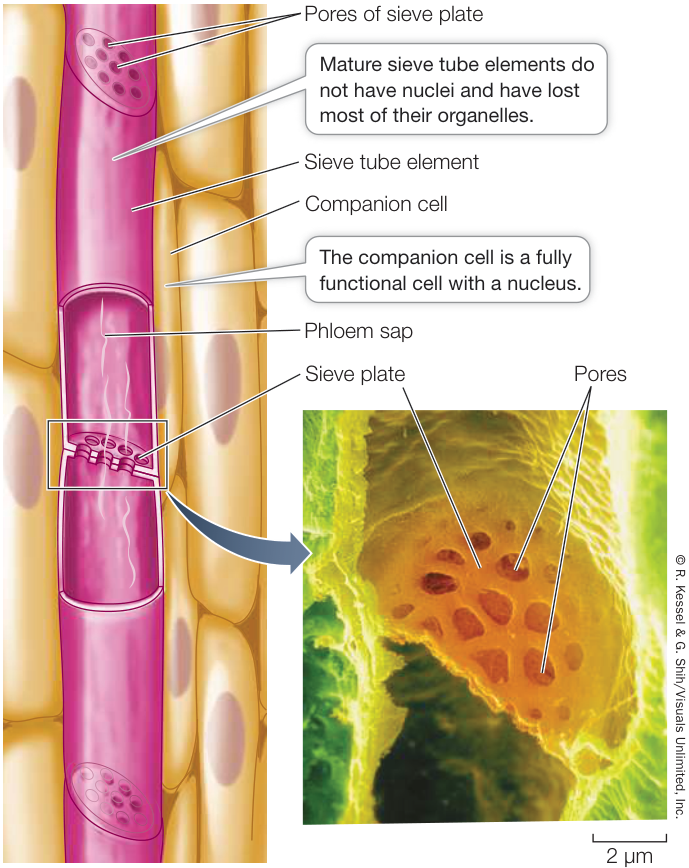
Figure 33.10 Sieve Tubes Individual sieve tube elements join together to form long tubes that transport carbohydrates and other nutrient molecules throughout the plant body in the phloem. Sieve plates form at the ends of each sieve tube element, and phloem sap passes through the pores in the sieve plate.
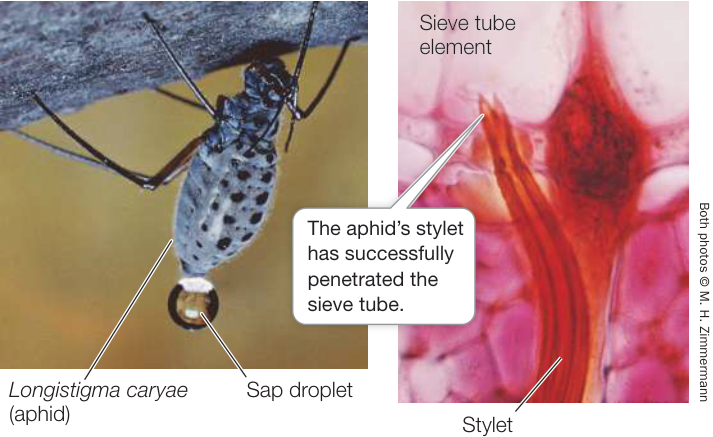
Figure 33.11 Aphid Inserting its Stylet into the Phloem Aphids’ ability to tap into phloem allows them to feed on phloem sap. Researchers have used inserted stylets to collect and examine the contents of the phloem.
- Sucrose makes up 90% of the phloem sap solutes. The phloem sap also contains hormones, proteins, small molecules such as amino acids, mineral nutrients, and viruses.
- The flow rate can be very high, as much as 150 centimeters per hour.
- Different sieve tube elements conduct their contents in different directions—for example, up or down the stem. Therefore the overall movement in the phloem is bidirectional.
- The movement of phloem sap requires living cells, in contrast to movement in the xylem.
The pressure flow model accounts for translocation in the phloem
The observations we just described have led to the pressure flow model as an explanation for translocation in the phloem (Figure 33.12). According to this model, sucrose is actively transported at a source into companion cells, from which it flows through plasmodesmata into the sieve tube elements. This gives those cells a higher sucrose concentration than the surrounding cells (a more negative solute potential), and water therefore enters the sieve tube elements from the xylem by osmosis. The entry of this water increases turgor pressure (causes a more positive pressure potential) at the source end of the sieve tube, so that the entire fluid content of the sieve tube is pushed toward the sink end of the tube—in other words, the sap moves in response to a pressure gradient. Pressure-driven flow is called bulk flow. In the sink, the sucrose is unloaded both passively and by active transport, and water moves back into the xylem. In this way, the gradient of solute potential and pressure potential needed for the movement of phloem sap (translocation) is maintained.
Two steps in phloem translocation require metabolic energy:
- Loading: Transport of sucrose and other solutes from sources into companion cells and then into the sieve tubes
2. Unloading: Transport of solutes from the sieve tubes into sinks
The need for metabolic energy is the reason why phloem transport, unlike xylem transport, requires living cells.
Connect the Concepts Interactions among biochemical pathways (such as photosynthesis, cellular respiration, and the Calvin cycle) that produce carbohydrates that fuel processes such as translocation are discussed in Key Concept 10.5.
Sucrose and other solutes can move from the mesophyll cells into the phloem by either an apolastic pathway or a symplastic pathway. In the apolastic pathway, sucrose and other solutes leave the mesophyll cells and enter the apoplast before they reach the sieve tube elements. Specific sugars and amino acids are then actively transported into cells of the phloem. Because the solutes cross at least one selectively permeable membrane in the apoplastic pathway, selective transport can be used to regulate which specific substances enter the phloem. In the symplastic pathway, the solutes remain within the symplast all the way from the mesophyll cells to the sieve tube elements.
In sink regions, the solutes are transported out of the sieve tube elements and into the surrounding tissues. This unloading serves several purposes: it helps maintain the gradient of solute potential, and hence of pressure potential, in the sieve tubes; it
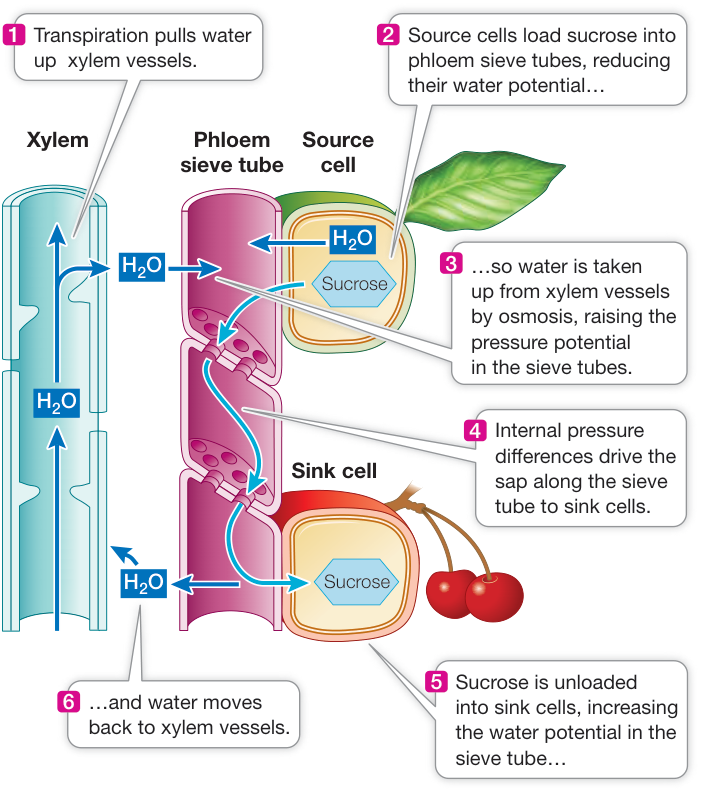
Figure 33.12 The Pressure Flow Model Water potential differences produce a pressure gradient that drives bulk flow of phloem sap from sources to sinks.
Table 33.2 Mechanisms of Sap Flow in Plant Vascular Tissues
| Xylem | Phloem | |
|---|---|---|
| Driving force for flow | Transpiration from leaves | Active transport of sucrose |
| Site of flow | Nonliving vessel elements and tracheids | Living sieve tube elements |
| Pressure potential in sap | Negative (pull from top; tension) | Positive (push from source; pressure) |
helps build up high concentrations of carbohydrates in storage organs, such as developing fruits and seeds; and it moves nutrients to parts of the plant that are growing rapidly, such as shoots that form after the winter.
Table 33.2 contrasts the pressure flow model of translocation in the phloem with the transpiration–cohesion–tension model of xylem transport.
The control of phloem sap travel from source to sink has great importance for people. The parts of plants that we use for food, such as seeds (e.g., the rice in the opening story), fruits, and storage organs, are mostly sinks. Increasing the flow of sucrose into these organs as they develop can increase food production in crop plants.
Recap and Assess
Carbohydrates produced by photosynthesis are translocated from source to sink through the phloem by a pressure flow mechanism.
- Explain the difference between a source and a sink.
- How does loading of sucrose at the source result in bulk flow toward the sink?
Investigating LIFE
QA What methods are used to reduce water loss in agriculture?
Ensuring the availability of water and its dissolved nutrients is a challenge to growing our crops. Historically, the approach of farmers has been to grow crops adapted to the local environment (e.g., rice in areas of heavy rainfall) or adapt the environment for the plant (irrigation). With our changing climate resulting in droughts, a new approach—adapting the plant’s genetic ability to the environment—has begun. The HARDY gene, described in Investigating Life: Improving Water-Use Efficiency in Rice, confers adaptation to drought in rice plants by upregulating the expression of clusters of genes involved in water-use efficiency, the ratio of plant biomass produced to water transpired. This is largely achieved through increased leaf thickness, with more mesophyll cells resulting in increased photosynthesis, as well as increased root growth, for greater uptake of water from the soil. The HARDY gene acts during development of leaves and roots, which you will recall happens throughout the life of the plant.
Future directions
Sorghum bicolor (Figure 33.13) is an important grain crop worldwide, grown for human food, animal feed, and as a source for biofuels. It is especially valuable because it is both drought-and heat-tolerant, and so is important in hot, dry regions in Africa and South America. At the University of Illinois, scientists are trying to improve the water-use efficiency of sorghum by reducing transpiration in two ways: reduction of leaf stomata and shifting more photosynthesis to lower leaves, which are nearer to the ground and thus surrounded by humid air. Thousands of varieties of sorghum are stored in “seed banks.” Samples of these seeds will be germinated and grown in the search for the two desired phenotypes. In addition, a deliberate molecular approach using transgenic plants will be attempted. It is hoped that the result will be a crop even better adapted to make the best use of limited water.
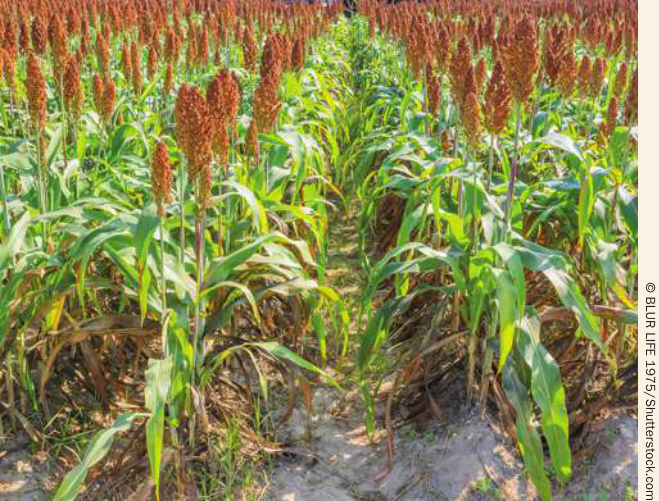
Figure 33.13 Sorghum bicolor

© Izzet Keribar/Getty Images
You should be able to relate each summary to the adjacent figures. If you go to this visual summary in Achieve, you can follow links to figures, animations, activities, and simulations that will help you consolidate the material.
Visual Summary
Plants Acquire Water and Minerals from the Soil
- ■ Water potential () = solute potential () + pressure potential (). Water tends to move toward regions with high concentrations of solutes and away from regions with high pressure.
- ■ The Casparian strip blocks movement of water and minerals through the apoplast.
- ■ Uptake of many mineral nutrients is regulated by the abundance and activity of specific transport proteins.
Questions
- A cell with a high concentration of solutes has a more negative solute potential than does a cell with a lower concentration of solutes (e.g., a cell with MPa has a higher concentration of solutes than a cell with MPa). Explain how assigning a more negative number to these values makes sense in the context of the water potential equation.
- Because the Casparian strip exists, most molecules can’t reach the vascular tissues without passing through a cell membrane. How might this protect plants from toxic compounds present in the soil water? How might this allow cells to regulate the concentration of beneficial molecules?
- Consider a simple model of a plant cell in which the cell wall is represented by a cardboard box and the cell membrane is represented by a tightly sealed plastic bag inside the box. If you placed this model cell in a mud puddle, which part would get wet? Does that part represent the apoplast or the symplast?
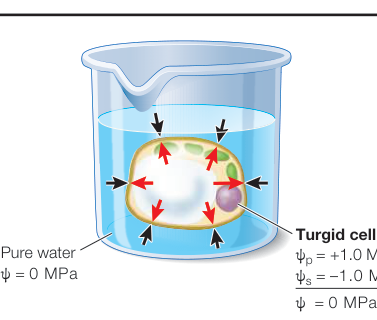
Figure 33.2
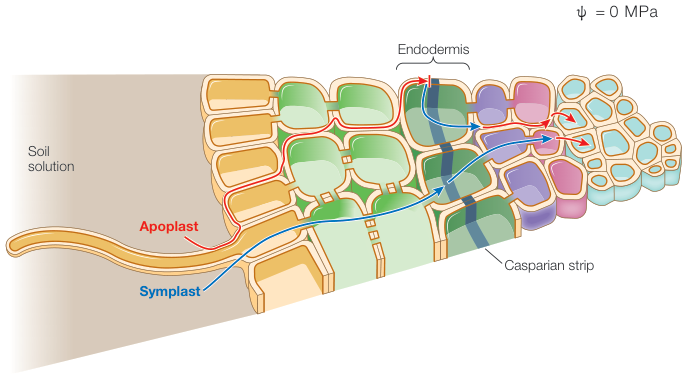
Figure 33.6
Water and Minerals Are Transported in the Xylem
- ■ Loss of water from leaves creates tension (negative pressure) that pulls a column of water through the xylem tissue. This is called the transpiration–cohesion–tension mechanism for movement of xylem sap.
Questions
- Is the pressure potential () in vessel elements through which water is actively moving upward positive or negative?
- A common misconception is that water is pushed up a tree by a positive pressure from the roots. What experimental evidence indicates that this is not required to raise water to the top of a tall tree?
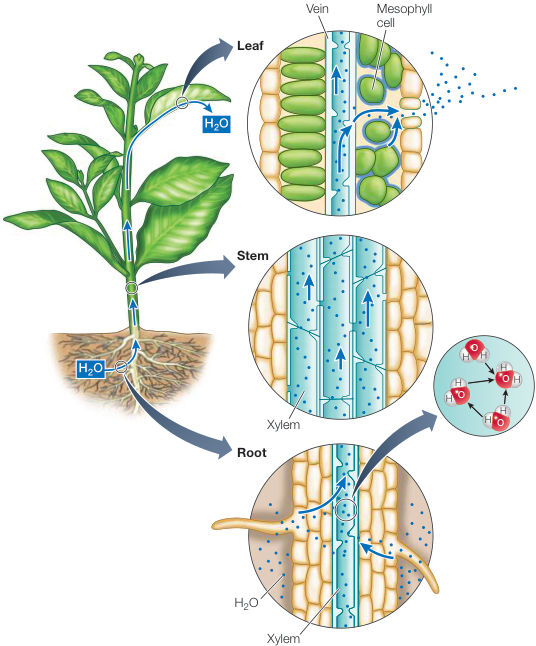
Figure 33.7
Stomata Control the Loss of Water and the Uptake of CO2
- ■ Stomata open to allow for CO2 intake and close to prevent excessive water loss.
- ■ Stomata open when K+ ions enter the guard cells. Water follows osmotically, swelling the guard cells and pushing them apart.
- ■ The hormone abscisic acid can trigger stomatal closure.
Questions
- Explain how light-activation of a proton pump can lead to an influx of K+ ions into the guard cells.
- How can an influx of water into guard cells cause the stomatal pore to open?
- Given the manner in which light regulates stomatal opening, when is the pressure in the conducting cells of the xylem likely to be higher: just before dawn or about an hour after dawn?
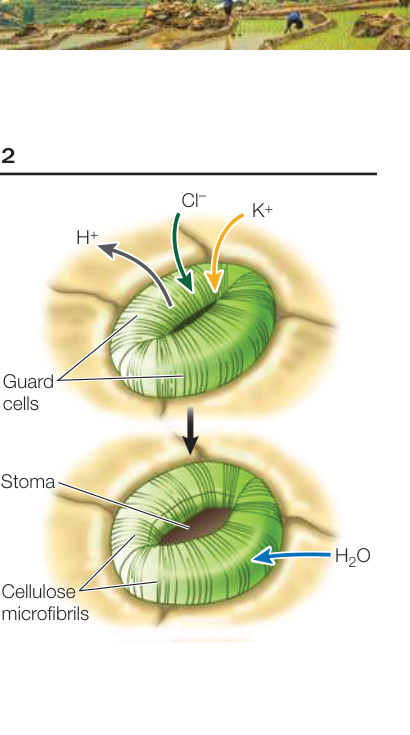
Figure 33.8
Solutes Are Transported in the Phloem
- ■ The phloem carries photosynthate and other solutes from source to sink via bulk flow.
- ■ According to the pressure flow model:
- High concentrations of solutes at the source draw water into the phloem, increasing pressure that pushes the fluid and its contents toward the sink.
- As solutes are unloaded at sinks, water moves out and the pressure drops.
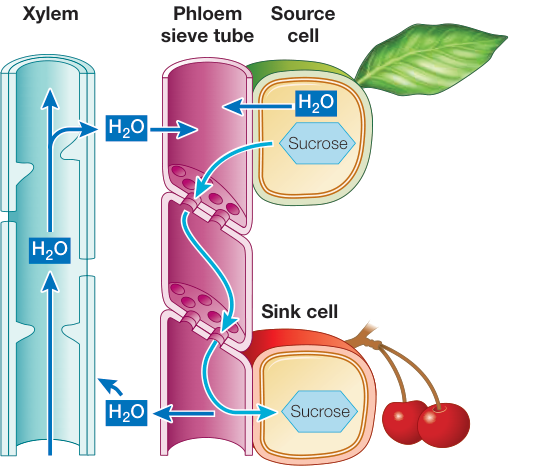
Figure 33.12
Questions
- Very young leaves are sinks, whereas the same leaves, when older, may be sources. Explain what happens to drive the conversion from sink to source.
- It takes energy to move fluids around. The human circulatory system is driven by a large pump (the heart). What energy-requiring pump or pumps drive water transport in the phloem? Hint: How is the pressure that drives bulk flow generated?
- What parts of phloem transport rely on the presence of cell membranes within the phloem tissue?