Chapter 54Species Interactions
Key Concepts
- 54.1 Species Interactions Vary in Direction and Strength across a Continuum
- 54.2 Predation Is a Trophic Interaction in which Predators Benefit and Prey Are Harmed
- 54.3 Competition Is a Negative Interaction in which Species Overlap in the Use of Some Limiting Resource
- 54.4 Positive Interactions Occur When at Least One Species Benefits and None Are Harmed
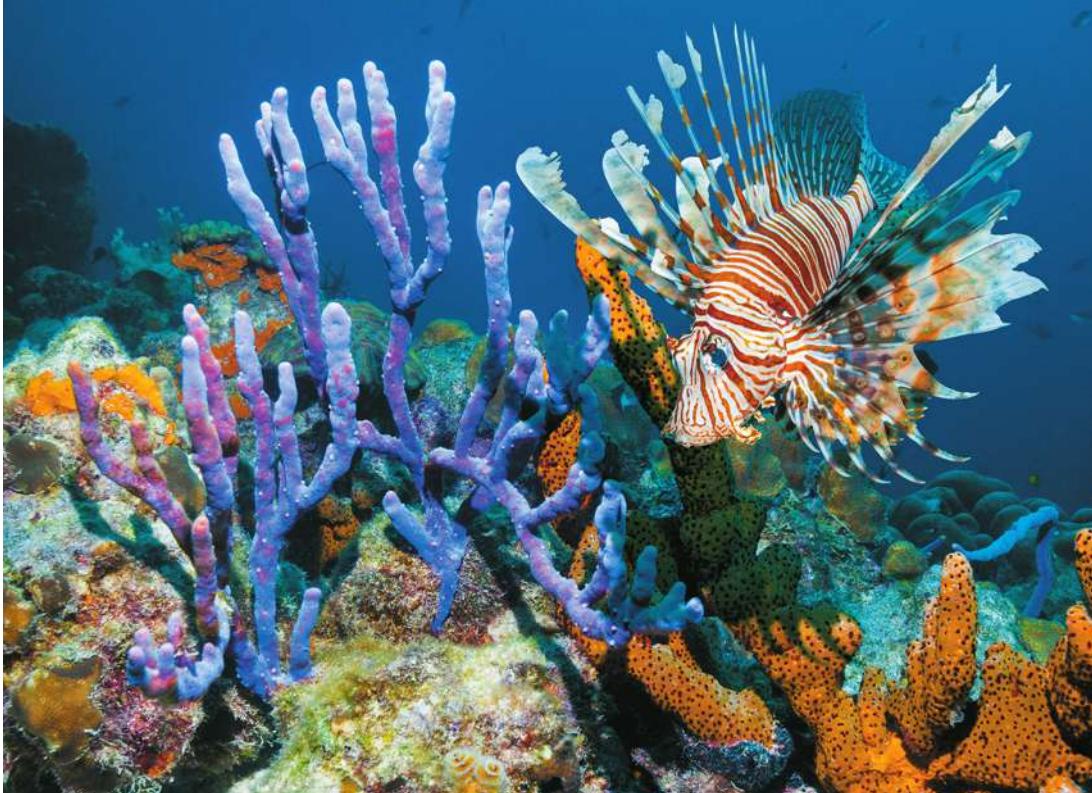
Lionfishes (Pterois spp.), native to the Indo-Pacific region, have invaded the Atlantic Ocean and are drastically reducing native coral-reef fish populations using a novel feeding strategy.
Investigating Life: The Lionfish King
The coral reefs surrounding the Bahamas have endured the effects of human activity for centuries, but for the last three decades they have faced a threat unlike any other—the invasion of two species of beautiful but highly destructive lionfishes (Pterois volitans and P. miles). Lionfishes, first spotted off the coast of Florida in the mid-1980s, are native to the Indo-Pacific region and are popular aquarium fishes. How they came to their new habitats is uncertain, but DNA evidence suggests that they were released into the Atlantic Ocean by unsuspecting aquarium owners. Over the last three decades, lionfish populations have thrived, successfully invading the Western Atlantic, the Caribbean and Gulf of Mexico, and now as far south as Brazil. The invasion has progressed to the point that the density of lionfishes in the Atlantic is greater than in their native Pacific range; in some locations, 450 lionfishes per hectare (2.5 acres) have been recorded.
The invasion of marine habitats by fish predators is extremely rare. What, then, allows lionfishes to be so successful? Part of their success has to do with their ability to tolerate a variety of tropical and subtropical temperatures and salinities—from the warm waters of shallow reefs, mangroves, and sea-grass beds to the colder waters of deep reefs and offshore currents. But the real story lies in their interactions with other species—they are dominant predators and competitors in their introduced range. A survey of lionfish populations at nine sites off the coast of the Bahamas showed that their abundance increased 2.5-fold from 2008 to 2010, despite the presence of 16 species of similar native competitor fishes (which declined by 44% during that period). Gut analyses of lionfishes showed that they are voracious generalist predators; the increase in lionfish abundance coincided with a 65% decline in small-bodied coral-reef fishes representing 42 different species. Other studies have shown similar results, reinforcing the notion that lionfishes may be among the most damaging marine invaders known.
Explaining the success and devastating impact of these invaders requires an understanding of the ecology and evolution of species interactions, the subject of this chapter. We will return to the example of the lionfishes’ extraordinary success in capturing their prey at the end of this chapter.
QA Why are small coral-reef fish species so vulnerable to lionfish predation, and what can be done about it? (Find the answer on page 1233.)
Species Interactions Vary in Direction and Strength across a Continuum
Species Interactions Vary in Direction and Strength across a Continuum
Learning Objectives
54.1.1 Distinguish among predation, competition, positive interactions (mutualism and commensalism), and amensalism.
54.1.2 Define asymmetrical species interactions and evaluate possible reasons for the asymmetry.
54.1.3 Explain how species interactions can result in genetic and coevolutionary changes.
One of life’s certainties is that every species on Earth will encounter and interact with other species. These interactions have consequences that affect not only individuals but populations, and ultimately the distribution and abundance of species. Over the long term, they can lead to evolutionary change in one or more of the interacting species. For ease of description, we will focus on two-way relationships, such as one species eating another or two species competing for the same limiting resources. In reality, species interact with multiple species as part of an integrated ecological community. We will explore these community dynamics in Chapter 55.
Ecologists characterize species interactions based on the effects species have on each other—positive (+), negative (-), or neutral (0)—and whether that effect is trophic (feeding) or not (Figure 54.1). In addition, species interactions may include a symbiosis, a condition in which one of the species lives in or on the other species. As you will see, symbioses can occur whether the interaction is positive or negative. Four broad categories into which species interactions fall are predation, competition, positive interactions, and amensalism.
- Predation is a trophic interaction in which an individual of one species (a predator) kills and/or consumes individuals (or parts of individuals) of another species (its prey). Predation includes carnivory, in which the predator and prey are both animals; herbivory, in which the predator is an animal and the prey is a plant or algae; and parasitism, in which the predator (a parasite) lives symbiotically on or in the prey (its host) and consumes only certain tissues without necessarily killing the host. Some parasites are pathogens that cause disease in their hosts.
- Competition is a nontrophic interaction in which two or more species overlap in the use of at least some of the same required limiting resources, negatively affecting their growth, reproduction, and/or survival. Competition can occur under a variety of circumstances: between predators that depend on the same prey species (such as you saw in the lionfish example), between herbivores that feed on the same host plant, or between pathogenic microbes attacking the same host. The limiting resource need not be food; species may compete for water, space, nesting sites, or even (in the case of plants) sunlight.
| Type of interaction | Effect on species 1 | Effect on species 2 |
|---|---|---|
| Predation (predator–prey) | + | – |
| Carnivory (animal–animal) | + | – |
| Herbivory (animal–plant) | + | – |
| Parasitism (parasite–host) | + | – |
| Competition | – | – |
| Positive interactions (facilitations) | + | 0 or + |
| Mutualism | + | + |
| Commensalism | + | 0 |
| Amensalism | – | 0 |
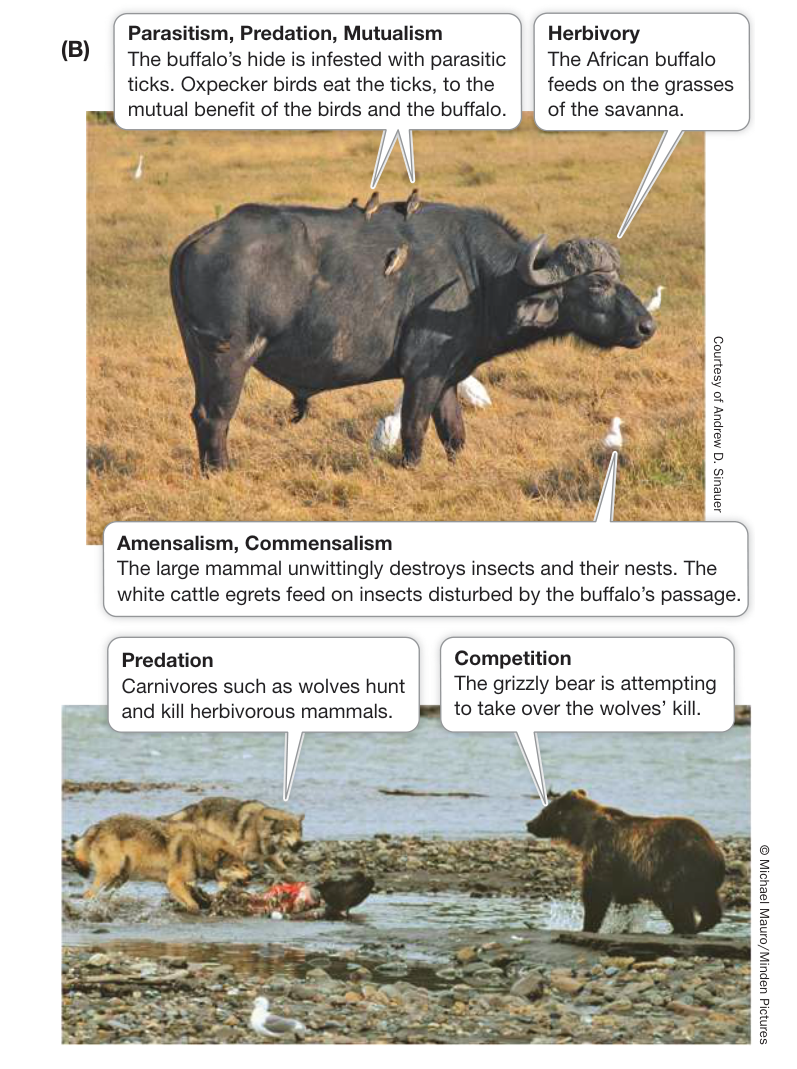
Figure 54.1 Types of Species Interactions Interactions among species can be grouped into categories based on whether their influence on each of the interacting species is positive (+), negative (-), or neutral (0). Species interactions are an everyday occurrence within communities. Q: Are any of the species interactions featured in the photos trophic or symbiotic? If so, which ones? Activity 54.1 Ecological Interactions
- Positive interactions (also known as facilitations) are trophic or nontrophic interactions in which at least one species benefits from the interaction and none are harmed. Positive interactions include mutualisms, in which both species benefit from the interaction, sometimes in a highly dependent and symbiotic manner. Commensalism is a type of positive interaction in which one participant benefits but the other is unaffected; it includes a wide range of interactions that typically encompass the provisioning of food and habitat that improve conditions for the commensal organism.
- Amensalisms occur when one participant is harmed but the other is not affected. An example is a herd of elephants moving through a forest and trampling vegetation; the elephants are not affected by this event, but the plants clearly are. Another example includes small understory plants that grow under trees. The understory plants are deprived of light but likely have no effect on the trees.
Species interactions are not always clear-cut
Although ecologists find it useful to classify interactions among species into a few basic categories, the boundaries between groupings are not always clear. In reality, the interaction categories described in this key concept are part of a continuum in how strongly each species affects the other (Figure 54.2). The continuum is a consequence of the variable strength in species interactions and their asymmetrical nature. For example, competition between the native Eurasian red squirrel (Sciurus vulgaris) and the non-native eastern gray squirrel (S. carolinensis) in the United Kingdom is highly asymmetrical, with the gray squirrel having a much stronger effect on the red squirrel than vice versa. This asymmetry is the result of the gray squirrel’s ability to better obtain limiting food resources, particularly oak acorns, causing the red squirrel’s population sizes to decline. The red squirrel is also declining because of a fatal disease spread by the gray squirrel.
Species interactions can be difficult to classify because of the different ways in which interactions affect particular species. For example, sea anemones in the Pacific Ocean sting and eat small fishes, but a select few fish species (mostly in the genus Amphiprion) live within the tentacles of sea anemones and are unaffected by their stings. Safe from its predators, an anemonefish moves freely among the stinging tentacles to scavenge the leavings of the anemone (Figure 54.3).
Anemonefishes must acclimate to the anemone’s venom, and the anemone, in turn, must acclimate to the fishes. The acclimation process appears to involve a change in the mucus coat of the fishes; wiping off the mucus of an acclimated fish results in immediate stinging, whereas anemones do not sting fishes with intact mucus. The benefits of this relationship to the anemonefishes are clear: they escape their own predators by hiding behind the anemone’s stinging tentacles, and they have no need to forage widely for food. But does the anemone benefit from the association? By defecating while in residence, the anemonefishes may provide nitrogen-rich nutrients to the anemone. However, the fishes may occasionally steal the anemone’s prey, which has a negative effect on the anemone’s fitness. Thus the net outcome of the interaction depends on the ecological circumstances under which it occurs, including the influence of other species and the existing physical conditions.
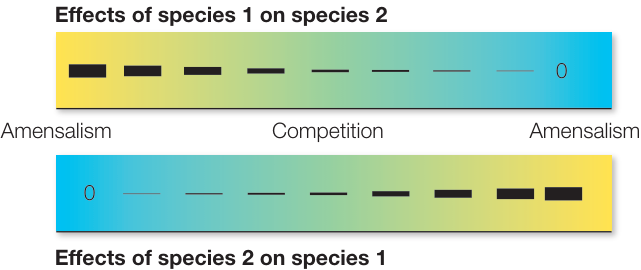
Figure 54.2 A Continuum of Competitive Effects Species interactions, such as competition, vary in their strength (represented by the thickness of the bars) and symmetry depending on the effects of one species on the other species. Amensalism occurs when one species suffers a negative effect from the interaction but the other species is not affected. Q: Suppose the Eurasian red squirrel described in the text is species 1 and the eastern gray squirrel is species 2. Indicate which pairs of interactions between species 1 and 2 would best represent their relationship.
Some interactions result in evolutionary change in the species involved
All types of interactions have the potential to influence the population sizes of interacting species. By contributing to the differential survival or reproduction of individuals with different traits, they can also alter genotype frequencies within the interacting populations over time. Thus these interactions have both ecological consequences, as when they affect the distribution and abundance of a species, and evolutionary consequences, as when they lead to evolutionary change. Darwin observed that evolutionary change occurs not only in response to physical conditions, as described in
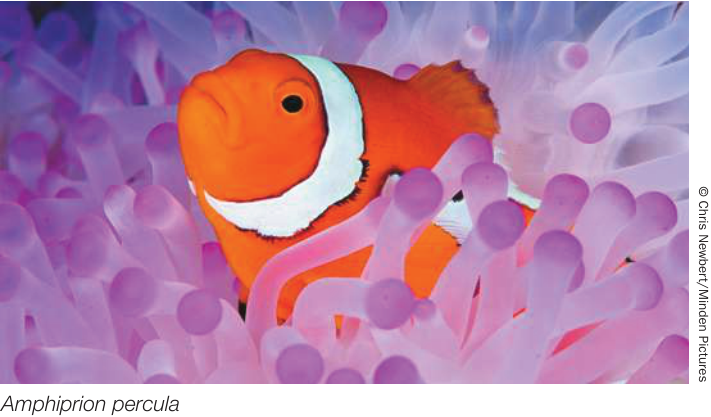
Figure 54.3 Interactions between Species Are Not Always Clear-Cut Ecologists long believed that the relationship between sea anemones and anemonefishes was a commensalism: that the fishes, by living among the anemone’s stinging tentacles, gained protection from their predators. But it could also be considered a mutualism, if the fishes’ feces provide the anemone with beneficial nutrients.
Chapter 52, but also in response to interactions among species. In his introduction to On the Origin of Species, Darwin pointed out that woodpeckers have feet, tails, beaks, and tongues “admirably adapted to catch insects under the bark of trees” as a result of their long-standing interactions with their insect prey.
While abiotic factors also act as agents of selection, they differ in a fundamental way from biotic agents of selection in that they do not themselves undergo change as a result of the interaction. Snow and ice do not become more deadly as a result of encountering cold-resistant organisms, but predators can, over evolutionary time, become swifter, more powerful, or more efficient at capturing their prey. In response, prey species may become swifter, tougher, less conspicuous, or more poisonous, all of which decrease their likelihood of being consumed. This back-and-forth evolutionary response between interacting species is known as coevolution.
The types of interactions most likely to lead to coevolution are those that occur predictably and with high frequency over time and that have a strong effect on the fitness of individuals. Thus species involved in amensal and commensal interactions are less likely to experience coevolutionary change as a result of the interaction than are species involved in predatory, competitive, and mutualistic interactions.

Simulation 54.1 Coevolution
Recap and Assess
Species interactions may be classified into four basic categories: predation (a trophic interaction in which a predator kills and/or consumes its prey, or part of its prey), competition (a nontrophic interaction in which species use some of the same limiting resources and have negative effects on one another), positive interactions (trophic or nontrophic interactions in which at least one species benefits from the interaction and none are harmed), or amensalism (a nontrophic interaction in which one species is harmed but the other is not affected). Species interactions are not always clear-cut but instead fall along a continuum in which species vary in how strongly they affect one other. Some species interactions result in evolutionary change.
- Classify each of the following species interactions as carnivory,
herbivory, parasitism, competition, amensalism, mutualism, or
commensalism.
- Leafcutter ants harvest and transport leaf fragments to their nests, where the vegetation will support fungus, which the ants consume.
- Elephant seals lie on rocks, crushing and detaching algae underneath them.
- Head lice inhabit the human scalp and feed on blood.
- Wolves and cougars both prey on the same deer population, which is limiting to both predators.
- Name some conditions that can modify or change the outcome of a two-species interaction.
- Do you think the interactions between lionfishes and their fish prey in the Atlantic Ocean have resulted in evolutionary change for the prey? Explain.
Trophic interactions are critical to life on Earth. As a result, the variety of ways that heterotrophic organisms acquire food plays a critical role in the success of every species on Earth. In the next key concept we will consider how predation influences the ecology and evolution of both predator and prey species.
Predation Is a Trophic Interaction in which Predators Benefit and Prey Are Harmed
Predation Is a Trophic Interaction in which Predators Benefit and Prey Are Harmed
Learning Objectives
- 54.2.1 Describe the types of strategies prey use to avoid being captured and eaten by predators.
- 54.2.2 Explain why many herbivore–plant and parasite–host relationships have evolved to be specialized species interactions.
- 54.2.3 Describe why some predator–prey populations are linked and cycle in response to one another.
- 54.2.4 Explain how predators can have dramatic effects on communities.
Predator–prey interactions are probably the most familiar, and perhaps the most dramatic, type of species interaction. Even though carnivory, herbivory, and parasitism all involve the simple interaction of one species eating another species, they often defy categorization. For example, a carnivore might sometimes function like an herbivore by eating berries and roots, or an insect might be considered an herbivore or a parasite if it spends its entire life feeding on a single tree. In addition, predators can differ considerably in the ways they affect their prey’s population dynamics if the prey species is not killed in the process. Despite these complications, we will explore predation by considering carnivory, herbivory, and parasitism separately. We will end by considering some generalities regarding population and community consequences of predation.
Carnivory results in a range of capture and avoidance mechanisms
Given that carnivores almost always kill the prey they consume, the interests of both predator and prey are at stake: the best strategy for carnivores is to maximize their ability to capture and consume prey, while the best strategy for prey is to minimize the likelihood of being eaten. We first consider the strategies carnivores use to obtain food and then examine how prey avoid being eaten.
What strategies do carnivores use to obtain food? The success of carnivores depends on balancing the cost of pursuing, capturing, and handling prey against the energetic benefit of consuming them, as discussed in Key Concept 51.4. At one extreme, carnivores use strength and swiftness to actively search for and capture high-quality prey. The “active pursuit” strategy is used by predators of all sizes: both orca whales (Orcinus orca) pursuing gray whales (Eschrichtius robustus) and foxes pursuing birds are fast, powerful predators and are equipped with strong jaws (Figure 54.4A). At the other extreme, an ability to look inconspicuous allows the stealthy predator to ambush prey
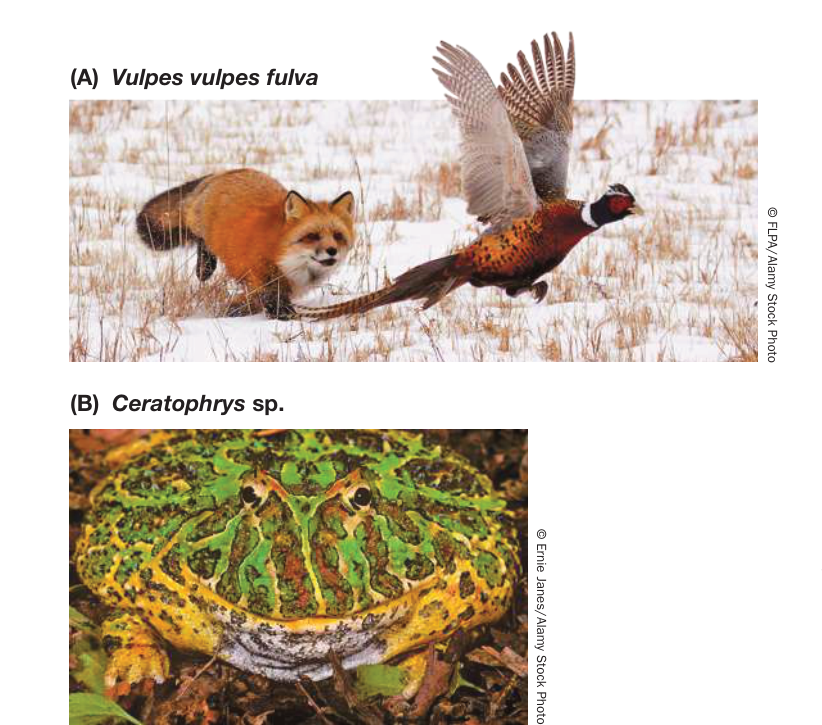
Figure 54.4 Active Searcher or Stealthy Ambusher Predators can be (A) active searchers such as the swift and strong red fox or (B) stealthy ambushers such as this seemingly inconspicuous wide mouthed frog.
“Playing possum,” a term that is sometimes applied to this strategy, refers to the ability of opposums to simulate death.
CHEMICAL DEFENSES Many animals use chemical defenses to escape or repel their predators. Chemical defenses are generally used by animal prey that are small, weak, sessile, or otherwise unprotected. Many insects produce sprays, oozes, or froths when attacked. Bombardier beetles, for example, eject a hot (100°C) noxious chemical spray from the tip of their abdomen that can be fatal to attacking insects.
Predators may evolve adaptations to overcome their prey’s chemical defenses, as you saw in the case of the rough-skinned newt (Taricha granulosa) and the garter snakes (Thamnophis sirtalis) that have become insensitive to the newt’s protective toxin (see Figure 19.20). Some predators ingest and sequester their prey’s defensive chemicals and use them as defenses against their own predators. For example, some sea slug species incorporate toxic chemicals from their sponge prey, whereas others, which feed on hydrozoans, incorporate the stinging cells into their own bodies (Figure 54.5C). Likewise, poison dart frogs from Central and South America sequester toxins from their prey, which include ants, mites, and other small invertebrates (Figure 54.5D).
unlucky enough to pass its way (Figure 54.4B). Various other predation strategies have evolved in predators that are smaller than their prey. For example, the jaws of some snakes open wide enough to allow them to swallow prey larger than their head. The tiny short-tailed shrews (Blarina spp.), among the smallest mammalian predators, produce venomous saliva that paralyzes earthworms and snails but also prey much larger than the shrews, including mice and small birds.
Prey species have in turn developed a variety of defenses against predators. Some escape from predators simply by flying or running away. Others have morphological defenses; tough skin, shells, spines, or hair can foil even a determined predator (Figure 54.5A). Various other defenses that prey have evolved to avoid capture are described next.
AVOIDING DETECTION Prey species can often escape predators by hiding. One form of hiding is camouflage, also known as crypsis. Crypsis allows species to resemble objects that their predators consider inedible. The katydid in Figure 54.5B, for example, looks very much like a dead leaf, even down to the likeness of a spot of fungal decay.
Because the vision of many types of predators is adapted to spot moving prey, many prey species simply stop moving if they are being pursued.
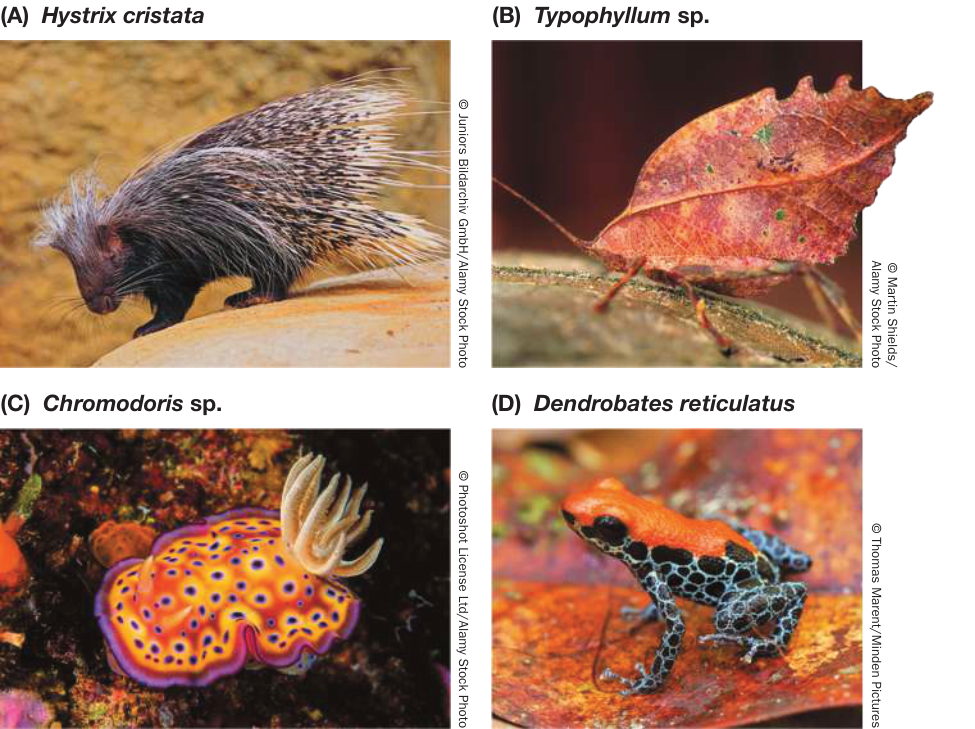
Figure 54.5 Adaptations to Avoid Being Eaten (A) Porcupines have a coat of sharp spines, or quills, that protect them from predators. (B) Birds searching for insect prey are likely to bypass a katydid that looks like a partially eaten leaf. (C) Nudibranchs (sea slugs) are mollusks without protective shells that may possess stinging nematocysts acquired from their hydrozoan prey. (D) Poison dart frogs of Central and South America sequester highly toxic chemicals in their brightly colored skin.
WARNING SIGNALS Some prey species that defend themselves with toxic chemicals advertise that fact with a warning signal. Warning signals may be visual (many toxic species are brightly colored) or acoustical (the rattlesnake’s warning rattle, for example), depending on what sensory cues their predators use to find prey.
Many toxic prey, such as the nudibranchs and frogs in Figures 54.5C and D, sport bright colors or striking patterns to protect themselves against visually orienting predators. Such warning coloration increases the probability that a predator will learn to recognize and avoid the toxic species. Some vertebrate predators that rely on visual cues can learn quickly to associate certain color patterns with an unpleasant feeding experience.
MIMICRY SYSTEMS There are two general types of mimicry systems that have evolved repeatedly in nature: Batesian mimicry and Müllerian mimicry. In Batesian mimicry, a benign, edible species (the mimic) closely resembles a dangerous, toxic species (the model). The mimic benefits from the avoidance behavior of predators of the model (Figure 54.6A). In Müllerian mimicry, two or more species converge on a common warning signal; all benefit from providing a stronger recognition signal to predators. Many of the Neotropical longwing butterflies (Heliconius), which as caterpillars feed on toxic passionflower plants and incorporate the plant toxins into their bodies, are Müllerian mimics. Heliconius species living together in a particular geographic region are likely to have similar coloration and share a common warning pattern (Figure 54.6B). Genome sequencing of Heliconius Müllerian mimics has identified one gene, optix, that codes for a transcription factor that can, by changing gene expression patterns, create the same color patterns in Heliconius species that are not very closely related.
BEHAVORIAL MECHANISMS Prey often use behavioral mechanisms to avoid predation. For example, as you saw in Key Concept 51.2 and Figure 51.21, group behaviors such as flocking and alarm vocalizations can provide protection from predators. In the lionfish example introduced in the chapter opening, the evolutionary change in behavior that predator and prey may experience has not yet had time to develop. In Investigating Life: The Lionfish King we describe research showing that the small reef-fish prey of lionfishes are likely experiencing a novel predatory behavior not previously encountered, and thus may be defenseless in the face of lionfish predation. Lionfishes slowly approach their prey and direct jets of water toward them. Confused or distracted by the jets, the prey are often taken by headfirst capture. The highly efficient predatory behavior of lionfishes doubtless contributes to their success as invasive species in tropical Western Atlantic and Caribbean coral reefs.
Herbivory is a widespread but specialized interaction
Herbivory is a widespread interaction, with the vast majority of herbivores being insects. Of those herbivorous insects, more than 90% are specialists that feed on just one or a few, often taxonomically related, plant species. Generalist herbivores, in contrast, feed on as many as hundreds of unrelated plant species. Vertebrate herbivores are usually generalists; a cow grazing in a pasture, for example, can consume many different plant species in a single afternoon. There are exceptions to this pattern, however. Australian koalas (Phascolarctos cinereus) famously feed exclusively on the foliage of eucalyptus trees, and the diet of giant pandas (Ailuropoda melanoleuca) is made up almost entirely of bamboo.
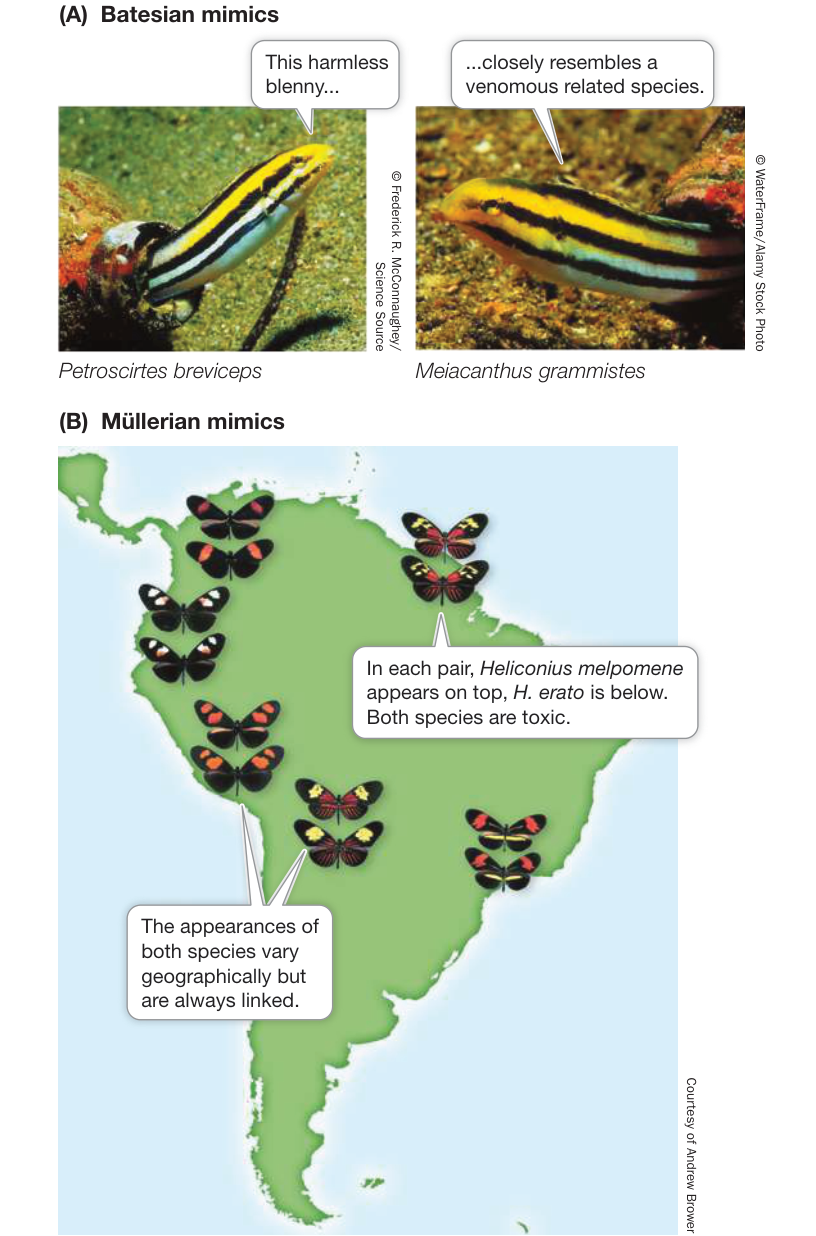
Figure 54.6 Truth in Labeling? (A) Batesian mimics are vulnerable species that gain protection by mimicking the warning signals of dangerous species. The appearance of the harmless blenny species Petroscirtes breviceps closely resembles that of the fanged striped blenny, which possesses a pair of grooved fangs with associated venom glands. (B) The shared warning coloration of Müllerian mimics is an honest advertisement of their toxicity. As caterpillars, all of the longwing butterflies (genus Heliconius) of South America feed on toxic passionflower plants and incorporate the toxins into their adult bodies. The Heliconius species living together in a particular region have similar warning coloration. (Map: The World Factbook 2016-17. Washington, DC: Central Intelligence Agency, 2016. https://www.cia.gov/library/publications/the-world-factbook/index.html.)
Investigating Life: The Lionfish King
Experiment
Original Paper: M. A. Albins and P. J. Lyons. 2012. Invasive red lionfish Pterois volitans blow directed jets of water at prey fish. Mar Ecol Prog Ser 448: 1–5.
Mark Albins and his colleagues asked what feeding behaviors the invasive lionfish Pterois volitans might use to be a successful predator on Atlantic and Caribbean coral-reef fishes. They conducted field observations of lionfish feeding on small reef fishes and noticed that lionfish typically face their prey, flaring their pectoral fins and moving very slowly within striking distance of the prey. During the approach, lionfish produced a strong, pulsed jet of water from their mouths and directed it toward the prey. To investigate this novel feeding behavior, Albins and his colleagues conducted feeding trials on lionfish and native goby prey.
HYPOTHESIS The novel feeding method of lionfish—in which jets of water are directed at their prey—disorients prey, allowing for easier headfirst capture.
METHOD
Using hand nets, capture lionfish and two species of native goby prey (Coryphopterus glaucofraenum and Gnatholepis thompsoni) from coral reefs and sea-grass beds in the Bahamas.
Acclimate lionfish and gobies to a flow-through aquarium and film their feeding behavior using a digital video camera.
Present lionfish with gobies in two ways:
- release lionfish into an open aquarium setting containing the gobies, and (ii) release lionfish into an aquarium that holds the gobies in transparent containers so the lionfish can see but not consume them.
Use a glass pipette to release food-grade dye in front of the lionfish to visualize the movement of water around its mouth.
- Examine digital videos of all feeding trials to measure characteristics of water jets and response of the prey.
RESULTS In all of the open aquarium trials, lionfish produced directed water jets at goby prey. Seven of the eight trials resulted in headfirst strikes. In the container trials, the lionfish produced an average of 18 water-jet pulses before striking at the prey. The maximum distance from the mouth of the lionfish that a visible jet-front reached was 10 cm.
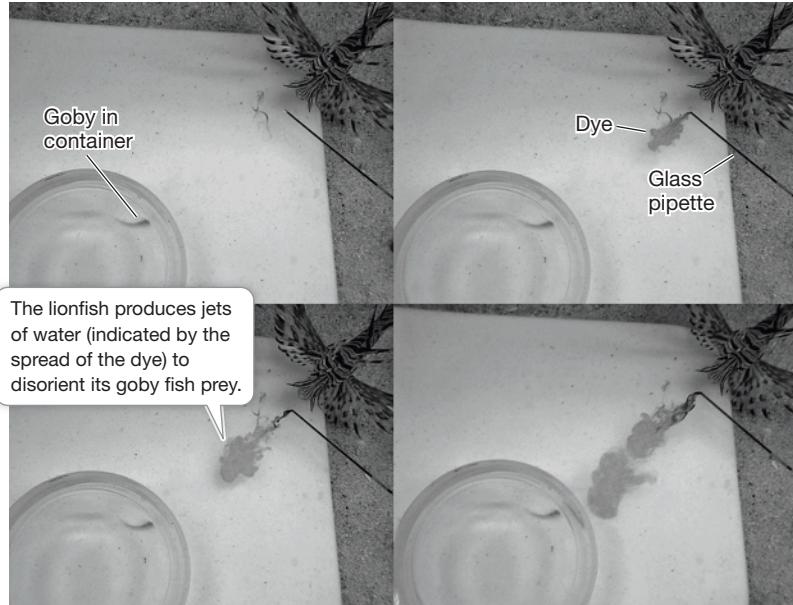
The lionfish produces jets of water (indicated by the spread of the dye) to disorient its goby fish prey.
M. A. Albins and P. J. Lyons. 2012. Mar Ecol Prog Ser 448: 1–5
CONCLUSION What would you conclude about the feeding behavior of lionfishes and the responses of prey from the Atlantic Ocean versus the Pacific Ocean? Explore this question in the following Work with the Data exercise.
Work with the Data
In addition to the aquarium experiments, the researchers conducted field observations of the feeding behavior of lionfishes in different locations—their native Pacific Ocean and their non-native Atlantic Ocean. They found that, in the Atlantic Ocean, most successful captures by lionfishes did not require them to blow jets of water at their prey (only 18% of the captures involved this behavior). However, in the Pacific Ocean, they found that 56% of successful captures by lionfishes involved them blowing jets of water at their prey. The researchers also reported that an extensive literature search showed that blowing jets of water at prey appears to be unique to lionfishes.
QUESTIONS
- Refer to Method step 3 in the experiment. Why do you suppose the researchers conducted lionfish aquarium feeding trials with
- free-swimming fish prey? Alternatively, what did the containers containing the fish prey afford the researchers?
- Given what you know about the feeding behavior of lionfishes, would you expect them to produce more or fewer water jets to capture fish prey in the Atlantic Ocean compared with the Pacific Ocean? Would the distance the water jet had to travel be shorter or longer for the Atlantic Ocean prey compared with the Pacific Ocean prey?
- Based on all the lionfish feeding behavior information presented here, what is the most plausible hypothesis to explain why lionfishes are such effective predators on coral-reef fishes in the Atlantic Ocean compared with the Pacific Ocean?
Media Clip 54.2 Lionfish “Strike” Again! Life12e.com/mc54.2
Herbivores, particularly insects, generally consume only parts of their food plants and usually do not kill them. In most natural ecosystems, insects rarely remove more than a small percentage of the plant biomass. For that reason, some ecologists have questioned the ability of herbivores to exert strong selection pressure on plant traits. Mortality is not, however, the only form of selection that leads to evolutionary change; herbivores can reduce plant fitness if the plants they attack produce fewer offspring.
PLANT DEFENSES AGAINST HERBIVORES Plant chemistry is one of the principal defense mechanisms against herbivores. Plants in the mustard family (Brassicaceae) offer just one example of the strategy of producing secondary metabolites as a mechanism to reduce herbivory. The amazing variety of secondary metabolites produced by plants to defend themselves against herbivores is considered in Key Concept 37.3.
Some plants and algae protect themselves by being physically difficult to eat. For example, thorns and spines are highly effective deterrents to browsing vertebrate herbivores. Coralline algae contain calcium carbonate within their tissues, which deters many marine herbivores. An exception is some sea urchin species that have powerful articulated jaws and teeth and long coiling guts that can process less nutritious chalky tissue.
RECIPROCAL ADAPTATIONS IN HERBIVORES AND PLANTS A spectacular variety of adaptations to plant defenses has evolved in herbivores. Many herbivores circumvent plant defenses by behavioral means. For example, the secondary metabolites produced by a plant called Saint-John’s-wort (Hypericum perforatum) require exposure to sunlight for optimal toxicity, so some insects that feed on this plant roll its leaves into a light-impervious cylinder and feed in comfort in the dark. Large herbivores such as deer and horses graze on a wide variety of plant species, minimizing their exposure to any particular defensive chemical. Long-lived and with relatively good memories, they can learn to avoid plants with an unpleasant taste.
Unlike large mammalian herbivores, caterpillars and many other insect herbivores may spend their entire lives feeding on a single individual plant. Such exclusive diets are associated with highly specialized detoxification systems. The caterpillar of the diamondback moth (Plutella xylostella) eats plants in the cabbage family, which are rich in toxic mustard oil glycosides. In its gut is an enzyme that breaks down the glycosides into harmless by-products.
Some herbivores take resistance a step further by storing, or sequestering, plant toxins in specialized organs or tissues that are insensitive to those toxins. This strategy also makes the sequestered chemicals available for defense against the herbivores’ own enemies. The caterpillar of the monarch butterfly (Danaus plexippus), for example, is insensitive to the neurotoxic glycosides in its milkweed host plants, but most of its enemies, including insect-eating birds, cannot tolerate these compounds.
Most parasites specialize on hosts, and most hosts have many species of parasites
Parasitism is an interaction in which a predator (a parasite) lives on or in the prey (its host) and consumes only certain tissues.
Many parasite–host relationships are symbiotic. Effects of parasite–host interactions can vary dramatically in magnitude, from having weak effects to causing the death of the host. While parasites typically feed on only one or a few host species, hosts typically have many species of parasites (Figure 54.7). Parasites can also have their own parasites. This specialization helps explain why there are so many parasite species; it is estimated that roughly 50% of the species on Earth are parasites.
Parasites can be classified as microparasites, which include viruses, bacteria, and protists, or macroparasites, which are larger and include such groups as worms and insects.
MICROPARASITES Microparasites are many orders of magnitude smaller than their hosts and generally live and reproduce inside their hosts. Multiple generations may reside within a single individual, and a host may harbor thousands or millions of them. Many microparasites, in the process of acquiring nutrients at the expense of their host, cause symptoms of disease and thus are considered pathogens. Host mechanisms that can limit pathogen proliferation include the immune system in animals (see Chapter 40) and biochemical defenses in plants (see Key Concept 37.3).
Just as with other predator–prey interactions, hosts and pathogens can place strong selective pressure on one another. If a pathogen strain is to persist in a host population, the pathogens must continually infect new host individuals. A less deadly strain that kills a smaller proportion of host individuals may be able to infect a larger number of new hosts. Thus pathogen and host may reach a state of coexistence as increased host resistance (ability to withstand the effects of a pathogen) and decreased pathogen virulence.
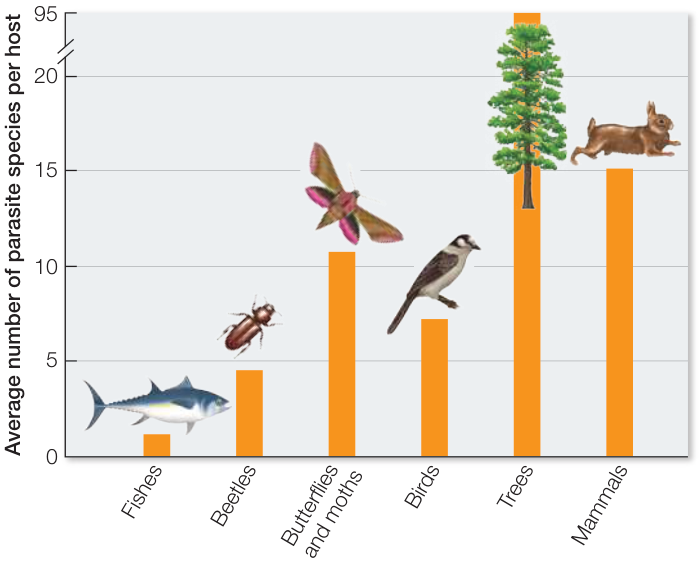
Figure 54.7 Why Are There So Many Parasites? It is estimated that roughly 50% of the species on Earth are parasites. Most parasites specialize on host species, most host species have multiple parasite species, and most parasites have their own parasites. This specialization may help explain why there are so many species of parasites. (After P. D. Stiling. 2002. Ecology: Theories and Applications, 4th ed. Prentice-Hall: Upper Saddle River, NJ.)
(ability to cause disease) evolve. Yet new virulent strains may also arise, reminding us that evolution is constantly occurring.
An example of the complex interactions between host and pathogen comes from Australia, where the myxoma virus was introduced to control the exploding population of European rabbits (Oryctolagus cuniculus), which were devastating the rangeland vegetation used by cattle and sheep. The virus, which is transmitted by mosquitoes, causes infections and blindness in rabbits, eventually leading to starvation and death. After the introduction of the virus in 1950, 99.8% of infected rabbits died. Millions of rabbits died over the following decades, but the rabbits slowly evolved resistance to the virus. The virus is still used to control rabbit populations, but this requires introducing new, more lethal strains of the virus to ultimately be effective.
MACROPARASITES While microparasites generally live and reproduce inside their hosts, macroparasites are not always intimately associated with their hosts. Macroparasites rarely cause the same kinds of disease symptoms that pathogenic microparasites cause, but they may nevertheless affect host survival and reproduction and can thereby act as agents of selection on their hosts. Ectoparasites are macroparasites that live outside the bodies of their hosts. Endoparasites, such as the tapeworms described in Key Concept 29.2, are macroparasites that spend at least part of their life cycle inside the bodies of their hosts.
Some ectoparasites, such as leeches and mosquitoes, are only casually associated with their hosts, interacting with them just long enough to eat their fill and then moving on. Ectoparasites that spend their entire lives on their hosts have several attributes that keep them attached to their hosts. Whale lice, which are generally found in skin lesions, nostrils, and eyes of marine mammals, have claws on the tips of their legs that pierce the skin of the whale or dolphin host (Figure 54.8A). Most whale lice are associated with a single species of whale and spend their entire lives on one individual whale. The lice feed on algae or flaking skin on the whale’s body, causing minor skin damage but no significant health risks.
Most hosts actively work to rid themselves of their ectoparasites. Grooming behavior—an important component of the social interactions of many primates—may have evolved in response to ectoparasites. The Japanese macaque (Macaca fuscata), for example, is prone to infestation by two species of lice, which tend to lay their multitudinous eggs on the outer surfaces of their host’s back, arms, and legs. To keep louse populations in check, macaques form and maintain social bonds that ensure the consistent presence of grooming partners (Figure 54.8B). Some biologists believe that hairlessness in humans is an evolutionary response to ectoparasites.
Predator populations can cycle with their prey populations
The interaction between predators and prey, including parasites and hosts, not only influences the adaptations that species develop but also their population dynamics. Some predator–prey populations are linked and oscillate in response to one another. What controls such patterns of cycling?
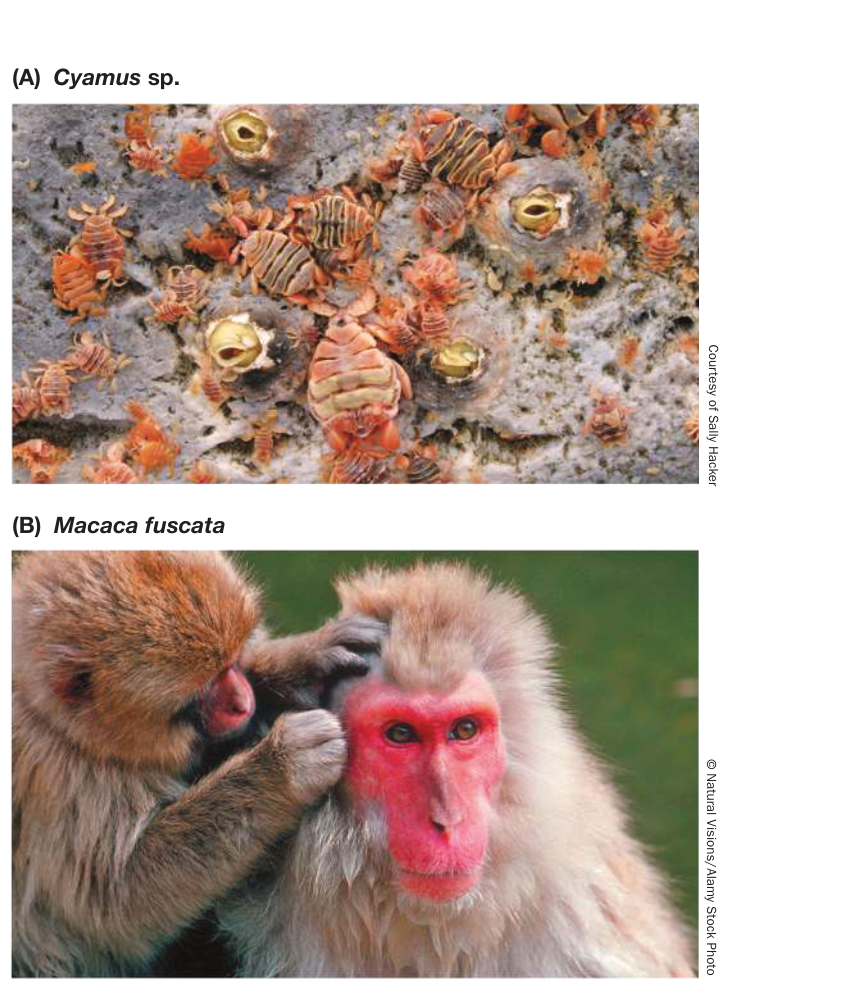
Figure 54.8 Ectoparasites Hang On (A) Ectoparasites such as these whale lice on the body of a gray whale are flattened and equipped with strong claws for gripping the body of their host. Each individual whale has its own population of lice. (B) Grooming behaviors among primates are believed to have evolved in response to ectoparasites. Japanese macaques form social groups in which this behavior plays a significant role.
Consider the classic example of predator–prey cycling in the Canada lynx (Lynx canadensis) and the snowshoe hare (Lepus americanus), which makes up a large portion of the lynx diet. Long-term records from Hudson’s Bay Company, a Canadian retailer with a long history in the fur-trading business, show that the numbers of lynx and hares trapped over time reflect a regular cycle in the population sizes of each species, with peak abundances occurring every 10 years but falling to low abundances in the intervening years (Figure 54.9). In addition, the peak in the lynx population lags behind that of the hare population by 2–3 years. Models of predator–prey interactions suggest that this cycling is the result of a tight coupling between prey and predator: as prey increase in abundance, predators do as well, causing prey numbers to decline as a result of increased mortality. When prey decline, so do predators, causing both predator and prey populations to decrease. At some point, the prey population starts to increase again due to the lack of predation, which then allows the predator population, which lags behind, to increase as well. However, in the case of lynx and hare populations, it is likely more complicated.
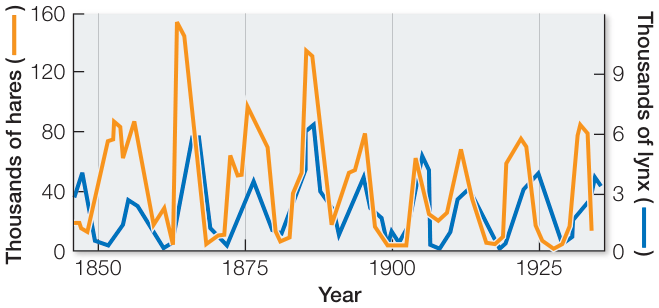
Figure 54.9 Lynx and Hare Population Cycles Historical trapping data from the Hudson’s Bay Company show that numbers of both hares and lynx fluctuate in a 10-year cycle that is offset by 2–3 years. (After D. A. MacLulich. 1937. Fluctuations in the Number of the Varying Hare (Lepus americanus). University of Toronto Press: Toronto.) Q: Does the peak number of hares typically occur before or after the peak number of lynx? Why is this so?
A long-term study by Charles Krebs and colleagues showed that if lynx are absent or food is added for the hares, predator and prey populations continue to cycle, suggesting that the underlying cause of the cycling may be controlled by environmental factors such as large-scale variability in climate.
(A) Sea stars of the Pacific Northwest
Predators can have dramatic effects on communities
As you might imagine, given the reduced growth, reproduction, and survival of prey, predators (including parasites) can have dramatic effects not only on populations but also on communities.
One classic experiment, conducted by Robert Paine in the mid-1960s, showed the strong role that sea star predation has on rocky shore communities of the Pacific Northwest of North America. Paine noticed that one species in the community, the mussel Mytilus californianus, dominated in certain zones of the intertidal when the density of its sea star predator (Pisaster ochraceus) was low. Through the continual removal of Pisaster from the rocky shoreline, Paine showed that sessile invertebrate species number declined as the mussel monopolized space in the absence of its predator. After nearly 3 years, the experimental plots had roughly half the number of sessile invertebrate species compared with the natural condition where Pisaster was present (Figure 54.10A). Subsequent experimental removal of sea stars on New Zealand rocky shores, which share no species in common with the Pacific Northwest, resulted in similar reductions in sessile invertebrates (Figure 54.10B). Paine’s research on the sea star–mussel interaction showed not only that predation can affect the number of species in a community but that the effect can be controlled by one or a few species, which Paine called keystone species (named after the single wedge-shaped stone in the center of an archway called the “keystone” that holds all the other stones in place). Keystone species have large effects, not because of their abundance but because of the important role they play in communities. You’ll learn more about keystone species in Chapter 55.
Some of the most compelling examples of the effects of predation on communities come from human-caused events such as the extinction (or near extinction) of predators, as in the case of wolves living in Yellowstone National Park (see Key Concept 55.3), or from the introduction of novel predators into communities. As you saw in the opening of this chapter, the inadvertent introduction of lionfishes to the Atlantic Ocean from the Pacific Ocean has led marine ecologists to hypothesize that there may be drastic effects for reef communities.
Recap and Assess
Predation is a fundamental species interaction because all animals must eat. Predator–prey interactions result in the evolution of a range of capture mechanisms (extremes of swift pursuer to inconspicuous ambusher) and avoidance mechanisms (including avoiding detection, chemical defenses, warning signals, mimicry, and behavior). Most parasites specialize on hosts, and most hosts have many species of parasites. Predator populations can cycle with their prey and can have dramatic effects on communities.
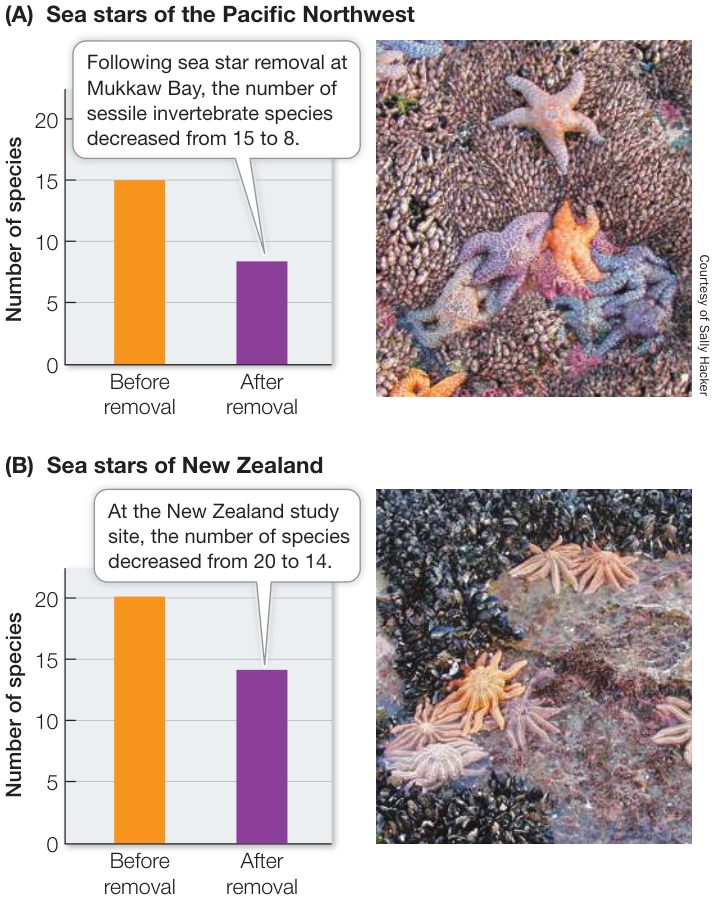
Figure 54.10 Sea Star Predation on Mussels Has Community-Wide Effects Along the coasts of the Pacific Northwest of North America and New Zealand, sea stars preferentially feed on mussels, creating bare space for other sessile invertebrates such as acorn and gooseneck barnacles. Experiments by Robert Paine demonstrated that when sea stars were removed from the rocky shore, mussels outcompeted other sessile invertebrates for space, resulting in a decline in the number of invertebrate species in both (A) the Pacific Northwest and (B) New Zealand. (A after R. T. Paine. 1966. Am Nat 100: 65–75; B after R. T. Paine. 1971. Ecology 52: 1096–1106.)
- Given what you know about lionfish feeding behavior, describe some avoidance mechanisms that might evolve in small reef fishes in the Atlantic, to avoid being eaten by lionfishes.
- What characteristics of herbivory and parasitism are likely important in promoting specialization?
- Suppose the number of grass species in an alpine meadow is maintained by herbivory by hares. By feeding on the dominant space-occupier, the hares allow less dominant grass species to thrive (similar to the sea star-mussel example in Figure 54.10). Now suppose lynx predators are introduced into the system. When, in the population cycle of lynx and hare (see Figure 54.9), would you predict the number of grass species to be highest? When would it be lowest?
Predator-prey interactions are intrinsically compelling; the idea of a lionfish “vacuuming up” tiny reef fishes naturally captures our attention. But at the same time, lionfishes are not the only predators of reef fishes; sharks, barracudas, and even turtles hunt small reef fishes, potentially reducing the food available for lionfishes. Whenever any shared resource is limiting, organisms may compete to varying degrees to get that resource. In the next key concept we will consider how competition influences the ecology and evolution of species that overlap in their use of a limiting resource.
Competition Is a Negative Interaction in which Species Overlap in the Use of Some Limiting Resource
Learning Objectives
54.3.1 Compare and contrast the concepts of fundamental niche and realized niche.
54.3.2 Distinguish between interference competition and exploitation competition.
54.3.3 Describe some of the important processes that maintain competitive coexistence.
Virtually no species has exclusive access to any given set of resources. All species must compete with other species for at least some resources. Resources are simply the components of the environment—such as food, water, light, and space—that are required by all species. The full set of these resources, in part, determines the niche of a species, defined as the physical and biological conditions required for growth, reproduction, and survival. Thus a species’ niche defines where it can and cannot live. Although a species might be physiologically able to live under a wide range of conditions, competitors may restrict its use of those resources. Thus every species has a fundamental niche, defined by its physiological capabilities, and a realized niche, defined by its interactions with other species. As you saw in Key Concept 53.1, intraspecific competition for resources is the main reason why populations do not grow indefinitely, and instead eventually reach some limit defined by their carrying capacity. Interspecific competition—competition among different species—affects individuals in much the same way. At some point an essential resource, or set of resources, may be in such short supply that competition becomes a factor in a population’s growth. Such a resource that is in short supply is referred to as a limiting resource. At one extreme, if a species can prevent another species from using essential resources, the inferior competitor may become locally extinct, a result called competitive exclusion. In reality, though, most species show some sort of competitive coexistence, or the ability to coexist with one another despite sharing limiting resources. Competitive coexistence is maintained through a variety of ecological processes.
Assuming competitive coexistence occurs, competition can manifest itself either directly or indirectly. Interference competition occurs when one species directly interferes with or excludes another species’ access to a limiting resource. Interference competition can take many forms, from physical exclusion to chemical warfare among the competitors. A graphic example involves two ant species: the desert ant Dorymyrmex bicolor and the honeypot ant Myrmecocystus mexicanus. These species occupy the same habitat type—arid areas containing little vegetation—and they feed on similar foods—the sugary excretions of aphids and other sap-feeding insects. When D. bicolor workers find the entrance of a honeypot ant nest, they pick up small stones in their mandibles, carry them to the rim of the nest opening, and drop them down the hole—up to 200 stones in a 5-minute interval. This activity stops the honeypot ants from foraging and temporarily limits competition for food with the desert ant.
Exploitation competition occurs when a limiting resource is available to all competitors but the outcome of the interaction depends on the relative efficiency with which each species uses the resource. Exploitation competition affects the availability of a resource for another species but not in an exclusionary way, as we see with interference competition. Exploitation competition may lead to coexistence, provided that the species relying on the same resource have ways to divide up, or partition, that resource. For example, in the American Southwest at least three species of bees consume the nectar of the shin dagger agave (Agave schottii). The three bee species differ in where and when they collect shin dagger nectar. Honey bees tend to forage in places with the greatest numbers of shin dagger flowers, bumblebees in places with intermediate numbers of flowers, and carpenter bees where flowers are few and far between. Honey bees also tend to be most active when nectar output is greatest. With their larger nests and greater numbers of offspring to support, honey bees require greater foraging efficiency and greater energy intake. Foraging sites that are not worth their time are left to the other bees.
The bee-shin dagger agave example is one in which closely related bee species compete for agave nectar. But competition is not limited to closely related species; it commonly occurs among distantly related species as well. Bats and hummingbirds also visit shin dagger agave for its nectar. Even humans harvest agave (albeit the leaves rather than the nectar) to be used as an alternative for sugar.
Another important aspect of competition is that it is often asymmetrical (unequal): one species can be more negatively affected by the interaction than the other. Clearly this is the case under conditions of competitive exclusion, when one species drives the other to local extinction. But even when species coexist under competition, competitive success forms a continuum, as you saw with red and gray squirrels in the United Kingdom (see Figure 54.2). The effects of competition can vary for many reasons. Morphological, physiological, or behavioral differences can affect a species’ ability to obtain limiting resources. In addition, the magnitude of competitive interactions can vary depending on environmental conditions and how they affect the competitive ability of individual species. We’ll discuss how the outcome of competitive interactions can be modified by environmental factors shortly, but first let’s consider the ways in which species can divide limiting resources to reduce their competitive effects on one another.
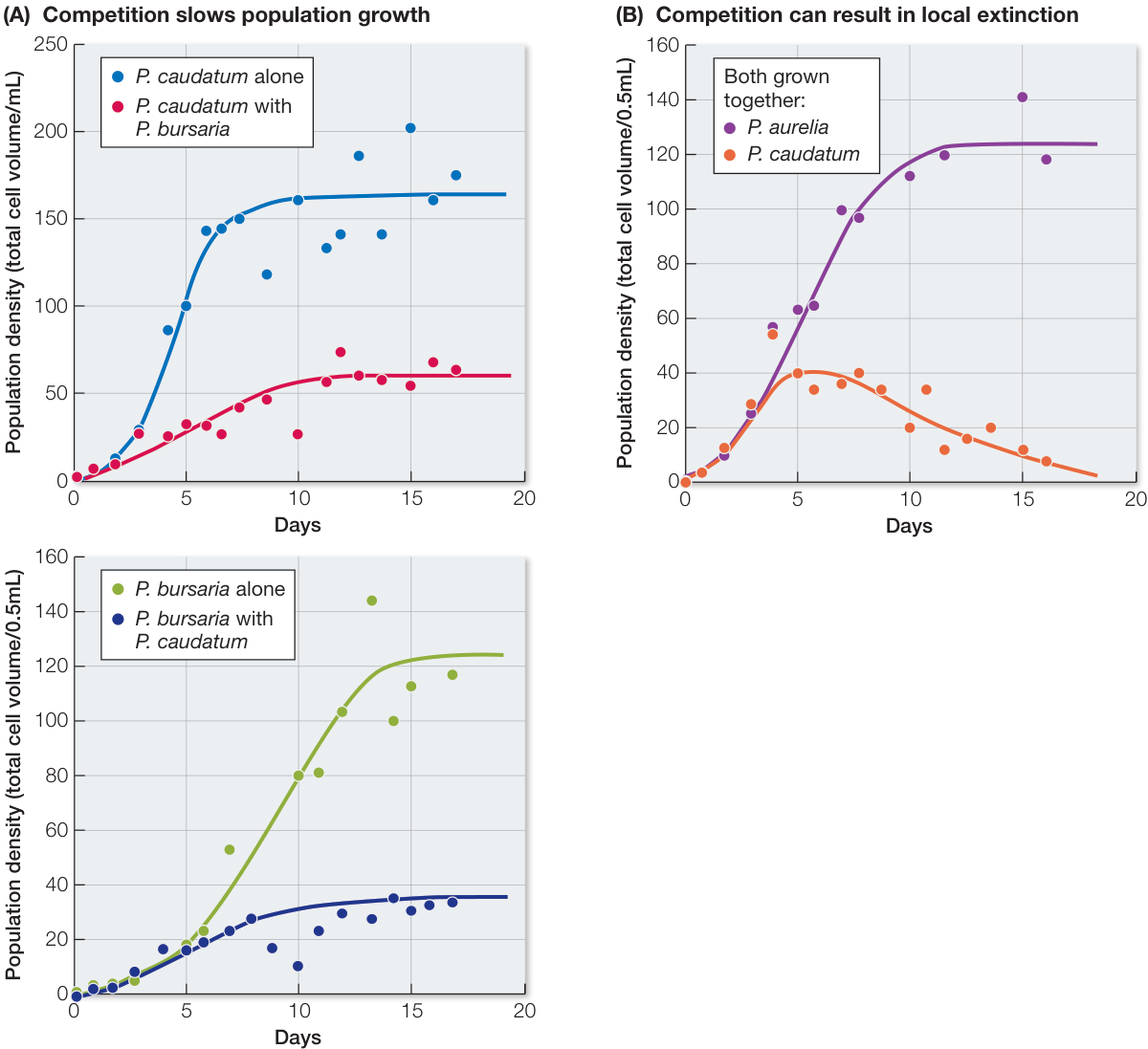
Figure 54.11 Competitive Exclusion or Coexistence? G. F. Gause grew three species of Paramecium in tubes filled with medium containing bacteria and yeast. (A) When P. caudatum and P. bursaria were grown alone, they showed logistic population growth and reached a stable carrying capacity. When grown together, each species showed slower population growth but were able to coexist by feeding on different food items. (B) When P. caudatum was grown with P. aurelia, it experienced local extinction. (A after G. F. Gause. 1935. Vérifications Expérimentales de la Théorie Mathématique de la Lutte pour la Vie. Hermann et Cie: Paris; B after G. F. Gause. 1934. The Struggle for Existence. Williams and Wilkins: Baltimore.) Q: Predict what would happen if P. caudatum and P. bursaria both fed mainly on yeast cells.
Resource partitioning allows species to coexist despite overlapping use of limiting resources
Even though the potential for intense competition is high, various ecological and evolutionary mechanisms reduce competition. As you saw with the bee-shin dagger agave example, one way is through resource partitioning, the sharing of limiting resources by using them in different ways. Another example of resource partitioning comes from the classic experiments performed by G. F. Gause in the 1930s using Paramecium, a single-celled protist. Gause grew three species of Paramecium in test tubes filled with growth medium that contained bacteria and yeast for food. When grown alone, P. caudatum and P. bursaria showed logistic population growth and reached a stable carrying capacity (Figure 54.11A). When grown together, each species showed slower population growth but were able to coexist. However, when P. caudatum was grown with P. aurelia, it experienced local extinction in the test tubes (Figure 54.11 B). The difference in outcome, Gause suggested, was a consequence of P. caudatum and P. aurelia both competing for bacteria as a food source, while P. bursaria avoided competition by eating the other food source, yeast. Thus P. caudatum and P. bursaria partitioned their food resource in the presence of one another and were able to coexist as a result.
Connect the Concepts Key Concept 53.2 describes logistic population growth, which occurs when intraspecific competition causes population growth to slow down and eventually level off at some size known as the carrying capacity.
In some cases individuals within a species evolve different behaviors or morphologies depending on whether they are competing for resources with other species. Darwin remarked in On the Origin of Species that “Natural Selection leads to divergence of character; for more living beings can be supported on the same area the more they diverge in structure, habits, and constitutions.” This “divergence of character” is referred to today as character displacement. On some of the islands of the Galápagos archipelago, for example, certain cactus species are pollinated exclusively by the Small Ground-Finch (Geospiza fuliginosa), for which cactus nectar is an important food source (see Figure 22.8). On other islands, a carpenter bee (Xylocopa darwinii) competes with the finches for cactus nectar; the birds consequently feed more often on seeds and insects. On the islands where bees are absent, the nectar-feeding birds have smaller wingspans, presumably to make it easier for them to negotiate the flowers.
Sometimes organisms respond to competition by moving. The African wild dog (Lycaon pictus) (see Figure 57.17) is a carnivore that lives and forages in packs (groups of related individuals). Frequent vocalizations, called twitters, function to keep the pack together, but these acoustical signals also can alert the dogs’ competitors, African lions (Panthera leo), to the presence of prey. Lions hearing the dogs’ twitters can use them to locate dog packs and steal their kills. The dogs avoid competing with lions by selecting areas for their dens where the likelihood of being overheard by lions is low. The wild dog is considered a fugitive species—a species that leaves an otherwise suitable habitat in order to avoid competition with another species.
The physical environment, disturbance, and predation can each alter the outcome of competition
The outcome of competition among species can be changed by a variety of factors, including the influence of the physical environment and processes such as disturbance and predation, which may injure or kill some individuals. These factors can cause a weakening or even a reversal of competitive outcomes between species if they negatively affect the competitively dominant species. By reducing the growth or survival of the competitively superior species, the physical environment, disturbance, or predation can allow the competitively inferior species a chance to acquire limiting resources, gain a foothold, and potentially increase its population size.
In an example from a Rhode Island salt marsh, Mark Bertness and colleague showed how competition could be altered by the effect of daily tides on the interaction between a rush, Juncus gerardii, and a shrub, Iva frutescens. Through a series of Juncus and Iva removal experiments in each tidal zone, the researchers found that in the relatively physically benign high intertidal, Iva is the competitive dominant, shading Juncus and causing it to have lower biomass (Figure 54.12). However, in the low intertidal, where salinity and waterlogging from the tides are greater, Iva cannot compete with Juncus because it is physiologically intolerant of the physical conditions in this zone. In fact, the competitive relationship is turned into a positive one, in which Iva is dependent on Juncus to survive in the low intertidal. We’ll discuss the role of positive interactions in the next key concept, but it is clear from examples such as this that the outcomes of species interactions depend on the particular circumstances, or context, under which they occur.
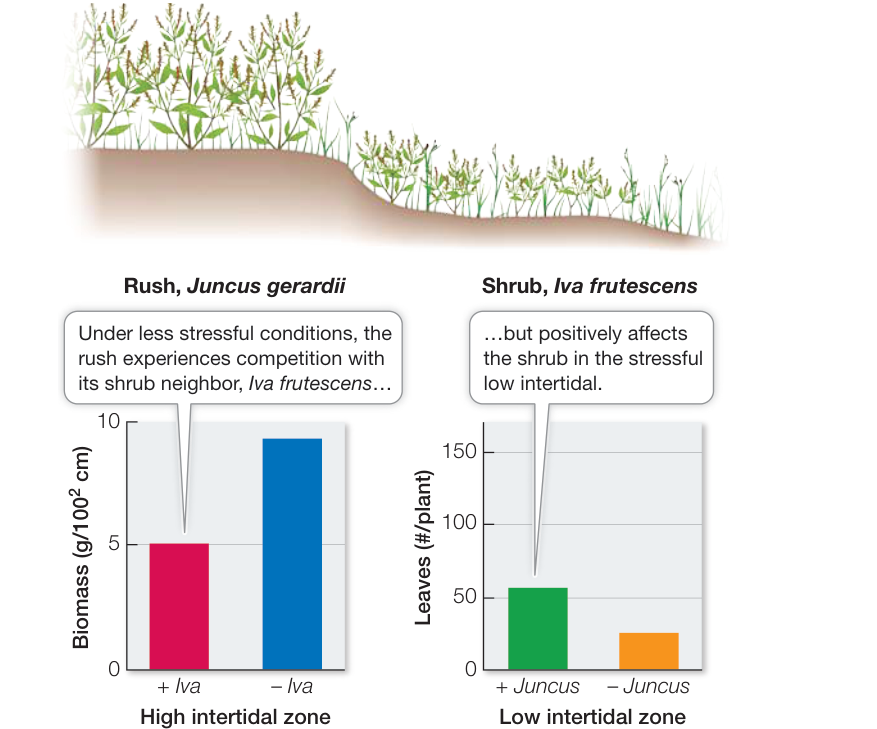
Figure 54.12 Species Interactions in a Salt Marsh Plant species removal experiments showed that the shrub Iva frutescens competitively dominates the rush Juncus gerardii in the high intertidal where physical conditions are benign. But the interaction switches to a positive one in the low intertidal, where the tides flood on a daily basis and Iva grows better in the presence of Juncus. (After M. D. Bertness and S. D. Hacker. 1994. Am Nat 144: 363–372.)
Competition can affect species’ distributions
Competition can be important in determining where species are found. As you saw earlier, although species may be physiologically able to live under a wide range of conditions, competitors may restrict their use of resources to particular locations. An example of how competition can affect species distributions comes from the rocky intertidal zone of Scotland. Two species of barnacles, the acorn barnacle Semibalanus balanoides and Poll’s stellate barnacle (Chthamalus stellatus), compete for space on the rocky shorelines of the North Atlantic Ocean. The planktonic larvae of both species settle in the intertidal zone and metamorphose into sessile adults. The smaller stellate barnacles generally live at higher levels in the intertidal zone, where they face longer periods of exposure and desiccation (drying out) than do acorn barnacles, which live at lower levels. There is little overlap between the areas occupied by adults of the two species (Figure 54.13). What explains their distinct distributions in the intertidal zone?
In a famous study conducted nearly 60 years ago, Joseph Connell experimentally removed one or the other species of barnacle from its characteristic zone and observed the response of the remaining species. Stellate barnacle larvae normally settle in large numbers throughout much of the intertidal zone, including the lower levels where acorn barnacles are found (their fundamental niche), but they thrive at those lower levels only when acorn barnacles are not present (their realized niche). Connell found that the acorn barnacles grew so fast they smothered, crushed, or undercut the stellate barnacle juveniles. However, removing stellate barnacles from their spots higher in the intertidal zone did not lead to their replacement by acorn barnacles; the acorn barnacles are less tolerant of desiccation and failed to thrive there even when stellate barnacles were absent. The result of the competitive interaction between the two species is a distinctive pattern of intertidal zonation, with stellate barnacles restricted in their distribution by competition and acorn barnacles restricted in their distribution by their physiological limitations.
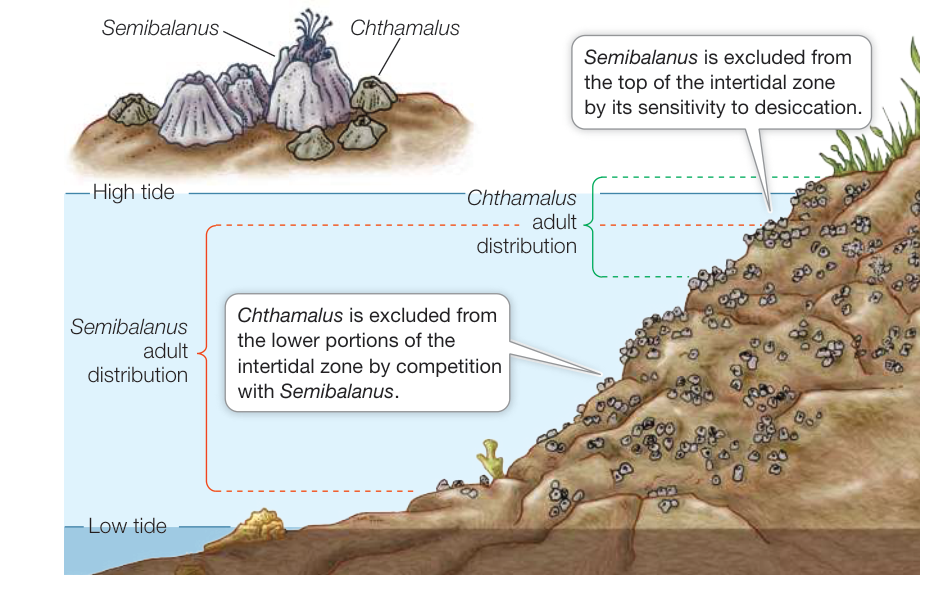
Figure 54.13 Interspecific Competition Can Restrict a Species’ Range Interspecific competition with acorn barnacles (Semibalanus) restricts stellate barnacles (Chthamalus) to a smaller portion of the intertidal zone than they could otherwise occupy. Larvae of both species settle throughout the intertidal, but at lower levels acorn barnacles grow much faster and eliminate the stellate barnacle larvae. In the upper reaches of the intertidal, however, the greater susceptibility of acorn barnacles to desiccation (drying out) allows stellate barnacles to outcompete them. The two species can coexist in a small portion of the intertidal zone. (After J. H. Connell. 1961. Ecology 42: 710.)
Recap and Assess
Competition occurs when species overlap in their use of limiting resources, either through interference or exploitation. At one extreme, if a superior competitor prevents another species from using essential resources, the inferior species may be competitively excluded. In reality, most species show competitive coexistence, which is maintained through a variety of ecological processes, including resource partitioning, environmental conditions, disturbance, and predation. The distribution of a species may be affected by competition when another species restricts the use of limiting resources to a particular location.
The fundamental niche of the native Eurasian red squirrel includes all of the United Kingdom. Since the introduction of the eastern gray squirrel, a non-native competitor, the Eurasian red squirrel’s distribution has been restricted to the northern regions of Scotland and Ireland. How has the realized niche of the red squirrel changed in response to the species’ interactions with the gray squirrel?
- Suppose you are sharing a milkshake with a friend. You each have a straw. Under scenario 1, you both drink from your straws, eventually consuming the entire milkshake together. Under scenario 2, your friend takes both straws and drinks the whole milkshake. Which scenario is an example of interference competition and which is an example of exploitation competition?
- Refer to Question 3 in the Key Concept 54.2 recap. What species interaction controls the coexistence of competing grass species? Explain how this interaction can promote species diversity.
Prior to the 1990s, most ecologists believed that positive interactions were interesting, unusual phenomena, but of limited importance to populations and communities. Most of their focus was on the role of negative interactions such as predation and competition. But research over the last few decades has shown that just like negative interactions, positive interactions can have important consequences for the growth, reproduction, and survival of species, especially under stressful conditions. Let’s turn our attention to how positive interactions might promote the coexistence of species.
Positive Interactions Occur When at Least One Species Benefits and None Are Harmed
Learning Objectives
- 54.4.1 Discuss why the types of mutualistic interactions, from generalized to specialized and from obligate to facultative, have evolved.
- 54.4.2 Explain why stressful environments are more likely to give rise to positive species interactions.
- 54.4.3 Describe why positive interactions have important effects on both population growth and community structure.
Positive interactions, or facilitations, are ubiquitous on Earth. Consider the simple fact that most vascular plants have beneficial pollinators, seed dispersers, and root-associated fungi and bacteria that are key to their survival. Consider all the species that provide essential habitat for other species. These positive interactions, while common, were often overlooked or underappreciated until recently.
As mentioned in Key Concept 54.1, there are two types of positive interactions: mutualisms, in which both species benefit from the interaction, and commensalisms, in which one species benefits and the other is unaffected. Some positive interactions are symbiotic. In addition, some interactions can be obligate (necessary) while others are facultative (optional).
Table 54.1 lists mutualistic interactions that range from highly specialized obligate symbioses to highly generalized facultative nonsymbioses. Mutualistic interactions allow organisms to access limiting resources and often involve an exchange of food for housing or defense. Plants and their mycorrhizal fungi (see Key Concept 28.2 and Figure 28.9), corals and their photosynthetic endosymbionts (see Key Concept 24.4), and lichens formed from fungi and photosynthetic algae (see Key Concept 28.2 and Figure 28.8) all provide examples of obligate and/or facultative mutualistic interactions in which food is exchanged for housing and nutrients.
Some common mutualisms occur between sessile organisms—particularly flowering plants—and mobile animal species that can pollinate flowers or disperse their offspring. These interactions can be highly specialized or very general and facultative. For example, about three-fourths of the more than 300,000 flowering plant species on Earth require the transport of pollen by an animal partner. The benefit from the plant’s perspective is clear: the animals move pollen from one plant to another and thereby promote sexual reproduction and thus genetic diversity. The most direct reward for pollinators is the pollen itself, which serves as food. Plant reproduction would not be served, however, if pollinators were to eat all of a plant’s pollen; thus plants have evolved various adaptations to ensure that they benefit from the exchange. For example, some plants have two types of anthers: feeding anthers to produce pollen for pollinators, and fertilization anthers to produce pollen for reproduction.
Plants not only need to attract pollinators, but must also ensure that those pollinators carry their pollen to other members of the same species. Repeat visits by a pollinator to different individuals of a particular plant species increase the likelihood that the pollen will end up on the appropriate stigma; thus some plants have adaptations to encourage repeat visits by a given animal, while discouraging others. The nectar of tobacco flowers, for example, contains trace amounts of nicotine, an insecticidal neurotoxin. Many flower visitors, including hummingbirds, can ingest only tiny amounts of nicotine-laced nectar before moving on to other flowers. To other pollinators, however, nicotine may actually be addictive. Putting small amounts of a potentially addictive substance in nectar may be one way tobacco plants improve their odds of a repeat visit by the right pollinator species.
Many animals that eat fruits (called frugivores) provide a valuable service to the plants that produce those fruits by dispersing seeds. Seed dispersal by animals not only offers plants the advantages of delivery to potential germination sites away from the parent plant (described in Key Concept 36.1), but comes with the bonus of organic fertilizer for the seeds. Interactions between plants and frugivores, however, are not always reciprocal; in many cases, one party benefits more than the other. Whereas the frugivore is paid “in advance” for its transportation services, the seeds may never reach an appropriate destination for germination (your windshield, for example, will not do). From the plant’s perspective, its partnership with frugivores requires a delicate balance between discouraging them from eating fruits before the seeds are capable of germinating and attracting them when the seeds are ready. In addition, the plant must protect the seeds from destruction in the frugivore’s digestive tract and defend them against inappropriate consumers that would damage the seeds or fail to disperse them at all.
Positive interactions are more common in stressful environments
It is clear from the previous examples that positive interactions arise out of net positive benefits accrued by one or more species involved in the interaction. Over the last two decades studies have repeatedly shown that positive interactions, be they mutualisms or commensalisms, are more likely to occur in stressful environments such as deserts, salt marshes, and alpine communities. In these environments, where physical conditions can limit fitness, some species provide benefits for those species that lack mechanisms to deal with the stressful conditions.
A comprehensive study conducted by Ray Callaway and an international group of ecologists testing for the influence of positive interactions in alpine plant communities around the world illustrates the benefits of these interactions in stressful environments (Figure 54.14). The experiment was conducted on 11 mountain ranges and involved either removing neighboring plants around target plants or keeping them in place as controls (in total, 115 plant species were used). The experiment was conducted at both high-mountain elevations where temperatures are lower and at low-mountain elevations where temperatures are higher. A year later, the relative effect of the neighbor on the growth of the target plants was measured. Researchers found that target plants benefitted from their plant neighbors at high elevations simply as a consequence of the thermal protection that living close together provides under cold temperatures. In contrast, target plants competed with neighboring plants at low elevations, where temperatures are moderate and the same dense plant growth resulted in competition. Whether the observed positive interactions were mutualisms or commensalisms is unknown because the effects of the target species on the neighboring plant species were not measured. Nonetheless, in this and other studies (e.g., see Figure 54.12) it is clear that positive interactions can arise under a variety of stressful conditions.
Positive interactions can have dramatic effects on populations and communities
You have seen how positive interactions influence the physiology, behavior, and growth of species. Research has shown that positive interactions have effects at the population and community levels as well.
Table 54.1 Examples of Mutualistic Interactions
| Interaction | Obligate symbiosis | Facultative symbiosis | Obligate nonsymbiosis | Facultative nonsymbiosis |
|---|---|---|---|---|
| Plants—mycorrhizal fungi | x | x | x | x |
| Corals—algal endosymbionts | x | x | ||
| Lichens (algae—fungi) | x | |||
| Plants—insect pollinators | x | x | ||
| Plants—animal dispersers | x | x |
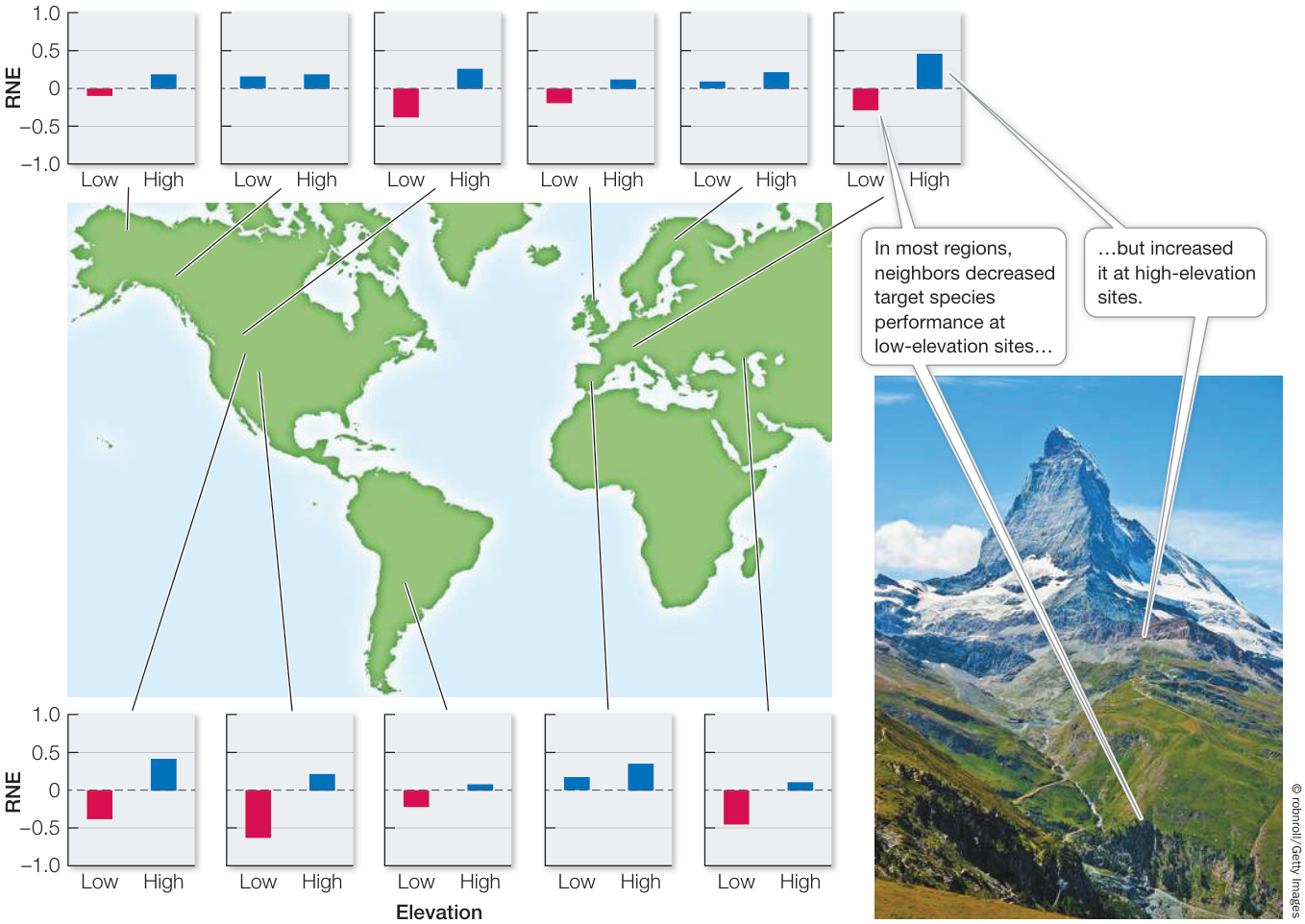
Figure 54.14 Positive Plant Interactions Are More Common at Higher Elevations The species interactions of alpine plants were experimentally measured (using the relative neighbor effect [RNE], defined as the growth of the target plant species with neighboring plants present minus its growth with neighboring plants removed) in 11 mountain ranges worldwide. RNE values greater than zero (in blue) indicate that neighbors increased the growth of target species; RNE values less than zero (in red) indicate that neighbors decreased the growth of target species. Plants generally benefited from neighbors at high elevations where temperatures were colder and competed with them at lower elevations where temperatures were warmer. (After R. M. Callaway et al. 2002. Nature 417: 844–848.)
As you know from population biology, any interaction that affects the survival of individuals can affect population growth. One example of the effects of a mutualism on population growth comes from an interaction between ants and acacia trees in Central America. In 1874, in Nicaragua, the naturalist Thomas Belt observed a peculiar interaction between bullhorn acacia trees (Acacia cornigera) and Pseudomyrmex ants. Bullhorn acacias get their common name from the enlarged, hollow thorns, in which the ants build nests. The trees also produce rewards for the ants, both in nectar-producing extrafloral structures and modified leaflet tips that are rich in oil and protein. These structures have no apparent purpose other than providing food for ants.
Belt suggested that the notoriously aggressive acacia ants defend the plants against herbivores in exchange for food and shelter. This idea was tested by Daniel Janzen in 1966 when he removed ants from some acacias with insecticide, and showed that trees without ants suffered a reduction in growth and an increase in mortality (Figure 54.15). If a bullhorn acacia tree lacks an ant colony, the repeated loss of its leaves and growing tips to herbivores often kills the plant within 6–12 months. Since Janzen conducted his experiment, additional work on ants and acacias has revealed that ants do more than simply defend the plant against herbivorous enemies; they also clip weeds from around the base of the plants, presumably reducing competition. Thus the ant–acacia mutualism has considerable effects on the population size of each partner.
Finally, possibly one of the most important types of positive interactions is that of species that provide habitat for other species and thus have widespread community effects. These dominant species mostly include plants such as trees or kelps but can include animals such as corals and sponges. For example, coral reefs are home to many species of fishes that cannot survive outside the reef environment. Likewise, species that are forest specialists cannot survive outside the cool and shaded environment of trees. Most tree species facilitate many other types of species by simply providing sites for attachment, shelter from extreme environmental conditions, or hiding places from predators. Many of these species have no direct effect on the trees in which they live, and thus have a commensalism with the trees. In all these cases, these dominant plants and animals are the very foundation of the community, which would not exist without them.
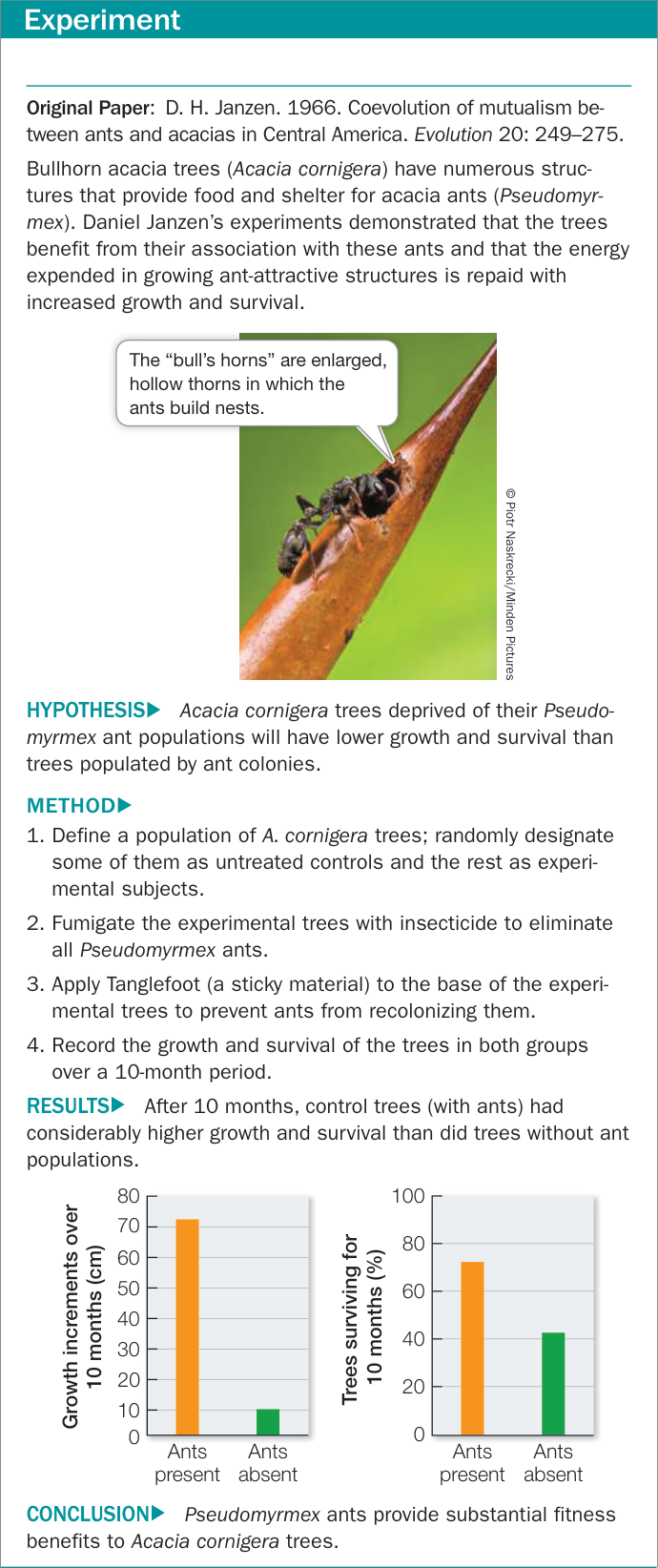
Figure 54.15 Are Ants and Acacia Mutualists?
Recap and Assess
Positive interactions, when at least one species benefits from an interaction and none are harmed, play a key role in enhancing coexistence among species. Positive interactions are more common in stressful environments, where physical conditions can limit the population growth of some species. Positive interactions can have dramatic effects on populations and communities, especially by providing habitat for other species.
- Offer reasons for why insect pollinators and animal dispersers might evolve obligate versus facultative mutualistic relationships with plants.
- Refer to Figure 54.13. Where in the rocky intertidal might Semibalanus benefit from positive interactions with other species? How about Chthamalus? Explain your answer.
- Give an example of how species that provide habitat could affect the number of species in a community.
Investigating Life
QA Why are small coral-reef fish species so vulnerable to lionfish predation, and what can be done about it?
You have seen that this question is greatly informed by understanding the power that species interactions have on shaping the behavior, physiology, and morphology of interacting species. It is clear that the longer species are exposed to one another, the more likely it is that they will develop strategies that allow coexistence. When lionfishes were inadvertently introduced to coral reefs in the Atlantic Ocean, native coral-reef fishes were exposed to a simple but novel predator behavior for which they currently have no viable defense mechanisms. It is unclear whether native coral-reef fishes will evolve defensive mechanisms before coral-reef fish communities are irreparably damaged. One potential strategy to slow the invasion may be to introduce predators of lionfishes. Unfortunately, however, lionfishes are well defended by frilly fin rays with venomous spines and a zebralike barred coloration that provides crypsis. To make matters worse, populations of predators that might control lionfish populations (such as sharks) are drastically declining as a consequence of overfishing. Fortunately lionfishes are relatively easy to catch, and the future may lie in controlling the population through systematic harvesting by humans.
Future directions
Some people have argued that the best way to control lionfishes is through commercial fishing. Lionfishes are attracted to lobster traps and can also be easily speared. The only risk to harvesters is in being poked by the spines, but this can be avoided if the fishes are handled with care. After some initial skepticism, restaurant owners are realizing that lionfishes are very good eating; the meat has a light, buttery flavor. Efforts are now ramping up to create a market for this destructive invader. Lionfish and chips, anyone?
© Georgette Douwma/Getty Images
You should be able to relate each summary to the adjacent figures. If you go to this visual summary in Achieve, you can follow links to figures, animations, activities, and simulations that will help you consolidate the material.
Visual Summary
Species Interactions Vary in Direction and Strength across a Continuum
- ■ Species vary in the effects they have on each other (positive, negative, neutral). Species interactions may involve feeding (trophic) effects and/or living in close association (symbiosis).
- ■ The four main categories of species interactions are predation (predator kills and/or consumes all or part of its prey), competition (at least two species use some of the same limiting resources and have negative effects on one another), positive interactions, or facilitations (at least one species benefits from the interaction and none are harmed), and amensalism (one species is harmed but the other is not affected).
- ■ Species interactions are not always clear-cut but instead fall along a continuum in which species vary in how strongly they affect one other.
- ■ Some species interactions result in reciprocal evolutionary change over time, known as coevolution.
Questions
- Explain the difference between the following species interactions: carnivory, herbivory, parasitism, competition, mutualism, commensalism, and amensalism.
- Name some factors that can produce variable, or asymmetrical, species interactions.
- What is coevolution, and what types of species interactions are most often involved?
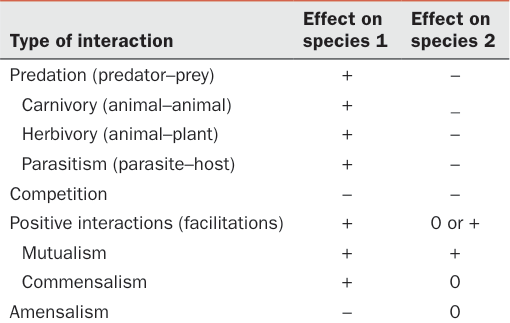
Figure 54.1
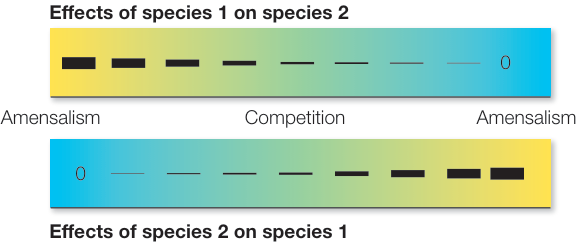
Figure 54.2
Predation Is a Trophic Interaction in which Predators Benefit and Prey Are Harmed
- ■ Predator-prey interactions result in the evolution of a range of capture and avoidance mechanisms.
- ■ Herbivory (animals preying on plants) and parasitism (parasites feeding and living on or in hosts) are widespread but specialized interactions that usually do not result in the death of the prey.
- ■ Population sizes of predators and their prey tend to cycle as a result of predator-prey interactions over time.
- ■ Some predators, called keystone species, can have dramatic effects on communities by preying on competitively dominant species.
- What types of strategies do predators use to catch prey and do prey use to avoid being captured?
- Why are herbivore-plant and parasite-host relationships likely to be specialized species interactions?
- How do predator-prey cycles arise? How can predators have community-wide effects?
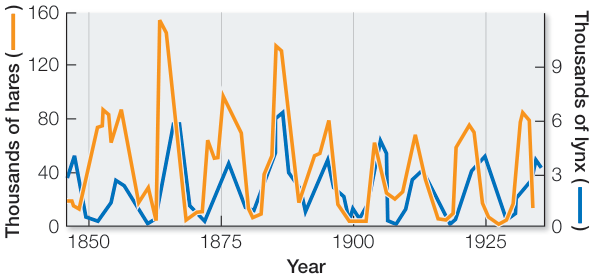
Figure 54.9
- ■ The fundamental niche determines where a species can live physiologically, but the realized niche depends on interactions with other species, especially competitors.
- ■ Interference competition occurs when one species directly interferes with or prevents another species’ access to a limiting resource. Exploitation competition occurs when all competitors have access to the limiting resource but the outcome depends on their relative efficiency at using the resource.
- ■ Competitive exclusion occurs when a species prevents another species from using essential resources, which may cause the inferior competitor to become locally extinct.
- ■ Most competing species show competitive coexistence through the processes of resource partitioning, disturbance, stress, and/or predation. Competitive coexistence can extend species’ ranges.
Questions
- What is the difference between a fundamental niche and a realized niche?
- How does interference competition differ from exploitation competition?
- Competition results in exclusion or coexistence. What factors allow competitive coexistence, and how do they affect species’ distributions?
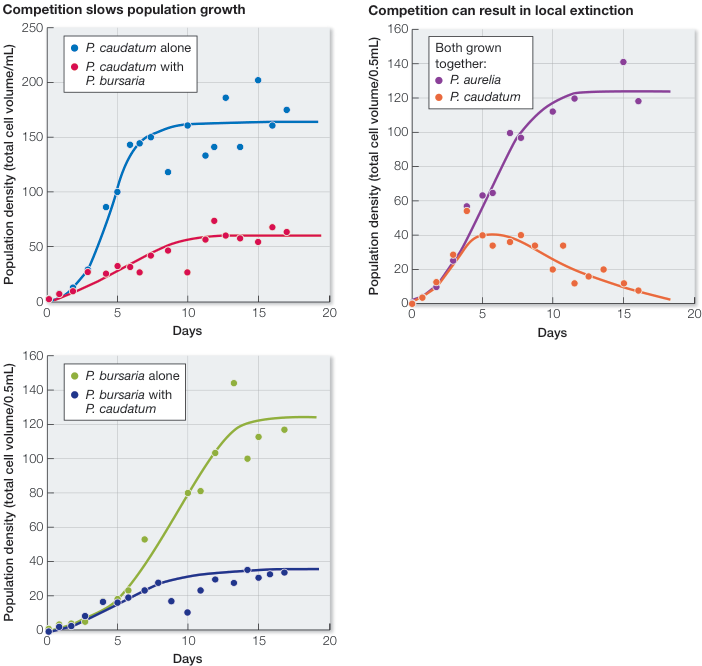
Figure 54.11
Positive Interactions Occur When at Least One Species Benefits and None Are Harmed
- ■ The two types of positive interactions are mutualisms, in which both species benefit from the interaction, and commensalisms, in which one species benefits and the other is unaffected. Some positive interactions are symbiotic relationships. Some positive interactions are obligate (necessary), while others are facultative (optional).
- ■ Positive interactions are more common in stressful environments, where physical conditions can limit the abundance and distribution of some species.
- ■ Positive interactions can have dramatic effects on populations and communities, especially by providing habitat for other species.
Questions
- How have obligate versus facultative mutualistic interactions evolved?
- Why are positive interactions more common in stressful environments?
- How do positive interactions affect population growth and community structure?
Table 54.1 Examples of Mutualistic Interactions
| Interaction | Obligate symbiosis | Facultative symbiosis | Obligate nonsymbiosis | Facultative nonsymbiosis |
|---|---|---|---|---|
| Plants–mycorrhizal fungi | x | x | x | x |
| Corals–algal endosymbionts | x | x | ||
| Lichens (algae–fungi) | x | |||
| Plants–insect pollinators | x | x | ||
| Plants–animal dispersers | x | x |