Chapter 57A Changing Biosphere
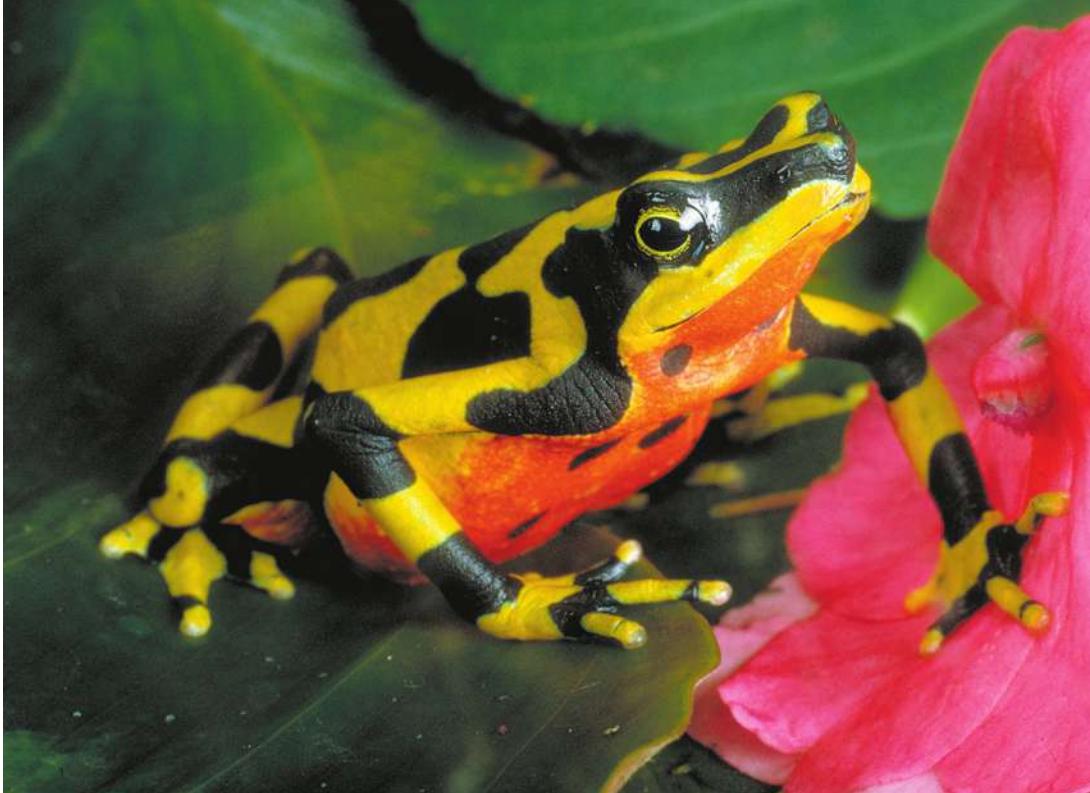
© Dr. Paul A. Zahl/Science Source
Key Concepts
57.1 Human Activities Are Changing the Biosphere, Resulting in Biodiversity Loss
57.2 Most Biodiversity Loss to Date Is Caused by Habitat Loss and Degradation
57.3 Protecting Biodiversity Requires Conservation and Management Strategies
A small population of the harlequin toad (Atelopus varius), a species in Costa Rica that was presumed extinct in 1996, was found in a mountainous protected area in 2003.
Investigating Life: Fatal Fungus Final Fate for Frogs?
Most of us have at some point in our life encountered a frog in a local pond or park. Maybe more than almost any other wild animals, amphibians are commonly encountered by human beings. But since the late 1980s, ecologists have documented a sharp global decline in amphibian species—more than in any other major taxonomic group on Earth. Some regions show greater declines than others, but a 2019 study by the International Union for Conservation of Nature (IUCN) showed that amphibians are more threatened than either birds or mammals, with 40% of species (2,123) being globally threatened and 159 species believed to be extinct in the wild.
The decline has been particularly worrisome to scientists for a few key reasons: the sudden and global nature of the decline, the undisturbed nature of the areas where some of the declines have occurred (for example, mountainous rainforest preserves in Costa Rica, where 40% of the amphibians have become extinct), and the reputation of amphibians as “biological indicators” of environmental conditions. Amphibians have permeable skin, live their lives in water and on land, and typically do not move long distances, factors that make them particularly susceptible to changes in their immediate environment. The IUCN study showed that most amphibian declines were caused by habitat loss, habitat degradation, and overexploitation, but for 48% of the rapidly declining species, there was no clear explanation. What factors might be contributing to the rapid decline of these species?
Over the past two and a half decades, a highly lethal and infectious skin disease called chytridiomycosis, caused by a fungal pathogen (Batrachochytrium dendrobatidis), has been linked to mass mortalities of amphibians, especially in the regions where amphibian declines have been most dramatic. The disease was first discovered in 1993 in dead frogs in Australia and then seemed to appear suddenly in the Americas, Africa, Europe, and New Zealand. However, it is not clear how or why the fungal disease has emerged as a threat, and whether humans have contributed to its spread. An increasing number of studies are looking for reasons why this deadly disease has emerged and how it might be prevented.
QA Is the most recent dramatic decline of amphibians the result of a novel fungal pathogen, and if so, what can be done about it? (Find the answer on page 1296.)
Human Activities Are Changing the Biosphere, Resulting in Biodiversity Loss
Learning Objectives
- 57.1.1 Describe the value of biodiversity and how its loss at one scale affects loss at other scales.
- 57.1.2 Explain the concept of effective population size and the various ways that small population sizes can lead to extinction.
- 57.1.3 Discuss why it is difficult to determine the number of species on Earth and their extinction rates.
- 57.1.4 Explain the methods used to estimate the probability of species extinction.
Throughout Part Nine we have described the dramatic ways in which the biosphere is changing as a result of human activities. The causes of these changes have been varied, and include habitat destruction and degradation, overharvesting of species, species invasions and emerging diseases, and now climate change. One of the largest ecological consequences of these changes has been the rapid decline of biodiversity, or the loss of diversity at genetic, population, species, ecosystem, and global scales.
Biodiversity has great value to human society
The escalating loss of Earth’s biodiversity is of great concern for many reasons:
- Humans depend on thousands of species and their ecosystems for ecosystem goods and services. As you learned in Key Concept 56.5, species and ecosystems provide humans with important goods (e.g., food, timber, and fiber) and services (e.g., regulating and supporting services such as coastal protection, water and air quality, soil formation, and carbon sequestration).
- Humans derive enormous psychological benefits, including aesthetic pleasure, from interacting with other organisms. These aesthetic benefits are the reason we surround ourselves with parks and recreate in the wilderness.
- Living in ways that cause the extinction of other species raises ethical issues. Loss of biodiversity is of concern to anyone who believes humans have an ethical obligation to the natural world.
- Extinctions deprive the public and scientific community of opportunities to study and understand ecological relationships among organisms. The more species that are lost, the more difficult it will be to understand the biosphere, as it exists today.
Recognizing the importance of biodiversity propels us to develop strategies for protecting and managing it and has spawned the development of conservation biology—an integrative scientific discipline that relies on principles of ecology, economics, social science, and policy to protect and manage Earth’s biodiversity. As you will see, we will refer to many ecological concepts from other chapters to establish, first, how and why biodiversity is being lost and, second, the role of conservation biology in protecting against and managing its further loss.
Diversity loss at one scale affects diversity loss at other scales
As you saw in Key Concept 55.1, biodiversity is central to the interconnectedness of various levels of biological organization, from genes to species to communities. Thus the loss of diversity at one scale affects the loss of diversity at other scales (Figure 57.1).
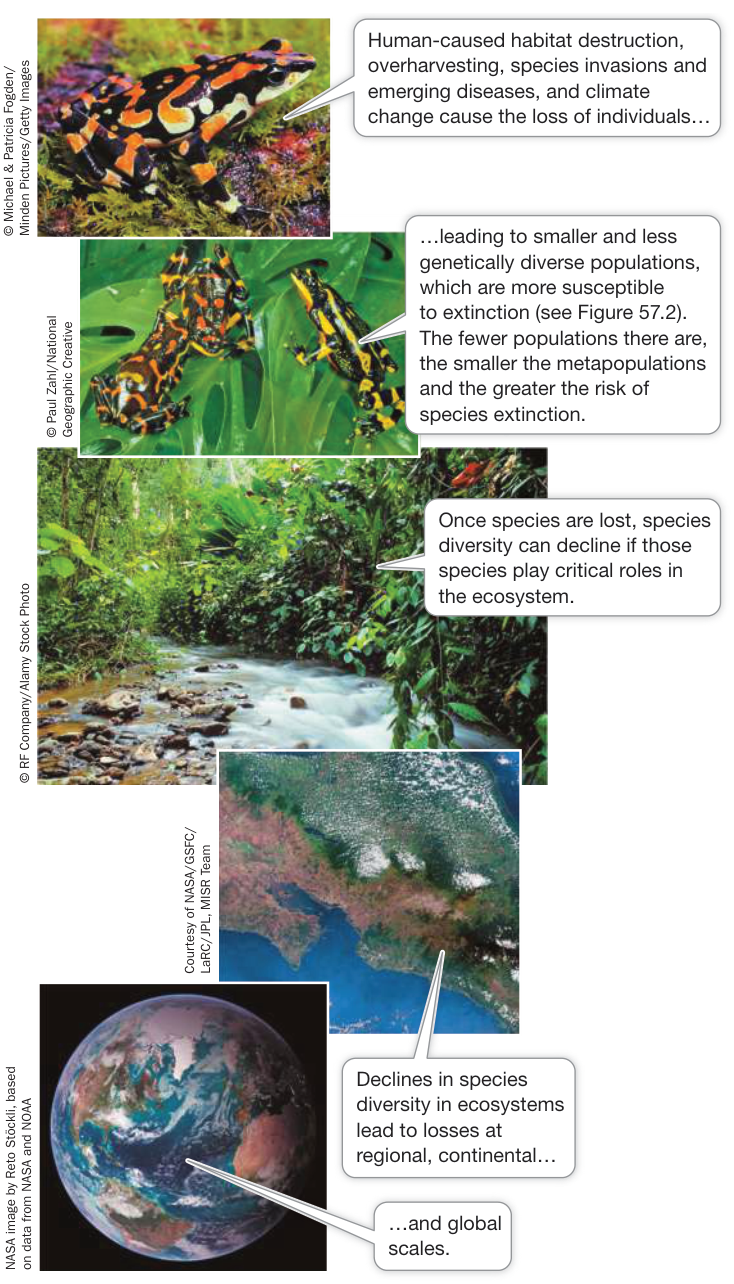
Figure 57.1 Biodiversity Loss Is Interconnected across Scales Human activities have caused the rapid decline of biodiversity, or the loss of diversity at genetic, population, species, ecosystem, and global scales. Implicit in biodiversity loss is the concept that the loss of diversity at one scale affects the loss of diversity at other scales (see Figure 55.5).
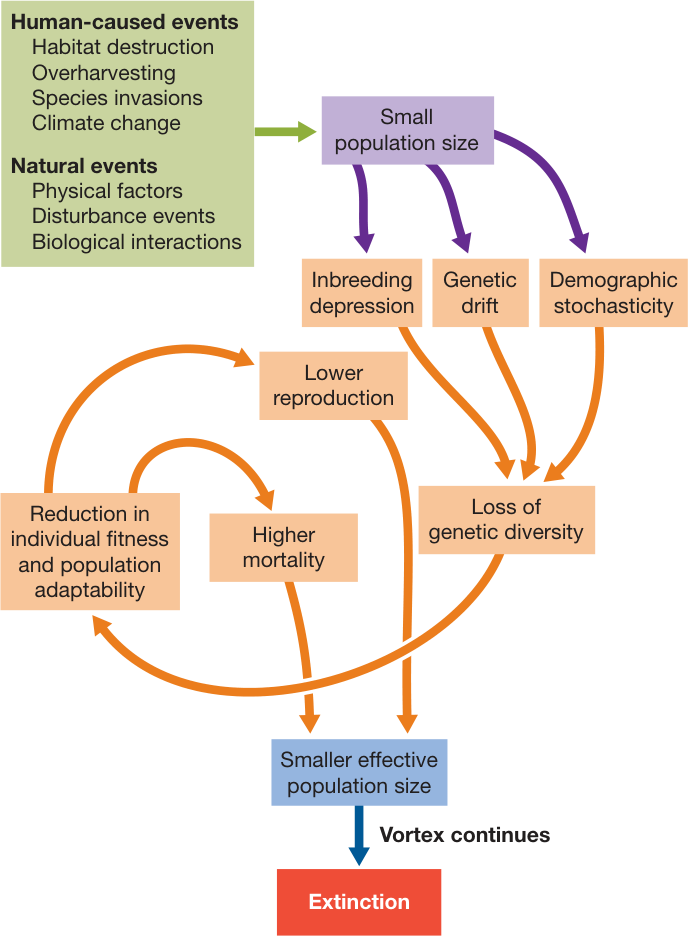
Figure 57.2 Extinction Vortex Human-caused and natural events can reduce the effective population size (number of individuals that can contribute offspring to the next generation) of species, eventually leading to population and species extinctions. Q: Explain how the chytrid fungal pathogen described in the opening story could cause the extinction of a species such as the harlequin frog.
For example, when human-caused activities reduce the number of individuals in a population, they reduce what is called the effective population size, or the number of individuals that can contribute offspring to the next generation, resulting in further population size decline, or what has been termed an “extinction vortex” (Figure 57.2). How does the effective population size continue to decline? First, small populations are more likely to experience genetic drift and inbreeding, which can lead to lower genetic diversity and inbreeding depression. Second, when population sizes are small, there is also a greater chance of demographic stochasticity, or fluctuations in population size as the result of random differences among individuals in reproduction and survival. For example, a small population might have, by chance, fewer females than males, resulting in fewer offspring than expected if the sex ratio were reversed. Finally, external mortality events such as extreme weather or habitat destruction can have devastating effects on small populations by increasing their chance of extinction even if only a small number of individuals are killed.
Connect the Concepts As described in Key Concept 12.3, inbreeding depression is a state of reduced biological fitness in a population arising from mating among close relatives that tend to have the same recessive, sometimes deleterious, alleles. Key Concept 20.2 describes how in small populations, genetic drift—random changes in allele frequencies from one generation to the next—may produce large changes in allele frequencies over time. Harmful alleles may increase in frequency, and rare advantageous alleles may be lost.
Biodiversity loss is also connected at higher metapopulation, species, and ecosystem levels (see Figure 57.1). For example, you know from Key Concept 53.4 that the larger the metapopulation, the greater the chance that dispersal among source populations can rescue sink populations from extinction. As more local populations become extinct, and as more metapopulations are compromised, there is a greater risk that species will become extinct as well. Unfortunately, if some of those species play critical roles in their ecosystems—if they are, for example, keystone or foundation species—the possibility exists that other species will be threatened with extinction as well. As species diversity declines in ecosystems, biodiversity loss manifests itself at larger regional, continental, and even global scales (see Figure 57.1).
There are many examples of how a series of unfortunate events at different levels of biodiversity has led to the extinction of species—or subspecies, in the case of the Heath Hen (Tympanuchus cupido cupido), a large bird in the grouse family (Figure 57.3A). Heath Hens were common from Maine to Virginia prior to the 1800s but were hunted extensively for food. By 1830 only one population, on the island of Martha’s Vineyard, Massachusetts, was left. By 1908 only 50 birds remained, and a reserve was established to recover the population, which eventually grew to several thousand birds. Unfortunately, in 1916 a fire and a series of environmental factors that included a hard winter, an influx of predators, and a poultry disease caused the population size to decline dramatically. By 1928 demographic stochasticity and inbreeding depression set in, leaving only 13 individuals—2 females and 11 males. Four years later, the Heath Hen was extinct.
Species diversity is being lost at unprecedented rates
The loss of the Heath Hen and other extirpations caused by humans (see Figure 57.3) remind us of the finality inherent in species extinctions. However, over the scope of Earth’s history extinction has been a constant theme; most of the species that have lived on Earth are extinct today. Extinctions have occurred throughout Earth’s history at what is referred to as a “background” rate as changes in environmental conditions have favored some species and negatively affected others. But the rate of extinctions taking place today rivals those of the five great mass extinction events, which were the result of cataclysmic natural disturbances rather than human activities (see Table 23.1 and Figure 23.2). One estimate, from renowned evolutionary biologist Edward O. Wilson, suggests that Earth is losing some 30,000 species per year, putting us in the midst of a sixth mass extinction event.
This mass extinction event has been ongoing for some time. For example, research suggests that when humans first arrived in North America from Siberia about 15,000 years ago, they encountered a diverse and spectacular group of large mammals, including saber-toothed cats, dire wolves (Canis diris), mammoths, mastodons, giant ground sloths, and giant beavers. Most of this “megafauna” became extinct within a few thousand years after humans arrived. Although several hypotheses have been advanced to account for the rapid and simultaneous disappearance of so many large animals, overhunting by humans is the most likely explanation. Losses of megafauna coinciding with the arrival of humans have been documented worldwide, most notably in Australia, New Zealand, and Madagascar. Tracking and predicting extinctions are, however, difficult for several reasons:
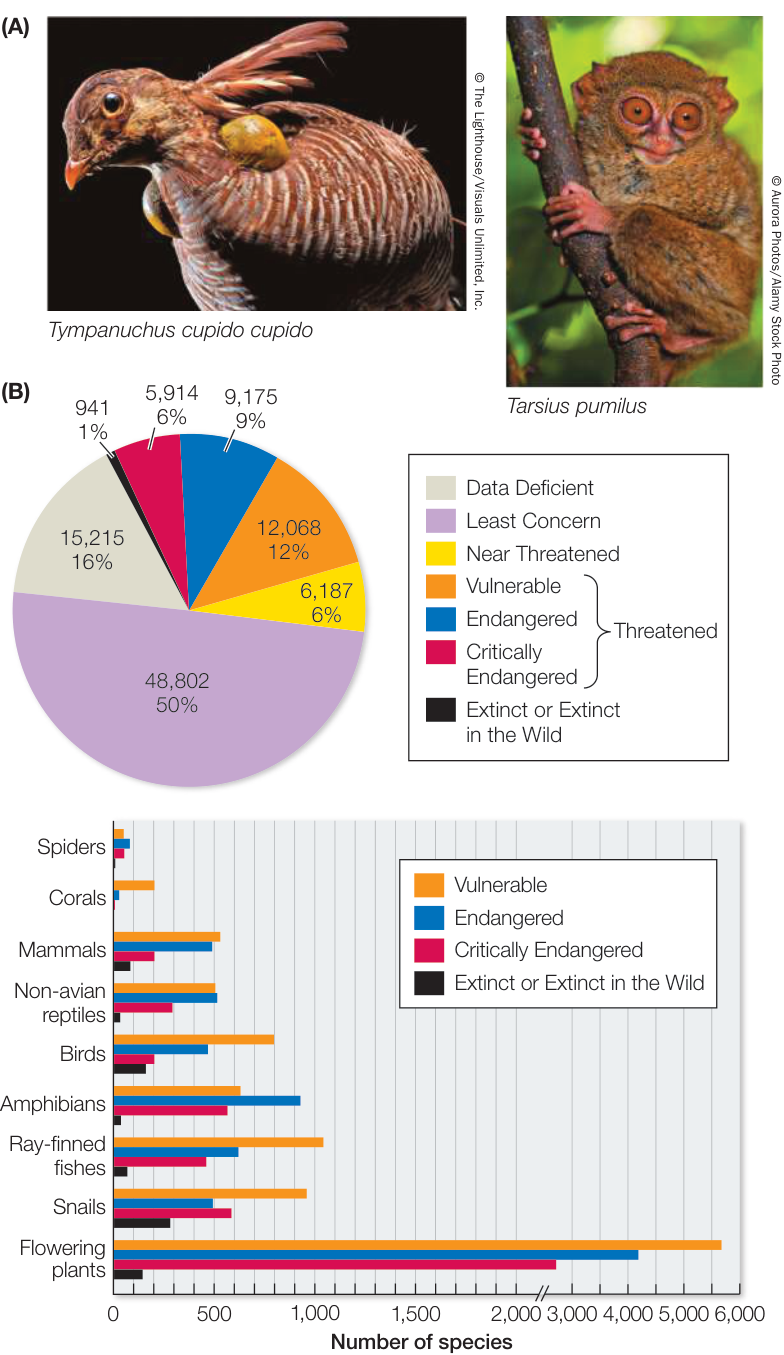
Figure 57.3 Species Extinctions: Going, Going … (A) The Heath Hen (above left) became extinct in 1932. In 2008 the pygmy tarsier (above right) was discovered in an Indonesian national park after having been presumed extinct for 85 years. (B) The pie chart shows the breakdown by risk category of 98,302 animal, plant, and fungi species that are either Extinct or Threatened as assessed by the International Union for Conservation of Nature. The bar graph shows examples of animal and plant taxonomic groups from that assessment that are experiencing heightened extinction or risk of extinction. (B after IUCN 2019. The IUCN Red List of Threatened Species. Version 2019-1. http://www.iucnredlist.org. Downloaded on 16 May 2019.) Q: What percentage of species are categorized as Extinct versus Threatened? Of those species, which taxonomic group has experienced the most extinction and which can be categorized as most Threatened? Of the animal groups, which can be categorized as most Threatened?
We do not know how many species live on Earth today. Many species that are likely to become extinct in the near future have not been named and described by scientists. Insects provide a case in point: although more than 1 million species have been described (see Key Concept 30.4), estimates of the number of species yet to be discovered range from 2 million to more than 15 million. Even for larger organisms, our understanding of diversity is incomplete. For example, worldwide, an annual inventory of newly described species reported 19,232 species discovered in 2009 alone; this list included 9,738 insects, 2,184 plants, 1,360 fungi, 71 mammals, and 7 birds.
The distributions of most described species, particularly those that are small, reclusive, and rare, are poorly known. One tiny North American true bug, Corixidea major (so rare it has no common name), had been found in only one location near Clarksville, Tennessee, until entomologists using lights to collect insects at night discovered it in Virginia and Florida, extending the species’ known range by more than 1,000 kilometers.
It is difficult to determine whether a species is truly extinct. Rarely is the death of the last surviving member of a species recorded with certainty, as it was in the case of the last Passenger Pigeon (Ectopistes migratorius), a female named Martha, that died in the Cincinnati Zoo on September 1, 1914. The status of rare, reclusive species with poorly known life histories is much more difficult to determine, as has been the case with the pygmy tarsier (Tarsius pumilus) (see Figure 57.3A). This tiny primate, weighing less than 60 grams, was thought to have become extinct in its native cloud forests on the island of Sulawesi in Indonesia. In 2008—85 years after the last reported sighting of a living T. pumilus—a research team discovered individuals of this species living in one of the island’s national parks.
We rarely know all of the interactions among species. The loss of one species—be it as a member of a food web or as a habitat for species—can place other species at risk. How many species are at risk as a result of their interactions with other species is hard to characterize and often requires detailed ecological knowledge.
We can predict the effects of human activities on biodiversity
Despite gaps in our understanding of biodiversity, methods exist for estimating the extinction probability of species, taking into account their population sizes, genetic variation, life history traits, and ecology. The IUCN has published categories that define the risk of extinction of species. Species in imminent danger of extinction in all or most of their range are classified as “Critically Endangered” or “Endangered”; those believed to be susceptible to extinction in the near future are classified as “Vulnerable.” Biologists consider species in any one of these three categories to be “Threatened” (Figure 57.3B).
Rarity in and of itself is not always a cause for concern. Some species may be specialized for rare and unusual habitats and not be particularly abundant by nature. But as you saw earlier, “newly rare” species are of concern because large and rapid reductions in population sizes can lead to smaller effective population sizes through a variety of mechanisms (see Figure 57.2).
Certain aspects of species’ life histories (see Key Concept 53.3) can be important in predicting the ability of species to recover from declines. In fishes and mammals, for example, one of the best predictors of extinction risk is age at maturity, a life history trait that influences the rate of reproduction. Ecological requirements can also influence the ability of species to recover from rapid declines. Species with specialized habitat or dietary requirements, for example, are more likely to become extinct than are species with more generalized requirements.
Ecologists can apply the principles of the species–area relationship and the theory of island biogeography (see Key Concept 52.5) to predict the effects of habitat loss on species—a major cause of extinction today. By measuring the rate at which species richness decreases with decreasing habitat patch size, they can estimate how many species that live in and depend on that habitat may be lost. We examined the connection between habitat area and species loss in Investigating Life: The Largest Experiment on Earth in Chapter 52.
Recap and Assess
Biodiversity has great value to human society in the form of goods and services. Human activities have resulted in a rapid loss of biodiversity, a decline detectable at genetic, population, species, ecosystem, and global scales. Species extinctions can occur when human and natural events reduce effective population sizes and cause inbreeding depression, genetic drift, and demographic stochasticity. Methods exist for estimating the extinction probability of species that take into account their population sizes, genetic variation, life history traits, and ecology.
- What are some of the values that humans place on biodiversity?
- Using the extinction vortex concept as your guide, describe how the Heath Hen became extinct in 1932.
- Figure 57.3B shows the number of extinct species in various taxonomic groups. What types of animals have shown the most extinction, and why might this be the case?
We’ve said that human activities have played a major role in the loss of biodiversity. In the next key concept we will describe the types of human activities that most threaten biodiversity.
Most Biodiversity Loss to Date Is Caused by Habitat Loss and Degradation
Learning Objectives
- 57.2.1 Describe how habitat loss, fragmentation, and degradation have caused species extinctions.
- 57.2.2 Explain the effect that overharvesting of species has had on species extinctions and food webs.
- 57.2.3 Describe how the introduction of non-native species has threatened many species.
- 57.2.4 Provide evidence of how climate change is linked to declines of species and ecosystems.
Global Biodiversity Outlook 4, a report published by the United Nations in 2014, identified four principal pressures on biodiversity: (1) habitat loss and degradation, (2) overharvesting of biological resources, (3) species invasions and emerging diseases, and (4) climate change. Here we consider each of these pressures separately while keeping in mind that the threats to biodiversity are often not mutually exclusive.
Habitat loss and degradation endanger species
Most scientists agree that, up to this point in human history, habitat loss (reduction in habitat quantity) and habitat degradation (reduction in habitat quality) have been the major culprits in biodiversity loss. Our human footprint is large—it is estimated that we have transformed 50%–60% of the land surface, primarily for agriculture, timber, and livestock grazing. The building of infrastructure, such as cities, transportation corridors, and utilities (including hydroelectric dams), has altered another 2%–3% of Earth’s surface.
As humans increasingly dominate the planet, the transformations they are causing affect whole biomes and the species dependent on them. For example, the current rate of loss of tropical rainforest—Earth’s most species-rich biome—is about 2% of the remaining forest each year due to the increasing demands of a rapidly expanding human population for forest products and cleared agricultural land. Most of the rainforests of Asia have already been reduced to small fragments, with the only extensive remaining tracts being found on the islands of New Guinea and, to a much lesser extent, Borneo (Figure 57.4). As of 2019, the greatest amount of tropical rainforest deforestation had taken place in Brazil. If the current rate of loss continues, millions of rainforest species could become extinct before the end of this century.
Physical destruction of habitat, as when tropical rainforests are cut down or wetlands are drained and converted to agricultural use, has significant effects on the distributions and abundances of species. Reductions in suitable habitat have contributed to the extinction of thousands of species. As the remaining habitat gets divided into smaller and smaller fragments, it can become further degraded by edge effects (as you saw in Investigating Life: The Largest Experiment on Earth in Chapter 52 and Animation 52.4, Edge Effects). Recall that as habitat fragments become smaller, proportionally more land is exposed to edge effects (see Key Concept 52.5). The physical conditions at the edges of habitats often are more similar to those of the new habitat than to the original habitat, and this can be physically stressful for species acclimatized to the original habitat. In addition, species from surrounding habitats can colonize the edges, where they may compete with or prey on the species living in the fragment.
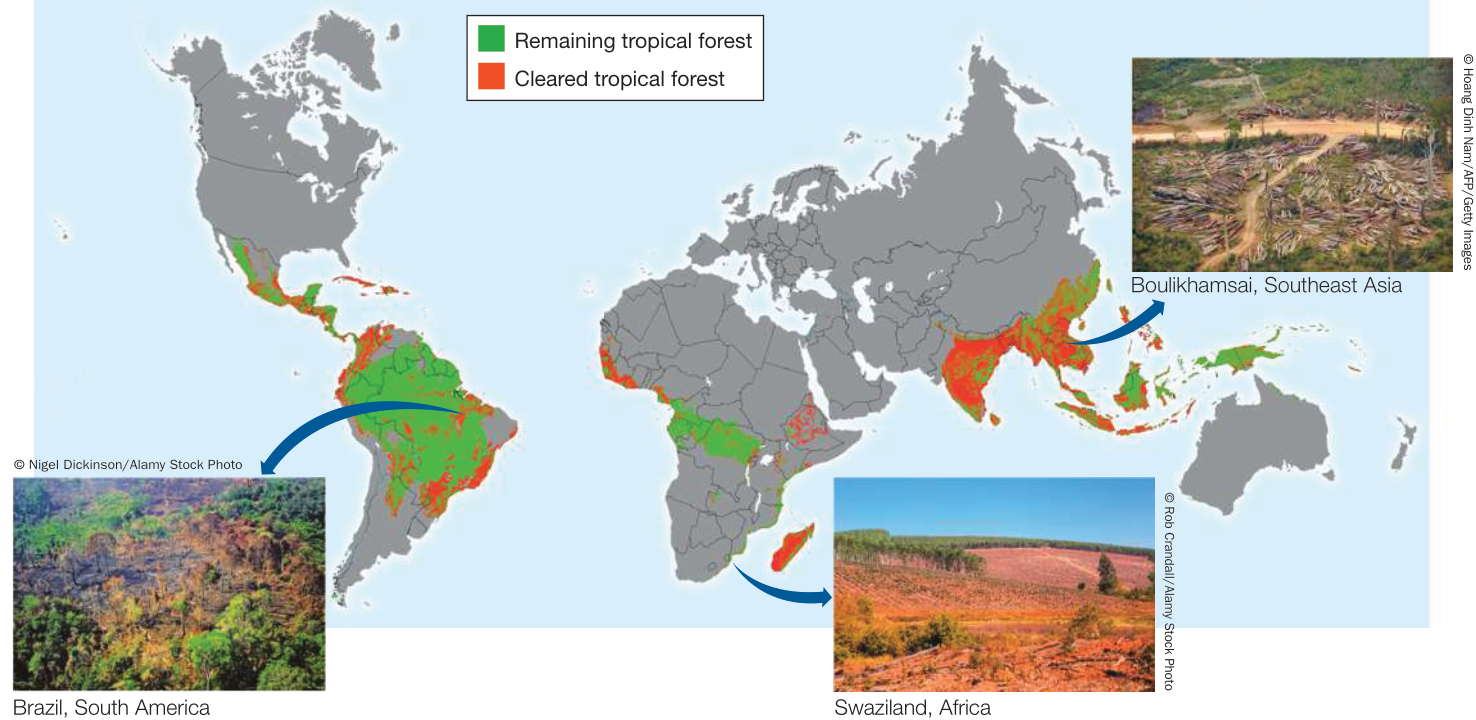
Figure 57.4 The Disappearing Tropical Forest Rainforests, the most abundant tropical forests, have long been recognized as centers of biodiversity that harbor vast numbers of species (see tropical rainforest biome, p. 1183). Since the 1950s, tropical forests have been cleared for agriculture, highways, timber resources, and other needs of an exploding human population. Map based on data from 2005. (After S. L. Pimm and C. Jenkins. 2005. Sci Am 293: 66–73.) cleared for agriculture, highways, timber resources, and other needs of an exploding human population. Map based on data from 2005. (After S. L. Pimm and C. Jenkins. 2005. Sci Am 293: 66–73.)
One effect of forest fragmentation in much of North America has been an increase in the abundance of the Brown-headed Cowbird (Molothrus ater), a brood parasite that lays its eggs in the nests of other bird species. Nestlings of a brood parasite are raised by the host parents, to the detriment of their own young (Figure 57.5A). Historically, cowbirds followed bison (Bison bison) and other grazing mammals, feeding on insects kicked up by the herds; thus their eggs were laid primarily in nests of grassland host species. Forest fragmentation has opened up new opportunities for the cowbirds, which can now lay their eggs in the nests of forest birds in habitat edges, affecting nestling mortality and fledging success (Figure 57.5B). Fragmented forests, with relatively more edge than intact forest, thus favor the proliferation of cowbirds at the expense of forest birds.
Pollution is another cause of habitat loss and degradation. The negative effects of acid rain (see Key Concept 56.4), for example, have greatly affected lake and forest ecosystems. Among the most troublesome toxic pollutants in ecosystems today are heavy metal waste products of mining and manufacturing, and synthetic organic chemicals (pesticides) released into the environment to control pests. Multiple studies have implicated a variety of pesticides in the decline of amphibian species, particularly in areas with intense agriculture such as California and the Midwestern United States.
A relatively hidden form of pollution comes from nondegradable plastic garbage in open ocean habitats (Figure 57.6). One garbage patch in the middle of the Pacific Ocean is estimated to be the size of Texas. Plastic is broken up into smaller pieces and when ingested by marine birds, mammals, or fishes can be a choking hazard or can disrupt endocrine functions such as reproduction, neural development, and immune function. Plastic or abandoned fishing nets can also entangle marine organisms, including marine mammals, resulting in death.
Overharvesting has driven many species to extinction and changed food webs
Overharvesting occurs when single species, or groups of similar species, are harvested for human use. Overharvesting for such resources as food, clothing, ornamentation, pets, and medicines was once the most important and rapid cause of species extinction. For example, it has been estimated that overharvesting is responsible for roughly 40% of the approximately 150 bird species that have become extinct since the 1500s. Maybe one of the most egregious examples of overharvesting of birds came from “plume hunting” in the late nineteenth century. Feathers were harvested for ornamentation on hats and clothing—during the heyday, 5 million birds were killed each year, including 95% of Florida’s shorebirds.
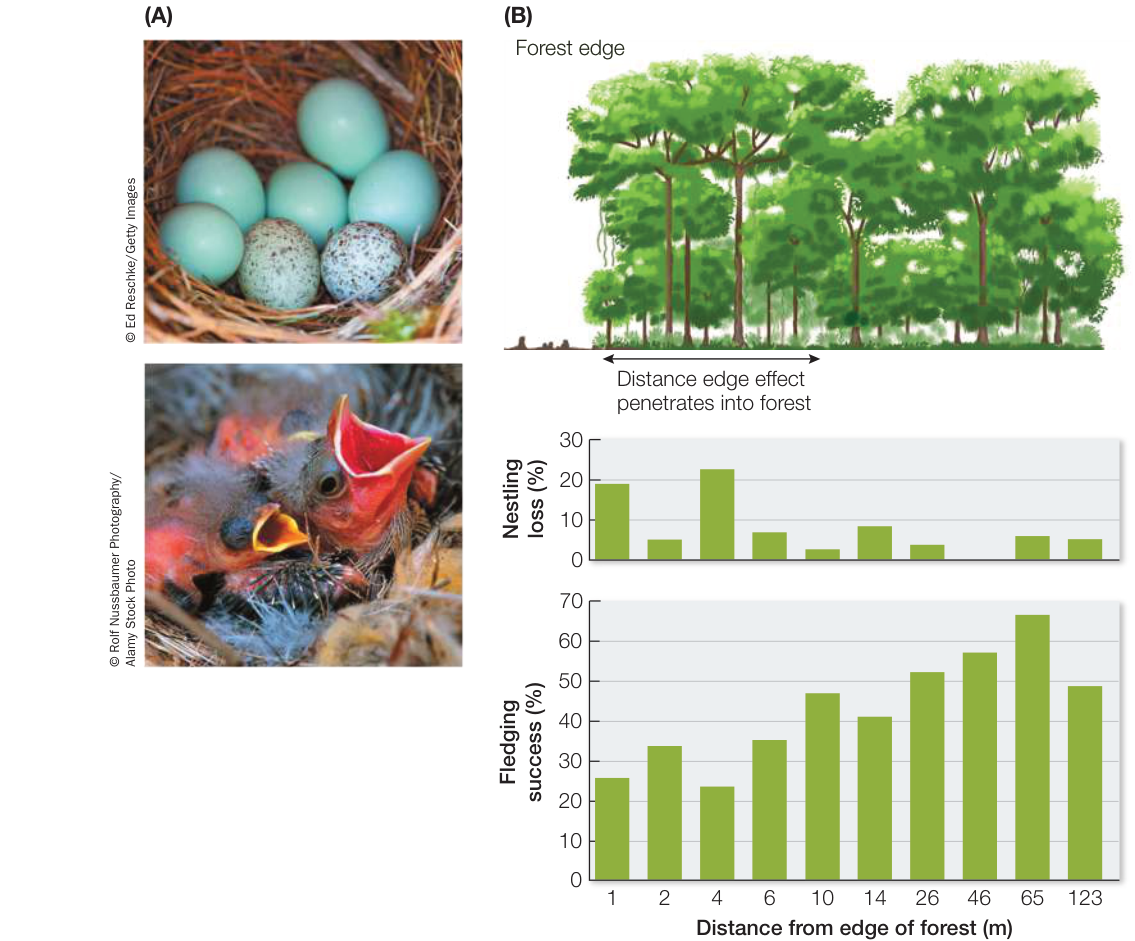
Figure 57.5 Cowbird Parasitism at Forest Edges (A) Cowbirds are nest parasites—they lay their eggs (black speckled) in the nests of host bird species and depend on them to raise their young (note the large cowbird chick). (B) At forest edges, host birds have higher nestling loss and lower fledging success as a result of cowbird parasitism. (B after J. E. Gates and L. W. Gysel. 1978. Ecology 59: 871–883.)
of Africa and Asia because of markets for ivory tusks and horns. A recent study estimated that in central Africa alone, regional elephant population sizes have declined by 64% because of illegal killing within the last decade (Figure 57.7). On a continental scale, the study showed that between 2010 and 2012, 40,000 elephants were killed illegally, a rate of 8% per year.
Massive and lucrative international trade in exotic pets such as birds, non-avian reptiles, frogs, mammals, aquarium fishes and corals, and ornamental plants threatens many species. It is estimated that 2–5 million birds and 2–3 million non-avian reptiles are captured live each year. In addition, it has been estimated that more than 1 billion ornamental fishes comprising more than 4,000 freshwater and 1,400 marine species are traded internationally each year. For example, the Banggai cardinalfish (Pterapogon kauderni) is on the brink of extinction entirely because of the pet trade; almost a million of these critically endangered fish are caught annually near
The plumes of white egrets sold for $32 per ounce in 1915, which was the same price as gold.
Even today, overharvesting is still of great concern for critically endangered species that are not yet extinct but have a high probability of becoming so within the century, particularly as their habitat declines or is further degraded. Recently there has been an alarming uptick in illegal poaching of what might be considered charismatic megafauna, or species with widespread popular appeal. One example is the illegal poaching of elephants and rhinoceroses in much
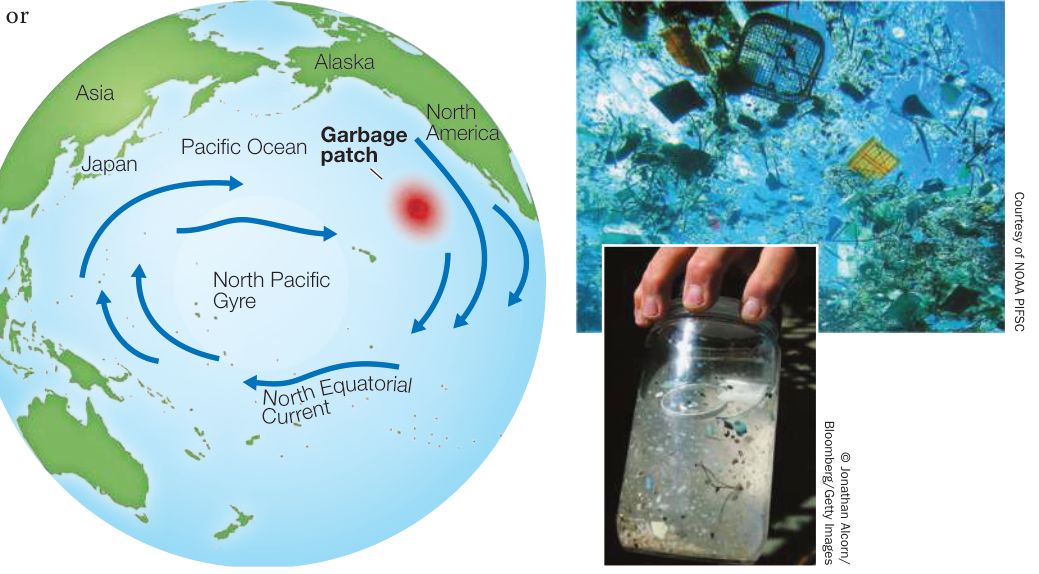
Figure 57.6 Plastic Ocean Large amounts of plastic garbage have accumulated in the North Pacific Gyre, degrading the pelagic environment. Inset is a photo of tiny bits of plastic comingled with a sample of water taken from the vicinity of the North Pacific Gyre garbage patch. (After Marine Debris Division/NOAA, US Department of Commerce. https://marinedebris.noaa.gov/sites/default/files/GPmap\_2012\_NOAAMDP.jpg. Accessed 4/8/2019.)

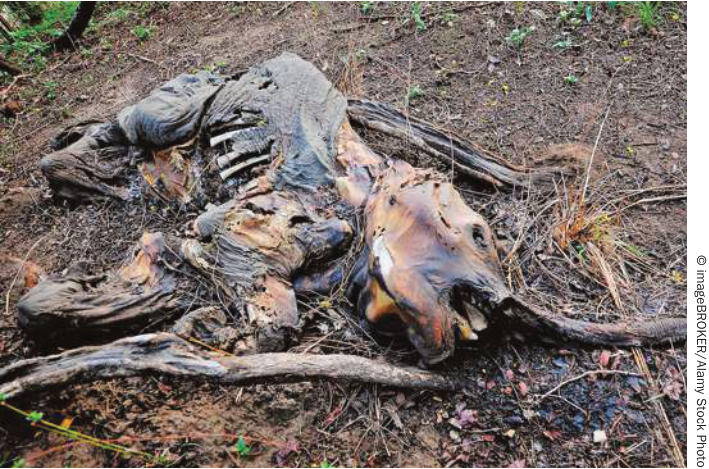
Figure 57.7 Mass Killing of Elephants One of the largest known mass elephant killing events took place in Bouba Njida National Park, Cameroon, in 2012. Poachers killed more than 300 elephants with AK-47s and grenades.
Sulawesi, Indonesia, to satisfy the demand from saltwater aquarium enthusiasts. The exotic pet trade is worrisome from multiple aspects—harvesting and transporting species not only cause the decline of rare or endangered species but also can unintentionally lead to disease transmission or species invasions, as you saw with the lionfishes example in Chapter 54.
Even though we tend to think of the oceans as boundless, they too are affected by overharvesting. Burgeoning human populations in need of food are placing unprecedented pressure on species harvested from the wild. Humans have fished for at least 40,000 years, but in recent centuries innovations in technology and increasing demand have accelerated overharvesting. A recent comprehensive study of fisheries found that nearly 14% of fished taxa collapsed between 1950 and 2007 (Figure 57.8A). The effects of fish harvesting vary widely across the globe, in part because restrictions in some locations have been implemented to encourage the recovery of overfished species (Figure 57.8B). Top predators such as sharks, bluefin tunas, and groupers, which are preferentially harvested, are at particular risk of extinction. These long-lived species show slow population recovery, and because they are keystone species, their losses are likely to have more lasting ecosystem ramifications.
What are some of the consequences of single-species overharvesting, particularly of species that are long-lived or top predators? First, species such as elephants and rhinoceroses that are characterized by slow population growth show slower recovery. Blue whales (Balaenoptera musculus) are at greater risk of extinction than are humbacks (Megaptera novaeangliae), even though both species experienced chronic overharvesting in the nineteenth century. You saw in Key Concept 53.4 that while humback whales have been recovering relatively quickly with the cessation of hunting, blue whale populations have lagged behind because of their lower reproductive rates. Recovery of populations of the black rockfish (Sebastes melanops), which we introduced in Key Concept 53.4, has been extremely slow because older, larger females were preferentially harvested, and the remaining smaller females produce fewer and smaller larvae.
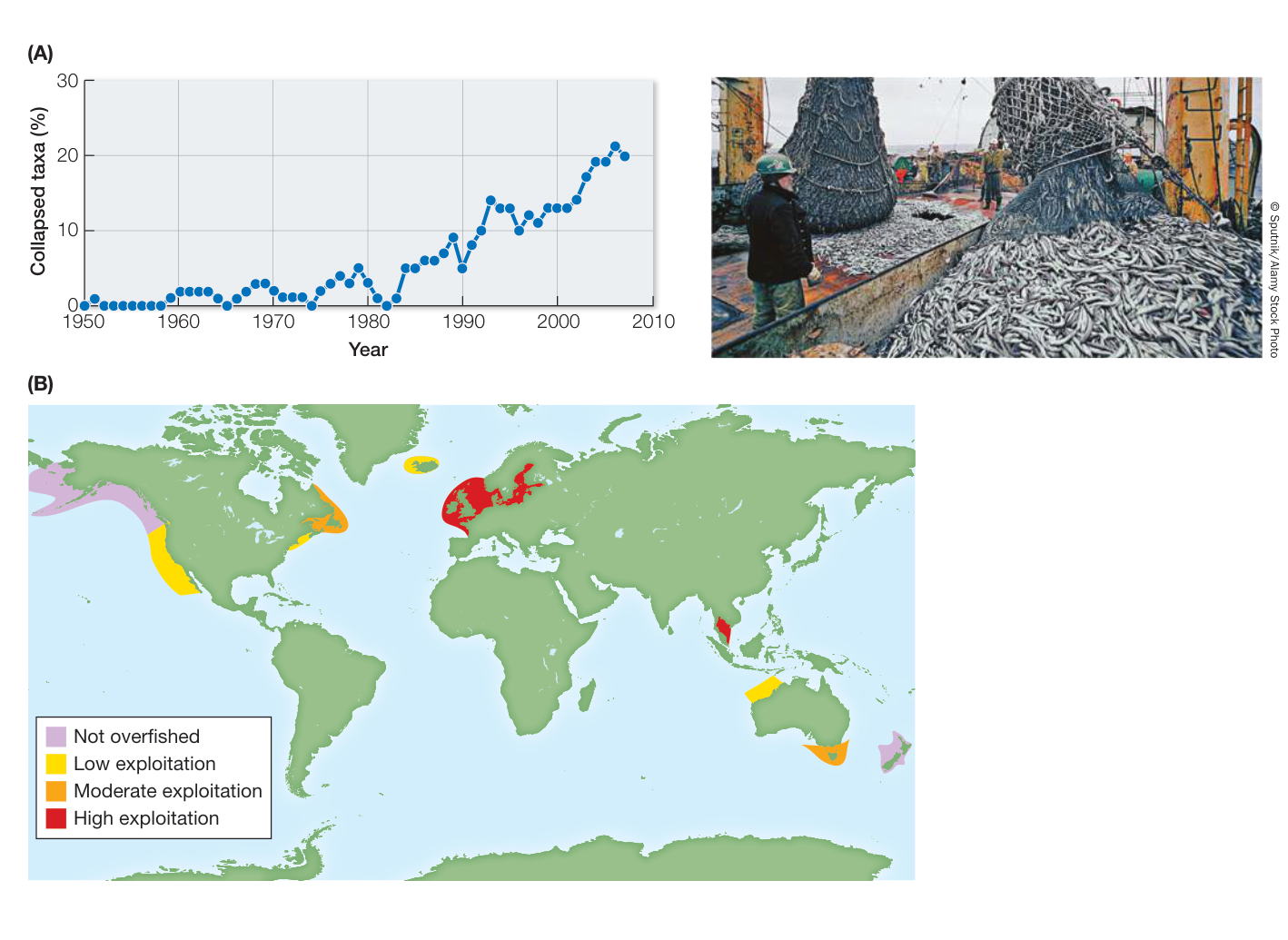
Figure 57.8 Overharvesting Has Caused Fisheries Collapses, but Some Recovery Is Occurring (A) The number of collapsed fished taxa (estimated as a decline of biomass of the fished taxa to less than 10% of their unfished biomass) increased steadily from 1950 to 2007. (B) Worldwide status of exploited fish populations. (After B. Worm et al. 2009. Science 325: 578–585.) Q: Using the map, indicate which regions of the world are experiencing the highest fisheries exploitation.
Second, consider what happens when an overharvested species plays an important keystone or foundation role in its community. A recent study by William Ripple and colleagues considered the status and ecological consequences of the decline of 31 of the world’s largest carnivores. Most of the species studied have experienced substantial population declines over the past two centuries as the result of overharvesting, persecution (culling because of conflicts with humans), and habitat loss. Using data from several studies, the researchers showed that when top large carnivores declined, trophic cascades were interrupted, dramatically changing the abundance of herbivore and primary producer species (Figure 57.9). This research suggests that large carnivores are necessary to maintain biodiversity and ecosystem function in some ecosystems.
Invasive predators, competitors, and pathogens threaten many species
Deliberate or inadvertent introductions of non-native species have increased exponentially over the last 200 years. It is estimated that 50,000 species have been introduced to the United States alone. Many of these species were intentionally introduced to provide food, natural resources, or other important services for humans. But roughly 10% of these species have become invasive—that is, they reproduce rapidly, spread widely, and have mostly negative effects on the native species or ecosystems of the region. As you saw in Key Concept 55.2, once an introduced species arrives in a new community, a successful invasion usually involves multiple introduction events and the ability to cope with the physical environment and coexist with other species in the community.
While arguments can be made for the positive side of some species invasions, most invasions have had negative effects on species and ecosystems. For example, estimates suggest that 400 of the 958 species (42%) listed under the U.S. Endangered Species Act are at risk primarily because of predation, competition, or disease transmission by invasive species. Invasive species also can have dramatic effects on the functions and services of ecosystems, affecting fire cycles, water availability, and coastal sedimentation (Figure 57.10).
Invasive species have even changed the genetic diversity of native species through hybridization events with wild populations (e.g., non-native rainbow trout [Oncorhynchus mykiss] and native cutthroat trout [Oncorhynchus clarkii] in Montana). The total cost estimate for dealing with undesirable invasive species in the United States alone was roughly $120 billion per year.
Non-native species are spread in a variety of ways. Over the past 400 years, Europeans colonizing new continents have deliberately introduced plants and animals to reconstruct their once familiar surroundings. Many of these introductions have had disastrous effects on native flora and fauna. In Australia the introduction of European rabbits (Oryctolagus cuniculus) and foxes for sport hunting and of dogs and cats as pets has led to the extermination of nearly half the small-to medium-sized native marsupials over the last 100 years. As you saw in Key Concept 53.4, the use of biological control, or the deliberate introduction of species to control other invasive species, can sometimes cause even greater problems. Examples include the introduction of small predators such as mongoose to Hawaii to control rabbits and stoat (Mustela erminea, a type of weasel) to New Zealand to control rats. Instead of curbing the population sizes of rabbits and rats, these predators have been the major cause of bird species extinctions on these islands.
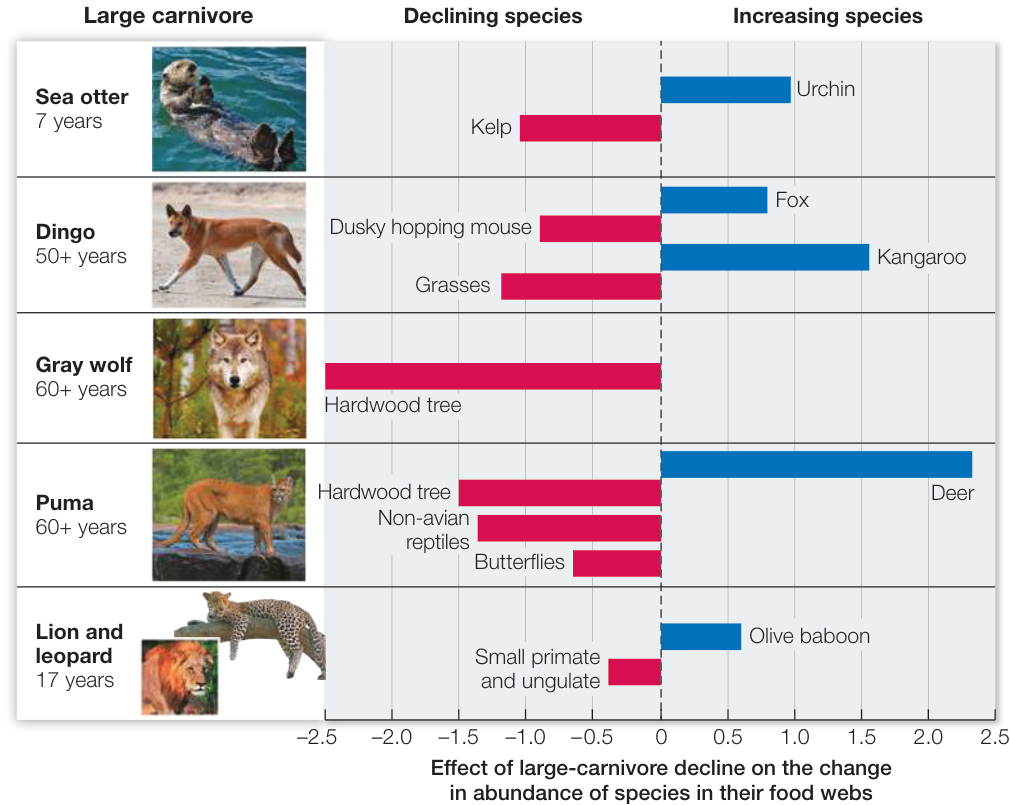
Figure 57.9 Large Carnivores Are Declining, Changing Food Webs Examples of the effects of large-carnivore decline on the change in abundance of species in their food webs. The blue bars represent the direct effects and the red bars represent the indirect effects. The number of years refers to the time since the carnivore species ceased to exist at the study site. (After W. J. Ripple et al. 2014. Science 343: 1241484; Sea otter © iStock.com/dstone6; Dingo © John Carnemolla/Shutterstock.com; Gray wolf © age fotostock/Alamy Stock Photo; Puma © iStock.com/John Pitcher; Lion and leopard courtesy of Andrew D. Sinauer.)
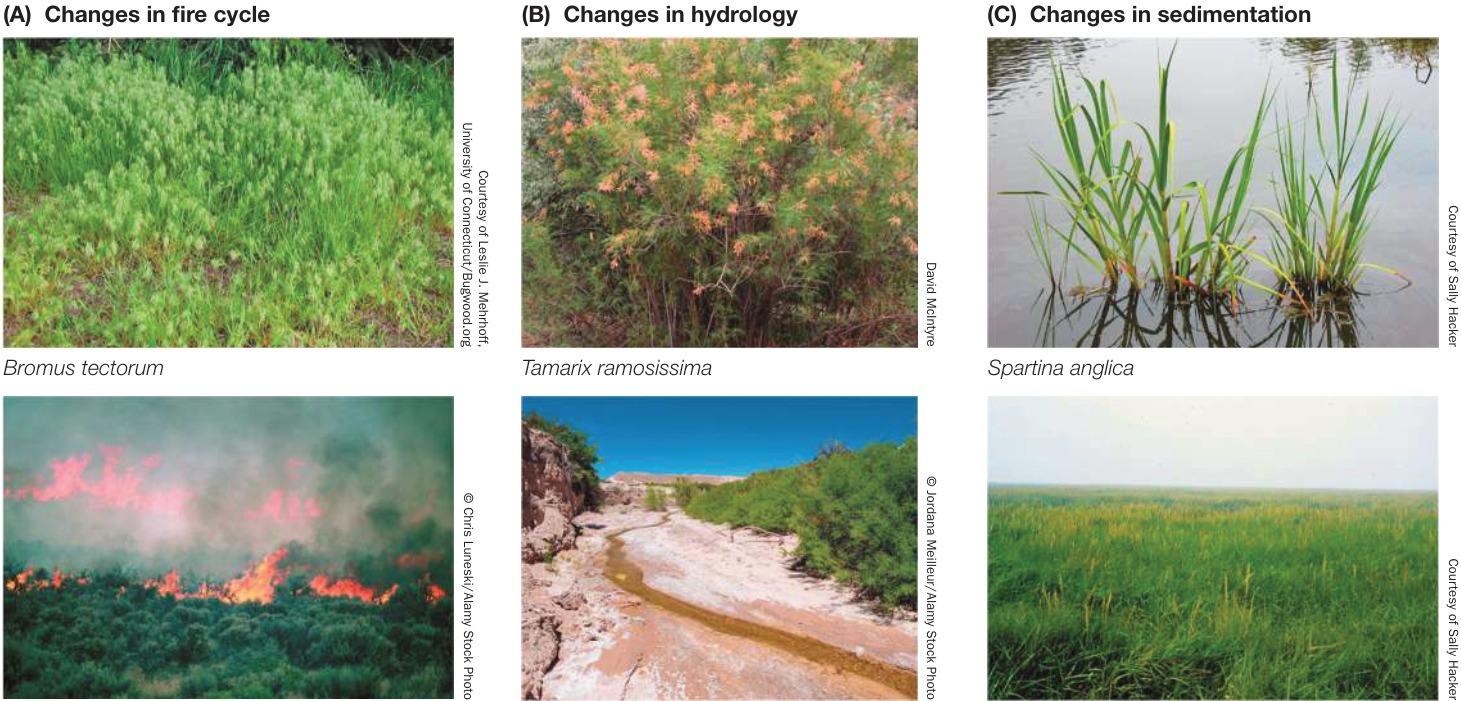
Figure 57.10 Species Invasions Can Change Ecosystem Functions and Services Three examples of the effects that invasive species can have: (A) cheatgrass increases the fire cycle in sagebrush habitat, (B) salt cedar draws down water in desert streams, and (C) English cordgrass leads to sedimentation, transforming coastal mudflats into salt marshes.
Sometimes invasions have occurred out of ignorance in what people believe are unlikely events of releasing non-native species (as was the case with the lionfishes described in Chapter 54). It can be difficult for people to imagine that species that are desirable and attractive in their place of origin can “go rogue” in a new region. Some of today’s most noxious weeds were deliberately transported and planted in new places for their beauty, fragrance, or culinary value.
A more inadvertent mechanism of introduction comes from species that stow away during transportation. For example, you saw in Key Concept 55.2 how non-native species are transported in ballast water. The brown tree snake (Boiga irregularis) arrived on Guam in air cargo shortly after World War II and today can be found at densities up to 5,000 individuals per square kilometer. The snake has exterminated 15 species of land birds, including 3 found only on Guam.
Introduced pathogens have also wreaked havoc among native species, as exemplified by the fungal pathogen Batrachochytrium dendrobatidis, or Bd for short, which is implicated in the dramatic worldwide declines of amphibians over the last 25 years. As described in the story opening this chapter, the disease may be responsible for the large percentage of amphibian declines recorded globally and for which there has been no clear explanation (the others being a result of some combination of habitat loss, overharvesting, exposure to UV radiation, or pollution). Such “rapidly declining” events have taken place on all the major continents and occur within well-protected areas such as Yosemite National Park (USA), Monteverde Cloud Forest Reserve (Costa Rica), and Eungella National Park (Australia). Most of the mass mortality events in which Bd has been implicated have not been observed because they happen so rapidly. Generally, researchers return to a site to find that population sizes are drastically reduced, or that some species are missing altogether, and discover the fungus present in some remaining individuals.
Researchers studying amphibian declines are interested in whether Bd is a novel and highly virulent pathogen that was recently introduced into wild populations (“novel pathogen hypothesis”) or if Bd existed prior to the declines but emerged as a serious pathogen as a result of human-caused environmental changes to climate or UV radiation (“emerging endemic hypothesis”). Although Bd seems to thrive under fairly specific environmental conditions (high-elevation streams with permanent water sources and temperatures between 12°C and 27°C), most of the evidence now suggests that Bd is a non-native pathogen likely introduced through the global trade in amphibians for food, for use as laboratory animals, or for use as pets or display animals. Investigating Life: Exploring the Decline of Central American Frogs describes research by Karen Lips and colleagues on the 20-year decline of four species of frogs in the genus Atelopus at multiple sites in Costa Rica and Panama. Their data suggest that the Bd pathogen traveled as an “invasion front” from infected to uninfected populations over time and that, based on microscopic tissue analyses of frogs collected prior to the declines, Bd was probably never present in this region of the world until its introduction in the 1980s. Of the four Atelopus species considered in this study, three species (A. chiriquiensis, A. senex, and A. zeteki) are likely extinct, and one species (A. varius; photo at chapter opening), thought to be extinct in 1996, likely exists only in a small population near Quepos, Costa Rica.
Investigating Life: Exploring the Decline of Central American Frogs
Experiment
Original Paper: K. Lips et al. 2008. Riding the wave: Reconciling the roles of disease and climate change in amphibian declines. PLOS Biol 6: e72. CC BY 4.0.
Karen Lips and her colleagues studied the spread of the fungal pathogen Batrachochytrium dendrobatidis (Bd), implicated in the dramatic declines of frogs in the genus Atelopus seen in the moist and mountainous regions of lower Central America (Costa Rica and Panama) starting in the late 1980s. They compiled biogeographic reports of Atelopus declines and conducted microscopic tissue analyses to test whether Bd was a non-native pathogen species recently introduced to Central America or an existing disease that emerged as the result of changes in climate or the environment.
HYPOTHESIS Amphibian declines in Central America are caused by the non-native species invasion of the Bd pathogen rather than by an environmentally induced emergence of Bd as an existing pathogen.
METHOD
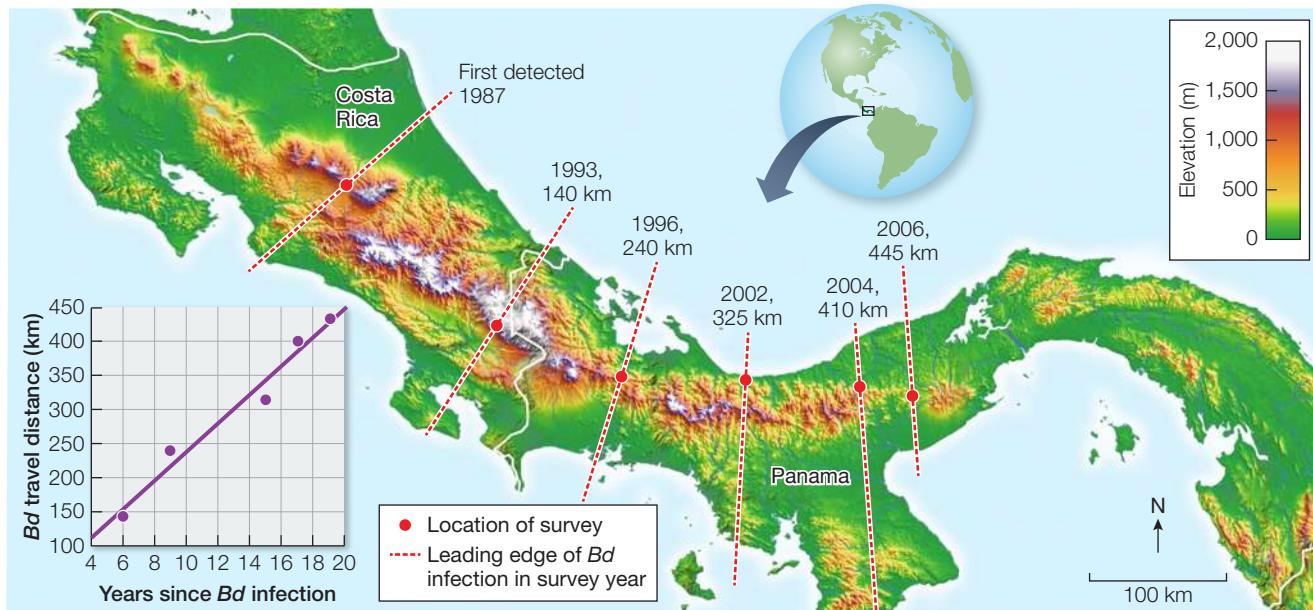
The researchers mapped the location and approximate year of decline as a result of Bd infection for populations of four species of Atelopus at numerous sites in Costa Rica and Panama using data from published studies, the Global Amphibian Assessment, and their own fieldwork.
The distance of Bd spread was plotted against the years since Bd first caused a decline in Atelopus populations.
Sixty-four frogs, collected before 1987 in Monteverde, Costa Rica, were examined for Bd to determine if the pathogen was present prior to the decline.
RESULTS
- The Bd pathogen was not found in frogs collected prior to 1987.
- The map of Atelopus decline from Bd’s first appearance in 1987 to nearly 20 years later in 2006 shows that Bd spread from Costa Rica to Panama in a wavelike pattern from northwest to southeast.
- There is a positive linear relationship between Bd travel distance and the years since Bd infection was detected (see inset on map).
CONCLUSION The analyses of the prevalence of Bd in lower Central America over nearly 20 years support a classic pattern of a novel invasive disease spread across naive populations rather than the environmentally induced emergence of an already existing disease.
Work with the Data
The researchers were able to combine the distributional data of Bd infection from lower Central America with a much larger data set from South America to determine the percentage of Atelopus species that became extinct as a function of elevation. They found the following frog species extinctions with elevation:
| Elevation (m) | Species extinctions (%) |
|---|---|
| 0–199 | 30 |
| 200–1,000 | 85 |
| 1,001–4,000 | 100 |
QUESTIONS
The data from the results portion of the experiment can be used to calculate the rate of spread (km/year) of Bd by dividing the distance between pairs of locations (distance interval) by the number of years between the dates of decline. Calculate the rate of spread of the Bd pathogen between pairs of locations of frog declines (time interval). Is the rate of Bd spread similar among locations, or does it differ?
Calculate the average rate of spread for the Bd pathogen in lower Central America. Predict how far and in what direction Bd could travel by 2020 (14 years).
Using the map elevations in the results section of the experiment, and the species extinction data in the table here, do you think is it likely that the Bd pathogen will spread, and cause species extinctions, in the direction and distance estimated in your answer to Question 2? If so, what is your best estimate of the percentage of species that would become extinct? Explain.
Species and ecosystems are already being affected by climate change
As you saw in Key Concept 56.4, human-generated emissions of greenhouse gases are contributing to global climate warming, sea level rise, increased storminess, and ocean acidification, all of which are likely to become increasingly important causes of habitat loss and degradation, and ultimately species extinctions. Across North America, for example, average annual temperatures are predicted to increase by 2–5 degrees Celsius by the end of the twenty-first century. If the climate warms to that extent, model projections show that the average temperature found at any given location in North America today could shift 500–800 kilometers to the north. Those species that cannot adapt to the warmer climate will have to shift their geographic ranges to stay within their physiological and ecological ranges. The shift in distributional range that organisms experience could result in habitat loss and fragmentation, especially if appropriate habitat does not shift as well or is lost altogether.
For example, as the globe warms, sea level is rising as a result of melting polar glaciers and warming seas. The Intergovernmental Panel on Climate Change (IPCC) estimates that the current rate of global sea level rise is 3.4 millimeters per year, resulting in a projected rise of 0.65 meters by 2100. As the seas slowly inundate the coast, coastal ecosystems will become increasingly flooded, putting them at great risk for habitat loss. Likewise, as polar regions warm, sea ice ecosystems are disappearing at an alarming rate, affecting species such as polar bears (Ursus maritimus) and seals dependent on that habitat (see the “Future directions” discussion in Chapter 56). Global warming has also been implicated in causing more frequent and extreme storm events, as seas warm and winds increase in intensity. Extreme storms such as Hurricane Irma in 2017 are causing flooding and erosion hazards for both human and natural coastal communities. Finally, as discussed in Investigating Life: Food Webs in an Acidic and Warming Ocean in Chapter 56, as the ocean absorbs more atmospheric CO2, seas become more acidic, leading to a host of individual species and ecosystem changes.
Scientists are beginning to explore how species and ecosystems will respond to climate change by predicting how it may affect organisms and looking for ways to mitigate those effects. Their research activities include analyses of past climate changes and studies of sites currently undergoing rapid climate change. It would be helpful to know, for example, how rapidly species responded to the end of the most recent ice age. Which species did and did not keep pace with the warming climate and rising seas? How much, and in what ways, do past ecological communities differ from those of today as a result of changes in climate?
Species that can disperse easily, such as birds, insects, and fishes that can move considerable distances, may be able to shift their ranges as rapidly as the climate changes, provided they can find appropriate habitats. However, the ranges of other species, particularly plants, are likely to shift more slowly. For example, after the glaciers started to retreat in North America about 18,000 years ago, the ranges of plant communities slowly shifted northward (Figure 57.11). In addition, roughly 12,000 years ago, some novel, or what are termed “no analog,” plant communities formed under unique climate conditions that do not exist today. Thus it may be that as climate rapidly changes, unique combinations of species will come together to form similar novel communities.
Modern-day scientific observations have shown that for a wide variety of organisms, latitudinal and elevational distributions are
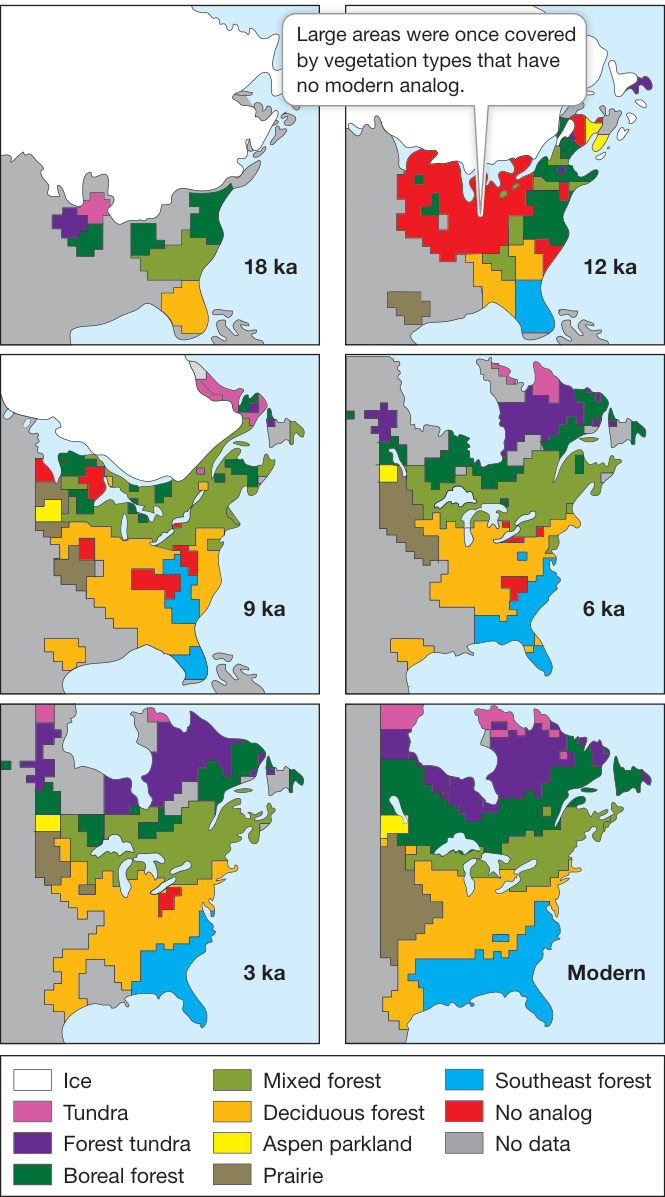
Figure 57.11 Past Changes in Plant Communities Due to Climate Vegetation types in eastern North America have changed since the last glacial maximum, 18,000 years ago (ka, thousands of years ago). Vegetation composition was determined from pollen preserved in sediments. (After J. T. Overpeck et al. 1992. Geology 20: 1071–1074; Mapped paleogeography and Laurentide ice sheet after A. S. Dyke and V. K. Prest. 1987. Géographie physique et Quaternaire 41: 237–263 and G. H. Denton and T. J. Hughes. 1981. The Last Great Ice Sheets. John Wiley & Sons: New York.) Q: After the glaciers first started to retreat 18,000 years ago, what has been the pattern of plant community change with latitude? What were the “no analog” plant communities, and how did they form?
Table 57.1 Recent Latitudinal and Elevational Range Shifts That Likely Result from Climate Change
| Community or taxon | Location | Observed changes | Climate link |
|---|---|---|---|
| Tree line | Europe, New Zealand | Elevational shifts from lower to higher mountain zones | Increased air temperature |
| Alpine plants | European alps | Elevational shifts of 1–4 m per decade | Increased air temperature |
| Zooplankton, intertidal invertebrate, and fish communities | California coast, North Atlantic Ocean | Increasing abundance of warm-water species | Increased ocean temperature |
| 39 butterfly species | North America, Europe | Northward range shifts up to 200 km over 27 years | Increased air temperature |
| Lowland birds | Costa Rica | Elevational shifts from lower to higher mountain zones | Decreased dry-season mist frequency |
| 12 bird species | Britain | Northward range shifts up to 19 km over 20 years | Increased winter air temperature |
| Red fox ( Vulpes vulpes ), Arctic fox ( Alopex lagopus ) | Canada | Northward range shift of red fox and simultaneous southward range shift of Arctic fox | Increased air temperature |
Source: G.-R. Walther et al. 2002. Nature 416: 389–395.
shifting in ways that are consistent with climate change (Table 57.1). For example, a study that considered the range shifts in alpine plants in the European alps showed that plant species have been moving to higher elevations consistent with increasing temperature. Researchers compared current plant community species richness with historical data from the eighteenth and nineteenth centuries. They found that alpine plant species richness increased over time, suggesting that plants were moving from lower elevations to higher elevations. Likewise, observations of the distribution of nonmigratory butterfly species in Europe and North America showed that of the 39 species examined, 63% had moved their ranges northward, while only 3% had moved southward.
Along with the shifts in distribution, evidence is mounting that important life history events are also occurring earlier in the spring (Table 57.2). The observations suggest that increases in temperature are triggering species to breed or migrate earlier than they have in the past few decades. There can also be physiological changes that reduce growth and reproduction. For example, since the mid-1980s the average minimum nightly temperature at La Selva Biological Station in the Caribbean lowlands of Costa Rica has increased from about 20°C to 22°C. On warmer nights, trees use more of their energy reserves to maintain themselves. As a result, even this small rise in temperature has reduced the average growth rate of six different tree species by about 20%.
Finally, climate change has the potential to cause species extinctions, although to date, none have been directly and definitively linked to this cause. However, as you saw in Figure 57.2, effects of climate change such as habitat loss or changes in life history or physiology could lead to lower effective population sizes, increased population extinctions, and eventually species extinctions.

Animation 57.1 The Effects of Climate Change
Recap and Assess
Biodiversity loss is the result of four major, and potentially interacting, factors. First, habitat loss and degradation (including pollution) have been primary culprits contributing to the extinction of tens of thousands of species. Second, overharvesting for food, clothing, ornamentation, pets, and medicines has eased for some species, but others are still under threat. Third, deliberate or inadvertent introduction of non-native species has increased exponentially, with some becoming invasive—meaning they reproduce rapidly, spread widely, and have mostly negative effects on native species. Finally, some species are already affected by climate change through distributional changes, timing of life history events, and decreased growth and reproduction and will continue to be affected as climate change progresses.
- Describe how invasive species can cause habitat loss and habitat degradation.
- Refer to Figure 55.9. Describe how the loss of gray wolves (Canis lupus) has likely resulted in a decrease in hardwood trees in Yellowstone National Park (see Figure 57.9).
- Suppose you have ecological data for a species of butterfly over the last 50 years. The data show that this species’ range has moved north by 100 km and that its emergence occurs 4 days earlier than 50 years ago. Do these data suggest the butterfly species is responding to climate warming? Explain.
Table 57.2 Recent Advances in the Timing of Life History Events That Likely Result from Climate Change
| Taxon | Location | Observed changes | Period over which change occurred |
|---|---|---|---|
| Numerous plant species | Europe North America |
Earlier flowering and leaf unfolding by 1.4–3.1 days per
decade Earlier flowering and leaf unfolding by 1.2–2.0 days per decade |
30–48 years 35–63 years |
| 18 butterfly species | United Kingdom | Earlier appearance by 2.8–3.2 days per decade | 23 years |
| Amphibians | United Kingdom | Earlier breeding | 25 years |
| Numerous bird species | Europe, North America | Earlier spring migration by 1.3–4.4 days per decade and earlier breeding by 1.9–4.8 days per decade | 30–60 years |
A major objective of understanding how and why biodiversity loss is occurring is to determine how conservation and management strategies might help preserve species. In the next key concept we will consider some positive steps that are being taken to recover and protect biodiversity.
Protecting Biodiversity Requires Conservation and Management Strategies
Protecting Biodiversity Requires Conservation and Management Strategies
Learning Objectives
- 57.3.1 Discuss the guiding principles behind establishing protected areas and promoting sustainable coupled human–natural practices.
- 57.3.2 Explain how restoration ecology can be used to reestablish the original structure and function of degraded ecosystems.
- 57.3.3 Discuss the benefits and limitations of captive breeding programs as a method for preserving endangered species.
- 57.3.4 Describe what can be done to end the trade of endangered species, control invasive species, and make biodiversity a marketable commodity.
As you have seen multiple times in this chapter, human activities play an integral role in biodiversity loss. Consequently, it falls to humans to develop, strengthen, and defend policies that conserve biodiversity. Biodiversity conservation integrates interests from ecological, institutional, and socioeconomic contexts into the decision-making process (Figure 57.12). Ecologists use scientific theory, empirical data, and tools from a variety of disciplines to help inform the protection and management of endangered and threatened species and ecosystems. They identify the factors that present risks to species and ecosystems and provide that information to managers, landowners, politicians, lawyers, nonprofit agencies, and the general public so that appropriate decisions can be made and action plans can be devised. Partnerships that incorporate these multiple contexts and stakeholders often result in conservation plans with the most support. Here we consider some conservation actions designed to protect and manage biodiversity in more detail.
Protected areas preserve habitat and curtail biodiversity loss
The establishment of protected areas, in which habitat loss or degradation is restricted or prohibited, is probably the most important component of efforts to conserve and manage biodiversity. Protected areas allow populations of multiple species to maintain themselves in the preserved habitat and may also serve as nurseries from which individuals can disperse into unprotected areas, replenishing populations that might otherwise become extinct. Without proper habitat, the long-term preservation of biodiversity will be nearly impossible.
Deciding which areas to protect usually involves a complex array of decisions by stakeholders. From an ecological perspective, two criteria need to be met: (1) the candidate habitat must support viable populations of the species it is meant to protect, and (2) the original ecosystem functions and services of the candidate habitat must be mostly intact.
DESIGNING PROTECTED AREAS The first element in nature-preserve design involves identifying a large area that is relatively undisturbed and can serve as the core of the protected area (Figure 57.13A). This core natural area should allow populations of endangered species to maintain themselves and potentially serve as source individuals for populations outside the core area. This typically means that the core area should be large and compact with as little edge habitat as possible, to reduce edge effects.
The second element in designing a protected area involves buffer zones around the core area (Figure 57.13B). Buffer zones have some features required by the species of concern but involve less stringent controls on land use. For example, buffer zones allow some resource extraction (e.g., timber, food, or medicines) or recreation while maintaining some of the original habitat.
The third element in nature-preserve design involves habitat connectivity (Figure 57.13C), which keeps populations from becoming isolated from the greater metapopulation and thus subject to extinction (see Key Concept 53.4). Traveling from one protected habitat to another requires habitat corridors, or patches that connect blocks of suitable habitat. Insight into the importance of corridors has led to new regional conservation initiatives, among the most notable of which is the Yellowstone to Yukon Conservation Initiative. This joint Canada–United States nonprofit organization has as its goal the sustainable preservation of the mountain ecosystem extending from Yellowstone National Park in the United States to Yukon, Canada. This stretch of land, the largest intact ecosystem of its kind on the planet, contains high-quality habitat for many of North America’s most imperiled animals, including grizzly bears (Ursus arctos), gray wolves, lynx, and native fishes. The initiative works with landowners to find sustainable ways of preserving high-quality, well-connected wildlife habitat in the region. For example, Banff National Park has 40 human-made corridors for wildlife that cross an 83-kilometer stretch of the Trans-Canada Highway (Figure 57.14). Managing the entire region in this way will not only provide passageways to habitat for these species, but will also provide room for their populations to shift in response to global climate change.
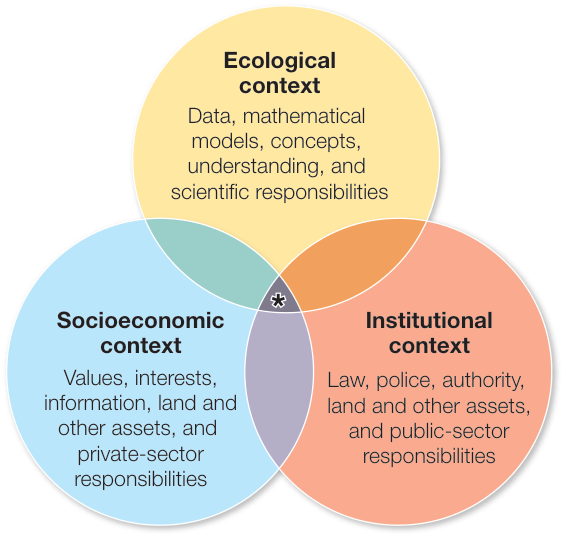
Figure 57.12 Humans Are an Integral Part of Protecting and Managing Biodiversity Protecting and managing biodiversity involves integrating interests from ecological, institutional, and socioeconomic contexts. Partnerships that incorporate these multiple contexts (*) often result in conservation plans with the most support. (From Dennis A. Schenborn, personal communication.)
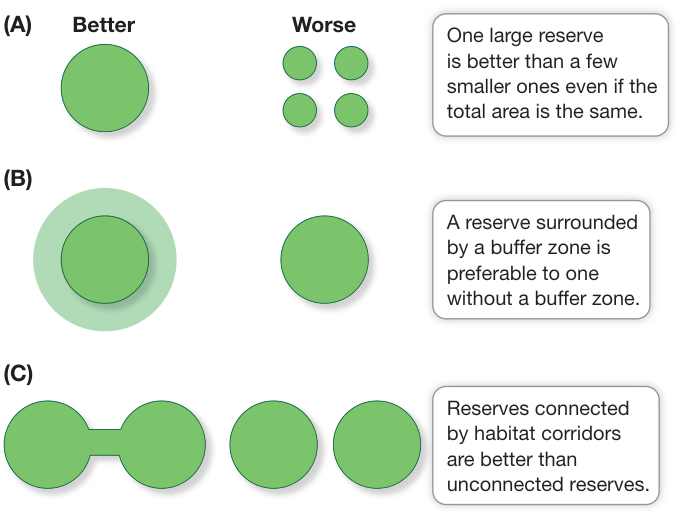
Figure 57.13 Nature-Reserve Designs Based on Ecological Principles Some spatial configurations are better than others when designing reserves for fostering biodiversity. (After J. C. Williams et al. 2005. Environ Model Assess 10: 163–181.)
COUPLED HUMAN–NATURAL SYSTEMS Establishing protected areas is an essential component of efforts to maintain biodiversity, but this action alone is insufficient to stem global biodiversity loss. The extensive landscapes in which people live and extract resources should be integrated into biodiversity conservation efforts. Even urban and suburban areas can contribute to the conservation of species and habitats. The practice of encouraging biodiversity and sustainability in systems where humans and nature are intricately linked is known as coupled human–natural system ecology.
Research into coupled human–natural systems builds on the disciplines of ecology, physical sciences, social sciences, and economics. It is based on the principle that most ecosystem services are provided locally, and that people are motivated to work to protect their local interests. In practice, encouraging linkages between humans and nature comes in many forms. For example, the National Wildlife Federation has established a successful program in which people petition to have their backyards certified as wildlife-friendly. Criteria for certification include planting shrubs that provide food for birds and refraining from applying pesticides. In the case of coastal developments exposed to flooding hazards during extreme storms or sea level rise, humans are encouraging the protection and restoration of coastal wetlands and dunes, so-called green infrastructure, which provide important ecosystem services such as coastal protection, biodiversity, and recreation. Peregrine Falcons (Falco peregrinus), once endangered by pesticide use, are thriving in urban settings where tall buildings mimic the cliffs that peregrines naturally nest on, and non-native pigeons are a main prey item. Green roofs, which are roofs covered with soil and native vegetation, are a way of creating parks and habitat, cooling buildings, and dealing with storm-water runoff, all important ecosystem services to humans. France passed a law in 2015 that requires all new buildings constructed in commercial areas to be partially covered by green roofs or solar panels.
Even some industrial sites can support biodiversity. The Turkey Point power plant in southern Florida uses large amounts of water to cool its generating units. To cool the heated water before discharging it, the Florida Power & Light Company dug a system of 38 canals that covers 2,428 hectares. These cooling canals are separated by low-lying berms that support a variety of native and non-native plants. Red mangroves (Rhizophora mangle) grow along the edges of the canals. Today they support a thriving population of American crocodiles (Crocodylus acutus), a highly endangered species. Crocodiles living in the canals yield about 10% of all young crocodiles born in the United States.
Degraded ecosystems can be restored
When a species is endangered as a consequence of habitat degradation rather than outright habitat loss, protecting the species may require restoring the habitat to a more natural state. Without human assistance, many degraded ecosystems recover very slowly, if at all. Restoration ecology involves renewing degraded ecosystems by active human intervention. Ideally, restoration involves reestablishing the original structure and function of native ecosystems through such techniques as active removal of pollutants or non-native species, revegetation to reestablish habitat and food resources, reintroduction of native species, and reestablishment of hydrological processes or disturbance regimes. For example, many species depend on particular patterns of disturbance, such as fire or windstorms, to maintain their populations (see Key Concept 55.4).
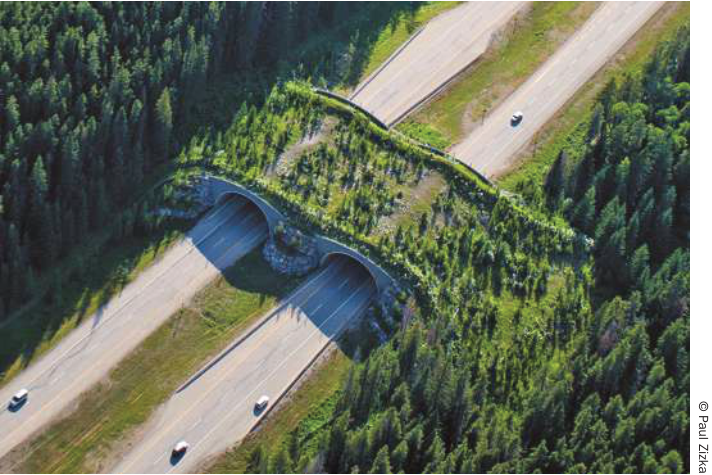
Figure 57.14 Habitat Corridors: Passageways to Recovery Grizzly bears and other wildlife can use this overpass to travel safely over the Trans-Canada Highway and gain access to more protected area in Banff National Park, Canada.
Recognition of the need for periodic disturbance to maintain healthy ecosystems is a relatively new dimension of conservation biology. We know, for example, that many plant species require periodic fires for successful establishment and survival, but for many years the official policy of the U.S. Forest Service, symbolized by the iconic mascot Smokey Bear, was to suppress all forest fires. Today, however, controlled burning is common, particularly in western North America. In order to use fire as an ecosystem management tool, it is important to know the historical pattern of fires in an area, which can be determined in part by studies of the annual growth rings and fire scars of trees. A schedule of controlled burning that recreates the historical pattern can reduce forest floor litter, avoiding a buildup of fuel that can lead to intense, tree-killing canopy fires.
Sometimes restoration involves using species that act as ecosystem engineers to help restore the original ecosystem. For example, as Key Concept 55.3 and Figure 55.12 described, the recolonization of beavers (Castor canadensis), once hunted to near extinction on Minnesota’s Kabetogama Peninsula, resulted in more wetlands and higher species diversity as a consequence of the beavers’ dam-building activities. You’ve seen also how vegetation such as grasses can be planted to facilitate sediment capture, accretion, and ultimately the restoration of sea-grass beds, salt marshes, and sand dunes for habitat and coastal protection.
A large-scale terrestrial grassland restoration project—coined the “American Serengeti”—is under way in northeastern Montana. The goal of the project, which is run by the World Wildlife Fund and American Prairie Reserve in cooperation with public land managers and several other private conservation organizations, is to restore and conserve the native prairie and its fauna over a 1.2-million-hectare area near the Missouri River (Figure 57.15).
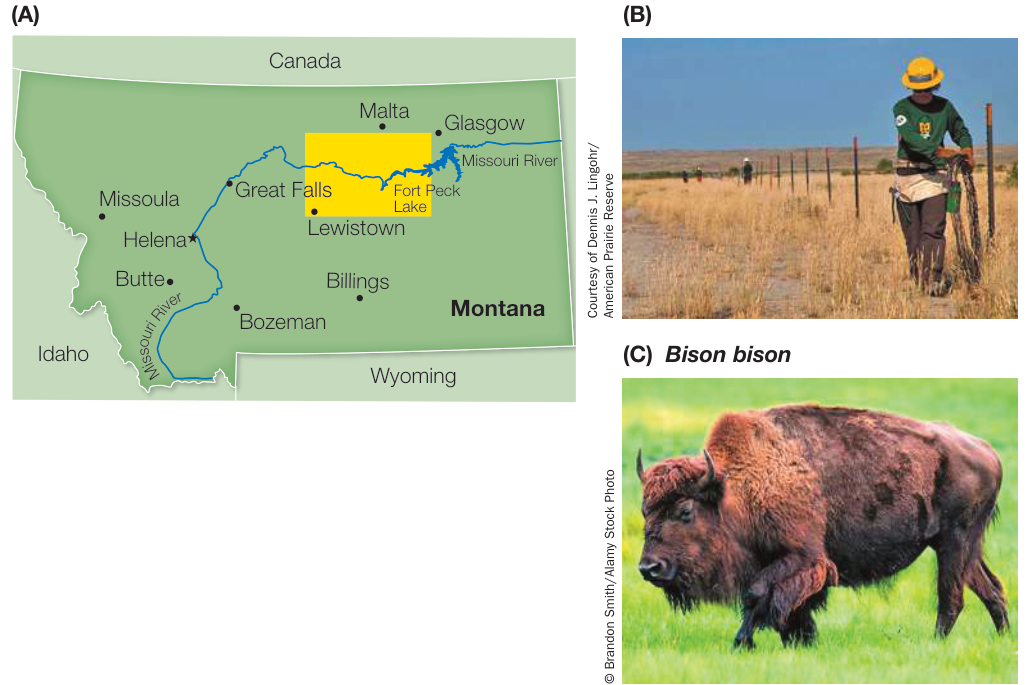
Figure 57.15 Restoring a North American Prairie (A) A major prairie restoration project (yellow area) is under way north of the Missouri River in Montana. (B) Restoration of prairie ecosystems can be as simple as removing fences that restrict large herds of native grazers such as bison. (C) The first bison were reintroduced to the area in 2005. (Area map courtesy of American Prairie Reserve.)
57.15). When Lewis and Clark mapped this region more than 200 years ago, they saw large herds of bison, elk (Cervus canadensis), deer, and pronghorn (Antilocapra americana) as well as abundant populations of their predators. But by the middle of the twentieth century, most North American prairies had been converted to cropland or were heavily grazed by domestic livestock, reducing the herds of large mammals to small remnant populations. Most of these populations are too small to maintain their genetic diversity or to function in their original ecological roles. However, the species have survived, so opportunities exist to reintroduce them if their habitat can be restored.
This ambitious restoration and protection project is feasible for three reasons. First, the private land in the area is owned by a small number of ranchers, each of whom owns extensive grazing leases on public lands administered by either U.S. federal agencies or the State of Montana. Second, most of the land has never been plowed, so native vegetation may recover rapidly when grazing pressures are reduced. Third, the area’s human population is decreasing. Ranchers are aging, and some of their children are leaving for careers in urban settings. Now that free-ranging herds of several thousand bison and large numbers of elk—along with their predators (wolves)—have established in the Reserve, it is generating millions of dollars to the local economy from tourism alone.
Captive breeding programs can maintain a few species
A few of the world’s endangered species can be maintained in captivity while the external threats to their persistence are reduced or removed. However, captive propagation is only a temporary measure that buys time to deal with those threats. Zoos, aquariums, and botanical gardens do not have enough space to maintain adequate populations of more than a small fraction of Earth’s endangered and threatened species. Nonetheless, captive propagation can play an important role by maintaining species and their genetic diversity during critical periods, providing a source of individuals for reintroduction into the wild, and raising public awareness of threatened and endangered species.
The California Condor, North America’s largest bird, survives today only because of captive propagation (Figure 57.16). Two centuries ago, condors ranged from British Columbia to northern Mexico, but by 1978 the wild population was plunging toward extinction. Many of the birds, which are scavengers, had died from ingesting animal carcasses containing lead shot or bullets. To save the condor from certain extinction, the Endangered Species Act was evoked and biologists captured all the remaining condors—only 22 individuals—and initiated a captive breeding program in 1983.
The first captive-bred birds were released in the mountains north of Los Angeles in 1992. Since that time, there have also been releases in northern Arizona and Baja California. Today captive-bred birds use the same roosting sites, bathing pools, and mountain ridges that their wild-born predecessors did. In 2003 a wild-born chick fledged in the wild for the first time in more than two decades. By 2017 the number of condors living in the wild had reached 290 with another 170 living in captivity. Most of the major threats to condor survival, including power lines, pesticides, and museum collectors, have been mitigated. Lead poisoning is still a problem, but as of July 1, 2008, under the Ridley–Tree Condor Preservation Act, California hunters are required to use non-lead bullets when hunting in the condor’s range. Passage of this legislation marks a change in public attitudes from the days when cattle ranchers, in the mistaken belief that the condors killed livestock, opposed their reintroduction into the wild.
Ending trade is crucial to saving some species
Most endangered species cannot survive any further reductions in their breeding populations, so it is important to prevent their exploitation. The legal mechanism for prohibiting trade in these species or their products is an international agreement called the Convention on International Trade in Endangered Species (CITES). CITES currently prohibits international trade in items such as whale meat, rhinoceros horns, and many species of parrots, orchids, and other animals and plants.
The recent history of elephant poaching for ivory illustrates how complex it can be to prevent hunting of endangered species. CITES instituted a ban on international trade in African elephant ivory in 1989, but demand for ivory remains strong, especially in Asia. As a result, as we described in Key Concept 57.2, poaching of elephants continues in the forests of central and east Africa, where the animals are threatened. However, some countries, including Malawi and Zambia, have so many elephants that government officials kill them to control populations and prevent the animals from damaging crops. This excess of elephants led to the controversial decision to sanction sales of ivory from Namibia, Botswana, Zimbabwe, and South Africa in 2008, the first such sales in close to a decade. More than 100 tons of elephant tusks—the equivalent of 20,000 dead elephants—were auctioned off to authorized buyers from China and Japan and generated $15 million for elephant conservation efforts. Although the 2008 sales were monitored by CITES, concerns remain that the flood of legal ivory will be intermingled with poached ivory.
Species invasions must be controlled or prevented
The best way to reduce the damage caused by invasive species is to prevent their introduction or eradicate them earlier in their establishment phase. Given the tremendous volume of global trade, curtailing it might seem impossible, but some promising strategies do exist. For example, transoceanic transport of invasive species in ballast water could be largely eliminated by the simple procedure of deoxygenating ballast water before it is pumped out. This practice not only kills most organisms in the water but also extends the life of ballast tanks—an economic benefit to shippers.
In 1996 the U.S. Congress responded to concerns about ballast water with legislative action. After years of wrangling, in 2012 the
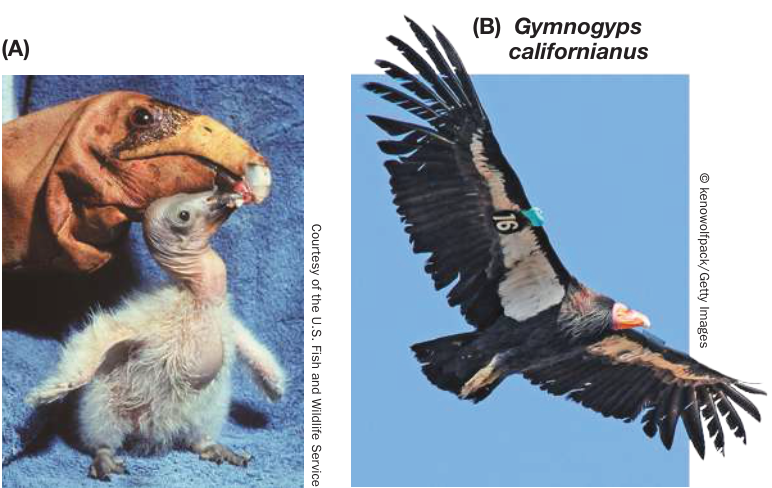
Figure 57.16 California Condors Make a Comeback (A) California Condors raised in captivity are fed by humans wearing hand puppets so that the birds will not imprint on their human captors and will be able to survive in the wild. (B) Numbered wing tags allow conservation biologists to identify and track released adult condors. The survival of North America’s largest bird depends on this captive propagation project.
U.S. Coast Guard amended its regulations on managing ballast water to set standards for “the allowable concentration of living organisms in ballast water discharged from ships in waters of the United States.” Despite the adoption of these strict standards for protecting U.S. waterways, transport of invasive aquatic organisms in ballast water is an international problem whose potential solutions continue to run up against political and economic barriers.
Biodiversity can be conserved as a consequence of its economic value
As we’ve discussed previously, biodiversity can benefit humans in profound ways, providing important goods and services. You learned in Key Concept 56.5 that ecosystem goods and services can be valued by using a variety of methods to determine what people are willing to pay for them. Some goods such as timber or products from the animal trade are relatively easy to value, but nonmarket services such as the existence of an endangered species or the ability to visit a unique ecosystem are much harder to value. The following examples provide a sense of the nonmarket benefits of conserving rare or endangered species.
WILD DOGS AND ECOTOURISM Environmentally responsible travel to natural areas, the proceeds of which support conservation efforts and the economic well-being of the local communities, is a major source of income for many developing nations. For example, tourists visiting Africa often express interest in seeing wild dogs (Lycaon pictus) (Figure 57.17). However, diseases such as rabies and canine distemper, along with habitat loss, road kills, deliberate extermination due to a perceived threat to livestock, and many other factors have decimated wild dog populations, making this the second-most endangered carnivore in Africa. (Another canid, the Ethiopian wolf, Canis simensis, is first.) South Africa is home to about 400 of Africa’s remaining 5,000 wild dogs, most of which live in Kruger National Park. Their endangered status has piqued tourist interest in these charismatic animals; a survey of visitors to South Africa revealed that nearly three-fourths of them would be willing to pay an extra U.S. $12 for the opportunity to see wild dogs. Conservation biologists are working with lodge owners and ranchers elsewhere in South Africa and in Kenya to encourage them to reestablish wild dogs in areas from which they have disappeared.
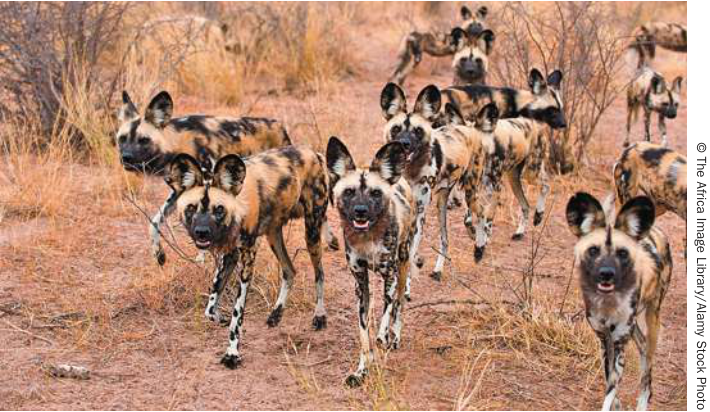
Figure 57.17 Tourists Are Willing to Pay to See Wildlife The wild dog (Lycaon pictus) is the second-most endangered carnivore in Africa. Tourists come to Kruger National Park in South Africa to catch a glimpse of this rare species.
POLLINATORS AND COFFEE Taylor Ricketts and colleagues at Stanford University assessed the economic value of the pollination services provided by the bees that live in, and depend on, tropical forest patches adjacent to a coffee plantation in Costa Rica. They found that coffee production was highest at the sites that were closest to forest patches. They also hand-pollinated some coffee plants to show that the difference in production was a result of pollination services rather than other environmental conditions. The investigators calculated that the value of pollination services to the plantation on which the experiments were carried out was about $60,000 per year, more than the current conservation incentive payments offered to landowners to preserve forest patches.
Recap and Assess
Ecologists use scientific theory, empirical data, and tools from a variety of disciplines to help inform socioeconomic and institutional sectors in the protection and management of biodiversity. To achieve these biodiversity conservation goals, various strategies are employed, including creating protected areas, restoring degraded habitat, breeding endangered species in captivity, ending trade of endangered species, controlling species invasions, and making biodiversity a marketable commodity.
- Given the principles of reserve design and an understanding of how global warming can affect the distribution of species, design the best possible but realistic protected area for the conservation of terrestrial biodiversity today and in the future.
- Using the example of the California Condor, describe how species recovery is dependent on the integration of ecological information, socioeconomic interests, and institutional authority.

Activity 57.1 Concept Matching: A Changing Biosphere
Investigating Life
Q&A Is the most recent dramatic decline of amphibians the result of a novel fungal pathogen, and if so, what can be done about it?
The research to date suggests that amphibian declines are caused by multiple human-instigated factors, including habitat loss and pollution, overharvesting, and even exposure to UV radiation, but that the final fatal blow may be the unintended introduction of the novel chytrid fungal pathogen Batrachochytrium dendrobatidis, or Bd. Population declines and species extinctions of amphibians have occurred at such alarming rates, and in areas that are considered undisturbed, that it can be hard to know how the Bd invasion can be stopped or realistically treated in the wild. Despite these hurdles, scientists are recommending several measures to help control the pathogen’s destructive effects. The first and foremost recommendation is to reduce the volume of amphibian trade and ensure that amphibians transported long distances are required by law to undergo disease testing and quarantine procedures. Second, improvements in diagnostics and knowledge of the disease are needed in both wild and captive settings. Recently, a method using polymerase chain reaction (PCR) has been developed to definitively identify the fungus in the water and on the skin of potentially infected animals. Third, the risk of spread can be minimized by restricting the movement of captive amphibians, especially to the wild, and by disinfecting footwear and collecting equipment when working in aquatic environments. A variety of strategies that integrate ecological research, socioeconomic interests, and institutional authority will likely be required to save the remaining amphibian species that are susceptible to this highly fatal disease.
Future directions
Although it is tragic that the harlequin frog (Atelopus varius), once ubiquitous in the mountains of Costa Rica, and the golden frog (Atelopus zeteki), the national symbol of Panama, could disappear so fast, hope still remains. An active area of research involves understanding why some amphibian species, such as the American bullfrog (Rana catesbeiana) and African clawed frog (Xenopus laevis), are more resistant to Bd while other species are highly susceptible. Some mechanisms that could explain species resistance to the disease are (1) the presence of specific types of bacteria or antimicrobial compounds that discourage Bd growth, (2) inherent genetic resistance to Bd, and (3) certain less virulent strains of Bd. More research will be needed to understand the complexities of the disease. In the meantime, captive breeding programs are under way for both the harlequin frog and golden frog so that they might one day be reintroduced into the Costa Rican and Panamanian nature preserves designed to protect them.
Visual Summary
© Dr. Paul A. Zahl/Science Source
You should be able to relate each summary to the adjacent figures. If you go to this visual summary in Achieve, you can follow links to figures, animations, activities, and simulations that will help you consolidate the material.
Human Activities Are Changing the Biosphere, Resulting in Biodiversity Loss
- ■ Biodiversity has great value to human society in the form of goods and services, but human activities have caused its rapid decline at genetic, population, species, ecosystem, and global scales.
- ■ Human-caused events coupled with natural events can reduce a species’ effective population size (number of individuals that can contribute offspring to the next generation), leading to population and species extinctions. Ever-smaller effective population sizes are affected by inbreeding depression, genetic drift, and demographic stochasticity.
- ■ Humans are causing biodiversity loss at unprecedented rates, rivaling that of the five previous mass extinction events, which were the result of cataclysmic natural disasters.
- ■ We can estimate the extinction probability of species by taking into account their population sizes, genetic variation, life history traits, and ecology.
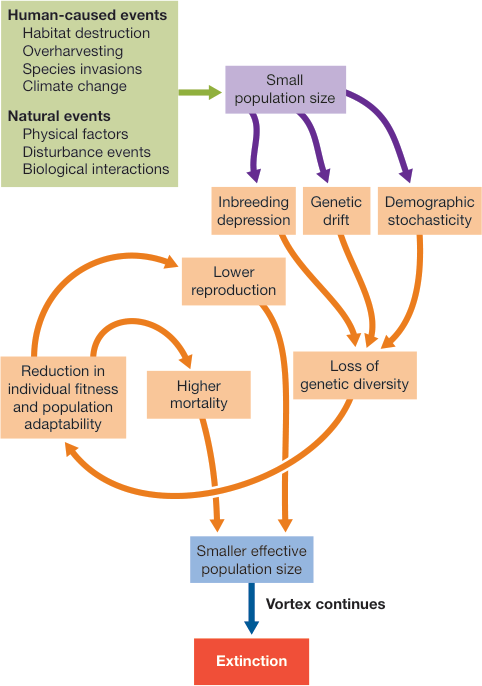
Figure 57.2 Questions
- How does the loss of biodiversity at one scale affect its loss at other scales?
- How can reducing a species’ effective population size result in population and species extinction?
- Why is it difficult to determine how many species are extinct, and what factors indicate that a species could be at risk of extinction?
Most Biodiversity Loss to Date Is Caused by Habitat Loss and Degradation
- ■ Habitat loss (reduction in habitat quantity) and habitat degradation (reduction in habitat quality) have been the major causes of biodiversity loss. Estimates are that humans have transformed and fragmented 50%–60% of the land surface, primarily for agriculture, timber, and livestock grazing.
- ■ Overharvesting of species for food, clothing, ornamentation, pets, and medicines was once the most important and rapid cause of species extinction and is still a concern for some species, and their food webs, if conservation measures are not enacted.
- ■ Deliberate or inadvertent introductions of non-native species have increased exponentially over the last 200 years, with roughly 10% of those species becoming invasive.
- ■ Invasive species can endanger native species through predation, competition, and disease. They can cause changes to ecosystem functions or genetic diversity through hybridization with wild populations.
- ■ Human-generated emissions of greenhouse gases are contributing to global climate warming, sea level rise, increased storminess, and ocean acidification, all of which are becoming increasingly important causes of biodiversity loss.
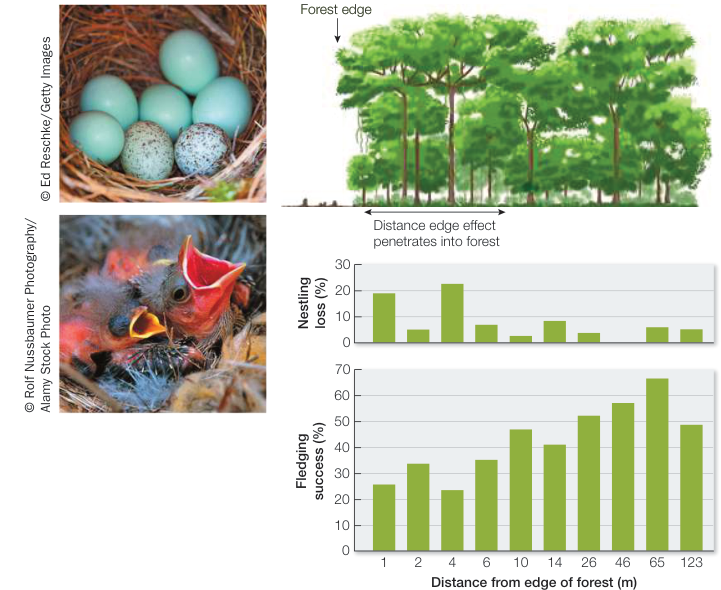
Figure 57.5
- Scientific evidence shows that some species have been, or are currently being, affected by climate change through distributional changes, timing of life history events, and decreased growth and reproduction.
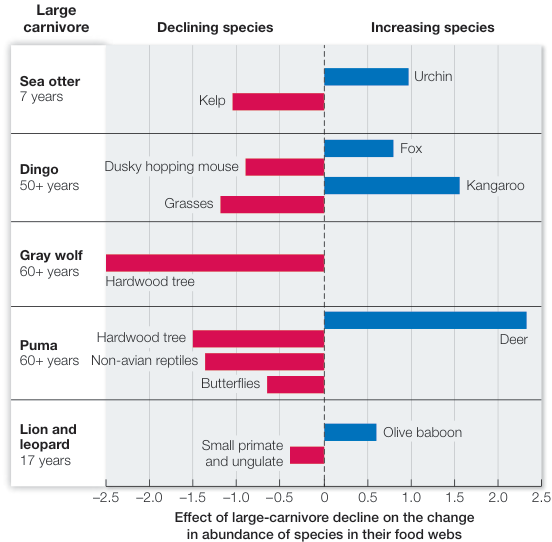
Figure 57.9 Questions
- How do habitat loss, degradation, and fragmentation contribute to the extinction of species?
- Give three reasons why invasive species can have negative effects on biodiversity and ecosystems.
- Describe how overharvesting and climate change could affect a large carnivore species and its food web.
Protecting Biodiversity Requires Conservation and Management Strategies
- Ecologists use scientific theory, empirical data, and tools from a variety of disciplines to help inform socioeconomic and institutional sectors in the protection and management of biodiversity.
- Creating protected areas and restoring degraded habitat can curtail biodiversity loss. Creating viable protected areas requires establishing core natural areas, buffer zones surrounding them, and habitat corridors connecting them.
- Restoration ecology involves renewing degraded ecosystems by re-establishing their original structure and function through active removal of pollutants or non-native species, revegetation to reestablish habitat and food resources, reintroduction of native species, or reestablishment of important processes such as disturbance.
- Captive breeding programs and ending trade can help conserve and manage a few highly threatened or charismatic species.
- The best way to reduce the damage caused by invasive species is to either prevent their introduction through trade restrictions or eradicate them in their early establishment phase.
- Biodiversity can be conserved because of the economic value of the goods and services it provides.
Questions
- Using ecological principles, what are the best spatial configurations for nature-reserve designs?
- How can restoration ecology be used to reestablish the original structure and function of degraded ecosystems?
- What are the best ways to reduce the damage caused by invasive species?
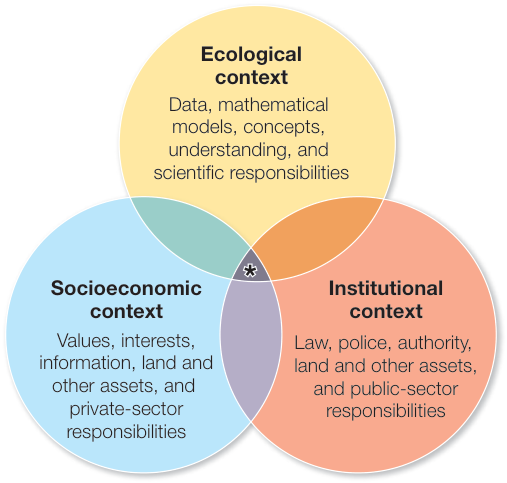
Figure 57.12
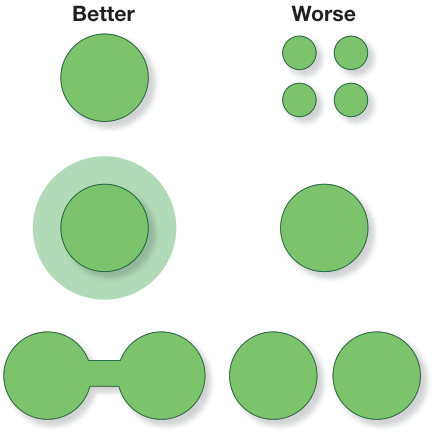
Figure 57.13